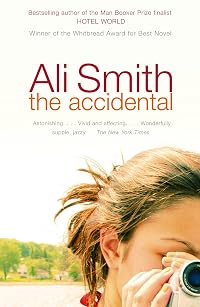
The Accidental
by Ali Smith
On This Page
Description
Barefoot, thirty-something Amber shows up at the door of a Norfolk cottage that the Smarts are renting for the summer, insinuating herself into their family. Dazzled by her seeming exoticism, the Smarts begin to examine the accidents of their lives under the searing lens of Amber's perceptions. When the mother Eve finally banishes her from the cottage, Amber disappears from their sight, but not--as they find when they return home to London--from their profoundly altered lives. Fearlessly show more intelligent, disarmingly playful, "The accidental" is a Joycean tour-de-force of literary improvisation that explores the nature of truth, the role of chance, and the transformative power of storytelling. show lessTags
Recommendations
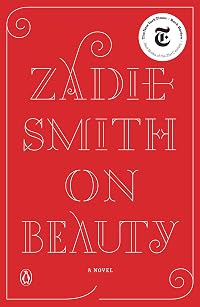
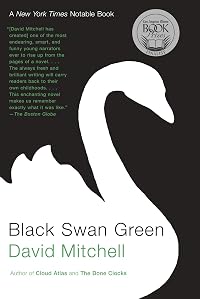
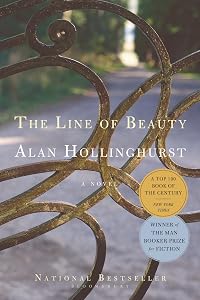
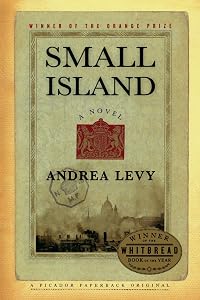






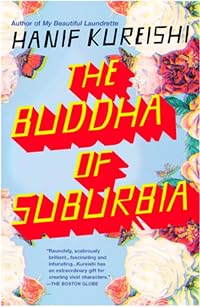

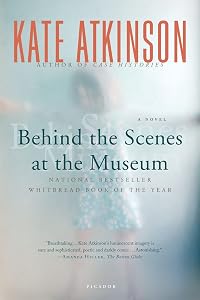
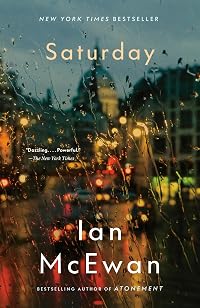
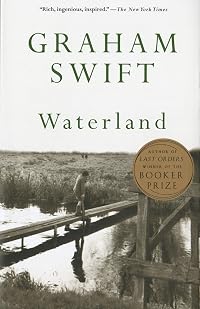

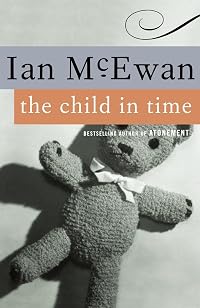
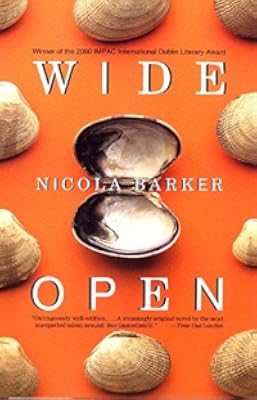
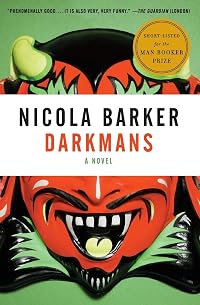
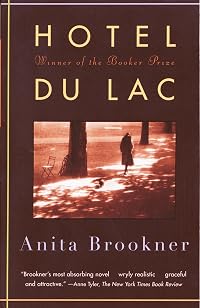

Member Recommendations
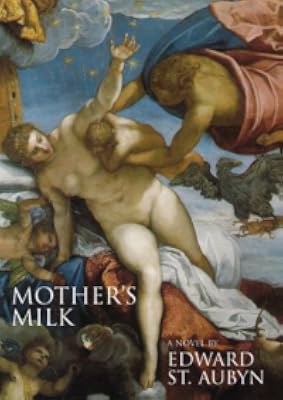
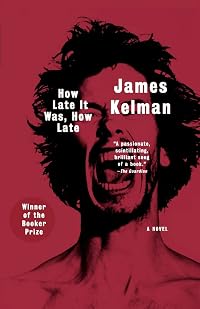
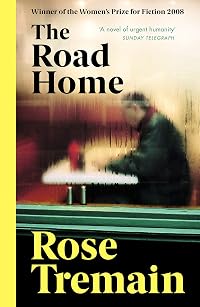
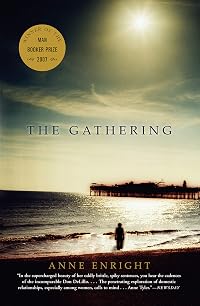
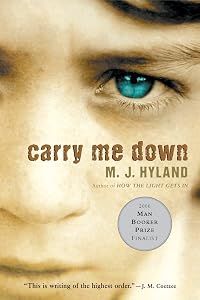
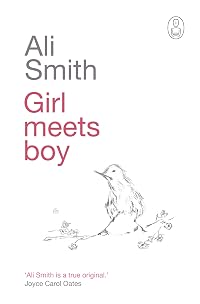
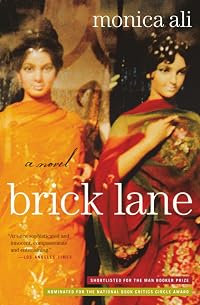
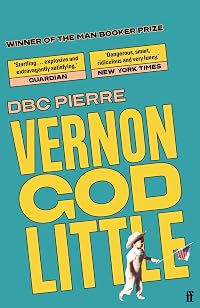
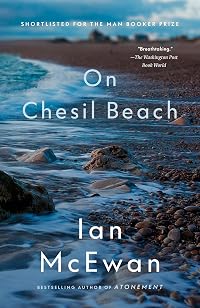
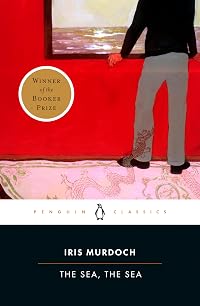
shaunie Both feature families retreating to an idyllic summer house, but Hadley's book thankfully doesn't have the clever-clever touches which sometimes mar Smith's work.
kitzyl A family on holiday whose lives are disrupted and changed forever by a mysterious interloper. The author is known for being experimental with literary styles.
Member Reviews
I just finished listening to The Accidental on audio book. Talk about original! It’s the story of the ironically named Smarts: professor Michael, writer Eve, teen bully Magnus, and pre-teen bully victim Astrid. A fifth wheel, Amber, careens into their lives and throws them all for a loop. Each character has a unique voice, not just as a person, but as a literary invention. Eve speaks in question-and-answer interview format like the historical recreations that she writes; Michael speaks an entire chapter in verse; Magnus has an alter ego named “Hologram Boy”; and twelve-year-old Astrid is still seeking a voice, trying out phrases like “typical and ironic” and “i.e.” And Amber speaks in movie allusions, since she was show more conceived in a cinema.
It’s an amazing book, as Astrid would say. It addresses not just bullying, but adultery, writer’s block, and the ways in which we are vulnerable to the kind of fraud Amber commits on the whole family. It shines with motifs of light, photography, and cinema. I found it far more complex than The Sea, and the twist at the end has a much more satisfying kick to it. I highly recommend it, and I can’t believe that Banville won the Booker Prize over Smith and Ishiguro. Harumph. show less
It’s an amazing book, as Astrid would say. It addresses not just bullying, but adultery, writer’s block, and the ways in which we are vulnerable to the kind of fraud Amber commits on the whole family. It shines with motifs of light, photography, and cinema. I found it far more complex than The Sea, and the twist at the end has a much more satisfying kick to it. I highly recommend it, and I can’t believe that Banville won the Booker Prize over Smith and Ishiguro. Harumph. show less
The technology in "The Accidental" will strike some younger readers and hopelessly dated, and apparently the author has gone on to bigger and better things, but this one's still a novel that's well worth picking up. The writing, for one, is top-notch. Bad writers tend to use the same voice to transcribe the thoughts of all of their characters, and middling writers tend to write children as miniature adults. Smith's the rare writer that can give each of her characters -- pre-teen Astrid, moody teenager Magnus, and both of the adults in the Smart household -- voices that are unmistakably their own. Morose, haunted Magnus is beset by guilt while Astrid is in the first throes of thrilling adolescent discovery. Michael Smart is a posh show more British academic but far from a caricature. Eve frets and drifts, even as she finds herself on the brink of big-time literary fame. Smith never forgets that her characters see and talk about the world differently. Yes, that sounds like a pretty basic task if you're business is writing novels, but it's much harder to pull off than it sounds. By doing this, Smith, to put it bluntly, demonstrates that she's got the touch.
It would be easy to read "The Accidental" as a story about the fragility of British upper-class life and how one family's existence comes apart when Amber -- mysterious, impulsive, and strangely charismatic -- walks into their lives. But Smith also demonstrates her chops by not tying up all of her loose ends here. Amber's character stubbornly refuses analysis and even identification: we never even learn her last name, or whether or not Amber is indeed her real name. While each of the Smarts come off as a fully formed character, Amber remains, by contrast, entirely unknowable, a blank space that moves purposefully but chaotically through the story. It'd be easy to see her as a mere advantage-taker, and it's quite possible that that is all she is. But readers who go through this one carefully might conclude -- as I did -- that there's just enough about her behavior to call this judgment into question. The psychological needs that Amber satisfies in each member of the Smart family are, in the end, more real than anything we know about Amber herself. I can't help but respect authors who refuse to provide their readers with easy answers, and Smith's far too good a writer to simplify her story for the sake of a tidy ending. This one isn't perhaps, a life-changer, but it was the first novel of Smith's I'd ever read. It left no doubt in my mind that she's the real thing, and I hope that I'll be able to pick up more of her work soon. Recommended. show less
It would be easy to read "The Accidental" as a story about the fragility of British upper-class life and how one family's existence comes apart when Amber -- mysterious, impulsive, and strangely charismatic -- walks into their lives. But Smith also demonstrates her chops by not tying up all of her loose ends here. Amber's character stubbornly refuses analysis and even identification: we never even learn her last name, or whether or not Amber is indeed her real name. While each of the Smarts come off as a fully formed character, Amber remains, by contrast, entirely unknowable, a blank space that moves purposefully but chaotically through the story. It'd be easy to see her as a mere advantage-taker, and it's quite possible that that is all she is. But readers who go through this one carefully might conclude -- as I did -- that there's just enough about her behavior to call this judgment into question. The psychological needs that Amber satisfies in each member of the Smart family are, in the end, more real than anything we know about Amber herself. I can't help but respect authors who refuse to provide their readers with easy answers, and Smith's far too good a writer to simplify her story for the sake of a tidy ending. This one isn't perhaps, a life-changer, but it was the first novel of Smith's I'd ever read. It left no doubt in my mind that she's the real thing, and I hope that I'll be able to pick up more of her work soon. Recommended. show less
Ali Smith has left me discombobulated with this novel, which I have to admit is the calling card of a great writer.
That's not to say I completely loved it; for the first quarter or so I had to make a big effort to stay with it, mostly because I didn't like the characters. The horrible adolescent daughter. The depressed teenage son. The can't-keep-it-in-his-pants stepdad. The pathetic mother. And the setting of a miserable summer rental in an ugly village in Norfolk. So far, so bleak. In fact, it was that gritty British bleakness and the detachment of the family members from each other that turned me off this novel the first time I attempted to read it (and abandoned it).
Once the mysterious Amber appears, it starts to gather pace into show more an edgy psychological read, and we're thrown all over the place trying to figure out who she is and what she's doing in the middle of the family. That's done very well - she confuses the hell out of you as a reader for a while.
The writing was very, very good, but at times the conscious playing with narrative form irritated me, like Smith was trying so hard to intellectualise and get on that Booker list. And whilst she was clever at getting into the adolescent Astrid's head, often I found it an annoying 12 year old head to be in.
All in all, if you'd ask me would I read another Smith at the end of the first half I'd probably have answered no. But the second half was brilliant and had me reeled right in, desperate to find out where on earth it was all going. So yes - I probably don't love Ali Smith just yet, but there's enough there to tempt me to look at her latest novels if they come my way.
4 stars - clever and unsettling. I'll be thinking about this one for a while. show less
That's not to say I completely loved it; for the first quarter or so I had to make a big effort to stay with it, mostly because I didn't like the characters. The horrible adolescent daughter. The depressed teenage son. The can't-keep-it-in-his-pants stepdad. The pathetic mother. And the setting of a miserable summer rental in an ugly village in Norfolk. So far, so bleak. In fact, it was that gritty British bleakness and the detachment of the family members from each other that turned me off this novel the first time I attempted to read it (and abandoned it).
Once the mysterious Amber appears, it starts to gather pace into show more an edgy psychological read, and we're thrown all over the place trying to figure out who she is and what she's doing in the middle of the family. That's done very well - she confuses the hell out of you as a reader for a while.
The writing was very, very good, but at times the conscious playing with narrative form irritated me, like Smith was trying so hard to intellectualise and get on that Booker list. And whilst she was clever at getting into the adolescent Astrid's head, often I found it an annoying 12 year old head to be in.
All in all, if you'd ask me would I read another Smith at the end of the first half I'd probably have answered no. But the second half was brilliant and had me reeled right in, desperate to find out where on earth it was all going. So yes - I probably don't love Ali Smith just yet, but there's enough there to tempt me to look at her latest novels if they come my way.
4 stars - clever and unsettling. I'll be thinking about this one for a while. show less
Is this a cautionary tale about the dangers of miscommunication, assumption, or dysfunctional family silence? The Smith family, on holiday in Norfolk, England, find a beautiful woman on their doorstep announcing her car has broken down. She soon stays for dinner then stays the night. She learns their names: Eve, a writer on the brink of literary success; Michael, a philandering professor; Magnus, a teenager wrack with guilt over a school prank gone horribly wrong; Astrid, a typical twelve year old girl bored with life; everything is substandard in her eyes. The family learns her name, Amber. No one recognizes her from anywhere. Either the Smith family cannot or will not ask each other what they know about the mysterious stranger. Based show more on their preconceived opinions about each, other each family member makes a blind assumption. Amber is a friend of Eve's. Amber is Michael's next "bit 'o fluff on the side," maybe one of his latest students he to shag? Amber is a teacher from Magnus or Astrid's school. Each family member sees a situation from a completely different point of view and that's when the lies start. Without confirming anything about Amber, the Smith family starts to let the woman integrate herself into their daily lives until it is too late to extract her. show less
Ali Smith is very good at realistic internal monologues. She also seems to always have characters who understand or discover or completely miss what's important in life, and a character or two who is totally alive (even when, as in Hotel World, they're actually dead). She's good at representing how siblings feel about one another. In The Accidental, she illuminates a rather ordinary intellectual family's dysfunction with an "outsider" who is perfectly alive, perfectly honest, perfectly antisocial.
A stranger turns up in the midst of a family spending the summer in a rented house in Norfolk, and they are all so preoccupied with their individual concerns that they just assume she's got a good reason for being there and that one of the others must have invited her in. The sense of disconnection is enhanced by Smith's use of parallel narratives from the four family members, who of course all see something quite different. And then there's a fifth narrative voice, someone called "Alhambra" after the cinema where they were conceived(*), who might or might not be the same as the mysterious stranger, Amber, but is clearly locked into a world in which the narrative conventions of cinema rule, and we soon realise that a lot of what happens show more in the book is a kind of awful real-life transfer of things that would make perfect sense on the screen.
Like most strangers who turn up in fiction (and like the stranger in Smith's latest book, Winter) Amber acts as a plot-catalyst, pushing the four members of the family towards a resolution of their problems and making them actually talk to each other. But of course it's not as simple as stranger turns up and problems are resolved - whilst she offers them each what might well be the thing they most need in the short term, she also takes or destroys a great deal in the process - finding resolution is not a pain-free process, and there are no fairy godmothers in this book.
Literature comes in too - one of the characters is an Eng Lit lecturer who has lost interest in anything except the transitory enjoyment of sleeping with his students, and it's great fun when his section of the narrative keeps sliding into a pastiche of the Great Poetry he's been teaching without any conviction all these years...
As you would expect, the book is set in a very precise historical moment (the summer and autumn of 2003) and there are a lot of Smith's usual funny and clear-sighted comments on current affairs - it's striking how many of the things that were grabbing our attention just over a decade ago have faded to the backs of our minds already - the abuse of Iraqi prisoners, the failure of the Millennium Dome, Love Actually and the rise of the Islingtocracy, bookshops with cafés, DV camcorders. But there are other topics that haven't gone away, where Smith was probably a bit ahead of the pack in singling them out: the omnipresence of CCTV cameras, public-private spaces, social media bullying.
---
(*)Out of curiosity, I had a look to see if there really was an Alhambra in Inverness - wouldn't you know it, there's an excellent online database of defunct Scottish cinemas (http://www.scottishcinemas.org.uk/index.html) and it turns out that there were eleven Alhambras in Scotland, but none of them in the right place. The Inverness cinema that would match the circumstances of the novel best was called "La Scala", which doesn't really make for a plausible baby name... show less
Like most strangers who turn up in fiction (and like the stranger in Smith's latest book, Winter) Amber acts as a plot-catalyst, pushing the four members of the family towards a resolution of their problems and making them actually talk to each other. But of course it's not as simple as stranger turns up and problems are resolved - whilst she offers them each what might well be the thing they most need in the short term, she also takes or destroys a great deal in the process - finding resolution is not a pain-free process, and there are no fairy godmothers in this book.
Literature comes in too - one of the characters is an Eng Lit lecturer who has lost interest in anything except the transitory enjoyment of sleeping with his students, and it's great fun when his section of the narrative keeps sliding into a pastiche of the Great Poetry he's been teaching without any conviction all these years...
As you would expect, the book is set in a very precise historical moment (the summer and autumn of 2003) and there are a lot of Smith's usual funny and clear-sighted comments on current affairs - it's striking how many of the things that were grabbing our attention just over a decade ago have faded to the backs of our minds already - the abuse of Iraqi prisoners, the failure of the Millennium Dome, Love Actually and the rise of the Islingtocracy, bookshops with cafés, DV camcorders. But there are other topics that haven't gone away, where Smith was probably a bit ahead of the pack in singling them out: the omnipresence of CCTV cameras, public-private spaces, social media bullying.
---
(*)Out of curiosity, I had a look to see if there really was an Alhambra in Inverness - wouldn't you know it, there's an excellent online database of defunct Scottish cinemas (http://www.scottishcinemas.org.uk/index.html) and it turns out that there were eleven Alhambras in Scotland, but none of them in the right place. The Inverness cinema that would match the circumstances of the novel best was called "La Scala", which doesn't really make for a plausible baby name... show less
Most unusual. Written in a random stream-of-consciousness style - or several streams as we flip between the disintegrating minds of the members of a disintegrating family. The erratic feel is emphasized by the books layout; half-missing paragraphs and pages with type snaking over them.
A lot of loose plot ends are left hanging and there is a recursive twist to the end of the story, but you'd expect nothing less of the unpredictable package that is this book.
There is something fresh and rewarding, mind altering and expanding about this read, but there is frustration and confusion too. Its the kind of book that probably makes a lot more sense on a second reading, that is if I ever get round to it!
A lot of loose plot ends are left hanging and there is a recursive twist to the end of the story, but you'd expect nothing less of the unpredictable package that is this book.
There is something fresh and rewarding, mind altering and expanding about this read, but there is frustration and confusion too. Its the kind of book that probably makes a lot more sense on a second reading, that is if I ever get round to it!
Members
- Recently Added By
Published Reviews
ThingScore 63
Ms. Smith can do suicidal teenage angst and middle-aged ennui, a 12-year-old's sardonic innocence and an aging Lothario's randy daydreams with equal aplomb. And in riffing on the stream of consciousness form, pioneered by such high-brow litterateurs as Joyce and Woolf, she manages to make it as accessible and up to the minute (if vastly more entertaining) as talk radio or an Internet chat room.
added by jlelliott
The awkwardness of the novel's moralizing is all the more disconcerting given its fine, lustrous texture on the page. Smith is a wizard at observing and memorializing the ebb and flow of the everyday mind — Astrid musing that "hurtling sounds like a little hurt being, like earthling, like something aliens from another planet would land on earth and call human beings who have been a little show more bit hurt." The close-up is Smith's forte. Her long shots need a little work. show less
added by jlelliott
Lists

1001 Books You Must Read Before You Die
1,448 works; 1,136 members

Favourite Women's Prize for Fiction, Orange & Bailey's Prize contenders
132 works; 52 members

Female Author
1,234 works; 65 members

Literature About Social Class
134 works; 19 members

Booker Prize
491 works; 62 members

Stream of Consciousness
87 works; 8 members

Unread books
1,063 works; 87 members
Booker Prize Shortlist: Titles Read
103 works; 10 members
Female Protagonist
1,056 works; 57 members

Experimental Literature
141 works; 19 members

Top Five Books of 2017
757 works; 230 members

Speculative Fiction: Slipstream Literature
166 works; 16 members

Man Booker Prize Longlist 2005
17 works; 3 members

Five star books
1,767 works; 110 members

Books Read in 2020
4,379 works; 124 members

Books Read in 2013
1,630 works; 51 members

To Read
617 works; 7 members

2024. Nuestro año literario (Faustino Sánchez)
20 works; 1 member

Take Four Books
130 works; 1 member
Talk Discussions
Past Discussions
The Accidental by Ali Smith in Orange January/July (January 2012)
Author Information

54+ Works 17,461 Members
Some Editions
Awards and Honors
Awards
Distinctions
Series
Belongs to Publisher Series
Penguin Celebrations (34)
Otavan kirjasto (176)
Common Knowledge
- Canonical title
- The Accidental
- Original title
- The Accidental
- Original publication date
- 2005
- People/Characters
- Michael Smart; Astrid Smart; Amber; Eve Smart; Magnus Smart
- Important places
- Norfolk, England, UK
- Epigraph
- "Between the experience of living a normal life at this moment on the planet and the public narratives being offered to give a sense to that life, the empty space, the gap, is enormous" – John Berger
"Shallow uniform... (show all)ity is not an accident but a consequence of what Marxists optimistically call late capitalism" – Nick Cohen
"The whole history dwindled soon into a matter of little importance but to Emma and her nephews:-- in her imagination it maintained its ground, and Henry and John were still asking every day for the story of Harriet and the gypsies, and still tenaciously setting her right if she varied in the slightest particular from the original recital" – Jane Austen
"Many are the things that man Seeing must understand. Not seeing, how shall he know What lies in the hand Of time to come?" – Sophocles
"My artistry is a bit austere." – Charlie Chaplin - Dedication
- for Philippa Reed, high hopes/ Inuk Hoff Hansen, far away so close/Sarah Wood, The wizard of us
- First words
- My mother began me one evening in 1968 on a table in the cafe of the town's only cinema.
- Last words
- (Click to show. Warning: May contain spoilers.)I'm everything you ever dreamed.
- Blurbers
- Oates, Joyce Carol; Winterson, Jeanette
- Original language
- English
Classifications
Statistics
- Members
- 2,968
- Popularity
- 6,049
- Reviews
- 116
- Rating
- (3.23)
- Languages
- 14 — Catalan, Danish, Dutch, English, Estonian, Finnish, French, German, Italian, Norwegian (Bokmål), Polish, Portuguese, Spanish, Swedish
- Media
- Paper, Audiobook, Ebook
- ISBNs
- 43
- UPCs
- 1
- ASINs
- 18