On This Page
Description
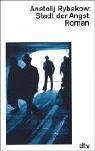
"The publication of Children of the Arbat in 1988 established Anatoli Rybakov as one of the most important Russian authors of the century. Now, in a long-awaited novel - the first since his magnificent international bestseller - Rybakov has written Fear: a stunning account of Stalin's purges." "Rybakov brings alive a generation and a nation on the brink of self-destruction with the story of Sasha Pankratov, a young man sent into Siberian exile after a flippant and inadvertently impolitic show more remark in a school newspaper. No longer the idealistic youth of Rybakov's first novel, but a knowledgeable victim with hard-won wisdom, Sasha is released to make his way across a country where the mass arrests have continued, but the Party faithful - the original creators of the Bolshevik Revolution - are now subject to arrest, torture, trial, and death." "In his profound rendering of Stalin's mind and personality, Rybakov proves his extraordinary skills as both historian and craftsman. His depiction of the dynamics of terrorism is equally deft: the psychological molding of a once hopeful generation into fearful, self-protective informers; and, even more devastating, Stalin's conscious twisting of a self-serving but essentially banal bureaucracy into a horde of prosecutorial demons whose zeal and inventiveness surpass Torquemada's inquisitors." "At once an epic saga, a chilling exposition of terrorism, and a deeply etched, unmatched portrait of Stalin, Fear confirms Rybakov's stature among the classic historical writers of our time."--BOOK JACKET.Title Summary field provided by Blackwell North America, Inc. All Rights Reserved show lessTags
Recommendations























Member Reviews
This is the continuation of the story of the first generation to grow up under the Soviet regime. One of the things I appreciated about Fear was that Rybakov took the time to recap The Children of Arbat before launching into the story of Fear. It was nice to have a refresher on all the different characters and where we last left them: Lead character Sasha Pankratov has been exiled to Siberia for making a flippant joke in 1934 in the school newspaper. Lesser characters like Yuri went to work for the secret police and had blackmailed Vika into becoming an informant. Maxim Kostin was in the army and in love with a teacher, Nina. Lena Budyagina, daughter of a Soviet diplomat and Yuri's on again, off again lover, had an illegal abortion and show more almost died. Nina and Varya are on opposite sides of the Soviet loyalty.
Fear takes place between 1935 - 1937. Again, Stalin is a prominent character in the book. Rybakov does a good job humanizing the dictator (Stalin liked flowers), and express his growing paranoia and erratic behavior: on good days Stalin would remind subordinates of orders he never gave in the first place. On bad days, he would find trivial ways to execute long-loyal subordinates. It was troublesome when to talk of Stalin's wife's suicide was considered counterrevolutionary slander. Stalin was out for revenge against even people who did not betray him. Good citizens scrambled to distance themselves from lifelong friends; individuals "confessed" to be criminals. The political landscape is as such that a tenth grader could be expelled for saying the wrong name on an oral report.
Embedded in the story is the spiderweb-thin thread of hope is Sasha and Varya's love. Is it strong enough to endure insecurity, assumptions, self-doubt, and Stalin? show less
Fear takes place between 1935 - 1937. Again, Stalin is a prominent character in the book. Rybakov does a good job humanizing the dictator (Stalin liked flowers), and express his growing paranoia and erratic behavior: on good days Stalin would remind subordinates of orders he never gave in the first place. On bad days, he would find trivial ways to execute long-loyal subordinates. It was troublesome when to talk of Stalin's wife's suicide was considered counterrevolutionary slander. Stalin was out for revenge against even people who did not betray him. Good citizens scrambled to distance themselves from lifelong friends; individuals "confessed" to be criminals. The political landscape is as such that a tenth grader could be expelled for saying the wrong name on an oral report.
Embedded in the story is the spiderweb-thin thread of hope is Sasha and Varya's love. Is it strong enough to endure insecurity, assumptions, self-doubt, and Stalin? show less
Ratings
Members
- Recently Added By
Lists

Russian Literature
184 works; 35 members
Author Information

35+ Works 1,383 Members
Some Editions
Series

Belongs to Publisher Series
Common Knowledge
- Canonical title
- Fear
- Original title
- Страх; Strakh
- Original publication date
- 1993 (English translation) (English translation); 1990
- First words
- The mail didn't come that day.
- Last words
- (Click to show. Warning: May contain spoilers.)LEAVING ON TWENTY-FIFTH TRAIN FORTY CAR SEVER. MEET ME. SASHA.
- Blurbers
- Salisbury, Harrison; Yevtushenko, Yevgeny
- Original language
- Russian
Classifications
- Genres
- Fiction and Literature, General Fiction, Historical Fiction
- DDC/MDS
- 891.7344 — Literature & rhetoric Asian Literature East Indo-European and Celtic literatures Russian and East Slavic languages Russian fiction USSR 1917–1991 Late 20th century 1917–1991
- LCC
- PG3476 .R87 .T7513 — Language and Literature Slavic languages and literatures. Baltic languages. Albanian language Slavic. Baltic. Albanian Russian literature Individual authors and works 1917-1960
- BISAC
Statistics
- Members
- 176
- Popularity
- 185,503
- Reviews
- 2
- Rating
- (3.93)
- Languages
- 9 — Dutch, English, Finnish, French, German, Polish, Portuguese, Russian, Spanish
- Media
- Paper, Ebook
- ISBNs
- 20
- ASINs
- 3