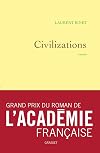
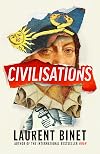
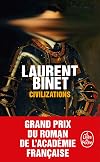
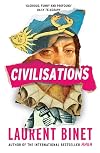
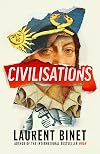
Civilizations: A Novel
by Laurent Binet
On This Page
Description
An ambitious and highly entertaining novel of revisionist history. Freydis is a woman warrior and leader of a band of Viking explorers setting out to the south. They meet local tribes, exchange skills, are taken prisoner, and get as far as Panama. But nobody ultimately knows what became of them. Fast forward five hundred years to 1492 and we're reading the journals of Christopher Columbus, mid-Atlantic on his own famous voyage of exploration to the Americas, dreaming of gold and conquest. show more But he and his men are taken captive by Incas. Even as their suffering increases, his faith in his superiority, and in his mission, is unshaken. Thirty years later, Atahualpa, the last Inca emperor, arrives in Europe in the ships stolen from Columbus. He finds a continent divided by religious and dynastic quarrels, the Spanish Inquisition, Luther's Reformation, capitalism, the miracle of the printing press, endless warmongering between the ruling monarchies, and constant threat from the Turks. But most of all he finds downtrodden populations ready for revolution. Fortunately, he has a recent bestseller as a guidebook to acquiring power--Machiavelli's The Prince. The stage is set for a Europe ruled by Incas and Aztecs, and for a great war that will change history forever. show lessTags
Recommendations






































Member Reviews
Well, that was lots of fun. A 'what if' of history retold. The Vikings went further than Newfoundland and reached the Caribbean, Columbus set sail but never returned to Europe with his discovery of the New World. In fact the 'New World' turned out to be Europe itself discovered by a small band of armed Incas. The conquistadors-in-reverse took on and conquered the continent. The emperor Atahualpa leading them. All the main characters of European history appear including Pedro Pizarro in a very different role, Charles V the Holy Roman Emperor, Queen Isabella, Henry VIII, Luther, Erasmus, Barbarossa, Michelangelo, Titian, Cervantes, El Greco and many others. Written in a very apposite, folkloric, simple style as well as being highly show more amusing it highlights some of the absurdities of European history of the time. Atahualpa himself is a very worthy hero. What if indeed. show less
What if Americans had invaded Europe in the sixteenth century instead of the other way round? We all know that tiny handfuls of Conquistadors managed to snag improbably large swathes of territory for Spain on the strength of a marginal technological advantage, a huge amount of luck, and a consciousness that they had nothing to lose. How might it have worked out if that playing-field had been slightly more level, and what consequences might it have had for Europe?
Binet's alternative branch of history starts out with the Vikings penetrating much further south along the American coast than is usually accepted, with a shipload under the command of Erik the Red's daughter Freydis (because, why not?) getting as far as Cuba, leaving a trail of show more antibodies, horses, ironworking skills and the worship of Thor behind them. As a result, Columbus has a bit of a hard time in the Caribbean and never gets home, but his Taino hosts have time to profit from his geographical knowledge and reverse-engineer his ship and firearms.
Some forty years later, in 1531, a couple of shiploads of Americans under the leadership of exiled Inca emperor Atahualpa and his Taino mistress Higuénamota arrive in Lisbon at a moment when the local authorities have been rather distracted by a devastating earthquake. And before anyone has fully realised what is happening, they have hijacked Charles V's empire in a kind of mirror-image of the way Hernan Cortés took over Montezuma's.
The novel is a lively romp in which just about anyone who was anybody in the sixteenth century has at least a walk-on part, and there are plenty of more and less subtle jokes buried in the text. In fact, I half suspect Binet of having put the whole complex structure together just so that he can have the Mexican conquerors build a pyramid in the courtyard of the Louvre...
On a more serious level, as becomes clearer from the epilogue in which Cervantes and El Greco debate the relationship between humanist values and religious belief with Michel de Montaigne (again, because why not?), Binet is using the novel to make us think about what we really mean when we talk about "European civilisation," "the Christian tradition," and the like. The hybrid European/American empire he postulates for Atahualpa, in which Sun-worship is the state religion but Catholicism, Lutheranism, Judaism and Islam are all officially tolerated and the Inquisition has been abolished, is more liberal and humanistic in practice than any "traditional" European state of the the time, and it also manages to maintain European peace for an unprecedented length of time (until the Mexicans turn up and destabilise things again...).
An interesting and entertaining read, with some great characters, especially Higuénamota, who loves to shock people like Luther by appearing on formal occasions in her national costume (i.e. none). But I think it might have worked better if Binet had found a way to overcome the technical imbalance without requiring Americans to rely on knowledge they had got from visiting Europeans. Couldn't there have been a stray Chinese ship landing on the coast of Peru? show less
Binet's alternative branch of history starts out with the Vikings penetrating much further south along the American coast than is usually accepted, with a shipload under the command of Erik the Red's daughter Freydis (because, why not?) getting as far as Cuba, leaving a trail of show more antibodies, horses, ironworking skills and the worship of Thor behind them. As a result, Columbus has a bit of a hard time in the Caribbean and never gets home, but his Taino hosts have time to profit from his geographical knowledge and reverse-engineer his ship and firearms.
Some forty years later, in 1531, a couple of shiploads of Americans under the leadership of exiled Inca emperor Atahualpa and his Taino mistress Higuénamota arrive in Lisbon at a moment when the local authorities have been rather distracted by a devastating earthquake. And before anyone has fully realised what is happening, they have hijacked Charles V's empire in a kind of mirror-image of the way Hernan Cortés took over Montezuma's.
The novel is a lively romp in which just about anyone who was anybody in the sixteenth century has at least a walk-on part, and there are plenty of more and less subtle jokes buried in the text. In fact, I half suspect Binet of having put the whole complex structure together just so that he can have the Mexican conquerors build a pyramid in the courtyard of the Louvre...
On a more serious level, as becomes clearer from the epilogue in which Cervantes and El Greco debate the relationship between humanist values and religious belief with Michel de Montaigne (again, because why not?), Binet is using the novel to make us think about what we really mean when we talk about "European civilisation," "the Christian tradition," and the like. The hybrid European/American empire he postulates for Atahualpa, in which Sun-worship is the state religion but Catholicism, Lutheranism, Judaism and Islam are all officially tolerated and the Inquisition has been abolished, is more liberal and humanistic in practice than any "traditional" European state of the the time, and it also manages to maintain European peace for an unprecedented length of time (until the Mexicans turn up and destabilise things again...).
An interesting and entertaining read, with some great characters, especially Higuénamota, who loves to shock people like Luther by appearing on formal occasions in her national costume (i.e. none). But I think it might have worked better if Binet had found a way to overcome the technical imbalance without requiring Americans to rely on knowledge they had got from visiting Europeans. Couldn't there have been a stray Chinese ship landing on the coast of Peru? show less
Wir alle haben sie studiert, die Geschichte Europas und die Eroberung der Welt. Mutige Männer, die dahinsegelten, um ferne Länder zu entdecken und zu unterwerfen, um ihnen die zivilisierte Hochkultur der alten Welt nahezubringen. Was aber wäre gewesen, wenn alles ganz anders verlaufen wäre? Die Wikinger noch vor Kolumbus Südamerika entdeckt hätten und die Inkas sich gen Osten aufgemacht hätten, um erst Portugal und dann ganz Europa zu unterwerfen? So manch ein Herrscher hätte nicht schlecht gestaunt, ebenso die Vertreter der Heiligen Kirche – und deren Gegner. Ein fuchsteufelswilder Luther muss zusehen, wie statt seiner Thesen die Kunde des Sonnengottes angeschlagen und damit der neue Glaube besiegelt wird.
Laurent Binet ist show more ein Meister darin, die Geschichte neu zu erfinden und einen alternativen, wenn auch bisweilen aberwitzig anmutenden Verlauf zu schildern. Schon mit „Die siebte Sprachfunktion“ konnte er mich restlos begeistern, nun beschränkt er sich nicht auf die kleine Welt der Linguisten, sondern geht ans Eingemachte. Und das wieder einmal mit präziser und messerscharfer Beobachtungsgabe und pointierten Formulierungen.
„Doch die Geschichte lehrt uns, dass wenige Ereignisse es der Mühe wert erachten, sich rechtzeitig anzukündigen, darunter manche, die sich jeglicher Vorhersage entziehen, und dass letztlich die allermeisten sich damit begnügen, einfach einzutreten.“
So manches in der europäischen Geschichte wäre uns erspart geblieben oder schlichtweg besser gelaufen, hätten wir Binets Version der Historie erlebt. Die Inquisition beendet, Toleranz zum leitenden Motiv gemacht und Frieden, der eigentlich immer nur ein Traum war. Daneben wird das heliozentrische Weltbild per Dekret verordnet und die Mystifizierung der jungfräulichen Braut und der unbefleckten Empfängnis ein Schlusspunkt gesetzt.
Viele große Namen haben ihren Auftritt in dem Roman, der 2019 mit dem großen Preis der Académie française ausgezeichnet wurde. Man kann immer wieder nur schmunzeln, wie Laurent Binet uns einen Spiegel vorhält und die Absurditäten aufzeigt, die wir als gegeben hinnehmen. Virtuos reihen sich sie Ereignisse aneinander, die bekannte und belegte Fakten neu interpretieren. Diesbezüglich finde ich den deutschen Titel leider auch etwas zu begrenzt, es geht nicht nur um „Eroberung“, sondern wie das Original schon sagt, um die Frage, was eigentlich „Zivilisation“ sein soll und vor dem Hintergrund von Inquisition, Kreuzzügen und Imperialismus ist diese mehr als berechtigt. show less
Laurent Binet ist show more ein Meister darin, die Geschichte neu zu erfinden und einen alternativen, wenn auch bisweilen aberwitzig anmutenden Verlauf zu schildern. Schon mit „Die siebte Sprachfunktion“ konnte er mich restlos begeistern, nun beschränkt er sich nicht auf die kleine Welt der Linguisten, sondern geht ans Eingemachte. Und das wieder einmal mit präziser und messerscharfer Beobachtungsgabe und pointierten Formulierungen.
„Doch die Geschichte lehrt uns, dass wenige Ereignisse es der Mühe wert erachten, sich rechtzeitig anzukündigen, darunter manche, die sich jeglicher Vorhersage entziehen, und dass letztlich die allermeisten sich damit begnügen, einfach einzutreten.“
So manches in der europäischen Geschichte wäre uns erspart geblieben oder schlichtweg besser gelaufen, hätten wir Binets Version der Historie erlebt. Die Inquisition beendet, Toleranz zum leitenden Motiv gemacht und Frieden, der eigentlich immer nur ein Traum war. Daneben wird das heliozentrische Weltbild per Dekret verordnet und die Mystifizierung der jungfräulichen Braut und der unbefleckten Empfängnis ein Schlusspunkt gesetzt.
Viele große Namen haben ihren Auftritt in dem Roman, der 2019 mit dem großen Preis der Académie française ausgezeichnet wurde. Man kann immer wieder nur schmunzeln, wie Laurent Binet uns einen Spiegel vorhält und die Absurditäten aufzeigt, die wir als gegeben hinnehmen. Virtuos reihen sich sie Ereignisse aneinander, die bekannte und belegte Fakten neu interpretieren. Diesbezüglich finde ich den deutschen Titel leider auch etwas zu begrenzt, es geht nicht nur um „Eroberung“, sondern wie das Original schon sagt, um die Frage, was eigentlich „Zivilisation“ sein soll und vor dem Hintergrund von Inquisition, Kreuzzügen und Imperialismus ist diese mehr als berechtigt. show less
I was highly intrigued upon hearing that Laurent Binet's new novel was an alternate history in which the Incas invade Southern Europe. His last book, [b:The 7th Function of Language|35610817|The 7th Function of Language|Laurent Binet|https://i.gr-assets.com/images/S/compressed.photo.goodreads.com/books/1515115679l/35610817._SY75_.jpg|71033745], was an absolute delight and I love an alternate history. However, they all struggle to match up to Kim Stanley Robinson's epic [b:The Years of Rice and Salt|2723|The Years of Rice and Salt|Kim Stanley Robinson|https://i.gr-assets.com/images/S/compressed.photo.goodreads.com/books/1419079388l/2723._SY75_.jpg|74882] and, while I enjoyed Binet's sly and politically intricate alternate universe, it show more didn't have the same depth and texture. The variation in narrative voices was interesting, but some definitely worked better than others. The chapters told in letters weren't as effective in my view, although I generally enjoy epistolatory fiction. Nonetheless the novel is a very entertaining thought experiment, asking how Europe could be invaded and ruled by the Americas rather than vice versa. Binet sets up the 16th century invasion via prior exposure to Vikings providing Incas with weapons and shipping technology, as well as resistance to European diseases.
There is considerable narrative tension as the small party of Incas try to survive and consolidate their position in Southern Europe. I enjoyed the ways they were able to exploit religious schisms and ally with political dynasties. Various historical figures pop up; Luther in particular doesn't come off well. The impact of the Inca economic and religious policies is extrapolated in a satisfying and interesting fashion, with attention to the peasants' grievances and uprisings of the time. The battle scenes are vivid and thrilling. Although I wasn't wholly convinced by all of the individual elements, overall the book was an involving and thought-provoking read. It's always pleasing to read a well-constructed counterfactual of colonialism. show less
There is considerable narrative tension as the small party of Incas try to survive and consolidate their position in Southern Europe. I enjoyed the ways they were able to exploit religious schisms and ally with political dynasties. Various historical figures pop up; Luther in particular doesn't come off well. The impact of the Inca economic and religious policies is extrapolated in a satisfying and interesting fashion, with attention to the peasants' grievances and uprisings of the time. The battle scenes are vivid and thrilling. Although I wasn't wholly convinced by all of the individual elements, overall the book was an involving and thought-provoking read. It's always pleasing to read a well-constructed counterfactual of colonialism. show less
I have been meaning to read Laurent Binet for a while now! I LOVED the idea, the concept behind this book. What would have happened if the events of certain historical visitors went slightly differently? Everything as a butterfly effect. Unfortunately, I am not a history buff so this sort of writing style gets very dense as a minefield of things I don't know. So it doesn't hit as well as it probably could have, if I knew my world history better. My fault! I was really hoping I would enjoy this more. There are probably a ton of fun historical easter eggs here, if you can spot them. History buffs can get more mileage out of this, I suppose. This very much reminded me of the book 'Sudden Death' by Alvaro Enrique.
A brilliantly evocative re-imagining of history, with Columbus' expedition to the Americas leading to a Central American Indian conquering of Europe. I loved the vividness of the author's imagination, and the none-too-subtle swipes at the absurd and nonsensically-minute differences between Christian sects. While the alternate history is fascinating, it is rather distant, and it can be difficult to sustain an emotional connection to the characters.
A Viking ship travels down the Eastern coast of America, spreading their genes, ironworking, horses and cattle. As a result, Columbus fails to establish the Spanish in the Caribbean, and instead it is an Incan army who conquers Spain...
Alternate histories are like a buffet, the author can pick and choose which events he wants to change without regard to the consequences and usually not looking beyond his own homeground. Still, it's an interesting concept to play around with and to see familiar historical figures having a completely different fate. There's also a little satisfaction to see Charles V treated exactly like Atahualpa. But I think this sort of intellectual game would work even more rewardingly if it were played by a show more descendant of the Andean tribes. show less
Alternate histories are like a buffet, the author can pick and choose which events he wants to change without regard to the consequences and usually not looking beyond his own homeground. Still, it's an interesting concept to play around with and to see familiar historical figures having a completely different fate. There's also a little satisfaction to see Charles V treated exactly like Atahualpa. But I think this sort of intellectual game would work even more rewardingly if it were played by a show more descendant of the Andean tribes. show less
Members
- Recently Added By
Published Reviews
ThingScore 100
Ïk wilde ze ( de Inca's) niet beter neerzetten als beter dan de Europeanen, ik denk ook niet dat ze dat waren.
added by nagel175
Lists

EU Fiction: 1950-2022
223 works; 70 members

Speculative Fiction from around the World
610 works; 18 members
Author Information

9+ Works 4,271 Members
Some Editions
Awards and Honors
Common Knowledge
- Canonical title*
- Civilizations
- Original title
- Civilizations
- Original publication date
- 2019 (1e édition originale française) (1e édition originale française); 2020 (Nederlands) (Nederlands); 2021 (English translation) (English translation)
- People/Characters
- Freydis Eriksdottir; Christopher Columbus; Karel V, Keizer van het Heilige Roomse Rijk; Atahualpa; Pizarro; Manco Capac
- Important places
- Toledo, Spain; Castilla, Spain; Alhambra, Granada, Andalusia, Spain
- Epigraph
- 'Art gives life to what history killed.'
Carlos Fuentes
Don Quixote, or the Critique of Reading
'Because of the confusion and discordance in which they lived, their conquest was very easy.'
Inca Gar... (show all)cilaso de la Vega
The Royal Commentaries of the Incas - First words
- There was a woman named Aud the Deep-Minded, daughter of Ketill Flatnose, who had been queen.
- Last words
- (Click to show. Warning: May contain spoilers.)And so, undoubtedly, was he.
- Blurbers
- Ellis, Bret Easton; Llosa, Mario Vargas
- Original language
- French
*Some information comes from Common Knowledge in other languages. Click "Edit" for more information.
Classifications
- Genres
- Fiction and Literature, General Fiction, Science Fiction, Historical Fiction
- DDC/MDS
- 843.92 — Literature & rhetoric French Literature French fiction 1900- 2000-
- LCC
- PQ2702 .I57 .C5813 — Language and Literature French, Italian, Spanish and Portuguese literatures French literature Modern literature 2001-
- BISAC
Statistics
- Members
- 602
- Popularity
- 48,593
- Reviews
- 31
- Rating
- (3.52)
- Languages
- 12 — Catalan, Czech, Dutch, English, French, German, Italian, Polish, Portuguese, Russian, Spanish, Swedish
- Media
- Paper, Audiobook, Ebook
- ISBNs
- 35
- ASINs
- 13