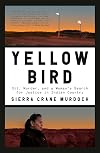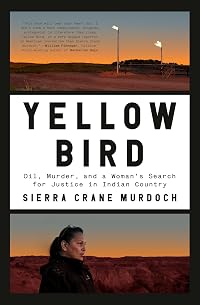
Yellow Bird: Oil, Murder, and a Woman's Search for Justice in Indian Country
by Sierra Crane Murdoch
On This Page
Description
"An award-winning author investigates the entangled history of her Jewish ancestors' land in South Dakota and the Lakota, who were forced off that land by the United States government. "A brilliantly conceived family history, one that places questions of responsibility and atonement at the center of the conversation about America's political future."--the Whiting Foundation. Growing up, Rebecca Clarren only knew the major plot points of her tenacious immigrant family's origins. Her show more great-great-grandparents, the Sinykins, and their six children fled antisemitism in Russia and arrived in the United States at the turn of the 20th century, ultimately settling on a 160-acre homestead in South Dakota. Over the next few decades, despite tough years on a merciless prairie and multiple setbacks, the Sinykins became an American immigrant success story. What none of Clarren's ancestors ever mentioned was that their land, the foundation for much of their wealth, had been cruelly taken from the Lakota by the United States government. By the time the Sinykins moved to South Dakota, America had broken hundreds of treaties with hundreds of Indigenous nations across the continent, and the land that had once been reserved for the seven bands of the Lakota had been diminished, splintered, and handed for free, or practically free, to white settlers. In The Cost of Free Land, Clarren melds investigative reporting with personal family history to reveal the intertwined stories of her family and the Lakota, and the devastating cycle of loss of Indigenous land, culture, and resources that continues today. With deep empathy and clarity of purpose, Clarren grapples with the personal and national consequences of this legacy of violence and dispossession. What does it mean to survive oppression only to perpetuate and benefit from the oppression of others? By shining a light on the people and families tangled up in this country's difficult history, The Cost of Free Land invites readers to consider their own culpability and what, now, can be done"-- show lessTags
Recommendations




Member Reviews
This book touched my very heart. I have long seen the U.S tribal peoples as the true Children of Mother Earth. That they still remain, a reference to the PBS series, is a testament to them as Her Treasured People. Not one promise made to them by the US Government has gone unbroken. They are treated as irrelevant by companies seeking to gain access, and not fair access, to their natural mineral resources. When white conservatives whine about "cancel culture", I roll my eyes. If you really want to know what cancel culture looks like, learn the real history of tribal peoples in the US up to, and including, the present.
Lissa Yellow Bird is the stuff of which heroes are made. Overcoming her personal history, cleaning up her life, she started show more down a troubled, winding, and broken road to find the truth of what happened to Kristopher "KC" Clarke, a young white oil worker. No one seemed to care that no one knew where Clarke had gone, and few people were actively looking for him. Was it because he disappeared from the "res" and that meant he didn't matter?
Finding him mattered to Lissa. She had to work against those who should have been helping her. Time and again she was turned away as though a buzzing mosquito they hoped would just go away. There were times when she and her children were in danger from people trying to stop her. Her methods were immensley creative. Ultimately she learned what happened to Clarke and where he was. Her actions brought down corrupt officials, native and white, and corrupt businesses, white and native. But this did not end Lissa's fight. As others learned of her fight for Clarke, they asked her help in finding their children, lost from home. Her fight has brought to light the horrible statistic of tribal women gone missing. Lissa continues her battle to keep working against this problem and to help find these women. That is what makes her a hero. show less
Lissa Yellow Bird is the stuff of which heroes are made. Overcoming her personal history, cleaning up her life, she started show more down a troubled, winding, and broken road to find the truth of what happened to Kristopher "KC" Clarke, a young white oil worker. No one seemed to care that no one knew where Clarke had gone, and few people were actively looking for him. Was it because he disappeared from the "res" and that meant he didn't matter?
Finding him mattered to Lissa. She had to work against those who should have been helping her. Time and again she was turned away as though a buzzing mosquito they hoped would just go away. There were times when she and her children were in danger from people trying to stop her. Her methods were immensley creative. Ultimately she learned what happened to Clarke and where he was. Her actions brought down corrupt officials, native and white, and corrupt businesses, white and native. But this did not end Lissa's fight. As others learned of her fight for Clarke, they asked her help in finding their children, lost from home. Her fight has brought to light the horrible statistic of tribal women gone missing. Lissa continues her battle to keep working against this problem and to help find these women. That is what makes her a hero. show less
Lissa Yellow Bird is incredible. Her story, told through the lens of a murdered white man (KC Clarke) on a reservation in North Dakota, is powerful. She rose above the chaos in her life to attempt to reduce the chaos for others by assisting them in organizing searches and finding their loved ones.
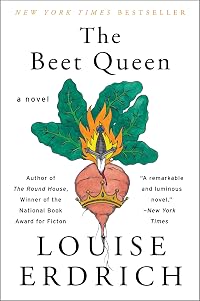
While the crimes committed by James Henrikson (etc) are central to this story, it is truly all about Lissa Yellow Bird—her personal struggle, her family, the history of her people—it is biography and Native American history woven together with corrupt capitalism and greedy men twisted throughout. I was reminded of novels by one of my favorite authors, Louise Erdrich. Lissa seeing spirits reminded me of Tookie in The Sentence, and, in show more general, murder and crime in North Dakota reminded me of The Plague of Doves and The Round House. show less
While the crimes committed by James Henrikson (etc) are central to this story, it is truly all about Lissa Yellow Bird—her personal struggle, her family, the history of her people—it is biography and Native American history woven together with corrupt capitalism and greedy men twisted throughout. I was reminded of novels by one of my favorite authors, Louise Erdrich. Lissa seeing spirits reminded me of Tookie in The Sentence, and, in show more general, murder and crime in North Dakota reminded me of The Plague of Doves and The Round House. show less
While Yellow Bird in part is an exploration of the disappearance and likely murder of a truck driver during the Bakken oil boom, the "search for justice" of the book's subtitle is actually more expansive than that. Sierra Crane Murdoch recounts the determined efforts of Lissa Yellow Bird, an Arikara woman living on the Fort Berthold Reservation, to find the missing man, and interweaves that story with a look at Yellow Bird's life as a recovering addict and single mother, and the corrosive and corrupting effects of the oil industry and U.S. government policy on Native communities.
This makes for a lot of ground to cover even in a book of this length. It sprawls a little, and there were still things I didn't feel I had quite a clear grasp show more on by the time I finished reading, such as what daily life is like at Fort Berthold. However, Yellow Bird makes for a really compelling central figure: vivid, flawed, determined. Getting to see this case through her eyes was absorbing, and I'd recommend the book to anyone interested in stories about the intersection of Indigenous rights and environmental justice in contemporary North America. show less
This makes for a lot of ground to cover even in a book of this length. It sprawls a little, and there were still things I didn't feel I had quite a clear grasp show more on by the time I finished reading, such as what daily life is like at Fort Berthold. However, Yellow Bird makes for a really compelling central figure: vivid, flawed, determined. Getting to see this case through her eyes was absorbing, and I'd recommend the book to anyone interested in stories about the intersection of Indigenous rights and environmental justice in contemporary North America. show less
A fascinating mix of true crime, feature journalism on the Bakken oil boom, and biography of Lissa Yellow Bird, member of the Mandan, Hidatsa, and Arika Nation, who gets out of prison for drugs, and seemingly randomly becomes single-mindedly obsessed with solving the disappearance of a young white man working in the oil industry on her reservation. Fascinating on so many levels.
This was meticulously written. As a journalist, Murdoch became interested in the murder of a white man who had come to the North Dakota Reservation during the oil boom. What impressed me most that she was able to treat Lissa Yellow Bird with such integrity. Lissa’s troubled past with drugs could easily be dismissed by many, but not Murdoch. Yellow Bird’s story of how she became obsessed with the murder of this white man shows such dogged determination. Her ability to work “undercover” on Facebook to help solve the problem, her ability to keep track of all the threads she had to follow as she searched and examined evidence marks Yellow Bork as very special person.
Sierra Crane Murdoch went to the oilfields of North Dakota to report on crime and stumbled on a crimesolver. When Lissa Yellow Bird, a recovering addict, returned to her reservation after prison, as part of her rehabilitation she ended up putting her criminal skills—fast talking*, craftiness, persistence, bravery—to legitimate use finding missing persons. This book tells the story of her first case, the search for oilfield worker Kristopher Clarke, and it also ends up being the story of Lissa's life and recovery. Lissa is a natural protagonist, with an outsize personality and heart, and Sierra Crane Murdoch makes her story into a compelling read. There is a ton of reporting here, and it's all fascinating, but the fact that it tends show more to be organized by the person telling it rather than chronologically makes the timeline hard to follow in places. Still, this book is great and I recommend it highly.
*I first heard of Lissa on this podcast, which showcases her phenomenal phone skills. Highly recommend. show less
*I first heard of Lissa on this podcast, which showcases her phenomenal phone skills. Highly recommend. show less
Yellow Bird : Oil, Murder, and a Woman's Search for Justice in Indian Country, written and read by Sierra Crane Murdoch
There are two books out, with similar titles. One is a novel about the Holocaust, “The Yellow Bird Sings”, the other one is this one which is described as a true story of crime on the Indian Reservation. It is, however, more of a story about the woman, Lissa Yellow Bird, who is part of the Arikara nation. Lissa can only be described as obsessed with solving the mystery of the disappearance of Kristopher “KC” Clarke a white man who worked for an oil company on The Berthold Indian Reservation in North Dakota. The author, Sierra, who is white, and Lissa , who is Native American, traverse both worlds as they show more investigate crime and injustice on the reservation. Neither one of the women is either welcome nor comfortable, in both worlds, though the two of them get along perfectly well, proving that differences are not always hard to overcome.
The book is long and has an over abundance of characters. The time line fluctuates forward and back to impart information, but it is often confusing. The author is narrating the book and her voice is neither mellifluous nor resonant, but rather it is raspy and rough, leaving a lot to be desired. I recommend this book in a print edition.
The author and Lissa maintain a relationship for eight years until pretty much the time that Sierra completes the book. She writes the book from Lissa’s point of view. Lissa returned to her reservation after being released from prison. She served time on drug charges and is a recovering addict with five children. She has never been married. She discovers, upon her return, that her home, the reservation, has changed. The people have been convinced by unscrupulous oil company employees, some of whom are Native Americans, to lease their land at less than its real value. The oil companies are thriving, and although the terms may have been unfair, many of the Indians who participated are thriving as well. On the down side, many are now also addicted to drugs and alcohol, and have lost their Native values, having been corrupted by “the white man”..
When Lissa learns of the disappearance of KC, she is completely overwhelmed with the idea of finding out what happened to him, and she often takes time off from her welding job to investigate it, eventually leading to her being fired. Still, her input is invaluable, since she has an inner instinct which helps her in the investigation. She is often able to discern facts and clues intuitively, which others fail to see and often overlook. She is quite spiritual. The Indians in charge have maintained little oversight when it comes to the oil companies, except when it comes to lining their own pockets. Some have been embezzling. Lissa is thwarted by them and by the U.S. regulations, as the investigation takes place, because the rules concerning jurisdiction are confusing and often fail the Indian community.
When the oil business suffers a setback, with lower prices, nearing $50/barrel, the Indians begin to realize that they have been manipulated and robbed by some of the oil companies and/or employees. They have been defrauded. When bodies begin to pile up, the situation grows worse. As the story develops, the oppression of the various tribes by governmental restrictions and regulations and unscrupulous dealers and employees illustrates the oppression of the Native American community by the “white man”, oppression that has largely been sanctioned by the American government for years. (One has to wonder what the effect of the Covid-19 virus is having on their economy today with oil reaching historic lows, and at one time actually going negative, below $1/barrel.)
The book highlights the differences that exist between the world of the United States, and the world that the United States government has created for the Native American Indians, whittling down their power, their numbers, and their influence, slowly, subtly, over the years, until their lives are without a system of justice that is uniform. Often the systems are in conflict with each other, allowing for cover-ups and a lack of positive solutions or resolution to criminal activity, and even murder.
Greed and selfishness, coupled with a predilection for crime, create a perfect storm that enabled corruption to rise and thrive. If the reader gets nothing else out of the book, he/she will surely recognize that the continued abuse of the Native American and their communities, by the United States government, without any adequate recompense to the injured parties for that behavior, or change in that abusive behavior, is an affront to the dignity and to the rights of the Native Americans.
Persistence, perseverance and courage enabled this story to be written. Intense research over several years evolved into a multidimensional investigation expanding the book from a murder investigation to a general awareness of the systematic manipulation of the tribes, to weaken them and wipe out their culture and heritage. The cast of characters is odd, the mystery is difficult to solve, but the scariest part of the book is that it is non-fiction. show less
There are two books out, with similar titles. One is a novel about the Holocaust, “The Yellow Bird Sings”, the other one is this one which is described as a true story of crime on the Indian Reservation. It is, however, more of a story about the woman, Lissa Yellow Bird, who is part of the Arikara nation. Lissa can only be described as obsessed with solving the mystery of the disappearance of Kristopher “KC” Clarke a white man who worked for an oil company on The Berthold Indian Reservation in North Dakota. The author, Sierra, who is white, and Lissa , who is Native American, traverse both worlds as they show more investigate crime and injustice on the reservation. Neither one of the women is either welcome nor comfortable, in both worlds, though the two of them get along perfectly well, proving that differences are not always hard to overcome.
The book is long and has an over abundance of characters. The time line fluctuates forward and back to impart information, but it is often confusing. The author is narrating the book and her voice is neither mellifluous nor resonant, but rather it is raspy and rough, leaving a lot to be desired. I recommend this book in a print edition.
The author and Lissa maintain a relationship for eight years until pretty much the time that Sierra completes the book. She writes the book from Lissa’s point of view. Lissa returned to her reservation after being released from prison. She served time on drug charges and is a recovering addict with five children. She has never been married. She discovers, upon her return, that her home, the reservation, has changed. The people have been convinced by unscrupulous oil company employees, some of whom are Native Americans, to lease their land at less than its real value. The oil companies are thriving, and although the terms may have been unfair, many of the Indians who participated are thriving as well. On the down side, many are now also addicted to drugs and alcohol, and have lost their Native values, having been corrupted by “the white man”..
When Lissa learns of the disappearance of KC, she is completely overwhelmed with the idea of finding out what happened to him, and she often takes time off from her welding job to investigate it, eventually leading to her being fired. Still, her input is invaluable, since she has an inner instinct which helps her in the investigation. She is often able to discern facts and clues intuitively, which others fail to see and often overlook. She is quite spiritual. The Indians in charge have maintained little oversight when it comes to the oil companies, except when it comes to lining their own pockets. Some have been embezzling. Lissa is thwarted by them and by the U.S. regulations, as the investigation takes place, because the rules concerning jurisdiction are confusing and often fail the Indian community.
When the oil business suffers a setback, with lower prices, nearing $50/barrel, the Indians begin to realize that they have been manipulated and robbed by some of the oil companies and/or employees. They have been defrauded. When bodies begin to pile up, the situation grows worse. As the story develops, the oppression of the various tribes by governmental restrictions and regulations and unscrupulous dealers and employees illustrates the oppression of the Native American community by the “white man”, oppression that has largely been sanctioned by the American government for years. (One has to wonder what the effect of the Covid-19 virus is having on their economy today with oil reaching historic lows, and at one time actually going negative, below $1/barrel.)
The book highlights the differences that exist between the world of the United States, and the world that the United States government has created for the Native American Indians, whittling down their power, their numbers, and their influence, slowly, subtly, over the years, until their lives are without a system of justice that is uniform. Often the systems are in conflict with each other, allowing for cover-ups and a lack of positive solutions or resolution to criminal activity, and even murder.
Greed and selfishness, coupled with a predilection for crime, create a perfect storm that enabled corruption to rise and thrive. If the reader gets nothing else out of the book, he/she will surely recognize that the continued abuse of the Native American and their communities, by the United States government, without any adequate recompense to the injured parties for that behavior, or change in that abusive behavior, is an affront to the dignity and to the rights of the Native Americans.
Persistence, perseverance and courage enabled this story to be written. Intense research over several years evolved into a multidimensional investigation expanding the book from a murder investigation to a general awareness of the systematic manipulation of the tribes, to weaken them and wipe out their culture and heritage. The cast of characters is odd, the mystery is difficult to solve, but the scariest part of the book is that it is non-fiction. show less
Members
- Recently Added By
Lists

Books Read in 2023
5,638 works; 147 members

Indigenous America Reader
145 works; 12 members
Author Information
1 Work 437 Members
Awards and Honors
Awards
Distinctions
Common Knowledge
- Original publication date
- 2020-02-25
- People/Characters
- Lissa Yellow Bird; Rick Arey; Jill Williams; Micah Yellow Bird; Tex Hall; James Henrikson (show all 21); Tesha Fredericks; Percy Yellow Bird; Judd Parker; Robert Clarke; Shauna Yellow Bird; Sarah Creveling; Darrick Trudell; Doug Carlile; Kristopher Clarke; Obie Yellow Bird; Tim Suckow; Steve Kelly; Robert Delao; Nathan Sanchez; Peyton Martin
- Important places
- North Dakota, USA; Fort Berthold Reservation, North Dakota, USA; Badlands, North Dakota, USA
- Dedication
- For my family
- First words
- A man once told me of how he dug up the bones of his relatives and held them in his hands.
- Last words
- (Click to show. Warning: May contain spoilers.)This was her burden; to bring up their bodies, to let go their spirits, to bury their bones again.
- Blurbers
- Finnegan, William; Treuer, David; Monroe, Rachel; Conover, Ted; McKibben, Bill
- Canonical DDC/MDS
- 364.1523092
Classifications
- Genres
- General Nonfiction, Nonfiction, History, Biography & Memoir
- DDC/MDS
- 364.1523092 — Society, government, & culture Social problems and social services Crime Criminal offenses Offenses against the person Homicide Murder History, geographic treatment, biography Biography
- LCC
- HV6762 .U5 .M78 — Social sciences Social pathology. Social and public welfare. Criminology Social pathology. Social and public welfare. Criminology Crimes and offenses
- BISAC
Statistics
- Members
- 437
- Popularity
- 70,478
- Reviews
- 18
- Rating
- (3.72)
- Languages
- English
- Media
- Paper, Audiobook, Ebook
- ISBNs
- 6
- ASINs
- 2