On This Page
Description
Setting off from New York Harbor aboard the boat he named Nikawa ("river horse" in Osage), in hopes of entering the Pacific near Astoria, Oregon, William Least Heat-Moon and his companion, Pilotis, struggle to cover some five thousand watery miles-more than any other cross-country river traveler has ever managed-often following in the wakes of our most famous explorers, from Henry Hudson to Lewis and Clark. En route, the voyagers confront massive floods, submerged rocks, dangerous weather, show more and their own doubts about whether they can complete the trip. But the hard days yield incomparable pleasures: strangers generous with help and eccentric tales, landscapes unchanged since Sacagawea saw them, riverscapes flowing with a lively past, and the growing belief that efforts to protect our lands and waters are beginning to pay off. show lessTags
Recommendations




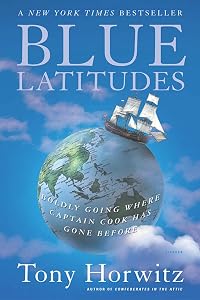
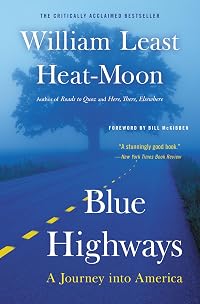

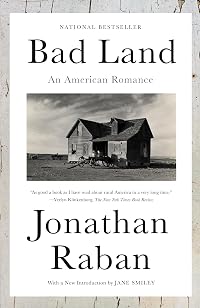
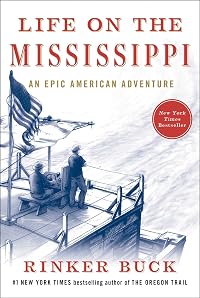
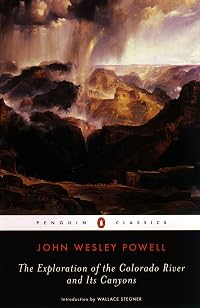
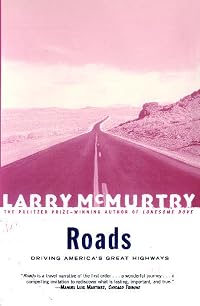




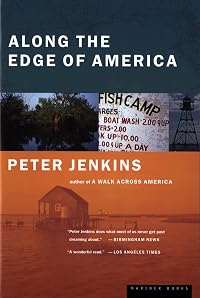


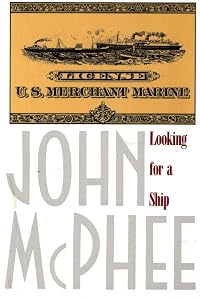
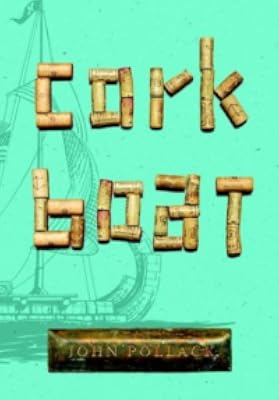
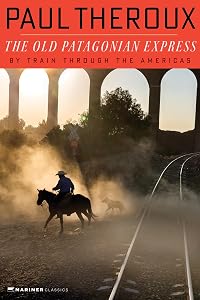



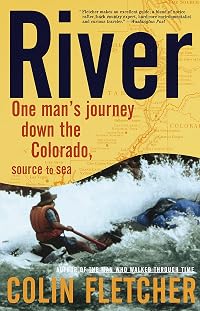





Member Recommendations

John_Vaughan While these two journey are opposite in compass headings (Least Heat Moon from East to West and Raban from North to South) they share the sheer joy of the trips and the awesome detailing and description of places and peoples.


Member Reviews
This was a chance find in a secondhand bookshop: I didn't know anything about the author, but the idea of travelling across the USA by boat sounded daft enough to make an interesting book, so I thought I'd give it a try. It turns out that William Least Heat Moon is a Great American Individualist in everything including his prose style. He specialises in recycling old words that have lain forgotten in lexicographers’ junk bins since the last time a Victorian poet needed them to make a line scan or an eighteenth-century geographer lost for an English term copied them from a French gazetteer. And he has a very particular way of getting syntax into a state where it always looks subtly wrong, but you can never quite put your finger on why. show more Apparently he is or was an English professor, which probably explains a lot.
The odd thing is that his strange way of writing, so irritating when you first encounter it, seems to grow on you: after the first three or four chapters, I was really enjoying it. Technically it's terrible, but it has such warmth and energy and personality that, whilst you wouldn't want to play Scrabble with him, you do rather get to like the author, groaning bad-pun-style whenever he comes up with a ridiculously obscure way of saying something very simple.
The boat-trip is quite fun too, and WLHM’s encyclopaedic knowledge of the geography and history of the USA combines very well with his sharp eye for the damage that people have done to its “wilderness” environments. show less
The odd thing is that his strange way of writing, so irritating when you first encounter it, seems to grow on you: after the first three or four chapters, I was really enjoying it. Technically it's terrible, but it has such warmth and energy and personality that, whilst you wouldn't want to play Scrabble with him, you do rather get to like the author, groaning bad-pun-style whenever he comes up with a ridiculously obscure way of saying something very simple.
The boat-trip is quite fun too, and WLHM’s encyclopaedic knowledge of the geography and history of the USA combines very well with his sharp eye for the damage that people have done to its “wilderness” environments. show less
The last book in Heat-Moon's travel trilogy, read in a buddy read with my dad. Perhaps my least favorite of the three, though while it is poorer in the charming glimpses into the lives of the strangers that Blue Highways has, at least it carries less of Heat-Moons women baggage.
The conceit of this book is that it is the record of Heat-Moon's attempt to travel across the U.S., from Atlantic to Pacific, in a single season, traveling as many miles by river as humanly possible. (Some stretches, particularly at the continental divide, are simply not passable by boat.) This trip, being by water rather than road, affords rather fewer chances for Heat-Moon to run into and get stories out of strangers, particularly as most American cities have show more turned their backs on their rivers (both literally and figuratively), pluse the conditions of traveling by river are certainly more variable than traveling by road. So this has a much higher travel:people stories ratio. Of course, while there are riveting and hair-raising stretches, so mcuh of traveling by river is monotonous. And for long portions of the trip, Heat-Moon's only company is Pilotis, a character we never really fully get a grasp on, and who has a kind of shorthand with Heat-Moon which is sometimes very clever, but often brusque.
Plus, there is the fact that a cross-country road trip sounds romantic. I spent much of Blue Highways wishing that I could justify going on a similar trip. But for this book? While there were isolated locations I would love to go see, I don't know who would POSSIBLY read this book and think that a coast-to-coast river trip sounded like a good idea. Especially not in a single season.
But there are things I have come to expect from Heat-Moon: unexpected vocabulary (orzizzazz?), unique reflections, some really beautiful passages of prose, enough run-ins with truly extraordinary people to make one suspect that perhaps everyone is extraordinary, and reason to believe that after finishing another of his books, that one is left knowing America immeasurably better.
These books are a gift. show less
The conceit of this book is that it is the record of Heat-Moon's attempt to travel across the U.S., from Atlantic to Pacific, in a single season, traveling as many miles by river as humanly possible. (Some stretches, particularly at the continental divide, are simply not passable by boat.) This trip, being by water rather than road, affords rather fewer chances for Heat-Moon to run into and get stories out of strangers, particularly as most American cities have show more turned their backs on their rivers (both literally and figuratively), pluse the conditions of traveling by river are certainly more variable than traveling by road. So this has a much higher travel:people stories ratio. Of course, while there are riveting and hair-raising stretches, so mcuh of traveling by river is monotonous. And for long portions of the trip, Heat-Moon's only company is Pilotis, a character we never really fully get a grasp on, and who has a kind of shorthand with Heat-Moon which is sometimes very clever, but often brusque.
Plus, there is the fact that a cross-country road trip sounds romantic. I spent much of Blue Highways wishing that I could justify going on a similar trip. But for this book? While there were isolated locations I would love to go see, I don't know who would POSSIBLY read this book and think that a coast-to-coast river trip sounded like a good idea. Especially not in a single season.
But there are things I have come to expect from Heat-Moon: unexpected vocabulary (orzizzazz?), unique reflections, some really beautiful passages of prose, enough run-ins with truly extraordinary people to make one suspect that perhaps everyone is extraordinary, and reason to believe that after finishing another of his books, that one is left knowing America immeasurably better.
These books are a gift. show less
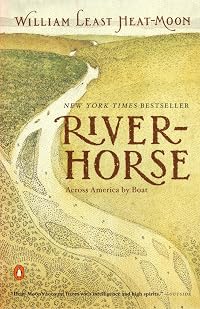
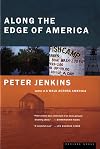
The author goes by the dignified name of William Least Heat-Moon, and the front cover of his book shows a tiny speck of a boat puttering serenely on a river that meanders through the green hills. I don’t think I can be entirely faulted for anticipating a read that was more sedate, less angry, and less cynical than this one turned out to be.
Some miscellaneous comments:
1) There’s no denying that the author is a very talented writer.
2) I got tired of his profanity pretty quickly.
3) The book’s dedication makes it sound like the copilot was a composite of seven different people. If so, they all had pretty much the same personality.
4) “The Photographer” is one of the main figures, but very few photographs of any worth made it into show more the book.
5) The author despises the partying frat boys he encounters along his way, but he and his friends sometimes act like superannuated frat boys themselves.
6) The author is angry about the environmental state of the country, and he’s not shy about sniping at those he feels are to blame. I doubt that he turned very many of his readers Green. I think he would have been more successful if he had either molded his anger into a cogent argument or had very clearly led by example. What was the environmental cost of his journey? How would he possibly have made this journey if engineers had left the wilderness alone? That last question is actually posed to him by someone he meets on his voyage. His response was weak, I thought. show less
Some miscellaneous comments:
1) There’s no denying that the author is a very talented writer.
2) I got tired of his profanity pretty quickly.
3) The book’s dedication makes it sound like the copilot was a composite of seven different people. If so, they all had pretty much the same personality.
4) “The Photographer” is one of the main figures, but very few photographs of any worth made it into show more the book.
5) The author despises the partying frat boys he encounters along his way, but he and his friends sometimes act like superannuated frat boys themselves.
6) The author is angry about the environmental state of the country, and he’s not shy about sniping at those he feels are to blame. I doubt that he turned very many of his readers Green. I think he would have been more successful if he had either molded his anger into a cogent argument or had very clearly led by example. What was the environmental cost of his journey? How would he possibly have made this journey if engineers had left the wilderness alone? That last question is actually posed to him by someone he meets on his voyage. His response was weak, I thought. show less
In his most ambitious journey ever, William Least Heat-Moon sets off aboard a small boat named Nikawa ("river horse" in Osage) from the Atlantic at New York Harbor in hopes of entering the Pacific near Astoria, Oregon. He and his companion, Pilotis, struggle to cover some 5,000 watery miles, often following in the wakes of our most famous explorers, from Henry Hudson to Lewis and Clark.
En route, the voyagers confront massive floods, dangerous weather, and their own doubts about whether they can complete the trip. But the hard days yield incomparable pleasures: generous strangers, landscapes untouched since Sacajawea saw them, riverscapes flowing with a lively past, and the growing belief that efforts to protect our lands and waters are show more beginning to pay off.
Teeming with humanity, humor, and high adventure, River-Horse is an unsentimental and original arteriogram of our nation at the millennium. show less
En route, the voyagers confront massive floods, dangerous weather, and their own doubts about whether they can complete the trip. But the hard days yield incomparable pleasures: generous strangers, landscapes untouched since Sacajawea saw them, riverscapes flowing with a lively past, and the growing belief that efforts to protect our lands and waters are show more beginning to pay off.
Teeming with humanity, humor, and high adventure, River-Horse is an unsentimental and original arteriogram of our nation at the millennium. show less
I have previously enjoyed a couple of books written by William Least Heat Moon and found him to be a talented observer of life as he travelled across America. With River Horse, he once again crosses America but this time by water. The timing of his journey is the late 1990s and I cringe to think of how population expansion, industry growth and climate change has altered these rivers today.
In this outing the author undertakes the crossing of Continental North America from New York State all the way to where the mouth of the Columbia River meets the Pacific Ocean. He only had a few portages to make as he jumped from various waterways. The actual trip took four months to accomplish with many more months taken up with the planning. Although show more the authors’ evocative descriptions and thoughtful ways are still very much in evidence, I wasn’t as taken with this book as I had been with his Blue Highways. I suspect this was because although I could well envision myself on a road trip, travelling the smaller highways of America, a journey travelling by small boat was next to impossible for me to picture. River Horse also takes place in much more isolated areas and often he only had his co-pilot to talk to. But he does give the reader a clear picture of the breathtaking scenery he encountered and interesting stories of the past history of the area he was moving through. I cheered when he finally reached the Pacific.
Although not as hard hitting as Blue Highways for me, River Horse is still a very good read by a well-seasoned travel writer and definitely gives one the itch to get out and explore one’s country. show less
In this outing the author undertakes the crossing of Continental North America from New York State all the way to where the mouth of the Columbia River meets the Pacific Ocean. He only had a few portages to make as he jumped from various waterways. The actual trip took four months to accomplish with many more months taken up with the planning. Although show more the authors’ evocative descriptions and thoughtful ways are still very much in evidence, I wasn’t as taken with this book as I had been with his Blue Highways. I suspect this was because although I could well envision myself on a road trip, travelling the smaller highways of America, a journey travelling by small boat was next to impossible for me to picture. River Horse also takes place in much more isolated areas and often he only had his co-pilot to talk to. But he does give the reader a clear picture of the breathtaking scenery he encountered and interesting stories of the past history of the area he was moving through. I cheered when he finally reached the Pacific.
Although not as hard hitting as Blue Highways for me, River Horse is still a very good read by a well-seasoned travel writer and definitely gives one the itch to get out and explore one’s country. show less
I enjoyed this excellent account of the author's coast to coast journey across America by boat. Very well written with vivid descriptions of the journey.
I liked the idea of the book, and the author is a good storyteller, but I have to admit, two thirds of the way through I was suffering from river-story fatigue. The chapter-a-day thing eventually started wearing me down, and indeed the author admits as much when he condenses two longer runs into little more than slightly cooked notes which are much less engaging than the rest of the story. One more quibble, the author seems to have a love of obscure words--I don't remember ever having to look up so many in a non-technical book. The ending is, to put it mildly, anticlimactic. It may just be that I found the story too long and too repetitive. I stuck with it stubbornly to the end, as did the author, and I certainly learned a lot about show more American rivers. Have a book of his shorter pieces,"Here,There,Elsewhere," which I will give a try. Haven't read the book he's famous for but it's on my list too. show less
Members
- Recently Added By
Lists

Best of Travel Narratives
142 works; 28 members

Best of Travel Narratives (Rivers)
22 works; 1 member

Books Read in 2021
5,361 works; 114 members
Author Information

20+ Works 6,722 Members
William Least Heat-Moon was born of English-Irish-Osage ancestry in Kansas City, Missouri. He holds a doctorate in English and a bachelor's degree in photojournalism from the University of Missouri.
Awards and Honors
Awards
Distinctions
Series

Common Knowledge
- Canonical title
- River-Horse
- Original title
- River-Horse. The Logbook of a Boat Across America
- Original publication date
- 1999
- Important places
- Mississippi River, USA; Missouri River, USA; Columbia River
- Dedication
- My Lotic Mates
Without a copilot, there would have been no voyage,
and so this book is for Pilotis who was these seven:
Motier Duquince Davis, Robert McClure Lindholm,
Linda Jane Barton, Jack David LaZebnik,
Buchanan,
Steven Edward Ratiner. - First words
- If you want the specifications: she was made of fiberglass laminate over an end-grain balsa core two inches thick, with a flat hull aft a V-shaped bow; just under twenty-two feet long and about eight in beam, approximately se... (show all)venteen hundred pounds empty, with an eight-inch minimum draft and about thirty inches when motored and loaded; called a C-Dory and built near Seattle in January 1995.
- Last words
- (Click to show. Warning: May contain spoilers.)Then I poured the stream into the Pacific and went back to the wheel of our river horse, and I turned her toward home.
Classifications
- Genres
- Travel, Nonfiction, General Nonfiction, Biography & Memoir
- DDC/MDS
- 917.304929 — History & geography Geography & travel Geography of and travel in North America United States subdivisions and modified standard subdivisions Travel; guidebooks 1901- 1953-2001 1993-2001
- LCC
- E169 .Z82 .H43 — History of the United States United States General
- BISAC
Statistics
- Members
- 1,136
- Popularity
- 22,314
- Reviews
- 14
- Rating
- (3.62)
- Languages
- English, Italian
- Media
- Paper, Audiobook, Ebook
- ISBNs
- 15
- UPCs
- 1
- ASINs
- 10