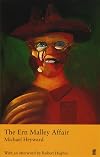
The Ern Malley Affair
by Michael Heyward
On This Page
Description
In October 1943, the young and successful Australian literary editor, Max Harris, received a package of poems by a recently deceased poet, Ern Malley, forwarded to him by his sister Ethel. Convinced he had hit upon the work of a Modernist genius, a poet of whom Australia could be proud, Harris published Malley's poems in his magazine, Angry Penguins. With copies despatched around the world and grand claims surrounding publication, Harris had no idea of the events that lay in store; the show more consequences of which would haunt the literary landscape for generations. Michael Heyward's compelling account of perhaps the most famous literary hoax of the twentieth century reproduces in their entirety, the seventeen poems published as 'The Darkening Ecliptic' in the magazine, Angry Penguins. 'As Michael Heyward explains in his exceptional book . . . the Ern Malley affair dramatises, more luridly than any other literary episode, the question which is in the minds of the audience of any work of modern art; the question of whether what they're being invited to admire is, in fact, in some sense, fake.' John Lanchester, Guardian 'A thoroughly researched narrative of the whole saga . . . tells the story very well indeed, with wit and style.' Ian Hamilton, Times Literary Supplement show lessTags
Recommendations



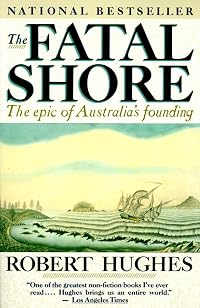
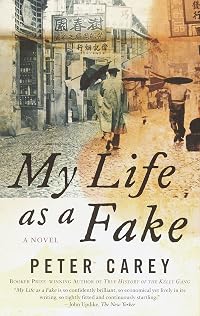

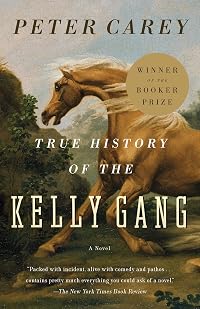

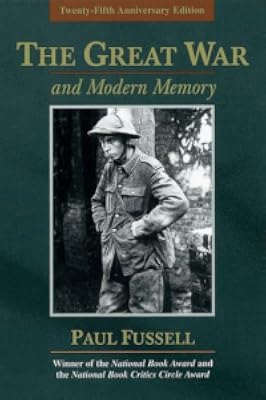


















Member Recommendations
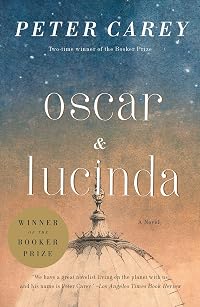
x_hoxha The Ern Malley Affair was the inspiration for Carey's novel.
Member Reviews
The most famous Australian poet, leaving aside the Banjos and Lawson, is Ern Malley, but Ern Malley never existed. This is the kind of thing that could only happen in Australia: everywhere has its literary hoaxes, but usually the hoax isn't better than the 'real' work of the hoaxers or the real work of the hoaxed.
Heyward does a great job telling the story, though the legal wranglings at the end of the book (takeaway: forties Australia was a horrible time and place) are much less fun than the development of the hoax and his description of the personalities involved. Cliche alert: it reads like a thriller. Or so I imagine, since I haven't read a thriller for some time. Anyway, I couldn't put it down.
The book lacks one thing: a real show more engagement with the intellectual and artistic problems a successful hoax creates. The editor who accepted the Malley poems argued that the hoaxers, freed from the constraints under which they usually wrote, wrote better than they could have done otherwise: in other words, standard mid-century surrealist/psychoanalytic nonsense. Heyward suggests that the strange quality of the Malley poems is caused by the fact that there was no single Malley; that there are so many different Malleys, in other words, standard late-century postmodern nonsense.
I think the real issue we have to face is: what sort of a literary movement would *not* be subject to hoaxes like this? The neo-classicists were fooled by 'Ossian,' the Romantics fooled by almost everything, and so on. There was never a literature that could not be parodied with great success. But modernism was and is more easily open to it, simply because there are no 'rules' for success in modernist art. This is a problem we're still dealing with. Some people try to impose rigid rules (James Wood), some people revel thoughtlessly in their absence, and the best authors, I suspect, are the ones who can really work through the incredibly strange situation of a high art form that lacks established criteria. I certainly haven't done so. show less
Heyward does a great job telling the story, though the legal wranglings at the end of the book (takeaway: forties Australia was a horrible time and place) are much less fun than the development of the hoax and his description of the personalities involved. Cliche alert: it reads like a thriller. Or so I imagine, since I haven't read a thriller for some time. Anyway, I couldn't put it down.
The book lacks one thing: a real show more engagement with the intellectual and artistic problems a successful hoax creates. The editor who accepted the Malley poems argued that the hoaxers, freed from the constraints under which they usually wrote, wrote better than they could have done otherwise: in other words, standard mid-century surrealist/psychoanalytic nonsense. Heyward suggests that the strange quality of the Malley poems is caused by the fact that there was no single Malley; that there are so many different Malleys, in other words, standard late-century postmodern nonsense.
I think the real issue we have to face is: what sort of a literary movement would *not* be subject to hoaxes like this? The neo-classicists were fooled by 'Ossian,' the Romantics fooled by almost everything, and so on. There was never a literature that could not be parodied with great success. But modernism was and is more easily open to it, simply because there are no 'rules' for success in modernist art. This is a problem we're still dealing with. Some people try to impose rigid rules (James Wood), some people revel thoughtlessly in their absence, and the best authors, I suspect, are the ones who can really work through the incredibly strange situation of a high art form that lacks established criteria. I certainly haven't done so. show less
What could I give this book but a perfect score for the hoax poets James McAuley and Harold Stewart pulled off. A hoax in one hand and in the other the greatest modernist expression Australia has ever produced. Does that make this dada-ist poetry? The story is one of those stranger than fiction fish out of water tales that happen once in a lifetime or perhaps in this case once in all of recorded human history.
That being said, I don't know if Michael Heyward nailed all of the important factors about the story. I honestly would've liked to have seen both Ern Malley authors' other poetry and see for myself what exactly a joke is supposed to look like. After all, I'm sure Tennyson joking would look just like Ezra Pound. It's also show more interesting that this is a trick nobody wants to admit is a trick just as Finnegans Wake is the real deal nobody wants to admit is the real deal. Also, the lives of McAuley and Stewart seem awful anemic in lieu of a rather anti-climatic case against Max Harris for obscenity. I wish it had talked more about the demise of the Angry Penguins itself as I heard it did run into issues outside the case that ultimately ended it over any ramifications thereof. show less
That being said, I don't know if Michael Heyward nailed all of the important factors about the story. I honestly would've liked to have seen both Ern Malley authors' other poetry and see for myself what exactly a joke is supposed to look like. After all, I'm sure Tennyson joking would look just like Ezra Pound. It's also show more interesting that this is a trick nobody wants to admit is a trick just as Finnegans Wake is the real deal nobody wants to admit is the real deal. Also, the lives of McAuley and Stewart seem awful anemic in lieu of a rather anti-climatic case against Max Harris for obscenity. I wish it had talked more about the demise of the Angry Penguins itself as I heard it did run into issues outside the case that ultimately ended it over any ramifications thereof. show less
Ratings
Members
- Recently Added By
Lists

Top Five Books of 2013
1,562 works; 715 members

Books Read in 2013
1,630 works; 51 members

Recommend the 20 best books you've read in the last five years
2,168 works; 601 members

Books Set in Australia.
45 works; 9 members

Pants on fire
27 works; 4 members

Fakes, Forgeries, and Fictitious Authors
112 works; 4 members
Author Information
5+ Works 130 Members
Some Editions
Work Relationships
Contains
Classifications
- Genres
- Literature Studies and Criticism, Nonfiction, Fiction and Literature, Biography & Memoir, History
- DDC/MDS
- 828.91409 — Literature & rhetoric English & Old English literatures English miscellaneous writings English miscellaneous writings 1900- English miscellaneous writings 1900-1999 English miscellaneous writings 1945-1999 Individual authors
- LCC
- PR9619.3 .M264 .Z68 — Language and Literature English English Literature English literature: Provincial, local, etc.
- BISAC
Statistics
- Members
- 117
- Popularity
- 279,013
- Reviews
- 2
- Rating
- (4.05)
- Languages
- English
- Media
- Paper
- ISBNs
- 7
- ASINs
- 1