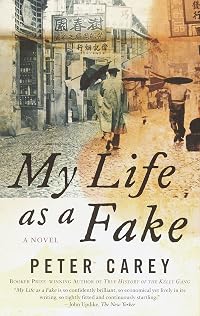
My Life as a Fake
by Peter Carey
On This Page
Description
In steamy, fetid Kuala Lumpur in 1972, Sarah Wode-Douglass, editor of a London poetry journal, meets the mysterious Christopher Chubb. An Australian literary hoaxer, Chubb is carting around a manuscript likely filled with deceit. In this dubious work Sarah recognises a real genius. But whose genius? She is drawn into a fantastic story of imposture, murder, kidnapping and exile, which couldn't be true unless its teller were mad. Or perhaps haunted.My Life as a Fake is a Frankenstein story in show more which what is imagined comes to life and exacts its due. show lessTags
Recommendations












Member Recommendations
PghDragonMan Deception is layered on deception until even the truth looks false.
20
PghDragonMan Fine work from an author under appreciated in the US.
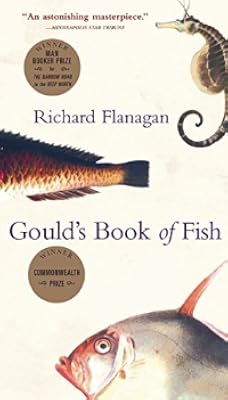
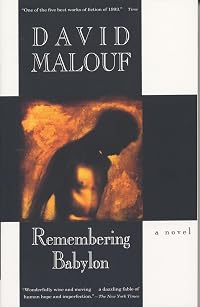
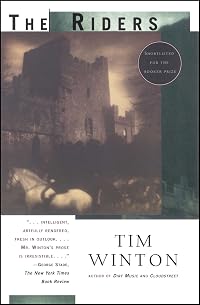
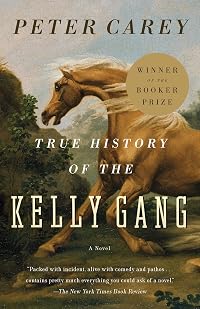
PghDragonMan In reading these two novels, you are never quite sure where the book's defined reality leaves off and the main character's imagination begins.
Member Reviews
Yaratan kim, yaratılan kimdir? Ne edebiyattır, ne değildir? Gerçek nedir, sahte nedir? Genellikle bunlara verecek cevaplarımız var gibidir. Ya tüm bunların birbirine karıştığı, cevapların öyle kolayca verilemediği durumlar, zamanlar yok mudur? Peter Carey işte o gölgeli, hem de koyu gölgeli alanlarda, yaratılanın yaratanı yarattığı o tekinsiz kıyılarda, gerçek ile sahte, edebiyat ile edebiyat olmayan arasındaki gelgitlerde keyifle dolaşıp okuru da o edebiyat adasının her koyunda maceralı bir geziye çıkarıyor. Edebiyat âleminde her daim sahte imzalarla gerçek yapıtlar üretilmiş, camianın direkleri sallanmaya çalışılmış, edebiyat adına korsan gösteriler düzenlenmiştir. İki Booker show more ödüllü Peter Carey de Avustralya'da 1943'te yaşanan Ern Malley Hilesi'nden esinlenerek ve onun temel olay örgüsünü ve şiirlerini kullanarak yarattığı Bob McCorkle Hilesi ile okurunu edebiyat ve edebiyat âlemi üzerine düşündürüyor. Ayrıca yazar, “Zavallıyı seyrettim, yarattığım hilkat garibesini. Yatağın perdesini kaldırdı ve gözlerini, eğer onlara göz denebilirse, üzerime mıhladı” diyen Mary Shelley'e bir selam da çakıyor. Ancak bu kez yaratığın adı Frankenstein değil, Bob McCorkle ya da Cristopher Chubb. Baktığınız yere göre değişir! Bir editör, iki şair Malezya'da Rilke vasıtasıyla milyonda bir gerçekleşebilecek bir karşılaşma yaşarsa ve onları bir araya getiren iyi şiir tutkusu ve arayışı olursa ortaya ne çıkar? Elbette şiir gibi bir roman. Her kafiyesi, her cinası iyi düşünülmüş, dokusu sıkı örülmüş, zekice olduğu kadar eğlenceli, eğlenceli olduğu kadar entelektüel bir eser. show less
London literary magazine editor Sarah agrees to accompany an old family friend, author John Slater, on a trip to Malaysia, where she quite accidentally meets Christopher Chubb - an Australian poet living in shamed exile after a scandal in which he created a hoax poet whose works were published in a high-profile publication. While the trick doesn't seem like that much of an issue in and of itself, the poems were later the subject of court case in which the editor was tried for obscenity and ultimately died in questionable circumstances. But stranger yet is the arrival on the trial scene of a man who claims to be the hoax poet - fitting every description of the imaginary personage. Chubb insists that Sarah must hear the full story and so show more unfolds a tale that spans years and countries, involving all kinds of turmoil, including kidnappings and murder.
This book was inspired in part by the real-life story of Ern Malley, a literary hoax whose creation resulted in a court case. But Carey then diverges from the story by introducing elements of magical realism, most notably the character of Bob McCorkle, the apparently turned-to-real-life fruition of Chubb's creative joke. The storytelling is deceptively simple, appearing to be simply the earnest narration of Sarah but then turning into stories within stories as she hears from Chubb and then learns alternate perspectives from Slater, Chubb's daughter Tina, and Tina's caregiver Mrs. Linn, with the plot unfolding layer after layer. In this way, Carey plays not only with literary conventions but also with themes related to the nature of reality, the reliability of memory, and the elements that go into perception. Some things are deliberately (and I think well so) left vague, so that the reader must decide for him or herself exactly what has transpired and which story to believe - or which parts from each story are to be believed.
The version I had was an audiobook narrated by Susan Lyons, who did an excellent job of conveying a number of emotions and stories passionately while also doing a fantastic job of speaking with the many accents required by the cast of characters presented. I highly recommend this book for a relatively short read that will leave you with plenty of food for thought on a variety of topics. show less
This book was inspired in part by the real-life story of Ern Malley, a literary hoax whose creation resulted in a court case. But Carey then diverges from the story by introducing elements of magical realism, most notably the character of Bob McCorkle, the apparently turned-to-real-life fruition of Chubb's creative joke. The storytelling is deceptively simple, appearing to be simply the earnest narration of Sarah but then turning into stories within stories as she hears from Chubb and then learns alternate perspectives from Slater, Chubb's daughter Tina, and Tina's caregiver Mrs. Linn, with the plot unfolding layer after layer. In this way, Carey plays not only with literary conventions but also with themes related to the nature of reality, the reliability of memory, and the elements that go into perception. Some things are deliberately (and I think well so) left vague, so that the reader must decide for him or herself exactly what has transpired and which story to believe - or which parts from each story are to be believed.
The version I had was an audiobook narrated by Susan Lyons, who did an excellent job of conveying a number of emotions and stories passionately while also doing a fantastic job of speaking with the many accents required by the cast of characters presented. I highly recommend this book for a relatively short read that will leave you with plenty of food for thought on a variety of topics. show less
From the first page Peter Carey captures the reader’s attention and entertains with great writing as he tells the story of hoaxes, madmen, rejections, unfulfilled expectations, fakes and lies. Carey maintains a good pace throughout the book but the story fizzles at the end and left me a little dissatisfied. Nevertheless this is a book worth reading.
The story begins in London where Sarah, the youngest editor of a literary magazine, is somewhat depressed for not having introduced a major work to the world in her 12 years in the job. She is enticed by an old family friend – John Slater, a mediocre poet turned critic still living off the reputation of his first work – to Malaysia.
There, while strolling through a shopping alley Sarah show more spies a western man working in a bike repair shop reading Rilke. Anyone reading Rilke would be interested in her magazine she thought, so she returns to the shop and leaves a copy for him. Quickly he gets in touch with her and we meet Christopher Chubb who considers himself a poet - and who once did submit some work to Sarah’s magazine that was rejected. He shows her one page of his work which he believes is “great” and Sarah is immediately interested. But to see the rest of the work Sarah must hear his story.
From this point the novel is a monologue as Chubb tells his story and Sarah frantically takes notes while John Slater, who knows of Chubb more intimately than he makes out, tries to wrest her away. We learn of Chubb’s hoax some 30year earlier (based on the infamous 1944 Australian Ern Malley hoax) where he tries to embarrass an old school chum who had rejected his works. The editor falls for the hoax but Carey’s story takes a different turn from the original when Weiss is charged with publishing obscenities. Chubb would like to help the editor get off the charge, but during the trial a strange man appears who vaguely resembles a montage photo of Bob McCorkle, the unrecognized Australian working class poet that Chubb created.
The imaginary man becomes real and Chubb is stalked by “McCorkle” who is seeking a full identity from his creator - and eventually a passport. Chubb’s life becomes a nightmare. McCorkle gets his new identity with the help of Chubb’s lover, the woman to whom he may or may not be the father of her newly born daughter, and a friend of hers – who turns out to be John Slater, who had a one-night stand about the time the daughter was conceived. Who is who and who is not start becoming confused.
McCorkle gets custody of the daughter as the mother - a libertine and socialite - is more interested in a party life than motherhood. He flees to South-East Asia where he has little difficulty in attracting benefactors. Enraged, Chubb chases him and spends the next couple of decades tracking him down and reclaiming his daughter.
This story has a Frankenstein element of the creator being haunted by his creation leading to the creator destroying his creation in this story. But as the story unfolds characters and roles become confused, and the issue of truth, lies and deception takes central stage. Is McCorkle the creation of Chubb or is Chubb appropriating McCorkle’s work? Why does John Slater understate his knowledge of Chubb? Is Sarah deceiving herself in her pursuit of a “major work”? Where do facts end and lies begin becomes harder to tell.
Carey has a great way with words and is a good storyteller and these skills compensate for the less than satisfactory ending of this story. Who is the fake? Read and enjoy. show less
The story begins in London where Sarah, the youngest editor of a literary magazine, is somewhat depressed for not having introduced a major work to the world in her 12 years in the job. She is enticed by an old family friend – John Slater, a mediocre poet turned critic still living off the reputation of his first work – to Malaysia.
There, while strolling through a shopping alley Sarah show more spies a western man working in a bike repair shop reading Rilke. Anyone reading Rilke would be interested in her magazine she thought, so she returns to the shop and leaves a copy for him. Quickly he gets in touch with her and we meet Christopher Chubb who considers himself a poet - and who once did submit some work to Sarah’s magazine that was rejected. He shows her one page of his work which he believes is “great” and Sarah is immediately interested. But to see the rest of the work Sarah must hear his story.
From this point the novel is a monologue as Chubb tells his story and Sarah frantically takes notes while John Slater, who knows of Chubb more intimately than he makes out, tries to wrest her away. We learn of Chubb’s hoax some 30year earlier (based on the infamous 1944 Australian Ern Malley hoax) where he tries to embarrass an old school chum who had rejected his works. The editor falls for the hoax but Carey’s story takes a different turn from the original when Weiss is charged with publishing obscenities. Chubb would like to help the editor get off the charge, but during the trial a strange man appears who vaguely resembles a montage photo of Bob McCorkle, the unrecognized Australian working class poet that Chubb created.
The imaginary man becomes real and Chubb is stalked by “McCorkle” who is seeking a full identity from his creator - and eventually a passport. Chubb’s life becomes a nightmare. McCorkle gets his new identity with the help of Chubb’s lover, the woman to whom he may or may not be the father of her newly born daughter, and a friend of hers – who turns out to be John Slater, who had a one-night stand about the time the daughter was conceived. Who is who and who is not start becoming confused.
McCorkle gets custody of the daughter as the mother - a libertine and socialite - is more interested in a party life than motherhood. He flees to South-East Asia where he has little difficulty in attracting benefactors. Enraged, Chubb chases him and spends the next couple of decades tracking him down and reclaiming his daughter.
This story has a Frankenstein element of the creator being haunted by his creation leading to the creator destroying his creation in this story. But as the story unfolds characters and roles become confused, and the issue of truth, lies and deception takes central stage. Is McCorkle the creation of Chubb or is Chubb appropriating McCorkle’s work? Why does John Slater understate his knowledge of Chubb? Is Sarah deceiving herself in her pursuit of a “major work”? Where do facts end and lies begin becomes harder to tell.
Carey has a great way with words and is a good storyteller and these skills compensate for the less than satisfactory ending of this story. Who is the fake? Read and enjoy. show less
A lesson in storytelling. There is a good story here, and some things to think about, especially about poetry, but what really stood out for me was how dynamic the storytelling was. It was fun to read from the very first page.
The inspiration of the story is a real hoax in poetry world of Australia during WWII, where an editor became enraptured with what turned out to be the fictional poet Ern Malley and his fictional life story. Carey's story calls into question the true value of poetry, and looks at the obsession to find a sort of pure poet, an outsider free of the modern prevailing poetry culture, but still a master.
What I admire here is that we aren't told what to think. The story on the pages stays light. It's serves more like a show more jumping off point for pondering the nature of modern poetry and of humanity (and of truth vs. fiction). The implied questions are, perhaps, much deeper.
I should also mention this includes an interesting look at Malaysia during and after WWII.
2009
http://www.librarything.com/topic/68641#1453007 show less
The inspiration of the story is a real hoax in poetry world of Australia during WWII, where an editor became enraptured with what turned out to be the fictional poet Ern Malley and his fictional life story. Carey's story calls into question the true value of poetry, and looks at the obsession to find a sort of pure poet, an outsider free of the modern prevailing poetry culture, but still a master.
What I admire here is that we aren't told what to think. The story on the pages stays light. It's serves more like a show more jumping off point for pondering the nature of modern poetry and of humanity (and of truth vs. fiction). The implied questions are, perhaps, much deeper.
I should also mention this includes an interesting look at Malaysia during and after WWII.
2009
http://www.librarything.com/topic/68641#1453007 show less
Australian talespinner Carey wins points with this affecting and ingenious potboiler about a literary feud gone sour, set in a sinister southeast Asian backwater. These days, of course, it's hard to believe that a hoax concerning poets and their publication in literary journals would merit anything more than a yawn, let alone a career-ending, suicide-inducing succès de scandale; yet such is the bygone literary world that Carey invokes, with a combination of pathos and glamour. The narrative drags a little in the second half, but remains on the whole highly entertaining.
While other reviewers consider this book confusing, I disagree and find it masterful. There are some shifting dialogues, but with one of the character's speech always typically (linguistically) marked, the careful reader should not lose track. An absolutely great read, with a great deal of humour and quite a pinch of horror.
The story is framed by the hunt and wish of a young female editor, Sarah, to discover a great, unknown poet and make a scoop. She stumbles upon Chubb who leads the miserable life of an absolute loser in Kuala Lumpur. Despite her travel companion's attempts to save her from herself and Chubb, whom he seems to know all about, Sarah is sure she's onto her great discovery. Chubb carefully entices her to listen to his show more life story, holding the supposedly great works out as bait.
Chubb is an outcast. In his youth he wrote a pastiche of some poetry of a friend, attributing / publishing those poems under the pseudonym Bob McCorkle. This McCorkle, shows up in flesh and blood, claiming to be the author and starts haunting and causing havoc in Chubb's life. McCorkle kidnaps Chubb's daughter and disappears to southeast Asia, where Chubb eventually tracks him down, and manages to liberate his child, who is completely estranged from him. When Sarah meets Chubb, many years later, Chubb is revered by his wife and daughter, who guard his works like guardian angels.
The novel has stark overtones, reminding us of Conrad's Asian and African novels and Mary Shelley's Frankenstein. McCorkle is like an evil genii, called up or into existence by Chubb. Originally, Chubb created McCorkle, or so he thought, and tracking down his malicious creation reverberates the hunt for the monster of Frankenstein.
There are several other, remaining strands. The role of Sarah's travel companion is not very clear. He draws her attention to Chubb, apparently casually, but fully and knowingly of who Chubb is. He acts a bit like Sarah's mentor. The novel extensively explores issues of authorship and copyrights, and the moral rights attached to that.
Throughout the book, Chubb is put forward as an utterly repulsive figure. Repeatedly, we are confronted with his legs, covered with pustules and boils, his miserable life style, his run-down clothes and even his deteriorated English. Nobody wants to have anything to do with him, except for the deluded, misguided, his wife (apparently), his daughter (supposedly) and desperate Sarah. show less
The story is framed by the hunt and wish of a young female editor, Sarah, to discover a great, unknown poet and make a scoop. She stumbles upon Chubb who leads the miserable life of an absolute loser in Kuala Lumpur. Despite her travel companion's attempts to save her from herself and Chubb, whom he seems to know all about, Sarah is sure she's onto her great discovery. Chubb carefully entices her to listen to his show more life story, holding the supposedly great works out as bait.
Chubb is an outcast. In his youth he wrote a pastiche of some poetry of a friend, attributing / publishing those poems under the pseudonym Bob McCorkle. This McCorkle, shows up in flesh and blood, claiming to be the author and starts haunting and causing havoc in Chubb's life. McCorkle kidnaps Chubb's daughter and disappears to southeast Asia, where Chubb eventually tracks him down, and manages to liberate his child, who is completely estranged from him. When Sarah meets Chubb, many years later, Chubb is revered by his wife and daughter, who guard his works like guardian angels.
The novel has stark overtones, reminding us of Conrad's Asian and African novels and Mary Shelley's Frankenstein. McCorkle is like an evil genii, called up or into existence by Chubb. Originally, Chubb created McCorkle, or so he thought, and tracking down his malicious creation reverberates the hunt for the monster of Frankenstein.
There are several other, remaining strands. The role of Sarah's travel companion is not very clear. He draws her attention to Chubb, apparently casually, but fully and knowingly of who Chubb is. He acts a bit like Sarah's mentor. The novel extensively explores issues of authorship and copyrights, and the moral rights attached to that.
Throughout the book, Chubb is put forward as an utterly repulsive figure. Repeatedly, we are confronted with his legs, covered with pustules and boils, his miserable life style, his run-down clothes and even his deteriorated English. Nobody wants to have anything to do with him, except for the deluded, misguided, his wife (apparently), his daughter (supposedly) and desperate Sarah. show less
What do you do when you find your life has been built on misperceptions, misperceptions as grand as the reason and means behind your mother’s death? How do you react when you find out the hoax you’ve been chasing turns out to be a hoax of a hoax? These are just some of the revelations that Sarah Wode-Douglass, one of the main characters of this novel, finds in her search.
Once again, Carey gives us a heavily Far Eastern influenced blend of eccentric and complicated characters, reminiscent of Illywacker. While most of the action in My Life as a Fake takes place in Malaysia, the cast of characters is drawn from England, Malaysia, Australia, authors and poets from other lands and the minds of the characters in this book.
Carey takes show more liberties with, according to the Author’s Notes, a real literary hoax from the mid 1940’s. In Carey’s version of the story, the hoax becomes a parable of how we are shaped by how we perceive our own memories. None of the characters we are introduced to are quite what they seem to be and even the patently invented characters take on a life of their own because of the way people believe in them. In the end, you are left questioning what is real and what is not, very similar to the questions left after Martel’s Life of Pi. Just remember, this is a story . . . isn’t it?
After reading My Life as a Fake, I can’t help but wonder why Peter Carey is not better known in America. His writing is just plain brilliant. As with Illywacker, Carey writes very graphically. I had no trouble envisioning the people or settings described in the book. The liberal use of Malay dialect in the narrative pulled me even further into the story. The scenes became so vivid, I began to cast people for a movie in my head while reading. One of the few detracting features is Carey did not use quotes to separate dialog from exposition. Then again, the story deals with poetic license and the inability to separate reality from fantasy, so the physical layout of the book mirrors the story as well. Very fitting.
If you like the division between fantasy and reality clearly defined, this book may give you trouble. If you like realistic characters with as many levels of interpretation as real people, you will enjoy this work. If nothing else, read this for the exotic locale and quirky people you will meet. While not casual escapism, this novel is certainly a break from reality. show less
Once again, Carey gives us a heavily Far Eastern influenced blend of eccentric and complicated characters, reminiscent of Illywacker. While most of the action in My Life as a Fake takes place in Malaysia, the cast of characters is drawn from England, Malaysia, Australia, authors and poets from other lands and the minds of the characters in this book.
Carey takes show more liberties with, according to the Author’s Notes, a real literary hoax from the mid 1940’s. In Carey’s version of the story, the hoax becomes a parable of how we are shaped by how we perceive our own memories. None of the characters we are introduced to are quite what they seem to be and even the patently invented characters take on a life of their own because of the way people believe in them. In the end, you are left questioning what is real and what is not, very similar to the questions left after Martel’s Life of Pi. Just remember, this is a story . . . isn’t it?
After reading My Life as a Fake, I can’t help but wonder why Peter Carey is not better known in America. His writing is just plain brilliant. As with Illywacker, Carey writes very graphically. I had no trouble envisioning the people or settings described in the book. The liberal use of Malay dialect in the narrative pulled me even further into the story. The scenes became so vivid, I began to cast people for a movie in my head while reading. One of the few detracting features is Carey did not use quotes to separate dialog from exposition. Then again, the story deals with poetic license and the inability to separate reality from fantasy, so the physical layout of the book mirrors the story as well. Very fitting.
If you like the division between fantasy and reality clearly defined, this book may give you trouble. If you like realistic characters with as many levels of interpretation as real people, you will enjoy this work. If nothing else, read this for the exotic locale and quirky people you will meet. While not casual escapism, this novel is certainly a break from reality. show less
Members
- Recently Added By
Lists

Fakes, Forgeries, and Fictitious Authors
112 works; 4 members

Clues about Australia
38 works; 1 member
Author Information

42+ Works 24,726 Members
Peter Carey was born on May 7, 1943 in Bacchus Marsh, Victoria, Australia. His first two books, The Fat Man in History (1974) and War Crimes (1979), were short story collections. His first novel, Bliss, was published in 1982. At the time he was balancing his writing career with the operation of an advertising agency in Sydney, and his books were show more not generally known outside of Australia. He began to receive international attention when Illywhacker was published in 1985. He won the Booker Prize in 1988 for Oscar and Lucinda and in 2001 for True History of the Kelly Gang. His other works include The Tax Inspector, Parrot and Olivier in America, and The Chemistry of Tears. He also won the Miles Franklin Award three times. In 2015 he made the Australian Book Designers Association Award shortlist for his title Amnesia. This title also made the 2015 Prime Minister's Literary Awards shortlist. (Bowker Author Biography) show less
Some Editions
Awards and Honors
Awards
Common Knowledge
- Original title
- My Life as a Fake
- Original publication date
- 2003
- People/Characters
- Sarah Wode-Douglass
- Important places
- Kuala Lumpur, Malaysia; Australia; Malaysia
Classifications
Statistics
- Members
- 1,633
- Popularity
- 13,872
- Reviews
- 37
- Rating
- (3.32)
- Languages
- 10 — Danish, English, French, German, Greek, Polish, Portuguese, Romanian, Spanish, Turkish
- Media
- Paper, Audiobook, Ebook
- ISBNs
- 49
- ASINs
- 7