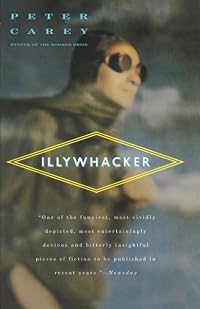
Illywhacker
by Peter Carey
On This Page
Description
Herbert Badgery is vagabond and charlatan, aviator and car salesman, seducer and patriarch. He might very well be the embodiment of Australia's national character, especially in its fondness for tall stories and questionable history.As this charming scoundrel traverses the continent and a century's worth of outlandish encounters - not least with a genteel dowager fending off madness with an electric belt, and a ravishing young girl with a dangerous fondness for rooftop trysts - one truth show more emerges.Herbert Badgery may in fact be the king of all con men. show lessTags
Recommendations


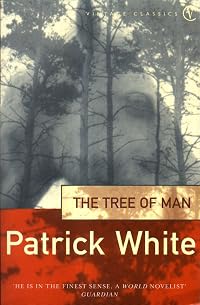
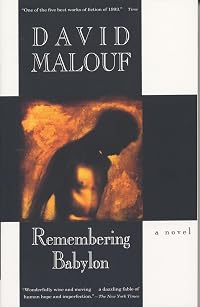
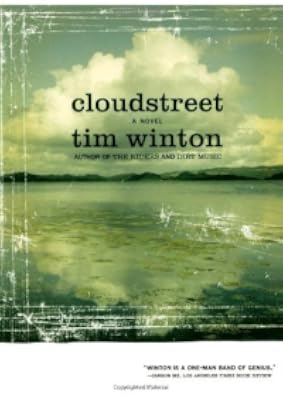

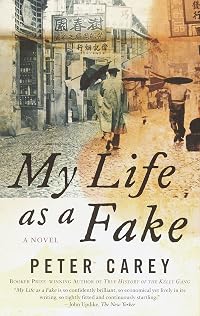

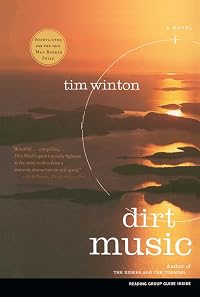
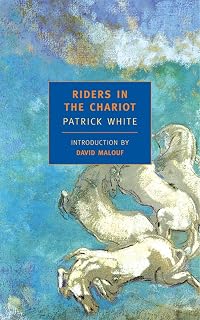
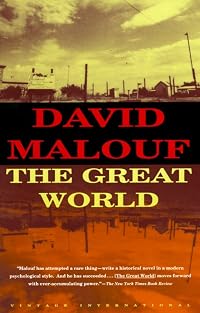
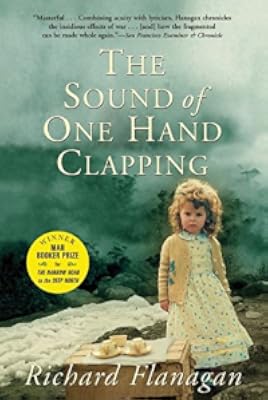



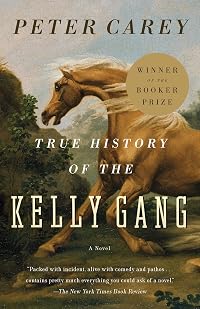
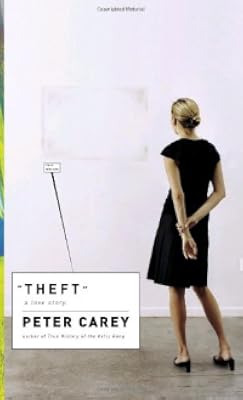


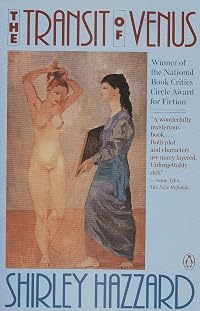
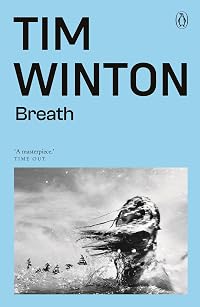
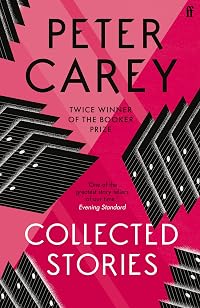
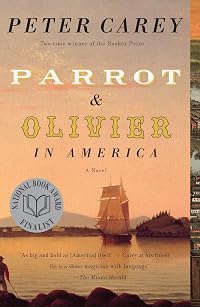




Member Recommendations
PghDragonMan Fine work from an author under appreciated in the US.
PghDragonMan Memories of an old man approaching his last days bind these two works together. Both well done, but with different perspectives.
Member Reviews
My previous experiences of Carey have been mixed. I really enjoyed [b:True History of the Kelly Gang|110090|True History of the Kelly Gang|Peter Carey|https://images.gr-assets.com/books/1440509588s/110090.jpg|2134852], but found both [b:Oscar and Lucinda|316496|Oscar and Lucinda|Peter Carey|https://images.gr-assets.com/books/1173712561s/316496.jpg|2304710] and [b:Parrot and Olivier in America|6632372|Parrot and Olivier in America|Peter Carey|https://images.gr-assets.com/books/1250737303s/6632372.jpg|6826746] over-long and a little tedious, though both had their moments and were funny at times. When I saw the size of this one and the density of the print, I feared more of the same, and for roughly half of the book, that expectation show more seemed to be confirmed.
Then something clicked, and I found myself enjoying the second half much more, allowing myself to be carried away by the chutzpah and exuberance of Carey's storytelling.
From the start we know that we have an unreliable narrator:
"My name is Herbert Bargery. I am a hundred and thirty-nine years old and something of a celebrity...
I am a terrible liar and I have always been a liar. I say this early to set things straight. Caveat emptor. "
We are soon pitched back to 1919, where Herbert lands his small plane in a field in rural Victoria and charms the McGrath family who are picnicking there. He moves into their house and persuades his host to invest in what would be Australia's first aircraft factory, and the 17 year old daughter Phoebe soon falls for him.
This is just the start of a wild, funny and often bawdy picaresque fantasy cum family story that blends social history and magic realism, populated by an array of memorable characters.
So yes, it could have been shorter, but in the end I enjoyed the journey. show less
Then something clicked, and I found myself enjoying the second half much more, allowing myself to be carried away by the chutzpah and exuberance of Carey's storytelling.
From the start we know that we have an unreliable narrator:
"My name is Herbert Bargery. I am a hundred and thirty-nine years old and something of a celebrity...
I am a terrible liar and I have always been a liar. I say this early to set things straight. Caveat emptor. "
We are soon pitched back to 1919, where Herbert lands his small plane in a field in rural Victoria and charms the McGrath family who are picnicking there. He moves into their house and persuades his host to invest in what would be Australia's first aircraft factory, and the 17 year old daughter Phoebe soon falls for him.
This is just the start of a wild, funny and often bawdy picaresque fantasy cum family story that blends social history and magic realism, populated by an array of memorable characters.
So yes, it could have been shorter, but in the end I enjoyed the journey. show less
Is this The Great Australian Novel?
Perhaps it's a bit too playful to aspire to such pretensions, but nonetheless it is an admirable attempt.
The book is often categorized as magical realism, due largely to events that could be (and probably are) entirely fabrications of the narrator: a disappearing act, an alleged Chinese sorcerer, and a mysterious Vegemite jar containing either shape-shifting matter or a rotting body part. Don't be dissuaded: there may be some tall tales told, and a fair amount of stunning coincidence, but the bulk of the book is firmly grounded out in the bush.
The novel follows ne'er-do-well Herbert Badgery and two generations of his children, spanning Australia's "coming of age" during the twentieth century. This is show more the Australia of Walkabout and Wake In Fright, rather than the lawlessness of Ned Kelly's day or the Mad Max franchise.
From the outset, the author informs us that he is 139 years old and that his word is not to be trusted. He then spins a yarn of his incompatible attempts to earn a buck and to foster native transportation industry in Australia ("we can make just as good a car or plane as the English!").
It is this latter character trait, more than the dusty squatter backdrop, that makes this book peculiarly Australian. Resentful of the English and distrustful of the Americans, the country is attempting to claim its birthright as a modern, industrial power, only to be domineered and exploited by the others. The ruling government and the dissident political parties prove helpless in the face of foreign capital: there is a muted call-to-arms for each citizen to make his own way as an independent Australian.
The narrator spends a third of the book in gaol. Mercifully (as jail stories get rather tedious), the author takes this opportunity to relate the maturation and success of his son, setting the stage for a third act in which the narrator returns and once again introduces casual upheaval into the lives of his loved ones. This lends the novel an epic tone, despite having a first-person narrator: we see Australia through the experiences of three generations of the Badgery family,and how their particular craftiness proves more or less fortunate in changing times.
A fun, engaging read. Perfect for the pending summer. show less
Perhaps it's a bit too playful to aspire to such pretensions, but nonetheless it is an admirable attempt.
The book is often categorized as magical realism, due largely to events that could be (and probably are) entirely fabrications of the narrator: a disappearing act, an alleged Chinese sorcerer, and a mysterious Vegemite jar containing either shape-shifting matter or a rotting body part. Don't be dissuaded: there may be some tall tales told, and a fair amount of stunning coincidence, but the bulk of the book is firmly grounded out in the bush.
The novel follows ne'er-do-well Herbert Badgery and two generations of his children, spanning Australia's "coming of age" during the twentieth century. This is show more the Australia of Walkabout and Wake In Fright, rather than the lawlessness of Ned Kelly's day or the Mad Max franchise.
From the outset, the author informs us that he is 139 years old and that his word is not to be trusted. He then spins a yarn of his incompatible attempts to earn a buck and to foster native transportation industry in Australia ("we can make just as good a car or plane as the English!").
It is this latter character trait, more than the dusty squatter backdrop, that makes this book peculiarly Australian. Resentful of the English and distrustful of the Americans, the country is attempting to claim its birthright as a modern, industrial power, only to be domineered and exploited by the others. The ruling government and the dissident political parties prove helpless in the face of foreign capital: there is a muted call-to-arms for each citizen to make his own way as an independent Australian.
The narrator spends a third of the book in gaol. Mercifully (as jail stories get rather tedious), the author takes this opportunity to relate the maturation and success of his son, setting the stage for a third act in which the narrator returns and once again introduces casual upheaval into the lives of his loved ones. This lends the novel an epic tone, despite having a first-person narrator: we see Australia through the experiences of three generations of the Badgery family,and how their particular craftiness proves more or less fortunate in changing times.
A fun, engaging read. Perfect for the pending summer. show less
Boy, it's been kind of gloomy around here recently, hasn't it? What with unanticipated abridgments, disorganized Englishmen, and lukewarm responses to historical fiction, things have looked rosier. But here, my friends, is the antidote: Peter Carey's rollicking Australian epic Illywhacker is robust and uproarious - a chewy, stew-like story you can really sink your teeth into, and which also offers a thought-provoking meditation on the nature of lying and the truth.
I've written before about how I would cheerfully devour a phone book if Peter Carey took it into his head to write one, and Illywhacker is no exception - although it is different than the other Carey novels I've read. It doesn't have quite the focused incandescence of Oscar show more and Lucinda and True History of the Kelly Gang, or the obsessive surreality of My Life as a Fake. Instead, it follows a John Irving-like model of sprawling, character-driven, oddball family saga: a portrait of three generations in the quick-tempered and bandy-legged Badgery clan. Narrating the tales of his progeny and their hangers-on is the 139-year old patriarch Herbert Badgery, an exuberant liar who has yarned, belched, strutted and cajoled his way through the Australian countryside over more than a century. Badgery is the archetype of the charismatic con-man, and Carey depicts him masterfully: we observe, at once, his flatulence and grime, and also his grand dreams of love and aviation, of starting an Australian airplane factory, of building a rambling mansion for the woman he loves. He's simultaneously crass, cynical, and grandly ambitious, and, somewhat predictably, gets his heart broken at least as often often as he breaks the hearts of others. Possibly most important, he's a freewheeling unreliable narrator, telling the reader on the first page, "[M]y advice is to not waste your time with your red pen, to try to pull apart the strands of lies and truth, but to relax and enjoy the show."
Apart from his masterful control of sentences and paragraphs, one of the most interesting things about Peter Carey is the complex morality in his novels; all of the four that I've read so far have interrogated the relationship between lying, storytelling, and the truth, and come to complicated conclusions that can't readily be summarized. Mid-way through Illywhacker, Badgery (sort of) wins and then (kind of) loses a puritanically honest woman named Leah Goldstein, of whom he eventually and unexpectedly makes a lying addict. After they are separated, she spends years upon years faithfully writing to him, creating letters which are almost complete balderdash:
Another word for "lying addict"? "Accomplished fiction writer." When he learns that the lovely world Leah created for him is a lie, Badgery is faced, on a more dramatic scale, with the feelings we all have upon finishing a fantastic book: loss and grief for a world he believed in. Leah has written herself through a gauntlet of lies and somehow become a novelist - and also, argues Badgery, a fully fledged Australian citizen. For, as Carey has his famous fictional historian MV Anderson relate,
Together, these two passages paint an impressively complex view of lying and storytelling. On the one hand, Badgery spends the entire novel fighting for Australian pride - for Australians to invest, for example, in Australian-made cars and airplanes, rather than importing British and American models thought to be self-evidently better than anything "we" could make. He rails against the colonial inferiority complex that motivates many Australians of his day to truckle to the British crown. And so, recognizing that lying and tall-tale-telling are an integral part of his Australian heritage, he embraces them with unmitigated exuberance. I couldn't help loving him for it; the charisma of his voice is intoxicating. On the other hand, though, a big reason that lying has become a national pastime for Australians (and, I might add, Americans) is both shameful and essentially BRITISH: the foundation stone of British colonization in both places was a huge, convenient deception about whether the land they took was already being used. So Badgery's mode of protest against the British turns out to originate with them, and his recommendation to his readers not to look too closely at the truthfulness of his own stories mirrors the cavalier disregard with which they invaded continents and invented the convenient fiction that they had "discovered" them.
But while the lies of Badgery and the British colonizers are largely selfish and convenient, however attractive they may seem, Leah's fictions are a more complicated matter. It doesn't directly benefit her to provide Badgery with false images of a beautiful life which she is not really living. It provides a bit of escapism for her, crafting these letters in which everything she wishes is made true, but it also accentuates the gulf between what she wants and what she has. Whatever results her actions have (and there are both positive and negative repurcussions), her primary motivation, arguably, is kindness. It's painful to Badgery to learn that (almost) everything he believed about Leah's life is a lie, but he's such an inveterate liar himself that it's hard to pity him too much. And if we condemn Leah, what to make of our own decision to pick up Peter Carey's Illywhacker? Of all people, isn't Herbert Badgery, con-man extraordinaire, ASKING to be conned himself, just as we readers of fiction are when we crack open his book? After all, it was Badgery who taught Leah to lie in the first place. Not to mention that through her lies, she manages to demonstrate truths: the truth that she loves Badgery, and that she wishes things were different.
Without giving too much away, I'll just say that toward the end of Illywhacker all these intersecting threads of lies and counter-lies, of the personal versus the national, take a disorienting and eerie turn. I don't pretend to have tracked them all; as Badgery says in the novel's opening, there comes a point when it's best to just sit back and enjoy the ride. And enjoy it I did, thoroughly and completely. Carey has yet to disappoint. show less
I've written before about how I would cheerfully devour a phone book if Peter Carey took it into his head to write one, and Illywhacker is no exception - although it is different than the other Carey novels I've read. It doesn't have quite the focused incandescence of Oscar show more and Lucinda and True History of the Kelly Gang, or the obsessive surreality of My Life as a Fake. Instead, it follows a John Irving-like model of sprawling, character-driven, oddball family saga: a portrait of three generations in the quick-tempered and bandy-legged Badgery clan. Narrating the tales of his progeny and their hangers-on is the 139-year old patriarch Herbert Badgery, an exuberant liar who has yarned, belched, strutted and cajoled his way through the Australian countryside over more than a century. Badgery is the archetype of the charismatic con-man, and Carey depicts him masterfully: we observe, at once, his flatulence and grime, and also his grand dreams of love and aviation, of starting an Australian airplane factory, of building a rambling mansion for the woman he loves. He's simultaneously crass, cynical, and grandly ambitious, and, somewhat predictably, gets his heart broken at least as often often as he breaks the hearts of others. Possibly most important, he's a freewheeling unreliable narrator, telling the reader on the first page, "[M]y advice is to not waste your time with your red pen, to try to pull apart the strands of lies and truth, but to relax and enjoy the show."
Apart from his masterful control of sentences and paragraphs, one of the most interesting things about Peter Carey is the complex morality in his novels; all of the four that I've read so far have interrogated the relationship between lying, storytelling, and the truth, and come to complicated conclusions that can't readily be summarized. Mid-way through Illywhacker, Badgery (sort of) wins and then (kind of) loses a puritanically honest woman named Leah Goldstein, of whom he eventually and unexpectedly makes a lying addict. After they are separated, she spends years upon years faithfully writing to him, creating letters which are almost complete balderdash:
Later she would think of these months, when she helped her friend die, as one of the most important times in her life.
But she wrote not a word about it to me. Instead she described long walks with Rosa along the clifftops to Tamarama. She did not date these walks, but the impression given was that they had happened an hour or a minute before, that Rosa sat across from her at the kitchen table, drinking fragrant tea. They were beautiful letters, bulging with powerful skies and rimmed with intense yellow light. Every blade of grass seemed sharply painted, every word of conversation exact and true. Perhaps these things had once taken place. Perhaps she invented them. In any case they gave me that electric, unnatural mixture of emotions that every prisoner knows, where even the best things in the world outside become slashed with our own bitterness or jealousy. This confusion of love and hurt is very powerful. I came to crave it even while I dreaded it. It is a more potent drug than simple happiness.
...
There was a time, when I finally learned the truth, that I could have killed her for her deception, to have made me feel so much about what revealed itself as nothing. I will tell you, later, how I got on the train with my bottle and my blade. But when I think about her now I cannot even imagine my own anger.
Another word for "lying addict"? "Accomplished fiction writer." When he learns that the lovely world Leah created for him is a lie, Badgery is faced, on a more dramatic scale, with the feelings we all have upon finishing a fantastic book: loss and grief for a world he believed in. Leah has written herself through a gauntlet of lies and somehow become a novelist - and also, argues Badgery, a fully fledged Australian citizen. For, as Carey has his famous fictional historian MV Anderson relate,
Our forefathers were all great liars. They lied about the lands they selected and the cattle they owned. They lied about their backgrounds and the parentage of their wives. However it is their first lie that is the most impressive for being so monumental, i.e., that the continent, at the time of first settlement, was said to be occupied but not cultivated and by that simple device they were able to give the legal owners short shrift and, when they objected, to use the musket or poison flour, and to do so with a clear conscience. It is in the context of this great foundation stone that we must begin our study of Australian history.
Together, these two passages paint an impressively complex view of lying and storytelling. On the one hand, Badgery spends the entire novel fighting for Australian pride - for Australians to invest, for example, in Australian-made cars and airplanes, rather than importing British and American models thought to be self-evidently better than anything "we" could make. He rails against the colonial inferiority complex that motivates many Australians of his day to truckle to the British crown. And so, recognizing that lying and tall-tale-telling are an integral part of his Australian heritage, he embraces them with unmitigated exuberance. I couldn't help loving him for it; the charisma of his voice is intoxicating. On the other hand, though, a big reason that lying has become a national pastime for Australians (and, I might add, Americans) is both shameful and essentially BRITISH: the foundation stone of British colonization in both places was a huge, convenient deception about whether the land they took was already being used. So Badgery's mode of protest against the British turns out to originate with them, and his recommendation to his readers not to look too closely at the truthfulness of his own stories mirrors the cavalier disregard with which they invaded continents and invented the convenient fiction that they had "discovered" them.
But while the lies of Badgery and the British colonizers are largely selfish and convenient, however attractive they may seem, Leah's fictions are a more complicated matter. It doesn't directly benefit her to provide Badgery with false images of a beautiful life which she is not really living. It provides a bit of escapism for her, crafting these letters in which everything she wishes is made true, but it also accentuates the gulf between what she wants and what she has. Whatever results her actions have (and there are both positive and negative repurcussions), her primary motivation, arguably, is kindness. It's painful to Badgery to learn that (almost) everything he believed about Leah's life is a lie, but he's such an inveterate liar himself that it's hard to pity him too much. And if we condemn Leah, what to make of our own decision to pick up Peter Carey's Illywhacker? Of all people, isn't Herbert Badgery, con-man extraordinaire, ASKING to be conned himself, just as we readers of fiction are when we crack open his book? After all, it was Badgery who taught Leah to lie in the first place. Not to mention that through her lies, she manages to demonstrate truths: the truth that she loves Badgery, and that she wishes things were different.
Without giving too much away, I'll just say that toward the end of Illywhacker all these intersecting threads of lies and counter-lies, of the personal versus the national, take a disorienting and eerie turn. I don't pretend to have tracked them all; as Badgery says in the novel's opening, there comes a point when it's best to just sit back and enjoy the ride. And enjoy it I did, thoroughly and completely. Carey has yet to disappoint. show less
G'day, g'day!
How ya going?
What do you know!
Well, strike a light!
G'day, g'day,
And how ya go-o-oing?
Just say g'day, g'day, g'day,
And you'll be right!
—Slim Dusty
This is a novel about Australia: the souvenir-shop image of Slim Dusty records and tourist posters, and the romantic but gritty reality that underlies it. It is about how to separate the two: how to celebrate your own history without turning it into a cartoon or a travesty. It is, in short, about ‘the problems of belief and principle’ faced by three generations of proud Australians.
‘I am a hundred and thirty-nine years old,’ our narrator, Herbert Badgery, tells us at the start. ‘I am a terrible liar…My age is the one fact you can rely on.’ His being 139 is, of show more course, one of the least believable ‘facts’ in here, and so right from the beginning of this long, picaresque novel, there is an in-built lack of trust – an uncertainty which frees you up to concentrate on the emotional and symbolic value of what you're being told without worrying too much about its feasibility.
Just as well, because the plot at times feels like nothing more than a series of tall tales, shaggy dog stories, fireside anecdotes and family legends – albeit brilliantly told ones, because Peter Carey seems incapable of writing a boring sentence. Planes are crashed, children are conceived, narrow escapes are had. At first I thought it was brilliant, but I have to admit that the novel gradually beat me down from four stars to three-and-a-half. The problem is one of focus. There isn't one – or if there is, it's the whole country. The book rambles, and even our aged narrator does not constitute a central character for much of it – many sections do not involve him at all, and although the digressions are enjoyable I found myself wondering what exactly it was adding up to.
But perhaps this is my fault. Characters, central or otherwise, are not the main concern, and Carey tells us as much near the end, in a reference to one character's own literary exploits:
the real subject of Goldstein's work was not the people, but the landscape and its roads, red, yellow, white, ochre, mustard, dun, madeira, maize, the raw optimistic tracks that cut the arteries of an ancient culture before a new one had been born.
Illywhacker likewise takes us on a delirious journey through western Victoria, the placenames beating out a steady rhythm in a way that reminded me of the geographical romance of Kerouac's America: Ballarat, Bacchus Marsh, Jeparit, Geelong, not to mention wonderful sketches of Melbourne and Sydney. ‘It is not a country where you can rest,’ says one character. ‘It is a black man's country: sharp stones, rocks, sticks, bull ants, flies. We can only move around it like tourists.’
The book itself tries (like so many of its characters) to forge or identify some kind of authentic Australia. Its language is discretely shot through with regionalisms: wildlife like she-oaks and yabbies, people that work as cockies or bushies or rabbit-ohs, obscure references to mud-maps and kero and dunnymen, clichés like Akubras, fair-dinkum and dinky-di, surprising mundanities like ‘nature strips’ and ‘rear-vision mirrors’. Sentences like ‘the johns had sworn to massacre the swaggies if they jumped the rattler.’
In the early parts of the book, set in the 1910s and 1920s, this Australia is defined in opposition to England, and Herbert reserves his most withering scorn for fellow countrymen who still idolise the motherland.
It was what happened in this country. The minute they began to make a quid they started to turn into Englishmen. Cocky Abbot was probably descended from some old cockney lag, who had arrived here talking flash language, a pickpocket, a bread-stealer, and now, a hundred years later his descendents were dressing like his gaolers and torturers, disowning the language, softening their vowels, greasing their way into the plummy speech of the men who had ordered their ancestors lashed until the flesh had been dragged in bleeding strips from their naked backs.
But towards the end of the book, the enemy shifts to become multinational industry in general, and American investors (who ‘misunderstood our ironies and took them for firmly held beliefs’) in particular. Herbert and his family, struggling to turn their Sydney premises into a monument to Australian fauna, end up with something between a tourist attraction and a prison, funded by General Motors and owned by the Mitsubishi Company of Japan. Almost everyone involved ends up reduced to – in Carey's typically memorable phrase – ‘a skin-wrapped parcel of fucked-up dreams’.
‘I have not valued what I have loved,’ frets one character. To this extent Illywhacker is a cautionary tale. You can love your country to your heart's content, but giving it its proper value is an altogether trickier proposition. In a country founded on lies, maybe lying is the best solution after all. show less
How ya going?
What do you know!
Well, strike a light!
G'day, g'day,
And how ya go-o-oing?
Just say g'day, g'day, g'day,
And you'll be right!
—Slim Dusty
This is a novel about Australia: the souvenir-shop image of Slim Dusty records and tourist posters, and the romantic but gritty reality that underlies it. It is about how to separate the two: how to celebrate your own history without turning it into a cartoon or a travesty. It is, in short, about ‘the problems of belief and principle’ faced by three generations of proud Australians.
‘I am a hundred and thirty-nine years old,’ our narrator, Herbert Badgery, tells us at the start. ‘I am a terrible liar…My age is the one fact you can rely on.’ His being 139 is, of show more course, one of the least believable ‘facts’ in here, and so right from the beginning of this long, picaresque novel, there is an in-built lack of trust – an uncertainty which frees you up to concentrate on the emotional and symbolic value of what you're being told without worrying too much about its feasibility.
Just as well, because the plot at times feels like nothing more than a series of tall tales, shaggy dog stories, fireside anecdotes and family legends – albeit brilliantly told ones, because Peter Carey seems incapable of writing a boring sentence. Planes are crashed, children are conceived, narrow escapes are had. At first I thought it was brilliant, but I have to admit that the novel gradually beat me down from four stars to three-and-a-half. The problem is one of focus. There isn't one – or if there is, it's the whole country. The book rambles, and even our aged narrator does not constitute a central character for much of it – many sections do not involve him at all, and although the digressions are enjoyable I found myself wondering what exactly it was adding up to.
But perhaps this is my fault. Characters, central or otherwise, are not the main concern, and Carey tells us as much near the end, in a reference to one character's own literary exploits:
the real subject of Goldstein's work was not the people, but the landscape and its roads, red, yellow, white, ochre, mustard, dun, madeira, maize, the raw optimistic tracks that cut the arteries of an ancient culture before a new one had been born.
Illywhacker likewise takes us on a delirious journey through western Victoria, the placenames beating out a steady rhythm in a way that reminded me of the geographical romance of Kerouac's America: Ballarat, Bacchus Marsh, Jeparit, Geelong, not to mention wonderful sketches of Melbourne and Sydney. ‘It is not a country where you can rest,’ says one character. ‘It is a black man's country: sharp stones, rocks, sticks, bull ants, flies. We can only move around it like tourists.’
The book itself tries (like so many of its characters) to forge or identify some kind of authentic Australia. Its language is discretely shot through with regionalisms: wildlife like she-oaks and yabbies, people that work as cockies or bushies or rabbit-ohs, obscure references to mud-maps and kero and dunnymen, clichés like Akubras, fair-dinkum and dinky-di, surprising mundanities like ‘nature strips’ and ‘rear-vision mirrors’. Sentences like ‘the johns had sworn to massacre the swaggies if they jumped the rattler.’
In the early parts of the book, set in the 1910s and 1920s, this Australia is defined in opposition to England, and Herbert reserves his most withering scorn for fellow countrymen who still idolise the motherland.
It was what happened in this country. The minute they began to make a quid they started to turn into Englishmen. Cocky Abbot was probably descended from some old cockney lag, who had arrived here talking flash language, a pickpocket, a bread-stealer, and now, a hundred years later his descendents were dressing like his gaolers and torturers, disowning the language, softening their vowels, greasing their way into the plummy speech of the men who had ordered their ancestors lashed until the flesh had been dragged in bleeding strips from their naked backs.
But towards the end of the book, the enemy shifts to become multinational industry in general, and American investors (who ‘misunderstood our ironies and took them for firmly held beliefs’) in particular. Herbert and his family, struggling to turn their Sydney premises into a monument to Australian fauna, end up with something between a tourist attraction and a prison, funded by General Motors and owned by the Mitsubishi Company of Japan. Almost everyone involved ends up reduced to – in Carey's typically memorable phrase – ‘a skin-wrapped parcel of fucked-up dreams’.
‘I have not valued what I have loved,’ frets one character. To this extent Illywhacker is a cautionary tale. You can love your country to your heart's content, but giving it its proper value is an altogether trickier proposition. In a country founded on lies, maybe lying is the best solution after all. show less
Because I didn’t like Bliss, I skipped ahead to Peter Carey’s first Booker Prize winner, Oscar and Lucinda, which I found to be excellent. So I was pleasantly surprised to go back to Illywhacker, Carey’s second novel (and the first nominated for a Booker) to find that it was also an excellent work – a funny, tragic, picaresque epic.
Herbert Badgery, Illywhacker’s protagonist and omniscient narrator, begins the novel by announcing that he is “a hundred and thirty-nine years old… and a terrible liar.” The story begins in Victoria in 1919 when he is thirty-two years old and engine trouble forces him to land his plane in a country field, where he meets the picnicking McGrath family. This chance encounter leads to his show more friendship with Jack McGrath, with whom he plans to open an aeroplane factory, his romance with Jack’s teenage daughter Phoebe, and the subsequent deaths, births, weddings, adventures and trials that follow – and this is just in the first third of the novel.
After reading Oscar and Lucinda I compared Carey, or at least an aspect of his writing, to Terry Pratchett – a sort of wry, witty sense of human nature and a dry way of dropping random information to sum up encounters between two different people. For example, when a self-important woman attempts to convince a policeman of her importance:
“My father was a Colonel McInlay,” she told the sergeant who had successfully conspired to shoot a major in Ypres.
There’s an element of Carey’s style which also reminds me of Michael Chabon’s, particularly in The Amazing Adventures of Kavalier & Clay, though I can’t quite articulate why. A sort of omniscient third person perspective that expounds upon the characters’ thoughts and feelings and futures, without ever seeming overdone.
For all the comparisons, Carey undoubtedly has a unique writing style. I particularly like his knack for imbuing Australian place names with a sense of fabulousness, admiring their innate lyrical beauty: Jeparit, Bendigo, Jindabyne, Geelong, Terang. (Perhaps this is part of why I didn’t care for Bliss, which takes place in city suspiciously like Brisbane which nonetheless goes unnamed.) Illywhacker covers more of Australia than any of Carey’s other books, rambling across Victoria, New South Wales and Queensland, and Herbert Badgery has an insight on everywhere:
I have heard people describe Bendigo as a country town. They mention it in the same breath as Shepparton or Ararat. These people have never been to Bendigo and don’t know what they’re talking about. The Town Hall is the equal of anything in Florence; the Law Courts would not look frumpish in Versailles. And if there are farmers in the streets, dark cafes with three courses for two and sixpence and, in Hayes Street, a Co-op dedicated to Norfield Wire Strainers and Cattle Drench, it does not alter the fact that Bendigo is a town of the Gold Age.
If Illywhacker has an underlying theme beneath its sprawling family saga, it’s the cultural cringe and the Australian sense of inferiority. At the beginning of the novel, a 32-year-old Badgery is determined to establish an Australian aviation industry; later, he becomes disillusioned with his job selling Ford cars, and rants against the Holden slogan, “Australia’s own car,” given Holden was owned by GM. When a guest at his wedding says “I could fancy I was sitting, at this very moment, in Paris,” Badgery says he was “so happy I could not find it in my heart to ask the old gentleman what was wrong with sitting in Melbourne.” He has nothing but contempt for the Australians who behave as Englishmen:
You would think Cocky Abbot a reasonable fellow until you met the son, and then you saw what was wrong with him. It was what happened in this country. The minute they began to make a quid they started to turn into Englishmen. Cocky Abbot was probably descended from some old cockney lag, who had arrived here talking flash language, a pickpocket, a bread-stealer, and now, a hundred years later his descendants were dressing like his gaolers and torturers, disowning the language, softening their vowels, greasing their way into the plummy speech of the men who had ordered their ancestors lashed until the flesh had been dragged in bleeding strips from their backs.
There are also elements of Carey’s light touch at magic realism – an adoptive Chinese father who teaches Badgery an invisibility trick, a priest who swears he once saw a fairy, a jar containing a severed finger which sometimes, to different people, contains completely different things. Badgery’s self-confessed liar status makes it difficult to tell what really happened and what’s just a shaggy dog story, but as Badgery warns on the first page: “My advice is to not waste your time with your red pen, to try to pull apart the strands of lies and truth, but to relax and enjoy the show.”
Illywhacker is a great, garrulous, tottering tower of a novel, which is much better than it has any right to be. Oscar and Lucinda is probably the better book, being quite a bit more tightly plotted, but both of them are brilliant: wonderfully written Australian adventures full of odd characters, magical landscapes and Peter Carey’s unique, beautiful prose. Illywhacker is a gem. show less
Herbert Badgery, Illywhacker’s protagonist and omniscient narrator, begins the novel by announcing that he is “a hundred and thirty-nine years old… and a terrible liar.” The story begins in Victoria in 1919 when he is thirty-two years old and engine trouble forces him to land his plane in a country field, where he meets the picnicking McGrath family. This chance encounter leads to his show more friendship with Jack McGrath, with whom he plans to open an aeroplane factory, his romance with Jack’s teenage daughter Phoebe, and the subsequent deaths, births, weddings, adventures and trials that follow – and this is just in the first third of the novel.
After reading Oscar and Lucinda I compared Carey, or at least an aspect of his writing, to Terry Pratchett – a sort of wry, witty sense of human nature and a dry way of dropping random information to sum up encounters between two different people. For example, when a self-important woman attempts to convince a policeman of her importance:
“My father was a Colonel McInlay,” she told the sergeant who had successfully conspired to shoot a major in Ypres.
There’s an element of Carey’s style which also reminds me of Michael Chabon’s, particularly in The Amazing Adventures of Kavalier & Clay, though I can’t quite articulate why. A sort of omniscient third person perspective that expounds upon the characters’ thoughts and feelings and futures, without ever seeming overdone.
For all the comparisons, Carey undoubtedly has a unique writing style. I particularly like his knack for imbuing Australian place names with a sense of fabulousness, admiring their innate lyrical beauty: Jeparit, Bendigo, Jindabyne, Geelong, Terang. (Perhaps this is part of why I didn’t care for Bliss, which takes place in city suspiciously like Brisbane which nonetheless goes unnamed.) Illywhacker covers more of Australia than any of Carey’s other books, rambling across Victoria, New South Wales and Queensland, and Herbert Badgery has an insight on everywhere:
I have heard people describe Bendigo as a country town. They mention it in the same breath as Shepparton or Ararat. These people have never been to Bendigo and don’t know what they’re talking about. The Town Hall is the equal of anything in Florence; the Law Courts would not look frumpish in Versailles. And if there are farmers in the streets, dark cafes with three courses for two and sixpence and, in Hayes Street, a Co-op dedicated to Norfield Wire Strainers and Cattle Drench, it does not alter the fact that Bendigo is a town of the Gold Age.
If Illywhacker has an underlying theme beneath its sprawling family saga, it’s the cultural cringe and the Australian sense of inferiority. At the beginning of the novel, a 32-year-old Badgery is determined to establish an Australian aviation industry; later, he becomes disillusioned with his job selling Ford cars, and rants against the Holden slogan, “Australia’s own car,” given Holden was owned by GM. When a guest at his wedding says “I could fancy I was sitting, at this very moment, in Paris,” Badgery says he was “so happy I could not find it in my heart to ask the old gentleman what was wrong with sitting in Melbourne.” He has nothing but contempt for the Australians who behave as Englishmen:
You would think Cocky Abbot a reasonable fellow until you met the son, and then you saw what was wrong with him. It was what happened in this country. The minute they began to make a quid they started to turn into Englishmen. Cocky Abbot was probably descended from some old cockney lag, who had arrived here talking flash language, a pickpocket, a bread-stealer, and now, a hundred years later his descendants were dressing like his gaolers and torturers, disowning the language, softening their vowels, greasing their way into the plummy speech of the men who had ordered their ancestors lashed until the flesh had been dragged in bleeding strips from their backs.
There are also elements of Carey’s light touch at magic realism – an adoptive Chinese father who teaches Badgery an invisibility trick, a priest who swears he once saw a fairy, a jar containing a severed finger which sometimes, to different people, contains completely different things. Badgery’s self-confessed liar status makes it difficult to tell what really happened and what’s just a shaggy dog story, but as Badgery warns on the first page: “My advice is to not waste your time with your red pen, to try to pull apart the strands of lies and truth, but to relax and enjoy the show.”
Illywhacker is a great, garrulous, tottering tower of a novel, which is much better than it has any right to be. Oscar and Lucinda is probably the better book, being quite a bit more tightly plotted, but both of them are brilliant: wonderfully written Australian adventures full of odd characters, magical landscapes and Peter Carey’s unique, beautiful prose. Illywhacker is a gem. show less
The next unread book from my shelf was Illywhaker published in 1985 and shortlisted for the Booker prize. I have to admit that I felt like putting it back on the shelf during a bit of a slog through its 600 pages. Peter Carey is Australian and this is an Australian novel that rambles across Victoria, New South Wales and Queensland and describes places such as Jeparit, Bendigo, Geelong and Terang and ending up in Sydney: Great names and I was curious to look up some of these towns on the internet as a theme of the novel is Australian identity.
An Illywhaker is a conman or a liar probably both and is a story told by Herbert Badgery who claims to be 139 years old. He is in hospital at the end of his life and reminisces about his life and show more times. We first meet him when he is 32 years old in 1919 landing his small aeroplane in a large lot or garden area and meeting Jack McGrath a wealthy former bullock herder. They become good friends and Herbert persuades Jack to invest in an aeroplane factory to make Australian aeroplanes. Herbert marries Jack's daughter Phoebe and the omnipresent narrator continues the story of Herbert's family and the people that fall within their orbit, most of whom are crazy, weird or both. Herbert's plan to make Australian aeroplanes fails because investors insist that parts and specifications must be taken from other countries: tried and tested rather than inventing something new. There are similar issues with automobiles when Herbert turns his talents to selling cars. Herbert's story of failures and catastrophes, of lovers and deaths barrels on across the Australian landscape. Herbert is cynical sometimes contemptuous, but never loses his lust for life. He keeps on keeping on, adapting and surviving in his own self centred way: he claims he wants to be a good person, but of course we do not believe him.
Peter Carey has written a novel packed with tall stories, told in Herbert's inimitable style and it is this style that for me outstayed it's welcome. Herberts jaundiced views dressed up in a sort of garrulous humour that looks down on other people even though the narrator takes the world in his stride, seems to belong to another era. I could not warm to it even though I appreciated that it was well done. it is a novel written to entertain, but it failed to hold my interest throughout its length and so 3.5 stars. show less
An Illywhaker is a conman or a liar probably both and is a story told by Herbert Badgery who claims to be 139 years old. He is in hospital at the end of his life and reminisces about his life and show more times. We first meet him when he is 32 years old in 1919 landing his small aeroplane in a large lot or garden area and meeting Jack McGrath a wealthy former bullock herder. They become good friends and Herbert persuades Jack to invest in an aeroplane factory to make Australian aeroplanes. Herbert marries Jack's daughter Phoebe and the omnipresent narrator continues the story of Herbert's family and the people that fall within their orbit, most of whom are crazy, weird or both. Herbert's plan to make Australian aeroplanes fails because investors insist that parts and specifications must be taken from other countries: tried and tested rather than inventing something new. There are similar issues with automobiles when Herbert turns his talents to selling cars. Herbert's story of failures and catastrophes, of lovers and deaths barrels on across the Australian landscape. Herbert is cynical sometimes contemptuous, but never loses his lust for life. He keeps on keeping on, adapting and surviving in his own self centred way: he claims he wants to be a good person, but of course we do not believe him.
Peter Carey has written a novel packed with tall stories, told in Herbert's inimitable style and it is this style that for me outstayed it's welcome. Herberts jaundiced views dressed up in a sort of garrulous humour that looks down on other people even though the narrator takes the world in his stride, seems to belong to another era. I could not warm to it even though I appreciated that it was well done. it is a novel written to entertain, but it failed to hold my interest throughout its length and so 3.5 stars. show less
This is the memoir of a character reminiscent of "Little Big Man" as written by John Irving. I should call this a pseudomemoir because Illywhacker is written from the perspective of an autobiography of a person that does not exist anywhere outside the pages of the book. The title is apparently Australian slang for what in America we would call a con man: a liar, a confidence man, a seller of get rich quick schemes. Despite Herbert Badgery being a consummate liar, he has a big heart and we feel sorry for him in all his misadventures.
Peter Carey, the author of this wonderful book, has a lyrical pen that does wonders bringing the off beat characters to life. This applies equally to his human characters, Herbert Badgery, the ancient show more narrator of the entire tale, Leah Goldstein, one of his love interests and a Communist Activist / Dancer, to name just two, and a goanna, an Australian Monitor Lizard, that has an integral part in the story. Carey plays on the national pride of Australians, takes pot shots at American industry and in general, pokes fun at just about everything, especially marriage and the process of aging, though not necessarily the two together.
While the Australian slang may be puzzling to some readers, the richness of the scenes makes it easy to figure out the meanings. It may take a while to get through, but it is very much worth the read, so much so that I now want to explore more works by Peter Carey. show less
Peter Carey, the author of this wonderful book, has a lyrical pen that does wonders bringing the off beat characters to life. This applies equally to his human characters, Herbert Badgery, the ancient show more narrator of the entire tale, Leah Goldstein, one of his love interests and a Communist Activist / Dancer, to name just two, and a goanna, an Australian Monitor Lizard, that has an integral part in the story. Carey plays on the national pride of Australians, takes pot shots at American industry and in general, pokes fun at just about everything, especially marriage and the process of aging, though not necessarily the two together.
While the Australian slang may be puzzling to some readers, the richness of the scenes makes it easy to figure out the meanings. It may take a while to get through, but it is very much worth the read, so much so that I now want to explore more works by Peter Carey. show less
Members
- Recently Added By
Lists

The Guardian's 1000 Novels Everyone Must Read
1,005 works; 549 members

1001 Books You Must Read Before You Die
1,448 works; 1,137 members

Booker Prize
491 works; 62 members

Unreliable Narrators
170 works; 43 members

Man Booker Prize Longlist 1985
6 works; 1 member

Booker Prize Shortlist: Titles Not Yet Read
161 works; 4 members
Harold Bloom - The Western Canon: D. The Chaotic Age
833 works; 24 members

Clues about Australia
38 works; 1 member
Author Information

42+ Works 24,726 Members
Peter Carey was born on May 7, 1943 in Bacchus Marsh, Victoria, Australia. His first two books, The Fat Man in History (1974) and War Crimes (1979), were short story collections. His first novel, Bliss, was published in 1982. At the time he was balancing his writing career with the operation of an advertising agency in Sydney, and his books were show more not generally known outside of Australia. He began to receive international attention when Illywhacker was published in 1985. He won the Booker Prize in 1988 for Oscar and Lucinda and in 2001 for True History of the Kelly Gang. His other works include The Tax Inspector, Parrot and Olivier in America, and The Chemistry of Tears. He also won the Miles Franklin Award three times. In 2015 he made the Australian Book Designers Association Award shortlist for his title Amnesia. This title also made the 2015 Prime Minister's Literary Awards shortlist. (Bowker Author Biography) show less
Awards and Honors
Awards
Notable Lists
Common Knowledge
- Original title
- llywhacker
- Original publication date
- 1985
- People/Characters
- Herbert Badgery; Leah Goldstein
- Important places
- Australia
- Dedication
- For my mother and father,
with love and thanks - First words
- My name is Herbert Badgery.
- Last words
- (Click to show. Warning: May contain spoilers.)It will give him strength for the interesting times ahead.
- Blurbers
- Jacobson, Howard
Classifications
Statistics
- Members
- 1,313
- Popularity
- 18,508
- Reviews
- 17
- Rating
- (3.82)
- Languages
- 5 — English, French, German, Spanish, Swedish
- Media
- Paper, Audiobook, Ebook
- ISBNs
- 34
- ASINs
- 9