On This Page
Description
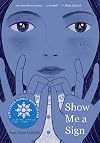
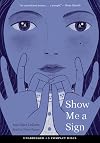
Mary Lambert has always felt safe and protected on her beloved island of Martha's Vineyard. Her great-great-grandfather was an early English settler and the first deaf islander. Now, in 1805, over a hundred years later, many people there -- including Mary -- are deaf, and nearly everyone can communicate in sign language. Mary has never felt isolated. She is proud of her lineage. But recent events have delivered winds of change. Mary's brother died, leaving her family shattered. Tensions over show more land disputes are mounting between English settlers and the Wampanoag people. And a cunning young scientist has arrived, hoping to discover the origin of the island's prevalent deafness. His maniacal drive to find answers soon renders Mary a "live specimen" in a cruel experiment. (Written by a deaf author and based upon a true story.) show lessTags
Recommendations












Member Reviews
This is another book on the SLJ Best Books of the Year list, and unlike The Magnificent Monsters of Cedar Street, it really is! I could not put the book down. This book takes place in the early 1800s on Martha's Vineyard and is told by Mary Lambert, who is deaf. In fact, as many as 1 in 6 of the residents of her town is deaf, a phenomenon that occurs worldwide in small, isolated communities where genetic variations are passed down and passed on. As with all of those communities, they develop their own sign language - in this case MVSL or Martha's Vineyard Sign Language - which is "spoken" fluently by the deaf and hearing alike. Mary's description of life on her island is charming and idyllic, but her family is mourning the accidental show more death of Mary's brother George, and there are tensions and conflict between the English settlers and the native Wampanoag people over land ownership and religion. These serious and complex issues are handled with skill and sensitivity. A little heavier hand is used to show the prejudices and misunderstandings about the deaf off of the island. This is brought terrifyingly to life with the arrival of a young scientist to the island, who is determined to find out the source of the "infirmity" afflicting the island's deaf. He takes soil and water samples, grills the women about the tightness of their stays during pregnancy, and ultimately takes Mary as a "live specimen" and subjects her to cruel treatment and experiments. Mary must struggle to save herself while also contemplating for the first time the nature of a disability and whether it makes the disabled less than full people. Though the book is set over 200 years ago the issues are as relevant as they ever were. This book is terrific and fascinating. show less
"A young girl living on Martha’s Vineyard in 1805 doesn’t think her community of Deaf and hearing signers is special until the day the hearing world violently intrudes.
In present-tense narrator Mary Lambert’s life, it is easy to forget who is Deaf and who is hearing. Everyone she knows uses sign language, and a quarter of her village is Deaf. Mary only learns how different her community is when a young scientist with disdain for the Deaf and no understanding of their culture arrives, seeking to discover the cause of their “infirmity”—using Mary as an experimental subject. LeZotte weaves threads of adventure, family tragedy, community, racism, and hearing people’s negative assumptions about Deaf people into a beautiful and show more complex whole. Mary overcomes her own ordeal with the support of her community, but in the process she discovers that there is no silver bullet for the problems and prejudices of the world. There is no hollow inspirational content to be found in this tale, even where another author may have fallen into the trap. Though Mary is White of English descent, LeZotte acknowledges the racial tensions among the English, Black, Irish, and Wampanoag residents of Martha’s Vineyard, creating a dynamic that Mary interacts within but cannot fix. Each element of the narrative comes together to create an all-too-rare thing: an excellent book about a Deaf person. A closing note provides further information on Martha’s Vineyard Sign Language and the history of both Martha’s Vineyard and Deaf education.
A vivid depiction of Deaf community along with an exciting plot and beautiful prose make this a must-read. (Historical fiction. 8-14)" A Kirkus Starred Review, www.kirkusreviews.com show less
In present-tense narrator Mary Lambert’s life, it is easy to forget who is Deaf and who is hearing. Everyone she knows uses sign language, and a quarter of her village is Deaf. Mary only learns how different her community is when a young scientist with disdain for the Deaf and no understanding of their culture arrives, seeking to discover the cause of their “infirmity”—using Mary as an experimental subject. LeZotte weaves threads of adventure, family tragedy, community, racism, and hearing people’s negative assumptions about Deaf people into a beautiful and show more complex whole. Mary overcomes her own ordeal with the support of her community, but in the process she discovers that there is no silver bullet for the problems and prejudices of the world. There is no hollow inspirational content to be found in this tale, even where another author may have fallen into the trap. Though Mary is White of English descent, LeZotte acknowledges the racial tensions among the English, Black, Irish, and Wampanoag residents of Martha’s Vineyard, creating a dynamic that Mary interacts within but cannot fix. Each element of the narrative comes together to create an all-too-rare thing: an excellent book about a Deaf person. A closing note provides further information on Martha’s Vineyard Sign Language and the history of both Martha’s Vineyard and Deaf education.
A vivid depiction of Deaf community along with an exciting plot and beautiful prose make this a must-read. (Historical fiction. 8-14)" A Kirkus Starred Review, www.kirkusreviews.com show less
Set in Martha's Vineyard and Boston in 1805-1806, SHOW ME A SIGN is narrated by eleven-year-old Mary, a Deaf girl in the town of Chilmark. Mary's father is also Deaf; her mother is hearing, but, like everyone else on the island, also signs. (Mary's older brother, George, died in an accident; he was hearing also.) For Mary, the fact that everyone communicates in sign is not extraordinary, but when Andrew Noble sails in, she realizes that elsewhere, deafness is considered a disability. Andrew has no respect for Deaf people, makes no effort to communicate with them - either in sign or writing - and part of his "research" into the question of why Deafness is so predominant on the island requires a "live specimen." Part II of the narrative show more follows Mary's kidnapping and her time in Boston; finally, after many weeks of being able to communicate with anyone, she is able to write a letter, which helps her escape. Mary's view of the world outside her island gives her more perspective - not just on the difference between Deaf and hearing people, but into all kinds of prejudice (white settlers vs. the Wampanoag people and formerly enslaved people, for example).
Quotes
"All beliefs are important to the believers." (Thomas to Mary, 127)
It's odd how an antagonist back home could be a welcome friend elsewhere. (176) show less
Quotes
"All beliefs are important to the believers." (Thomas to Mary, 127)
It's odd how an antagonist back home could be a welcome friend elsewhere. (176) show less
I love this book. I love reading a story that centers a deaf character and never even considers lack of hearing to be a disability. I love the fantastic historical setting, the excellent story, the thoughtful struggles of the heroine, and her continuous courage -- not courage to be a deaf person in a world that includes speaking -- courage to take responsibility for her actions, to empathize and consider the plight of others, to hold herself to a standard of kindness, and to endure when placed in a terrifying situation. The world is a fascinating world, and rooted in history. The notes at the end of the book that talk about many different kinds of sign language are an illumination. It's a great read; don't miss it.
Even more impressive show more -- this book got a mention from Debbie Reese's blog as one of the few recommended reads from an author that's not Indigenous, for her excellent inclusion and depiction of the Wampanoag.
Reread as an audio book — quite excellent, great reader.
Advanced Readers copy provided by Edelweiss. show less
Even more impressive show more -- this book got a mention from Debbie Reese's blog as one of the few recommended reads from an author that's not Indigenous, for her excellent inclusion and depiction of the Wampanoag.
Reread as an audio book — quite excellent, great reader.
Advanced Readers copy provided by Edelweiss. show less
Set in 1805 in Martha's Vineyard, an island off the coast of Massachusetts, where from 1640 to the late 1800's, a large number of the residents were deaf. In order to communicate with each other, the community as a whole, used sign language, both hearing and Deaf.
When a scientist comes to the island to study the reason for the large population of Deaf people, Mary feels for the first time that she is seen as "less than" those who are hearing. In his drive to find answers, Mary becomes his "live specimen" in his cruel experiment. Fighting to survive in a world where she cannot speak, Mary must find a way back home.
I've always been interested in American Sign Language since I was a little girl. I even went and Minored in ASL in college. I show more have learned of Martha's Vineyard and the island's history. This book gives the reader a small history lesson without making it seem so. I even learned a few things I didn't know reading this.
It broke my heart reading about how Mary was treated on the mainland by those hearing. The history of those treated differently because they're not "perfect white men" still makes my blood boil. Mary struggled to understand the racism and prejudice she observes people displaying towards the indigenous people, local freedmen, and Irishmen. Kudos to her father for being like, "I'm going to employ those who others refuse".
The book itself did start off a little slow, but quickly picked up to the point I didn't put it down until I was finished with it. Not only did I enjoy Mary as the main character, but I also enjoyed the side characters and stories as well (Ezra almost always had me giggling). I just found out there will be a second book / continuation of Mary's story set to release later this year and I'm stoked! I'll for sure be looking out for that one!
I would recommend this book to anyone who not only wants to read a book with a well written deaf character and community, but also those who would like to learn a little more history about Martha's Vineyard. show less
When a scientist comes to the island to study the reason for the large population of Deaf people, Mary feels for the first time that she is seen as "less than" those who are hearing. In his drive to find answers, Mary becomes his "live specimen" in his cruel experiment. Fighting to survive in a world where she cannot speak, Mary must find a way back home.
I've always been interested in American Sign Language since I was a little girl. I even went and Minored in ASL in college. I show more have learned of Martha's Vineyard and the island's history. This book gives the reader a small history lesson without making it seem so. I even learned a few things I didn't know reading this.
It broke my heart reading about how Mary was treated on the mainland by those hearing. The history of those treated differently because they're not "perfect white men" still makes my blood boil. Mary struggled to understand the racism and prejudice she observes people displaying towards the indigenous people, local freedmen, and Irishmen. Kudos to her father for being like, "I'm going to employ those who others refuse".
The book itself did start off a little slow, but quickly picked up to the point I didn't put it down until I was finished with it. Not only did I enjoy Mary as the main character, but I also enjoyed the side characters and stories as well (Ezra almost always had me giggling). I just found out there will be a second book / continuation of Mary's story set to release later this year and I'm stoked! I'll for sure be looking out for that one!
I would recommend this book to anyone who not only wants to read a book with a well written deaf character and community, but also those who would like to learn a little more history about Martha's Vineyard. show less
Such a beautiful story about sign language on Martha's Vineyard in the early 1800s. What intrigued me was not just the prejudice and misconceptions the rest of the world held against those who were deaf, but the discrimination by those who lived on Martha's Vineyard (both hearing and deaf) against freedmen and the indigenous Wampanoag people. It's up to 10-year-old Mary to sort out how she feels about all of it, including whether to tell her parents the role she played in her older brother's accidental death. (Not a spoiler.)
It starts out slowly, so it may take some convincing to get my 4th and 5th grade library patrons to take a chance on it, but the adventurous second half will make them glad they did. In fact, because it is, in show more turns, quiet and dangerous, it will appeal to both my introverts and extroverts.
The end notes also contain some enlightening information.
This historical fiction book is a fabulous follow-up to Macy McMillan and the Rainbow Goddess by Shari Green, a contemporary story about a girl who is deaf. show less
It starts out slowly, so it may take some convincing to get my 4th and 5th grade library patrons to take a chance on it, but the adventurous second half will make them glad they did. In fact, because it is, in show more turns, quiet and dangerous, it will appeal to both my introverts and extroverts.
The end notes also contain some enlightening information.
This historical fiction book is a fabulous follow-up to Macy McMillan and the Rainbow Goddess by Shari Green, a contemporary story about a girl who is deaf. show less
Mary Lambert has always felt safe and protected on her beloved island of Martha's Vineyard. Her great-great-grandfather was an early English settler and the first deaf islander. Now, over a hundred years later, many people there -- including Mary -- are deaf, and nearly everyone can communicate in sign language. Mary has never felt isolated. She is proud of her lineage.
But recent events have delivered winds of change. Mary's brother died, leaving her family shattered. Tensions over land disputes are mounting between English settlers and the Wampanoag people. And a cunning young scientist has arrived, hoping to discover the origin of the island's prevalent deafness. His maniacal drive to find answers soon renders Mary a "live specimen" show more in a cruel experiment. Her struggle to save herself is at the core of this penetrating and poignant novel that probes our perceptions of ability and disability. show less
But recent events have delivered winds of change. Mary's brother died, leaving her family shattered. Tensions over land disputes are mounting between English settlers and the Wampanoag people. And a cunning young scientist has arrived, hoping to discover the origin of the island's prevalent deafness. His maniacal drive to find answers soon renders Mary a "live specimen" show more in a cruel experiment. Her struggle to save herself is at the core of this penetrating and poignant novel that probes our perceptions of ability and disability. show less
Members
- Recently Added By
Author Information

8 Works 933 Members
Awards and Honors
Awards
Distinctions
Notable Lists
Series

Common Knowledge
- Original publication date
- 2020
- People/Characters
- Mary Elizabeth Lambert; Nancy Skiffe; Andrew Noble; Ezra Brewer; Martha "Mrs. Muffins" Cummings; Dr. Henry Minot (show all 8); Reverend Lee; Thomas Richards
- Important places
- Martha's Vineyard, Massachusetts, USA; Boston, Massachusetts, USA; Chilmark, Martha's Vineyard, Cape Cod, Massachusetts, USA
- First words
- If you are reading this, I suppose you want to know more about the terrible events of last year—which I almost didn't survive—and the community where I live.
- Publisher's editor
- Mack, Tracy; Budnick, Leslie; Gartenberg, Benjamin
- Blurbers
- Selznick, Brian; Gino, Alex; Kelly, Erin Entrada; Gamble-Williams, Penny
Classifications
- Genres
- Tween, Kids, Fiction and Literature, Children's Books
- DDC/MDS
- 813.6 — Literature & rhetoric American literature in English American fiction in English 2000-
- LCC
- PZ7 .L59114 .S — Language and Literature Fiction and juvenile belles lettres Fiction and juvenile belles lettres Juvenile belles lettres
- BISAC
Statistics
- Members
- 514
- Popularity
- 58,295
- Reviews
- 29
- Rating
- (4.01)
- Languages
- English, Spanish
- Media
- Paper, Audiobook, Ebook
- ISBNs
- 13
- ASINs
- 2