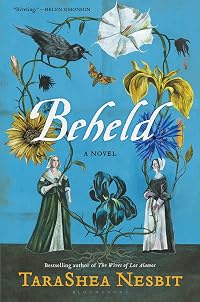
Beheld
by TaraShea Nesbit
On This Page
Description
A New York Times Notable Book of the YearA Publishers Weekly Best Fiction Book of 2020
Most Anticipated Books of 2020 — Vogue, Medium, LitHub
Honoree for the 2021 Society of Midland Authors Prize
Finalist for the 2021 Ohioana Book Award in fiction
"A Must Read Book"-The Massachusetts Book Awards
From the bestselling author of The Wives of Los Alamos comes the riveting story of a stranger's arrival in the fledgling colony of Plymouth, Massachusetts—and a crime that shakes the divided show more community to its core.
Ten years after the Mayflower pilgrims arrived on rocky, unfamiliar soil, Plymouth is not the land its residents had imagined. Seemingly established on a dream of religious freedom, in reality the town is led by fervent puritans who prohibit the residents from living, trading, and worshipping as they choose. By the time an unfamiliar ship, bearing new colonists, appears on the horizon one summer morning, Anglican outsiders have had enough.
With gripping, immersive details and exquisite prose, TaraShea Nesbit reframes the story of the pilgrims in the previously unheard voices of two women of very different status and means. She evokes a vivid, ominous Plymouth, populated by famous and unknown characters alike, each with conflicting desires and questionable behavior.
Suspenseful and beautifully wrought, Beheld is about a murder and a trial, and the motivations—personal and political—that cause people to act in unsavory ways. It is also an intimate portrait of love, motherhood, and friendship that asks: Whose stories get told over time, who gets believed—and subsequently, who gets punished? show less
Tags
Recommendations












Member Reviews
I came to see that threat we feared was not the Wampanoag—our treaty with Massasoit had been long-standing—nor the unknowns beyond the colony’s fences. Instead, the threat came from within our own community.
In 1630, the original Mayflower settlers had been in Plymouth for ten years, their early dreams settled into some sort of reality. The puritans, who originally fled England for the Netherlands, held the power and governed worship, commerce, and even the ways of day-to-day living. Anglican settlers, often indentured servants, were considered a lower class and treated as such. In Beheld, TaraShea Nesbit discards the myths associated with early American colonists, and shows readers real human beings and their all-too-real show more struggles, told in the voices of the marginalized: women and Anglicans.
Americans will recognize William Bradford and Miles Standish from their history books. In Beheld, we see William through the eyes of his wife Alice. William sent for Alice following the death of his first wife Dorothy, shortly after the Mayflower docked in Plymouth. Because Bradford’s diaries make no mention of Dorothy’s death, Nesbit has Alice quietly questioning the circumstances, especially since Dorothy was a close childhood friend. Standish doesn’t come across particularly well either. Anglicans John and Eleanor Billington are disputing their entitlement to land. In the face of Standish’s smug abuse of power, John becomes increasingly angry and unhinged. Nesbit rotates the narrative among these settlers with measured prose that simultaneously sets the scene, develops characters into seemingly real people, and builds suspense. As the colony moves towards the inevitable, its members become increasingly cruel and violent. The pacing of the dénouement felt a bit rushed, but that is a small quibble. Beheld is an excellent example of historical fiction that amplifies voices that have traditionally been silenced show less
In 1630, the original Mayflower settlers had been in Plymouth for ten years, their early dreams settled into some sort of reality. The puritans, who originally fled England for the Netherlands, held the power and governed worship, commerce, and even the ways of day-to-day living. Anglican settlers, often indentured servants, were considered a lower class and treated as such. In Beheld, TaraShea Nesbit discards the myths associated with early American colonists, and shows readers real human beings and their all-too-real show more struggles, told in the voices of the marginalized: women and Anglicans.
Americans will recognize William Bradford and Miles Standish from their history books. In Beheld, we see William through the eyes of his wife Alice. William sent for Alice following the death of his first wife Dorothy, shortly after the Mayflower docked in Plymouth. Because Bradford’s diaries make no mention of Dorothy’s death, Nesbit has Alice quietly questioning the circumstances, especially since Dorothy was a close childhood friend. Standish doesn’t come across particularly well either. Anglicans John and Eleanor Billington are disputing their entitlement to land. In the face of Standish’s smug abuse of power, John becomes increasingly angry and unhinged. Nesbit rotates the narrative among these settlers with measured prose that simultaneously sets the scene, develops characters into seemingly real people, and builds suspense. As the colony moves towards the inevitable, its members become increasingly cruel and violent. The pacing of the dénouement felt a bit rushed, but that is a small quibble. Beheld is an excellent example of historical fiction that amplifies voices that have traditionally been silenced show less
This novel uses the lens of fiction to explore issues of class, religion, and gender in the young Plymouth Colony. The colony’s first murder trial and conviction serves as the central crisis of the book. Multiple voices tell the story, each from their own perspective, and the voices include that of Governor William Bradford’s second wife, Alice; the murderer, John Billington; Billington’s wife, Eleanor; the murder victim, John Newcomen; and William Bradford’s first wife, Dorothy.
I am not a fan of historical novels about real people and events, and this novel didn’t change my mind. It did leave me more aware of the tensions in the colony between the religiously motivated Puritans and the more secular laboring classes.
I am not a fan of historical novels about real people and events, and this novel didn’t change my mind. It did leave me more aware of the tensions in the colony between the religiously motivated Puritans and the more secular laboring classes.
Set in the early years of the Plymouth colony, this novel explores the lives of some less prominent settlers, including women and indentured servants. The narrative voice varies from chapter to chapter, but the most frequent speakers are Alice, second wife of the governor, William Bradford, and Eleanor Billington, wife of an indentured servant who was the first person in the colony executed for murder. Nesbit was curious as to why Bradford's account of the colony never mentioned his first wife or the circumstances surrounding her death; other accounts say that Dorothy accompanied him on the voyage but "slipped overboard" and died. Nesbitt speculates that she and Alice were childhood friends and that perhaps Dorothy, depressed over show more leaving her son behind, committed suicide.
Although most of us know that the pilgrims (or puritans) arrived on the Mayflower, they were not the only passengers. Another ship, the Speedwell, carried tradesmen and their families who were sent by the Merchant Adventurers to support the new community, many of them as indentured servants. When the Speedwell was determined to be unsailworthy, many of these families joined the colonists on the Mayflower. One of these was John Billington. Each male resident of a household was to be granted a plot of land. Billington counted on three plots, one for himself and one for each of his sons, but because one son lived in a different family's home while learning a trade, he was given only two plots. A heavy drinker and frequent troublemaker, Billington's seething resentment eventually erupted into the colony's first murder.
These are the basic historical facts, but the novel is more about the lives of the women and their relationships with their husbands and with one another. Alice, who had arrived a few years after the landing for the specific purpose of marrying her friend's widower, is still adjusting to the prominent role of governor's wife. While friendly with two other women, Elizabeth and Susannah, memories of Dorothy continue to play through her mind. She also clashes with Billington's wife, particularly when her husband sends her to persuade Eleanor that she and John should not attend a dinner for a group of newly-arrived colonists. Behind the scenes, we see the brutality of Miles Standish (especially against the local tribes), the men's jockeying for power, and the investment strategies that were as much a part of the settlement as religious freedom.
Overall, this was an interesting and enjoyable read. The characters well engaging and well developed, and I gained some different views of the Plymouth colonists. show less
Although most of us know that the pilgrims (or puritans) arrived on the Mayflower, they were not the only passengers. Another ship, the Speedwell, carried tradesmen and their families who were sent by the Merchant Adventurers to support the new community, many of them as indentured servants. When the Speedwell was determined to be unsailworthy, many of these families joined the colonists on the Mayflower. One of these was John Billington. Each male resident of a household was to be granted a plot of land. Billington counted on three plots, one for himself and one for each of his sons, but because one son lived in a different family's home while learning a trade, he was given only two plots. A heavy drinker and frequent troublemaker, Billington's seething resentment eventually erupted into the colony's first murder.
These are the basic historical facts, but the novel is more about the lives of the women and their relationships with their husbands and with one another. Alice, who had arrived a few years after the landing for the specific purpose of marrying her friend's widower, is still adjusting to the prominent role of governor's wife. While friendly with two other women, Elizabeth and Susannah, memories of Dorothy continue to play through her mind. She also clashes with Billington's wife, particularly when her husband sends her to persuade Eleanor that she and John should not attend a dinner for a group of newly-arrived colonists. Behind the scenes, we see the brutality of Miles Standish (especially against the local tribes), the men's jockeying for power, and the investment strategies that were as much a part of the settlement as religious freedom.
Overall, this was an interesting and enjoyable read. The characters well engaging and well developed, and I gained some different views of the Plymouth colonists. show less
Because of, you know, life, I had to put Beheld down several times while I was reading and then return a few days or a week later. With many books, this would lessen the enjoyment, but with Beheld the effect was the opposite. Beheld stayed with me through each of those breaks. I kept turning characters and events over in my head, considering what I knew about the historical period (it's set in Plymouth Colony) and Nesbit's thoughtful, multi-angled examination of it.
Nesbit is the author of Wives of Los Alamos, in which the narrator is a collective "we" made up of women whose husbands are working at Los Alamos while the atomic bomb is being invented. This time around, Nesbit explores the first recorded murder in Plymouth Colony, and does show more so through multiple narrators—various colonists, Dorothy Bradford (who drowned in the harbor where pilgrims were about to disembark and enter the "new world"), and Nature herself. The relationships among these characters are complex, so Nesbit isn't just telling us a single story from multiple perspectives. Instead, we come to understand the complicated tapestry holding all these lives together in a variety of ways in the vulnerable, tension-riddled colony.
One key source of tension in Plymouth is the different status and faiths of the various colonists. In school, Plymouth is depicted as homogenous: a group with a shared religion and values committed to a single cause. In fact, the colony was founded not just by Puritans, but also by a number of individuals of other Christian demominations who came as indentured servants and were promised "membership" in the colony after they'd served their seven years' indenture. Tensions roil below the surface between the Puritans who see themselves as the "real" colonists and the formerly indentured who feel marginalized and ill-treated.
This mix of lives and tension makes for fascinating reading. Beheld is a book you'll want to read—and share with friends so you can mull over its many aspects together. show less
Nesbit is the author of Wives of Los Alamos, in which the narrator is a collective "we" made up of women whose husbands are working at Los Alamos while the atomic bomb is being invented. This time around, Nesbit explores the first recorded murder in Plymouth Colony, and does show more so through multiple narrators—various colonists, Dorothy Bradford (who drowned in the harbor where pilgrims were about to disembark and enter the "new world"), and Nature herself. The relationships among these characters are complex, so Nesbit isn't just telling us a single story from multiple perspectives. Instead, we come to understand the complicated tapestry holding all these lives together in a variety of ways in the vulnerable, tension-riddled colony.
One key source of tension in Plymouth is the different status and faiths of the various colonists. In school, Plymouth is depicted as homogenous: a group with a shared religion and values committed to a single cause. In fact, the colony was founded not just by Puritans, but also by a number of individuals of other Christian demominations who came as indentured servants and were promised "membership" in the colony after they'd served their seven years' indenture. Tensions roil below the surface between the Puritans who see themselves as the "real" colonists and the formerly indentured who feel marginalized and ill-treated.
This mix of lives and tension makes for fascinating reading. Beheld is a book you'll want to read—and share with friends so you can mull over its many aspects together. show less
DNF @ 68%. This book seems to be very well researched and it's very well written. The settler's vernacular is written in a way that you are well aware of the time period but you never stumble over any awkward diction. It's also an interesting view point of those times as it is mostly told from the female POV. It was so much fun to listen to their true thoughts that aren't necessarily in keeping with what we believe was the demeanor of their faith. And the character Eleanor - whew - was she snarky, in the best possible way that I wanted to be her friend :)
I was also so struck with the fact that the settlers braved the new world to escape religious persecution but then got here and persecuted those they saw as 'other' in the exact same show more way. Religion certainly can be a double-edged sword and that's made very clear in this book.
So, after all this praise, why my DNF? I began reading and was immediately drawn into the characters and the story but from about 30% to almost 70% the plot slowed to an almost standstill and I was struggling to keep reading. This is a story about the first murder in Plymouth and that didn't happen until 68% and then it was what had expected to happen all along. It was just too slow to keep my interest.
But I know there are tons of readers who enjoy that slow, deep dive into characters and to whom the plot is secondary - and I think you will love this book. It's smart and edgy and an incredibly interesting look at the founders that gives you an entirely new female perspective.
Much thanks to the publisher and NetGalley for allowing me to read an advanced copy. My opinions are entirely my own. show less
I was also so struck with the fact that the settlers braved the new world to escape religious persecution but then got here and persecuted those they saw as 'other' in the exact same show more way. Religion certainly can be a double-edged sword and that's made very clear in this book.
So, after all this praise, why my DNF? I began reading and was immediately drawn into the characters and the story but from about 30% to almost 70% the plot slowed to an almost standstill and I was struggling to keep reading. This is a story about the first murder in Plymouth and that didn't happen until 68% and then it was what had expected to happen all along. It was just too slow to keep my interest.
But I know there are tons of readers who enjoy that slow, deep dive into characters and to whom the plot is secondary - and I think you will love this book. It's smart and edgy and an incredibly interesting look at the founders that gives you an entirely new female perspective.
Much thanks to the publisher and NetGalley for allowing me to read an advanced copy. My opinions are entirely my own. show less
When reading William Bradford's account of Plymouth colony, Nesbit noticed that he never mentions his first wife, who died by falling off the Mayflower once they were in harbor of the new land, or his second wife who came over to join him after he was widowed. In fact, there are really no women mentioned at all. So this novel, set in 1630 Plymouth, gives a voice to Alice Bradford, the second wife, and also to Eleanor Billington, a woman who came on the Mayflower as an indentured servant and has earned her freedom by the time the novel begins.
The novel is told from several points of view, but only the female characters get to speak in first person. There is drama about dispersal of land, which leads to a murder. And this also brings up show more gossip about the death of William Bradford's first wife. There is also lots of conflict between the "chosen" puritans and the colonists who came along without the same religious convictions.
Not a lot happens in this novel, but I liked how the author tries to explore some different aspects of what this early colony might have actually been like, instead of the more reverent and idealized version of events that we, as Americans, are often taught. show less
The novel is told from several points of view, but only the female characters get to speak in first person. There is drama about dispersal of land, which leads to a murder. And this also brings up show more gossip about the death of William Bradford's first wife. There is also lots of conflict between the "chosen" puritans and the colonists who came along without the same religious convictions.
Not a lot happens in this novel, but I liked how the author tries to explore some different aspects of what this early colony might have actually been like, instead of the more reverent and idealized version of events that we, as Americans, are often taught. show less
In August 1630, as the ten-year-old Plymouth Colony awaits a ship from England bearing more colonists, rivalries and resentments divide the settlement. Alice Bradford, the governor’s wife, who sets the scene and narrates much of the novel, ascribes the tension largely to indentured servants who accompanied the pilgrims but don’t follow God’s ways. That summer witnesses the settlement’s first murder and increasing encroachments on indigenous lives and property. Mistress Bradford’s conscience stirs at how the colonists, led by the soldier Myles Standish, have so quickly forgotten how the Wampanoags saved them from starvation through kindness and generosity.
Nesbit performs a great service in her tale of appalling hypocrisy, show more brutality, and greed. Her historical background seems authoritative, and I’m glad to see she’s countered a few myths traditionally spoon-fed in American schools. For instance, the pilgrims weren’t all fleeing religious oppression; many sailed from Holland originally, where they’d found tolerance. Rather, they feared intermarriage with the Dutch, whom they despised, and sought economic opportunity in the New World.
Further, they meant to land in Virginia, of which they had heard favorable reports as to the climate and soil, and which put them further away from the Dutch in New Amsterdam. But the captain of the Mayflower, perhaps because the storm-filled, illness-ridden crossing had taken such a toll, held to a more northern course. From that decision arose New England.
Nesbit performs one other service: She focuses on the women of Plymouth, who have been largely lost to history. Alice comes across especially well, the good wife who sees and understands far more than she can say, who believes implicitly that her husband should rule her as he governs the colony, and who suffers mightily for all that. The novel also pays due homage to the back-breaking work she and other women perform to keep the settlement afloat, about which the historical record is equally mute.
I admire how Alice holds fast to an outlook that her sharp perceptions do nothing to shake, though she herself trembles a little. Also fine is Eleanor Billington, wife to John, both former indentured servants and therefore outliers. Eleanor sees the Puritans for who they are and tries to keep her bad-tempered husband from running afoul of them. Like Alice, she’s trapped: The Billingtons lack the resources to move, and even if they pulled up stakes, they’d lose years’ worth of labor and the land they scrimped to buy.
Nevertheless, despite a terrific premise, worthy themes and historical perspective, and excellent female characters, Beheld disappoints me as a novel. Much as I’m glad to feed my contrarian soul against the lies my teachers told me, and though the portrayal of fundamentalists so willing to oppress others feels relevant today, Beheld lacks nuance and coherent storytelling.
Bradford, though a forceful governor, has no redeeming features as a man except that he’s good in bed — surprise! — or as good as any seventeenth-century Englishwoman has the right to expect. Standish, known as Shrimp because of the short stature of which he’s ashamed, is highly disagreeable, vicious, and treacherous. The murder, announced in the second paragraph, is fairly predictable, and the narrative keeps referring to it before it happens, as if the author (or her agent or editor) feared nobody would keep turning the pages without reminders of Something Really Important. I’ve never liked that authorial technique, which has the opposite effect to what’s intended and makes me think that the novel begins in the wrong place.
The blink-of-an-eye chapters interrupt the flow rather than propel it. Some, from an omniscient narrator called Nature, though prettily written, feel dropped in. All that, and the layout, including unnecessary breaks for different “parts,” gives the impression that the publisher worries that the book looks scanty. I don’t see why length matters, but I did want longer scenes and fuller development, especially of storylines and the male characters.
So with Beheld, you get an arresting, unusual narrative inherently noteworthy because of our national myths, yet which feels as if it has holes. I wonder whether Nesbit, with her solid command of the subject, could have filled a few in. show less
Nesbit performs a great service in her tale of appalling hypocrisy, show more brutality, and greed. Her historical background seems authoritative, and I’m glad to see she’s countered a few myths traditionally spoon-fed in American schools. For instance, the pilgrims weren’t all fleeing religious oppression; many sailed from Holland originally, where they’d found tolerance. Rather, they feared intermarriage with the Dutch, whom they despised, and sought economic opportunity in the New World.
Further, they meant to land in Virginia, of which they had heard favorable reports as to the climate and soil, and which put them further away from the Dutch in New Amsterdam. But the captain of the Mayflower, perhaps because the storm-filled, illness-ridden crossing had taken such a toll, held to a more northern course. From that decision arose New England.
Nesbit performs one other service: She focuses on the women of Plymouth, who have been largely lost to history. Alice comes across especially well, the good wife who sees and understands far more than she can say, who believes implicitly that her husband should rule her as he governs the colony, and who suffers mightily for all that. The novel also pays due homage to the back-breaking work she and other women perform to keep the settlement afloat, about which the historical record is equally mute.
I admire how Alice holds fast to an outlook that her sharp perceptions do nothing to shake, though she herself trembles a little. Also fine is Eleanor Billington, wife to John, both former indentured servants and therefore outliers. Eleanor sees the Puritans for who they are and tries to keep her bad-tempered husband from running afoul of them. Like Alice, she’s trapped: The Billingtons lack the resources to move, and even if they pulled up stakes, they’d lose years’ worth of labor and the land they scrimped to buy.
Nevertheless, despite a terrific premise, worthy themes and historical perspective, and excellent female characters, Beheld disappoints me as a novel. Much as I’m glad to feed my contrarian soul against the lies my teachers told me, and though the portrayal of fundamentalists so willing to oppress others feels relevant today, Beheld lacks nuance and coherent storytelling.
Bradford, though a forceful governor, has no redeeming features as a man except that he’s good in bed — surprise! — or as good as any seventeenth-century Englishwoman has the right to expect. Standish, known as Shrimp because of the short stature of which he’s ashamed, is highly disagreeable, vicious, and treacherous. The murder, announced in the second paragraph, is fairly predictable, and the narrative keeps referring to it before it happens, as if the author (or her agent or editor) feared nobody would keep turning the pages without reminders of Something Really Important. I’ve never liked that authorial technique, which has the opposite effect to what’s intended and makes me think that the novel begins in the wrong place.
The blink-of-an-eye chapters interrupt the flow rather than propel it. Some, from an omniscient narrator called Nature, though prettily written, feel dropped in. All that, and the layout, including unnecessary breaks for different “parts,” gives the impression that the publisher worries that the book looks scanty. I don’t see why length matters, but I did want longer scenes and fuller development, especially of storylines and the male characters.
So with Beheld, you get an arresting, unusual narrative inherently noteworthy because of our national myths, yet which feels as if it has holes. I wonder whether Nesbit, with her solid command of the subject, could have filled a few in. show less
Members
- Recently Added By
Lists

Fiction: Crime, Detective, Mystery
350 works; 3 members
Author Information

3+ Works 842 Members
Awards and Honors
Awards
Distinctions
Notable Lists
Common Knowledge
- Original publication date
- 2020
- People/Characters
- Alice Bradford; William Bradford; John Billington; Eleanor Billington
- Important places
- Plymouth Colony
- Dedication
- In memory of my great-grandmother, Fonda Davis
- First words
- We thought ourselves a murderless colony.
- Last words
- (Click to show. Warning: May contain spoilers.)The head has been taken down from the post above the meetinghouse, but the linen with Wituwamat's blood still waves.
- Canonical DDC/MDS
- 813.6
- Canonical LCC
- PS3614.E467
Classifications
Statistics
- Members
- 411
- Popularity
- 75,168
- Reviews
- 22
- Rating
- (3.62)
- Languages
- English
- Media
- Paper, Audiobook, Ebook
- ISBNs
- 5
- ASINs
- 2