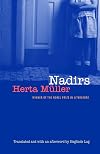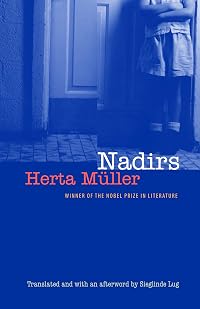
Nadirs
by Herta Müller
On This Page
Description
A collection of stories on life in Romania under Communism, illustrating the violence and the corruption. They are based on the writer's experience in her youth, in a village in the German-speaking part of the country.Tags
Recommendations





























Member Recommendations

Member Reviews
Thin on plot & character development, but rich with poetic observations that slip between hazy half-remembered impressions and the emotional-logic of dreams.
Very good. The stories are fairly plotless, documents of village life rather than 'tales' of any sort. They are brilliantly written, constructed of sparse and oppressively brutal prose. A sense of oppression runs through every line; the regime is hardly ever mentioned but its echoing effect on daily life is total and suffocates everything. This was Muller's first book and later works of hers are more developed in style and subject matter, but I'm glad I read this. And even gladder I didn't live in this time and place, which seems as utterly hopeless as anywhere I've ever read about.
Nadirs is a collection of semi-autobiographical short stories depicting life in a German-speaking Romanian community. Müller’s flat, succinct style is enhanced by her vivid, at times graphic, descriptions of people and places and occasional bouts of surrealism. The title story is very powerful but pretty much every story is extremely bleak and depressing. “Nadirs” takes that to new highs (lows?) as every glimmer of hope or pleasure or beauty is paired with violent or unpleasant imagery. For example, the narrator recalls the fun she has playing with a toy mouse, but it comes just after a section describing in graphic detail how their cats would dismember and eat mice. Pumpkin carving brings to mind her father’s death. Any show more descriptions of nature are juxtaposed with images of rot, decay and death. The story ostensibly describes the narrator’s childhood in a Banat Romanian village but there are some subtle criticisms of the Communist regime – describing how common death is in the cities and the overall mood of hopelessness.
Most of the other stories are short and also describe village life. Besides “Nadirs”, the best ones are those with flights of surrealism – “The Funeral Sermon” which describes the narrator’s father’s funeral heightened by its unreality, “About German Mustaches and Hair Parts” – about a friend who returns to the village and finds it unrecognizable, and “Workday” which seems to be a flat, straightforward depiction of a day but everything is completely off. I found Müller’s short and flat style, at times a listing of events or descriptions, to be rather hypnotic but could easily see how many would find it off-putting. Also, the extreme grimness and bleak mood makes it hard to recommend – it might be one more admirable than likeable. show less
Most of the other stories are short and also describe village life. Besides “Nadirs”, the best ones are those with flights of surrealism – “The Funeral Sermon” which describes the narrator’s father’s funeral heightened by its unreality, “About German Mustaches and Hair Parts” – about a friend who returns to the village and finds it unrecognizable, and “Workday” which seems to be a flat, straightforward depiction of a day but everything is completely off. I found Müller’s short and flat style, at times a listing of events or descriptions, to be rather hypnotic but could easily see how many would find it off-putting. Also, the extreme grimness and bleak mood makes it hard to recommend – it might be one more admirable than likeable. show less
Nadirs is a collection of short stories and one novella (the title selection) narrated by a child, which is supposedly based on Müller's experiences in the Romanian countryside. The stories are incredibly bleak, and every day is filled with cruelty, pain, hunger and hopelessness.
This is a typical excerpt from the novella:
A cough shakes Mother's head and sprays spit from her mouth. Her neck gets all wrinkled in the process. It is short and heavy. At one time, I assume, it must have been beautiful, at one time before I existed.
Ever since I was born my mother's breasts have been sagging, ever since I was born Mother has had bad legs, ever since I was born Mother has had a drooping belly, ever since I was born Mother has had hemorrhoids show more and moans in agony in the bathroom.
Ever since I was born Mother has talked about my gratitude as a child and started crying and scratching the fingernails of one hand with the fingernails of the other hand. Her fingers are cracked and hard.
Only when she counts money are they smooth and limber like spiders spinning a thread.
Even though it is a short collection at 119 pages, I couldn't handle 40 pages of this unremitting despair. show less
This is a typical excerpt from the novella:
A cough shakes Mother's head and sprays spit from her mouth. Her neck gets all wrinkled in the process. It is short and heavy. At one time, I assume, it must have been beautiful, at one time before I existed.
Ever since I was born my mother's breasts have been sagging, ever since I was born Mother has had bad legs, ever since I was born Mother has had a drooping belly, ever since I was born Mother has had hemorrhoids show more and moans in agony in the bathroom.
Ever since I was born Mother has talked about my gratitude as a child and started crying and scratching the fingernails of one hand with the fingernails of the other hand. Her fingers are cracked and hard.
Only when she counts money are they smooth and limber like spiders spinning a thread.
Even though it is a short collection at 119 pages, I couldn't handle 40 pages of this unremitting despair. show less
True to its name, this book is filled with low points; indeed, over and over again, when you think there is no place darker to go, Muller finds some tiny bit of light she has left hidden or off to the side and snuffs it out. She is fond of imagery, and the images are piled thickly and laid out in often poetic though somber language. However, all of the images are deeply dark, and she offers little in the way of hope or resolution. It is a mass grave of images. While she writes well, and is most self-consciously literary, this black monotone is difficult reading, and the lack of movement or resolution in the stories, which are more sorts of dreary tableaus than stories, leaves one wondering what the whole point is. It is suffocating show more among these bodies.
Every now and then, she shows a bit of humor, or finds a little bit of levity in a situation. Perhaps even some irony. Oh, leaden, serious irony! What hope in that wry turn of the lips! Perhaps, maybe, we'll see a gleam in the eye next?
No, the gleam would require light, and any bit of humor or levity is quickly stamped out, usually through a morose twist into despair, and usually within a sentence or two. The bit of light is not allowed to linger. The bodies are rotting. Pressing down upon us and rotting.
I might take some of this as Muller's attempt to indict the communist system she grew up in, which is apparently how most of her reviewers are interpreting her work and certainly is the meme reinfoced by the Nobel committee. More accurately, I might focus on this darkness as a cry against the way the German-language minority was treated in Romania; there's a deep strain of German nationalism in this book. However, Muller herself dispels such thoughts in her first story, which focuses on the relationship of a young German girl (autobiographical?) and the town she lives in with the girl's father, who during the war was a successfully murderous Nazi soldier and after the war was a bully and drunk. No, the dark images are not related only to some abstract communist system or some cry from a suppressed nationalist, they are deeply personal and related to a girl who despises her own rural upbringing and unwitting inheritance. And perhaps even her own existence.
I found this to be an unpleasant and uninteresting work. Even as a fan of a book called Nausea, Nadirs was too much. Too dark, too devoid of light. This was her first work, and I am hoping I will find growth and development in the later work, and perhaps see some of whatever it was that won her that Nobel. There is clearly some talent here, but it is buried beneath several yards of obsessively morose soil. And the soil is not rich; it is poor, infertile, rocky. show less
Every now and then, she shows a bit of humor, or finds a little bit of levity in a situation. Perhaps even some irony. Oh, leaden, serious irony! What hope in that wry turn of the lips! Perhaps, maybe, we'll see a gleam in the eye next?
No, the gleam would require light, and any bit of humor or levity is quickly stamped out, usually through a morose twist into despair, and usually within a sentence or two. The bit of light is not allowed to linger. The bodies are rotting. Pressing down upon us and rotting.
I might take some of this as Muller's attempt to indict the communist system she grew up in, which is apparently how most of her reviewers are interpreting her work and certainly is the meme reinfoced by the Nobel committee. More accurately, I might focus on this darkness as a cry against the way the German-language minority was treated in Romania; there's a deep strain of German nationalism in this book. However, Muller herself dispels such thoughts in her first story, which focuses on the relationship of a young German girl (autobiographical?) and the town she lives in with the girl's father, who during the war was a successfully murderous Nazi soldier and after the war was a bully and drunk. No, the dark images are not related only to some abstract communist system or some cry from a suppressed nationalist, they are deeply personal and related to a girl who despises her own rural upbringing and unwitting inheritance. And perhaps even her own existence.
I found this to be an unpleasant and uninteresting work. Even as a fan of a book called Nausea, Nadirs was too much. Too dark, too devoid of light. This was her first work, and I am hoping I will find growth and development in the later work, and perhaps see some of whatever it was that won her that Nobel. There is clearly some talent here, but it is buried beneath several yards of obsessively morose soil. And the soil is not rich; it is poor, infertile, rocky. show less
"Lord God, heavenly host, deliver us from this exile"
"The flowers in the vases are such big bouquets that they are thickets, beautiful and in disarray, as if they were lives."
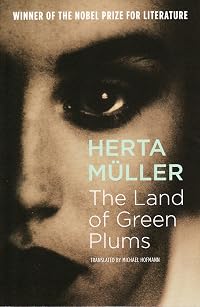
I purchased this book, Nadirs (Niederungen), by Herta Müller because our book club was reading her The Land of Green Plums, and a copy was not available. I bought this volume of short stories, hoping that it would get me into her style as preparation for reading the novel. As it was the novel arrived the next day, and I read it in one sitting (Wednesday) and this the next day (Thursday). I was thoroughly taken with both of these volumes.
The quotes above are from two stories in Nadirs. The first is a quote from the short story, "Oppressive Tango" which provides a show more obsessively detailed description of a funeral (although that is not an unusual topic for Müller). The second quote is from another short story in the same volume, "Black Park." Each of them gives you some kind of idea as to the atmosphere of these stories. The are almost "Lamentations" in their effect, and the quote about the bouquets gives a measure of their texture.
In these stories, Müller recounts her childhood as an ethnic German (Swabian) living in the Banat region of Romania during the period of Ceaușescu. The perspective is always that of a child, probing, detailed, literal, and dream-like. Likewise all is seen in the microcosm of the village, the xenophobic village in which outsiders literally do not exist. Characters are identified more by their foibles than by their given names, and all is seen through a scrim of spit, grease, fat, mud, piss and shit. In one interesting section, children are asked to take on roles in a game, being either Russian or German. They object, wanting only to be German - and when being given permission to do so divide along Saxon-Swabian lines.
There is a heavy dose of fate in these pages. The mothers, fathers, aunts, and children seem not to be able to wrest any kind of freedom around their actions, and function as players assigned a role. Although she does not expressly comment on the Romanian dictator in this volume (there is only one mention that I could find) the influence is certainly there. Then again, this is the village, removed from the city. This is the land of fields, orchards, house gardens, and geese. This is a child's world.
This book was of especial interest to me since my cousin's wife, who lives in the Schwartzwald in Baden-Wurttemberg Germany, came from a German colony in Romania. I am anxious to talk with her about this volume and author. I read these stories in one sitting. This is something that I do not recommend that you do. The horror and darkness is blunted by a quick read. These need to be savored. show less
"The flowers in the vases are such big bouquets that they are thickets, beautiful and in disarray, as if they were lives."
I purchased this book, Nadirs (Niederungen), by Herta Müller because our book club was reading her The Land of Green Plums, and a copy was not available. I bought this volume of short stories, hoping that it would get me into her style as preparation for reading the novel. As it was the novel arrived the next day, and I read it in one sitting (Wednesday) and this the next day (Thursday). I was thoroughly taken with both of these volumes.
The quotes above are from two stories in Nadirs. The first is a quote from the short story, "Oppressive Tango" which provides a show more obsessively detailed description of a funeral (although that is not an unusual topic for Müller). The second quote is from another short story in the same volume, "Black Park." Each of them gives you some kind of idea as to the atmosphere of these stories. The are almost "Lamentations" in their effect, and the quote about the bouquets gives a measure of their texture.
In these stories, Müller recounts her childhood as an ethnic German (Swabian) living in the Banat region of Romania during the period of Ceaușescu. The perspective is always that of a child, probing, detailed, literal, and dream-like. Likewise all is seen in the microcosm of the village, the xenophobic village in which outsiders literally do not exist. Characters are identified more by their foibles than by their given names, and all is seen through a scrim of spit, grease, fat, mud, piss and shit. In one interesting section, children are asked to take on roles in a game, being either Russian or German. They object, wanting only to be German - and when being given permission to do so divide along Saxon-Swabian lines.
There is a heavy dose of fate in these pages. The mothers, fathers, aunts, and children seem not to be able to wrest any kind of freedom around their actions, and function as players assigned a role. Although she does not expressly comment on the Romanian dictator in this volume (there is only one mention that I could find) the influence is certainly there. Then again, this is the village, removed from the city. This is the land of fields, orchards, house gardens, and geese. This is a child's world.
This book was of especial interest to me since my cousin's wife, who lives in the Schwartzwald in Baden-Wurttemberg Germany, came from a German colony in Romania. I am anxious to talk with her about this volume and author. I read these stories in one sitting. This is something that I do not recommend that you do. The horror and darkness is blunted by a quick read. These need to be savored. show less
Nadirs is a collection of semi-autobiographical short stories depicting the youth of Herta Muller’s in a Germany speaking region of the Romanian countryside. Facts mixed with fantasy, the author recollects memories of her childhood in short abrupt sentences, somewhat stream of conscientiousness, possibly close to how a child thinks. The fantasy elements at times add confusion as it’s not meant to be literal. At other times, my mind wandered in art mode – surrealism effect (Dali with melting clocks, time melting, lots of death…) or cubism effect (Picasso with jagged edges, harsh livelihood, rain described as glass) or impressionism effect (Monet with florals, a softness in the countryside). Joy is inevitably mixed with show more gruesomeness; I failed to take in all the words, painting pictures of scenes sometimes best not visualized.
All the stories are very short except the title tale, “Nadirs”, which was the most telling of the various elements in her life. Given the setting is vastly different than my own, I find some aspects to be hmm, curious, such as mildew on walls are salty and the goats like to lick them. Is that real? The internet didn’t give me an answer, Lol. The “Village Chronicle” gave a matter of fact account of her surroundings, which I appreciated, while “Workday” was a humorous take on a bad way to start the work day. “Rotten Pears” has the young author on a road trip with father, aunt, and cousin where she hears “Aunt is moaning. Father is panting.” Upon returning home and lying to her mother that everyone slept separately, she then hears “Mother moans. Father pants.” Yikes… With a perpetually drunk father, corporal punishment, images of death, animals galore, and a less than idyllic life, a book like this reminds me my youth didn’t suck so much after all. It is not a book that I would readily recommend to anyone. If you like international (non-U.S., non-Brit) lit and appreciate some darkness in the words, then go for it. Otherwise, stay away.
Some quotes:
On death:
“The pulp is craved out of the pumpkins. Two eyes, a triangular nose and a mouth are cut into the shell. A candle is place in the pumpkin shell… The children are swaying the cut-off heads through the dark. They run into the houses crying… The doctor is much too late. My father’s puked out his liver. There in the bucket it stinks like rotten soil… In the cavity of my father’s head, the candle has duped itself into death.”
On animal slaughtering – it’s rather gruesome:
“A village full of strange dogs was in our yard. They were licking the blood from the straw of the manure heap and dragging claws and skin scraps across the barn floor. Uncle pulled them from their mouths. They weren’t allowed in the street with them.
Two eyes were lying in the liquid manure. The cat bit into one of them with her canine tooth. There was a crack, and bluish slime splattered in her face. She shook herself and walked off with stiff spread-out legs.”
On corporal punishment – I grew up with corporal punishment but boy, this is a level up…
“Every day at noon, Mother brought warm milk to the kitchen, warm from the cow. I asked her if she would be sad too if they took me away from her, if they were to slaughter me. I fell against the closet door, I had a blue bump on my forehead, I had a swollen upper lip and a purple bruise on my arm. All that from a slap.”
And
“…when the priest said that lipsticks are made from blood of fleas and other disgusting animals I asked myself why the Madonna at the side altar was using lipstick. I also asked the priest and then he beat my hands sore with his ruler and sent me home immediately. I couldn’t bend my fingers for several days afterward.”
On her grandmother’s cast – apparently country living doesn’t mix well with a sparkling white cast:
“Grandmother’s cast had gotten dirty with time. The city doctor who had given her this cast had a bloated and very pale face. When he saw Grandmother’s cast his fact go even bigger.
On her cast there were a few splashes of cow manure, some traces of green tomato leaves, many blue plum stains and some grease stains. There was a whole summer on her cast…” show less
All the stories are very short except the title tale, “Nadirs”, which was the most telling of the various elements in her life. Given the setting is vastly different than my own, I find some aspects to be hmm, curious, such as mildew on walls are salty and the goats like to lick them. Is that real? The internet didn’t give me an answer, Lol. The “Village Chronicle” gave a matter of fact account of her surroundings, which I appreciated, while “Workday” was a humorous take on a bad way to start the work day. “Rotten Pears” has the young author on a road trip with father, aunt, and cousin where she hears “Aunt is moaning. Father is panting.” Upon returning home and lying to her mother that everyone slept separately, she then hears “Mother moans. Father pants.” Yikes… With a perpetually drunk father, corporal punishment, images of death, animals galore, and a less than idyllic life, a book like this reminds me my youth didn’t suck so much after all. It is not a book that I would readily recommend to anyone. If you like international (non-U.S., non-Brit) lit and appreciate some darkness in the words, then go for it. Otherwise, stay away.
Some quotes:
On death:
“The pulp is craved out of the pumpkins. Two eyes, a triangular nose and a mouth are cut into the shell. A candle is place in the pumpkin shell… The children are swaying the cut-off heads through the dark. They run into the houses crying… The doctor is much too late. My father’s puked out his liver. There in the bucket it stinks like rotten soil… In the cavity of my father’s head, the candle has duped itself into death.”
On animal slaughtering – it’s rather gruesome:
“A village full of strange dogs was in our yard. They were licking the blood from the straw of the manure heap and dragging claws and skin scraps across the barn floor. Uncle pulled them from their mouths. They weren’t allowed in the street with them.
Two eyes were lying in the liquid manure. The cat bit into one of them with her canine tooth. There was a crack, and bluish slime splattered in her face. She shook herself and walked off with stiff spread-out legs.”
On corporal punishment – I grew up with corporal punishment but boy, this is a level up…
“Every day at noon, Mother brought warm milk to the kitchen, warm from the cow. I asked her if she would be sad too if they took me away from her, if they were to slaughter me. I fell against the closet door, I had a blue bump on my forehead, I had a swollen upper lip and a purple bruise on my arm. All that from a slap.”
And
“…when the priest said that lipsticks are made from blood of fleas and other disgusting animals I asked myself why the Madonna at the side altar was using lipstick. I also asked the priest and then he beat my hands sore with his ruler and sent me home immediately. I couldn’t bend my fingers for several days afterward.”
On her grandmother’s cast – apparently country living doesn’t mix well with a sparkling white cast:
“Grandmother’s cast had gotten dirty with time. The city doctor who had given her this cast had a bloated and very pale face. When he saw Grandmother’s cast his fact go even bigger.
On her cast there were a few splashes of cow manure, some traces of green tomato leaves, many blue plum stains and some grease stains. There was a whole summer on her cast…” show less
Members
- Recently Added By
Published Reviews
Premio Nobel de Literatura 2009. El presente volumen reúne quince relatos –localizados en su mayoría en un mundo rural inclemente, cerrado y opresivo– que nos hacen recorrer, tras la mirada viviseccionadora de una niña, escenas cotidianas en la vida de una pequeña comunidad de ascendencia suaba. El núcleo familiar, la muerte, los juegos infantiles, el sexo, la iglesia y la escuela, el show more baile, los animales y el huerto se van plasmando con una engañosa ingenuidad que convierte la realidad en brutal pesadilla. Por encima de la anécdota la naturaleza se impone, incluso en las breves escenas de la vida urbana, en cada una de las páginas del libro, destilando una intensa calidad poética con la fuerza de sus imágenes casi oníricas. show less
added by pacocillero
Author Information

90+ Works 5,148 Members
Born in Romania in 1953, Herta Müller lost her job as a teacher and suffered repeated threats after refusing to cooperate with Ceausescu's Secret Police. She succeeded in emigrating in 1987 and now lives in Berlin. The recipient of the European Literature Prize, she has also won the International IMPAC Dublin Literary Award for her previous show more novel, The Land of Green Plums. Müller was awarded the Nobel Prize in Literature in 2009. (Publisher Provided) Herta Müller was born in Nitzkydorf, Romania on August 17, 1953 to German parents. She studied German studies and Romanian literature at Timisoara University. While there, she became part of the Aktionsgruppe Banat, a group of idealistic Romanian-German writers seeking freedom of expression under the Ceaucescu dictatorship. After graduation, she worked as a translator in a machine factory, but was fired for refusing to cooperate with the secret police. Her first short story collection, Niederungen, was published in 1982 in a censored form. She immigrated to West Germany in 1987. She is a novelist, poet and essayist whose works depict the harsh conditions of life in Communist Romania under the repressive Nicolae Ceausescu regime. Her works include Herztier or The Land of Green Plums; The Appointment; Der Fuchs War Damals Schon der Jäger or The Passport; and Atemschaukel or Everything I Possess I Carry with Me. She has won numerous awards including the Marieluise-Fleißer Prize in 1990, the Kranichsteiner Literary Prize in 1991, the Kleist Prize in 1994, and the 2009 Nobel Prize in Literature. (Bowker Author Biography) show less
Some Editions
Awards and Honors
Series
Belongs to Publisher Series
Work Relationships
Is contained in
Common Knowledge
- Canonical title
- Nadirs
- Original title
- Niederungen
- Original publication date
- 1982
- Important places*
- Zwaben, Duitsland; Roemenië
- First words
- At the railway station, relatives were running alongside the puffing train.
- Last words
- (Click to show. Warning: May contain spoilers.)I work for eight hours.
- Publisher's editor*
- University of Nebraska Press
- Blurbers
- Jones, Calvin N.; Budzynski, Brian
- Original language
- German
*Some information comes from Common Knowledge in other languages. Click "Edit" for more information.
Classifications
- Genres
- Fiction and Literature, General Fiction
- DDC/MDS
- 833.914 — Literature & rhetoric German & related literatures German fiction 1900- 1900-1990 1945-1990
- LCC
- PT2673 .U29234 .N5413 — Language and Literature German, Dutch and Scandinavian literatures German literature Individual authors or works 1961-2000
- BISAC
Statistics
- Members
- 343
- Popularity
- 92,267
- Reviews
- 20
- Rating
- (3.46)
- Languages
- 14 — Catalan, Czech, Danish, Dutch, English, Finnish, French, German, Italian, Polish, Portuguese (Portugal), Slovenian, Spanish, Swedish
- Media
- Paper, Audiobook, Ebook
- ISBNs
- 35
- ASINs
- 5