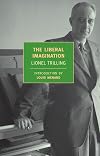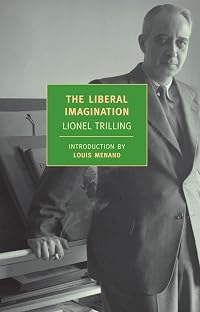
The Liberal Imagination
by Lionel Trilling
On This Page
Description
"Trilling's best and most influential collection of essays shows how criticism, written with grace, style, and a self-questioning cast of mind, can itself become a form of literature, as well as a valuable contribution to how we think about society.". "The dialectical method at its peak, honed to revelatory art.". HTML:"One felt that the essays of The Liberal Imagination were helping to generate a new kind of discourse; in them the traditional disparities between English and American ways of show more discussing both literature and society were being transcended. The specific means of this transcendence had largely to do with the intensity and luminosity of Trilling's mind...". "Lionel Trilling was so compelling that he mesmerized many of his Columbia students for life, away from what he regarded as the illusions about progress fostered by the liberal imagination.". "One of the most important literary critics of mid-20th century America.". "After his death, Lionel Trilling still exerts great influence on the landscape of American culture.". HTML:"The essays in [The Liberal Imagination] are remarkable for persuasiveness with which they draw attention to the importance for much, if not all great literature, of the tragic, the ironic, and the basically unjust elements in life.". HTML:The Liberal Imagination is one of the most admired and influential works of criticism of the last century, a work that is not only a masterpiece of literary criticism but an important statement about politics and society. Published in 1950, one of the chillier moments of the Cold War, Trilling's essays examine the promise --and limits--of liberalism, challenging the complacency of a naïve liberal belief in rationality, progress, and the panaceas of economics and other social sciences, and asserting in their stead the irreducible complexity of human motivation and the tragic inevitability of tragedy. Only the imagination, Trilling argues, can give us access and insight into these realms and only the imagination can ground a reflective and considered, rather than programmatic and dogmatic, liberalism.
Writing with acute intelligence about classics like Huckleberry Finn and the novels of Henry James and F. Scott Fitzgerald, but also on such varied matters as the Kinsey Report and money in the American imagination, Trilling presents a model of the critic as both part of and apart from his society, a defender of the reflective life that, in our ever more rationalized world, seems ever more necessary--and ever more remote.
. show less
Tags
Recommendations





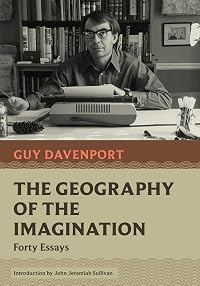
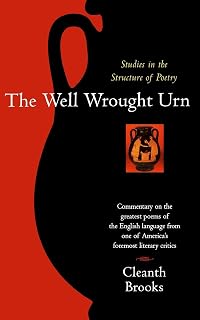
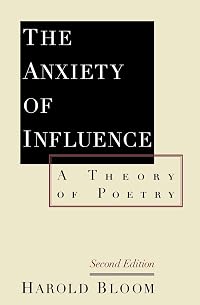
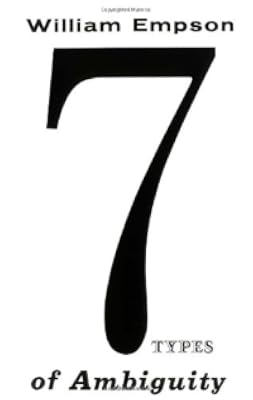








Member Reviews
Trilling, Lionel. The Liberal Imagination. 1950. Introduction by Louis Menand. New York Review of Books, 2009.
Lionel Trilling’s classic collection of essays from such journals as the Partisan Review in the 1940s provides a refreshing antidote to the tweets and blog posts that often serve for critical thought these days. Trilling was, according to Louis Menand, a “liberal anticommunist” with a grudge against the American Marxism typified by the literary historian V. L. Parrington. Parrington, he said, had a narrowly materialist view of reality. Trilling’s critique of Marxism made old-school radicals like Irving Howe say he lacked social conscience. Trilling has a sharp eye for the overly simple. He admires Freud but is critical show more of Sherwood Anderson and others who oversimplified Freudian insights. Even Freud, he says, does that at times. He praises Henry James and Mark Twain, both of whom he said had a well-nuanced realism. In talking about Twain, he quotes Pascal’s comment that a river is a road that moves. Huckleberry Finn, he says, has moral passion and a good blend of romantic imagination and social realism. Trilling also admires the blend of realism and romanticism in the early Wordsworth. Wordsworth’s Immortality Ode, he says, is not a poem about growing old but a poem about growing up. He appreciates Tacitus for having a more nuanced view of history than he is usually credited with. He deplores Kipling for oversimplifying nationalism and Kinsey for dehumanizing sex. He likes the moral realism of European comedy of manners, a form he says is rare in American literature. F. Scott Fitzgerald he sees as a moralist who depicts an unresolved struggle between free will and circumstance. Trilling does not think the novel is a dead form, but he does not like writers he thinks ideological or self-indulgent, like Dos Passos, O’Neill and Wolfe. He prefers writers like Faulkner and Hemingway who express all the contradictions in American culture. In sum, Trilling’s attack on Parrington may be beating an already dead horse, and I am not sure many would agree that The Princess Casamassima is the best novel by Henry James. But his discussions of Twain and Wordsworth are thoughtful and his warnings against ideological excesses are more apt than ever. 4 stars. show less
Lionel Trilling’s classic collection of essays from such journals as the Partisan Review in the 1940s provides a refreshing antidote to the tweets and blog posts that often serve for critical thought these days. Trilling was, according to Louis Menand, a “liberal anticommunist” with a grudge against the American Marxism typified by the literary historian V. L. Parrington. Parrington, he said, had a narrowly materialist view of reality. Trilling’s critique of Marxism made old-school radicals like Irving Howe say he lacked social conscience. Trilling has a sharp eye for the overly simple. He admires Freud but is critical show more of Sherwood Anderson and others who oversimplified Freudian insights. Even Freud, he says, does that at times. He praises Henry James and Mark Twain, both of whom he said had a well-nuanced realism. In talking about Twain, he quotes Pascal’s comment that a river is a road that moves. Huckleberry Finn, he says, has moral passion and a good blend of romantic imagination and social realism. Trilling also admires the blend of realism and romanticism in the early Wordsworth. Wordsworth’s Immortality Ode, he says, is not a poem about growing old but a poem about growing up. He appreciates Tacitus for having a more nuanced view of history than he is usually credited with. He deplores Kipling for oversimplifying nationalism and Kinsey for dehumanizing sex. He likes the moral realism of European comedy of manners, a form he says is rare in American literature. F. Scott Fitzgerald he sees as a moralist who depicts an unresolved struggle between free will and circumstance. Trilling does not think the novel is a dead form, but he does not like writers he thinks ideological or self-indulgent, like Dos Passos, O’Neill and Wolfe. He prefers writers like Faulkner and Hemingway who express all the contradictions in American culture. In sum, Trilling’s attack on Parrington may be beating an already dead horse, and I am not sure many would agree that The Princess Casamassima is the best novel by Henry James. But his discussions of Twain and Wordsworth are thoughtful and his warnings against ideological excesses are more apt than ever. 4 stars. show less
Lionel Trilling’s The Liberal Imagination comprises fifteen essays that range in time from 1946 to 1948. The book was first published in 1950. The collection provides a potpourri of intellectual refinements on the state of American literature in the late 1940s. He starts with a focus on the relation between literature and society, and how that relationship has changed over time.
As a side note: Trilling wrote these essays just a few years before people started watching TV, when reading habits rapidly declined—so the book provides a time capsule when there was still a dynamic relationship between the novels, poetry, and essays of the day, and society’s values, ideas, and norms. The average person today might be surprised at how show more influential literature once was to society and prevailing ideologies.
Back to Trilling’s time: Society and literature were inextricably linked in the 1940s and earlier, and this book provides analysis and criticism of that interplay. As examples of this evolution, Trilling references dozens of authors, from Plato to Faulkner, with varied representatives from the many eras in between.
Some authors suffer significantly under Trilling’s scrutiny: Dreiser, Dos Passos, O’Neill, Sherwood Anderson, Thucydides, Kipling, among others, he considers lesser figures. To paraphrase, these authors are viewed as naïve and self-absorbed, with limited intellectual faculties, and less in touch with the complicated subtleties of the social and psychological realities around them. They give us only a meager façade of literary art instead of the real thing.
Conversely, authors faring better include Henry James, Faulkner, Hemmingway, Tacitus, Aristotle, Fitzgerald, T. S. Eliot, Stendhal, Dickens, Flaubert, Balzac, and several others. These authors are viewed as giving us deeper and more powerful insights into the complexities of life, offering more profound and rewarding experiences for the reader. These greater authors also played a more significant rôle in the development of human societies, according to Trilling.
Of course, rattling off names of lesser and greater authors sounds dégagé and presumptuous out of context. I should emphasize that Trilling provides persuasive arguments and à propos examples to support his appraisals. The lesser authors have in common a tendency to over-confident declarations about a contrived self-serving version of reality. They emphasize brute emotional force that indicates a limited range of intellect and experience. Readers are manœuvred to feel good short-term, but there is little long-term learning or reward after the reading. Conversely, the greater authors have in common a more astute analysis of real-life experience that helps us better understand our social and psychological realities. According to Trilling, these preëminent authors reflect wider experience and deeper intellect in their works.
The general public, however, is not so coöperative—popular preferences do not seem to align with Trilling’s appraisals. Trilling points out that his so-called lesser authors are in fact more popular than the greater authors. The apparent difference lies in an affinity for emotional impact (lesser authors), regardless of expositional incoherence; versus a public mistrust of intellectuals (greater authors), regardless of deeper insights and æsthetic quality.
Another tension that Trilling highlights is the historical scholarship of a literary work’s context, versus the New Critics who say that a “work of art” stands alone outside of history. New Critics were Trilling’s coævals in the 1940s, and they dominated literary criticism at the time. New Critics discount any information about the author’s era, culture, social milieu, personality, etc., in their study of a literary work. New Critics treat the work as a bubble-wrapped ænigma isolated from the roots and atmosphere of its creation. Trilling disagrees with this view of a novel, for example, being a self-contained, self-referential æsthetic object. Trilling takes the position that “a literary work is ineluctably a fact of history, and, what is more important, that its historicity is a fact in our æsthetic experience” (184).
Culture changes over time, and a literary work is the product of its particular moment in a changing culture. Trilling notes the life-art interplay: culture influences art, and art influences culture, in the ongoing cycle of cause and effect. Trying to extract a work from its culture and time (New Criticism) strips away much of the meaning and significance of a literary work. Trilling argues that scholarship into the period, and into the author, give us a more thorough comprehension of the complex layers of literary art, and a more accurate critical appraisal. For Trilling, the roots and the atmosphere are vital to understanding our art as part of our existence.
The book touches on other topics such as the Romantic poets and epistemology, Mark Twain’s Huckleberry Finn, the rôle of Little Magazines, a look at Freud’s influence on criticism, and other topics.
As a bonus above and beyond this potpourri of intellectual refinements on the state of American literature, we discover that Trilling himself is a great writer. Academic books like The Liberal Imagination can be intimidating, stereotypically dreaded like reading an encyclopædia. Not so for this book. This book is lively and well written, every page drawing the reader forward. Every essay stimulates interesting thought vis-à-vis life, society, culture, and literature. Trilling’s insights and perspective reward the reader and make the time commitment to read this book very much worthwhile. show less
As a side note: Trilling wrote these essays just a few years before people started watching TV, when reading habits rapidly declined—so the book provides a time capsule when there was still a dynamic relationship between the novels, poetry, and essays of the day, and society’s values, ideas, and norms. The average person today might be surprised at how show more influential literature once was to society and prevailing ideologies.
Back to Trilling’s time: Society and literature were inextricably linked in the 1940s and earlier, and this book provides analysis and criticism of that interplay. As examples of this evolution, Trilling references dozens of authors, from Plato to Faulkner, with varied representatives from the many eras in between.
Some authors suffer significantly under Trilling’s scrutiny: Dreiser, Dos Passos, O’Neill, Sherwood Anderson, Thucydides, Kipling, among others, he considers lesser figures. To paraphrase, these authors are viewed as naïve and self-absorbed, with limited intellectual faculties, and less in touch with the complicated subtleties of the social and psychological realities around them. They give us only a meager façade of literary art instead of the real thing.
Conversely, authors faring better include Henry James, Faulkner, Hemmingway, Tacitus, Aristotle, Fitzgerald, T. S. Eliot, Stendhal, Dickens, Flaubert, Balzac, and several others. These authors are viewed as giving us deeper and more powerful insights into the complexities of life, offering more profound and rewarding experiences for the reader. These greater authors also played a more significant rôle in the development of human societies, according to Trilling.
Of course, rattling off names of lesser and greater authors sounds dégagé and presumptuous out of context. I should emphasize that Trilling provides persuasive arguments and à propos examples to support his appraisals. The lesser authors have in common a tendency to over-confident declarations about a contrived self-serving version of reality. They emphasize brute emotional force that indicates a limited range of intellect and experience. Readers are manœuvred to feel good short-term, but there is little long-term learning or reward after the reading. Conversely, the greater authors have in common a more astute analysis of real-life experience that helps us better understand our social and psychological realities. According to Trilling, these preëminent authors reflect wider experience and deeper intellect in their works.
The general public, however, is not so coöperative—popular preferences do not seem to align with Trilling’s appraisals. Trilling points out that his so-called lesser authors are in fact more popular than the greater authors. The apparent difference lies in an affinity for emotional impact (lesser authors), regardless of expositional incoherence; versus a public mistrust of intellectuals (greater authors), regardless of deeper insights and æsthetic quality.
Another tension that Trilling highlights is the historical scholarship of a literary work’s context, versus the New Critics who say that a “work of art” stands alone outside of history. New Critics were Trilling’s coævals in the 1940s, and they dominated literary criticism at the time. New Critics discount any information about the author’s era, culture, social milieu, personality, etc., in their study of a literary work. New Critics treat the work as a bubble-wrapped ænigma isolated from the roots and atmosphere of its creation. Trilling disagrees with this view of a novel, for example, being a self-contained, self-referential æsthetic object. Trilling takes the position that “a literary work is ineluctably a fact of history, and, what is more important, that its historicity is a fact in our æsthetic experience” (184).
Culture changes over time, and a literary work is the product of its particular moment in a changing culture. Trilling notes the life-art interplay: culture influences art, and art influences culture, in the ongoing cycle of cause and effect. Trying to extract a work from its culture and time (New Criticism) strips away much of the meaning and significance of a literary work. Trilling argues that scholarship into the period, and into the author, give us a more thorough comprehension of the complex layers of literary art, and a more accurate critical appraisal. For Trilling, the roots and the atmosphere are vital to understanding our art as part of our existence.
The book touches on other topics such as the Romantic poets and epistemology, Mark Twain’s Huckleberry Finn, the rôle of Little Magazines, a look at Freud’s influence on criticism, and other topics.
As a bonus above and beyond this potpourri of intellectual refinements on the state of American literature, we discover that Trilling himself is a great writer. Academic books like The Liberal Imagination can be intimidating, stereotypically dreaded like reading an encyclopædia. Not so for this book. This book is lively and well written, every page drawing the reader forward. Every essay stimulates interesting thought vis-à-vis life, society, culture, and literature. Trilling’s insights and perspective reward the reader and make the time commitment to read this book very much worthwhile. show less
Do I agree with everything Trilling says? Of course not: he's disturbingly keen on a very orthodox Freud, and he's not immune to the old 'the cure for the problems of democracy is more democracy line;' and I'm not sure how those two tendencies mesh. Also, early 21st century America is a very different place than mid 20th century America. It's hard to imagine a moment in history when the rationalists were on the offensive and everything was being quantified. Today I would say the irrationalists are definitely on the defensive. But Trilling's book is still fabulous: first, he argues that the question is not limited to reason on the one hand, and the irrational on the other. There are kinds of reason, and kinds of the irrational. You can't show more just pick a side. Second, he's willing to get in the trenches and shout it loud: books matter! They help you think better! Literature has a purpose! I'd like to throw a few dozen copies of this at Stanley Fish's head on the right, and at the heads of people on the left who think it's cool to disdain rational argument. show less
As I recall this is a collection of essays that centre around the idea of why literature is worthy of "serious" study. It was a course requirement, but I believe still it is an adequate treatment of the theme.
"Pixie Lattman" on inside front cover
Ratings
Members
- Recently Added By
Lists

Edward Gorey Covers
150 works; 8 members

Modern Library 100 Best Nonfiction Books
100 works; 8 members

KIB Non-Fiction Book Cloud
41 works; 1 member

Books Read in 2023
5,638 works; 147 members

Art Books
16 works; 1 member

Books Cited in Digging Up the Dead by Michael Kammen
183 works; 1 member
Author Information

44+ Works 3,295 Members
Trilling has exerted a wide influence upon literature and criticism: as university professor at Columbia, where he taught English literature, and in his long association with Partisan Review, Kenyon Review, and the Kenyon School of English (now the School of Letters, Indiana University). He considered himself a true "liberal"---having a "vision of show more a general enlargement of [individual] freedom and rational direction in human life. Yet even liberalism, Trilling insisted, was simply one of several ways of organizing the complexity of life; however, it can reveal "variousness and possibility" just as literature, its subject, does. Trilling was viewed as a genteel moralist, but never would settle for mere simplification in literary analysis even if it led to understanding. (Bowker Author Biography) show less
Some Editions
Awards and Honors
Series
Belongs to Publisher Series
Common Knowledge
- Canonical title
- The Liberal Imagination
- Original publication date
- 1950
- Dedication
- To Jacques Barzun
- First words
- It is possible to say of V.L. Parrington that with his Main Currents in American Thought he has had an influence on our conception of American culture which is not equaled by that of any other writer of the last two de... (show all)cades.
Classifications
Statistics
- Members
- 592
- Popularity
- 49,538
- Reviews
- 5
- Rating
- (3.83)
- Languages
- English, Portuguese, Spanish
- Media
- Paper, Ebook
- ISBNs
- 12
- ASINs
- 17