Prairie Lotus
by Linda Sue Park
On This Page
Description
Prairie Lotus is a powerful, touching, multilayered book about a girl determined to fit in and realize her dreams: getting an education, becoming a dressmaker in her father's shop, and making at least one friend. Acclaimed, award-winning author Linda Sue Park has placed a young half-Asian girl, Hanna, in a small town in America's heartland, in 1880. Hanna's adjustment to her new surroundings, which primarily means negotiating the townspeople's almost unanimous prejudice against Asians, is at show more the heart of the story. Narrated by Hanna, the novel has poignant moments yet sparkles with humor, introducing a captivating heroine whose wry, observant voice will resonate with readers. In Dakota Territory in the 1880s, half-Chinese Hanna and her white father face racism and resistance to change as they try to make a home for themselves. Includes author's note. show lessTags
Recommendations




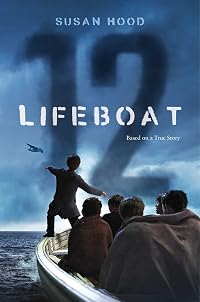
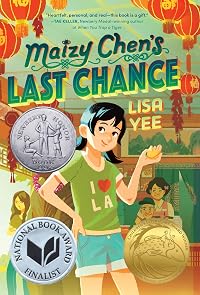
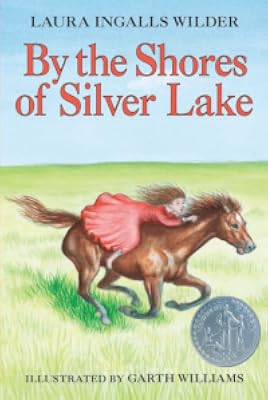
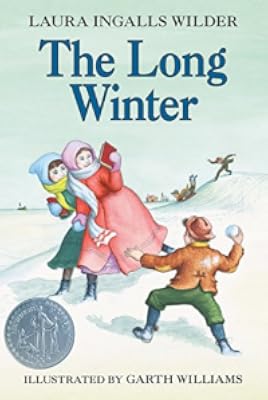
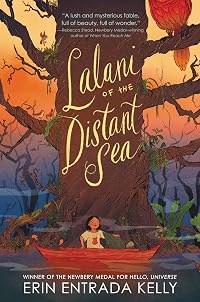
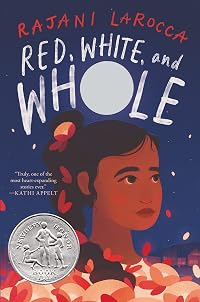
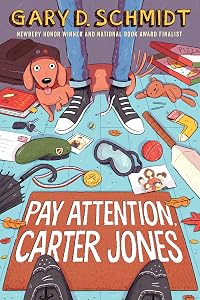
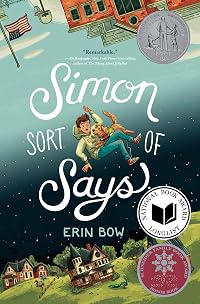
Member Recommendations

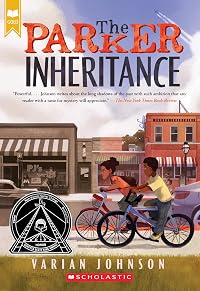
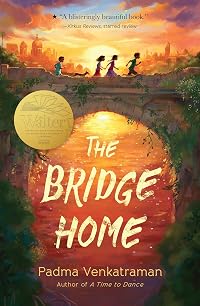
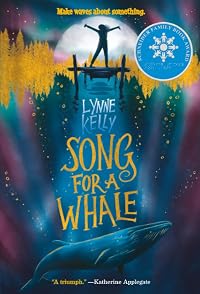
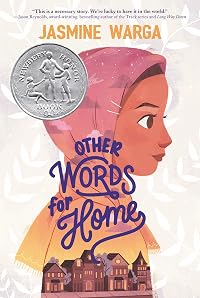
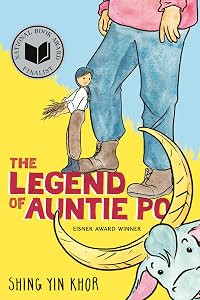
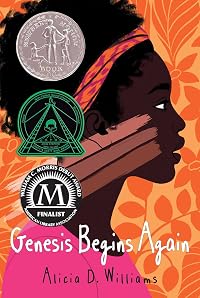
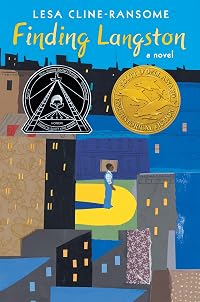
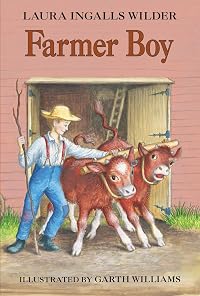
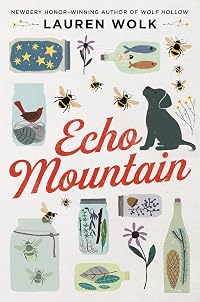
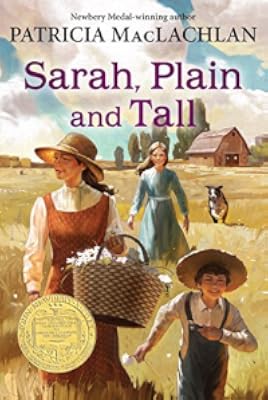
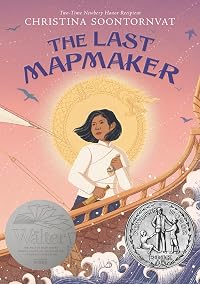
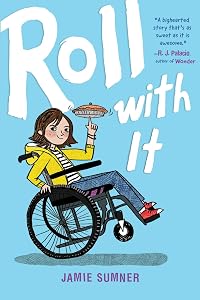
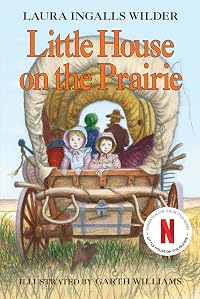
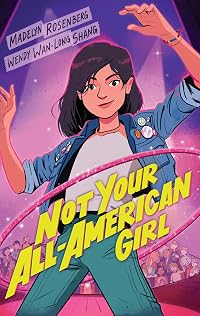
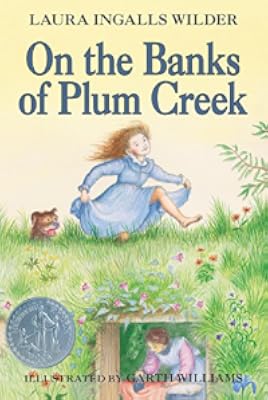
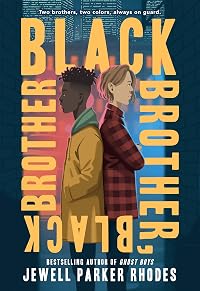
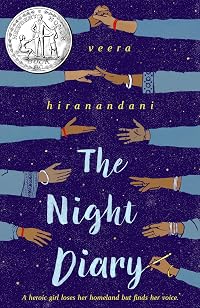
Caramellunacy Both look at pioneer life from the perspective of non-White children. Prairie Lotus follows a Chinese girl in a frontier town, while One Big Open Sky follows Black Exodusters along the Oregon Trail seeking to claim a homestead out West.
Member Reviews
I, too, loved Little House as a child, and I'm loving this generations' wave of responses to it even more. From the frank discussion on microaggressions and racism to the loving descriptions of the inside of the dress goods store, this book is a treat. Hannah is a character to feel proud of, and her story is very well told.
advanced reader's copy provided by Edelweiss.
advanced reader's copy provided by Edelweiss.
Hanna and her Pa move to Dakota Territory in 1880, and she's hoping they can finally settle in and go to school. But that means revealing that she's part Chinese, and that's caused trouble before. Will the town's racism drive them out again, or will Hanna and her father be able to stay? Will Pa let her have her dream of making dresses for their shop?
This middle grade book has been getting good reviews lately, with the inevitable comparisons and contrasts to Little House on the Prairie - which is very much intentional, as the author herself was a fan of the series but knew there were racist characters and beliefs portrayed, and that no one like herself was in the story. Hanna has to deal with racism every day, and throughout the story it show more broke my heart to see her decide when to say something or stand up for herself and when she just didn't want to argue, even with her father. She's a great character, and it's a quiet, well-told story that would appeal to fans of historical fiction of the American West in the 19th century. show less
This middle grade book has been getting good reviews lately, with the inevitable comparisons and contrasts to Little House on the Prairie - which is very much intentional, as the author herself was a fan of the series but knew there were racist characters and beliefs portrayed, and that no one like herself was in the story. Hanna has to deal with racism every day, and throughout the story it show more broke my heart to see her decide when to say something or stand up for herself and when she just didn't want to argue, even with her father. She's a great character, and it's a quiet, well-told story that would appeal to fans of historical fiction of the American West in the 19th century. show less
A “half-Chinese and half-white” girl finds her place in a Little House–inspired fictional settler town.
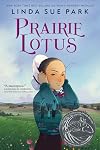
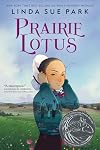
After the death of her Chinese mother, Hanna, an aspiring dressmaker, and her White father seek a fresh start in Dakota Territory. It’s 1880, and they endure challenges similar to those faced by the Ingallses and so many others: dreary travel through unfamiliar lands, the struggle to protect food stores from nature, and the risky uncertainty of establishing a livelihood in a new place. Fans of the Little House books will find many of the small satisfactions of Laura’s stories—the mouthwatering descriptions of victuals, the attention to smart building construction, the glorious details of pleats and poplins—here in show more abundance. Park brings new depth to these well-trodden tales, though, as she renders visible both the xenophobia of the town’s White residents, which ranges in expression from microaggressions to full-out assault, and Hanna’s fight to overcome it with empathy and dignity. Hanna’s encounters with women of the nearby Ihanktonwan community are a treat; they hint at the whole world beyond a White settler perspective, a world all children deserve to learn about. A deeply personal author’s note about the story’s inspiration may leave readers wishing for additional resources for further study and more clarity about her use of Lakota/Dakota. While the cover art unfortunately evokes none of the richness of the text and instead insinuates insidious stereotypes, readers who sink into the pages behind it will be rewarded.
Remarkable. show less
After the death of her Chinese mother, Hanna, an aspiring dressmaker, and her White father seek a fresh start in Dakota Territory. It’s 1880, and they endure challenges similar to those faced by the Ingallses and so many others: dreary travel through unfamiliar lands, the struggle to protect food stores from nature, and the risky uncertainty of establishing a livelihood in a new place. Fans of the Little House books will find many of the small satisfactions of Laura’s stories—the mouthwatering descriptions of victuals, the attention to smart building construction, the glorious details of pleats and poplins—here in show more abundance. Park brings new depth to these well-trodden tales, though, as she renders visible both the xenophobia of the town’s White residents, which ranges in expression from microaggressions to full-out assault, and Hanna’s fight to overcome it with empathy and dignity. Hanna’s encounters with women of the nearby Ihanktonwan community are a treat; they hint at the whole world beyond a White settler perspective, a world all children deserve to learn about. A deeply personal author’s note about the story’s inspiration may leave readers wishing for additional resources for further study and more clarity about her use of Lakota/Dakota. While the cover art unfortunately evokes none of the richness of the text and instead insinuates insidious stereotypes, readers who sink into the pages behind it will be rewarded.
Remarkable. show less
Recommended by Maya B
Fourteen-year-old Hanna travels east with her father from California to the Dakotas in April of 1880, where he plans to set up a dress goods shop, and she plans to finish school and become a dressmaker. Hanna's father is white, but she is half-Chinese; her mother, who taught her to sew, was raised by American missionaries in China and came to California as a young woman. At the time, California had a significant population of Asians, but the Midwest had few to none, so Hanna is unique - and white people are as prejudiced against her as they are against other non-whites (including the Native Americans whose land they stole).
Once Hanna and her father are settled in LaForge, she attends school - but once word gets show more around, other parents begin pulling their children out of school, until only Hanna, Bess, and one younger girl are left. The teacher, Miss Walters, works with Hanna and Bess so that they can take their graduation exams early, a solution that Hanna accepts, even as she notes that it doesn't really solve the issue. But once she has graduated, she focuses on the opening of the store. Everything is coming together - until two drunken men in town assault Hanna, and suddenly, town opinion turns even more against her (blaming her for her own assault). Once she has recovered, Hanna enlists Bess and Miss Walters' help to get the women of the town to come to the shop's opening day.
Throughout, Hanna relies on memories of her mother and her advice, and sometimes invokes her to win a point with her father (to finish school, to work as a dressmaker). Hanna also finds kindness during two encounters with Indians on the plains - a group of women and children she sees twice, and who teach her how to find and harvest prairie turnips. Unlike most of the whites in the town, Hanna sees the injustice of the Indians being pushed of their land for what it is.
Terminology note: "Indian" and "Sioux" are used in the book, because those are the terms that would have been used by whites at the time. The Indians Hanna encounters in the story are of the Ihanktonwan tribe, Dakota speakers of the Oceti Sakowin Nation.
See also: The Downstairs Girl by Stacey Lee
Quotes
Like many other tribes, the Sioux had signed a treaty with the US government, promising that white settlers would not encroach on Indian land. Every single treaty had been broken - by settlers, or the government, or both. (ch. 1)
...she already knew from living in California that most white people didn't like having neighbors - Chinese, Indians, Mexican - who weren't white themselves. (ch. 1)
"Good work is no good if you don't finish." (Mama's advice, ch. 4)
For most of her life, Hanna had made quick conclusions about the people she met, in an effort to guess how they might treat her. The trick was to keep her own conclusions light - never giving them too much weight, in case it turned out they were just plain wrong. (ch. 4)
But why did her being half-and-half bother other people so much? (ch. 5)
She made them - she made us see that we all came from somewhere else. (ch. 6)
"If there's going to be any trouble, it won't be either of us starting it." (Papa, ch. 8)
She had learned at an early age to act one way while feeling another by watching Mama....Hanna had somehow absorbed the knowledge that there were times when it was useful - crucial - to hide her thoughts. (ch. 9)
She always hoped that cruel remarks were misunderstandings, benign, forgotten in the next breath. Instead, they were most often birthed by thoughtlessness or ignorance at best; at worst, by venom and malice. (ch. 9)
Cruelty was painful. Thoughtlessness was merely exhausting. (ch. 12)
Besides, why should people get what they want when what they want is just plain wrong? (ch. 13)
"Sometimes beautiful things aren't for buying. They're for dreaming." (ch. 13)
I always cared about unfairness. But I used to think only of how white people treated Chinese people. Now I know it's about how white people treat anybody who isn't white. (ch. 17)
She had learned that you could often tell something about a person by their reaction to unfamiliar foods. (ch. 19)
"For the person who is sour, do something sweet." (ch. 20)
Was it better to pretend nothing bad had happened, and just get on with the work?
An awful lot of people dealt with difficulties that way. Hanna was as loath as anyone to talk about disagreeable subjects, but she hated the thought of them lurking, waiting for the moment when they could rear up again. (ch. 20)
They were in favor of fairness and justice as long as it wasn't too inconvenient or uncomfortable. (ch. 24)
But Hanna wondered if the change of mind might one day lead to a change of heart as well. (ch. 26)
Before there could be answers, there had to be questions. (ch. 27)
From Author's Note:
Racism is, however, not a series of incidents. Rather, the incidents are evidence of deeply ingrained states of personal bias and institutional injustice. show less
Fourteen-year-old Hanna travels east with her father from California to the Dakotas in April of 1880, where he plans to set up a dress goods shop, and she plans to finish school and become a dressmaker. Hanna's father is white, but she is half-Chinese; her mother, who taught her to sew, was raised by American missionaries in China and came to California as a young woman. At the time, California had a significant population of Asians, but the Midwest had few to none, so Hanna is unique - and white people are as prejudiced against her as they are against other non-whites (including the Native Americans whose land they stole).
Once Hanna and her father are settled in LaForge, she attends school - but once word gets show more around, other parents begin pulling their children out of school, until only Hanna, Bess, and one younger girl are left. The teacher, Miss Walters, works with Hanna and Bess so that they can take their graduation exams early, a solution that Hanna accepts, even as she notes that it doesn't really solve the issue. But once she has graduated, she focuses on the opening of the store. Everything is coming together - until two drunken men in town assault Hanna, and suddenly, town opinion turns even more against her (blaming her for her own assault). Once she has recovered, Hanna enlists Bess and Miss Walters' help to get the women of the town to come to the shop's opening day.
Throughout, Hanna relies on memories of her mother and her advice, and sometimes invokes her to win a point with her father (to finish school, to work as a dressmaker). Hanna also finds kindness during two encounters with Indians on the plains - a group of women and children she sees twice, and who teach her how to find and harvest prairie turnips. Unlike most of the whites in the town, Hanna sees the injustice of the Indians being pushed of their land for what it is.
Terminology note: "Indian" and "Sioux" are used in the book, because those are the terms that would have been used by whites at the time. The Indians Hanna encounters in the story are of the Ihanktonwan tribe, Dakota speakers of the Oceti Sakowin Nation.
See also: The Downstairs Girl by Stacey Lee
Quotes
Like many other tribes, the Sioux had signed a treaty with the US government, promising that white settlers would not encroach on Indian land. Every single treaty had been broken - by settlers, or the government, or both. (ch. 1)
...she already knew from living in California that most white people didn't like having neighbors - Chinese, Indians, Mexican - who weren't white themselves. (ch. 1)
"Good work is no good if you don't finish." (Mama's advice, ch. 4)
For most of her life, Hanna had made quick conclusions about the people she met, in an effort to guess how they might treat her. The trick was to keep her own conclusions light - never giving them too much weight, in case it turned out they were just plain wrong. (ch. 4)
But why did her being half-and-half bother other people so much? (ch. 5)
She made them - she made us see that we all came from somewhere else. (ch. 6)
"If there's going to be any trouble, it won't be either of us starting it." (Papa, ch. 8)
She had learned at an early age to act one way while feeling another by watching Mama....Hanna had somehow absorbed the knowledge that there were times when it was useful - crucial - to hide her thoughts. (ch. 9)
She always hoped that cruel remarks were misunderstandings, benign, forgotten in the next breath. Instead, they were most often birthed by thoughtlessness or ignorance at best; at worst, by venom and malice. (ch. 9)
Cruelty was painful. Thoughtlessness was merely exhausting. (ch. 12)
Besides, why should people get what they want when what they want is just plain wrong? (ch. 13)
"Sometimes beautiful things aren't for buying. They're for dreaming." (ch. 13)
I always cared about unfairness. But I used to think only of how white people treated Chinese people. Now I know it's about how white people treat anybody who isn't white. (ch. 17)
She had learned that you could often tell something about a person by their reaction to unfamiliar foods. (ch. 19)
"For the person who is sour, do something sweet." (ch. 20)
Was it better to pretend nothing bad had happened, and just get on with the work?
An awful lot of people dealt with difficulties that way. Hanna was as loath as anyone to talk about disagreeable subjects, but she hated the thought of them lurking, waiting for the moment when they could rear up again. (ch. 20)
They were in favor of fairness and justice as long as it wasn't too inconvenient or uncomfortable. (ch. 24)
But Hanna wondered if the change of mind might one day lead to a change of heart as well. (ch. 26)
Before there could be answers, there had to be questions. (ch. 27)
From Author's Note:
Racism is, however, not a series of incidents. Rather, the incidents are evidence of deeply ingrained states of personal bias and institutional injustice. show less
Rod:
Inspired by the Little House books of Laura Ingalls Wilder but aware of the modern day criticisms of them, Linda Sue Park has given us a peek at how a 14-year-old girl with a White father and a Chinese mother might have experienced life in a small town in the Dakota Territory in the 1880s. All Hanna May Edmunds wants to do is attend school and make dresses with the skills her mother taught her before she died, but she keeps running into obstacles put up by her classmates, the townspeople, and her own father.
Park is able to match the gentle family-centric tone of Wilder's books even while addressing many aspects of racism. Trigger warning: Toward the end of the book there is asexual assault .
Adele:
Really heart-warming book full of show more homages to the Little House series, but with a strong story and characters that more than stand on their own. Educational, enlightening, and relatable. I gave one bonus star for excellent and sorely needed representation in current children's historical literature. show less
Inspired by the Little House books of Laura Ingalls Wilder but aware of the modern day criticisms of them, Linda Sue Park has given us a peek at how a 14-year-old girl with a White father and a Chinese mother might have experienced life in a small town in the Dakota Territory in the 1880s. All Hanna May Edmunds wants to do is attend school and make dresses with the skills her mother taught her before she died, but she keeps running into obstacles put up by her classmates, the townspeople, and her own father.
Park is able to match the gentle family-centric tone of Wilder's books even while addressing many aspects of racism. Trigger warning: Toward the end of the book there is a
Adele:
Really heart-warming book full of show more homages to the Little House series, but with a strong story and characters that more than stand on their own. Educational, enlightening, and relatable. I gave one bonus star for excellent and sorely needed representation in current children's historical literature. show less
Like author Linda Sue Park, I was a big Little House on the Prairie book fan. My second grade teacher read LHotP to us in class, and when we did a family trip to Michigan the next summer, my parents made stops in Plum Creek, MN and DeSmet, SD. Nothing fits a long roadtrip quite well like staring out the window at grass and thinking about Laura doing the same from the back of the wagon.
However, like Park it's hard to ignore the fact that the Ingalls family likely would've been racist to me with some of the aggressions that Hanna encounters (and as Park notes, are all things she's faced IRL). Historical fiction is whitewashed, and that gives an erroneous perception that history largely belongs to white people. Black and brown people have show more existed in all eras; do you think our ancestors stayed at home until deciding to move in the 20th century or something? Prairie Lotus is Park's way of reckoning with that childhood love while envisioning how girls like us would've lived in a pioneer town.
LH fans will find this a familiar place- small town with a one room school house, cheerful calicos and poplins, and salt pork. One of Hanna's classmates is an expy of Laura Ingalls Wilder herself (lived in the same states and wants to graduate & become a teacher soon). Unlike the Little House books, though, Park recognizes that indigenous people lived in the area and they have names & dialogue instead of being a nameless, voiceless Other. A lot of what 14-year-old Hanna faces from townsfolk is unfortunately timeless, and will be familiar to any nonwhite reader (as is the way she reacts, not wanting to give the satisfaction of a reaction especially as the only Asian these people have likely met).
Really loved this, and it was the perfect way to segue into my Little House reread. I'll strongly recommend this book in general, and also as a companion book for readers going through LH, especially those who Ma would've snubbed. show less
However, like Park it's hard to ignore the fact that the Ingalls family likely would've been racist to me with some of the aggressions that Hanna encounters (and as Park notes, are all things she's faced IRL). Historical fiction is whitewashed, and that gives an erroneous perception that history largely belongs to white people. Black and brown people have show more existed in all eras; do you think our ancestors stayed at home until deciding to move in the 20th century or something? Prairie Lotus is Park's way of reckoning with that childhood love while envisioning how girls like us would've lived in a pioneer town.
LH fans will find this a familiar place- small town with a one room school house, cheerful calicos and poplins, and salt pork. One of Hanna's classmates is an expy of Laura Ingalls Wilder herself (lived in the same states and wants to graduate & become a teacher soon). Unlike the Little House books, though, Park recognizes that indigenous people lived in the area and they have names & dialogue instead of being a nameless, voiceless Other. A lot of what 14-year-old Hanna faces from townsfolk is unfortunately timeless, and will be familiar to any nonwhite reader (as is the way she reacts, not wanting to give the satisfaction of a reaction especially as the only Asian these people have likely met).
Really loved this, and it was the perfect way to segue into my Little House reread. I'll strongly recommend this book in general, and also as a companion book for readers going through LH, especially those who Ma would've snubbed. show less
Absolutely fantastic. Hanna's story illustrates not only what life is like growing up in a 1880s frontier town, but also explores being new, being passionate about a vocation, wanting to make friends, mourning a mother, living with a volatile (but not unkind) father, wanting an education, and on top of all this, being half-Chinese in a world where racism is rampant. Hanna is determined and uses the memory of her mother's strength to speak out when she sees prejudice. She encounters some Native women and children several times, and despite not sharing language, gives and receives respect and kindness. I never really had an interest in the Little House books growing up, but I know they are still very popular. I can confidently suggest show more this instead to those asking for them in my library. show less
Members
- Recently Added By
Lists

Books for An American Girl Readers
58 works; 1 member

Youth: DEI
296 works; 2 members

AR Level 5 in cloudLibrary
170 works; 1 member

NPR Books You Love: 100 Favorite Books For Young Readers
100 works; 1 member
Author Information

62+ Works 23,553 Members
Linda Sue Park was born in Urbana, Illinois on March 25, 1960. She received a B.A. in English from Stanford University. After graduating, she worked as a public-relations writer for a major oil company for two years. She obtained advanced degrees in literature from Trinity College, Dublin in Ireland and from the University of London. Before show more becoming a full-time author, she held numerous jobs including working for an advertising agency, teaching English as a second language to college students, and working as a food journalist. Her first book, Seesaw Girl, was published in 1999. Her other books include The Kite Fighters, Tap Dancing on the Roof: Sijo (Poems), and A Single Shard, which won the 2002 Newbery Medal. She also wrote Storm Warning, which is the ninth book in the 39 Clues series. Her title A Long Walk to Water made the New York Times bestseller list. (Bowker Author Biography) show less
Some Editions
Awards and Honors
Awards
Distinctions
Notable Lists
Work Relationships
Was inspired by
Common Knowledge
- Original publication date
- 2020-03-03
- People/Characters
- Hanna May Edmunds; Laura Ingalls Wilder; Ben Edmunds (father of Hanna May Edmunds); Mei Li "May" Edmunds (mother of Hanna May Edmunds); Philip Harris (LaForge justice of the peace); Miss Walters (teacher) (show all 18); Dolly Swenson; Bess Harris (daughter of Philip Harris); Sadie Harris (daughter of Philip Harris); Sam Baxter; Bill Baxter (father of Sam Baxter); Tommy Heywood; Charlie Hart; Pearl Baxter (sister of Sam Baxter); Wichapiwin; Harold Grantham; Wilma Grantham; James Harvey Strobridge
- Important places
- LaForge, Dakota Territory, USA; Dakota Territory, USA; Los Angeles, California, USA
- Dedication
- To all those whose stories have been erased or silenced in the past: May your stories sing and shape and color the future.
- First words
- "Should be our last day," Papa said when they stopped to make camp.
- Last words
- (Click to show. Warning: May contain spoilers.)"So you like it?" Papa asked.
Her reflection nodded at them both.
"Yes, Papa," she said. "It's exactly what I need. - Publisher's editor
- Stevenson, Dinah
- Blurbers
- Anderson, Laurie Halse
- Original language
- English
Classifications
- Genres
- Tween, Kids, Fiction and Literature, Children's Books
- DDC/MDS
- 813.6 — Literature & rhetoric American literature in English American fiction in English 2000-
- LCC
- PZ7 .P22115 .P — Language and Literature Fiction and juvenile belles lettres Fiction and juvenile belles lettres Juvenile belles lettres
- BISAC
Statistics
- Members
- 613
- Popularity
- 47,610
- Reviews
- 31
- Rating
- (4.39)
- Languages
- English, Spanish
- Media
- Paper, Audiobook, Ebook
- ISBNs
- 11
- ASINs
- 2