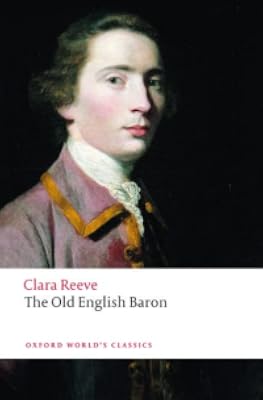
The Old English Baron: A Gothic Story
by Clara Reeve
On This Page
Description
Whilst the greatest effort has been made to ensure the quality of this text, due to the historical nature of this content, in some rare cases there may be minor issues with legibility. Thus, for infiance, a man (ball admire and almoft adore the Epic poems of the Ancients, and yet defpife and execrate the ancient Romances, which are only Epics in profe.Tags
Recommendations








Member Reviews
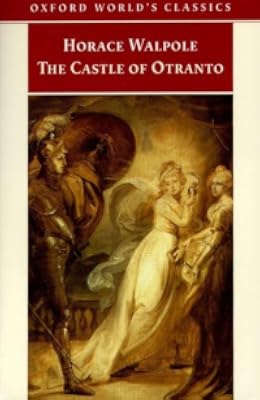
This isn't very good. The author wrote this as an attempt to produce something like The Castle of Otranto but without the unrealistic and over-the-top supernatural elements that jarred her out of the story. And, indeed, the supernatural elements here are almost subdued compared to Otranto. But what it makes up for in credibility, it more than loses in terms of predictability.
Also: emotions run dramatically wild.
Towards the end, the book needlessly drags out revealing the central conceit to side characters, with characters intentionally withholding crucial information so as to build up to an emotional tension in preparation for dramatic reveals and scenes of emotional release. That gets old really fast. Coupled with endless marriage show more preambles, it makes the final third a chore to sit through. show less
Also: emotions run dramatically wild.
Towards the end, the book needlessly drags out revealing the central conceit to side characters, with characters intentionally withholding crucial information so as to build up to an emotional tension in preparation for dramatic reveals and scenes of emotional release. That gets old really fast. Coupled with endless marriage show more preambles, it makes the final third a chore to sit through. show less
The author says she wrote this in response to Walpole's The Castle of Otranto. It doesn't compare. Unlike Walpole, who made a private study of it, Reeve knows nothing about the Middle Ages. Consequently, her barons live and behave like Georgian country squires. She refers to the younger characters as "Mister" which is entirely anachronistic. And I think the narrowness of her own horizons shows in the way she spends pages on the division of the estates, right down to tableware and linens, like some penny-pinching housewife. Somehow the phrase "a nation of shopkeepers" sprang to mind.
Of academic merit only to people who study Gothic literature in depth.
ETC
Of academic merit only to people who study Gothic literature in depth.
ETC
Probably one that only need be read by the most committed fans of gothic fiction. Basically a toned-down "Castle of Otranto" with the setting changed and the outcome pretty obvious from the get-go.
Ratings
Members
- Recently Added By
Lists

1898 C.K. Shorter List of Best 100 Novels
100 works; 34 members

Best Gothic Fiction
110 works; 31 members

Lovecraft's 'Supernatural Horror in Literature' Reading List
216 works; 8 members
Jones & Newman: Best Horror Books Further Recommended Reading
577 works; 4 members

el
1,139 works; 1 member

Books Read in 2025
4,128 works; 98 members
Author Information

16+ Works 305 Members
Some Editions
Awards and Honors
Notable Lists
Series
Belongs to Publisher Series
Work Relationships
Is contained in
Was inspired by
Common Knowledge
- Canonical title
- The Old English Baron: A Gothic Story
- Original title
- The Champion of Virtue; The Champion of Virtue or The Old English Baron
- Original publication date
- 1777
- First words
- In the minority of Henry the Sixth, King of England, when the renowned John Duke of Bedford was Regent of France, and Humphrey the good Duke of Gloucester, a worthy knight, called Sir Philip Harclay, returned from his travels... (show all) to England, his native country.
- Last words
- (Click to show. Warning: May contain spoilers.)All these, when together, furnish a striking lesson to posterity, of the over-ruling hand of Providence, and the certainty of RETRIBUTION.
Classifications
Statistics
- Members
- 235
- Popularity
- 139,114
- Reviews
- 4
- Rating
- (2.46)
- Languages
- English, Italian, Spanish
- Media
- Paper, Ebook
- ISBNs
- 42
- ASINs
- 7