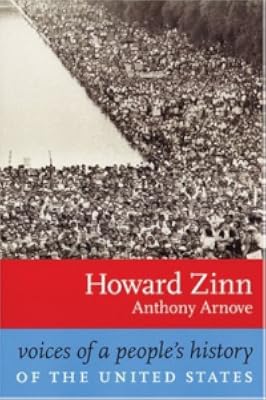
Voices of a People's History of the United States
by Howard Zinn (Editor), Anthony Arnove (Editor)
On This Page
Description
Here in their own words are Frederick Douglass, George Jackson, Chief Joseph, Martin Luther King Jr., Plough Jogger, Sacco and Vanzetti, Patti Smith, Bruce Springsteen, Mark Twain, and Malcolm X, to name just a few of the hundreds appearing in Voices of a People's History of the United States, edited by Howard Zinn and Anthony Arnove. Paralleling the 24 chapters of Zinn's A People's History of the United States, Voices of a People's History is the long-awaited companion volume to the show more national bestseller. For Voices, Zinn and Arnove have selected testimonies to living history-speeches, letters, poems, songs-left by the people who make history happen, but who usually are underrepresented or misrepresented in history books: women, Native Americans, workers, blacks and Latinos. Zinn has written short introductions to the texts, which themselves range in length from letters or poems of less than a page to entire speeches and essays that run several pages and longer. Voices of a People's History is a symphony of our nation's original voices, rich in ideas and actions, an embodiment of the power of civil disobedience and dissent, wherein lies our nation's true spirit of defiance and resilience. show lessTags
Recommendations


Member Reviews
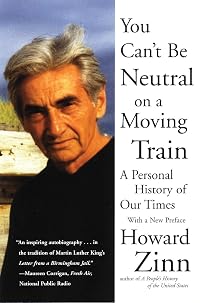
A person must understand one thing going in: this is not "objective" history, if such a thing can be said to exist. Howard Zinn's A People's History of the United States is written, and the companion volume Voices of a People's History is compiled, with a clear and openly acknowledged anarcho-socialist agenda, and if the titles (and the books' huge fame as touchstones of the radical left) weren't enough to clue you in, I definitely wouldn't recommend either volume to a person who wants their historical narrator to walk some kind of ideological "neutral" zone (nor, needless to say, to someone who expects a right-slanting bias). Zinn, as the title of his famous memoir You Can't Be Neutral On A Moving Train might suggest, makes no bones show more about his allegiances. In my opinion this can be a breath of fresh air, since every historian comes to the table with a set of biases, acknowledged or not, and getting them out in the open saves the reader time and energy. Not only that, but where should we locate this mythical neutral ground, anyway? Even the supposedly objective stance of one place or time comes to seem hopelessly biased when viewed from a different perspective. However I admit that, although I certainly don't agree with Zinn on everything, my political leanings are broadly in line with his, so take that for what it's worth.
A People's History deals with over five hundred years of American history in just over six hundred pages, meaning that it covers a LOT of ground. Not only that, but its avowed focus on the stories of the resisters, the everyday people who fought against their conquerors/oppressors, means that by definition the narrative is more multi-form, more fragmented than the standard history event line (discovery, exploration, colonization, expansion, etc.) Zinn's work is cut out for him to an even greater extent than if he were simply attempting to tell five hundred years of victors' stories. For me, this was the most difficult thing about reading the book cover-to-cover: there is simply so much there. I usually prefer micro-histories: books that cover enough of the bigger picture so that I can contextualize the particulars of the smaller story being told, but specific enough that I feel I'm getting to know individuals, glimpsing what it was like to live in a different time and place. That's simply not going to happen when the author must move along at such a brisk clip, devoting four pages AT MOST to each individual struggle prior to 1960, and ten pages at most to more recent developments. Most of the fascinating individuals Zinn touches on are present for a paragraph or a page only, providing a tantalizing glimpse before the narrative speeds on by. Having read entire books on a few of the subjects Zinn mentions, it was very clear to me how much complexity and interest is lost in super large-scale histories like this one. To choose just one example, in Elliot Gorn's biography of the labor organizer Mary Harris "Mother" Jones, one of the most fascinating things to me was Jones's seemingly anti-progressive attitude toward female suffrage and union recognition for women; Zinn's only comment about this is "Mother Jones did not seem particularly interested in the feminist movement." It's not Zinn's fault, of course: just the function of this type of macro history.
These challenges were one reason I decided to read Voices of a People's History in tandem with its parent volume: as a compilation of primary-source documents, it gives the reader a direct window into the experience of individual people taking part in the struggles Zinn describes, at a specific moment in time. I'm so glad I read both books together, as Voices reinforces the element I find most inspiring about A Peoples' History to begin with: that is, not so much the leftist (re)interpretation of events all Americans learned in high school anyway, but these books' function as a treasury of struggles and movements too regional, grass-roots, or politically radical to be included in traditional histories. These stories are often utterly fascinating: complex, personal/political struggles that illustrate the ways in which the landscape of American politics has shifted and buckled over the years, and a reminder that "America" does not equal whoever happens to be President/Governor/Secretary of Defense at a given time.
I learned, for example, about the Anti-Rent movement in the Hudson Valley, a rebellion of tenant farmers against their Dutch-descended landlords, and against a system that amounted more or less to medieval-style feudalism, touched off by the financial crisis of 1837. I was reminded of the Irish-descended secret society of the Molly Maguires, immortalized antagonistically by Arthur Conan Doyle in The Valley of Fear and semi-sympathetically by Peter Carey in True History of the Kelly Gang. Zinn portrays a complex picture of Civil War-era hostilities, in which poor white Southerners resisted being drafted to die for the right of the wealthy to own slaves, and Northern anti-draft riots escalated into ugly race confrontations between Irish and black workers. The complexities of race surfaced again in Zinn's descriptions of the Populism of the 1890s, a Socialist grass-roots movement turned political party (Zinn argues that it was effectively made impotent by its move away from direct action and into politics) that was surprisingly radical in its demands for fair treatment for small farmers, while still displaying huge amounts of white racism. I learned about the General Strike in Seattle in 1919, in which workers across nearly all industries shut down the city in support of a wage increase for shipyard workers. So too, Zinn chronicles the International Workers of the World free-speech struggles in the early years of the 20th century, and tells of the 900 people jailed under the Espionage Act of 1917 for speaking against US involvement in World War I. From more recent years, I was glad to be reminded of the American Indian activism of the 1970s, when several tribes staged fish-ins to protest the federal withdrawal of ancestral fishing rights on the Nisqually and Columbia Rivers. Other native groups seized Alcatraz Island and the site of the Wounded Knee massacre in attempts to assert their rights to land and to basic visibility—a protest against the prevalent white American notion of Native Americans as a thing of the past, an extinct species, the "Disappearing Indian."
In Voices, I loved best the accounts of ordinary people relating their experiences: first-hand accounts of Virginia slave rebellions; of the flour riots of 1837; of the massive Chicago railroad strikes of 1877; of organizing the unemployed in the Bronx tenements during the Great Depression; of the Stonewall riots of 1969. In addition to these first-hand recollections, there are letters, speeches, a surprising number of statements from defendants to their juries, popular songs and poems, excerpts from novels and memoirs, and a few passages from other third-party histories. Some of these documents seem overblown or poorly written by modern/literary standards (the nineteenth-century speeches are particularly overheated for my taste), but most are fascinating, and a few made me genuinely want to stand up and cheer. The speech to which this passage belongs, delivered by Emma Goldman in 1908, has long been a favorite of mine, and the place I point when trying to explain why I consider myself a humanist, not a patriot:
Indeed, conceit, arrogance, and egotism are the essentials of patriotism. Let me illustrate. Patriotism assumes that our globe is divided into little spots, each one surrounded by an iron gate. Those how have had the fortune of being born on some particular spot, consider themselves better, nobler, grander, more intelligent than the living beings inhabiting any other spot. It is, therefore, the duty of everyone living on that chosen spot to fight, kill, and die in the attempt to impose his superiority upon all others.
And the speech from which this comes, "Why We Fight," delivered in 1988 by Vito Russo and addressing the early apathy of those in power toward the AIDS epidemic: what can I say? It's amazing.
So, if I'm dying from anything, I'm dying from homophobia. If I'm dying from anything, I'm dying from racism. If I'm dying from anything, it's from indifference and red tape, because these are the things that are preventing an end to this crisis. If I'm dying from anything, I'm dying from Jesse Helms. If I'm dying from anything, I'm dying from the President of the United States. And, especially, if I'm dying from anything, I'm dying from the sensationalism of newspapers and magazines and television shows, which are interested in me, as a human interest story—only as long as I'm willing to be a helpless victim, but not if I'm fighting for my life.
If I'm dying from anything—I'm dying from the fact that not enough rich, white, heterosexual men have gotten AIDS for anybody to give a shit.
"If I'm dying from anything, I'm dying from Jesse Helms": brilliant. (Incidentally, this speech also made me realize just how fast the messaging around AIDS evolved, because by the time I was old enough to be getting middle-school sex education, which must have been only three or four years after Russo delivered the speech, the educational system was aggressively trying to reverse the mistaken impression that HIV was solely a "gay" disease. Russo's point, that our society should do its best to intervene even if it WERE solely a gay disease, or a poor disease, or a disease affecting people of color, still stands, however.)
As much as the United States has a despicable tradition of violent imperialism and oppression, both within our borders and abroad, it's good to learn or be reminded of concrete ways in which we also have a history of conscientious protest. To what extent the latter tradition can point to concrete results is another question, and I must admit that reading the Zinn duo does sometimes feel like being beat over the head with the atrocities committed by the US government and corporations through the years. Personally, there was nothing too surprising in this aspect of the book, although it's possible that someone who didn't grow up a lefty in Portland "Little Beirut" Oregon might be more surprised by the ongoing abuses Zinn chronicles. Despite whatever difficulties I may have had with this duo, however, I found them very much worthwhile. I plan to use them as starting points to more in-depth investigations of some of the most interesting stories, and I was glad to be reminded that no group, be it country or movement, speaks as a monolith. show less
During the mid 1800’s, some escaped slaves reached out to their former masters. In letters that rend the heart, they expressed an understanding that is both pitiless and generous, to the men and women who sold their parents, wives, and children, who abused and tormented them, worked them to death, and justified it in the name of a loving God.
They are the real thing, these letters: forgiveness, rage, acceptance, stern judgment, Because they are written in the gracious, formal manner of the 19th century, they combine dignity, moral outrage and positive purpose that is impossible to find today.
We cannot imagine the lives of American slaves, the heroic, deadly work of traveling a thousand miles to Canada. That they should survive, make a show more new life, travel back, return with family, and yet still reach out across that immeasurable distance to connect with and confront their abusers is proof, like no other, of the healing power of freedom.
Freedom is the principal theme of “Voices of a People’s History,” Howard Zinn’s illuminating anthology of first-person, eyewitness, and creative accounts. And surprising unknown details are what make this book special, invaluable.
During the colonial period, pre- and post-, there were hundreds of insurrections; after the war many disenfranchised merchants saw the landed gentry as essentially British, and the rebellions (Shay’s, et al) were continuing the good fight to make the promise of equal opportunity real. It was messy. These frontline dispatches, some decades later, underscore how pragmatic our founding Fathers really were. Pat Robertson notwithstanding, self-satisfied piety was a detriment when fair play was being legislated one bloody detail at a time. Understanding the Founding Documents as defensive writings, intended to channel universal revolutionary fervor, is a new perspective for most of us.
It’s such a rich volume. I can create a litany of its better pieces: the horrified officer’s letters during the “War” with Mexico; Robinson’s “Factory Girls”; the bread riot descriptions that reveal a south ripped by profiteers and landowner abuses during the Civil War; the astonishing, pivotal strike in Flint in 1936-7, that elevated Reuther, enabled mainstream Unions, and saw the police fire point-blank into unarmed strikers. Genora Dollinger’s account of her baptism under fire as a Union speaker, where she calls for the strikers families to bravely walk past the police lines, backs to the guns, in order to save their husbands, is unforgettable. This was not long ago, far away. The unions, its members, made us a better country. Reagan’s grandstanding with the air traffic controllers was the refined tactic of the thugs of yesterday. They don’t make it so easy for us now, no brutal face. But the campaign to diminish worker protections and disenfranchise unions continues, and Zinn reminds us of its tradition and context.
Some should be read aloud every year, perhaps an Americans Day (as opposed to America Day, July 4th). In every public square, high school, let’s temporarily interrupt the Rush lie fest on our public airwaves. Let’s take turns and read aloud from this volume: Truth’s “Ain’t I a woman?”; Starr’s “Back of the Yards”; Ali’s refusal to fight in Vietnam. Most of all, we need Dalton Trumbo (Zinn’s excerpt from “Johnny Got His Gun” is perfect). Many of these selections speak with immediacy about our current adventurism overseas, but Trumbo’s is rabble-rousing, heartbreaking literature that wakes us up.
There are annoyances: in his intro, absurdly, “…there is no such thing as a pure fact, innocent of interpretation"; introducing Mumia Abu-Jamal without a mention of the legit controversies about his murder conviction. But Zinn has made an important, immensely readable, and timely contribution to our self-understanding. show less
They are the real thing, these letters: forgiveness, rage, acceptance, stern judgment, Because they are written in the gracious, formal manner of the 19th century, they combine dignity, moral outrage and positive purpose that is impossible to find today.
We cannot imagine the lives of American slaves, the heroic, deadly work of traveling a thousand miles to Canada. That they should survive, make a show more new life, travel back, return with family, and yet still reach out across that immeasurable distance to connect with and confront their abusers is proof, like no other, of the healing power of freedom.
Freedom is the principal theme of “Voices of a People’s History,” Howard Zinn’s illuminating anthology of first-person, eyewitness, and creative accounts. And surprising unknown details are what make this book special, invaluable.
During the colonial period, pre- and post-, there were hundreds of insurrections; after the war many disenfranchised merchants saw the landed gentry as essentially British, and the rebellions (Shay’s, et al) were continuing the good fight to make the promise of equal opportunity real. It was messy. These frontline dispatches, some decades later, underscore how pragmatic our founding Fathers really were. Pat Robertson notwithstanding, self-satisfied piety was a detriment when fair play was being legislated one bloody detail at a time. Understanding the Founding Documents as defensive writings, intended to channel universal revolutionary fervor, is a new perspective for most of us.
It’s such a rich volume. I can create a litany of its better pieces: the horrified officer’s letters during the “War” with Mexico; Robinson’s “Factory Girls”; the bread riot descriptions that reveal a south ripped by profiteers and landowner abuses during the Civil War; the astonishing, pivotal strike in Flint in 1936-7, that elevated Reuther, enabled mainstream Unions, and saw the police fire point-blank into unarmed strikers. Genora Dollinger’s account of her baptism under fire as a Union speaker, where she calls for the strikers families to bravely walk past the police lines, backs to the guns, in order to save their husbands, is unforgettable. This was not long ago, far away. The unions, its members, made us a better country. Reagan’s grandstanding with the air traffic controllers was the refined tactic of the thugs of yesterday. They don’t make it so easy for us now, no brutal face. But the campaign to diminish worker protections and disenfranchise unions continues, and Zinn reminds us of its tradition and context.
Some should be read aloud every year, perhaps an Americans Day (as opposed to America Day, July 4th). In every public square, high school, let’s temporarily interrupt the Rush lie fest on our public airwaves. Let’s take turns and read aloud from this volume: Truth’s “Ain’t I a woman?”; Starr’s “Back of the Yards”; Ali’s refusal to fight in Vietnam. Most of all, we need Dalton Trumbo (Zinn’s excerpt from “Johnny Got His Gun” is perfect). Many of these selections speak with immediacy about our current adventurism overseas, but Trumbo’s is rabble-rousing, heartbreaking literature that wakes us up.
There are annoyances: in his intro, absurdly, “…there is no such thing as a pure fact, innocent of interpretation"; introducing Mumia Abu-Jamal without a mention of the legit controversies about his murder conviction. But Zinn has made an important, immensely readable, and timely contribution to our self-understanding. show less
People criticize Zinn for being anti-america, I really didn't notice so much as he does inform the audience of the slant he is writing from up front. I can see where he gets the marker but if you don't read his books you will continue to view history from an american biased prospective. The peoples history is exactly that, a a qualitative account from the people viewpoint on history.
Ratings
Members
- Recently Added By
Author Information

A committed radical historian and activist, Howard Zinn approaches the study of the past from the point of view of those whom he feels have been exploited by the powerful. Zinn was born in Brooklyn, New York in 1922. After working in local shipyards during his teens, he joined the U.S. Army Air Force, where he saw combat as a bombardier in World show more War II. He received a Ph.D. in history from Columbia University in 1958 and was a postdoctoral fellow in East Asian studies at Harvard University. While teaching at Spelman College in Atlanta, Georgia, Zinn joined the civil rights movement and wrote The Southern Mystique (1964) and SNCC: The New Abolitionists (1964). He also became an outspoken critic of the Vietnam War, writing Vietnam: The Logic of Withdrawal (1967) and visiting Hanoi to receive the first American prisoners released by the North Vietnamese. Zinn's best-known and most-praised work, as well as his most controversial, is A People's History of the United States (1980). It explores American history under the thesis that most historians have favored those in power, leaving another story untold. Zinn discusses such topics as Native American views of Columbus and the socialist and anarchist opposition to World War I in examining his theory that historical change is most often due to "mass movements of ordinary people." Zinn's other books include You Can't Be Neutral on a Moving Train: A Personal History of Our Times (1995) and Artists in Times of War (2004). He has also written the plays Emma (1976), Daughter of Venus (1985), and Marx in Soho (1999). (Bowker Author Biography) Howard Zinn grew up in the immigrant slums of Brooklyn, where he worked in shipyards in his late teens. He saw combat duty as an air force bombardier in World War II, and afterward received his doctorate in history from Columbia University. His first book, "La Guardia in Congress", was an Albert Beveridge Prize winner. In 1956, he moved with his wife and children to Atlanta to become chairman of the history department of Spelman College. He has since written and edited many more books, including A People's History of the United States, SNCC: The New Abolitionist; Disobedience and Democracy; The Politics of History; The Pentagon Papers: Critical Essays; You Can't Be Neutral on a Moving Train: A Personal History of Our Times; and The Zinn Reader (Seven Stories Press, 1997). Zinn is also the author of three plays, Emma, Daughter of Venus, and Marx in Soho. Among the many honors Zinn has received is the 1998 Lannan Literary Award for nonfiction. A professor emeritus of political science at Boston University, he lives with his wife, Roslyn, in the Boston area, near their children and grandchildren. (Publisher Provided) show less

Work Relationships
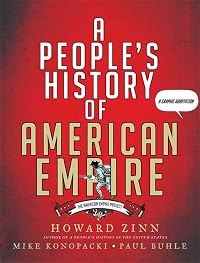
Has the adaptation
Is a supplement to
Common Knowledge
- Original publication date
- 2004
- People/Characters
- Bartolome de Las Casas; Angelina Grimké; Martin Delany; Maria Herrera-Sobek; Mumia Abu-Jamal; Eqbal Ahmad (show all 168); Muhammad Ali; Osborne P. Anderson; Paul Y. Anderson; Susan B. Anthony; Benjamin Banneker; Elliott James Barkley; I. D. Barnett; Miguel Barragan; Edward Bellamy; Henry Bibb; Black Elk; Black Hawk; Henry B. Blackwell; Randolph Bourne; James R. Bradley; John Brown, abolitionist; Susan Brownmiller; John G. Burnett; Smedley D. Butler; Anita Cameron; Maritza Castillo; César Chávez; Rose Chernin; Joanne Chesimard; Lydia Maria Child; Noam Chomsky; Joseph Clarke; Kathleen Neal Cleaver; Samuel Langhorne Clemens (Mark Twain); Ned Cobb; Larry Colburn; Christopher Columbus; Rachel Corrie; Julia May Courtney; e. e. cummings; J. A. Dacus; Angela Davis; Mike Davis; Eugene V. Debs; Genora Dollinger; John Dos Passos; Frederick Douglass; Lewis H. Douglass; Samuel Drowne; Martin Duberman; W. E. B. Du Bois; Bob Dylan; Marian Wright Edelman; Daniel Ellsberg; Douglas A. Fraser; Richard Frethorne; Paul Fussell; Eduardo Galeano; Calixto Garcia; Henry George; Allen Ginsberg; Arturo Giovannitti; Danny Glover; Emma Goldman; Amy Goodman; Woody Guthrie; Fannie Lou Hamer; Yip Harburg; Joel Tyler Headley; Hinton Rowan Helper; George Hewes; Joe Hill; Julia Butterfly Hill; Ethan Allen Hitchcock; Abbie Hoffman; Billie Holiday; Martha Honey; Yolanda Huet-Vaughn; Langston Hughes; Ward Hunt; Thomas Hutchinson; George Jackson; Harriet Jacobs; Wamsutta James; Mother Jones; June Jordan; Chief Joseph; Helen Keller; Martin Luther King, Jr.; Henry Knox; Yuri Kochiyama; Roni Krouzman; Winona LaDuke; Gene Larocque; Rita Lasar; Mary Elizabeth Lease; John Lewis; Mary Licht; Abbey Lincoln; Jermain Wesley Loguen; Ernest Lyon; James Madison; Joseph Plumb Martin; Elizabeth Martinez; Rania Masri; Monami Maulik; Yamaoka Michiko; Gottlieb Mittelberger; Alex Molnar; Anne Moody; J. L. Moore; Michael Moore; Walter Mosley; James Norcom; Stella Nowicki; Tim O'Brien; Ismael Guadalupe Ortiz; S. Margaret Fuller Ossoli; Thomas Paine; Theodore Parker; Lorell Patterson; Leonard Peltier; Tim Predmore; Public Enemy; John Reed; Adrienne Rich; Harriet Hanson Robinson; Orlando Rodriguez; Phyllis Rodriguez; Ethel Rosenberg; Julius Rosenberg; Lewis Ross; Vito Russo; Jonathan Schell; Rita L. Schwerner; Peter Seeger; Assata Shakur; Upton Sinclair; Frank Smith; Patti Smith; Juan Soto; August Spies; Bruce Springsteen; Elizabeth Cady Stanton; Vicky Starr; John Steinbeck; Maria Stewart; I. F. Stone; Lucy Stone; Columbus Sun; Haywood T.; Tecumseh; Henry David Thoreau; Dalton Trumbo; Sojourner Truth; Henry McNeal Turner; Loung Ung; Bartolomeo Vanzetti; Kurt Vonnegut; Alice Walker; David Walker; Ida B. Wells-Barnett; Sandra A. West; Sylvia Woods; Richard Wright; Malcolm X; Howard Zinn
- Important places
- USA
- Important events
- Spanish-American War (1898)
- Epigraph
- If there is no struggle there is no progress.... This struggle may be a moral one, or it may be a physical one, and it may be both moral and physical, but it must be a struggle. Power concedes nothing without a demand. It nev... (show all)er did and it never will. Find out just what any people will quietly submit to and you have found out the exact measure of injustice and wrong which will be imposed upon them, and these will continue till they are resisted with either words or blows, or with both. — Frederick Douglass
- First words
- Readers of my book A People's History of the United States almost always point to the wealth of quoted material in it- the words of fugitive slaves, Native Americans, farmers and factory workers, dissenters and dissidents of ... (show all)all kinds. [Introduction]
- Last words
- (Click to show. Warning: May contain spoilers.)People have the power
- Blurbers
- Banks, Russell; Zinn, Howard
- Original language
- English
Classifications
Statistics
- Members
- 842
- Popularity
- 32,663
- Reviews
- 3
- Rating
- (3.96)
- Languages
- English
- Media
- Paper, Audiobook, Ebook
- ISBNs
- 15
- ASINs
- 5