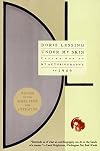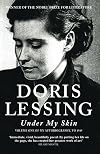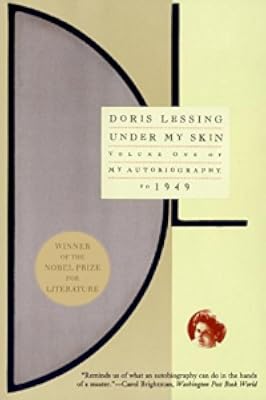
Under My Skin: Volume One of My Autobiography, to 1949
by Doris Lessing
Autobiographie, Doris Lessing (1)
On This Page
Description
"This, the first volume of Doris Lessing's autobiography, begins with her childhood in Africa and ends on her arrival in London in 1949 with the typescript of her first novel, The Grass is Singing, in her suitcase." "The book recalls her own mind as a child, and the life of a child, with almost overwhelming immediacy, mapping the growth first of her consciousness, then, in adolescence, of her sexuality, and later, as a young woman, of her political beliefs. The African landscape (described show more with great lyricism), her often angry and combative relationship with her parents, her intense awareness of her own body, her passionate involvement with other people and indeed with everything around her are all here very, very powerfully present." "Under My Skin shows a woman uncompromising, from the beginning, in every aspect, who breaks all the rules, who battles at every turn against her upbringing and environment, who looks on the world clear and hard; and yet who also displays a softness, a wonderful sense of humor, a compassion for human failure."--Jacket. show lessTags
Recommendations


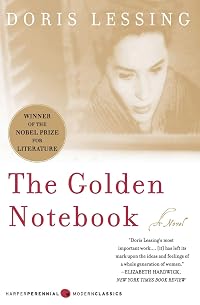















Member Reviews
“Here we are at the core of the problem of memory. You remember with what you are at the time of remembering.”
“Every novel is a story, but a life isn’t one, more of a sprawl of incidents.”
“How do you know that what you remember is more important than what you don’t?”
As might be expected, the first volume of Nobel-Prize-winning author Doris Lessing’s autobiography (covering her birth in Kermanshah, Persia, and her childhood, youth, and early adult years—to the age of 30–in Southern Rhodesia) is a stimulating read, often rewarding and wise, but occasionally frustrating, too. In my opinion, the first half of the book is the better. It considers the time before Lessing’s involvement with the Rhodesian Communist Party show more and her early, rather strangely cobbled marriages (to men she didn’t love and who, likewise, had no great feeling for her).
Lessing observes that children and grown-ups do not live in the same sensory world. The early years of life are marked by their “intense physicality”. Time passes differently for children, and what one experiences when young leaves the greatest impression. Lessing provides many details about her life in a stone house in a mountainous region of western Iran and on the Rhodesian veldt. Her descriptions of the times after she left her parents’ farm in her mid-teens to work first as an au pair and then as a legal secretary pale by comparison. I think I was expecting more intensity in Lessing’s account of her adolescence—i.e., a description of a burgeoning life of the mind (à la Simone de Beauvoir). I can’t say I got it.
Lessing begins by considering her parents and their families of origin. Throughout the book she regularly returns to The Great War, which, she says, ruined her parents’ lives. Those who survived it, she writes, “lived lives wrenched out of their proper course.” Maude McVeagh, Lessing’s “ferociously energetic”, capable mother, who had defied her controlling and aspirational father to become a nurse, lost her great love, a doctor to the war. His ship went down after being torpedoed by the Germans. Maude nursed Alfred Tayler, Lessing’s father, in the London Free Hospital. A soldier whose injury required a leg amputation, Alfred also suffered from shell shock and would be haunted for the rest of his days by his experiences in the trenches. He never got over his country’s betrayal of a generation of young men and was contemptuous of “the complacent crooks who had got rich out of the war.” From early on, Lessing was aware of her father’s demons: “I used to feel there was something like a dark, grey cloud, like poison gas, over my early childhood.” As for her mother: “I was in nervous flight from her ever since I can remember anything”. Lessing determined that hers would be a life entirely different from theirs. “I will not. I will not [be trapped]” became her mantra.
After the war, Lessing’s father worked as a banker in Kermanshah and then Tehran for about five years, providing his status-conscious wife and two young children with something approximating a middle-class way of life. However, he felt shackled and unhappy in such an existence. He was bored by the life of “dinner parties and musical evenings” that his wife thrived on. On a home leave from Persia, he jumped at the opportunity of making a go at farming in Rhodesia. The move to Africa presented his daughter and son with ample opportunities to enjoy the natural world. They were relatively free of the constraints that middle-class children in England were typically subject to.
Lessing’s African upbringing no doubt fostered some of the independence of spirit that she would later be known for. Her mother, however, was initially deeply unhappy in Africa. There were no “nice” people near the Tayler farm. Maude’s genius for society was starved and her energy was subsequently funnelled into the lives of her children. Hers became “the pathetic identifications of a woman whose gratification is only in her children.” She had a breakdown and took to her bed for months, undergoing “that inner reconstruction which most of us have to do at least once in a life. You relinquish what you had believed you must have to live at all.” Eventually, being the capable woman that she was, she pulled herself together and threw herself into the hard work that life on the land demanded. In spite of the Taylers’ efforts, however, the farm was never a success. Maize did not bring money. Neither did tobacco. Quests for gold and precious minerals on the property also yielded nothing. Soon enough, Lessing’s father was battling serious illness, diabetes, in a time when the medical profession hadn’t figured out how to properly use insulin. Tending to him as he wasted away over many years became his wife’s full-time job.
While I had a vague idea of the outline of Lessing’s life before reading this first volume of her autobiography, I’ll admit that I was surprised by what she reveals about her marriages. These were not love (or apparently even lust) matches. Indeed, it is hard to understand quite what was motivating her. Her first marriage was to Frank Wisdom, a civil servant. A decade older than Lessing, Frank was a member of a sports club she frequented, and he, too, was involved in the progressive political scene that attracted her. An “unregenerate”, she married him in an act of “female ruthlessness”, for he was, in fact, already engaged to a girl in Britain. Before long, knowing she “was not going to stay in this life”, Lessing ended up leaving him and her two young children: “There is no boredom like that of an intelligent young woman who spends a day with a very small child.” Yes, she “commit[ted] the unforgivable”, but, had she not, she would’ve had a breakdown or become an alcoholic. Her eldest son, John Wisdom, would later tell her that although he understood the reasons for her leaving, he nevertheless resented her having done so.
Lessing’s union with Gottfried Lessing, an ideological, “purist” communist, German-Jewish refugee, and scion of a wealthy Eastern European industrialist family, is even more baffling. Lessing supplies a number of explanations for this second marriage. The two were the only unpaired members in their political circle, so they more or less fell together by default, she says. Later, though, she opines that the marriage was “”forced by circumstance”. In a third take on the relationship, Lessing states that she married Gottfried in order to mitigate Salisbury society’s view of him as an enemy alien. She describes the rigid and orderly Gottfried dispassionately, as she would a character in one of her novels. Lessing acknowledges that he was a generous and mostly reasonable man, albeit one with little tolerance for the subjects that engaged her: psychology, psychoanalysis, and the world of dreams, myths, and fairy tales. He sounds like quite a trial: a humourless, dry stick of a man, a number of whose traits might have placed him on the autism spectrum were he alive today. Whatever led to the marriage, both Gottfried and Doris knew going in that they would eventually divorce.
I was surprised to read of Lessing’s cavalier (even careless) attitude to conceiving and bearing children. When she tells her father she is having a third baby (with Gottfried, whom she has every intention of divorcing), Alfred wonders why she’d do this, given that she’s already abandoned two young children. (He’s not the only one who wonders. I do, too.) Looking back, Lessing concludes that she was more or less fulfilling a biological imperative. As a heathy, fertile young woman living at a time when the population was still recovering from The Great War’s decimation, she did as Nature bid. Ultimately, though, she had her tubes tied, which she acknowledges was one of the smartest things she ever did.
I was underwhelmed and slightly frustrated by what I saw as Lessing’s somewhat superficial treatment of her youthful communist years. I felt that I got only an impressionistic sense of her thinking during that period. It seems that in the second half of her book, she was unable to resist writing novelistic descriptions of her friends and “comrades” in the cause. The reader doesn’t get much on her interior life. Early in the autobiography she had observed: “The older I get the more secrets I have, never to revealed . . .” Maybe she didn’t want to hold up the contents of her mind for viewing. Possibly she could not clearly recall what she was thinking as a young woman. Perhaps she felt her fiction, especially the novels in the Children of Violence series and The Golden Notebook, had already done an adequate job exploring or exposing the truth of those times.
If part of the measure of a good literary biography is the degree to which it makes the reader want to read or return to the writer’s body of work, Under My Skin is a great success. Throughout the book, Lessing regularly takes the time to link key people and incidents in her life to the characters and events in her fiction. Having completed the book, I am eager to approach the many works of hers I haven’t yet read and rediscover those I have. show less
“Every novel is a story, but a life isn’t one, more of a sprawl of incidents.”
“How do you know that what you remember is more important than what you don’t?”
As might be expected, the first volume of Nobel-Prize-winning author Doris Lessing’s autobiography (covering her birth in Kermanshah, Persia, and her childhood, youth, and early adult years—to the age of 30–in Southern Rhodesia) is a stimulating read, often rewarding and wise, but occasionally frustrating, too. In my opinion, the first half of the book is the better. It considers the time before Lessing’s involvement with the Rhodesian Communist Party show more and her early, rather strangely cobbled marriages (to men she didn’t love and who, likewise, had no great feeling for her).
Lessing observes that children and grown-ups do not live in the same sensory world. The early years of life are marked by their “intense physicality”. Time passes differently for children, and what one experiences when young leaves the greatest impression. Lessing provides many details about her life in a stone house in a mountainous region of western Iran and on the Rhodesian veldt. Her descriptions of the times after she left her parents’ farm in her mid-teens to work first as an au pair and then as a legal secretary pale by comparison. I think I was expecting more intensity in Lessing’s account of her adolescence—i.e., a description of a burgeoning life of the mind (à la Simone de Beauvoir). I can’t say I got it.
Lessing begins by considering her parents and their families of origin. Throughout the book she regularly returns to The Great War, which, she says, ruined her parents’ lives. Those who survived it, she writes, “lived lives wrenched out of their proper course.” Maude McVeagh, Lessing’s “ferociously energetic”, capable mother, who had defied her controlling and aspirational father to become a nurse, lost her great love, a doctor to the war. His ship went down after being torpedoed by the Germans. Maude nursed Alfred Tayler, Lessing’s father, in the London Free Hospital. A soldier whose injury required a leg amputation, Alfred also suffered from shell shock and would be haunted for the rest of his days by his experiences in the trenches. He never got over his country’s betrayal of a generation of young men and was contemptuous of “the complacent crooks who had got rich out of the war.” From early on, Lessing was aware of her father’s demons: “I used to feel there was something like a dark, grey cloud, like poison gas, over my early childhood.” As for her mother: “I was in nervous flight from her ever since I can remember anything”. Lessing determined that hers would be a life entirely different from theirs. “I will not. I will not [be trapped]” became her mantra.
After the war, Lessing’s father worked as a banker in Kermanshah and then Tehran for about five years, providing his status-conscious wife and two young children with something approximating a middle-class way of life. However, he felt shackled and unhappy in such an existence. He was bored by the life of “dinner parties and musical evenings” that his wife thrived on. On a home leave from Persia, he jumped at the opportunity of making a go at farming in Rhodesia. The move to Africa presented his daughter and son with ample opportunities to enjoy the natural world. They were relatively free of the constraints that middle-class children in England were typically subject to.
Lessing’s African upbringing no doubt fostered some of the independence of spirit that she would later be known for. Her mother, however, was initially deeply unhappy in Africa. There were no “nice” people near the Tayler farm. Maude’s genius for society was starved and her energy was subsequently funnelled into the lives of her children. Hers became “the pathetic identifications of a woman whose gratification is only in her children.” She had a breakdown and took to her bed for months, undergoing “that inner reconstruction which most of us have to do at least once in a life. You relinquish what you had believed you must have to live at all.” Eventually, being the capable woman that she was, she pulled herself together and threw herself into the hard work that life on the land demanded. In spite of the Taylers’ efforts, however, the farm was never a success. Maize did not bring money. Neither did tobacco. Quests for gold and precious minerals on the property also yielded nothing. Soon enough, Lessing’s father was battling serious illness, diabetes, in a time when the medical profession hadn’t figured out how to properly use insulin. Tending to him as he wasted away over many years became his wife’s full-time job.
While I had a vague idea of the outline of Lessing’s life before reading this first volume of her autobiography, I’ll admit that I was surprised by what she reveals about her marriages. These were not love (or apparently even lust) matches. Indeed, it is hard to understand quite what was motivating her. Her first marriage was to Frank Wisdom, a civil servant. A decade older than Lessing, Frank was a member of a sports club she frequented, and he, too, was involved in the progressive political scene that attracted her. An “unregenerate”, she married him in an act of “female ruthlessness”, for he was, in fact, already engaged to a girl in Britain. Before long, knowing she “was not going to stay in this life”, Lessing ended up leaving him and her two young children: “There is no boredom like that of an intelligent young woman who spends a day with a very small child.” Yes, she “commit[ted] the unforgivable”, but, had she not, she would’ve had a breakdown or become an alcoholic. Her eldest son, John Wisdom, would later tell her that although he understood the reasons for her leaving, he nevertheless resented her having done so.
Lessing’s union with Gottfried Lessing, an ideological, “purist” communist, German-Jewish refugee, and scion of a wealthy Eastern European industrialist family, is even more baffling. Lessing supplies a number of explanations for this second marriage. The two were the only unpaired members in their political circle, so they more or less fell together by default, she says. Later, though, she opines that the marriage was “”forced by circumstance”. In a third take on the relationship, Lessing states that she married Gottfried in order to mitigate Salisbury society’s view of him as an enemy alien. She describes the rigid and orderly Gottfried dispassionately, as she would a character in one of her novels. Lessing acknowledges that he was a generous and mostly reasonable man, albeit one with little tolerance for the subjects that engaged her: psychology, psychoanalysis, and the world of dreams, myths, and fairy tales. He sounds like quite a trial: a humourless, dry stick of a man, a number of whose traits might have placed him on the autism spectrum were he alive today. Whatever led to the marriage, both Gottfried and Doris knew going in that they would eventually divorce.
I was surprised to read of Lessing’s cavalier (even careless) attitude to conceiving and bearing children. When she tells her father she is having a third baby (with Gottfried, whom she has every intention of divorcing), Alfred wonders why she’d do this, given that she’s already abandoned two young children. (He’s not the only one who wonders. I do, too.) Looking back, Lessing concludes that she was more or less fulfilling a biological imperative. As a heathy, fertile young woman living at a time when the population was still recovering from The Great War’s decimation, she did as Nature bid. Ultimately, though, she had her tubes tied, which she acknowledges was one of the smartest things she ever did.
I was underwhelmed and slightly frustrated by what I saw as Lessing’s somewhat superficial treatment of her youthful communist years. I felt that I got only an impressionistic sense of her thinking during that period. It seems that in the second half of her book, she was unable to resist writing novelistic descriptions of her friends and “comrades” in the cause. The reader doesn’t get much on her interior life. Early in the autobiography she had observed: “The older I get the more secrets I have, never to revealed . . .” Maybe she didn’t want to hold up the contents of her mind for viewing. Possibly she could not clearly recall what she was thinking as a young woman. Perhaps she felt her fiction, especially the novels in the Children of Violence series and The Golden Notebook, had already done an adequate job exploring or exposing the truth of those times.
If part of the measure of a good literary biography is the degree to which it makes the reader want to read or return to the writer’s body of work, Under My Skin is a great success. Throughout the book, Lessing regularly takes the time to link key people and incidents in her life to the characters and events in her fiction. Having completed the book, I am eager to approach the many works of hers I haven’t yet read and rediscover those I have. show less
Why would an author wish to write her autobiography? Lessing asks this question of herself at a time (1992) when she was aware that at least five writers were engaged in searching out aspects of her life in order to write her biography. She admits that it was an attempt, in a way, to claim her own life; to set the record straight as it were. She also says that writers might protest as much as they like, "but our lives do not belong to us." What emerges then is a wiser, older woman (she was 75 when it was published) looking back on her early life with a critical, but proud eye at what she did and what she achieved. She writes what she believes to be factually correct, while acknowledging that she cannot remember everything, but perhaps show more writing it down will help her to understand what happened a little better. The reader then is invited to accompany her on a kind of voyage of discovery and one could not wish for better company than this superbly written account of a life lived by a free spirit struggling against a society that seemed bent on holding her down.
Part one of her autobiography covers her early childhood in Iran and her formative years when her parents moved the family to Southern Rhodesia, up to her escape to England in 1949 clutching the manuscript of her first novel. She had to fight for her freedom, she had to fight her mother; a dominating presence, she had to fight a rigid colonial society that frowned on divorce and her sexual independence, she had to fight her own deep maternal instincts, she had to control her impetuosity while living under a system of apartheid that she abhorred. It goes without saying that she had to continually prove herself in a male dominated milieu and her involvement with the communist party increasingly made her an enemy of the state. She is not tempted to portray herself as a super hero fighting against the odds nor as a victim of forces beyond her control; she comes across as an intelligent woman searching for ways to express herself, while suffering inevitable knocks from a world in which she was palpably out of step. In the end she won her freedom by getting herself on a boat to England with the expectation that she would have more chance of success in a freer society.
There are several good reasons why the reader might be interested in her story (apart from those people that enjoy reading biographies of famous authors). She was an adventurous and sensitive child living on a Southern Rhodesian farm, way out in the bush. Her appreciation of the sights, sounds, smells of the countryside are remembered with a vivid intensity as she tells of explorations undertaken with her younger brother. The liberty that she felt on these adventures contrasts with the claustrophobic relationship with her mother and an increasingly beaten and invalid father. Like many young women she sought escape in marriage and on moving to Salisbury she married an older professional; a man whose life centred round the rugby club. They had two children but Doris felt trapped again and eased herself out of the household, leaving her two children to be looked after by her husband and his new girlfriend. Her descriptions of life as a young colonial wife are told with honesty and no regret. Both her and her husband, to some extent, are ashamed at the treatment of black people and do what they can to alleviate it, knowing that they will upset their neighbours. Prising herself free she immediately enters into a relationship and marriage to a leading communist intellectual and the need for another baby cannot be denied, even though she and Gottfreid agree that they will separate soon. Doris now enters the circle of left wing intellectuals, some of whom are attempting to make overtures to black leaders. Increasingly dangerous games are played as the Lessing's flout the racial laws as far as they can. Doris is able to explore her own sexual needs outside of her open marriage with Gottfried, where both partners remain loyal to each other. The couple come across increasingly as people trapped by their environment, Gottfried cannot achieve his political ambitions and Doris cannot get her first novel published and so another important theme of talented individuals being stifled by an unjust political system is played out.
Doris Lessing born in 1919 was a war baby, because after the first world war there was a need for repopulation. Her father who suffered in the trenches and came out with a leg amputated could not forget the horrors. Doris while a young wife in Salisbury had to stand by her husband and his friends who were keen to enlist for the second world war. The RAF had bases in Rhodesia and for women like Doris their social and sexual lives revolved around the men who could get leave from the war. Doris and Gottfried were trapped in Rhodesia during, and for a four year period after the war ended. As communists they were ostracised by the cold war. War then dominated thoughts and actions during this time and Lessing's autobiography brings home the fact that the war years affected everybody, even if they were not directly involved; to an extent that it is difficult to imagine today. Lessing from her vantage point of 1992 can reflect on those times, trying to understand the madness of war, how everyone was caught up in it, how you always had to think of the war. She also reflects on the feelings of optimism that those early left wing intellectuals felt, how they had convinced themselves that socialism or communism would lead to a fairer society, would end the need for war and how these hopes were dashed by the cold war: paranoia replaces optimism as intellectuals cling to false ideals.
Doris Lessing's honesty in recounting her early life becomes too difficult for her at times and she invents an alter ego "Tigger" who says and does those things that the older Doris acknowledges but cannot condone without some acute embarrassment. It is an interesting ploy and alerts the reader as to how difficult it must be to account for ones actions when they were younger. She says:
"When you write about anything - in a novel, in an article - you learn a lot you did not know before. I learned a good deal writing this. Again and again I have had to say, 'That was the reason was it? Why didn't I think of that before?' Or even, 'Wait..... it wasn't like that'. Memory is a careless and lazy organ, not only a self flattering one. And not only self flattering. More than once I have said 'No, I wasn't as bad as I have always been thinking,' as well as discovering I was worse."
Doris Lessing's early life was eventful and interesting and she lived through a time that benefits from her faithful recollections of just how things were. They are times that are fading from memory and to have Lessing's own intensely personal thoughts are a real bonus to understanding her early novels and short stories. They are also the thoughts of a woman who does not flinch from setting those thoughts into print, bravely and courageously at times. She deserves to be read. 4.5 stars. show less
Part one of her autobiography covers her early childhood in Iran and her formative years when her parents moved the family to Southern Rhodesia, up to her escape to England in 1949 clutching the manuscript of her first novel. She had to fight for her freedom, she had to fight her mother; a dominating presence, she had to fight a rigid colonial society that frowned on divorce and her sexual independence, she had to fight her own deep maternal instincts, she had to control her impetuosity while living under a system of apartheid that she abhorred. It goes without saying that she had to continually prove herself in a male dominated milieu and her involvement with the communist party increasingly made her an enemy of the state. She is not tempted to portray herself as a super hero fighting against the odds nor as a victim of forces beyond her control; she comes across as an intelligent woman searching for ways to express herself, while suffering inevitable knocks from a world in which she was palpably out of step. In the end she won her freedom by getting herself on a boat to England with the expectation that she would have more chance of success in a freer society.
There are several good reasons why the reader might be interested in her story (apart from those people that enjoy reading biographies of famous authors). She was an adventurous and sensitive child living on a Southern Rhodesian farm, way out in the bush. Her appreciation of the sights, sounds, smells of the countryside are remembered with a vivid intensity as she tells of explorations undertaken with her younger brother. The liberty that she felt on these adventures contrasts with the claustrophobic relationship with her mother and an increasingly beaten and invalid father. Like many young women she sought escape in marriage and on moving to Salisbury she married an older professional; a man whose life centred round the rugby club. They had two children but Doris felt trapped again and eased herself out of the household, leaving her two children to be looked after by her husband and his new girlfriend. Her descriptions of life as a young colonial wife are told with honesty and no regret. Both her and her husband, to some extent, are ashamed at the treatment of black people and do what they can to alleviate it, knowing that they will upset their neighbours. Prising herself free she immediately enters into a relationship and marriage to a leading communist intellectual and the need for another baby cannot be denied, even though she and Gottfreid agree that they will separate soon. Doris now enters the circle of left wing intellectuals, some of whom are attempting to make overtures to black leaders. Increasingly dangerous games are played as the Lessing's flout the racial laws as far as they can. Doris is able to explore her own sexual needs outside of her open marriage with Gottfried, where both partners remain loyal to each other. The couple come across increasingly as people trapped by their environment, Gottfried cannot achieve his political ambitions and Doris cannot get her first novel published and so another important theme of talented individuals being stifled by an unjust political system is played out.
Doris Lessing born in 1919 was a war baby, because after the first world war there was a need for repopulation. Her father who suffered in the trenches and came out with a leg amputated could not forget the horrors. Doris while a young wife in Salisbury had to stand by her husband and his friends who were keen to enlist for the second world war. The RAF had bases in Rhodesia and for women like Doris their social and sexual lives revolved around the men who could get leave from the war. Doris and Gottfried were trapped in Rhodesia during, and for a four year period after the war ended. As communists they were ostracised by the cold war. War then dominated thoughts and actions during this time and Lessing's autobiography brings home the fact that the war years affected everybody, even if they were not directly involved; to an extent that it is difficult to imagine today. Lessing from her vantage point of 1992 can reflect on those times, trying to understand the madness of war, how everyone was caught up in it, how you always had to think of the war. She also reflects on the feelings of optimism that those early left wing intellectuals felt, how they had convinced themselves that socialism or communism would lead to a fairer society, would end the need for war and how these hopes were dashed by the cold war: paranoia replaces optimism as intellectuals cling to false ideals.
Doris Lessing's honesty in recounting her early life becomes too difficult for her at times and she invents an alter ego "Tigger" who says and does those things that the older Doris acknowledges but cannot condone without some acute embarrassment. It is an interesting ploy and alerts the reader as to how difficult it must be to account for ones actions when they were younger. She says:
"When you write about anything - in a novel, in an article - you learn a lot you did not know before. I learned a good deal writing this. Again and again I have had to say, 'That was the reason was it? Why didn't I think of that before?' Or even, 'Wait..... it wasn't like that'. Memory is a careless and lazy organ, not only a self flattering one. And not only self flattering. More than once I have said 'No, I wasn't as bad as I have always been thinking,' as well as discovering I was worse."
Doris Lessing's early life was eventful and interesting and she lived through a time that benefits from her faithful recollections of just how things were. They are times that are fading from memory and to have Lessing's own intensely personal thoughts are a real bonus to understanding her early novels and short stories. They are also the thoughts of a woman who does not flinch from setting those thoughts into print, bravely and courageously at times. She deserves to be read. 4.5 stars. show less
The writing in Lessing's autobiographies is not so different from the writing in her fiction. Her attention to detail in both the emotional lives of her characters, as well as in their physical environments, is here. It becomes evident that the five novels in her Children of Violence series is heavily autobiographical. Deserting her husband and children to become a social activist, marrying a German refugee to save him from an African concentration camp, having another child (almost as something to do with her time) are all fleshed out here, so near (but not identical) to the experiences of her fictional character, Martha. The novels, however, project into the future, predicting what could happen in a thoughtless society that does not show more mend its ways. I often see Lessing as being blind to her own motives, but that does not mean that she is kind to herself. Like her "feminist" masterpiece, The Golden Notebook, which she claims was never about feminism, perhaps her memoirs are exactly what she says they are, and not what the reader imagines them to be. Lessing's autobiographies are as engrossing as her fiction. (October 1999) show less
I don't agree with Lessing about everything, nor do I like everything she has written. With that disclaimer, I feel free to say that this is a great memoir. From her early life as a child of white immigrants to "Northern Rhodesia" to her life in South Africa first as a fairly conventional wife and mother and later as a divorced, remarried communist activist, Lessing is honest, witty and thoughtful. Interesting insights into the time period and also into the life of an extraordinary woman.
i live in zimbabwe born and bred here 70 years ago
doris's observations of the first half of her autobiography are before my time but tie up with the stories of my parents
so refreshing to read them from the horse's mouth
so honest
almost painfully honest
thoroughly enjoyed it and recommend it
i will take a breather before tackling the second part
doris's observations of the first half of her autobiography are before my time but tie up with the stories of my parents
so refreshing to read them from the horse's mouth
so honest
almost painfully honest
thoroughly enjoyed it and recommend it
i will take a breather before tackling the second part
Doris Lessing's (1994) remembrance of her life up to 1949 provides a fascinating account of her childhood in Persia and Southern Rhodesia, two marriages, three childbirths, and political involvements and disillusionments. She makes explicit what she felt being alive as a female.
This is a great autobiography, brilliantly written, endlessly fascinating and absorbing. I did come out of it, however, feeling rather overwhelmed by Lessing's very gloomy view of humanity, and the general tone of pessimism that pervades the book.
Members
- Recently Added By
Author Information

264+ Works 37,218 Members
Doris Lessing was born in Kermanshah, Persia (later Iran) on October 22, 1919 and grew up in Rhodesia (the present-day Zimbabwe). During her two marriages, she submitted short fiction and poetry for publication. After moving to London in 1949, she published her first novel, The Grass Is Singing, in 1950. She is best known for her 1954 Somerset show more Maugham Award-winning experimental novel The Golden Notebook. Her other works include This Was the Old Chief's Country, the Children of Violence series, the Canopus in Argos - Archives series, and Alfred and Emily. She has received numerous awards for her work including the 2001 Prince of Asturias Prize in Literature, the David Cohen British Literature Prize, and the 2007 Nobel Prize for Literature. She died on November 17, 2013 at the age of 94. (Bowker Author Biography) show less
Some Editions
Awards and Honors
Series

Belongs to Publisher Series
Common Knowledge
- Canonical title
- Under My Skin: Volume One of My Autobiography, to 1949
- Original title
- Under My Skin: Volume One of My Autobiography, to 1949
- Original publication date
- 1994
- People/Characters*
- Doris Lessing (1945 | 2013)
- First words
- "She was very pretty but all she cared about was horses and dancing."
- Quotations*
- Uno no puede sentarse a escribir sobre sí mismo sin que reclamen su atención preguntas teóricas de lo más aburridas. En primer lugar, nuestra vieja amiga, la Verdad. La verdad… ¿cuánta verdad contar, cuan poca? Parece... (show all) comúnmente admitido que éste es el primer problema del cronista de sí mismo, y en ambos casos le espera la deshonra.
Decir la verdad sobre uno mismo, si es posible, pero ¿y sobre los otros? Puedo escribir con facilidad acerca de mi vida hasta el año en que dejé Rhodesia del Sur en 1949, porque queda muy poca gente que se pueda sentir herida por lo que yo diga; debo saltarme o cambiar —básicamente un par de nombres— muy poco. En consecuencia, el primer volumen lo escribo sin obstáculos ni bloqueos de conciencia. Pero el segundo volumen, es decir, a partir del momento en que llegué a Londres, será algo distinto, aunque siga el ejemplo de Simone de Beauvoir, quien dijo que sobre algunas cosas no tenía la intención de contar la verdad. (Entonces ¿qué interés tiene?, es lógico que se pregunte el lector). He conocido a no pocos famosos e, incluso, a dos o tres de los grandes, pero no creo que sea el deber de los amigos, amantes, camaradas, contarlo todo. Cuanto mayor me hago más secretos tengo, que nunca se revelarán, y esto, lo sé, es frecuente en la gente de mi edad. ¿Y por qué todo este énfasis en contar intimidades? Las intimidades son lo de menos. - Last words
- (Click to show. Warning: May contain spoilers.)The door had shut and that was that.
- Original language*
- Anglais (Royaume-Uni) (Royaume-Uni)
*Some information comes from Common Knowledge in other languages. Click "Edit" for more information.
Classifications
Statistics
- Members
- 729
- Popularity
- 38,962
- Reviews
- 14
- Rating
- (3.99)
- Languages
- 12 — Danish, Dutch, English, Finnish, French, German, Italian, Norwegian (Bokmål), Portuguese, Slovenian, Spanish, Swedish
- Media
- Paper, Ebook
- ISBNs
- 29
- ASINs
- 11