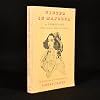
Winter in Majorca
by George Sand
On This Page
Description
George Sand recounts the story of her 1838 winter in Majorca, a winter she passed in the company of Frederick Chopin. She describes the natural beauties of Majorca as well as the rumblings of approaching war.Tags
Recommendations





























Member Recommendations

Member Reviews
Kind of tough to give this one a review score. On the one hand, if you’re travelling to Mallorca, it’s an interesting read because it provides a window into the island in 1838-39, when George Sand and Frederic Chopin stayed there for a few months in the attempt to alleviate Chopin’s health problems. On the other hand, George Sand is so damned annoying in her disdain for the islanders that it’s often difficult to enjoy. She refers to them as monkeys and makes sweeping statements about their laziness, dishonesty, and lack of culture. She complains about the smell of rancid olive oil and people who eat a lot of garlic. She shows not only the distasteful view of inherent cultural superiority that was common in the 19th century, but show more also just isn’t that open to new experiences or the joy of travel to begin with.
Just one example of that is a group of revelers who come to the monastery at Valldemossa in the middle of the night to celebrate Shrove Tuesday, and as they make music and dance, rather than enjoy what must have been a cool and unique thing for an outsider to experience, she reacts with outright horror, calling it a “hideous masquerade”, with music that is “so primitive and so harsh that it takes a lot of courage to endure a quarter of an hour of it.” Of the native cuisine, she says it’s “all so seasoned with garlic, black and red pepper and other corrosive spices, that you risk your life with each mouthful.” Of the monks at the Hermitage of the Trinity, she says “We found them to be the most stupid people in the world,” one of whom, simply for being very old. I mean, goodness, really? What a difference in tone we see when she quotes long passages from other authors who spent a lot of time in Mallorca and appreciated it!
If you ever travel to Mallorca, however, this book would be worth checking out. I liked the illustrations and learning about some of the history of the island, including the power dynamic of the politics and religion. Sand was there the year after an old Dominican monastery had been demolished because of its role in the Inquisition, and is clear-eyed in her assessment of the horror of the acts of the Church. She likens the conflicted feelings of destroying ancient buildings to chateaus during the French Revolution, quoting Chamisso: “Blessed are you, ancient manor, over whom now the ploughshare drives! And blessed is he who drives the ploughshare over you.”
While it doesn’t occupy a great deal of the book, she also has an appreciation for Mallorca’s natural beauty. “When the mire and fog of Paris depress me, I close my eyes and see again, as in a dream, that verdant mountain, those tawny rocks and that solitary palm-tree lost in a rose-coloured sky,” she writes. She also regrets not rounding a corner on a rugged cliff for another view on one of her hikes, because she realizes that’s it’s unlikely she’ll ever return (and never did). Who among travelers can’t relate? show less
Just one example of that is a group of revelers who come to the monastery at Valldemossa in the middle of the night to celebrate Shrove Tuesday, and as they make music and dance, rather than enjoy what must have been a cool and unique thing for an outsider to experience, she reacts with outright horror, calling it a “hideous masquerade”, with music that is “so primitive and so harsh that it takes a lot of courage to endure a quarter of an hour of it.” Of the native cuisine, she says it’s “all so seasoned with garlic, black and red pepper and other corrosive spices, that you risk your life with each mouthful.” Of the monks at the Hermitage of the Trinity, she says “We found them to be the most stupid people in the world,” one of whom, simply for being very old. I mean, goodness, really? What a difference in tone we see when she quotes long passages from other authors who spent a lot of time in Mallorca and appreciated it!
If you ever travel to Mallorca, however, this book would be worth checking out. I liked the illustrations and learning about some of the history of the island, including the power dynamic of the politics and religion. Sand was there the year after an old Dominican monastery had been demolished because of its role in the Inquisition, and is clear-eyed in her assessment of the horror of the acts of the Church. She likens the conflicted feelings of destroying ancient buildings to chateaus during the French Revolution, quoting Chamisso: “Blessed are you, ancient manor, over whom now the ploughshare drives! And blessed is he who drives the ploughshare over you.”
While it doesn’t occupy a great deal of the book, she also has an appreciation for Mallorca’s natural beauty. “When the mire and fog of Paris depress me, I close my eyes and see again, as in a dream, that verdant mountain, those tawny rocks and that solitary palm-tree lost in a rose-coloured sky,” she writes. She also regrets not rounding a corner on a rugged cliff for another view on one of her hikes, because she realizes that’s it’s unlikely she’ll ever return (and never did). Who among travelers can’t relate? show less
Thinking about a trip to Spain, perhaps some time on the delightful island of Majorca? Or perhaps just an entertaining literate jaunt through Majorca's natural geograghy and history? George Sand wrote this story of her winter in Majorca with her children and the ailing Frederic Chopin in the year 1838. You might say that Ms Sand was not the most friendly tourist given her view of the lack of amenities in Majorca. It is hard however not to sympathize with her as they struggle through the mud and chaos. The tale is made much more amusing by the numerous footnotes by the translator, Robert Graves, who a century later is living in Majorca and stoutly defends its virtues. So they are both a bit well, bitchy. Even Graves has to admit that the show more Majorcans have a blind spot about their winter. To them it does not exist and they persist in building houses with no fireplaces to throw off the chill of a cold rainy day.
Ms Sand does not give a lot of detail about their personal life and never refers to Chopin by name , only as the "invalid". She does go too far when she accuses the Majorcans of superstitious fear of infection. Chopin did have consumption and was infectious though he and Sand denied it. There he was at 28, hacking and coughing at the piano which they had to drag about the countryside. It is a nice little slice of history and despite Ms. Sand's commnets, I suspect Majorca would be a delightful place to visit. show less
Ms Sand does not give a lot of detail about their personal life and never refers to Chopin by name , only as the "invalid". She does go too far when she accuses the Majorcans of superstitious fear of infection. Chopin did have consumption and was infectious though he and Sand denied it. There he was at 28, hacking and coughing at the piano which they had to drag about the countryside. It is a nice little slice of history and despite Ms. Sand's commnets, I suspect Majorca would be a delightful place to visit. show less
Went wrong after three months. Chopin suffered from the clammy weather in the mountains. Accompanied by a cold and distant behaviour of the local people towards an unmarried couple. My wife and me, as well unmarried, experienced at Ibiza in the seventies still the same mugginess. Sand’s report is an example of a wife’s clear vision and “voice in times, when women kept quiet”, said André Maurois.
Did not finish this although the Majorca parts were of interest. Perhaps I'll get back to it when traveling to Majorca or listening to Chopin.
Did not finish this although the Majorca parts were of interest. Perhaps I'll get back to it when traveling to Majorca or listening to Chopin.
fiction, Chopin, Majorca, Palma, Valldemossa, tuberculosis, monastery, music
Accompagnée de Frédéric Chopin et de ses enfants, George Sand passe quatre mois à Majorque, et principalement à Valldemossa en 1838 pour se reposer de la trépidante vie parisienne. Un récit de voyage qui alterne entre récriminations sur les habitants, les logements, le mauvais temps ou la nourriture dont l’exagération (ou la mauvaise foi) en devient presque drôle, et considérations géographiques et historiques moins intéressantes pour le lecteur contemporain. Mais quoi qu’il en soit, un texte qui rappelle de beaux souvenirs de vacances.
Aug 27, 2022French
Members
- Recently Added By
Lists

In Our Time books
4,934 works; 2 members
Author Information

George Sand began life as Aurore Dupin, the daughter of a count and a dressmaker. Educated both on her aristocratic grandmother's estate and in a Parisian convent, at 18 she married Casimer Dudevant, a provincial gentleman whose rough temperament was the opposite of her own, and from whom she obtained a separation several years later. At 31 she show more moved to Paris, where she changed her name and plunged into the bohemian world of French romanticism. Frequently dressed in men's clothing, she participated actively in literary debates, cultural events, and even the revolution of 1848. Sand was friend and correspondent with many of the major artists and writers of her age, including Balzac, Flaubert, and Liszt. Her love affairs with the poet Musset and the composer Chopin were the stuff of legend, chronicled in her own Story of My Life. Sand's immensely popular novels ranged from sentimental stories of wronged women, to utopian socialist fictions, such as her masterpiece in Consuelo, 1842, to explorations of pastoral themes written when she retired, late in life, to her estate in Berry. Though frequently dismissed as overblown or too sentimental, Sand's fiction has recently undergone a revaluation, emerging as an influential body of women's writing. As both a writer and an intellectual personality, Sand is a central figure in nineteenth-century French cultural life. George Sand died in 1876 (Bowker Author Biography) show less
Some Editions
Series
Belongs to Publisher Series
Work Relationships
Has as a supplement
Common Knowledge
- Canonical title*
- Ein Winter auf Mallorca
- Original title
- Un hiver à Majorque
- Original publication date
- 1841 (serial) (serial); 1842
- People/Characters
- Frédéric Chopin; George Sand
- Important places
- Mallorca, Balearic Islands, Spain
- First words*
- Im Jahre 1741 entdeckten zwei englische Touristen das Tal von Chamonix; so jedenfalls bezeugt es eine Inschrift, die am Zugang zum Gletscher Mer de glace in einen Felsblock eingemeisselt ist. (Ulrich C. A. Krebs)
Alles hat einmal angefangen, auch Familienreisen nach Mallorca. - Last words*
- (Click to show. Warning: May contain spoilers.)Das Beste, was wir tun können, ist, uns gegenseitig zu helfen; denn wir sind wie die Kinder aus gleichem Schoss, die sich necken, sich streiten, sich sogar prügeln und doch nicht voneinander lassen können. (Caroline Tietze)
(Click to show. Warning: May contain spoilers.)..., und das Beste, was wir tun können ist, uns gegenseitig beizustehen, denn wir sind wie Kinder von einer Brust, die sich miteinander anlegen und zanken, sich sogar verprügeln und doch untrennbar sind. (Ulrich C. A. Krebs) - Original language*
- Französisch
*Some information comes from Common Knowledge in other languages. Click "Edit" for more information.
Classifications
- Genres
- Travel, Nonfiction, Biography & Memoir
- DDC/MDS
- 914.6 — History & geography Geography & travel Geography of and travel in Europe Spain, Andorra, Gibraltar, Portugal
- LCC
- DP302 .B27 .S213 — History of Europe, Asia, Africa and Oceania Spain – Portugal History of Spain Local history and description Provinces, regions, ets., A-Z
- BISAC
Statistics
- Members
- 502
- Popularity
- 59,950
- Reviews
- 13
- Rating
- (3.17)
- Languages
- 11 — Catalan, Danish, Dutch, English, Finnish, French, German, Norwegian (Bokmål), Russian, Spanish, Swedish
- Media
- Paper, Audiobook, Ebook
- ISBNs
- 95
- ASINs
- 35