On This Page
Description
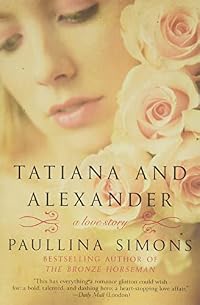
Paullina Simons's internationally bestselling blockbuster "The Bronze Horseman" told the heart-soaring tale of a young Russian woman's transcendent love affair with a Red Army soldier during the siege of Leningrad in the dark days of World War Two. The epic story continues in "Tatiana and Alexander", a novel of the enduring power of love and commitment against the devastating forces of war and the equally dangerous forces of keeping the peace. A sweeping, intensely compelling romantic show more historical saga, "Tatiana and Alexander" is a Russian "Thorn Birds" and a truly unforgettable listening experience. show lessTags
Recommendations


















Member Reviews
The Soviets and Allied forces are battling against Hitler and Alexander is in the midst of it all, this hell that is war. He is constantly haunted by images of his beloved, his Tatiana, her face, her laugh, her smell, the feel of her under his strong hands and his searching lips. But she is gone, he sent her away, but his mind won't let him forget her. He doesn't know that Tatiana has made it to America, where she too is living her own kind of hell without her one and only love. She hears Alexander's voice everywhere, calling for her. She searches the face of every broad shouldered, dark haired man, hoping, praying, begging....but her Shura is dead, only living in her heart and soul and in the son they created.
I can't believe how show more quickly I finished this book. I devoured it in a week, desperately wanting for Tatiana and Alexander to be reunited. As I turned each page, I continued to be drowned in their sorrows. The torment that Alexander struggles through is unbearable, yet he moves onward, from battle to battle, always the strong and courageous soldier. "Stay alive for me, my Shura", Tatiana would always say to him. "Stay alive", I say as my heart pours forth its own strength for this heroic character. He tries desperately, but as his body, mind and spirit are beaten down, I find myself crying out for him to hold on. She's coming....she has to come...she will come....won't she?
I continue to be obsessed with these characters. Even when I place the book down, I find myself wondering, will they make it? How can fate be so unkind? I want to push Tatiana onto that ship and yell "Go find him, he needs you, don't move on without him, open your heart and listen..." Will there ever be a time when they can just live, without fear, without war, without separation? I am hoping to get answers in the third book of the trilogy, which I am so anxiously waiting to arrive. Yet I too have my fears, for once I get my answers, my journey will be over. I will try to read slowly. show less
I can't believe how show more quickly I finished this book. I devoured it in a week, desperately wanting for Tatiana and Alexander to be reunited. As I turned each page, I continued to be drowned in their sorrows. The torment that Alexander struggles through is unbearable, yet he moves onward, from battle to battle, always the strong and courageous soldier. "Stay alive for me, my Shura", Tatiana would always say to him. "Stay alive", I say as my heart pours forth its own strength for this heroic character. He tries desperately, but as his body, mind and spirit are beaten down, I find myself crying out for him to hold on. She's coming....she has to come...she will come....won't she?
I continue to be obsessed with these characters. Even when I place the book down, I find myself wondering, will they make it? How can fate be so unkind? I want to push Tatiana onto that ship and yell "Go find him, he needs you, don't move on without him, open your heart and listen..." Will there ever be a time when they can just live, without fear, without war, without separation? I am hoping to get answers in the third book of the trilogy, which I am so anxiously waiting to arrive. Yet I too have my fears, for once I get my answers, my journey will be over. I will try to read slowly. show less
This is the second book in Paullina Simons’ trilogy about young couple Alexander and Tatiana. This review contains minor spoilers for both this book and the previous book, ‘The Bronze Horseman’.
The two title characters are actually not physically together for this book; Tatiana having escaped to America at the end of The Bronze Horseman, believing her husband Alexander to be dead; and Alexander still in Russia and forced to lead a penal battalion in war, with not enough soldiers, not enough ammunition and certainly not enough support from his country’s leader.
While Tatiana attempts to make something of her life – she becomes a nurse at Ellis Island, makes friends, raises her and Alexander’s son Anthony, and even considers show more dating again – she can never escape the possibility that her husband, the love of her life just might be alive. Alexander meanwhile has no idea where in the world Tatiana might be, or even if she is still alive.
I enjoyed this book, just as I enjoyed The Bronze Horseman. In this instalment of the story, Alexander’s back story, including how he came to be living in the Soviet Union, and his life before he met Tatiana, is covered, with the result that he is a much more sympathetic and rounded character. I thought the parts which detailed him fighting for a war he was no longer sure he believed in, under horrific conditions, to be absolutely compelling. The contrast between the lives which husband and wife led during this period were very marked – while Tatiana has found comfort and luxury, Alexander is barely surviving, and watches his fellow soldiers die on a daily basis.
The ending was superb – the last 100 pages or so are genuinely unputdownable! There is a third instalment in this series, which I certainly look forward to reading very soon.
Highly recommended. show less
The two title characters are actually not physically together for this book; Tatiana having escaped to America at the end of The Bronze Horseman, believing her husband Alexander to be dead; and Alexander still in Russia and forced to lead a penal battalion in war, with not enough soldiers, not enough ammunition and certainly not enough support from his country’s leader.
While Tatiana attempts to make something of her life – she becomes a nurse at Ellis Island, makes friends, raises her and Alexander’s son Anthony, and even considers show more dating again – she can never escape the possibility that her husband, the love of her life just might be alive. Alexander meanwhile has no idea where in the world Tatiana might be, or even if she is still alive.
I enjoyed this book, just as I enjoyed The Bronze Horseman. In this instalment of the story, Alexander’s back story, including how he came to be living in the Soviet Union, and his life before he met Tatiana, is covered, with the result that he is a much more sympathetic and rounded character. I thought the parts which detailed him fighting for a war he was no longer sure he believed in, under horrific conditions, to be absolutely compelling. The contrast between the lives which husband and wife led during this period were very marked – while Tatiana has found comfort and luxury, Alexander is barely surviving, and watches his fellow soldiers die on a daily basis.
The ending was superb – the last 100 pages or so are genuinely unputdownable! There is a third instalment in this series, which I certainly look forward to reading very soon.
Highly recommended. show less
Tatiana and Alexander did actually turn out to be a much stronger read for me than its predecessor, The Bronze Horseman. Rarely does a sequel improve upon the first book, so yay for that. While I slogged through book one, this one I read over the course of just a couple of days. Simons' trilogy takes a turn for the historical, rather than the romantic, which is just what I was wanting from this series from the start.
Of course, the reason I like this one so much better than The Bronze Horseman is that Tatiana and Alexander are kept apart for the bulk of it. Only in the last 100 pages are they together again, aside from some brief flashbacks that catch the reader up on the events of the first book (and, no, it's not in the least show more frustrating that an 800 page book can be summed up in a few quick flashbacks). My issues with Tatiana and Alexander's relationship were and are threefold: the idiotic love triangle (which is a non-issue now, but still taints my opinion of the two), the age difference (which isn't really all that large, but Tatiana was not mature for her age), and the way Alexander bosses Tatiana around. I'm sure his bossiness is typically Russian, and it's also what he witnessed from his parents, but I still think he's a dick, even if society taught him to behave that way.
However, as I said, they're hardly together in this one and that's a blessing, unless what you loved about book one was the romance, not the part about the siege; in that case, better luck with book three. Simons totally goes for a dramatic irony thing, with the reader knowing that he's alive and Tatiana believing Alexander died. Will she move on? Will she commit suicide out of despair, leaving her son an orphan? Sadly, the latter was much closer to transpiring. Yeah, I knew her husband was alive and that they would be reunited, but I kept hoping she would move on anyway, what with not shipping them in the slightest.
Aside from them, though, I pretty much loved everything else. Simons writes well, aside from her tendency to get all gooshy with the romance stuff. Where the story in The Bronze Horseman was entirely linear, Tatiana and Alexander jumps through time, from Tatiana to Alexander. We learn more about Alexander's childhood and follow him from his faked death until their reunion. Since the lovers are parted, the focus is on historical events, not melodrama.
Warning: This paragraph has spoilers:
With Alexander, Simons is able to cover torture sessions and the way the Soviets try to garner confessions, in which every option is a trap. From there, Alexander moves to a penal brigade, and the reader gets to witness just how poorly managed the Soviet forces were, sending men out to die senselessly. Later, Alexander fights along the front line with Germany, poorly armed and with the NKGB waiting behind to shoot him and his men should they retreat. Forced to surrender or die, his men are then sent to a concentration camp (Sachsenhausen) for having dared to let the enemy win. All of these things are true to the Soviet experience in WWII, and Simons does a good job depicting the bleakness.
With only one book left in this saga, I'm hoping for more historical fiction, but suspect that The Summer Garden will be romance, romance, romance. At any rate, with this one, I'm glad I've read the series, and tentatively excited to continue. show less
Of course, the reason I like this one so much better than The Bronze Horseman is that Tatiana and Alexander are kept apart for the bulk of it. Only in the last 100 pages are they together again, aside from some brief flashbacks that catch the reader up on the events of the first book (and, no, it's not in the least show more frustrating that an 800 page book can be summed up in a few quick flashbacks). My issues with Tatiana and Alexander's relationship were and are threefold: the idiotic love triangle (which is a non-issue now, but still taints my opinion of the two), the age difference (which isn't really all that large, but Tatiana was not mature for her age), and the way Alexander bosses Tatiana around. I'm sure his bossiness is typically Russian, and it's also what he witnessed from his parents, but I still think he's a dick, even if society taught him to behave that way.
However, as I said, they're hardly together in this one and that's a blessing, unless what you loved about book one was the romance, not the part about the siege; in that case, better luck with book three. Simons totally goes for a dramatic irony thing, with the reader knowing that he's alive and Tatiana believing Alexander died. Will she move on? Will she commit suicide out of despair, leaving her son an orphan? Sadly, the latter was much closer to transpiring. Yeah, I knew her husband was alive and that they would be reunited, but I kept hoping she would move on anyway, what with not shipping them in the slightest.
Aside from them, though, I pretty much loved everything else. Simons writes well, aside from her tendency to get all gooshy with the romance stuff. Where the story in The Bronze Horseman was entirely linear, Tatiana and Alexander jumps through time, from Tatiana to Alexander. We learn more about Alexander's childhood and follow him from his faked death until their reunion. Since the lovers are parted, the focus is on historical events, not melodrama.
Warning: This paragraph has spoilers:
With Alexander, Simons is able to cover torture sessions and the way the Soviets try to garner confessions, in which every option is a trap. From there, Alexander moves to a penal brigade, and the reader gets to witness just how poorly managed the Soviet forces were, sending men out to die senselessly. Later, Alexander fights along the front line with Germany, poorly armed and with the NKGB waiting behind to shoot him and his men should they retreat. Forced to surrender or die, his men are then sent to a concentration camp (Sachsenhausen) for having dared to let the enemy win. All of these things are true to the Soviet experience in WWII, and Simons does a good job depicting the bleakness.
With only one book left in this saga, I'm hoping for more historical fiction, but suspect that The Summer Garden will be romance, romance, romance. At any rate, with this one, I'm glad I've read the series, and tentatively excited to continue. show less
By far, my least favorite installment of the trilogy, Tatiana and Alexander are apart through the majority of this novel. And they are both upset by that fact. Very upset. Tatiana can barely function in New York, despite the fact that she has Alexander's son to care for. Alexander is trapped in Russia, still forced to lead a penal battalion in the war, which is essentially a death sentence. Long passages of them remembering their time together in Lazarevo and flashbacks of Alexander's childhood get very tiring. Simons could have used a stricter editor; this novel easily could have been shorter by at least 100 pages. After dragging through the majority of the book, the ending comes on quickly with a lot of suspense - almost redeeming the show more rest of the story. A necessary but lackluster installment in this trilogy. show less
Tatiana and Alexander is a continuation of The Bronze Horseman and I loved this sequel almost as much as the original. Paullina Simons paints a vivid and startling picture of Europe during and in the aftermath of World War II. The world inhabited by Tatiana and Alexander is cruel and beautiful at the same time. This novel starts with the two lovers separated - Tatiana having made her way to New York and Alexander facing charges in the Soviet Union - and tells the story of their lives during this separation and their attempts to reunite. The epic story of these two lover is historical fiction at its best and I look forward to reading more of their story.
This books succeeds in being both better and duller than the [b: The Bronze Horseman|83144|The Bronze Horseman (The Bronze Horseman, #1)|Paullina Simons|https://images.gr-assets.com/books/1327921996s/83144.jpg|12615171]. There is practically no independent plot - all the new events pertaining the heroes can be discussed at sufficient leisure in two or three chapters. Two thirds of the book are the thoughts and memories that expand on the events of the first book or their childhood. Though these passages are lengthly and sometimes really boring, they do create a more interesting and full exposition and allow us a better understanding of the heroes' motivations. Once again, the best descriptions are these of suffering, of the brutality of show more the Soviet system and the complete disregard of the value of individual life.
I believe a good and ferocious editor could have composed a good book of these two by picking the best bits and linking them together, as the overall story is not without merits. As it is the book looks like an attempt to make more money on the success of the first book . show less
I believe a good and ferocious editor could have composed a good book of these two by picking the best bits and linking them together, as the overall story is not without merits. As it is the book looks like an attempt to make more money on the success of the first book . show less
Guerra, amor, abandono, reencuentros, muerte, renacimiento, muchísimo suspenso... y recuerdos.
Alexander y Tatiana nos muestran como el amor puede ser el catalizador para sobrevivir los momentos mas oscuros, mas terribles. Como cuando crees que ya no tienes fuerzas para seguir el simple recuerdo de una sonrisa, de una palabra, es toda la esperanza que necesitas.
Amor sin fronteras, sin limites, sin fecha de caducidad.
-Lo bueno:
*En esta segunda parte de la historia de Tatia y Shura, se nos presenta como ambos logran sobrevivir su separación y continuar con sus vidas, en un relato lleno de emociones, suspenso ¡y sorpresas!
*Los relatos de la guerra son más explícitos, pero show more para nada aburridos, debo decir en cambio que fueron mis partes favoritas. Nos permiten entender la profundidad del dolor de Alex y el porque de su comportamiento después.
*Los nuevos personajes, también, están muy bien desarrollados y forman parte interesante de la historia, dándole mayor realismo y profundidad.
-Lo malo:
*En gran parte, la vida de Tatiana en Nueva York me parecía un poco aburrida de leer. Nos mostraba una Tatiana débil, sin la fortaleza que la caracterizó en El Jinete de Bronce.
*Lo mucho que tardan en reunirse los personajes. Leía y leía y leía y leía... y me preguntaba ¡¿cuando va a pasar?! Esta no es la historia de Tatiana y Alexander, sino la historia de
Tatiana
Y
Alexander.
Así, con mucho espacio de por medio. Porque es su historia individual, lo que cada uno piensa, vive y padece. POR SEPARADO.
*La descripción del pequeño Alex cuando era un niño. Es cierto que la autora nos los presenta como un niño muy maduro para su edad, pero ¿qué niño de 11 años piensa así?:
"Mientras caminaban hacía afuera, Alexander da la vuelta y se mira en el espejo una ultima vez. No quiero olvidar a este niño, pensó, en caso de que alguna vez tenga que volver a él."
Y la respuesta es: NINGUNO.
Así como ese hay otros momentos donde el Alexander niño tiene pensamientos más profundos que el Alexander adulto, y simplemente no me cuadra.
De igual forma, Tatiana y Alexander es un libro maravilloso e imposible de olvidar. Uno de los amores más épicos que han sido escritos.
"Do you hear the stellar winds, carrying from the heavens a whisper, straight from antiquity...into eternity. Will you remember that? Anywhere you are, if you can look up and find Perseus in the sky, find that smile, and hear the galactic wind whisper your name, you'll know it's me, calling for you..." show less
"Memoria - ese desalmado, ese enemigo cruel del consuelo."
Alexander y Tatiana nos muestran como el amor puede ser el catalizador para sobrevivir los momentos mas oscuros, mas terribles. Como cuando crees que ya no tienes fuerzas para seguir el simple recuerdo de una sonrisa, de una palabra, es toda la esperanza que necesitas.
Amor sin fronteras, sin limites, sin fecha de caducidad.
-Lo bueno:
*En esta segunda parte de la historia de Tatia y Shura, se nos presenta como ambos logran sobrevivir su separación y continuar con sus vidas, en un relato lleno de emociones, suspenso ¡y sorpresas!
*Los relatos de la guerra son más explícitos, pero show more para nada aburridos, debo decir en cambio que fueron mis partes favoritas. Nos permiten entender la profundidad del dolor de Alex y el porque de su comportamiento después.
*Los nuevos personajes, también, están muy bien desarrollados y forman parte interesante de la historia, dándole mayor realismo y profundidad.
-Lo malo:
*En gran parte, la vida de Tatiana en Nueva York me parecía un poco aburrida de leer. Nos mostraba una Tatiana débil, sin la fortaleza que la caracterizó en El Jinete de Bronce.
*Lo mucho que tardan en reunirse los personajes. Leía y leía y leía y leía... y me preguntaba ¡¿cuando va a pasar?! Esta no es la historia de Tatiana y Alexander, sino la historia de
Tatiana
Y
Alexander.
Así, con mucho espacio de por medio. Porque es su historia individual, lo que cada uno piensa, vive y padece. POR SEPARADO.
*La descripción del pequeño Alex cuando era un niño. Es cierto que la autora nos los presenta como un niño muy maduro para su edad, pero ¿qué niño de 11 años piensa así?:
"Mientras caminaban hacía afuera, Alexander da la vuelta y se mira en el espejo una ultima vez. No quiero olvidar a este niño, pensó, en caso de que alguna vez tenga que volver a él."
Y la respuesta es: NINGUNO.
Así como ese hay otros momentos donde el Alexander niño tiene pensamientos más profundos que el Alexander adulto, y simplemente no me cuadra.
De igual forma, Tatiana y Alexander es un libro maravilloso e imposible de olvidar. Uno de los amores más épicos que han sido escritos.
"Do you hear the stellar winds, carrying from the heavens a whisper, straight from antiquity...into eternity. Will you remember that? Anywhere you are, if you can look up and find Perseus in the sky, find that smile, and hear the galactic wind whisper your name, you'll know it's me, calling for you..." show less
Members
- Recently Added By
Author Information

40 Works 8,015 Members
Paullina Simons was born in Leningrad, USSR in 1963. At the age of ten her family immigrated to the United States. Paullina attended college in New York, Kansas and England. After graduating from the University of Kansas with a degree in Political Science Paullina went on to various jobs including working as a financial journalist and as a show more translator. After several years Paullina got around to her first love and wrote her novel Tully (HarperCollins, Oct. 1995). She has since written Red Leaves, Eleven Hours, The Bronze Horseman, The Bridge to Holy Cross, (also known as Tatiana and Alexander.) The Summer Garden, The Girl in Times Square, Road to Paradise and Children of Liberty. Many of Paullina's novels have reached international bestseller lists in countries including Australia and New Zealand. Paullina has also written a cookbook, Tatiana's Table, which is a collection of recipes, short stories and recollections from her bestselling books The Bronze Horseman, The Bridge to Holy Cross, and The Summer Garden. (Bowker Author Biography) show less
Series

Belongs to Publisher Series
Common Knowledge
- Canonical title
- Tatiana and Alexander
- Original title
- Tatiana and Alexander
- Alternate titles
- The Bridge to Holy Cross
- Original publication date
- 2003
- People/Characters
- Tatiana Metanova; Alexander Barrington; Anthony Alexander Barrington
- Important places
- Leningrad, Russia
- First words
- Alexander Barrington stood in front of the mirror and adjusted his red Cub Scout tie. (Prologue)
- Last words
- (Click to show. Warning: May contain spoilers.)And the bronze horseman is still.
Classifications
- Genres
- Fiction and Literature, Romance, Historical Fiction, General Fiction
- DDC/MDS
- 813.54 — Literature & rhetoric American literature in English American fiction in English 1900-1999 1945-1999
- LCC
- PS3569 .I48763 .T37 — Language and Literature American literature American literature Individual authors 1961-
- BISAC
Statistics
- Members
- 1,206
- Popularity
- 20,447
- Reviews
- 43
- Rating
- (4.12)
- Languages
- 12 — Chinese, Czech, Danish, Dutch, English, French, German, Greek, Italian, Polish, Portuguese, Spanish
- Media
- Paper, Audiobook, Ebook
- ISBNs
- 59
- ASINs
- 14