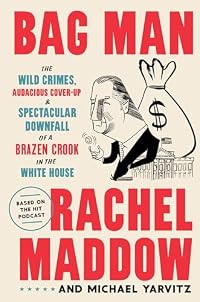
Bag Man: The Wild Crimes, Audacious Cover-Up, and Spectacular Downfall of a Brazen Crook in the White House (book)
by Rachel Maddow
On This Page
Description
"The knockdown, drag-out, untold story of the other scandal that rocked Nixon's White House, and reset the rules for crooked presidents to come-with new reporting that expands on Rachel Maddow's Peabody Award-nominated podcast. Is it possible for a sitting vice president to direct a vast criminal enterprise within the halls of the White House? To have one of the most brazen corruption scandals in American history play out while nobody's paying attention? And for that scandal to be all but show more forgotten decades later? The year was 1973, and Spiro T. Agnew, the former governor of Maryland, was Richard Nixon's second-in-command. Long on firebrand rhetoric and short on political experience, Agnew had carried out a bribery and extortion ring in office for years, when-at the height of Watergate-three young federal prosecutors discovered his crimes and launched a mission to take him down before it was too late, before Nixon's impending downfall elevated Agnew to the presidency. The self-described "counterpuncher" vice president did everything he could to bury their investigation: dismissing it as a "witch hunt," riling up his partisan base, making the press the enemy, and, with a crumbling circle of loyalists, scheming to obstruct justice in order to survive. In this blockbuster account, Rachel Maddow and Michael Yarvitz detail the investigation that exposed Agnew's crimes, the attempts at a cover-up-which involved future president George H. W. Bush-and the backroom bargain that forced Agnew's resignation but also spared him years in federal prison. Based on the award-winning hit podcast, Bag Man expands and deepens the story of Spiro Agnew's scandal and its lasting influence on our politics, our media, and our understanding of what it takes to confront a criminal in the White House."-- show lessTags
Recommendations






Member Reviews
I distinctly remember the day that Spiro T. Agnew resigned the Presidency, and had I know the true extent of his crimes, I would have been even more ecstatic to see him leave office. I always thought that he had been nabbed for tax evasion. Little did I know.
If you think that Donald Trump has been a unique politician, think again. Before there was Donald Trump, there was Spiro Agnew, a man who was chosen by Richard Nixon to be his running mate because he would attract those Southerners who would otherwise have voted for George Wallace, and a man who originated the scorched earth battle plan for corrupt officeholders:
• Label any investigation as a witch hunt
• Obstruct the investigation behind the scenes
• Attack the investigators in show more personal terms
• Attack the credibility of the justice department
• Attack the media
• Always punch back hard until either you or the system is broken
Sound familiar?
Agnew got his start - both politically and criminally - in 1962 as the executive of Baltimore County. In that position, he was responsible for a large number of road and bridge contracts and he made sure that he got a kick-back on each and every one that was awarded. When he became governor of Maryland in 1967 there were even more public works projects and even more kickbacks - kickbacks he continued to receive at his office in the White House when he became Vice President in 1969.
He was caught in the most mundane way. One of the contractors who had been paying Agnew off (and then Agnew's successor as Baltimore County Executive) decided to talk. And he talked, and talked and talked.
The great thing about this book is that so many of the conversations that demonstrate Agnew's guilt are on tape, courtesy of the infamous taping system that Nixon installed in the White house. These tapes were largely ignored as the larger Watergate case took over the nation's attention in 1973. Maddow, however, seems to have listened to them all .She has also interviewed many of the Federal prosecutors who were on the case at the time.
It's a great story, and much like the story of the 2020 election, it's heroes are fairly ordinary civil servants who insisted on doing their jobs and refused to be intimidated by powerful men in office. There are also the usual political weasels (Agnew also had 100 members of Congress who tried to stop his investigation), and some surprising bad guys.
This book reads like a great political thriller and I had a hard time setting it down. Read it and learn something. show less
If you think that Donald Trump has been a unique politician, think again. Before there was Donald Trump, there was Spiro Agnew, a man who was chosen by Richard Nixon to be his running mate because he would attract those Southerners who would otherwise have voted for George Wallace, and a man who originated the scorched earth battle plan for corrupt officeholders:
• Label any investigation as a witch hunt
• Obstruct the investigation behind the scenes
• Attack the investigators in show more personal terms
• Attack the credibility of the justice department
• Attack the media
• Always punch back hard until either you or the system is broken
Sound familiar?
Agnew got his start - both politically and criminally - in 1962 as the executive of Baltimore County. In that position, he was responsible for a large number of road and bridge contracts and he made sure that he got a kick-back on each and every one that was awarded. When he became governor of Maryland in 1967 there were even more public works projects and even more kickbacks - kickbacks he continued to receive at his office in the White House when he became Vice President in 1969.
He was caught in the most mundane way. One of the contractors who had been paying Agnew off (and then Agnew's successor as Baltimore County Executive) decided to talk. And he talked, and talked and talked.
The great thing about this book is that so many of the conversations that demonstrate Agnew's guilt are on tape, courtesy of the infamous taping system that Nixon installed in the White house. These tapes were largely ignored as the larger Watergate case took over the nation's attention in 1973. Maddow, however, seems to have listened to them all .She has also interviewed many of the Federal prosecutors who were on the case at the time.
It's a great story, and much like the story of the 2020 election, it's heroes are fairly ordinary civil servants who insisted on doing their jobs and refused to be intimidated by powerful men in office. There are also the usual political weasels (Agnew also had 100 members of Congress who tried to stop his investigation), and some surprising bad guys.
This book reads like a great political thriller and I had a hard time setting it down. Read it and learn something. show less
In a few short months in summer and fall of 1973, Spiro Agnew rewrote the rules for how a White House occupant can respond, and fight back, when his own Justice Department comes knocking. Damn the investigators. Damn the press. Damn the opposition. Damn the facts. Hang in there, baby! A legitimate investigation, it turns out, can be smeared and muddied up with a simple but aggressive counteroffensive-one that privileges feelings over facts, base loyalty over evidence, and obstruction over cooperation.
Ultimately, Agnew failed to save himself. But he left a scorched earth battle plan for any corrupt office holder that followed. Punch back. Hard. Until either you are broken or the system is.
Ultimately, Agnew failed to save himself. But he left a scorched earth battle plan for any corrupt office holder that followed. Punch back. Hard. Until either you are broken or the system is.
Anybody remember Spiro Agnew? If you don’t, and care about American democracy, then by all means read BAG MAN: THE WILD CRIMES, AUDACIOUS COVER UP, AND SPECTACULAR DOWNFALL OF A BRAZEN CROOK IN THE WHITE HOUSE, by Rachel Maddow and Michael Yarvitz. For those who have forgotten, and for those who are way too young, Spiro Agnew, the son of Greek immigrants, rose within a few short years in the 1960s from Baltimore County Executive to Governor of Maryland, then becoming Richard Nixon’s running mate on the 1968 Republican ticket, that won the election, elevating Agnew to the Vice Presidency. Though considered a political non-entity by most pundits at the time, Agnew quickly carved out a niche for himself as the Nixon Administration’s show more attack dog against those it considered enemies—anti-Vietnam War demonstrators, hippies in general, radical Blacks, young people, and most of all, the news media that critically covered the events of the day. With the help of speech writers William Safire and Pat Buchanan, the latter an old school Irish Catholic bigot, Agnew railed against An effete corp of impudent snobs and the Nattering nabobs of negativism, winning him a big following among middle Americans who felt that their very way of life was under attack during the turbulent ‘60s, and was glad to see somebody in authority stand up and fight back. When the Nixon/Agnew ticket won re-election in ’72, the Vice President immediately became the front-runner for the Republican nomination in ’76. But things changed very fast in the spring and summer of 1973, as first the Nixon Administration was engulfed in the Watergate scandal revelations, then soon followed by the news that Agnew was under investigation for taking bribes and kickbacks from contractors doing business with the state of Maryland going back to the time when he was county executive and continuing through his years as Vice President. It truly was brazen corruption, made plain by the fact that Agnew was accused of taking money right in his White House office. The Vice President was defiant at first, denying the charges, and attacking the Federal prosecutors, but ultimately, they had the goods on him, and he knew it. It ended with him pleading “no contest” to the charges, and escaping jail time by resigning his office in disgrace, before fading into relative obscurity.
I really liked Maddow, and her co-writer Yarvitz’s, take on this sordid story. My hardback copy comes in at 269 pages, making it a short read. Maddow writes in the conversational style of one of her monologues from her MS-NOW cable show, laying out the facts, but also giving some real context to the events described. The Spiro Agnew who emerges from these pages is one of a shallow grifting opportunist, and total hypocrite. The piety he put on in public hid a venomously hateful nature that came out in private. The authors make quite the contrast between the corrupt Vice President and the Federal Prosecutors who pursued his crimes and brought him to justice; they were public servants in the finest sense of the word, not once letting partisan political considerations get in the way of justice—men like George Beall, Tim Baker, Ron Liebman, and Barney Skolnick. They are true heroes. Also deserving praise is Attorney General Elliot Richardson, who understood early on that if the Watergate scandal took down the Presidency of Richard Nixon, then he could not be succeeded by his equally corrupt Vice President. Richardson backed his men all the way, and helped broker the deal that got Agnew’s resignation in the nick of time. There are also some interesting revelations concerning some very real attempts to quash the Agnew investigation early on, actions that amounted to obstruction of justice pure and simple. Another disgusting revelation is how Agnew, in the years after his resignation, was happy to take Saudi money to denounce Israeli influence in the United States. And Maddow is right in pointing out that the principal legacy of Agnew’s sordid career is the “best defense is a good offense” style of politics, where politicians under attack punch back by admitting to nothing while throwing haymakers at their accusers, and undermining the motives of investigators.
One thing Maddow leaves out is the big reason why Nixon picked Agnew as his Vice President in the first place: a deal with segregationist South Carolina Senator Strom Thurmond to pick a Vice President acceptable to the Senator in return for Thurmond’s support before the ’68 Republican National Convention. Agnew, who had called out the National Guard to keep order in Baltimore in the wake of MLK’s assassination, was the kind of tough “law and order” man from a border state that appealed to the aging white supremacist. The Agnew nomination, along with the Democratic Party’s self-inflicted wound with Thomas Eagleton in ’72, is why both political parties began seriously vetting their Vice-Presidential prospects in the years ahead, a practice that continues to this very day.
While BAG MAN is a story of justice triumphing over corruption and malfeasance, it is impossible not to be struck when reading it how very different the world is today. The Department of Justice, as it operates in the present day, would look the other way at the corruption of Spiro Agnew for no other reason than his political affiliation. We have fallen far. show less
I really liked Maddow, and her co-writer Yarvitz’s, take on this sordid story. My hardback copy comes in at 269 pages, making it a short read. Maddow writes in the conversational style of one of her monologues from her MS-NOW cable show, laying out the facts, but also giving some real context to the events described. The Spiro Agnew who emerges from these pages is one of a shallow grifting opportunist, and total hypocrite. The piety he put on in public hid a venomously hateful nature that came out in private. The authors make quite the contrast between the corrupt Vice President and the Federal Prosecutors who pursued his crimes and brought him to justice; they were public servants in the finest sense of the word, not once letting partisan political considerations get in the way of justice—men like George Beall, Tim Baker, Ron Liebman, and Barney Skolnick. They are true heroes. Also deserving praise is Attorney General Elliot Richardson, who understood early on that if the Watergate scandal took down the Presidency of Richard Nixon, then he could not be succeeded by his equally corrupt Vice President. Richardson backed his men all the way, and helped broker the deal that got Agnew’s resignation in the nick of time. There are also some interesting revelations concerning some very real attempts to quash the Agnew investigation early on, actions that amounted to obstruction of justice pure and simple. Another disgusting revelation is how Agnew, in the years after his resignation, was happy to take Saudi money to denounce Israeli influence in the United States. And Maddow is right in pointing out that the principal legacy of Agnew’s sordid career is the “best defense is a good offense” style of politics, where politicians under attack punch back by admitting to nothing while throwing haymakers at their accusers, and undermining the motives of investigators.
One thing Maddow leaves out is the big reason why Nixon picked Agnew as his Vice President in the first place: a deal with segregationist South Carolina Senator Strom Thurmond to pick a Vice President acceptable to the Senator in return for Thurmond’s support before the ’68 Republican National Convention. Agnew, who had called out the National Guard to keep order in Baltimore in the wake of MLK’s assassination, was the kind of tough “law and order” man from a border state that appealed to the aging white supremacist. The Agnew nomination, along with the Democratic Party’s self-inflicted wound with Thomas Eagleton in ’72, is why both political parties began seriously vetting their Vice-Presidential prospects in the years ahead, a practice that continues to this very day.
While BAG MAN is a story of justice triumphing over corruption and malfeasance, it is impossible not to be struck when reading it how very different the world is today. The Department of Justice, as it operates in the present day, would look the other way at the corruption of Spiro Agnew for no other reason than his political affiliation. We have fallen far. show less
This book was something of a trip down memory lane for me from a number of perspectives. One, though I had been a big fan at one point in time, Rachel Maddow had drifted outside my attention span sometime late in Obama's time in office. Two, before reading this book, I could go years without thinking about Spiro Agnew, and even at the time of Watergate his legal travails were a small time matter compared to that of Richard Nixon; though I can assure you that even adolescents in school were well aware that before Nixon was ushered out of office, Agnew had to go first.
What is most striking to me about the story that Maddow & Yarvitz tell is just how clueless Agnew seemed to be in pursuit of making politics personally pay, and the level of show more entitlement displayed actually did turn out to be toxic. Maybe it was mostly the residue of classic American machine politics, but there was something in the air, as I can remember more than a few media creations from the time featured "average" people trying to get rich quick, regardless of the risks or consequences. If it hasn't already been done there's certainly a book in it for someone doing cultural studies of the United States.
Besides that, the real story here is the pursuit of Agnew by the apparatus of the federal legal system, with particular focus on the team of young prosecutors who discovered Agnew's operation, how they sold pursuit of the case of their superiors, and how it was finally decided that discretion was the better part of valor and it was sufficient unto the day to coerce Agnew into resigning. It's not clear that the case against the man would have survived Nixon's "Saturday Night Massacre" against the Justice Department, and that would have made for some "interesting," and unpleasant history.
All in all an entertaining and informative book, and I might have to start paying attention to Rachel Maddow again. show less
What is most striking to me about the story that Maddow & Yarvitz tell is just how clueless Agnew seemed to be in pursuit of making politics personally pay, and the level of show more entitlement displayed actually did turn out to be toxic. Maybe it was mostly the residue of classic American machine politics, but there was something in the air, as I can remember more than a few media creations from the time featured "average" people trying to get rich quick, regardless of the risks or consequences. If it hasn't already been done there's certainly a book in it for someone doing cultural studies of the United States.
Besides that, the real story here is the pursuit of Agnew by the apparatus of the federal legal system, with particular focus on the team of young prosecutors who discovered Agnew's operation, how they sold pursuit of the case of their superiors, and how it was finally decided that discretion was the better part of valor and it was sufficient unto the day to coerce Agnew into resigning. It's not clear that the case against the man would have survived Nixon's "Saturday Night Massacre" against the Justice Department, and that would have made for some "interesting," and unpleasant history.
All in all an entertaining and informative book, and I might have to start paying attention to Rachel Maddow again. show less
More of a 4.5.
I had heard of the Bagman podcast but never got around to catching up. But I remember watching Rachel talk about Agnew during a couple of A blocks of her show and was surprised that I hadn’t even heard the name of this supposedly infamous VP. So when I saw the announcement for this book, I was obviously very excited and immediately got around to reading it as soon as I got my library copy.
I naturally don’t want to hash the facts from the book again in this review, but reading about this whole saga of a corrupt VP who took envelopes of cash bribes even while in the White House was just stunning, and even more surprising was the fact that this seems like a very forgotten piece of history, probably overshadowed by the show more Watergate scandal and its aftermath. However, the main point I took from this story was the parallels to the Trump administration - from the numerous similarities between the two figures and their brazen corruption, as well as the attacks they go on when caught. It’s almost like I was reading about the past four years and not something that happened almost 50 years ago. And just like what happened with Agnew, it feels like this administration might also escape prosecutions or any consequences, either due to a too lenient Biden admin or more possibly, lots of self serving pardons.
But what felt not similar between Agnew’s case and the current administration was the conduct of the Attorney General, the US attorney of Maryland as well as the prosecutors. Rightfully, the authors highlight the relentless work done by these civil servants who did their duty despite pressure from the higher ups and ultimately got a corrupt person out of the presidential line of succession, even if they were unable to get their preferred indictments or sentences. This is obviously in stark contrast to our recently resigned AG who never felt like someone who would support the prosecutors under him if they wanted to pursue similar lines of inquiry against anyone in the administration. This just goes to show that while the corruption has lived on, principled people - who would put up a fight against those in power using their positions for nefarious activities - are now a rare commodity, which is very unfortunate for the country.
All in all, this was a well written and interesting read with lots of first hand information from the lawyers who were involved, and despite the brazen corruption of a person in high office, I did enjoy the book a lot. There’s quite a bit of snark in the writing, which I think I can attribute to Rachel’s signature humor, but it never lessened the importance of what happened. And just like Rachel mentioned many times in her previous book Blowout, the strength of our small-d democratic institutions depends on the people who are ready to defend them, even against those in power - and the past four years have shown that they are not invincible. It’s now upto the people how they want to hold their electeds accountable. But before you do that, read this book and listen to the podcast, but sometimes history really teaches us lessons which can help us make better choices in the future. show less
I had heard of the Bagman podcast but never got around to catching up. But I remember watching Rachel talk about Agnew during a couple of A blocks of her show and was surprised that I hadn’t even heard the name of this supposedly infamous VP. So when I saw the announcement for this book, I was obviously very excited and immediately got around to reading it as soon as I got my library copy.
I naturally don’t want to hash the facts from the book again in this review, but reading about this whole saga of a corrupt VP who took envelopes of cash bribes even while in the White House was just stunning, and even more surprising was the fact that this seems like a very forgotten piece of history, probably overshadowed by the show more Watergate scandal and its aftermath. However, the main point I took from this story was the parallels to the Trump administration - from the numerous similarities between the two figures and their brazen corruption, as well as the attacks they go on when caught. It’s almost like I was reading about the past four years and not something that happened almost 50 years ago. And just like what happened with Agnew, it feels like this administration might also escape prosecutions or any consequences, either due to a too lenient Biden admin or more possibly, lots of self serving pardons.
But what felt not similar between Agnew’s case and the current administration was the conduct of the Attorney General, the US attorney of Maryland as well as the prosecutors. Rightfully, the authors highlight the relentless work done by these civil servants who did their duty despite pressure from the higher ups and ultimately got a corrupt person out of the presidential line of succession, even if they were unable to get their preferred indictments or sentences. This is obviously in stark contrast to our recently resigned AG who never felt like someone who would support the prosecutors under him if they wanted to pursue similar lines of inquiry against anyone in the administration. This just goes to show that while the corruption has lived on, principled people - who would put up a fight against those in power using their positions for nefarious activities - are now a rare commodity, which is very unfortunate for the country.
All in all, this was a well written and interesting read with lots of first hand information from the lawyers who were involved, and despite the brazen corruption of a person in high office, I did enjoy the book a lot. There’s quite a bit of snark in the writing, which I think I can attribute to Rachel’s signature humor, but it never lessened the importance of what happened. And just like Rachel mentioned many times in her previous book Blowout, the strength of our small-d democratic institutions depends on the people who are ready to defend them, even against those in power - and the past four years have shown that they are not invincible. It’s now upto the people how they want to hold their electeds accountable. But before you do that, read this book and listen to the podcast, but sometimes history really teaches us lessons which can help us make better choices in the future. show less
Bag Man: The Wild Crimes, Audacious Cover-up, and Spectacular Downfall of a Brazen Crook in the White House (no, not the current resident) by Rachel Maddow and Michael Yarvitz is a fascinating read that highlights the strange career of Spiro Agnew.
I remember Agnew and his shame very well. I was born in Maryland and lived there during most of the period when he held any office. During his time as VP, my sister worked on the Hill for Congressman Stratton from NY and then Congressman Bennett from Florida, so we heard a lot of the rumblings through her as well as on the nightly news and in the Post.
This work not only includes a lot of new (at least to me) information but offers both analysis and an engaging presentation. This was an show more enjoyable read even while it made you mad at what passes for politics. This is also the person who, along with Nixon, weaponized racism even more than before through substitute words and using "law and order" in place of openly announcing their racist leanings. Not much different from today's illegitimate administration.
I highly recommend this to readers interested in political history, especially how crooked our political system is and has been. It would be nice to make Agnew sound like an outlier but he isn't, he just wasn't very sophisticated at what he did. Politicians since him have perfected the art of the con. As evidenced by the liar/conman/racist-in-chief, Trumpenfuehrer.
Reviewed from a copy made available by the publisher via NetGalley. show less
I remember Agnew and his shame very well. I was born in Maryland and lived there during most of the period when he held any office. During his time as VP, my sister worked on the Hill for Congressman Stratton from NY and then Congressman Bennett from Florida, so we heard a lot of the rumblings through her as well as on the nightly news and in the Post.
This work not only includes a lot of new (at least to me) information but offers both analysis and an engaging presentation. This was an show more enjoyable read even while it made you mad at what passes for politics. This is also the person who, along with Nixon, weaponized racism even more than before through substitute words and using "law and order" in place of openly announcing their racist leanings. Not much different from today's illegitimate administration.
I highly recommend this to readers interested in political history, especially how crooked our political system is and has been. It would be nice to make Agnew sound like an outlier but he isn't, he just wasn't very sophisticated at what he did. Politicians since him have perfected the art of the con. As evidenced by the liar/conman/racist-in-chief, Trumpenfuehrer.
Reviewed from a copy made available by the publisher via NetGalley. show less
If you listened to the podcast you'll mostly know this story, but this was a good read nonetheless; a really well-told version of the Agnew investigation and its contexts.
Members
- Recently Added By
Lists

Top Five Books of 2020
982 works; 348 members

Matt
97 works; 1 member

Club Read's Recommended Nonfiction Written by Women
618 works; 30 members
Author Information

13+ Works 3,945 Members
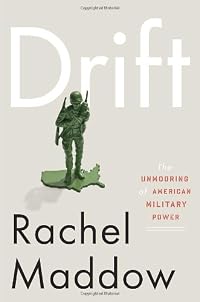
Rachel Maddow is host of the Emmy Award-winning Rachel Maddow Show on MSNBC, as well as the author of Drift: The Unmooring of American Military Power, a #1 New York Times bestseller, and Bag Man with Michael Yarvitz. Maddow received a bachelor's degree in public policy from Stanford University and earned her doctorate in political science at show more Oxford University. She lives in New York City and Massachusetts with her partner artist Susan Mikula. show less
All Editions
Awards and Honors
Distinctions
Common Knowledge
- Canonical title
- Bag Man: The Wild Crimes, Audacious Cover-Up, and Spectacular Downfall of a Brazen Crook in the White House (book) (book)
Classifications
- Genres
- General Nonfiction, History, Nonfiction, Politics and Government, Biography & Memoir
- DDC/MDS
- 973.924092 — History & geography History of North America United States 1901- Cold War, Vietnam War, Digital Age (1953-2001) Richard Nixon (1969-1974) Watergate Scandal, U.S. withdrawal from Vietnam Biography
- LCC
- E840.8 .A34 .M28 — History of the United States United States Later twentieth century, 1961-2000 Biography (General)
- BISAC
Statistics
- Members
- 497
- Popularity
- 60,438
- Reviews
- 13
- Rating
- (4.24)
- Languages
- English
- Media
- Paper, Ebook
- ISBNs
- 4
- ASINs
- 1