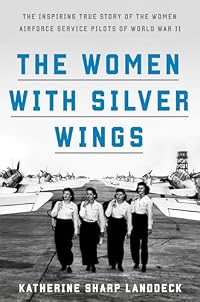
The Women with Silver Wings: The Inspiring True Story of the Women Airforce Service Pilots of World War II
by Katherine Sharp Landdeck
On This Page
Description
"The thrilling true story of the daring female aviators who helped the United States win World War II-only to be forgotten by the country they served When the Japanese attacked Pearl Harbor in December 1941, Cornelia Fort was already in the air. At twenty-two, Fort had escaped Nashville's debutante scene for a fresh start as a flight instructor in Hawaii. She and her student were in the middle of their lesson when the bombs began to fall, and they barely made it back to ground that morning. show more Still, when the U.S. Army Air Forces put out a call for women pilots to aid the war effort, Fort was one of the first to respond. She became one of just over 1,100 women from across the nation to make it through the Army's rigorous selection process and earn her silver wings. The brainchild of trailblazing pilots Nancy Love and Jacqueline Cochran, the Women Airforce Service Pilots (WASP) gave women like Fort a chance to serve their country-and to prove that women aviators were just as skilled as men. While not authorized to serve in combat, the WASP helped train male pilots for service abroad, and ferried bombers and pursuits across the country. Thirty-eight WASP would not survive the war. But even taking into account these tragic losses, Love and Cochran's social experiment seemed to be a resounding success-until, with the tides of war turning, Congress clipped the women's wings. The program was disbanded, the women sent home. But the bonds they'd forged never failed, and over the next few decades they came together to fight for recognition as the military veterans they were-and for their place in history"-- show lessTags
Recommendations










Member Reviews
The subtitle says it all, really. This is the story of the more than 1000 women who served in the Women Airforce Service Pilots, a not-quite-civilian, not-quite-military group that ferried planes from factories to the ships sending them overseas, towed targets for fighter pilots to practise shooting, and flew test flights, including to demonstrate to reluctant male pilots that the B-29 bomber was nothing to be afraid of. These women served their country well and honourably, only to fall through the cracks and receive neither benefits nor recognition for their achievements.
The author is a professor of history at Texas Women’s University, the home of the WASP Archive, and is therefore excellently placed to tell the story of this group. show more She keeps a wide cast of characters sorted out and maintains a strong narrative thread. It is a fascinating read for anyone who wants to read untold stories of the Second World War, about the achievements of women, or about great aviation stories in general. show less
The author is a professor of history at Texas Women’s University, the home of the WASP Archive, and is therefore excellently placed to tell the story of this group. show more She keeps a wide cast of characters sorted out and maintains a strong narrative thread. It is a fascinating read for anyone who wants to read untold stories of the Second World War, about the achievements of women, or about great aviation stories in general. show less
This is a superbly researched and written book about the brave young women who were eager to serve their country during World War II by ferrying new aircraft from the factories to the military pick-up point. Having served in the USAF in the mid-70s I could relate to some of the skepticism they encountered not only from the military men but from society in general. As all able-bodied males were off fighting in the war, there was a serious shortage of pilots. These gutsy women rushed in to fill the void flying 77 different types of aircraft. Even though most of the women pilots were better qualified than the male pilots they were not recognized for their service to their country and designated as veterans until November 1977.
The book show more consists of numerous vignettes of the remarkable female pilots who became known as WASPs (Women Airforce Service Pilots). The chapters are short and easy to read.
Thank you to BookBrowse and Crown Publishing for the advance copy. I am providing an unbiased review. show less
The book show more consists of numerous vignettes of the remarkable female pilots who became known as WASPs (Women Airforce Service Pilots). The chapters are short and easy to read.
Thank you to BookBrowse and Crown Publishing for the advance copy. I am providing an unbiased review. show less
aviation, military, World War ll, women, historical-figures, historical-places-events, historical-research, *****
Has anyone ever figured out why most men are afraid of capable women? This interesting chronicle of the American women who paved the way for those coming after to be able to fly as military pilots first and later as commercial pilots (so long as they weren't having their menstrual!). Although demonstrably capable and skilled, they were fobbed off as lowest class pilots during the second World War and neglected by the military and the government afterward. It is both fascinating and frustrating to read all the details of these women. Excellently researched and crafted.
I requested and received a free ebook copy from Crown show more Publishing via NetGalley. Thank you! show less
Has anyone ever figured out why most men are afraid of capable women? This interesting chronicle of the American women who paved the way for those coming after to be able to fly as military pilots first and later as commercial pilots (so long as they weren't having their menstrual!). Although demonstrably capable and skilled, they were fobbed off as lowest class pilots during the second World War and neglected by the military and the government afterward. It is both fascinating and frustrating to read all the details of these women. Excellently researched and crafted.
I requested and received a free ebook copy from Crown show more Publishing via NetGalley. Thank you! show less
Excellent and absorbing non-fiction about women pilots during and after World War II
I figured the odds were good when I picked this one up that I would find this to be an interesting read. I've read quite a few books about female aviators and also the roles women played during World War 2 but this is actually the first time I've had the opportunity to read a nonfiction book devoted to the two subjects. It truly was an honor to learn more about these women and this book was definitely a worthwhile read.
After the sneak attack on Pearl Harbor, the United States needed pilots to go fight in the war. The WASPs (Women Airforce Service Pilots) was a group formed during World War 2 that trained pilots, tested aircraft, and also ferried aircraft. Essentially by having female pilots take on these responsibilities this freed up show more more male pilots to go fight in combat. Sounds like a great thing, right? Unfortunately given society norms and gender roles at the time, these women faced a battle of their own in order to be taken seriously. And what's worse is even decades after the war, these female aviators barely got a smidge of recognition for helping win the war.
One of the reasons I wanted to read this book is about 20 years ago when my grandmother was in her 80s, she randomly told me how during WW2 she was going to get her pilot's license to help with the war effort but ended up not being able to take the exam because her mother thought it was too dangerous. This was the first time anyone in our family had heard this story, and now that she has passed away, it remains one of my favorite moments with her. One of the things that boggled my mind is all she needed was 7 lessons in the air and that's something that was basically confirmed in this book. Nowadays I think most of us know you need a lot of hours to get your pilot's license but back then you didn't need much at all. One of the women featured in this book I believe was deemed qualified to fly, after less than 5 hours in the air.
Even though I knew this fact from reading previous books about female aviators, it still is crazy to me that there were serious discussions back then about whether or not a woman should be able to fly during her menstrual cycle. I do love how there was really no way a ban could be enforced because most men weren't going to want to ask the female pilots if they were on their period before every flight. And also these women would most likely have lied if questioned anyway because they had common sense and realized they were more than fully capable and qualified even if it was a certain time of the month.
This book provides a good history of how the WASPs got their start as well as what led to it coming to an end in 1944 before the war was even over. The book features quite a few of the women associated with the WASPs and a decent amount of info is given about their backgrounds as well as their lives after the war. One thing I found fascinating is so many of the women pilots went on to start families and didn't really discuss their experiences during the war with them. They basically figured it was all about the kids and nobody really cared about mom's life prior to becoming a mother. It really wasn't until decades later when the government was attempting to give these women some recognition, that many family members got to actually learn more about the WASPs.
I'm glad the author mentioned how the vast majority of the women pilots were white. It does break your heart there were women of color wanting to help the nation and yet many were turned away. In general the author did a pretty decent job showing the good things about the women and the program as well as the bad.
This is a good read particularly if you enjoy nonfiction books about World War 2 and/or anything related to women doing extraordinary things.
Thank you to Crown and Netgalley for providing me with an advance digital copy in exchange for an honest review. show less
After the sneak attack on Pearl Harbor, the United States needed pilots to go fight in the war. The WASPs (Women Airforce Service Pilots) was a group formed during World War 2 that trained pilots, tested aircraft, and also ferried aircraft. Essentially by having female pilots take on these responsibilities this freed up show more more male pilots to go fight in combat. Sounds like a great thing, right? Unfortunately given society norms and gender roles at the time, these women faced a battle of their own in order to be taken seriously. And what's worse is even decades after the war, these female aviators barely got a smidge of recognition for helping win the war.
One of the reasons I wanted to read this book is about 20 years ago when my grandmother was in her 80s, she randomly told me how during WW2 she was going to get her pilot's license to help with the war effort but ended up not being able to take the exam because her mother thought it was too dangerous. This was the first time anyone in our family had heard this story, and now that she has passed away, it remains one of my favorite moments with her. One of the things that boggled my mind is all she needed was 7 lessons in the air and that's something that was basically confirmed in this book. Nowadays I think most of us know you need a lot of hours to get your pilot's license but back then you didn't need much at all. One of the women featured in this book I believe was deemed qualified to fly, after less than 5 hours in the air.
Even though I knew this fact from reading previous books about female aviators, it still is crazy to me that there were serious discussions back then about whether or not a woman should be able to fly during her menstrual cycle. I do love how there was really no way a ban could be enforced because most men weren't going to want to ask the female pilots if they were on their period before every flight. And also these women would most likely have lied if questioned anyway because they had common sense and realized they were more than fully capable and qualified even if it was a certain time of the month.
This book provides a good history of how the WASPs got their start as well as what led to it coming to an end in 1944 before the war was even over. The book features quite a few of the women associated with the WASPs and a decent amount of info is given about their backgrounds as well as their lives after the war. One thing I found fascinating is so many of the women pilots went on to start families and didn't really discuss their experiences during the war with them. They basically figured it was all about the kids and nobody really cared about mom's life prior to becoming a mother. It really wasn't until decades later when the government was attempting to give these women some recognition, that many family members got to actually learn more about the WASPs.
I'm glad the author mentioned how the vast majority of the women pilots were white. It does break your heart there were women of color wanting to help the nation and yet many were turned away. In general the author did a pretty decent job showing the good things about the women and the program as well as the bad.
This is a good read particularly if you enjoy nonfiction books about World War 2 and/or anything related to women doing extraordinary things.
Thank you to Crown and Netgalley for providing me with an advance digital copy in exchange for an honest review. show less
Many women served in the armed forces during WWII, but possibly no group is more compelling than those who flew planes for the Army Air Forces — later known as the Women’s Airforce Service Pilots or WASPs. Katherine Sharp Landdeck tells their story in The Women With Silver Wings using a handful of specific women to emphasize the variety of backgrounds they came from, jobs they performed, hurdles they overcame, successes and failures they faced. Landdeck covers what happened before and during the war, but spends almost as much time on their battles for recognition once the war ended. Readers who enjoy American history and WWII will certainly find some new and enlightening information in this book.
This book follows the fight for women to pilot planes during WWII, and the lives of the women themselves. The book also set up the rivalry between Nancy Love and Jacqueline Cochran, the two women who were the face of women pilots during the time. Throughout, the camaraderie between the women was featured, showing them at their best in difficult circumstances. After the women were discharged, the book seemed to bog down, I felt that it could have been wrapped up sooner. Overall, well worth reading.
Members
- Recently Added By
Lists

Penguin Random House
458 works; 4 members
Author Information

1 Work 195 Members
Some Editions
Awards and Honors
Distinctions
Common Knowledge
- Canonical title
- The Women with Silver Wings: The Inspiring True Story of the Women Airforce Service Pilots of World War II
- Original publication date
- 2020
- People/Characters
- Cornelia Fort; Nancy Love; Jacqueline Cochran
- Important events
- Pearl Harbor; Women Airforce Service Pilots
Classifications
- Genres
- History, Nonfiction, General Nonfiction, Sexuality and Gender Studies, Biography & Memoir
- DDC/MDS
- 940.54 — History & geography History of Europe History of Europe 1918- Military history of World War II
- LCC
- D790.5 .L36 — History of Europe, Asia, Africa and Oceania History (General) World War II (1939-1945)
- BISAC
Statistics
- Members
- 196
- Popularity
- 166,240
- Reviews
- 11
- Rating
- (4.23)
- Languages
- English
- Media
- Paper, Audiobook, Ebook
- ISBNs
- 5
- ASINs
- 2