On This Page
Description
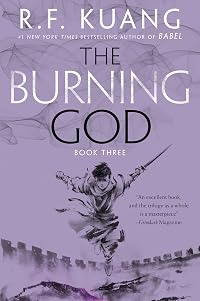
The exciting end to The Poppy War trilogy, R. F. Kuang's acclaimed, award-winning epic fantasy that combines the history of twentieth-century China with a gripping world of gods and monsters, to devastating, enthralling effect.After saving her nation of Nikan from foreign invaders and battling the evil Empress Su Daji in a brutal civil war, Fang Runin was betrayed by allies and left for dead.
Despite her losses, Rin hasn't given up on those for whom she has sacrificed so much—the people show more of the southern provinces and especially Tikany, the village that is her home. Returning to her roots, Rin meets difficult challenges—and unexpected opportunities. While her new allies in the Southern Coalition leadership are sly and untrustworthy, Rin quickly realizes that the real power in Nikan lies with the millions of common people who thirst for vengeance and revere her as a goddess of salvation.
Backed by the masses and her Southern Army, Rin will use every weapon to defeat the Dragon Republic, the colonizing Hesperians, and all who threaten the shamanic arts and their practitioners. As her power and influence grows, though, will she be strong enough to resist the Phoenix's intoxicating voice urging her to burn the world and everything in it?
. show less
Tags
Recommendations




Member Reviews
*Received via NetGalley for review*
I lOVED the first book of this trilogy - it really portrayed the horrors of war and a believable anti-heroine in a way that was both enthralling and horrible. The second one didn't quite live up to it, but I was still so eager to find out how it concluded. And I'm left feeling... mixed. This third book is as action-packed and dark as I expected, but it was a let down in some places. I got a lot to say, and there's gonna be spoilers.
First: I read (I think on a Goodreads review, actually) that Rin's character arc is based on Mao Zedong. I will admit that my knowledge of Chinese history is not comprehensive, but I researched Mao and... don't really see the parallels?Bot he and Rin dealt with Japanese show more invaders, the unwelcome attentions of the West, and foreign nations flooding drugs into their country, but that's kind of all I can tell. Mao is famous for his cultural revolution and his Great Leap Forward, and I see no parallels in these novels. Except for the fact that they both left their people starving and their country in tatters.
As always, there is an abundance of plot, and Kuang manages to move everything along quickly enough that it doesn't feel overstuffed. But here it did feel rushed (we spend two whole books talking about how powerful and unbeatable The Trifecta is, only forthem to be killed within, like, minutes of being awakened. What the hell?? The story would have been vastly more interesting if they managed to take the nation again, and then Rin had to deal with it. Instead these incredibly complex, powerful, and interesting characters are just tossed aside. ). Rin continues down her dark path, determined to free the South no matter the cost, and she stays determined as she sees that cost rising higher and higher. One of the things Kuang does really well is exposing the horrors of war, and that it can never be truly won. You think you're fighting for what's right, but the civilians are just as aversely affected by your battles as they are by the enemies.
While the second half of the book was not nearly as engaging, it did bring up some very interesting points (such as what happensonce they win the war and have to start actually ruling and Rin's inability to function in peacetime). But the climax depends a lot on how the reader feels about the relationships between the characters that I never really felt, mainly, Rin and Nezha. Yes, they might have had something, that ended when he stabbed her in the back. Rin herself knows she will never forgive him, so why are we supposed to treat the fact that they're enemies as some big star-crossed thing?
And I still have trouble with how anchoring is portrayed - The Trifecta apparently has the agility to read each other's emotions and thoughts, but not Kitay and Rin. Is this because they haven't been anchored long? And it's mentioned that Kitay struggles with the Pheonix in his head when Rin is channeling through him, but we're never shown this. Kitay is just a long suffering, super-smart foil to Rin. He could have been so much more.
Finally, the ending:as hard as it may be, sometimes concessions and cooperation are necessary, and that is so against everything Rin is. But then the terms the Hesperians offer are so obviously something that Rin will not accept: aid in exchange for stripping herself of her power and hunting down others like her. And so Rin decides that she has to die so that Nezha can gain their respect and become the ruler Nikan deserves? It all really came out of nowhere and left a sour taste in my mouth.
Still definitely a series worth reading and discussing overall. show less
I lOVED the first book of this trilogy - it really portrayed the horrors of war and a believable anti-heroine in a way that was both enthralling and horrible. The second one didn't quite live up to it, but I was still so eager to find out how it concluded. And I'm left feeling... mixed. This third book is as action-packed and dark as I expected, but it was a let down in some places. I got a lot to say, and there's gonna be spoilers.
First: I read (I think on a Goodreads review, actually) that Rin's character arc is based on Mao Zedong. I will admit that my knowledge of Chinese history is not comprehensive, but I researched Mao and... don't really see the parallels?
As always, there is an abundance of plot, and Kuang manages to move everything along quickly enough that it doesn't feel overstuffed. But here it did feel rushed (we spend two whole books talking about how powerful and unbeatable The Trifecta is, only for
While the second half of the book was not nearly as engaging, it did bring up some very interesting points (such as what happens
And I still have trouble with how anchoring is portrayed - The Trifecta apparently has the agility to read each other's emotions and thoughts, but not Kitay and Rin. Is this because they haven't been anchored long? And it's mentioned that Kitay struggles with the Pheonix in his head when Rin is channeling through him, but we're never shown this. Kitay is just a long suffering, super-smart foil to Rin. He could have been so much more.
Finally, the ending:
Still definitely a series worth reading and discussing overall. show less
So here we reach the denouement of the tale of Fang Runin, the doomed girl who would never surrender, and though I've been greatly looking forward to this, I'll also admit that Ms. Kuang's running Twitter commentary on what a bunch of idiots her characters really were, and wondering why she ever thought that writing an epic grim-dark trilogy was ever a good idea, did temper my expectations. This is not to mention that once one comes to appreciate that this work started as an attempted answer to a historical problem, and what history is being appropriated, it's a little harder to be surprised; even when you keep in mind that Runin is not the most reliable POV character you've ever met.
All that said, I'll also admit that about the first show more third or so of this book felt like the middle of the series, as a little bit of the "are we there yet" feeling finally arrived for me; particularly after Runin makes her "heel" turn and we enter the "Long March" analog of the narrative. At that point one then learns the real nature of the "Trifecta," the great shamans who had previously saved the Nikarans from foreign conquest, and the dynamite really goes off. From there the plot of the novel becomes a gallop, as Runin achieves victory and revenge, only to find that she has really achieved nothing. The live question is whether anything can be salvaged, and I'm reminded of another Asian nation's twentieth-century disaster.
Kuang is fond of reminding people that the truth will set you free, not make you happy, but there is no denying that she achieved her main goal, which is an examination of how a normal human, capable of empathy and understanding, goes off the rails and creates a social disaster. This trilogy is a great achievement and while the winning of awards is not a contest Ms. Kuang certainly has a dog in the fight. show less
All that said, I'll also admit that about the first show more third or so of this book felt like the middle of the series, as a little bit of the "are we there yet" feeling finally arrived for me; particularly after Runin makes her "heel" turn and we enter the "Long March" analog of the narrative. At that point one then learns the real nature of the "Trifecta," the great shamans who had previously saved the Nikarans from foreign conquest, and the dynamite really goes off. From there the plot of the novel becomes a gallop, as Runin achieves victory and revenge, only to find that she has really achieved nothing. The live question is whether anything can be salvaged, and I'm reminded of another Asian nation's twentieth-century disaster.
Kuang is fond of reminding people that the truth will set you free, not make you happy, but there is no denying that she achieved her main goal, which is an examination of how a normal human, capable of empathy and understanding, goes off the rails and creates a social disaster. This trilogy is a great achievement and while the winning of awards is not a contest Ms. Kuang certainly has a dog in the fight. show less
This has been one of the best series I have read in a long time. It's fantasy but just barely; the fantastical elements were limited to a few characters and the focus was much more on military strategy and colonization. Rin is a complex, yet naïve character who I empathized with yet also wanted to strangle at various points. This may sound strange, but this was a very realistic novel with flawed characters and major consequences to major actions, and the fairy-tale HEA ending that has been very prevalent in a lot of my recent fantasy reads was not there. A great change of pace and way to diversify my reading.
This book, and the trilogy as a whole, was a difficult one for me. I went into the series with quite high expectations based on the fact that it was a fantasy series couched in Chinese mythology and culture (which is a rare spawn) and also due to the high praise that I'd seen on a lot of internet reviews and reading lists. However, I ended up having a two main issues with it that significantly impacted my enjoyment, even though there were some very powerful aspects to the story.
The first was the use of the Chinese mythos and history. I'm not sure if this is just a result of cultural background, but I grew up with a lot of Chinese stories and folklore, especially the Journey to the West. The Poppy War draws a lot of these, but while show more these elements was creatively used in some ways, many of the references felt very on the nose to me. For a more Western comparison, it would be the equivalent of having a story set in a fantasy alternative universe, but having Zeus or Hercules being dropped in. This definitely broke the immersion for me, and together with the very overt historical allusions also, I felt the worldbuilding could never decide on whether it was trying to create it's own setting with its own lore, or whether it was just reinterpreting and amalgamating aspects from the real world.
The second was that I did not find any of the characters inherently likeable. While I understand that Rin was not intended to be the typical hero that the reader is meant to root for, I found her incredibly difficult to engage with, mainly because everything that she did or experienced was an extreme. As a rather rationally minded person myself, it was very frustrating to see the lack of character development in this sense, how even with everything she goes through, down to the very last chapters she continues to make rash decisions and be completely unreasonable. This frustration is exacerbated by the fact that the reader is constantly reminded about how 'powerful' she supposedly is, so much so that she considers herself a 'god' by this last book, yet she is constantly upstaged either in scenarios where her abilities aren't sufficient, or she just acts on impulse or is reckless. The result is that very few of her victories felt deserved, and it often seemed like she managed to achieve what she did by chance, or just by virtue of being the main character. Some of the other characters were more convincing - Nezha for instance saw good development - but because the story is almost entirely from Rin's perspective, the reader isn't able to get a wholesome picture of any of them. As others have mentioned, this is very much a series that could have benefitted from multiple perspectives, as well as more distinctive character voices.
It also has to be said that I'm not particularly well-versed in grim-dark fantasy, and from what I've seen, The Poppy War series has a lot of the trademarks of that subgenre. It may be that this kind of fantasy is just not for me, because although I felt Rebecca Kuang did a phenomenal job in depicting the horrors of war, both physical and psychological, the overall tone of the books, together with the issues I had above, meant that my level of actual enjoyment gradually diminished the more I got through the books, and I was more motivated by the goal of finishing than actually having fun reading. The final verdict is that while I can appreciate what the books were trying to achieve, they didn't end up ticking the boxes for me. show less
The first was the use of the Chinese mythos and history. I'm not sure if this is just a result of cultural background, but I grew up with a lot of Chinese stories and folklore, especially the Journey to the West. The Poppy War draws a lot of these, but while show more these elements was creatively used in some ways, many of the references felt very on the nose to me. For a more Western comparison, it would be the equivalent of having a story set in a fantasy alternative universe, but having Zeus or Hercules being dropped in. This definitely broke the immersion for me, and together with the very overt historical allusions also, I felt the worldbuilding could never decide on whether it was trying to create it's own setting with its own lore, or whether it was just reinterpreting and amalgamating aspects from the real world.
The second was that I did not find any of the characters inherently likeable. While I understand that Rin was not intended to be the typical hero that the reader is meant to root for, I found her incredibly difficult to engage with, mainly because everything that she did or experienced was an extreme. As a rather rationally minded person myself, it was very frustrating to see the lack of character development in this sense, how even with everything she goes through, down to the very last chapters she continues to make rash decisions and be completely unreasonable. This frustration is exacerbated by the fact that the reader is constantly reminded about how 'powerful' she supposedly is, so much so that she considers herself a 'god' by this last book, yet she is constantly upstaged either in scenarios where her abilities aren't sufficient, or she just acts on impulse or is reckless. The result is that very few of her victories felt deserved, and it often seemed like she managed to achieve what she did by chance, or just by virtue of being the main character. Some of the other characters were more convincing - Nezha for instance saw good development - but because the story is almost entirely from Rin's perspective, the reader isn't able to get a wholesome picture of any of them. As others have mentioned, this is very much a series that could have benefitted from multiple perspectives, as well as more distinctive character voices.
It also has to be said that I'm not particularly well-versed in grim-dark fantasy, and from what I've seen, The Poppy War series has a lot of the trademarks of that subgenre. It may be that this kind of fantasy is just not for me, because although I felt Rebecca Kuang did a phenomenal job in depicting the horrors of war, both physical and psychological, the overall tone of the books, together with the issues I had above, meant that my level of actual enjoyment gradually diminished the more I got through the books, and I was more motivated by the goal of finishing than actually having fun reading. The final verdict is that while I can appreciate what the books were trying to achieve, they didn't end up ticking the boxes for me. show less
despite how sad the ending is, i believe there was no better ending for the series. i love that we're left to wonder what happens to nezha with the hespertians. rin, rin, rin, my beautiful yet tragic protagonist. she really became so terrible here, becoming the worst of herself. i like how her madness here becomes more pronounced and i almost cried when i read the ending.
she realizes enough to change herself and i do wish there was a better ending for kitay but as nezha says "theres not a world where one of them dies and the other lives."
nezha, oh god, he really got the short straw here, huh?
she realizes enough to change herself and i do wish there was a better ending for kitay but as nezha says "theres not a world where one of them dies and the other lives."
nezha, oh god, he really got the short straw here, huh?
this one was better than the second, probably because even though it was still largely set in a war environment, there was a lot more interpersonal stuff that rin had to deal with in this one. i really liked the more starkly gray her character became in this one (as if she wasn't before!), and how kitay had to work hard to keep her doing the right thing. i especially liked the climax of this book and the way rin was so clearly going mad, as is eventually expected of everyone in the cike. at first i didn't see it, as she accused venka of betrayal, but then when she also started accusing kitay i saw what was happening, and i thought kuang did a brilliant job with that. and with having rin sacrifice herself, which was also a punishment for show more nezha, as he'd have to continue to both rule and undergo the experiments for the hesperians, and saved her people as well. man, to read this at a time when something similar is happening, where both sides have innocents and both sides are genocidal, and no one is right and everyone is wrong and both sides have arguments. war, man. she captures it, in all its awfulness and she doesn't sugarcoat anything or make any of them to actually be heroes. she really did something pretty amazing here.
okay so this series was not for me. the military history fantasy thing is not my genre and so i didn't love this. but this is impressive. like for real impressive. and kuang was 22 when the first book came out? the sheer scope of what she did in that book alone, which she started writing as a teenager, is just incredible. these 3 books were all out before she was 25 and the political, historical scope (of which i mostly know nothing, but obviously the opposite is true for kuang) covered is simply amazing. i am so impressed by her, even as this wasn't really my thing. (and the audio narrator! the number of voices she made distinct, over like 67 hours of narration, was also incredible.) whew.
"His cheeks and jaw, once angular perfection, were shattered porcelain, cracked tiles, a map of the country falling apart." show less
okay so this series was not for me. the military history fantasy thing is not my genre and so i didn't love this. but this is impressive. like for real impressive. and kuang was 22 when the first book came out? the sheer scope of what she did in that book alone, which she started writing as a teenager, is just incredible. these 3 books were all out before she was 25 and the political, historical scope (of which i mostly know nothing, but obviously the opposite is true for kuang) covered is simply amazing. i am so impressed by her, even as this wasn't really my thing. (and the audio narrator! the number of voices she made distinct, over like 67 hours of narration, was also incredible.) whew.
"His cheeks and jaw, once angular perfection, were shattered porcelain, cracked tiles, a map of the country falling apart." show less
I have come to expect the moon from Kuang and still, this book far exceeded my expectations. It was a good time, but not a fun time—so much death and destruction throughout the book from beginning to end. I don't think any author can make me feel the gambit of emotions as she does. Rin has gone through so much during the three books, I am sad to see it end. Rin is the poster child for female rage and honestly, I enjoyed every second of it.
I do want to reiterate that this is a grim dark fantasy, please make sure to review the triggers before starting this series.
I do want to reiterate that this is a grim dark fantasy, please make sure to review the triggers before starting this series.
Members
- Recently Added By
Lists

mom
729 works; 1 member

Books Read in 2024
4,727 works; 128 members

READ 2025
190 works; 1 member

H
177 works; 2 members

Books Read in 2025
4,128 works; 98 members
Author Information

18+ Works 35,419 Members
Some Editions
Awards and Honors
Awards
Series

Work Relationships
Is contained in
Common Knowledge
- Canonical title
- The Burning God
- Original publication date
- 2020-11-17
- Dedication
- To my dear readers,
who stayed with this series until the end,
and came prepared with a bucket for their tears - First words
- “We shouldn't be doing this,” Daji said.
- Last words
- (Click to show. Warning: May contain spoilers.)Nezha lowered Rin's body to the ground, stood up, squared his shoulders, and awaited the coming of the fleet.
- Original language
- English
Classifications
Statistics
- Members
- 2,782
- Popularity
- 6,608
- Reviews
- 49
- Rating
- (4.05)
- Languages
- 7 — English, German, Hungarian, Italian, Polish, Portuguese, Spanish
- Media
- Paper, Audiobook, Ebook
- ISBNs
- 23
- ASINs
- 8