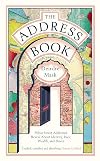
The Address Book: What Street Addresses Reveal About Identity, Race, Wealth, and Power
by Deirdre Mask
On This Page
Description
"An exuberant work of popular history: the story of how streets got their names and houses their numbers, and why something as seemingly mundane as an address can save lives or enforce power. When most people think about street addresses, if they think of them at all, it is in their capacity to ensure that the postman can deliver mail or a traveler won't get lost. But street addresses were not invented to help you find your way; they were created to find you. Addresses arose out of a grand show more Enlightenment project to name and number the streets, but they are also a way for people to be identified and tracked by those in power. As Deirdre Mask explains, the practice of numbering houses was popularized in eighteenth-century Vienna by Maria Theresa, leader of the Hapsburg Empire, to tax her subjects and draft them into her military. In many parts of the world, your address can reveal your race and class, causing them to be a shorthand for snobbery or discrimination. In this wide-ranging and remarkable book, Mask looks at the fate of streets named after Martin Luther King, Jr., the wayfinding means of ancient Romans, how Nazis haunt the streets of modern Germany, and why numbered streets dominate in America but not in Europe. The flipside of having an address is not having one, and we see what that means for millions of people today, including those who live in the slums of Kolkata, on the streets of London, or in post-earthquake Haiti. Filled with fascinating people and histories, The Address Book illuminates the complex and sometimes hidden stories behind street names and their power to name,to hide, to decide who counts, who doesn't-and why"-- show lessTags
Recommendations








Member Reviews
In "The Address Book," Deirdre Mask explores the significance of something that most of us take for granted—street addresses. Did you know that many households around the globe are off the grid? Mask tells us about an initiative, "Addressing the World," whose organizers try to help residents acquire addresses in such places as India and—believe it or not—rural West Virginia. Having an address can "lift people out of poverty, [while] facilitating access to credit, voting rights, and worldwide markets." Mask humorously describes how she gets hopelessly lost while trying to find a house by following ridiculously elaborate and arcane directions. After asking for help, she eventually arrives at her destination.
Another issue that Mask show more tackles is the origin and meaning of street names. The author points out that certain citizens object to naming streets after members of the confederacy who were pro-segregation and pro-slavery. Another curious fact is that there are no streets in Ireland named after the Irish Republican Army revolutionary Bobby Sands, who died in prison after a protracted hunger strike. Sands considered himself a liberator, but he advocated acts of violence to achieve his aims. It is also worth noting that street names and addresses may be indicative of the financial, social, and cultural status of various neighborhoods.
Like Susan Orlean, author of "The Orchid Thief" and "The Library Book," Deirdre Mask mines a seemingly ordinary subject and strikes gold. We learn in these pages that the French Revolution led to a frantic renaming of streets; mapping an area can help epidemiologists stem outbreaks of disease; street names can inflate or depress property values; and some individuals do not want addresses at all. The reason is that they prefer to avoid the prying eyes of government officials. This is a colorful, literate, funny, and fascinating work of non-fiction that is enriched by intriguing anecdotes—many are derived from historical events, but all of them remain relevant today. Ms. Mask puts a new spin on Juliet's eloquent words in "Romeo and Juliet": “What's in a name? That which we call a rose by any other name would smell as sweet.” The author demonstrates that, in the eyes of many, street names matter a great deal. They may be commemorative, controversial, and in some cases, downright infuriating. show less
Another issue that Mask show more tackles is the origin and meaning of street names. The author points out that certain citizens object to naming streets after members of the confederacy who were pro-segregation and pro-slavery. Another curious fact is that there are no streets in Ireland named after the Irish Republican Army revolutionary Bobby Sands, who died in prison after a protracted hunger strike. Sands considered himself a liberator, but he advocated acts of violence to achieve his aims. It is also worth noting that street names and addresses may be indicative of the financial, social, and cultural status of various neighborhoods.
Like Susan Orlean, author of "The Orchid Thief" and "The Library Book," Deirdre Mask mines a seemingly ordinary subject and strikes gold. We learn in these pages that the French Revolution led to a frantic renaming of streets; mapping an area can help epidemiologists stem outbreaks of disease; street names can inflate or depress property values; and some individuals do not want addresses at all. The reason is that they prefer to avoid the prying eyes of government officials. This is a colorful, literate, funny, and fascinating work of non-fiction that is enriched by intriguing anecdotes—many are derived from historical events, but all of them remain relevant today. Ms. Mask puts a new spin on Juliet's eloquent words in "Romeo and Juliet": “What's in a name? That which we call a rose by any other name would smell as sweet.” The author demonstrates that, in the eyes of many, street names matter a great deal. They may be commemorative, controversial, and in some cases, downright infuriating. show less
This is an outstanding mashup of sociology and history on a topic which is outwardly most plebian: the naming and numbering of streets all over the globe, back in time as well as in the current day. The author's research ranges so far and wide, but her focus on specific areas (W. Virginia, South African townships, Paris, Manhattan, Kolkata, early Rome, just to name a few) would makes every reader wonder about her own street! In many areas, although residents recognized that it would be easier to find their homes in an emergency if it was identifiable on a map, they also preferred living where no "gummint" could find and tax them. The contentious sections on renaming of Confederate-identified and on Apartheid officials' places induce show more anger for the blatant racism, and one of the most moving sections is where streets named for Martin Luther King Jr are located within American cities, and what the naming usually signifies about who lives there. The listener wishes that the author could keep her valuable analysis moving throughout our country and our world, back in time and in current day. It's like taking a riveting course taught by an engrossing professor. Fine narration too. show less
A kaleidoscopic look at a subject that might seem mundane. The table of contents touches on areas few think about when filing out a service slip or credit application:
Kolkata : how can street addresses transform the slums? --
Haiti : could street addresses stop an epidemic? --
Rome : how did the ancient Romans navigate? --
London : where do street names come from? --
Vienna : what can house numbers teach us about power? --
Philadelphia : why do Americans love numbered streets? --
Korea and Japan : must streets be named? --
Iran : why do street names follow revolutionariess? --
Berlin : what do Nazi street names tell us about Vergangenheitsbewältigung? --
Hollywood, Florida : why can't Americans stop arguing about Confederate street names? show more --
St. Louis : what do Martin Luther King Jr. Streets reveal about race in America? --
South Africa : who belongs on South Africa's street signs? --
Manhattan : how much is a street name worth? --
Homelessness : how do you live without an address? -- show less
Kolkata : how can street addresses transform the slums? --
Haiti : could street addresses stop an epidemic? --
Rome : how did the ancient Romans navigate? --
London : where do street names come from? --
Vienna : what can house numbers teach us about power? --
Philadelphia : why do Americans love numbered streets? --
Korea and Japan : must streets be named? --
Iran : why do street names follow revolutionariess? --
Berlin : what do Nazi street names tell us about Vergangenheitsbewältigung? --
Hollywood, Florida : why can't Americans stop arguing about Confederate street names? show more --
St. Louis : what do Martin Luther King Jr. Streets reveal about race in America? --
South Africa : who belongs on South Africa's street signs? --
Manhattan : how much is a street name worth? --
Homelessness : how do you live without an address? -- show less
With The Address Book Deirdre Mask has written a fascinating book on what may seem to be a mundane topic. Think of your own address. It probably has a house number, and a street name. How could there be anything exciting about that?
Well, Mask shows there are interesting stories to be told about the origins of both house numbering and street names. There are also controversies and societal differences to be explored. And there are usages of addresses we in the modern world take for granted, but work to the detriment of others.
For example, to apply for almost any job you’ll need to provide an address when you fill out the application form. Homeless people looking to find employment face discrimination as a result, as they don’t have show more an address to provide. How can a homeless person get a job to work their way out of homelessness, when the first requirement is that they provide an address?
That example shows that simply having a street address is a mark of social status and privilege. In countries like India, which the author explores at length, large segments of the population don’t have street addresses and are trapped in a cycle of poverty and lack of access to government programs as a result. And, as in so many other areas of life, race plays a role in street naming and the availability of street addresses as well, both here in the US and abroad.
Numbering conventions are another interesting topic. In the US many cities use a system that places even address numbers on one side of the street and odd address numbers on the other. This system actually started in colonial Philadelphia as a result of the desire for order the founding Quakers brought with them.
Mask looks back at the history of public health and explores the discovery of the source of cholera in 1800s London. Pioneering epidemiologist John Snow was able to map cholera cases and track the source of the disease to an infected public water tap. He was able to do this detective work in large part because London had street addresses by which the cholera cases could be tracked and mapped.
Street addresses offer other benefits. They ensure that the ambulance or fire truck driver knows where they are going. They ensure that our mail and packages get to us on time.
But street addresses didn’t start out as a scheme to benefit the individuals in society. They started out as a scheme to assist the government. Street addresses help governments take censuses and know where the draft age males live. Street addresses make it easier for governments to know where to go to apprehend crime suspects. The original street addressing efforts were seen by many citizens as government intrusions and signs of governmental control, and were protested as a result.
The Address Book wanders through these topics and more, including the social perceptions that accompany street names. For many Americans, Martin Luther King Boulevard in their city or town is where you will find a preponderance of African Americans. Naming streets for significant or popular figures has a long history and can be controversial depending on the figure being honored by the street name.
Mask unpeels one aspect of street addresses after another. With The Address Book she takes us on a fun, informative and entertaining journey through the history and impacts of something that most of us don’t give a second thought. I learned a lot and had fun reading this book. Four Stars ⭐⭐⭐⭐. show less
Well, Mask shows there are interesting stories to be told about the origins of both house numbering and street names. There are also controversies and societal differences to be explored. And there are usages of addresses we in the modern world take for granted, but work to the detriment of others.
For example, to apply for almost any job you’ll need to provide an address when you fill out the application form. Homeless people looking to find employment face discrimination as a result, as they don’t have show more an address to provide. How can a homeless person get a job to work their way out of homelessness, when the first requirement is that they provide an address?
That example shows that simply having a street address is a mark of social status and privilege. In countries like India, which the author explores at length, large segments of the population don’t have street addresses and are trapped in a cycle of poverty and lack of access to government programs as a result. And, as in so many other areas of life, race plays a role in street naming and the availability of street addresses as well, both here in the US and abroad.
Numbering conventions are another interesting topic. In the US many cities use a system that places even address numbers on one side of the street and odd address numbers on the other. This system actually started in colonial Philadelphia as a result of the desire for order the founding Quakers brought with them.
Mask looks back at the history of public health and explores the discovery of the source of cholera in 1800s London. Pioneering epidemiologist John Snow was able to map cholera cases and track the source of the disease to an infected public water tap. He was able to do this detective work in large part because London had street addresses by which the cholera cases could be tracked and mapped.
Street addresses offer other benefits. They ensure that the ambulance or fire truck driver knows where they are going. They ensure that our mail and packages get to us on time.
But street addresses didn’t start out as a scheme to benefit the individuals in society. They started out as a scheme to assist the government. Street addresses help governments take censuses and know where the draft age males live. Street addresses make it easier for governments to know where to go to apprehend crime suspects. The original street addressing efforts were seen by many citizens as government intrusions and signs of governmental control, and were protested as a result.
The Address Book wanders through these topics and more, including the social perceptions that accompany street names. For many Americans, Martin Luther King Boulevard in their city or town is where you will find a preponderance of African Americans. Naming streets for significant or popular figures has a long history and can be controversial depending on the figure being honored by the street name.
Mask unpeels one aspect of street addresses after another. With The Address Book she takes us on a fun, informative and entertaining journey through the history and impacts of something that most of us don’t give a second thought. I learned a lot and had fun reading this book. Four Stars ⭐⭐⭐⭐. show less
I love accessible nonfiction that is narrative, knowledgeable and gives me something to think about. As our society looks more closely at equity, a book like this is a real eye-opener. I have never considered what it means to have (or more accurately, not have) an address. It is one of the first things I memorized as a school-age child. Organized into sections: Development, Origins, Politics, Race, Class and Status, subchapters then give historical data, or contemporary case studies, or anecdotes both personal and research-based to provide a thorough picture of just what it means to be anchored to a specific place. Some of the topics are admittedly controversial, but handled with thoroughness of multiple view-points and are used to show more illustrate the greater concept here: location matters for myriad reasons. I learned: movements are underway to try to create addresses for the slums in Kolkata, India because "addresses are one of the cheapest ways to lift people out of poverty, facilitating access to credit, voting rights, and worldwide markets" (4) The same is true of homelessness and technology and innovative thinking are addressing that world-wide. Also: it wasn't until the 1700s that humans began keeping track of exact living location. This phenomena sprang up simultaneously in various regions of the world, just as centralized monarchies and governments were forming cohesive states. "Before they addressed houses, governments were blind to who their people were. House numbers gave them eyes." - and a way to find soldiers for armies. Also most American cities rely on grid layouts of straight lines, where landscape allows - and this is connected to the way we write - in straight lines from left to right vs. Eastern cultures that have a character system. And, vanity addresses are one of the most recent things that make location important - often the building is not actually located on the street the address names - especially true in NYC real estate. There are dozens more of these informative interesting examples as Mask focuses on her 5 areas and makes an important case for an overlooked everyday concept. show less
I have noted plenty of irony in suburban addresses more than once (where are the oaks on Oak Trail? Is Happy Valley Road in a valley, and are the residents all that happy?) So when I read a review of Mask's book about addresses, I jumped at a chance to read it. Mask takes a broad look at addresses, at the history and current issues relating to describing the places we live. Her introduction is essay-worthy of itself, giving a solid overview of where they come from and why we should care. She relates a story of visiting an address-less town in Appalachia and what it means in both concrete (directions to visitors, ambulances, property rights) and philosophical/political senses (after looking at a house on Black Boy Lane), as well as where show more the names come from once you create an address.
Mask is an engaging, accessible writer, and the early chapters flew by. After the introduction, the book is divided into five sections: Development, Origins, Politics, Race, and Class and Status. It's followed by a hefty bibliography, for those who want to check references and be reassured she isn't merely writing a light-weight interest story. Each section has at least a couple of essays exploring the topic, nominally written around an example city.
Development looks at Kolkata and the problem of street addresses and slum transformation. "But the lack of addresses was depriving those living in the slums a chance to get out of them. Without an address, it’s nearly impossible to get a bank account. And without a bank account, you can’t save money, borrow money, or receive a state pension." The second section looks at disease and addresses. In London in 1765 all houses were given numbers. When death certificates were done they had the address of the victim, which allowed Dr. John Snow tracing of a cholera epidemic. Brief discussion follows of the cholera epidemic in Haiti and how lack of addresses challenged pinpointing the source.
Under Origins section, 'Rome: How did the ancient Romans navigate' goes more into how addresses came about. Interestingly, despite being one of cultural touchpoints for government organization, the Romans, did not use addresses or street names. I found discussion of a MIT researcher in the 1950s talking about mental maps fascinating. Some cities are ‘highly imageable’ to our senses, which made them more memorable. She also relates a physiological study about how mental maps cause more of the hippocampus to fire, while using GPS/navigation causes less. There is some speculation here in this section, about how ancient Romans might have navigated, using the input from research.
Also under Origins, 'London: Where do street names come from,' contains some of the details of how street names came about, both in common parlance and in development of the postal system. "House numbers were not invented to help you navigate the city or receive your mail, though they perform those two functions admirably. Instead they were designed to make you easier to tax, imprison, and police. House numbers exist not to help you find your way, but rather to help the government find you." Part of the section also investigates how the recently created addresses helped a doctor track down a cholera outbreak. 'Vienna: What can house numbers teach us about power' continues the theme of government motivations, beginning with how giving house numbers in Vienna helped the ruler discover and track men of fighting age for conscription. This goes a little sideways into surnames as well, especially with government regulation with Native Americans and Jewish people in many countries. There was a French police officer, Guillauté, who created one of the first efforts at police Big Data by devising a mechanical file cabinet and tracking system for all French citizens in the 1750s.
'Philadelphia' is a more historical section, tracing the development of numbered streets in Manhattan and Philadelphia. 'Korea and Japan: Must streets be named' was intriguing in philosophical bent. Try this concept on: "Instead of naming its streets, Tokyo numbers its blocks. Streets are simply the spaces between the blocks. And buildings in Tokyo are, for the most part, numbered not in geographical order, but according to when they were built." Mind blown. Buildings connecting over time, instead of just location. Apparently, it comes from when the owners for each block had responsibility for government. She then segues into the theory of mental images and places, and connects Tokyo's system to it's most prevalent form of writing, Kanji, which is in 'logograms--each character represents a word or idea.' Children learn kanji by writing on grid-paper.
'Politics' examines address names in Iran and their connection to revolutionaries. The section on Berlin looks at how street names changed back and forth with politics: from pre-Nazi; to Nazi period, where any Jewish connected address was renamed; post-WWII when East and West Berlin got new street names again as the city tried to erase the past; and again, post-unification. One of the saddest commentaries came from an interviewee who had discovered she and her hairstylist were raised in the same city but had known the schools under different names: "We cannot talk about places that we have no common name for. Talking about cities, schools, and streets in East Germany, you have to translate between old, new, and very old."
The 'Race' section looks at Confederate names in Hollywood, Florida, and an activist who has been trying to get three streets renamed for over a decade. Another piece looks at MLK Jr. streets across America and one man's effort to beautify his in St. Louis. The final piece 'South Africa: Who belongs on South Africa's street signs,' looks at names in South Africa pre and post-apartheid, and considers the context of British influence and the Afrikaaner culture. This was a fascinating section. Although her essay predates #BLM and the removal of Confederate statutes, it ably demonstrates that the issue has been known and 'debated' endlessly to the disrespect of a formerly enslaved people. It only takes the sections on Berlin and South Africa to understand that what seems to be a refusal to 'erase' part of U.S. history by removing statutes is also about retaining a culture and a power difference embodied by naming prominent streets after infamous insurrectionists looking to maintain slavery--Lee, Hood (John Bell Hood) and Forrest (Nathan Bedford Forrest). To run them through Liberia, the Black section of Hollywood, Florida, is to demonstrate the power differential to the Black citizens.
The last section, 'Class and Status' contains two essays. The first covers Manhattan and status connected to addresses, and developers' push to buy a name. For instance, 1 Central Park West (developed by Trump) had asked the city to change it's designated address from 15 Columbus Circle. It was, but somehow just a few years later, "Time Warner built a tower behind Trump's, naming it One Central Park--even though its address was really 25 Columbus Circle." The last is 'Homelessness: How do you live without an address' revisits some of the issues raised in the slums of India and what not having an address means. One English innovator suggested a mail forwarding system using the 200,000 houses in London that are empty six months of the year, or the 11k that have been unoccupied for over ten years. These two felt surprisingly light, more like specifically written magazine pieces, given how full earlier chapters were. But the quality is good--think The New Yorker.
As with the introduction, she uses her conclusion to discuss other aspects of addresses, specifically about new efforts by Google and by smaller companies such as what3words to have a world-wide address system. what3words boggles my mind with it's grid system and naming based on three words.
Overall, even the lighter pieces had me thinking. I found it a fascinating read examining the intersection of place and culture.
cross posted at my blog, where there are links and such. https://clsiewert.wordpress.com/2021/02/23/the-address-book-what-street-addresse... show less
Mask is an engaging, accessible writer, and the early chapters flew by. After the introduction, the book is divided into five sections: Development, Origins, Politics, Race, and Class and Status. It's followed by a hefty bibliography, for those who want to check references and be reassured she isn't merely writing a light-weight interest story. Each section has at least a couple of essays exploring the topic, nominally written around an example city.
Development looks at Kolkata and the problem of street addresses and slum transformation. "But the lack of addresses was depriving those living in the slums a chance to get out of them. Without an address, it’s nearly impossible to get a bank account. And without a bank account, you can’t save money, borrow money, or receive a state pension." The second section looks at disease and addresses. In London in 1765 all houses were given numbers. When death certificates were done they had the address of the victim, which allowed Dr. John Snow tracing of a cholera epidemic. Brief discussion follows of the cholera epidemic in Haiti and how lack of addresses challenged pinpointing the source.
Under Origins section, 'Rome: How did the ancient Romans navigate' goes more into how addresses came about. Interestingly, despite being one of cultural touchpoints for government organization, the Romans, did not use addresses or street names. I found discussion of a MIT researcher in the 1950s talking about mental maps fascinating. Some cities are ‘highly imageable’ to our senses, which made them more memorable. She also relates a physiological study about how mental maps cause more of the hippocampus to fire, while using GPS/navigation causes less. There is some speculation here in this section, about how ancient Romans might have navigated, using the input from research.
Also under Origins, 'London: Where do street names come from,' contains some of the details of how street names came about, both in common parlance and in development of the postal system. "House numbers were not invented to help you navigate the city or receive your mail, though they perform those two functions admirably. Instead they were designed to make you easier to tax, imprison, and police. House numbers exist not to help you find your way, but rather to help the government find you." Part of the section also investigates how the recently created addresses helped a doctor track down a cholera outbreak. 'Vienna: What can house numbers teach us about power' continues the theme of government motivations, beginning with how giving house numbers in Vienna helped the ruler discover and track men of fighting age for conscription. This goes a little sideways into surnames as well, especially with government regulation with Native Americans and Jewish people in many countries. There was a French police officer, Guillauté, who created one of the first efforts at police Big Data by devising a mechanical file cabinet and tracking system for all French citizens in the 1750s.
'Philadelphia' is a more historical section, tracing the development of numbered streets in Manhattan and Philadelphia. 'Korea and Japan: Must streets be named' was intriguing in philosophical bent. Try this concept on: "Instead of naming its streets, Tokyo numbers its blocks. Streets are simply the spaces between the blocks. And buildings in Tokyo are, for the most part, numbered not in geographical order, but according to when they were built." Mind blown. Buildings connecting over time, instead of just location. Apparently, it comes from when the owners for each block had responsibility for government. She then segues into the theory of mental images and places, and connects Tokyo's system to it's most prevalent form of writing, Kanji, which is in 'logograms--each character represents a word or idea.' Children learn kanji by writing on grid-paper.
'Politics' examines address names in Iran and their connection to revolutionaries. The section on Berlin looks at how street names changed back and forth with politics: from pre-Nazi; to Nazi period, where any Jewish connected address was renamed; post-WWII when East and West Berlin got new street names again as the city tried to erase the past; and again, post-unification. One of the saddest commentaries came from an interviewee who had discovered she and her hairstylist were raised in the same city but had known the schools under different names: "We cannot talk about places that we have no common name for. Talking about cities, schools, and streets in East Germany, you have to translate between old, new, and very old."
The 'Race' section looks at Confederate names in Hollywood, Florida, and an activist who has been trying to get three streets renamed for over a decade. Another piece looks at MLK Jr. streets across America and one man's effort to beautify his in St. Louis. The final piece 'South Africa: Who belongs on South Africa's street signs,' looks at names in South Africa pre and post-apartheid, and considers the context of British influence and the Afrikaaner culture. This was a fascinating section. Although her essay predates #BLM and the removal of Confederate statutes, it ably demonstrates that the issue has been known and 'debated' endlessly to the disrespect of a formerly enslaved people. It only takes the sections on Berlin and South Africa to understand that what seems to be a refusal to 'erase' part of U.S. history by removing statutes is also about retaining a culture and a power difference embodied by naming prominent streets after infamous insurrectionists looking to maintain slavery--Lee, Hood (John Bell Hood) and Forrest (Nathan Bedford Forrest). To run them through Liberia, the Black section of Hollywood, Florida, is to demonstrate the power differential to the Black citizens.
The last section, 'Class and Status' contains two essays. The first covers Manhattan and status connected to addresses, and developers' push to buy a name. For instance, 1 Central Park West (developed by Trump) had asked the city to change it's designated address from 15 Columbus Circle. It was, but somehow just a few years later, "Time Warner built a tower behind Trump's, naming it One Central Park--even though its address was really 25 Columbus Circle." The last is 'Homelessness: How do you live without an address' revisits some of the issues raised in the slums of India and what not having an address means. One English innovator suggested a mail forwarding system using the 200,000 houses in London that are empty six months of the year, or the 11k that have been unoccupied for over ten years. These two felt surprisingly light, more like specifically written magazine pieces, given how full earlier chapters were. But the quality is good--think The New Yorker.
As with the introduction, she uses her conclusion to discuss other aspects of addresses, specifically about new efforts by Google and by smaller companies such as what3words to have a world-wide address system. what3words boggles my mind with it's grid system and naming based on three words.
Overall, even the lighter pieces had me thinking. I found it a fascinating read examining the intersection of place and culture.
cross posted at my blog, where there are links and such. https://clsiewert.wordpress.com/2021/02/23/the-address-book-what-street-addresse... show less
The simple street address is not only a relatively new concept, it is controversial everywhere it is implemented. Deirdre Mask has spent years traveling and discovering how people get on without addresses, how different implementations work (or don't), how addresses have figured in history, and how the digital world wants to change it all. She has put it together in her charming and engaging The Address Book.
The even/odd address system that most Americans are so accustomed to began in Philadelphia just three hundred years ago. It works, and yet Chicago had to to invent its own system 200 years later. The Japanese number blocks and not houses (and they are not alone in that). Some assign numbers by the year the building went up instead show more of sequentially. And many, many places still have no identifying systems in place at all. Mask uses the example of ancient Rome, a metropolis of a million, where without addresses, directions to find anyone or anything were, to put it mildly, involved. And yet, the city functioned as no other before it. Somewhat less functional was her experience in modern-day West Virginia, where a lack of street names and addresses led her to ask numerous people for directions, and still failing, had someone lead her almost there.
While that might seem unreasonable in a connected world, it does mean that locals become experts. Their knowledge grows vast, having to know people, landmarks, ruins, individual trees, people's homes, and what might have been there along the way before. Mask points out that GPS requires almost no brain power, and Americans use less and less of it make their way anywhere anymore.
In western society at least, not having a street address is fatal. It's essentially impossible to open a bank account, obtain a legitimate ID, rent an apartment, or get a job without one. This artificial prejudice is primarily a legal complication, of course. The government wants everyone to be traceable, for income tax purposes, for criminal pursuit, and for good old control. The unintended consequences include marginalizing an already marginal group, for life. Once they fall into that trap, there is rarely escape. Schemes to allow the homeless to use the address of a shelter, or vacant housing, have gone nowhere. If you don't have a street address, you are a non-entity. In the UK, organizations like the National Health Service and Unemployment services persist in using snail mail. If you don't get the letter and miss your appointment, it's curtains. You are canceled. She says: "Without an address, you are limited to communicating only with people who know you. And it's often people who don't know you who can most help you."
Address data is problematic. It has many great uses, but also dark sides. Addresses can mark people as living in bad districts, or racially dominated districts, poor or rich, religiously focused or mixed. Assumptions are assumed, loans approved or denied, interest rates lowered or raised, 911 calls answered or not, depending on the address attached. In the attempts over the years to assign addresses, people did not want them because they didn't want the junk mail, or to be followed or trackable. Freedom from street addresses is very real for some. Long before there were National ID numbers and Social Security Numbers to protest, there were street addresses that primarily benefited the monarch, the police and the tax collector.
The Address Book wanders globally and throughout history, with Mask injecting history lessons with great storytelling abilities. She tells the stories of Nelson Mandela and Martin Luther King, of Marie-Theresa of Austria, the slums of Kolkata, how European Jews got their last names and navigating Tokyo all by their connections to street names and numbers.
Mask says the discussion of street names and numbers can dominate local politics, shooting to the top of the agenda when up for discussion. This can be a near daily thing in New York or Paris, where renaming is all but constant. Or it can happen when a community wants to remove Confederate names in the USA, or Nazi names in Germany. Some will cling to tradition and claim they will be lost otherwise. Some don't like the replacements. Developers will maneuver to obtain chic addresses, forcing the current user to change everything. It's always a struggle. This seems to be particularly true of England, where the original street names could be particularly descriptive of what went on there, in a very raw and crude sense. Today, those names add character, and higher valuations. Lane tops Boulevard in sales pricing, and embarrassing names can cause sales to take forever. I for one have long joked I could never live at the corner of Tinker Bell Boulevard and Goofy Gulch in a Disney development. On the other hand, living at Mortgage Heights and Default Drive is no privilege either.
For the near future, companies like Google and what3words are creating global systems that computers (of course) generate. What3words, for example, has divided the planet into three-metre (10 ft) squares, each labeled by three common words. Look up a three word combo on its website, and the map function takes you to a very specific spot that needs no further description. Sadly, it is in English, which does not work for everyone . So the company is developing other language systems, and you will have to know what language the three word are in and choose that subsystem in order for it to work. Google is doing the same thing with a seven digit code that is most unmemorable. Unlike The Address Book, which is a delight, it kinda takes the romance and character out of it.
David Wineberg show less
The even/odd address system that most Americans are so accustomed to began in Philadelphia just three hundred years ago. It works, and yet Chicago had to to invent its own system 200 years later. The Japanese number blocks and not houses (and they are not alone in that). Some assign numbers by the year the building went up instead show more of sequentially. And many, many places still have no identifying systems in place at all. Mask uses the example of ancient Rome, a metropolis of a million, where without addresses, directions to find anyone or anything were, to put it mildly, involved. And yet, the city functioned as no other before it. Somewhat less functional was her experience in modern-day West Virginia, where a lack of street names and addresses led her to ask numerous people for directions, and still failing, had someone lead her almost there.
While that might seem unreasonable in a connected world, it does mean that locals become experts. Their knowledge grows vast, having to know people, landmarks, ruins, individual trees, people's homes, and what might have been there along the way before. Mask points out that GPS requires almost no brain power, and Americans use less and less of it make their way anywhere anymore.
In western society at least, not having a street address is fatal. It's essentially impossible to open a bank account, obtain a legitimate ID, rent an apartment, or get a job without one. This artificial prejudice is primarily a legal complication, of course. The government wants everyone to be traceable, for income tax purposes, for criminal pursuit, and for good old control. The unintended consequences include marginalizing an already marginal group, for life. Once they fall into that trap, there is rarely escape. Schemes to allow the homeless to use the address of a shelter, or vacant housing, have gone nowhere. If you don't have a street address, you are a non-entity. In the UK, organizations like the National Health Service and Unemployment services persist in using snail mail. If you don't get the letter and miss your appointment, it's curtains. You are canceled. She says: "Without an address, you are limited to communicating only with people who know you. And it's often people who don't know you who can most help you."
Address data is problematic. It has many great uses, but also dark sides. Addresses can mark people as living in bad districts, or racially dominated districts, poor or rich, religiously focused or mixed. Assumptions are assumed, loans approved or denied, interest rates lowered or raised, 911 calls answered or not, depending on the address attached. In the attempts over the years to assign addresses, people did not want them because they didn't want the junk mail, or to be followed or trackable. Freedom from street addresses is very real for some. Long before there were National ID numbers and Social Security Numbers to protest, there were street addresses that primarily benefited the monarch, the police and the tax collector.
The Address Book wanders globally and throughout history, with Mask injecting history lessons with great storytelling abilities. She tells the stories of Nelson Mandela and Martin Luther King, of Marie-Theresa of Austria, the slums of Kolkata, how European Jews got their last names and navigating Tokyo all by their connections to street names and numbers.
Mask says the discussion of street names and numbers can dominate local politics, shooting to the top of the agenda when up for discussion. This can be a near daily thing in New York or Paris, where renaming is all but constant. Or it can happen when a community wants to remove Confederate names in the USA, or Nazi names in Germany. Some will cling to tradition and claim they will be lost otherwise. Some don't like the replacements. Developers will maneuver to obtain chic addresses, forcing the current user to change everything. It's always a struggle. This seems to be particularly true of England, where the original street names could be particularly descriptive of what went on there, in a very raw and crude sense. Today, those names add character, and higher valuations. Lane tops Boulevard in sales pricing, and embarrassing names can cause sales to take forever. I for one have long joked I could never live at the corner of Tinker Bell Boulevard and Goofy Gulch in a Disney development. On the other hand, living at Mortgage Heights and Default Drive is no privilege either.
For the near future, companies like Google and what3words are creating global systems that computers (of course) generate. What3words, for example, has divided the planet into three-metre (10 ft) squares, each labeled by three common words. Look up a three word combo on its website, and the map function takes you to a very specific spot that needs no further description. Sadly, it is in English, which does not work for everyone . So the company is developing other language systems, and you will have to know what language the three word are in and choose that subsystem in order for it to work. Google is doing the same thing with a seven digit code that is most unmemorable. Unlike The Address Book, which is a delight, it kinda takes the romance and character out of it.
David Wineberg show less
Members
- Recently Added By
Published Reviews
Structurally, narrative nonfiction tends to work either like a freight train (progressing in a straight line from Point A to Point B) or like a horseback rider (jumping fences to gallop across fields of unwieldy facts); count Mask among the horsy set. “The Address Book” is her first book, and she is already a master at shoehorning in fascinating yet barely germane detours just for show more kicks.... How can a book about class, poverty, disease, racism and the Holocaust be so encouraging? Mask populates her daunting inquiries with a cast of stirring meddlers whose curiosity, outrage and ambition inspire them to confront problems ignored by indifferent bureaucracies. show less
added by Lemeritus
Journalist Mask’s entertaining and wide-ranging debut investigates the history of street addresses and their “power to decide who counts, who doesn’t, and why.” ... Mask’s fluid narration and impressive research uncover the importance of an aspect of daily life that most people take for granted, and she profiles a remarkable array of activists, historians, and artists whose work show more intersects with the evolution and meaning of street addresses. This evocative history casts its subject in a whole new light. show less
added by Lemeritus
An impressive book-length answer to a question few of us consider: “Why do street addresses matter?” In her first book, Mask, a North Carolina–born, London-based lawyer–turned-writer who has taught at Harvard and the London School of Economics—combines deep research with skillfully written, memorable anecdotes to illuminate the vast influence of street addresses as well as the show more negative consequences of not having a fixed address.... A standout book of sociological history and current affairs. show less
added by Lemeritus
Lists

Urban Planning (Michelle TBR)
39 works; 3 members

Evan's Wish List
86 works; 2 members

BLM
210 works; 1 member

Books Read in 2021
5,361 works; 114 members

Books Read in 2022
5,166 works; 114 members
Author Information

3+ Works 887 Members
Deirdre Mask is a writer whose work has appeared in The New York Times, The Atlantic, and The Guardian. She is a graduate of Harvard College, Harvard Law School, and the National University of Ireland, where she completed a master's in writing. She has taught at Harvard and the London School of Economics. Originally from North Carolina, she lives show more with her husband and daughters in London. show less
Awards and Honors
Awards
Distinctions
Common Knowledge
- Canonical title
- The Address Book: What Street Addresses Reveal About Identity, Race, Wealth, and Power
- Original publication date
- 2020-04-02
- People/Characters
- Rowland Hill; John Snow; Edward Paul Brennan; William Penn
- Important places
- London, England, UK; Kolkata, India; Philadelphia, Pennsylvania, USA; Chicago, Illinois, USA; Tokyo, Japan; Berlin, Germany
- Epigraph
- "In Lübeck, on 20 March (1933), a large number of people were taken into so-called protective custody. Soon after began the renaming of the streets."
--Willy Brandt, Links und frei. Mein Weg 1930-1950
(Left and ... (show all)Free: My Path 1930-1950) - Dedication
- For Paul, as he well knows
- First words
- In some years, more than 40 percent of all laws passed by the New York City Council have been street name changes. -Introduction
On a hot, fragrant February morning in Kolkata (formerly Calcutta), I took a walk with Subhashis Nath, a social workers, to the Bank of Baroda in Kalighat, one of the city's oldest neighborhoods. -Chapter 1, How Can Street Ad... (show all)dresses Transform the Slums? - Quotations
- Addresses, the UPU argues, are one of the cheapest ways to lift people out of poverty, facilitating access to credit, voting rights, and worldwide markets. But this is not just a problem in the developing world. Soon, I learn... (show all)ed that parts of the rural United States don’t have street addresses either.
The slums seemed to have more serious needs than addresses—sanitation, sources of clean water, healthcare, even roofs to protect them from the monsoon. But the lack of addresses was depriving those living in the slums a cha... (show all)nce to get out of them. Without an address, it’s nearly impossible to get a bank account. And without a bank account, you can’t save money, borrow money, or receive a state pension.
In the 1980s, the World Bank was zeroing in on one of the driving forces behind poor economic growth in the developing world: insecure land ownership. In other words, there was no centralized database of who owned any given p... (show all)roperty, which made it difficult to buy or sell land, or use it to get credit. And it’s hard to tax land when you don’t know who owns it.
Street addresses boosted democracy, allowing for easier voter registration and mapping of voting districts. They strengthened security, as unaddressed territories make it easy for crime to flourish. (On a less positive note, ... (show all)they also make it easy to find political dissidents.)
inclusion is one of the secret weapons of street addresses. Employees at the World Bank soon found that addresses were helping to empower the people who lived there by helping them to feel a part of society.
In other words, without an address, you are limited to communicating only with people who know you. And it’s often people who don’t know you who can most help you.
Addresses made pinpointing disease possible.
Location and disease are inseparable for epidemiologists.
House numbers were not invented to help you navigate the city or receive your mail, though they perform these two functions admirably. Instead, they were designed to make you easier to tax, imprison, and police. House numbers... (show all) exist not to help you find your way, but rather to help the government find you.
New York was founded as an outpost of the Dutch West India Company for the sole purpose of making money. Indeed, the Dutch colonists, unlike the English Puritans, rather liked their homeland. The Dutch encouraged immigrants f... (show all)rom all over to populate the city precisely because they didn’t want to do it themselves. These early New Yorkers were obsessed with accumulating wealth.
In 1750, Gottlieb Mittelberger, a German immigrant, wrote a list of those he found in Pennsylvania: “Lutherans, Reformed, Catholics, Mennonites or Anabaptists, Hernhunter or Moravian Brethren, Pietists, Seventh Day Baptists... (show all), Dunkers, Presbyterians, Newborn, Freemasons, Separatists, Freethinkers, Jews, Mohammadeans, Pagans, Negroes and Indians.” But also listed were “many hundred unbaptized souls there that do not even wish to be baptized.”
Barthes had been invited to lecture in Japan. His topic was “the structural analysis of narrative.” The lecture was an excuse to get to Tokyo. He was in his fifties, and already famous in France, perhaps the only country ... (show all)in the world where a literary theorist could be famous. He traveled to Japan, as one commentator has explained, “to relieve himself, for awhile at least, of the immense responsibility of being French.”
Instead of naming its streets, Tokyo numbers its blocks. Streets are simply the spaces between the blocks. And buildings in Tokyo are, for the most part, numbered not in geographical order, but according to when they were bui... (show all)lt.
Urban neighborhoods in the seventeenth century were broken into rectangular blocks (chō), and those owning property in the block had some responsibility for its governance. The block became the key unit for urban administrat... (show all)ion and geography, and a group of blocks would often share a name.
When Shelton was growing up in Nottingham, his teacher gave him a sheet of lined paper and taught him to write the alphabet. The goal was to write letters neatly along the straight line,
Emiko is from Japan; her writing paper looked nothing like the paper both he and I remembered. Japanese has three different kinds of scripts, but the bulk of written Japanese uses kanji, characters borrowed from Chinese. Kanj... (show all)i are logograms—each character represents a word or idea.
And kanji are not written on lines. Instead, Emiko told Barrie how in Japan their paper did not have lines but dozens of square boxes. (The paper is called genkō yōshi, and is still used in Japanese schools today.) Each kan... (show all)ji acted independently; each was perfectly understandable on its own, unlike English letters, which make no sense unless they are put together in lines and read from left to right to make words.
Westerners fixated on streets—lines—and insisted on naming them. But in Japan, the streets themselves, as one commentator has said, “seem to have too little significance in the Japanese urban scheme of things to warrant... (show all) the prestige that names confer.” The Japanese, Shelton theorized, focused on area—or blocks.
Joseph Goebbels was Hitler’s man tasked with making the Nazi message stick. “The task of a gifted propagandist,” he wrote, “is to take that which many have thought and put it in a way that reaches everyone from the ed... (show all)ucated to the common man.” A simple message, repeated in the right context, could worm its way into the mind and feast forever. And what message is more simple than a street name?
The newly chosen names, replacing the communists on the streets, often seemed deliberately provocative—Karl-Marx-Platz, in Dresden, was renamed Palaisplatz (Palace Square) and Friedrich-Engels-Straße became Koenigstraße (... (show all)King Street). The joining of East and West Germany was not a merger, as one anthropologist has argued, but a “corporate takeover.”
Their inability to translate between the names in their hometown left them “speechless,” Christiane wrote. “We cannot talk about places that we have no common name for. Talking about cities, schools, and streets in East... (show all) Germany, you have to translate between old, new, and very old.”
when the Ku Klux Klan was reborn in the years following 1915, its strongest and most violent branch was in Florida. On the day of the 1920 presidential election, just a few months after Young bought the land for Hollywood, th... (show all)e KKK in Ocoee, Florida, murdered almost 60 African Americans. Ocoee’s surviving black community hid in the marshes, while Julius “July” Perry hung from a telephone pole, next to a sign: “This is what we do to niggers who try to vote.” Floridians lynched at least 161 blacks between 1890 and 1920—a rate three times higher than Alabama, and twice as high as Mississippi, Georgia, and Louisiana. Florida’s state constitution disenfranchised black people and forbade white teachers from teaching them.
A street name is a kind of monument, too; in the South, more than a thousand streets bear the names of Confederate leaders. But it’s not just the South. Streets on an army base in Brooklyn are named after Generals Stonewall... (show all) Jackson and Robert E. Lee. Ohio, a Union State, has three streets named after Confederate generals; Pennsylvania, another Union State, has two. A district in Alaska, along the Bering Sea in an area that is 95 percent Alaska Native, was until recently named after Wade Hampton, one of the South’s largest slaveholders, a lieutenant of the Confederate cavalry, and later, governor of South Carolina. So it’s not just about the vanquished honoring their heroes. America seemed to want to celebrate the Confederacy even though the Confederates had fought to destroy America itself.
During Reconstruction, the period following the Civil War, many Northerners looked down on the former rebels with the expected enmity of former foes, and they were often optimistic about the future of African Americans. But t... (show all)hat changed, as historian Nina Silber has written, when, “increasingly, northern whites bowed to the racial pressures of reunion.” Northerners began to “overlook the history of American slavery, and came to view the southern blacks as a strange and foreign population,” while at the same time adopting a tender attitude toward the idea of Southern manliness.
We want our lives to be predictable, and predictability requires a “narrative link” between the present and the past that reassures us that everything is as it should be. We salt away our memories, bronze them in parks, a... (show all)nd tattoo them on street signs to try to force our future societies to be more like our past ones. So memorializing the past is just another way of wishing about the present. The trouble is that we don’t always share the same memories.
For many people, a street named after Martin Luther King can only be a black street. And for them, a black street will always be a bad street. No parks, no boutiques, no evidence to the contrary will ever make them feel any d... (show all)ifferently.
Most new regimes want to rebrand the landscape to cast away the past, to show how radically the world has changed. Mandela took the opposite approach. Keeping the old names was, perhaps, a tactic to make the revolution seem l... (show all)ess revolutionary, the peace less fragile.
Philosopher Henri Lefebvre has said that “A revolution that does not produce a new space has not realized its full potential.” If Mandela didn’t want to change names because he didn’t want to make it too obvious a rev... (show all)olution had happened—well, in that respect, he might have succeeded too well.
In New York, even addresses are for sale. The city allows a developer, for the bargain price of $11,000 (as of 2019), to apply to change the street address to something more attractive. (Cashier’s check or money order only,... (show all) please.) The city’s self-named vanity address program is an unusually forthright acknowledgment that addresses—rather than just locations—can be sold to the highest bidder.
Police and firemen might struggle to find a building with a Fifth Avenue address that is not actually on Fifth Avenue (one problem Manhattan and rural West Virginia share). In Chicago, where a similar program allowed develope... (show all)rs to manipulate addresses, thirty-one-year-old Nancy Clay died in an office fire when firefighters didn’t realize that One Illinois Center was actually on the less grandly named East Wacker Drive.
In the UK, addresses ending in “Street” fetched less than half of those that ended with “Lane.” “Is it the association of the word street—street urchins and streetwalkers?” Richard Coates, a professor of linguis... (show all)tics, asked in the Guardian. “You don’t get avenue urchins, do you?” Disturbingly, houses on roads named “King” or “Prince” were also worth more than those on “Queen” or “Princess.”
By definition, homeless people don’t have homes. But an address is not a home. An address, today, is an identity; it’s a way for society to check that you are not just a person but the person you say you are.
Today, we know that while the incidence of mental health and addiction is higher in the homeless population, many more have simply fallen on hard times. (Severe mental illness is also more visible in people who live on the st... (show all)reets, rather than in their cars or on friends’ sofas.) Families with children make up a third of the homeless population. And many people without permanent homes are already working; in no state in America today can anyone afford a two-bedroom apartment on a minimum-wage salary.
Digital addresses will make life easier. But I don’t see them making it any richer. - Last words
- (Click to show. Warning: May contain spoilers.)History is probably against me. This isn't the first time we have revolutionized the ways we find each other. But in the eighteenth century, residents protested violently when officials marched through their villages painting numbers on their home with that thick ink made from oil and boiled bones. The people understood the new numbers meant that they could now be found, taxed, policed, and governed, whether they like it or not. They understood that addressing the world is not a neutral act. Do we?
- Original language
- English
- Canonical DDC/MDS
- 388.1
- Canonical LCC
- HE336.S77
Classifications
- Genres
- Sociology, General Nonfiction, History, Nonfiction
- DDC/MDS
- 388.1 — Society, government, & culture Commerce, communications & transportation regulations Transportation Roads
- LCC
- HE336 .S77 — Social sciences Transportation and communications Transportation and communications Traffic engineering. Roads and highways.
- BISAC
Statistics
- Members
- 886
- Popularity
- 30,391
- Reviews
- 36
- Rating
- (3.94)
- Languages
- English, Italian, Polish, Spanish
- Media
- Paper, Audiobook, Ebook
- ISBNs
- 14
- ASINs
- 3