On This Page
Description
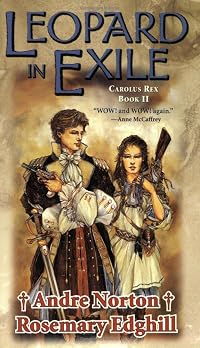
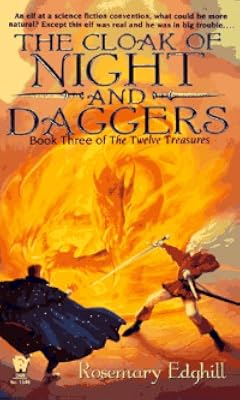
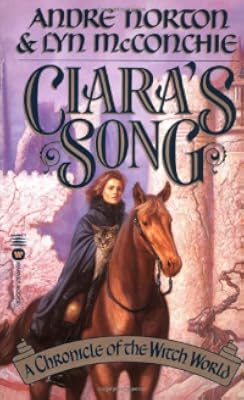
As Napoleon continues his devastating march across Europe, aided by the Marquis de Sade - an evil magician who will do anything to destroy the rightful king and queen of France - the Duke and Duchess of Wessex risk their lives to defend the embattled royals.Tags
Recommendations















Member Reviews
There's a perfectly adequate plot in here somewhere, involving the Holy Grail, the ex-Dauphin of France, and the Marquis de Sade. I assume Norton is probably responsible for the plot; I also assume she had nothing else whatever to do with the writing of the book.
The writing style is of course not Norton; as in all the Norton collaborations it's far smoother than anything she has ever written herself. The problem, I think, is mainly one of attitude.
This rather light alternate-history Regency is loaded with footnotes. Some of these footnotes contain genuinely interesting information, or clarify points that might need clarifying, when one is mucking about with early 19th century history, of which many readers will have somewhat fuzzy show more retention of even the real facts. Others, unfortunately, seem to assume the reader is barely literate, or seem designed to make the reader feel slightly off base, or to be intended merely to show off the vast amount of research Ms. Edghill has done.
Item: on page 95, we have Meriel picking up her ridicule--which is, of course, footnoted; it's footnote number 21. In the footnote we learn that it's a purse, otherwise known at the time as reticule or budget. Is there a reason, other than forcing as many readers as possible to look at the footnote and see all the research Ms. Edghill has done, to use "ridicule" rather than "reticule" or "budget", either of which would be confidently recognized in context by a far larger percentage of her readers?
Item: on page 344, we have the motto, "Piété, Justice, Liberté"--and also footnote number 67, helpfully translating this for the reader as "Piety, Justice, Liberty". Is there a reason for this footnote, other than assuming that the reader is barely literate?
On page 263, we have footnote 51, providing the url for a selection of jambalaya recipes, "Since no book set in New Orleans is complete without a discussion of the food..."
I could go on, listing foolish, gratuitous, or annoying footnotes, the places where I think she chose an obscure word or phrase rather than an equally correct but less obscure one solely to allow her to footnote it, or footnotes that provide far more information than the reader needs, but I think I've provided enough to capture something of the flavor of them. I should probably also say something about the numerous occasions when the characters behave like idiots, because behaving sensibly would cut short portions of the plot that Ms. Edghill wishes to spend more time on, but, as I write this, it's far too hot. show less
The writing style is of course not Norton; as in all the Norton collaborations it's far smoother than anything she has ever written herself. The problem, I think, is mainly one of attitude.
This rather light alternate-history Regency is loaded with footnotes. Some of these footnotes contain genuinely interesting information, or clarify points that might need clarifying, when one is mucking about with early 19th century history, of which many readers will have somewhat fuzzy show more retention of even the real facts. Others, unfortunately, seem to assume the reader is barely literate, or seem designed to make the reader feel slightly off base, or to be intended merely to show off the vast amount of research Ms. Edghill has done.
Item: on page 95, we have Meriel picking up her ridicule--which is, of course, footnoted; it's footnote number 21. In the footnote we learn that it's a purse, otherwise known at the time as reticule or budget. Is there a reason, other than forcing as many readers as possible to look at the footnote and see all the research Ms. Edghill has done, to use "ridicule" rather than "reticule" or "budget", either of which would be confidently recognized in context by a far larger percentage of her readers?
Item: on page 344, we have the motto, "Piété, Justice, Liberté"--and also footnote number 67, helpfully translating this for the reader as "Piety, Justice, Liberty". Is there a reason for this footnote, other than assuming that the reader is barely literate?
On page 263, we have footnote 51, providing the url for a selection of jambalaya recipes, "Since no book set in New Orleans is complete without a discussion of the food..."
I could go on, listing foolish, gratuitous, or annoying footnotes, the places where I think she chose an obscure word or phrase rather than an equally correct but less obscure one solely to allow her to footnote it, or footnotes that provide far more information than the reader needs, but I think I've provided enough to capture something of the flavor of them. I should probably also say something about the numerous occasions when the characters behave like idiots, because behaving sensibly would cut short portions of the plot that Ms. Edghill wishes to spend more time on, but, as I write this, it's far too hot. show less
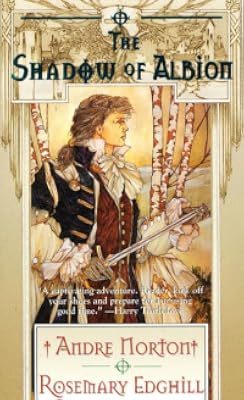
The second book in the Carolus Rex series, set in a fantasy Regency. The story starts of two years after the end of Shadow of Albion, with the culmination of that plotline - the wedding of the crown prince of England to the princess of Denmark. Sarah Cunningham, who was stolen from her world to this parallel world to fulfil some as yet unspecified work, is now happily married to her Duke. When she receives an urgent plea for help from Baltimore while the Duke is called away on espionage business, she goes to the rescue of the rightful king of France and his wife. Louis Capet, who refused to take on the kingship and oppose Emperor Napoleon in Shadow of Albion, has come to a New Albion which has not seceded from Great Britain in this show more world to live a peaceful life with his wife. All sorts of unrealistically complications arise, leaving the characters all over America, and when they meet up in New Orleans they are just in time to save the world from a power mad sorcerer who has made a pact with the devil.
A truly awful book. Unlike its predecessor which was an adequate story whose flaws were easily overlooked by any fan of Regency novels, this one is written in a markedly different style - and written badly - and is completely without a meaningful plot.
As the second book in a trilogy it should preferably have been written in a somewhat similar style and picked up on some of the plotlines left hanging in the first book - since Shadow of Albion contained no footnotes, nor did it try to explain every little difference between this world and the parallel world in which it takes place, I would not expect to be inundated by footnotes explaining everything from the name of New Orleans in this world to the proper construction of a reticule as well as assurances that the details of the story in fact are facts. If I wanted to know some obscure historical detail of Regency America I would have read a historical non fiction dealing with the history of this world. I have no wish to have my fiction reading continuously disrupted by assurances that these activities in a parallel world are the same as, or how they differ from, this worlds.
The choice of what to footnote and what not to footnote is obscure at best, and considering the obscure dialects too many of the dialogs are conducted in, it is hard to imagine that they are meant as an aid to the reader instead of to show of the authors research.
The continuity mistakes are aggravating – it should at least be possible to keep the familial relations of the characters straight from one book to the next.
The plot makes little sense, and since the author is unable to keep straight who knows what at which point, it is obviously not important for the book either.
The characters are lacking in depth, and all the descriptive passages in the world cannot substitute a plot or believable characters, even if they were somewhat interesting and wellwritten - and they are not. show less
A truly awful book. Unlike its predecessor which was an adequate story whose flaws were easily overlooked by any fan of Regency novels, this one is written in a markedly different style - and written badly - and is completely without a meaningful plot.
As the second book in a trilogy it should preferably have been written in a somewhat similar style and picked up on some of the plotlines left hanging in the first book - since Shadow of Albion contained no footnotes, nor did it try to explain every little difference between this world and the parallel world in which it takes place, I would not expect to be inundated by footnotes explaining everything from the name of New Orleans in this world to the proper construction of a reticule as well as assurances that the details of the story in fact are facts. If I wanted to know some obscure historical detail of Regency America I would have read a historical non fiction dealing with the history of this world. I have no wish to have my fiction reading continuously disrupted by assurances that these activities in a parallel world are the same as, or how they differ from, this worlds.
The choice of what to footnote and what not to footnote is obscure at best, and considering the obscure dialects too many of the dialogs are conducted in, it is hard to imagine that they are meant as an aid to the reader instead of to show of the authors research.
The continuity mistakes are aggravating – it should at least be possible to keep the familial relations of the characters straight from one book to the next.
The plot makes little sense, and since the author is unable to keep straight who knows what at which point, it is obviously not important for the book either.
The characters are lacking in depth, and all the descriptive passages in the world cannot substitute a plot or believable characters, even if they were somewhat interesting and wellwritten - and they are not. show less
Not as good as the first one. Opens with a very brutal murder.
Ratings
Members
- Recently Added By
Author Information

436+ Works 76,716 Members
Born Alice Mary Norton on February 17, 1912 in Cleveland, Ohio, she legally changed her name to Andre Alice Norton in 1934. She attended the Flora Stone Mather College of Western Reserve University (now Case Western Reserve) for a year then took evening courses in journalism and writing that were offered by Cleveland College, the adult division of show more the same university. Norton was a librarian for the Cleveland Library System then a reader at Gnome Press. After that position, she became a full-time writer. She is most noted for writing fantasy, in particular the Witch World series. Her first book The Prince of Commands was published in 1934. Other titles include Ralestone Luck, Magic in Ithkar, Voorloper, Uncharted Stars, The Gifts of Asti and All Cats are Gray. She also wrote under the pen names Andre Norton, Andrew North and Allen Weston She was the first woman to receive the Gandalf Grand Master of Fantasy and the Nebula Grand Master Award. She has also received a Phoenix Award for overall writing achievement, a Jules Verne Award, and a Science Fiction Book Club Book of the Year Award for her title The Elvenbane. In 1997 she was inducted into the Science Fiction and Fantasy Hall of Fame. She died on March 17, 2005. (Bowker Author Biography) show less

57+ Works 8,014 Members
Rosemary Edghill was born long enough ago to have seen Classic Trek on its first outing and to remember that she once thought Spock Must Die! to be great literature. As she aged, she put aside her fond dreams of taking over for Batman when he retired, and returned to her first love, writing. Her first SF sale (as eluki bes shahar) was the show more Hellflower series, in which Damon Runyon meets Doc Smith over at the old Bester place. Between books and short stories in every genre but the Western (several dozen so far), she's held the usual selection of odd and part-time writer jobs, including bookstore clerk, secretary, beta tester for computer software, graphic designer, book illustrator, library clerk, and administrative assistant for a non-profit arts organization. She can truthfully state that she once killed vampires for a living, and that without any knowledge of medicine has illustrated half-a-dozen medical textbooks show less
Some Editions
Series

Common Knowledge
- Canonical title
- Leopard in Exile
- Original publication date
- 2001
- People/Characters
- Louis XVII of France (Louis-Charles, Prince Royal of France and Duke of Normandy); Charles Corday (Gambit); Sarah Cunningham (Marchioness of Roxbury, Duchess of Wessex); Rupert St. Ives Dyer (Duke of Wessex, Earl of Scathach, Reynard); Meriel Jehane Greye Bulleyn Highclere; Princess Stephanie Julianna of Denmark (show all 14); Illya Koscuisko; Jean Lafitte (Captain); Delphine de McCarty Blanque Lalaurie; Jonathan Milon Arioch de la Forthe (Lord Misbourne, Baron Misbourne, the White Man, Lord White); Donatien Alphonse-François, Marquis de Sade; James Charles Henry David Robert Stuart (Prince of Wales, Prince Jamie, Duke of Gloucester); Charles-Maurice de Talleyrand-Périgord (the Black Priest, Talleyrand); Lord Warltawk
- Important places
- London, England, UK; New Orleans, Louisiana, USA; France
Classifications
Statistics
- Members
- 261
- Popularity
- 124,822
- Reviews
- 4
- Rating
- (3.65)
- Languages
- English
- Media
- Paper, Ebook
- ISBNs
- 2
- ASINs
- 2