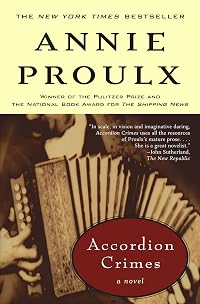
Accordion Crimes
by Annie Proulx
On This Page
Description
A tale of immigrants centered on an accordion brought to America in the 1880s. After its Italian owner is murdered, the instrument passes into the hands of other ethnic groups--German, French-Canadian, Mexican, Polish, Norwegian--and the novel describes their ceremonies, dreams and hates. By the author of The Shipping News.Tags
Recommendations







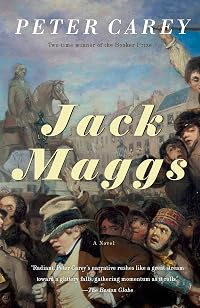

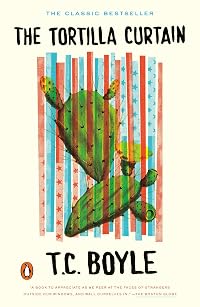
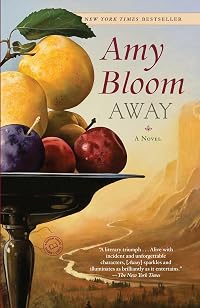
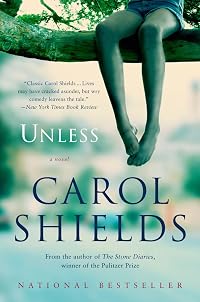









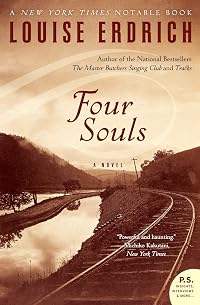

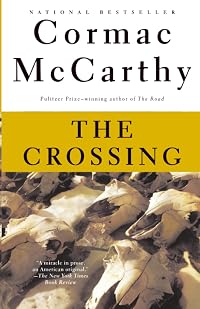


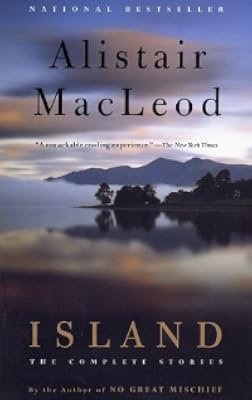

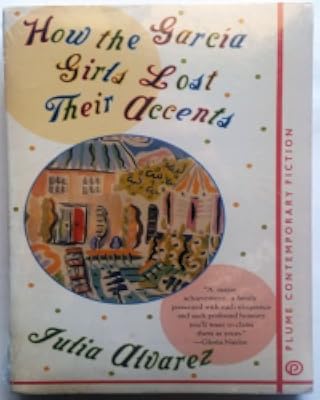



Member Recommendations
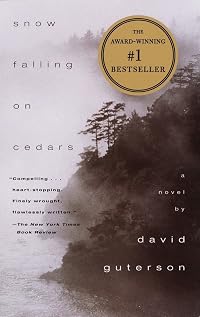
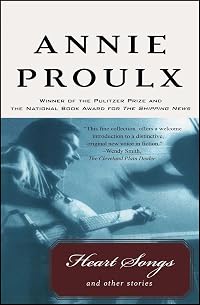
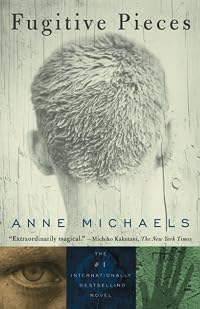
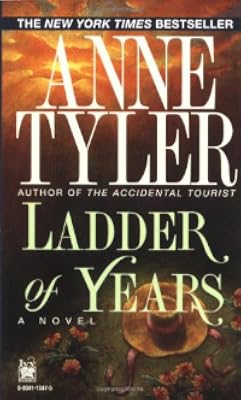
eenerd Same formula of all the people tied together over time by a particular item or object.
10

Sandwich76 A dumb thriller to cleanse the palate
Member Reviews
This is a dense, rich, packed-to-the-rafters attic of a novel. Totally engrossing, but with so many story lines, so many sets of characters, so much detail, that I felt rather like I was reading a Russian novel, or perhaps 4 or 5 books at a time. The writing, as always with Annie Proulx, just grabs you and won't let go, but just when I'd start to feel invested in one bunch of characters, she'd leave them behind and move on to another group, any of which could have supported a very fine novel all by itself. The central character of this book is a small green, hand-made, two-button accordion, and the focus of Proulx's storytelling is the instrument's long life history as it passes from its maker down the generations through multiple show more owners, with long periods where it lies forgotten in pawn shops or storage rooms, guarding its very own secret until its final sad days. I can't imagine the research that must have gone into this novel, which takes the reader from late 19th century Sicily to late 20th century Minnesota, from one immigrant culture to another, along the way embracing food, music, occupations, lifestyles, geographies...all of it feeling absolutely authentic. I loved it and want to start from the beginning to experience it all again. show less
A Sicilian makes a two-button accordion and then goes to La Merica with his son, Silvano. There, they encounter racism and suspicion, are lumped together with all "Italians" and find themselves competing for jobs with black men. The story then unfolds following the accordion's travels to German immigrants in the midwest, to Mexican Americans in Texas, through time and various immigrant experiences.
This is probably one of the most complicated stories we've read for my library book club. The one story is essentially eight longish short stories detailing the lives of many characters, moving back and forth in time to tell individual's stories, all the while the accordion features in some way, small or large, sweeping through almost a show more century. There are moments of humor, but most of the tale is bleak and does not shy away from horrors of death or reversals of fortune. By the end, I was bracing myself for the next awful thing to happen. The writing is lovely, descriptive, and keeps you reading at a slower pace pondering these characters and their lives. WE will have plenty to discuss from the immigrant experience to the power of music to the intricacies of the plot. show less
This is probably one of the most complicated stories we've read for my library book club. The one story is essentially eight longish short stories detailing the lives of many characters, moving back and forth in time to tell individual's stories, all the while the accordion features in some way, small or large, sweeping through almost a show more century. There are moments of humor, but most of the tale is bleak and does not shy away from horrors of death or reversals of fortune. By the end, I was bracing myself for the next awful thing to happen. The writing is lovely, descriptive, and keeps you reading at a slower pace pondering these characters and their lives. WE will have plenty to discuss from the immigrant experience to the power of music to the intricacies of the plot. show less
Genius. Depressing, but profound. Proulx has touched on something dark, deep and true about human nature - and pulled the curtain back on our American mythology. This book tackles the cycle of prejudice- looking at it not from the ‘haves’ condescending to the ‘have-nots’ – but rather from the much more disturbing reality: the fringes adopting prejudicial mentalities to become ‘true Americans.’ A rite of passage for disenfranchised groups- the real fire behind our hallowed melting pot. Stylistically, Proulx’s writing is an experience in itself. One of the most colorful descriptions of her work highlights her intense focus on the physical world, stating “Reading Ms. Proulx’s prose is like bouncing along rutted country show more roads in a pickup truck with no shock absorbers” (Garner, New York Times). Yes. Proulx’s writing is a bit uncomfortable and jarring--- but something you feel deep in your bones. show less
This is a book which I loved reading, despite its lenth, dark undercurrents and somewhat brisk dispatching of most of the characters. It follows the trail of a green button-accordion across the United States from its passage from Sicily in 1890, and from immigrant to immigrant's child and beyond. Along the way it's lost, sold, given away, and stolen by a colourful variety of characters. Part of what makes the story flow is the emotional investment most of the down-trodden owners make in the similarly misused and abused musical instrument. They recognise in its wail of misery a kindred spirit which comforts them at their lowest moments. There is a historical bent to the novel and Proulx's flair for grimy detail give each of the ages and show more places the accordion passes through a distinct odour, flavour and feeling. Some of the characters are unlikable and their demise draws little sympathy, but I got quite attached to a few of them and was sad when they met their wonderfully grim ends. The book says a lot about America's treatment of its immigrants - from Germans and Poles to French and Irish, all find the place a harsh and unforgiving land where dreams serve only to remind them of their own naiveté.
I've often wondered at the previous lives of some of my second-hand items (in fact I think this book was second or third or who knows how many hands!) so I enjoyed the detailed vignettes of the owner's lives and cultures, and how each one made the instrument their own. Highly recommended for an entertaining, sad, and sometimes disturbing read. show less
I've often wondered at the previous lives of some of my second-hand items (in fact I think this book was second or third or who knows how many hands!) so I enjoyed the detailed vignettes of the owner's lives and cultures, and how each one made the instrument their own. Highly recommended for an entertaining, sad, and sometimes disturbing read. show less
Pretty depressing but amazing writing. Series of vignettes following a particular small green accordion from its creation in Italy in the late 1800's through all of the owners of the instrument around the United States and Canada through to the 2000's. Incredibly gritty, very few high points, some interesting humor, but all of the characters are so well crafted and the stories so compelling that you really want to see if that accordion every manages to bring happiness rather bitterness and tragedy. Annie Proulx is an amazing writer, but be warned this is a really sad book.
Annie Proulx has written an odd and compelling book, ostensibly about the fate of those who in one way or another have come into possession of a green accordion, made in Sicily towards the end of the 19th century. It passes from one person to another over a hundred years, seeming to bring bad luck on all who own it. In this narrative, however, Proulx has woven together two histories—that of various ethnic minorities in the US over the last hundred years and an account of accordion music in those groups. Each ethnic group—Italian, German, French-Canadian, Hispanic and others—has its own history of folk accordion music, and its own masters of the genre.
For those familiar with The Shipping News, Proulx’s style in this book is very show more different, although she has the same way of looking at the lives of ordinary people, viewing them at an angle that illuminates the oddities of their personalities, the traits and habits that set them apart from others. But in the former book, her prose style was very often abrupt, with short or part sentences that were as jarring as the landscape of Newfoundland. Accordion Crimes, on the other hand, is written with long, long sentences, many times filled with bizarre lists that illustrate the person or the era she is describing:
“He listened to the radio, it was better than the TV late at night, the distant hillbilly music and sermons and promises of cures from the wildcat border stations down in Mexico—funny their signal could reach all the way to Maine—offers for weight-loss tonics, pills to make you put on pounds, plastic broncos, moon pens, zircon rings, Yellow Boy fishing lures, apron patterns, twelve styles for just one dollar, rat killer and polystyrene gravestones, send no money, send your name and address in care of this station, less than a penny a capsule, for each order received before December 15 you’ll receive in addition, absolutely free, while this special offer lasts, insist on the genuine, prosperity, plain brown sealed wrapper, a package containing rigidly inspected pharmaceuticals, if you are nervous and wakeful at night.”
Food, as in The Shipping News, makes its odd appearance from time to time:
"Every morning Mrs. Pelky labored to his door on her bad ankles with a plate of curious cookery: Orange Buds, Pork Fruit Cake, Deviled Clams and Bean Mash, Lentil Loaf, or The poor Man’s Omelet—bread sopped in hot milk…..He ate everything she brought him for it was better than his own strange combinations, a peach and kale sandwich, macaroni and vinegar, canned salmon and rat cheese."
You have to wonder about Proulx’s own attitude towards food.
The book is sectioned in parts according to whoever the current owner, a member of a different ethnic group, is. Each part is broken up into many different titled subsection--The Pulp Truck, A Smell of Burning, Prank, Inspection-- sequences of events in the lives of the characters, allowing a narrative that doesn’t have to be absolutely continuous in order to run smoothly. It’s very effective.
While I loved the book overall and marveled at Proulx’s ability to find the bizarre in even the most ordinary of human lives, towards the end the long, long sentences started to wear me out. I found that I was skipping over them half-way through, anxious to get to the end and on to the next thought. I slowed down my reading rate, and that helped.
The end of the book is as bizarre as the rest of the story. Proulx is nothing if not consistent.
Highly recommended. show less
For those familiar with The Shipping News, Proulx’s style in this book is very show more different, although she has the same way of looking at the lives of ordinary people, viewing them at an angle that illuminates the oddities of their personalities, the traits and habits that set them apart from others. But in the former book, her prose style was very often abrupt, with short or part sentences that were as jarring as the landscape of Newfoundland. Accordion Crimes, on the other hand, is written with long, long sentences, many times filled with bizarre lists that illustrate the person or the era she is describing:
“He listened to the radio, it was better than the TV late at night, the distant hillbilly music and sermons and promises of cures from the wildcat border stations down in Mexico—funny their signal could reach all the way to Maine—offers for weight-loss tonics, pills to make you put on pounds, plastic broncos, moon pens, zircon rings, Yellow Boy fishing lures, apron patterns, twelve styles for just one dollar, rat killer and polystyrene gravestones, send no money, send your name and address in care of this station, less than a penny a capsule, for each order received before December 15 you’ll receive in addition, absolutely free, while this special offer lasts, insist on the genuine, prosperity, plain brown sealed wrapper, a package containing rigidly inspected pharmaceuticals, if you are nervous and wakeful at night.”
Food, as in The Shipping News, makes its odd appearance from time to time:
"Every morning Mrs. Pelky labored to his door on her bad ankles with a plate of curious cookery: Orange Buds, Pork Fruit Cake, Deviled Clams and Bean Mash, Lentil Loaf, or The poor Man’s Omelet—bread sopped in hot milk…..He ate everything she brought him for it was better than his own strange combinations, a peach and kale sandwich, macaroni and vinegar, canned salmon and rat cheese."
You have to wonder about Proulx’s own attitude towards food.
The book is sectioned in parts according to whoever the current owner, a member of a different ethnic group, is. Each part is broken up into many different titled subsection--The Pulp Truck, A Smell of Burning, Prank, Inspection-- sequences of events in the lives of the characters, allowing a narrative that doesn’t have to be absolutely continuous in order to run smoothly. It’s very effective.
While I loved the book overall and marveled at Proulx’s ability to find the bizarre in even the most ordinary of human lives, towards the end the long, long sentences started to wear me out. I found that I was skipping over them half-way through, anxious to get to the end and on to the next thought. I slowed down my reading rate, and that helped.
The end of the book is as bizarre as the rest of the story. Proulx is nothing if not consistent.
Highly recommended. show less
An odd book, but it did draw me in. You follow a green accordion through more than a century, watching it pop up in an almost "where's Waldo" manner through stories of immigration, poverty, tragedy and an incredibly creative range of sorrows (death by spider bite, mistaken shooting of a prize horse, arms amputated by sheet metal coming off a truck, race riots, etc.). Then comes a story with something of a happy ending, and I was shocked by it. Then sorrow returns.
An interesting juxtaposition with Adverbs, the last book I read. There the stories interlocked to explore the nature of love. Here the stories interlocked to explore the nature of tragedy. Yet the book was somehow enjoyable, because the tragedy was so picturesque and keenly show more delineated. show less
An interesting juxtaposition with Adverbs, the last book I read. There the stories interlocked to explore the nature of love. Here the stories interlocked to explore the nature of tragedy. Yet the book was somehow enjoyable, because the tragedy was so picturesque and keenly show more delineated. show less
Members
- Recently Added By
Lists

Novels from The Guardian's Great American Novelist Tournament
148 works; 24 members

music to my eyes
86 works; 12 members

Books Read in 2023
5,638 works; 147 members

Biggest Disappointments
606 works; 168 members

Books You Couldn't Finish
202 works; 32 members

Favourite Women's Prize for Fiction, Orange & Bailey's Prize contenders
132 works; 52 members
Author Information

44+ Works 35,278 Members
Edna Annie Proulx was born in Norwich, Connecticut on August 22, 1935. She graduated from the University of Vermont in 1969 and earned an M. A. from Sir George Williams University in Montreal in 1973. She was a journalist, wrote nonfiction articles for numerous publications, and was the author of several "how-to" books before beginning to write show more fiction in her 50s. She became the first woman to win the prestigious PEN/Faulkner Award for Fiction, for her debut novel Postcards. Her novel The Shipping News won the Pulitzer Prize for Fiction and the National Book Award in 1994. Accordion Crimes, published in 1996, won the Dos Passos Prize for literature. She also won the O. Henry prize for the year's best short story twice; in 1998 for Brokeback Mountain and in 1999 for The Mud Below. She has written more than 50 articles and stories for periodicals and edited Best American Short Stories of 1997. (Bowker Author Biography) show less
Some Editions
Awards and Honors
Awards
Distinctions
Series
Belongs to Publisher Series
Work Relationships
Common Knowledge
- Canonical title
- Accordion Crimes
- Original title
- Accordion Crimes
- Original publication date
- 1996
- Important places
- Chicago, Illinois, USA; New Orleans, Louisiana, USA; Arizona, USA; Minnesota, USA; Maine, USA; Illinois, USA (show all 7); Louisiana, USA
- Epigraph
- My dad came over with a button accordion in a gunny sack, that's about all he had.
~ Ray Maki,
liner notes, Accordions in the Cutover
Without the presence of black people in America, European-Americans would not be "white" -- they would be only Irish, Italians, Poles, Welsh, and others engaged in class, ethnic, and gender struggles over resources and identi... (show all)ty.
~ Cornel West, Race Matters
Caminante, no hay camino,
Se hace camino al andar.
Traveler, there is no path,
Paths are made by walking.
~ Antonio Machado - Dedication
- FOR
MUFFY, JON, GILLIS, AND MORGAN
AND
IN MEMORY OF LOIS NELLIE GILL - First words
- It was as if his eye were an ear and a crackle went through it each time he shot a look at the accordion.
- Last words
- (Click to show. Warning: May contain spoilers.)"FIVE."
- Original language*
- englanti
- Disambiguation notice
- ISBN 0671570617 is for Whisper My Name by Fern Michaels
*Some information comes from Common Knowledge in other languages. Click "Edit" for more information.
Classifications
Statistics
- Members
- 3,058
- Popularity
- 5,790
- Reviews
- 47
- Rating
- (3.41)
- Languages
- 9 — Dutch, English, Finnish, French, German, Italian, Portuguese, Spanish, Swedish
- Media
- Paper, Audiobook, Ebook
- ISBNs
- 48
- UPCs
- 1
- ASINs
- 20