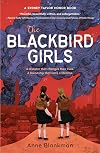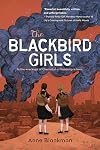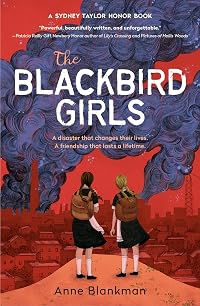
The Blackbird Girls
by Anne Blankman
On This Page
Description
"On a spring morning, neighbors Valentina Kaplan and Oksana Savchenko wake up to an angry red sky. A reactor at the nuclear power plant where their fathers work--Chernobyl--has exploded. Before they know it, the two girls, who've always been enemies, find themselves on a train bound for Leningrad to stay with Valentina's estranged grandmother, Rita Grigorievna. In their new lives in Leningrad, they begin to learn what it means to trust another person. Oksana must face the lies her parents show more told her all her life. Valentina must keep her grandmother's secret, one that could put all their lives in danger. And both of them discover something they've wished for: a best friend. But how far would you go to save your best friend's life? Would you risk your own?" -- show lessTags
Recommendations
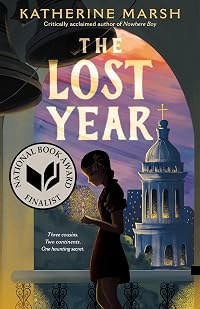
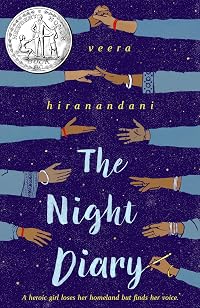


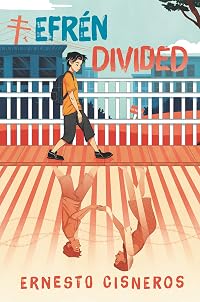
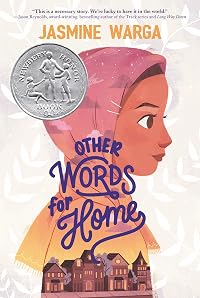



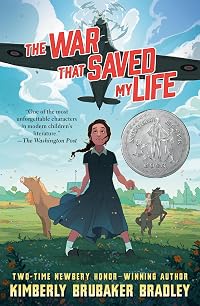
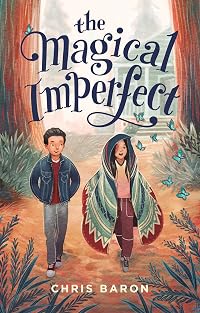
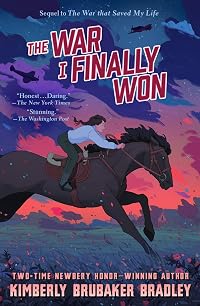
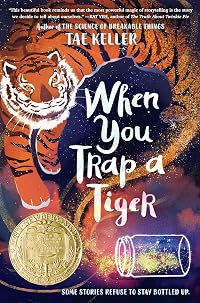
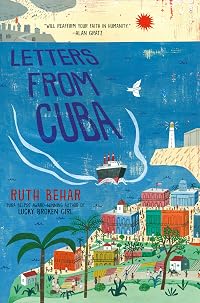
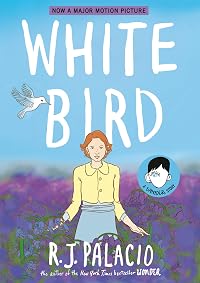
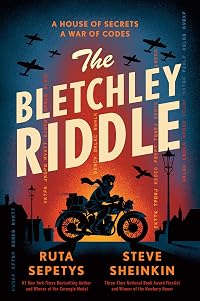
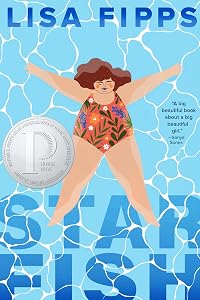



Member Recommendations
kgibbs1 Same living situation with girl/estranged grandmother and foreign sub-culture
Member Reviews
In April 1986 in Ukraine, Valentina and Oksana are classmates and only children who each live with their parents; both of their fathers work at the nuclear power station, and don't come home the morning of the fire. The Communist government does not immediately evacuate Pripyat, but Oksana and Valentina leave with Valentina's mother. When there is a shortage of train tickets, she sends them on to her own mother in Leningrad. There, the girls wait for news of their families, and Oksana, whose father died in the explosion and who was abusive, learns to reevaluate what he told her, begin to think for herself, and understand what love can look like - even though Valentina's family is Jewish, and Oksana's father always told her that Jews are show more cheats and liars and hiding secret wealth. When Oksana realizes he was wrong about that, she wonders if he was wrong about other things, too.
Valentina's grandmother Rifka's story of escaping the Germans during WWII is included, as well: her mother sent her away to save her life, and when Rifka returned after the war, she learned that her whole family had been murdered at Babi Yar. Rifka started over in Leningrad, always keeping in touch with the Uzbek family who sheltered her during the war - and this friendship saves Oksana also.
See also: When the World Was Ours by Liz Kessler (YA), everything by Ruta Sepetys (YA)
Quotes
"But it's easier for people like us to doubt."
"People like us?"
"Jews," her mother said softly. (53)
"Communism is supposed to be paradise. And there aren't mistakes in paradise. The explosion at the power station was a mistake. Our government can't admit to the world that we're responsible for an accident. They're trying to cover it up." (55)
[The government] had been wrong, Valentina thought. And now Papa was sick. Anger rose within her, so red and hot that she had to sit up to catch her breath. (86)
She mustn't sound as though she were saying anything bad about the government. (107)
Kommunalkas weren't only uncomfortable and overcrowded, she realized with a shiver. They could be dangerous. (127)
"So much has been lost in only a few generations," [Babulya] murmured to herself. (168)
"I wish I could tell you that someday when you become a grown-up, other people's opinions magically stop mattering to you. But I can't." (198)
[Oksana] didn't understand how he could have been both wonderful and terrible. Why couldn't he have been one or the other? Then she would have been able to love or hate him. (212)
"The people we love are never lost to us. Your father will never leave you, not truly. His actions will echo in your life and in the lives of your children and in the lives of your children's children." (Babulya to Valentina, 244)
She thought having a best friend was like being given a new set of lungs when you had been gasping for air. (251)
God gave us free will,. Those were the words her mother had said to her....That means, her mother had said many times, that we have the power to do terrible evil or great good.
Tears flooded her eyes. God hadn't murdered her family....People had killed. Not God. (259)
She was a knot in a rope that stretched back for centuries. (280) show less
Valentina's grandmother Rifka's story of escaping the Germans during WWII is included, as well: her mother sent her away to save her life, and when Rifka returned after the war, she learned that her whole family had been murdered at Babi Yar. Rifka started over in Leningrad, always keeping in touch with the Uzbek family who sheltered her during the war - and this friendship saves Oksana also.
See also: When the World Was Ours by Liz Kessler (YA), everything by Ruta Sepetys (YA)
Quotes
"But it's easier for people like us to doubt."
"People like us?"
"Jews," her mother said softly. (53)
"Communism is supposed to be paradise. And there aren't mistakes in paradise. The explosion at the power station was a mistake. Our government can't admit to the world that we're responsible for an accident. They're trying to cover it up." (55)
[The government] had been wrong, Valentina thought. And now Papa was sick. Anger rose within her, so red and hot that she had to sit up to catch her breath. (86)
She mustn't sound as though she were saying anything bad about the government. (107)
Kommunalkas weren't only uncomfortable and overcrowded, she realized with a shiver. They could be dangerous. (127)
"So much has been lost in only a few generations," [Babulya] murmured to herself. (168)
"I wish I could tell you that someday when you become a grown-up, other people's opinions magically stop mattering to you. But I can't." (198)
[Oksana] didn't understand how he could have been both wonderful and terrible. Why couldn't he have been one or the other? Then she would have been able to love or hate him. (212)
"The people we love are never lost to us. Your father will never leave you, not truly. His actions will echo in your life and in the lives of your children and in the lives of your children's children." (Babulya to Valentina, 244)
She thought having a best friend was like being given a new set of lungs when you had been gasping for air. (251)
God gave us free will,. Those were the words her mother had said to her....That means, her mother had said many times, that we have the power to do terrible evil or great good.
Tears flooded her eyes. God hadn't murdered her family....People had killed. Not God. (259)
She was a knot in a rope that stretched back for centuries. (280) show less
Valentina and Oksana are classmates in a village near the Chernobyl nuclear plant. Oksana was reared in a very anti-Semitic home, and Valentina is a Jewish girl. The disaster they'd been assured would never happens takes place. Both of their fathers are working at the plant. One is dead almost immediately; the other is in critical condition. Valentina's mother takes charge of Oksana when her mother is sent to a hospital because her radiation level is already too elevated. The girls head first to Minsk, but they only get two seats instead of three to head to Leningrad where Valentina's grandmother lives. Valentina's mother sends the girls ahead with promises to follow when she can join them. Oksana begins to question the things her show more father told her about Jews as she sees their kindness played out. We also learn the story of Valentina's grandmother who escaped the horrors of the Nazis by walking out her own village and surviving on her own. This book is very deserving of the Jewish Book Award it won. It's intended for middle school readers, but I recommend it to all. show less
I can't give this book enough stars, it was absolutely fantastic and written so beautifully.
The book wasn't at all what I was expecting. I thought there would be more focus on the Chernobyl disaster throughout, but I am actually really happy with the direction it took and the relationships that were built with the characters instead. And at first I wasn't too sure about the alternating storylines between Valentina/Oksana and Rifka - but later on it all makes sense and provides more depth into the storyline. (I don't think it would have been the same without it.)
It was definitely an emotional journey throughout with anti-semitism, child abuse, genocide, and the KGB. My heart broke and I was in tears for a good portion of it. But it was show more filled back up from the love, friendship, hope and trust that spanned thousands of miles and many decades. Absolutely incredible to put that much trust into others (especially strangers) during a time when there were secret police that could be watching your every move.
And a huge thank you to Victoria and her grandparents; Valentina and Yefim for sharing their experiences with Anne to help make this book what it is. I know that it must have been hard to talk about these experiences from life back in Ukraine. show less
The book wasn't at all what I was expecting. I thought there would be more focus on the Chernobyl disaster throughout, but I am actually really happy with the direction it took and the relationships that were built with the characters instead. And at first I wasn't too sure about the alternating storylines between Valentina/Oksana and Rifka - but later on it all makes sense and provides more depth into the storyline. (I don't think it would have been the same without it.)
It was definitely an emotional journey throughout with anti-semitism, child abuse, genocide, and the KGB. My heart broke and I was in tears for a good portion of it. But it was show more filled back up from the love, friendship, hope and trust that spanned thousands of miles and many decades. Absolutely incredible to put that much trust into others (especially strangers) during a time when there were secret police that could be watching your every move.
And a huge thank you to Victoria and her grandparents; Valentina and Yefim for sharing their experiences with Anne to help make this book what it is. I know that it must have been hard to talk about these experiences from life back in Ukraine. show less
A nuanced historical fiction that starts with the disaster at Chernobyl. Oksana and Valentina both have fathers that work at the nuclear reactor and don't come home the morning the fire is burning and the sky is full of blue smoke. Oksana has some sort of secret injury and she has frequently bullied and insulted Valentina because she is Jewish.
The girls, along with their mothers, desperately try to figure out what is going on. Valentina's mom ends up taking the girls to stay with a friend from University. But when the friend finds out how much radiation they've been exposed to asks them to leave. In desperation, they turn to the one person who make take them in, Valentina's grandmother who she has never met. She lives in Leningrad and show more there are only two train tickets available. Leaving Valentina's mother behind, the girls seek shelter. It's a rough transition. With both girls trying to heal from the loss of their fathers and adjust to life together.
Woven into the story is the story of Rifka during World War II who is on the run from the Germans and not warmly welcomed by others because she is Jewish. A girl and her family take her in, starting this notion of the Blackbird Girls.
Topic is one that I haven't seen explored before in middle grade fiction. And the characters are richly developed.
Soviet society is portrayed pretty darkly with the notion that the secret police might watch everything and doing anything against the party line could bring great danger to you and your family. show less
The girls, along with their mothers, desperately try to figure out what is going on. Valentina's mom ends up taking the girls to stay with a friend from University. But when the friend finds out how much radiation they've been exposed to asks them to leave. In desperation, they turn to the one person who make take them in, Valentina's grandmother who she has never met. She lives in Leningrad and show more there are only two train tickets available. Leaving Valentina's mother behind, the girls seek shelter. It's a rough transition. With both girls trying to heal from the loss of their fathers and adjust to life together.
Woven into the story is the story of Rifka during World War II who is on the run from the Germans and not warmly welcomed by others because she is Jewish. A girl and her family take her in, starting this notion of the Blackbird Girls.
Topic is one that I haven't seen explored before in middle grade fiction. And the characters are richly developed.
Soviet society is portrayed pretty darkly with the notion that the secret police might watch everything and doing anything against the party line could bring great danger to you and your family. show less
A poignant YA story of two preteen girls after they are evacuated from the Chernobyl meltdown and traverse the country looking for a safe haven. The journey is complicated by the fact that one of them has to hide that she is Jewish. The story of their journey to safety with a grandmother in Leningrad, is interwoven with that of the grandmother’s own escape from anti Semitic persecution, at the hands of both Nazis and Russians, 45 years earlier during WWII. This story sheds light on Russia’s handling of the nuclear disaster, and on the anti-Semitism in the country at the time of the disaster. The book doesn’t hold back on the realities of life in Russia for a Jewish person, but it also shows the humanity that can prevail even in show more the harshest conditions.
Both the death of family members and the physical and emotional abuse of one of the girls by her parents are handled sensitively. Supports are provided at the back of the book for students who need them. I like that many of the chapters are dated and located and all are entitled by a character’s name, it makes the two timelines easy to distinguish and provides many jumping off points for further historical research. The author’s personal connection to the story is heartwarming. show less
Both the death of family members and the physical and emotional abuse of one of the girls by her parents are handled sensitively. Supports are provided at the back of the book for students who need them. I like that many of the chapters are dated and located and all are entitled by a character’s name, it makes the two timelines easy to distinguish and provides many jumping off points for further historical research. The author’s personal connection to the story is heartwarming. show less
Blackbird Girls is a 2022 Lone Star selection.
I never thought about students not knowing about Chernobyl. It was so famous that I didn't think that about kids not knowing about this nuclear accident. Even people in their 20s didn't know about it when I quizzed them. I've already recommended this novel to students who enjoyed Refugee. It has the same tone and has multiple perspectives from which the story is told. I feel that this novel as well as the new Ruta Sepetys novel, I Must Betray You, really helps modern middle school students understand a part of the world that is currently in the headlines. They haven't been raised during the Cold War as I was, so it explains the significance of current events based on what has happened in show more the past.
Chernobyl Power Station in Ukraine exploded in 1986. As Ukraine was then a part of Russia as well as being during the Cold War years, the accident wasn't handled openly and revealed immediately. Both girls in the story have fathers who work at Chernobyl. Neither father returns that morning. The girls don't really like each other. Valentina is Jewish and has a close relationship with her family with her father well-respected for his scientific abilities. Oksana has been taught to dislike Jews and treats Valentina badly in hopes that she is doing as her parents expect.
As the townspeople are eventually evacuated, Oksana finds herself alone because her mother has too much radiation to travel. She must go to a hospital for treatment. This situation means that Oksana will go with Valentina and her mother. Unfortunately, there aren't enough tickets, so the girls end up traveling to Leningrad alone to stay with Valentina's grandmother whom she's never met. This unfortunate accident leads to new lives.
Oksana discovers that people, caretakers, can show love and care to others. She discovers her own family was abusive. Valentina's grandmother treats her with love and respect. Gradually, the girls do find a friendship. They must reunite with their families, allowing a way to tie up the stories.
There's a third perspective given, set in WWII that pulls the story together and helps provide the theme of survival.
I did think the novel was a wee bit long, but it was very interesting and covered so much information that made it all fascinating. I think students in middle through high school will enjoy it and learn a great deal. I was very invested in the lives of the three main characters and found myself hoping for a happy ending even though I know it's set during the Cold War where happiness wasn't an ending seen often. show less
I never thought about students not knowing about Chernobyl. It was so famous that I didn't think that about kids not knowing about this nuclear accident. Even people in their 20s didn't know about it when I quizzed them. I've already recommended this novel to students who enjoyed Refugee. It has the same tone and has multiple perspectives from which the story is told. I feel that this novel as well as the new Ruta Sepetys novel, I Must Betray You, really helps modern middle school students understand a part of the world that is currently in the headlines. They haven't been raised during the Cold War as I was, so it explains the significance of current events based on what has happened in show more the past.
Chernobyl Power Station in Ukraine exploded in 1986. As Ukraine was then a part of Russia as well as being during the Cold War years, the accident wasn't handled openly and revealed immediately. Both girls in the story have fathers who work at Chernobyl. Neither father returns that morning. The girls don't really like each other. Valentina is Jewish and has a close relationship with her family with her father well-respected for his scientific abilities. Oksana has been taught to dislike Jews and treats Valentina badly in hopes that she is doing as her parents expect.
As the townspeople are eventually evacuated, Oksana finds herself alone because her mother has too much radiation to travel. She must go to a hospital for treatment. This situation means that Oksana will go with Valentina and her mother. Unfortunately, there aren't enough tickets, so the girls end up traveling to Leningrad alone to stay with Valentina's grandmother whom she's never met. This unfortunate accident leads to new lives.
Oksana discovers that people, caretakers, can show love and care to others. She discovers her own family was abusive. Valentina's grandmother treats her with love and respect. Gradually, the girls do find a friendship. They must reunite with their families, allowing a way to tie up the stories.
There's a third perspective given, set in WWII that pulls the story together and helps provide the theme of survival.
I did think the novel was a wee bit long, but it was very interesting and covered so much information that made it all fascinating. I think students in middle through high school will enjoy it and learn a great deal. I was very invested in the lives of the three main characters and found myself hoping for a happy ending even though I know it's set during the Cold War where happiness wasn't an ending seen often. show less
I had never heard of the Jewish genocide in Babi Yar, Kiev, Ukraine, after the Germans took over that city. The disaster two hours away in Chernobyl drives the plot also, bringing together two generations of the same family who had never met. The story talks of two pervasive beliefs, one is intense Jewish discrimination in this region and in Russia during the late 1980s, and the other is the social norm of men beating females. Even with my angst and anger while reading about these difficult topics, the blossoming friendship and the grandmother's loving attitude made up for it. I always love learning from historical fiction. It is a hopeful book.
Members
- Recently Added By
Lists

Elementary Reads
15 works; 1 member

Books Read in 2022
5,226 works; 115 members
Author Information

5 Works 1,134 Members
Awards and Honors
Awards
Distinctions
Notable Lists
Common Knowledge
- People/Characters
- Valentina Kaplan; Oksana Savchenko
- Important places
- Chernobyl, Ukraine; Pripyat, Ukraine; Leningrad, USSR
- Publisher's editor
- Levin, Kendra
Classifications
Statistics
- Members
- 387
- Popularity
- 81,108
- Reviews
- 19
- Rating
- (4.32)
- Languages
- English, Italian
- Media
- Paper, Audiobook, Ebook
- ISBNs
- 14
- ASINs
- 3