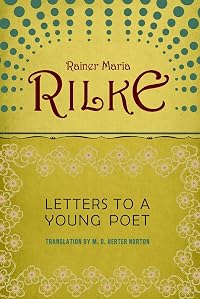
Letters to a Young Poet
by Rainer Maria Rilke
On This Page
Description
These have been called the most famous and beloved letters of the past century. Rainer Maria Rilke himself said that much of his creative expression went into his correspondence, and here he touches upon a wide range of subjects that will interest writers, artists,and thinkers. This luminous translation of Rainer Maria Rilke's classic offers brilliant inspiration to all people who seek to know and express their inner truth. Letters to a Young Poet is a classic that should be required reading show more for anyone who dreams of expressing themselves creatively. show lessTags
Recommendations






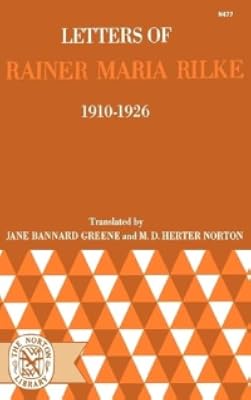




Member Recommendations

by anonymous user

Member Reviews
Twelve years on and it will have been a ten
by ten span of time since you left, Rilke.
Left on high, left to below both word and
hope, hope, most of all hope. Your heart you gave,
and for that we love.
I'd like to rhyme in metered line along
the likes of you, but too long ago your
poetry graced my eyes. What lies left's a
feeling fit for tears and joy alone, and
somber light it is.
Your maudlin days do not astonish, for
many a kindred of mine has suffered
the same, and yet, goes on. I draw from each
going for my own, and yours I say is
of exquisite touch.
Man to man you wrote back then, both letter
and the wider world of word, and as with
most I gritted firm for any and all
male strickenings of the female fact, of
grim necessity.
But 'lo! You knew, and show more where you didn't, you
hoped, in a beauty of mournful bright. Of
early on you penned this plighted dream, and
did more in a quickening page than most
in their own lifetime.
And more, and more, and more to come. Childhood
days, unhappy days, and yet every bloom
you would cherish and hold dear. Sin was not
a word allowed you said; what mattered was
life, and lived to love.
In solitude and suspension flush, you
counseled attention paid to the soul of
self. Every part and every shuddering truth,
both internal and the real. Often faint,
often not enough.
Fail better. The words came after you, and
with less heart, but you would most agree. There's
lovely things in life, you said, you wrote, you
sculpted deep in tears of crystalline. One
weeps in the knowing.
But one would smile and cheer and cradle close
what you've left us dear. You felt, and saw fit
to refract as close to thought through form. To
all, to us, to me. I cannot return,
save for scripting here.
Rainer Maria Rilke, you wrote; I
felt my heart would burst. show less
by ten span of time since you left, Rilke.
Left on high, left to below both word and
hope, hope, most of all hope. Your heart you gave,
and for that we love.
I'd like to rhyme in metered line along
the likes of you, but too long ago your
poetry graced my eyes. What lies left's a
feeling fit for tears and joy alone, and
somber light it is.
Your maudlin days do not astonish, for
many a kindred of mine has suffered
the same, and yet, goes on. I draw from each
going for my own, and yours I say is
of exquisite touch.
Man to man you wrote back then, both letter
and the wider world of word, and as with
most I gritted firm for any and all
male strickenings of the female fact, of
grim necessity.
But 'lo! You knew, and show more where you didn't, you
hoped, in a beauty of mournful bright. Of
early on you penned this plighted dream, and
did more in a quickening page than most
in their own lifetime.
And more, and more, and more to come. Childhood
days, unhappy days, and yet every bloom
you would cherish and hold dear. Sin was not
a word allowed you said; what mattered was
life, and lived to love.
In solitude and suspension flush, you
counseled attention paid to the soul of
self. Every part and every shuddering truth,
both internal and the real. Often faint,
often not enough.
Fail better. The words came after you, and
with less heart, but you would most agree. There's
lovely things in life, you said, you wrote, you
sculpted deep in tears of crystalline. One
weeps in the knowing.
But one would smile and cheer and cradle close
what you've left us dear. You felt, and saw fit
to refract as close to thought through form. To
all, to us, to me. I cannot return,
save for scripting here.
Rainer Maria Rilke, you wrote; I
felt my heart would burst. show less
Rilke really said: stop asking for answers and go have an existential crisis about it instead. Surprisingly comforting about it, though.
A slim book of letters that somehow manages to feel both intensely personal and universally applicable. Equal parts “this changed my brain chemistry” and “sir, please elaborate,” Letters to a Young Poet is essentially one long, thoughtful “it’s not that deep—but also it absolutely is” about art, solitude, and becoming yourself. Some passages hit like quiet revelations; others feel like being gently told to go sit with your feelings. Still holds up.
A slim book of letters that somehow manages to feel both intensely personal and universally applicable. Equal parts “this changed my brain chemistry” and “sir, please elaborate,” Letters to a Young Poet is essentially one long, thoughtful “it’s not that deep—but also it absolutely is” about art, solitude, and becoming yourself. Some passages hit like quiet revelations; others feel like being gently told to go sit with your feelings. Still holds up.
Rainer Maria Rilke's Letters to a Young Poet is a masterwork of introspective writing. The book, which was written between 1903 and 1908, is made up of ten letters that Franz Xaver Kappus, a 19-year-old military cadet, received asking for guidance on his poetry and life decisions. Rather than providing technical writing criticism, Rilke offers a profound manual on leading a genuine, creative life.
Loneliness is reclaimed by Rilke as a holy, useful place. He contends that a great deal of sometimes agonizing inner solitude is necessary for profound artistic creation and self-discovery. The letters promote accepting adversity rather than running away from it. Rilke famously suggests that instead of hurrying to find quick answers, we should show more love the questions themselves, like locked rooms. Love is presented as the ultimate test of maturity rather than as a straightforward emotional haven. According to Rilke, love is two solitudes that greet, border, and defend one another. show less
Loneliness is reclaimed by Rilke as a holy, useful place. He contends that a great deal of sometimes agonizing inner solitude is necessary for profound artistic creation and self-discovery. The letters promote accepting adversity rather than running away from it. Rilke famously suggests that instead of hurrying to find quick answers, we should show more love the questions themselves, like locked rooms. Love is presented as the ultimate test of maturity rather than as a straightforward emotional haven. According to Rilke, love is two solitudes that greet, border, and defend one another. show less
I was just a year out of university when I was in a downtown Philadelphia book store and picked up a slender volume entitled Letters to a Young Poet. I read it over and over and the advice I found there helped me in my struggle through young adulthood. Forty years have passed, and I was curious to read this new translation and commentary of the Letters from the perspective of maturity.
Anita Barrows is a translator and poet, a professor of psychology and a clinical psychologist. Joanna Macy is a professor of philosophy and scholar of Buddhism, systems thinking, and deep ecology. Their commentary offers interesting psychological and social insights into the letters.
Rilke was himself a young poet of twenty-seven when cadet Franz Xaver show more Kappus wrote and asked him to read his poetry and for advice. Kappus had learned that Rilke had attended the his military academy and hoped for advice as he endeavored to be a poet while in the military.
Rilke had been sent to the academy because his father wanted to remove him from his mother's influence. She had given him a girl's name, Rene Maria, and put him in dresses. His father decided that he needed toughening up to prepare for a man's life.
Rilke responded to Kappus by warning that no one, nothing external, could advise him; he must look within for the answers, and in the process, he must embrace the unknown and that which is terrifying.
If his work and peers provided little inspiration, he told Kappus, "If your daily life seems to bleak--don't blame it--blame yourself that you are not poet enough to call forth its wealth." And if all else fails, there was his childhood, "that deep well of memories."
Letter Four includes one of my favorite lines, "have patience with all that is unresolved in your heart and try to love the questions themselves, like closed rooms, like books written in a foreign language." He continues to advise not to seek the answers, but to live into them.
Rilke had been influenced by the sculptor Rodin who had taught the importance of solitude for the artist. Art required looking within and being separate. An artist does not need others:"Where there is no community among people, draw close to the things that present themselves around you; they will not abandon you. The nights are there, and the winds that blow through trees and over the lands..."
Yes, solitude is difficult, but so is love. And love, he says, is not about "merging," the goal is a "more human love" that consists of "two solitudes that protect, border, and greet each other," a love that allows personal space and growth.
Fear of the mysterious and the unknown is also good, something we should be open to and embrace. "If our world has fears, they are our fears. If it has an abyss, it belongs to us. If dangers appear, we must try to love them...Perhaps every terror is, at its core, something helpless that wants our help."
And he advises to "let life happen to you. Believe me--you can count on life in any case."
Trust the process, embrace that which frightens you, learn to love the unknown, and do not look for romantic love to save you.
Rilke's advice helped me as a young woman, and it helps me as I approach my seventh decade. For the questions have only become larger, the unknown closer.
The commentators point out that the first letter from Kappus arrived as Rilke was writing The Book of Hours, in which he "reconcieveing of God as not the image of perfection but as the sacred process of seeing the brokenness of the world as a sacred act."
They see Rilke's Letter 7, to love without merging, representing Rilke's relationship with his great love Lou Andreas-Salome, and demonstrating the Jungian concept of individuation (self-realization that rises above self-centeredness). Lou studied with Freud and became the first female psychoanalyst.
Also, in Letter 8 ("the world has fears") they find Rilke's message foreshadowing Jung's concept of the collective unconscious (shared archetypes/symbols, not personal) which Jung wrote about twelve years later.
Barrows and Macy have eliminating sections of the letters as pontificating, or not relevant to modern readers, or because the message was badly conceived. Those segments appear in the commentary.
The translation is clear and easy to understand.
Every generation faces a world of terrors, every person struggles to forge a path to a whole and healthy life. I believe that the Letters are still relevant and have much to offer.
I received a free galley from the publisher through NetGalley. My review is fair and unbiased. show less
Anita Barrows is a translator and poet, a professor of psychology and a clinical psychologist. Joanna Macy is a professor of philosophy and scholar of Buddhism, systems thinking, and deep ecology. Their commentary offers interesting psychological and social insights into the letters.
Rilke was himself a young poet of twenty-seven when cadet Franz Xaver show more Kappus wrote and asked him to read his poetry and for advice. Kappus had learned that Rilke had attended the his military academy and hoped for advice as he endeavored to be a poet while in the military.
Rilke had been sent to the academy because his father wanted to remove him from his mother's influence. She had given him a girl's name, Rene Maria, and put him in dresses. His father decided that he needed toughening up to prepare for a man's life.
Rilke responded to Kappus by warning that no one, nothing external, could advise him; he must look within for the answers, and in the process, he must embrace the unknown and that which is terrifying.
If his work and peers provided little inspiration, he told Kappus, "If your daily life seems to bleak--don't blame it--blame yourself that you are not poet enough to call forth its wealth." And if all else fails, there was his childhood, "that deep well of memories."
Letter Four includes one of my favorite lines, "have patience with all that is unresolved in your heart and try to love the questions themselves, like closed rooms, like books written in a foreign language." He continues to advise not to seek the answers, but to live into them.
Rilke had been influenced by the sculptor Rodin who had taught the importance of solitude for the artist. Art required looking within and being separate. An artist does not need others:"Where there is no community among people, draw close to the things that present themselves around you; they will not abandon you. The nights are there, and the winds that blow through trees and over the lands..."
Yes, solitude is difficult, but so is love. And love, he says, is not about "merging," the goal is a "more human love" that consists of "two solitudes that protect, border, and greet each other," a love that allows personal space and growth.
Fear of the mysterious and the unknown is also good, something we should be open to and embrace. "If our world has fears, they are our fears. If it has an abyss, it belongs to us. If dangers appear, we must try to love them...Perhaps every terror is, at its core, something helpless that wants our help."
And he advises to "let life happen to you. Believe me--you can count on life in any case."
Trust the process, embrace that which frightens you, learn to love the unknown, and do not look for romantic love to save you.
Rilke's advice helped me as a young woman, and it helps me as I approach my seventh decade. For the questions have only become larger, the unknown closer.
The commentators point out that the first letter from Kappus arrived as Rilke was writing The Book of Hours, in which he "reconcieveing of God as not the image of perfection but as the sacred process of seeing the brokenness of the world as a sacred act."
They see Rilke's Letter 7, to love without merging, representing Rilke's relationship with his great love Lou Andreas-Salome, and demonstrating the Jungian concept of individuation (self-realization that rises above self-centeredness). Lou studied with Freud and became the first female psychoanalyst.
Also, in Letter 8 ("the world has fears") they find Rilke's message foreshadowing Jung's concept of the collective unconscious (shared archetypes/symbols, not personal) which Jung wrote about twelve years later.
Barrows and Macy have eliminating sections of the letters as pontificating, or not relevant to modern readers, or because the message was badly conceived. Those segments appear in the commentary.
The translation is clear and easy to understand.
Every generation faces a world of terrors, every person struggles to forge a path to a whole and healthy life. I believe that the Letters are still relevant and have much to offer.
I received a free galley from the publisher through NetGalley. My review is fair and unbiased. show less
The immense acceptance I felt reading these letters from Rilke is inexplicably gracious. I've never felt so connected to any author until I picked this up. Going through Rilke's advice didn't feel like reading, but listening to a friend who understands, validates and sees me. He has given me solidity; my ongoing battle with my solitude and abstraction fixtures has never felt so 'right', so at peace. This is a book I will return to constantly throughout my lifetime, whether aligned with the path or not; I'm simply grateful for not being sole while alone—solace in collective solitary.
Ignore the date read discrepancy, Nonfiction November had me blow the dust off of the eBook cover here. Many writers on the internet that I have encountered cite this book as one of their most potent inspirations, and I definitely see why. At first, I thought it was the way he talks about craft, the first few letters and how he handles inspiration and feeling down, but as the letters progress it is so much more meaningful than that. I think of all the "letters" (imessages) I have written and how even the most carefully crafted ones are not nearly as articulate as this (which, to my own benefit, is not the point of an imessage really). He speaks of inspiration and solitude and God in ways that I have always wanted to hear, and his show more inspiration feels very meaningful and thoughtful. I like the abstraction of God here, it falls in line with what I find myself to believe from what I have encountered. I like the ideas relating to solitude, a concept I have never truly faced but am curious about. Excellent stuff, next time I am in half priced books I will be purchasing a copy and annotating it deeply. show less
In 1902, 19-year-old cadet Franz Kappus wrote to Rainer Maria Rilke for his thoughts on some poems he had written. Rilke was known for a few acclaimed books of poetry and was beginning to really hone his craft. Kappus wanted genuine criticism and was trying to decide between a career in the army or a life as a writer. The ten letters he saved and subsequently published as Letters to a Young Poet are some of the most genuine and honest assessments of the field of poetry and the duty of the poet.
Morton’s translation of Rilke letters is all at once succinct, plain, and gorgeous. Rilke needs few words to impart to Kappus the importance of poetry and how one should go about writing it. “Nobody can advise you and help you,” he says, show more “nobody. There is only one way. Go into yourself.” Rilke decries the professional critic, the editor, and even the friend who seeks to help the poet. All poetry must come from a place free of outside judgment. Rilke also helps Kappus through a series of crises, including ones of sexuality, intimacy, and professionalism. Rilke takes a little longer to respond to each letter, almost trying to wean Kappus off using him as a critical crutch. In ten simple letters, Rilke gives a very good master class in poetry. If you’re a writer or a lover of poetry, this one will make for a grand and quick read. show less
Morton’s translation of Rilke letters is all at once succinct, plain, and gorgeous. Rilke needs few words to impart to Kappus the importance of poetry and how one should go about writing it. “Nobody can advise you and help you,” he says, show more “nobody. There is only one way. Go into yourself.” Rilke decries the professional critic, the editor, and even the friend who seeks to help the poet. All poetry must come from a place free of outside judgment. Rilke also helps Kappus through a series of crises, including ones of sexuality, intimacy, and professionalism. Rilke takes a little longer to respond to each letter, almost trying to wean Kappus off using him as a critical crutch. In ten simple letters, Rilke gives a very good master class in poetry. If you’re a writer or a lover of poetry, this one will make for a grand and quick read. show less
Members
- Recently Added By
Lists

German Literature
518 works; 56 members

1920s
141 works; 6 members

The Complete Rory Gilmore Reading List
506 works; 5 members

Favorite Books in Translation
320 works; 133 members

sotiris' favourites circa january 2023
43 works; 2 members

Books mentioned in bell hooks' All About Love
70 works; 1 member

Rory Gilmore Book Club
193 works; 5 members

Books Read in 2021
5,361 works; 114 members

Epistolary Non-Fiction (Letters and Correspondence)
99 works; 5 members

Tonikat reading completed on Librarything journals
329 works; 2 members

20th Century Literature
1,161 works; 55 members

Top Five Books of 2016
795 works; 229 members

Trinity College Booklist (1951): Class Nine, Foreign Literatures
161 works; 3 members

Books Read in 2015
3,299 works; 126 members

Blue Pyramid 1,276 Best Books of All Time
1,248 works; 32 members

Jenny, read this!
6 works; 1 member

Books Featured on Gilmore Girls
307 works; 21 members
In and About the 1920s
181 works; 31 members

Books Set in Germany
74 works; 12 members
Reading LIst
648 works; 1 member
Talk Discussions
Past Discussions
Rainer Maria Rilke in Someone explain it to me... (April 2015)
Author Information

1,118+ Works 31,618 Members
More than any other modern German writer, Rainer Maria Rilke seems to match our romantic idea of what a poet should be, though, as with many writers, separating artistry from affectation is often difficult. Restless, sensitive, reverent, yet egotistical, Rilke often seems to hover in his poems like a sort of ethereal being. He was born in 1875 to show more a wealthy family in Prague. After a few years devoted to the study of art and literature, he spent most of his adult life wandering among the European capitals and devoting himself single-mindedly to poetry. His early poems reflect his interest in the visual and plastic arts, as he tries to lose himself in contemplation of objects such as an antique torso of Apollo.His later books of poetry, such as Duino Elegies (1923) and Sonnets to Orpheus (1923), on the contrary, focus intently on internal realms. The poetry of Rilke is noted, above all, for metaphysical and psychological nuances. (Bowker Author Biography) show less
Some Editions
Awards and Honors
Series
Belongs to Publisher Series
Work Relationships
Is contained in
Letters to a Young Poet / The Lay of the Love and Death of Cornet Christopher Rilke by Rainer Maria Rilke
Has the adaptation
Is abridged in
Common Knowledge
- Canonical title
- Letters to a Young Poet
- Original title
- Briefe an einen jungen Dichter
- Original publication date
- 1929
- People/Characters
- Rainer Maria Rilke; Franz Xaver Kappus
- Important places
- Paris, France; Viareggio, Tuscany, Italy; Worpswede, Osterholz, Lower Saxony, Germany
- Dedication*
- À Edmond Jaloux
- First words
- It was in the late autumn of 1902 - I was sitting under some ancient chestnuts in the park of the Military Academy in Wiener-Neustadt, reading. (Introduction)
Your letter only reached me a few days ago. - Quotations*
- La volupté de la chair est une expérience ces sens comparable au pur regard ou à la pure sensation qu’exhale un beau fruit sur la langue ; elle est une grande expérience, sans limites, qui nous est donnée, une connaiss... (show all)ance du monde, la connaissance dans toute sa plénitude et sa splendeur.
- Last words
- (Click to show. Warning: May contain spoilers.)May the year that is at hand uphold and strengthen you in that. Ever yours: Rainer Maria Rilke (Tenth Letter)
(Click to show. Warning: May contain spoilers.)It is a good moment at which to leave him, calmer, more content, because he is working. (Chronicle, 1903-1908) - Original language
- German
- Canonical DDC/MDS
- 831.912
*Some information comes from Common Knowledge in other languages. Click "Edit" for more information.
Classifications
Statistics
- Members
- 7,851
- Popularity
- 1,443
- Reviews
- 128
- Rating
- (4.19)
- Languages
- 20 — Catalan, Chinese, Danish, Dutch, English, Esperanto, Finnish, French, German, Greek, Hungarian, Italian, Norwegian (Nynorsk), Norwegian (Bokmål), Polish, Serbian, Spanish, Swedish, Turkish, Portuguese (Brazil)
- Media
- Paper, Audiobook, Ebook
- ISBNs
- 196
- UPCs
- 5
- ASINs
- 81