
Kent Nerburn
Author of Neither Wolf nor Dog: On Forgotten Roads with an Indian Elder
About the Author
Kent Nerburn holds a PhD in both theology and art. He is an author, sculptor, and educator who has been involved in Native American issues and education. He developed and directed an award-winning oral history project on the Red Lake Ojibwe reservation in northern Minnesota. He has edited several show more books on Native American subjects including Native American Wisdom, The Wisdom of the Native Americans, and The Soul of an Indian. He is also the author of Letters to My Son, The Wolf at Twilight, Simple Truths: Clear and Gentle Guidance on the Big Issues of Life, Small Graces: The Quiet Gifts of Everyday Life, and Ordinary Sacred: The Simple Beauty of Everyday Life. In 1995, Neither Wolf Nor Dog won the Minnesota Book Award. Nerburn is also the author of New York Times bestseller Chief Joseph and the Flight of the Nez Perce: The Untold Story of an American Tragedy. (Bowker Author Biography) show less
Image credit: Kent Nerburn. Author photo from back cover of his book, "The Wolf at Twilight"
Series
Works by Kent Nerburn
Chief Joseph & the Flight of the Nez Perce: The Untold Story of an American Tragedy (2005) 251 copies, 6 reviews
The Wolf at Twilight: An Indian Elder's Journey through a Land of Ghosts and Shadows (2009) 176 copies, 7 reviews
The Girl Who Sang to the Buffalo: A Child, an Elder, and the Light from an Ancient Sky (2013) 123 copies, 5 reviews
Native American Wisdom — Author — 1 copy
Associated Works
The wisdom of the great chiefs : the classic speeches of Chief Red Jacket, Chief Joseph, and Chief Seattle (1994) — Compiler — 18 copies
Tagged
Common Knowledge
- Birthdate
- 1946-07-03
- Gender
- male
- Education
- University of Minnesota (BA|American Studies)
Graduate Theological Union (PhD|religion)
University of California, Berkeley - Birthplace
- Minneapolis, Minnesota, USA
- Places of residence
- Minneapolis, Minnesota, USA
Bemidji, Minnesota, USA
Lake Oswego, Oregon, USA - Associated Place (for map)
- Minnesota, USA
Members
Reviews
The Girl Who Sang to the Buffalo: A Child, an Elder, and the Light from an Ancient Sky by Kent Nerburn
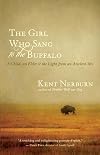
Not since Black Elk Speaks: Being the Life Story of a Holy Man of the Oglala Sioux by John G. Neihardt have I read a book that touched my heart in this way. Many years ago, why my children were young, I brought home a copy of Black Elk Speaks that I had found in a second hand books store and it wouldn't let me leave without it. Since that days, so long ago we have probably purchased six other copies, one for each of my children, and two or more for lending.. one to stay home. I have lost show more count. This will join the battered copy of that book on my shelf, the one where the books live that will always stay with me. This book, The Girl Who Sang to the Buffalo: A Child, an Elder, and the Light from an Ancient Sky by Kent Nerburn is a life changer, a spirit toucher, a heartbreaker. This is a story, and it is a truth.
Why do these books touch me is so strong a way? I don't know, as in this lifetime, I have not walked in the shoes of any but a white woman, but somewhere in the past, in a lifetime long ago, I think I knew. For this reason, I think I can also hear the ring of truth in words spoken, or written. I found this book waiting patiently for me on a list of Vine books, and I knew it had to be mine.
You will read the story of Yellow Bird, her family and her her ancestors, and her gifts. This is a story of how gifts are passed, how elders remember and why. This is a story of the world the way it was meant to be, not what we have twisted it into.
Recommended. show less
Why do these books touch me is so strong a way? I don't know, as in this lifetime, I have not walked in the shoes of any but a white woman, but somewhere in the past, in a lifetime long ago, I think I knew. For this reason, I think I can also hear the ring of truth in words spoken, or written. I found this book waiting patiently for me on a list of Vine books, and I knew it had to be mine.
You will read the story of Yellow Bird, her family and her her ancestors, and her gifts. This is a story of how gifts are passed, how elders remember and why. This is a story of the world the way it was meant to be, not what we have twisted it into.
Recommended. show less
***YOU (yes, you!) SHOULD READ THIS BOOK!***
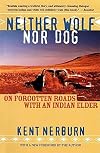
"Dan*," a Native American elder, had his granddaughter contact Kent Nerburn, a writer who had worked with a group of Native students to preserve their grandparents' stories. Dan had been trying to write his story (including being taken away from his family and forced to attend an Indian school, an unsuccessful marriage to a white woman, and the death of his young-adult son) and his truth, but he needed help. He chose "Nerburn" (which is what Dan show more and his friend "Grover" call the author throughout the book) to make his story sound better, but this book ended up being the story of writing the book. Initially, Nerburn interviewed Dan at his home, often with Grover present, but the bulk of the book is about the road trip the three men took (basically against Nerburn's will), which helped Dan to illustrate his points.
On protecting native culture:
"Now don't get me wrong on this. But you've got to understand that we are still at war. It's not like we are fighting against America or the American people, but we are still defending who we are. It's war to us, because if we don't fight for who we are we will be destroyed. We'll be destroyed by false ideas and phony Indians and all the good intentions of people who think they are helping us by making us act like white people." (This is followed by an interesting/amusing -- because it's so true -- tangent about how so many white people claim to have a Cherokee grandmother and the repercussions of that story.)
On preserving native history:
"Then later, when you tried to divide our land up and give us little pieces, you tried to make us have last names and marriage certificates like white people. You wrote it all down. Some of our people thought it was so stupid they would give you different names every time they talked to you. So you got everything confused and wrong. By the end, everything was wrong and a lie. But it was all written down, so you said it was true and you taught it to your children like it was true. That's what your white history did for us."
"But it did something worse, too. It took away all of our history from before the time you came here to our country. It's like before you came here, we didn't exist. You won't believe anything we tell you unless you can dig up some pot or an arrowhead. Then you put it in a lot of machines and put chemicals on it so that you can know when it was made, and then you say, 'Now we know about it. Now we know what happened.' Then the man who did the tests writes down what he found out and other people write down what they think about what he found out, and you call that history." (This is followed by another fascinating tangent about how native oral history shares many similarities with biblical history, but one is considered "myth" while the other is considered "truth.")
I'd never heard of this book until two of my book group ladies said they were going to see the film adaptation. (Obviously, this was months ago, but this title took a while to work its way up my to-read list.) Now I'm really curious to see how the film compares, but this is definitely a book that EVERYONE SHOULD READ. Even if you're not American or North American, there's a very good chance that you interact with an indigenous group whose story and culture have been taken from them. READ THIS!
*not his real name as he wished to remain anonymous show less
"Dan*," a Native American elder, had his granddaughter contact Kent Nerburn, a writer who had worked with a group of Native students to preserve their grandparents' stories. Dan had been trying to write his story (including being taken away from his family and forced to attend an Indian school, an unsuccessful marriage to a white woman, and the death of his young-adult son) and his truth, but he needed help. He chose "Nerburn" (which is what Dan show more and his friend "Grover" call the author throughout the book) to make his story sound better, but this book ended up being the story of writing the book. Initially, Nerburn interviewed Dan at his home, often with Grover present, but the bulk of the book is about the road trip the three men took (basically against Nerburn's will), which helped Dan to illustrate his points.
On protecting native culture:
"Now don't get me wrong on this. But you've got to understand that we are still at war. It's not like we are fighting against America or the American people, but we are still defending who we are. It's war to us, because if we don't fight for who we are we will be destroyed. We'll be destroyed by false ideas and phony Indians and all the good intentions of people who think they are helping us by making us act like white people." (This is followed by an interesting/amusing -- because it's so true -- tangent about how so many white people claim to have a Cherokee grandmother and the repercussions of that story.)
On preserving native history:
"Then later, when you tried to divide our land up and give us little pieces, you tried to make us have last names and marriage certificates like white people. You wrote it all down. Some of our people thought it was so stupid they would give you different names every time they talked to you. So you got everything confused and wrong. By the end, everything was wrong and a lie. But it was all written down, so you said it was true and you taught it to your children like it was true. That's what your white history did for us."
"But it did something worse, too. It took away all of our history from before the time you came here to our country. It's like before you came here, we didn't exist. You won't believe anything we tell you unless you can dig up some pot or an arrowhead. Then you put it in a lot of machines and put chemicals on it so that you can know when it was made, and then you say, 'Now we know about it. Now we know what happened.' Then the man who did the tests writes down what he found out and other people write down what they think about what he found out, and you call that history." (This is followed by another fascinating tangent about how native oral history shares many similarities with biblical history, but one is considered "myth" while the other is considered "truth.")
I'd never heard of this book until two of my book group ladies said they were going to see the film adaptation. (Obviously, this was months ago, but this title took a while to work its way up my to-read list.) Now I'm really curious to see how the film compares, but this is definitely a book that EVERYONE SHOULD READ. Even if you're not American or North American, there's a very good chance that you interact with an indigenous group whose story and culture have been taken from them. READ THIS!
*not his real name as he wished to remain anonymous show less

Nerburn receives an unexpected call: "My grandpa wants to talk to you." It's unclear if that's to criticize Nerburn's earlier books on the Red Lake Ojibwe or to discuss something else, and no further detail is forthcoming. Nerburn reluctantly agrees to meet. So begins an uncertain and at times frustrating relationship between Nerburn and Dan, an Oglala Lakota wanting a book ghostwritten for him.
Dan isn't writing his life story or even his memories. He's not dictating sacred teachings. He show more wants written down what he's got in his head. "I watch people. White people and Indian people. I see things. I want you to help me write it down right." [17]
Neither Wolf Nor Dog is partly the book Dan requests but mostly it's an account of writing that book, with the result that much of what Dan has in mind doesn't make it into the text. Rather than a postmodern narrative trick, though, Nerburn's sincere grappling with Dan's request, figuring out how to honour it while avoiding the trap of romanticizing Dan as a holy man or noble red man, becomes the best means for fulfilling his promise. The resulting irony not so much literary -- deliberately crafted -- as one arrived at unintentionally, unforeseen. (Dan's burned shoebox of notes and jottings elegantly confirms this.)
Nerburn's achievement is significant, remarkable enough that almost unnoticed is the fact that one book is lost in order to better pursue another. Some of the one is here, necessarily, in order to tell of its abandonment. But it is that abandonment which is told here, a story of how Dan came to ideas, and then how Dan could share those ideas with a white man, and how a white man could understand those ideas. The ideas themselves (that first book!) become less important than their transmission, from one man to another, across cultures. So not a book on Oglala culture, nor an Oglala critique of U.S. mainstream culture, but a book on how the cultures interact.
I found the tone at times exasperating, its solemnity or gravitas too self-conscious and earnest. Nerburn makes gaffes almost inconceivable for someone who spent so much time among Ojibwe and other Native Americans. And yet, I must acknowledge for the book to work, Nerburn had to act, speak, think like a white man, even while wrestling with our sins. Perhaps, after all, he dutifully described the sharp elbows, the shame and emotion of cultures awkwardly bumping and crowding, deliberately included these embarassments because it's inevitable in genuine exchange. A model for our times.
//
Reference point: Nerburn's account appears to illustrate a case study of nonviolent communication, though Nerburn doesn't specifically cite Marshall Rosenberg (even assuming he's aware of him). The book also avoids performative self-contradiction. show less
Dan isn't writing his life story or even his memories. He's not dictating sacred teachings. He show more wants written down what he's got in his head. "I watch people. White people and Indian people. I see things. I want you to help me write it down right." [17]
Neither Wolf Nor Dog is partly the book Dan requests but mostly it's an account of writing that book, with the result that much of what Dan has in mind doesn't make it into the text. Rather than a postmodern narrative trick, though, Nerburn's sincere grappling with Dan's request, figuring out how to honour it while avoiding the trap of romanticizing Dan as a holy man or noble red man, becomes the best means for fulfilling his promise. The resulting irony not so much literary -- deliberately crafted -- as one arrived at unintentionally, unforeseen. (Dan's burned shoebox of notes and jottings elegantly confirms this.)
Nerburn's achievement is significant, remarkable enough that almost unnoticed is the fact that one book is lost in order to better pursue another. Some of the one is here, necessarily, in order to tell of its abandonment. But it is that abandonment which is told here, a story of how Dan came to ideas, and then how Dan could share those ideas with a white man, and how a white man could understand those ideas. The ideas themselves (that first book!) become less important than their transmission, from one man to another, across cultures. So not a book on Oglala culture, nor an Oglala critique of U.S. mainstream culture, but a book on how the cultures interact.
I found the tone at times exasperating, its solemnity or gravitas too self-conscious and earnest. Nerburn makes gaffes almost inconceivable for someone who spent so much time among Ojibwe and other Native Americans. And yet, I must acknowledge for the book to work, Nerburn had to act, speak, think like a white man, even while wrestling with our sins. Perhaps, after all, he dutifully described the sharp elbows, the shame and emotion of cultures awkwardly bumping and crowding, deliberately included these embarassments because it's inevitable in genuine exchange. A model for our times.
//
Reference point: Nerburn's account appears to illustrate a case study of nonviolent communication, though Nerburn doesn't specifically cite Marshall Rosenberg (even assuming he's aware of him). The book also avoids performative self-contradiction. show less

Nerburn's theme of a daily journey is echoed in this arrangement of his essays, grouped into sections and stylised first Dawn's Awakening, then Morning Promise and Day's Journey, then Twilight's Veil and finally ending with Night's Embrace. The first and last sections include one essay, the remaining sections no more than four, and the typical essay runs about 10 pages. Each takes an everyday encounter as its departure point, musing on the nature of human interaction and possible glimpses of show more God in those and similar moments, and builds from them a structure that is meant, I think, to represent an experience common to all of us, and yet all too often ignored or missed. And it succeeds, for the most part, though not particularly forcefully.
"The Boy Who Wouldn't Leave" is an early essay in Nerburn's collection. Nerburn describes a very brief encounter with a boy from his neighbourhood, circling on his bike while Nerburn is reading on a park bench, increasingly agitated with the mute but quite evident deliberateness of the boy's antics, until Nerburn looks up and says hello. What follows is touching without being overly sentimental; and Nerburn's reflections on his own children, their relationship with him and his wife, as well as his speculation on the boy's life (seen only from outside), is an effective entry into Nerburn's argument that our higher values are always on display, if only we pay attention.
Most of the other essays don't quite get there. I think I see what they're driving at, and can admire their separate efforts to wrestle with Truth as well as the specific scenes Nerburn selects as a means of illustrating those truths. But too often, it's a formal, almost writerly recognition: the prose itself doesn't pull it off. Rather, it reveals the architecture, the theme, the principle around which the essay is crafted (without ever using those terms), as though a curtain is pulled back while Nerburn is busy at his desk. What is wanting, I think, is for the curtain to fall back into place, and the essay to put on display its piece of theater, its vignette, but for me that doesn't happen. Partly this results from Nerburn's tendency to tell, not show: most obvious in the essay "The Visit", or perhaps "Two Old Men". Here's a passage from the latter, describing Nerburn's mentor, and contrasting him with an elderly couple with whom Nerburn is also friendly:
The other friends who were at dinner are wonderful historians. But they teach history; he embodies it. The passage of time is etched in his face and his memory, and is part of the fabric of his life experience. To understand his past is to understand America. Listening to him is to gain an insight into our world that can be attained in no other way. [84]
Descriptively put, and I have no doubt this characterization is true for Nerburn, but he offers no further anecdote or scene for me to see any of the man's experience, to gain insight from it, to draw any parallels to our national character or destiny, or even to know just how the man's face and memory might reflect specific experiences. And so Nerburn undercuts his own essay, as though I'm reading entries from a diary not intended for anyone but himself. The personal conviction comes through, but the source of that conviction is absent. show less
"The Boy Who Wouldn't Leave" is an early essay in Nerburn's collection. Nerburn describes a very brief encounter with a boy from his neighbourhood, circling on his bike while Nerburn is reading on a park bench, increasingly agitated with the mute but quite evident deliberateness of the boy's antics, until Nerburn looks up and says hello. What follows is touching without being overly sentimental; and Nerburn's reflections on his own children, their relationship with him and his wife, as well as his speculation on the boy's life (seen only from outside), is an effective entry into Nerburn's argument that our higher values are always on display, if only we pay attention.
Most of the other essays don't quite get there. I think I see what they're driving at, and can admire their separate efforts to wrestle with Truth as well as the specific scenes Nerburn selects as a means of illustrating those truths. But too often, it's a formal, almost writerly recognition: the prose itself doesn't pull it off. Rather, it reveals the architecture, the theme, the principle around which the essay is crafted (without ever using those terms), as though a curtain is pulled back while Nerburn is busy at his desk. What is wanting, I think, is for the curtain to fall back into place, and the essay to put on display its piece of theater, its vignette, but for me that doesn't happen. Partly this results from Nerburn's tendency to tell, not show: most obvious in the essay "The Visit", or perhaps "Two Old Men". Here's a passage from the latter, describing Nerburn's mentor, and contrasting him with an elderly couple with whom Nerburn is also friendly:
The other friends who were at dinner are wonderful historians. But they teach history; he embodies it. The passage of time is etched in his face and his memory, and is part of the fabric of his life experience. To understand his past is to understand America. Listening to him is to gain an insight into our world that can be attained in no other way. [84]
Descriptively put, and I have no doubt this characterization is true for Nerburn, but he offers no further anecdote or scene for me to see any of the man's experience, to gain insight from it, to draw any parallels to our national character or destiny, or even to know just how the man's face and memory might reflect specific experiences. And so Nerburn undercuts his own essay, as though I'm reading entries from a diary not intended for anyone but himself. The personal conviction comes through, but the source of that conviction is absent. show less
Lists
Awards

You May Also Like


Associated Authors
Statistics
- Works
- 30
- Also by
- 4
- Members
- 2,559
- Popularity
- #10,034
- Rating
- 4.2
- Reviews
- 58
- ISBNs
- 90
- Languages
- 6
- Favorited
- 2