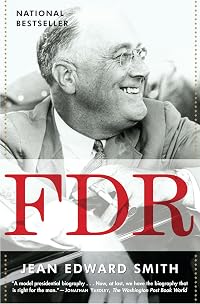
FDR
by Jean Edward Smith
On This Page
Description
Acclaimed biographer Smith combines contemporary scholarship and a broad range of primary source material to narrate the epic life of the president who, more than any other individual, changed the relationship between the American people and their government. We see how Roosevelt's energy, intellect, and personal magnetism permitted him to master countless challenges. Smith recounts FDR's battles with polio and physical disability, and how they helped forge the resolve to surmount the show more turmoil of the Great Depression and the wartime threats. FDR's private life is also depicted, with close attention paid to the four women who molded his personality and helped to inform his worldview: His mother; his wife, Eleanor; Lucy Mercer, the great love of his life; and Missy LeHand, his secretary, companion, and confidante. Smith also tackles the failures and miscues of Roosevelt's public career. Smith gives us a clear picture of how this Knickerbocker aristocrat, a man who never had to depend on a paycheck, became the common man's president.--From publisher description. show lessTags
Recommendations
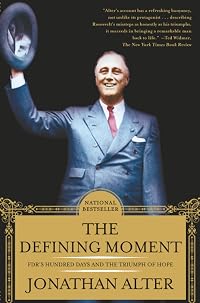

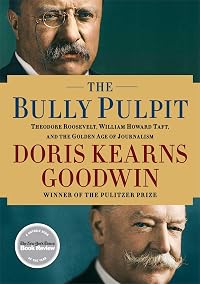

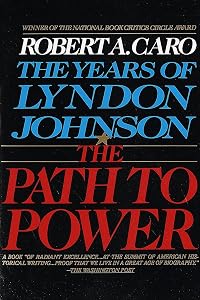
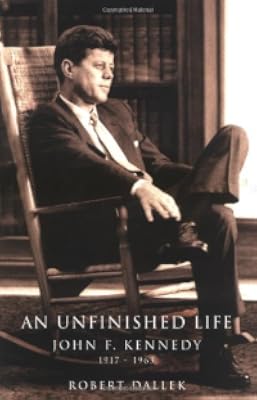





Member Reviews
Jean Edward Smith's biography of FDR is one of the most complete and compelling reads on the life of one of the greatest presidents of the United States. Largely chronological, Smith's biography keeps the different aspects of FDR's life in perspective. This is no easy task given that the time period in which FDR was in power was the most tumultuous in living memory. Where some biographies of FDR get understandably pulled in the direction of any number of the supporting characters, many of whom could and do have biographies in their own right, Smith maintains the steady path of telling FDR's own story.
As impenetrable as FDR was and remains to his contemporaries and historians, Smith ads light touches of personal insights into the private show more life of a political master. Admired for his stoicism in the face of his personal trauma of paralysis, we see rare occasions where FDR lets his guard down such as upon the death of his doting mother Sara and his leaving a large portion of his estate in his will to his secretary Missy LeHand.
While Smith pulls no punches in looking at FDR's numerous errors, such as the court packing fiasco and the unconstitutional internment of Japanese Americans, he tells FDR's story in such a way that it is much easier to consider the whole instead of the errors isolated in and of themselves and to judge him accordingly. For example, his often criticized lack of response to the genocide of the Jews of Europe was clearly not a lack of response or concern on FDR's part but a real inability to do much about it with military means once the truth became known. We see FDR's health failing while he simultaneously runs international affairs in the midst of the worst conflict of the 20th Century as well as running for reelection and keeping an eye on domestic issues.
Smith does a tremendous service for FDR's legacy in helping us all to understand more thoroughly the great leadership and the great sacrifice that FDR made. In a fitting final tribute at the end of this fantastic biography, Smith quotes Senator Robert Taft who sums up best the life of FDR "He dies a hero of the war, for he literally worked himself to death in the service of the American people." show less
As impenetrable as FDR was and remains to his contemporaries and historians, Smith ads light touches of personal insights into the private show more life of a political master. Admired for his stoicism in the face of his personal trauma of paralysis, we see rare occasions where FDR lets his guard down such as upon the death of his doting mother Sara and his leaving a large portion of his estate in his will to his secretary Missy LeHand.
While Smith pulls no punches in looking at FDR's numerous errors, such as the court packing fiasco and the unconstitutional internment of Japanese Americans, he tells FDR's story in such a way that it is much easier to consider the whole instead of the errors isolated in and of themselves and to judge him accordingly. For example, his often criticized lack of response to the genocide of the Jews of Europe was clearly not a lack of response or concern on FDR's part but a real inability to do much about it with military means once the truth became known. We see FDR's health failing while he simultaneously runs international affairs in the midst of the worst conflict of the 20th Century as well as running for reelection and keeping an eye on domestic issues.
Smith does a tremendous service for FDR's legacy in helping us all to understand more thoroughly the great leadership and the great sacrifice that FDR made. In a fitting final tribute at the end of this fantastic biography, Smith quotes Senator Robert Taft who sums up best the life of FDR "He dies a hero of the war, for he literally worked himself to death in the service of the American people." show less
With all the recent economic distress confronting the nation, I thought it might be interesting to read an FDR biography. Jean Edward Smith's FDR is a great addition the FDR scholarship. Smith clearly has a soft spot in his heart for FDR but he takes great pains to show Roosevelt warts and all. He tastefully relates FDR's extramarital affairs and his estrangement from Eleanor. He portrays the president as a somewhat shallow, superficial man yet also capable of greatness and deep understanding of human motivation. Reading the book, I finished ambivalent about the man FDR.
In terms of policy, Smith again presents a balanced view. He rightly rejects the current argument that the New Deal did nothing to combat the Depression (unemployment in show more fact fell dramatically). He also shows how when FDR trimmed spending under some pressure from conservative critics, the economy tanked and caused the 1937 recession. Roosevelt's lack of interest in racial justice comes across as well - he was no segregationist, but he clearly didn't fight it either. There were too many Southerners in his coalition to make this an effective political strategy. For a man with as profound a political sense as Roosevelt, it just didn't make sense to him.
I think the later sections of the book -- those dealing with WWII -- are a bit flat. That may be because that particular topic is too well-covered to make any impact on my understanding of the period. Smith did, however, covey the sense that Roosevelt had little choice but to accommodate Stalin. The Cold War argument that he caved in at Yalta just doesn't match reality.
As FDR's legacy comes under increasing attack by conservative historians, politicians, and pundits, Jean Edward Smith's FDR serves as a balanced and scholarly corrective to some of the polemical screeds that serve as scholarship. show less
In terms of policy, Smith again presents a balanced view. He rightly rejects the current argument that the New Deal did nothing to combat the Depression (unemployment in show more fact fell dramatically). He also shows how when FDR trimmed spending under some pressure from conservative critics, the economy tanked and caused the 1937 recession. Roosevelt's lack of interest in racial justice comes across as well - he was no segregationist, but he clearly didn't fight it either. There were too many Southerners in his coalition to make this an effective political strategy. For a man with as profound a political sense as Roosevelt, it just didn't make sense to him.
I think the later sections of the book -- those dealing with WWII -- are a bit flat. That may be because that particular topic is too well-covered to make any impact on my understanding of the period. Smith did, however, covey the sense that Roosevelt had little choice but to accommodate Stalin. The Cold War argument that he caved in at Yalta just doesn't match reality.
As FDR's legacy comes under increasing attack by conservative historians, politicians, and pundits, Jean Edward Smith's FDR serves as a balanced and scholarly corrective to some of the polemical screeds that serve as scholarship. show less
Listened to the audiobook for most of it on 1.2-1.5x speed.
Good beginning to end biography of FDR. Though it literally just ends when he dies. No wrap up or epilogue to tie things up or anything.
I found some of the events covered to be more of a history play by play than giving much insight into what Roosevelt was thinking or why he was doing something. The first time I thought that was during the court packing incident. Later in during the war some of it played the same way. I don't know if this is just because we don't know what he was thinking or if it's because the author was trying to cover so much in one book.
My other nitpick with the book was the early focus on Eleanor and then pretty much abandoning what she is doing. In the show more first half of the book there are at least a couple of chapters devoted to her and what she is doing, FDR builds a house for Eleanor and two of her friends. Later in the book she isn't mentioned much. It is a book about FDR and Eleanor and him were living separate lives at that point so I suppose it makes some sense?
Overall I liked this book and it gave me insight into this vast span of time that FDR was president, the New Deal, the preparations for WWII and our actually entry into the war. show less
Good beginning to end biography of FDR. Though it literally just ends when he dies. No wrap up or epilogue to tie things up or anything.
I found some of the events covered to be more of a history play by play than giving much insight into what Roosevelt was thinking or why he was doing something. The first time I thought that was during the court packing incident. Later in during the war some of it played the same way. I don't know if this is just because we don't know what he was thinking or if it's because the author was trying to cover so much in one book.
My other nitpick with the book was the early focus on Eleanor and then pretty much abandoning what she is doing. In the show more first half of the book there are at least a couple of chapters devoted to her and what she is doing, FDR builds a house for Eleanor and two of her friends. Later in the book she isn't mentioned much. It is a book about FDR and Eleanor and him were living separate lives at that point so I suppose it makes some sense?
Overall I liked this book and it gave me insight into this vast span of time that FDR was president, the New Deal, the preparations for WWII and our actually entry into the war. show less
One of the great challenges of writing a biography of America's 32nd president is encapsulating such a challenging character, complex life, and momentous career into the pages of a single volume. Doing so successfully requires incorporating his patrician background and upbringing, his marriage to one of the most remarkable women in American history, his early career in state and national politics, his affliction and adaptation to polio, his successful ascent to the presidency, and his management of two of the greatest challenges the United States and the world has ever faced. Though many have tried, few have pulled it off as well as Jean Edward Smith. A longtime political scientist and biographer, he draws upon both an enormous show more documentary record and the numerous studies that have been published to describe Franklin Roosevelt's life and achievements within the context of a changing America. Though he uncovers little that s new, he examines it with a critical eye that discovers quite a few insights missed by previous chroniclers. Thanks in no small measure to this, Smith's book stands among the finest biographies of Franklin Roosevelt ever written, one that can be read with profit both by the experienced reader and by anyone seeking a thorough yet accessible account of Franklin Roosevelt and his presidency. show less
"The literature on the Roosevelt era is immense," Jean Edward Smith notes in his preface to "FDR," "there is little that has not been said, somewhere, about the president." So why another biography? Because "Roosevelt himself has become a mythic figure, looming indistinctly out of the mist of the past."
Mr. Smith aims to write not only history but also Plutarchian biography:
The "children's hour" every evening when the president mixed martinis for his guests, the poker games with cabinet cronies, the weekly sojourns on the presidential yacht Potomac, and his personal relations with family and friends warrant extended treatment. Roosevelt enjoyed life to the full, and his unquenchable optimism never faded.
The biographer builds such an show more intricate network of personal detail that toward the end of the war, when President Franklin Roosevelt asks Eleanor to mix the martinis, we know Roosevelt is about to die. Anecdotes in this biography unmask FDR the man, with his shrewd ability to size up subordinates.
When the preening Douglas MacArthur kept Roosevelt waiting during the President's trip to Pearl Harbor, FDR mildly asked the senior military advisers, "Where's Douglas?" MacArthur then arrived seated in a very long, open touring car with sirens screaming and a motorcycle phalanx. "Hello, Doug," Roosevelt said. "What are you doing with that leather jacket on? It's darn hot today."
Every Roosevelt biographer has to come to terms with how FDR's polio affected the man and his policies. As Mr. Smith notes, for the last 23 years of his life FDR could not stand unassisted, let alone walk even a brief distance without the aid of heavy leg braces. How is it that this "Hudson River aristocrat, a son of privilege who never depended on a paycheck, became the champion of the common man"? The conventional explanation, Mr. Smith notes, is that overcoming personal adversity gave Roosevelt "insight into the nature of suffering." True enough, but that analysis hardly explains the specific nature of FDR's politics. Mr. Smith contends that the decisive influence was FDR's exposure to the "brutal reality of rural poverty" in Warm Springs, GA., an experience that prompted him to help that third of the nation that was "ill-housed, ill-clad, ill-nourished," to quote one of his most famous speeches.
It seems to me after reading Mr. Smith's deeply moving biography that there is yet another reason for FDR's empathy for the less fortunate: Here was a man with a powerful physique (massive shoulders, arms, and chest) who could not propel himself upward or forward, and who risked falling as he stood to greet world figures such as Stalin and Churchill. He expended more energy getting up than most people did in an entire day. He had the money to disguise his disability, to create the illusion that he could walk. But what of most other people who did not have his resources? That was the question that dominated Roosevelt's politics and the reason he believed government had a role in providing equal opportunity for all.
Mr. Smith ranks Roosevelt with Presidents Washington and Lincoln as among this country's greatest leaders. FDR's creation of programs such as social security and the G.I. Bill have ensured his high position among presidents. But Roosevelt was also a great wartime leader. Mr. Smith credits FDR's eight years as second-in-command in the Navy Department during the Wilson administration for FDR's understanding of military organization, allowing him to make key decisions quickly and effectively. Better yet, he had taken the measure of figures such as George Marshall, Dwight Eisenhower, and Douglas MacArthur. By the time of the Pearl Harbor attack, FDR knew that these three men were indispensable, even though many other commanders outranked Marshall and Eisenhower.
Although FDR's greatness is an indisputable theme in Mr. Smith's book, this is no hagiography. If FDR did not invite the attack on Pearl Harbor, he certainly neglected the Pacific theater and pursued policies that, in retrospect, made the Japanese attack all too feasible, Mr. Smith argues. And about FDR's court packing scheme — his attempt to add members to a recalcitrant Supreme Court that declared many New Deal measures unconstitutional — Mr. Smith is scathing. The issue was not a reactionary court, not a group of nine old men not up to the job, but a power-grab by a president who had overreached himself. Similarly, Mr. Smith is in no mood to exonerate FDR from the deplorable decision to intern Japanese residents during wartime.
FDR's flaws notwithstanding, the epigraph to Mr. Smith's biography, taken from Governor Cuomo's keynote address to the 1984 Democratic National Convention, beautifully captures the greatness of the man and the leader: "He lifted himself from his wheelchair to lift this nation from its knees." show less
Mr. Smith aims to write not only history but also Plutarchian biography:
The "children's hour" every evening when the president mixed martinis for his guests, the poker games with cabinet cronies, the weekly sojourns on the presidential yacht Potomac, and his personal relations with family and friends warrant extended treatment. Roosevelt enjoyed life to the full, and his unquenchable optimism never faded.
The biographer builds such an show more intricate network of personal detail that toward the end of the war, when President Franklin Roosevelt asks Eleanor to mix the martinis, we know Roosevelt is about to die. Anecdotes in this biography unmask FDR the man, with his shrewd ability to size up subordinates.
When the preening Douglas MacArthur kept Roosevelt waiting during the President's trip to Pearl Harbor, FDR mildly asked the senior military advisers, "Where's Douglas?" MacArthur then arrived seated in a very long, open touring car with sirens screaming and a motorcycle phalanx. "Hello, Doug," Roosevelt said. "What are you doing with that leather jacket on? It's darn hot today."
Every Roosevelt biographer has to come to terms with how FDR's polio affected the man and his policies. As Mr. Smith notes, for the last 23 years of his life FDR could not stand unassisted, let alone walk even a brief distance without the aid of heavy leg braces. How is it that this "Hudson River aristocrat, a son of privilege who never depended on a paycheck, became the champion of the common man"? The conventional explanation, Mr. Smith notes, is that overcoming personal adversity gave Roosevelt "insight into the nature of suffering." True enough, but that analysis hardly explains the specific nature of FDR's politics. Mr. Smith contends that the decisive influence was FDR's exposure to the "brutal reality of rural poverty" in Warm Springs, GA., an experience that prompted him to help that third of the nation that was "ill-housed, ill-clad, ill-nourished," to quote one of his most famous speeches.
It seems to me after reading Mr. Smith's deeply moving biography that there is yet another reason for FDR's empathy for the less fortunate: Here was a man with a powerful physique (massive shoulders, arms, and chest) who could not propel himself upward or forward, and who risked falling as he stood to greet world figures such as Stalin and Churchill. He expended more energy getting up than most people did in an entire day. He had the money to disguise his disability, to create the illusion that he could walk. But what of most other people who did not have his resources? That was the question that dominated Roosevelt's politics and the reason he believed government had a role in providing equal opportunity for all.
Mr. Smith ranks Roosevelt with Presidents Washington and Lincoln as among this country's greatest leaders. FDR's creation of programs such as social security and the G.I. Bill have ensured his high position among presidents. But Roosevelt was also a great wartime leader. Mr. Smith credits FDR's eight years as second-in-command in the Navy Department during the Wilson administration for FDR's understanding of military organization, allowing him to make key decisions quickly and effectively. Better yet, he had taken the measure of figures such as George Marshall, Dwight Eisenhower, and Douglas MacArthur. By the time of the Pearl Harbor attack, FDR knew that these three men were indispensable, even though many other commanders outranked Marshall and Eisenhower.
Although FDR's greatness is an indisputable theme in Mr. Smith's book, this is no hagiography. If FDR did not invite the attack on Pearl Harbor, he certainly neglected the Pacific theater and pursued policies that, in retrospect, made the Japanese attack all too feasible, Mr. Smith argues. And about FDR's court packing scheme — his attempt to add members to a recalcitrant Supreme Court that declared many New Deal measures unconstitutional — Mr. Smith is scathing. The issue was not a reactionary court, not a group of nine old men not up to the job, but a power-grab by a president who had overreached himself. Similarly, Mr. Smith is in no mood to exonerate FDR from the deplorable decision to intern Japanese residents during wartime.
FDR's flaws notwithstanding, the epigraph to Mr. Smith's biography, taken from Governor Cuomo's keynote address to the 1984 Democratic National Convention, beautifully captures the greatness of the man and the leader: "He lifted himself from his wheelchair to lift this nation from its knees." show less
He is the man who served in office the longest and once the most Presidential elections in history, he is most identifiable by his initials. FDR by Jean Edward Smith shows the life of the 32nd President of the United States from his birth in high society New York to his death just months before total victory in World War II.
From the outset Smith makes the reader aware Franklin Delano Roosevelt is one of the most written about of Presidents thus giving an indication that he will not do anything new but give a new generation of readers a straightforward look into Roosevelt’s life. Three-quarters of the book is Smith’s text with the final quarter being notes and an index, but during the biography proper Smith’s footnotes are in-depth show more and as interesting as what is in the text proper. Smith devotes a little over a third of the biography to Roosevelt’s life before his run for the 1932 Democratic nomination thus transitioning to focusing on the final 13 years of Roosevelt’s life. During that first third, Smith not only covers Roosevelt’s life but also foreshadows how his early political career in New York would later affect his entrance to Washington politics as Assistant Secretary of State and his later New York career as Governor. While in Washington Smith shows how Roosevelt learned the ways of the city that would come in handing once he assumed the Presidency. Once on the national stage, Smith gives the political backstories to campaigns and later to battles for legislation as well as the overall atmosphere of the Great Depression of the time. Yet while Smith devotes most of the biography to Roosevelt in the White House there is no really in-depthness like some books that devote themselves entirely to an individual’s Presidency and this is telling once the U.S. enters World War II as Smith essentially says ‘FDR did not micromanage the military once he made decision to an objective and left the generals do their thing’ while barely covering his relationship with Churchill.
FDR gives a detailed—but not in-depth—look at the life of the longest-serving President in the history of the United States. Jean Edward Smith writes in an engaging style for a very readable book but with wonderful footnotes that adds to the text. For a general biography this is a must read, but those looking for political or military details this is not. show less
From the outset Smith makes the reader aware Franklin Delano Roosevelt is one of the most written about of Presidents thus giving an indication that he will not do anything new but give a new generation of readers a straightforward look into Roosevelt’s life. Three-quarters of the book is Smith’s text with the final quarter being notes and an index, but during the biography proper Smith’s footnotes are in-depth show more and as interesting as what is in the text proper. Smith devotes a little over a third of the biography to Roosevelt’s life before his run for the 1932 Democratic nomination thus transitioning to focusing on the final 13 years of Roosevelt’s life. During that first third, Smith not only covers Roosevelt’s life but also foreshadows how his early political career in New York would later affect his entrance to Washington politics as Assistant Secretary of State and his later New York career as Governor. While in Washington Smith shows how Roosevelt learned the ways of the city that would come in handing once he assumed the Presidency. Once on the national stage, Smith gives the political backstories to campaigns and later to battles for legislation as well as the overall atmosphere of the Great Depression of the time. Yet while Smith devotes most of the biography to Roosevelt in the White House there is no really in-depthness like some books that devote themselves entirely to an individual’s Presidency and this is telling once the U.S. enters World War II as Smith essentially says ‘FDR did not micromanage the military once he made decision to an objective and left the generals do their thing’ while barely covering his relationship with Churchill.
FDR gives a detailed—but not in-depth—look at the life of the longest-serving President in the history of the United States. Jean Edward Smith writes in an engaging style for a very readable book but with wonderful footnotes that adds to the text. For a general biography this is a must read, but those looking for political or military details this is not. show less
Excellent one volume book on FDR by Smith. The book demonstrates why he is considered one of our top five presidents. Medicare, Social Security, the GI Bill, the WPA, the CCC, etc. are his accomplishments. He also chose the leaders: George Marshall, Stimson, Leahy, Eisenhower, etc. that won WW II. He gave the USA hope during the Great Depression with his programs and optimism. Finally, he saved the UK with his Lend Lease and other programs (overcoming the forces of isolationism like the America First Party). He overcame polio to be an effective leader. He was not without faults. He raised taxes in 1937 which threw the country back into a recession. He lost almost his entire political clout by trying to pack the Supreme Court. He was show more vindictive to his foes especially Herbert Hoover and Lindbergh. He imprisoned the American Japanese during WW II. He did nothing on civil rights. He was too sick to be an effective president after 1944. All in all, Smith does make a strong case for FDR still being at the top of the pantheon with Lincoln and Washington. To be a great leader you have to face an overcome a great crisis. FDR had to face two of them: the Great Depression and WW II. He did not conquer the Great Depression but he did alleviate many of its worse aspects. He did not win WW II but as I said he helped save the UK and he was skilled enough to appoint the right leaders like Lincoln appointed Grant. The book does end without an epilogue or a summary (which is a bit strange). He died. The end. show less
Members
- Recently Added By
Published Reviews
ThingScore 100
Altogether, an exemplary and highly readable work that ably explains why FDR merits continued honor.
added by Richardrobert
Lists

The Presidents
42 works; 2 members

Obama Reads
181 works; 3 members

Books recommended by Barack Obama
295 works; 28 members

Best Biographies of U.S. Presidents
61 works; 6 members
Author Information

11 Works 3,345 Members
Jean Edward Smith was born on October 13, 1932. He received an A.B. from Princeton University in 1954. He then went on to serve in the military from 1954-1961. In 1964, he obtained his Ph.D. from the Department of Public Law and Government of Columbia University. He is a well known biographer of several works inlcuding those featuring Franklin D. show more Rooselvelt and Ulysses S. Grant. He is the John Marshall Professor of Political Science at Marshall University and professor emeritus at the University of Toronto. In 2002 Jean Smith was a finalist for the Pulitzer Prize for Biography or Autobiography and in 2008 he won the Francis Parkman Prize. His title's inlcude: Bush, Eisenhower in War and Peace, FDR, Grant, and The Face of Justice: Portraits of John Marshall. (Bowker Author Biography) show less
Awards and Honors
Awards
Common Knowledge
- Canonical title
- FDR
- People/Characters
- Franklin Delano Roosevelt
- Dedication
- To the memory of my parents,
Eddyth and Jean - proud Mississippians,
devoted to Franklin Roosevelt - First words
- Three presidents dominate American history: George Washington, who founded the country; Abraham Lincoln, who preserved it; and Franklin Delano Roosevelt, who rescued it from economic collapse and then led it to victory in the... (show all) greatest war of all time. (Preface)
The Roosevelts were an old but relatively inconspicuous New York family. - Last words
- (Click to show. Warning: May contain spoilers.)Then we marched on.
- Blurbers
- Will, George F.
Classifications
- Genres
- Biography & Memoir, History, Nonfiction, General Nonfiction
- DDC/MDS
- 973.917092 — History & geography History of North America United States 1901- World Wars and Depression Era (1901-1953) Franklin Delano Roosevelt (1933-1937) New Deal, Social Security Act Standard subdivisions History, geographic treatment, biography Biography
- LCC
- E807 .S58 — History of the United States United States Twentieth century Franklin Delano Roosevelt's administrations,
- BISAC
Statistics
- Members
- 1,059
- Popularity
- 24,291
- Reviews
- 31
- Rating
- (4.32)
- Languages
- Danish, English
- Media
- Paper, Audiobook, Ebook
- ISBNs
- 7
- UPCs
- 1
- ASINs
- 3