On This Page
Description
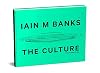
This extraordinary collection celebrates the dazzling worldbuilding of Iain M. Banks, one of the most important and influential writers in modern science fiction. Faithfully reproduced from notebooks he kept in the 1970s and 80s, these annotated original illustrations depict the ships, habitats, geography, weapons and language of Banks' Culture series of novels in incredible detail.Tags
Recommendations
















































Member Reviews
Mainstream novelists have it easy. The settings for their stories are known to most of their readers; even if they select a particularly exotic or unusual setting, they only have to describe the features that make that setting unique, because their readers will know all the other details about How The World Works through the simple expedient of actually living in that world. Not so the writers of science fiction. They have to perform the task of "world-building" to a greater or lesser degree, so that their readers will understand the setting of their stories and also so that they keep their own invented worlds' details internally consistent. Even if the 'novum', the significant scientific or technological change in the story, is simple show more and singular, the writer still has to understand its key details and how those work out in the rest of the world before even setting pen to paper or finger to keyboard. And this not only has to be internally consistent; in science fiction, it has to be in line with either science as we know it today or explicable using speculative advances in science that the future may bring us.
The late Iain M Banks wrote a series of novels and stories about 'The Culture' - a post-scarcity, galaxy-spanning society facilitated by complex artificial intelligences - Minds - that effectively run everything, and characterised by the levels of personal freedom it grants its citizens and a penchant for engineering mega-structures, from artificial ring-shaped habitats, three million kilometres in diameter - Orbitals - to mega-sized ships - General Systems Vehicles - which transport and provide homes for millions of individuals. Citizens of the Culture want for nothing and can devote their time to whatever takes their interest, even if that turns out to be nothing in particular. The Culture has been described as "fully automated luxury space communism", though it is perhaps more properly described as "anarcho-communism".
Banks wrote his first Culture novel, Consider Phlebus in 1987, although he had been writing and trying to sell science fiction since his teenage years. He was planning another Culture novel at the time of his death in 2013. In the intervening years, his Culture novels covered a vast range of topics, scenarios and situations. It therefore came as no surprise to find that he had been engaged in thinking about his world-building for many years. This book is a manifestation of that world-building. It consists of drawings Banks prepared of ships, robots ('drones'), weapons, structures and settings from the 1970s and 1980s.
These are not idle doodles. Rather, on the strength of these drawings, Banks was a capable draughtsman (although the originals were set down, albeit with care and attention to detail, on any spare paper he came across). The drawings also include calculations setting out his ships' performance and capacity parameters, the specifications for his weapons and the capabilities of his drones. Notes and comments are few and far between, though they occasionally throw light on the novels certain ships appear in or give his thoughts on the world-building process and his own reaction to what he was doing. (One such note appears next to a diagram of shift patterns on a General System Vehicle and comment that "this is verging on the obsessive - no-one has to work anyway!") Banks shows his ships to be generally featureless geometrical shapes (the novels make occasional reference to this), in contrast to the baroque designs of science fiction cover artists such as Chris Foss or Peter Jones, with ships covered in fiddly detail and sporting large numbers of windows. This is not to say that Banks did not have an eye for detail, or fought shy of depicting it; there is one rare spaceship shown with all the traditional accoutrements of the "wide-screen baroque" designs of others, which Banks describes as a "cruise ship" for "tourists", and he observes that there should be "no standard designs" but that they should "tend to the silly and/or impressive".
There are nearly 150 pages of drawings. Not all this world-building appeared in the pages of the novels, but that which we didn't see was still there, in the background of the narratives and in the novelist's head. It was this fully-formed nature of the Culture that enabled Banks to write with such assuredness. For instance, Consider Phlebas opens with a sequence where a sentient starship is escaping from an attack on its shipyard, and the very first words of the novel are "The ship didn't even have a name." It would not be until the later novels - and in particular the fourth Culture novel, Excession - that we began to understand quite how much trouble ship Minds put into selecting their names, and how off-the-wall those names could be. Yet at the very beginning of his exploration of his Culture universe, Banks already knew that when he started writing the first novel. That is serious world-building, and these drawings were an integral part of that process.
The book is a large-format, landscape, case bound volume on good art paper. My one criticism is that early announcements by the publisher suggested that Banks' essay Some Notes on The Culture, in which he talks in more detail about the Culture, its background and nature, would appear in this book. In fact, this has now been held back for another year. We have to wait a little longer to have that essay n print (although it has been available online for some time now).
Nonetheless, this is an important addition to Banks' canon and gives a fascinating insight into his creative mind. show less
The late Iain M Banks wrote a series of novels and stories about 'The Culture' - a post-scarcity, galaxy-spanning society facilitated by complex artificial intelligences - Minds - that effectively run everything, and characterised by the levels of personal freedom it grants its citizens and a penchant for engineering mega-structures, from artificial ring-shaped habitats, three million kilometres in diameter - Orbitals - to mega-sized ships - General Systems Vehicles - which transport and provide homes for millions of individuals. Citizens of the Culture want for nothing and can devote their time to whatever takes their interest, even if that turns out to be nothing in particular. The Culture has been described as "fully automated luxury space communism", though it is perhaps more properly described as "anarcho-communism".
Banks wrote his first Culture novel, Consider Phlebus in 1987, although he had been writing and trying to sell science fiction since his teenage years. He was planning another Culture novel at the time of his death in 2013. In the intervening years, his Culture novels covered a vast range of topics, scenarios and situations. It therefore came as no surprise to find that he had been engaged in thinking about his world-building for many years. This book is a manifestation of that world-building. It consists of drawings Banks prepared of ships, robots ('drones'), weapons, structures and settings from the 1970s and 1980s.
These are not idle doodles. Rather, on the strength of these drawings, Banks was a capable draughtsman (although the originals were set down, albeit with care and attention to detail, on any spare paper he came across). The drawings also include calculations setting out his ships' performance and capacity parameters, the specifications for his weapons and the capabilities of his drones. Notes and comments are few and far between, though they occasionally throw light on the novels certain ships appear in or give his thoughts on the world-building process and his own reaction to what he was doing. (One such note appears next to a diagram of shift patterns on a General System Vehicle and comment that "this is verging on the obsessive - no-one has to work anyway!") Banks shows his ships to be generally featureless geometrical shapes (the novels make occasional reference to this), in contrast to the baroque designs of science fiction cover artists such as Chris Foss or Peter Jones, with ships covered in fiddly detail and sporting large numbers of windows. This is not to say that Banks did not have an eye for detail, or fought shy of depicting it; there is one rare spaceship shown with all the traditional accoutrements of the "wide-screen baroque" designs of others, which Banks describes as a "cruise ship" for "tourists", and he observes that there should be "no standard designs" but that they should "tend to the silly and/or impressive".
There are nearly 150 pages of drawings. Not all this world-building appeared in the pages of the novels, but that which we didn't see was still there, in the background of the narratives and in the novelist's head. It was this fully-formed nature of the Culture that enabled Banks to write with such assuredness. For instance, Consider Phlebas opens with a sequence where a sentient starship is escaping from an attack on its shipyard, and the very first words of the novel are "The ship didn't even have a name." It would not be until the later novels - and in particular the fourth Culture novel, Excession - that we began to understand quite how much trouble ship Minds put into selecting their names, and how off-the-wall those names could be. Yet at the very beginning of his exploration of his Culture universe, Banks already knew that when he started writing the first novel. That is serious world-building, and these drawings were an integral part of that process.
The book is a large-format, landscape, case bound volume on good art paper. My one criticism is that early announcements by the publisher suggested that Banks' essay Some Notes on The Culture, in which he talks in more detail about the Culture, its background and nature, would appear in this book. In fact, this has now been held back for another year. We have to wait a little longer to have that essay n print (although it has been available online for some time now).
Nonetheless, this is an important addition to Banks' canon and gives a fascinating insight into his creative mind. show less
Don't get me wrong, I love all of Banks' works, but this collection reminds me of the contents of the margins in my high school note book. I personally find the content quite interesting, but I think that all the average person might see are a bunch of rather dry blueprint schematics. I think it would have been different if an actual illustrator like Stephen Biesty did the art, but it is what it is. I'd say if you are a SFRPG person who wants to game in the Cultureverse this would be a great resource. If you are a Culture fan it might be a nice to have. If you are a casual reader, probably of little interest.
There are probably people to whom this book is very exciting, but I am not one of them. The late Iain Banks was famously the author of the Culture novels, and this collects various meticulous drawings he made depicting spaceships, locations, vehicles, and weaponry from that series. The problem is that I have read just one Culture story, the novella "The State of the Art," and though I very much enjoyed it, and I have been meaning to get around to reading more Culture books, most of what was collected here utterly lacked significance. I spent less than an hour paging through it, and that was it. But if you know what these spaceships were, you would probably be very impressed!
Ratings
Members
- Recently Added By
Author Information

76+ Works 92,992 Members
Iain Banks was born in Fife in 1954 and was educated at Stirling University where he studied English Literature, Philosophy and Psychology. Banks came to widespread and controversial public note with the publication of his first novel, The Wasp Factory, in 1984. His first science fiction novel, Consider Phlebas, was published in 1987. He continued show more to write both mainstream fiction (as Iain Banks) and science fiction (as Iain M. Banks). Banks' mainstream fiction included The Wasp Factory (1984), Walking on Glass (1985), The Bridge (1986), Espedair Street (1987), Canal Dreams (1989), The Crow Road (1992), Complicity (1993), Whit (1995), A Song of Stone (1997), The Business (1999), Dead Air (2002) and The Steep Approach to Garbadale (2007). His final book, The Quarry, was released posthumously on June 20, 2013. Banks died on June 9, 2013 of terminal gall bladder cancer. (Bowker Author Biography) show less
All Editions
Awards and Honors
Awards
Distinctions
Series

Common Knowledge
- Original publication date
- 2023-11
- Disambiguation notice
- Title is given as The Culture: The Drawings on the cover, but just The Culture on the title page. Originally solicited long before eventual release as The Culture: Notes and Drawings.
Classifications
- DDC/MDS
- 741.64092 — Arts & recreation Drawing & decorative arts Drawing and drawings Graphic design, illustration, commercial art Books and book jackets History, geographic treatment, biography Biography
- LCC
- NC961.7 .S34 .B36 — Fine Arts Drawing. Design. Illustration Drawing. Design. Illustration Illustration
- BISAC
Statistics
- Members
- 95
- Popularity
- 337,221
- Reviews
- 3
- Rating
- (3.20)
- Languages
- English
- Media
- Paper
- ISBNs
- 4