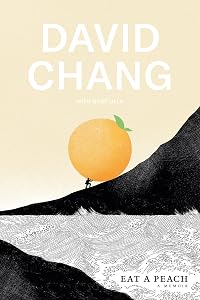
Eat a Peach: A Memoir
by David Chang
On This Page
Description
NEW YORK TIMES BESTSELLER • From the chef behind Momofuku and star of Netflix’s Ugly Delicious—an intimate account of the making of a chef, the story of the modern restaurant world that he helped shape, and how he discovered that success can be much harder to understand than failure.ONE OF THE BEST BOOKS OF THE YEAR: NPR, Fortune, Parade, The New York Public Library, Garden & Gun
In 2004, Momofuku Noodle Bar opened in a tiny, stark space in Manhattan’s East Village. Its young show more chef-owner, David Chang, worked the line, serving ramen and pork buns to a mix of fellow restaurant cooks and confused diners whose idea of ramen was instant noodles in Styrofoam cups. It would have been impossible to know it at the time—and certainly Chang would have bet against himself—but he, who had failed at almost every endeavor in his life, was about to become one of the most influential chefs of his generation, driven by the question, “What if the underground could become the mainstream?”
Chang grew up the youngest son of a deeply religious Korean American family in Virginia. Graduating college aimless and depressed, he fled the States for Japan, hoping to find some sense of belonging. While teaching English in a backwater town, he experienced the highs of his first full-blown manic episode, and began to think that the cooking and sharing of food could give him both purpose and agency in his life.
Full of grace, candor, grit, and humor, Eat a Peach chronicles Chang’s switchback path. He lays bare his mistakes and wonders about his extraordinary luck as he recounts the improbable series of events that led him to the top of his profession. He wrestles with his lifelong feelings of otherness and inadequacy, explores the mental illness that almost killed him, and finds hope in the shared value of deliciousness. Along the way, Chang gives us a penetrating look at restaurant life, in which he balances his deep love for the kitchen with unflinching honesty about the industry’s history of brutishness and its uncertain future.
. show less
Tags
Recommendations






Member Recommendations

Member Reviews
I admit it, I love chef memoirs, and I really enjoyed this one by David Chang. His story of his struggles with his Korean heritage, his parents and finding a decent job was told with humility. He is so honest with his discussion about his battle with bi-polar behaviors. It’s not a straightforward story. It is a story of hard-work and if you’ve read other celebrity chef memoirs, its unlike the others. I still wonder how he made it, but I loved that it became more like sitting with him and having him speak randomly about different things, like how he selected the music for his restaurants. As a teacher, I’d say he’s done a admirable job at self-assessment as a son and as a chef.
From the introduction, I get the sense this memoir, like Sara Bareilles' "Love Song" was written at the behest of his publisher (he even says so, in the reluctance to write a memoir versus a guide to young chefs starting their own restaurants). Still, Chang is an interesting person who's been in the public eye for food world with thoughtful, innovative shows and brash personality. I felt like this book was part therapy in self-evaluating the past, with tons of self-deprecation (and needed humility, in the case of reevaluating the anger-fueled actions in the early days.
There's also commentary of course, on perceptions, on being an Asian American guy who didn't necessarily fit the "smart" stereotype but was also driven to prove himself, show more to subvert expectations on dining and do something new with each property, etc. as well as taking criticisms of the restaurant personally (see aforementioned anger, where fuck ups in the kitchen were affronts to not just the restaurant but to himself). There's a common phrasing that depression is anger turned inwards, and I wouldn't be surprised if that connection was there here. show less
There's also commentary of course, on perceptions, on being an Asian American guy who didn't necessarily fit the "smart" stereotype but was also driven to prove himself, show more to subvert expectations on dining and do something new with each property, etc. as well as taking criticisms of the restaurant personally (see aforementioned anger, where fuck ups in the kitchen were affronts to not just the restaurant but to himself). There's a common phrasing that depression is anger turned inwards, and I wouldn't be surprised if that connection was there here. show less
As a preface, before I started this book I hadn't heard of David Chang and had only heard of the restaurant Momofuku once or twice in passing. I saw this book, though, on some lists of people's favorite 2020 releases, so I wanted to pick it up. I listened to the audiobook, read by the author, and I found it a really powerful book, though I do have some conflicting thoughts about it.
Eat a Peach is Chang's memoir, from his childhood through establishing a highly successful collection of restaurants in the US and abroad. The early portion is more or less chronological, though later it becomes more focused on various themes. And what themes they are--there's a lot of reflection on Chang's Korean-American upbringing as well as his ongoing show more struggles with mental illness.
I found Chang's reflections on race and Asian-ness very compelling, from his discussion of how the "smart Asian" stereotype was difficult for him, to "tiger parenting" (which he sees as a name that somewhat shellacs a destructive form of parenting, which for him caused a kind of hurt and need to excel that he suggests has remained with him into adulthood), to how his restaurants to date on the surface largely tout Japanese rather than Korean influences.
The sections on mental illness--Chang has struggled with bipolar throughout his adult life and has for years experienced truly extreme bursts of anger at his staff and people close to him--were probably the most moving part of this book for me. I found it really impressive how open Chang was about his flaws, and the book paints a strong portrait of someone who has made many, many mistakes but is trying to atone for them. To be completely honest as a reader, though I really respect him, I don't think that I emerged from this book liking him (though I don't think that that was necessarily the point). After finishing this book but before writing my review, I completely coincidentally happened to stumble upon this article/book review (https://www.eater.com/22193151/momofuku-david-chang-memoir-eat-a-peach-review), which I think also further adds layers of complication to his issues with anger/makes it a little difficult to figure out what was left unsaid in the memoir. It's a little interesting reading a mid-career memoir in a way, since Chang still hopefully has a substantial amount of time left in his career; and I really do hope that this book marks a turning point for him. show less
Eat a Peach is Chang's memoir, from his childhood through establishing a highly successful collection of restaurants in the US and abroad. The early portion is more or less chronological, though later it becomes more focused on various themes. And what themes they are--there's a lot of reflection on Chang's Korean-American upbringing as well as his ongoing show more struggles with mental illness.
I found Chang's reflections on race and Asian-ness very compelling, from his discussion of how the "smart Asian" stereotype was difficult for him, to "tiger parenting" (which he sees as a name that somewhat shellacs a destructive form of parenting, which for him caused a kind of hurt and need to excel that he suggests has remained with him into adulthood), to how his restaurants to date on the surface largely tout Japanese rather than Korean influences.
The sections on mental illness--Chang has struggled with bipolar throughout his adult life and has for years experienced truly extreme bursts of anger at his staff and people close to him--were probably the most moving part of this book for me. I found it really impressive how open Chang was about his flaws, and the book paints a strong portrait of someone who has made many, many mistakes but is trying to atone for them. To be completely honest as a reader, though I really respect him, I don't think that I emerged from this book liking him (though I don't think that that was necessarily the point). After finishing this book but before writing my review, I completely coincidentally happened to stumble upon this article/book review (https://www.eater.com/22193151/momofuku-david-chang-memoir-eat-a-peach-review), which I think also further adds layers of complication to his issues with anger/makes it a little difficult to figure out what was left unsaid in the memoir. It's a little interesting reading a mid-career memoir in a way, since Chang still hopefully has a substantial amount of time left in his career; and I really do hope that this book marks a turning point for him. show less
David Chang is very reflective, humble, and (apparently) honest. (I don't know actually anything about Chang aside from what he's written here.) This memoir tells a lot about his worldview, background, and challenges, especially in managing his mental health and his work-life balance.
> My sole breakthrough was a private one: if nothing mattered—if I wasn’t going to beat this depression and I wasn’t going to make it in the fine-dining world—what did I have to lose? Why not at least try to create a world that worked for me?
> Thoreau said, “I know of no more encouraging fact than the unquestionable ability of man to elevate his life by conscious endeavor.” I took that very much to heart as I contemplated suicide. Elevation show more through conscious endeavor. Work toward something. Open a restaurant. If it doesn’t pan out, there’s always the other path.
> At Noodle Bar, I also learned that Asian people drank the ramen broth. White people only ate the noodles. If we served the soup lukewarm, Asian customers would complain. If it was too hot, the white people wouldn’t touch it until it cooled down. By then, the noodles would be soggy.
> … During that era in American kitchens, whenever a chef tried to mingle Asian and European culinary ideas, one of two things tended to happen. If a French-trained chef added a stalk of lemongrass to a soup, the result would be deemed “French food with an Asian accent.” In the reverse case, whenever a little thyme made its way into an Asian dish, it was called “fusion.” I hated the way that the Asian side was always subsumed by the Western one
> I often wonder aloud to my friends if I’m living in a computer simulation or cosmic reality show. It honestly sounds more logical than the unbelievable string of luck I’ve had. Perhaps my memory is editing the most hectic moments of my life so that they’re easier to digest. Or maybe I’m just a bullshitter.
> Every successful chef I know approaches family meal with deadly seriousness. After all, if you don’t care for the people you work with, how will you ever care about the strangers coming into your restaurant? But it’s not simply about showing respect and love for your peers. Family meal is an amazing creative outlet. It’s the one chance for cooks on the bottom rung to express themselves, and an opportunity to practice making something delicious from scraps and leftovers
> In my mind, a perfect dish is not one where the flavors are uniformly in balance, but rather one that is both too salty and not salty enough at the same time. Taken together, it is in balance. Leaning into this paradox is how you make food that is both delicious and unpredictable.
> … There are bad ideas, but all ideas are worth chasing. Sometimes when you’re sure a certain idea will be a failure, you end up surprising yourself and it turns out better than you thought. But I promise that if you take the idea as far as you can and try as many ways of getting there as possible, at some point you will learn something that makes it worthwhile show less
> My sole breakthrough was a private one: if nothing mattered—if I wasn’t going to beat this depression and I wasn’t going to make it in the fine-dining world—what did I have to lose? Why not at least try to create a world that worked for me?
> Thoreau said, “I know of no more encouraging fact than the unquestionable ability of man to elevate his life by conscious endeavor.” I took that very much to heart as I contemplated suicide. Elevation show more through conscious endeavor. Work toward something. Open a restaurant. If it doesn’t pan out, there’s always the other path.
> At Noodle Bar, I also learned that Asian people drank the ramen broth. White people only ate the noodles. If we served the soup lukewarm, Asian customers would complain. If it was too hot, the white people wouldn’t touch it until it cooled down. By then, the noodles would be soggy.
> … During that era in American kitchens, whenever a chef tried to mingle Asian and European culinary ideas, one of two things tended to happen. If a French-trained chef added a stalk of lemongrass to a soup, the result would be deemed “French food with an Asian accent.” In the reverse case, whenever a little thyme made its way into an Asian dish, it was called “fusion.” I hated the way that the Asian side was always subsumed by the Western one
> I often wonder aloud to my friends if I’m living in a computer simulation or cosmic reality show. It honestly sounds more logical than the unbelievable string of luck I’ve had. Perhaps my memory is editing the most hectic moments of my life so that they’re easier to digest. Or maybe I’m just a bullshitter.
> Every successful chef I know approaches family meal with deadly seriousness. After all, if you don’t care for the people you work with, how will you ever care about the strangers coming into your restaurant? But it’s not simply about showing respect and love for your peers. Family meal is an amazing creative outlet. It’s the one chance for cooks on the bottom rung to express themselves, and an opportunity to practice making something delicious from scraps and leftovers
> In my mind, a perfect dish is not one where the flavors are uniformly in balance, but rather one that is both too salty and not salty enough at the same time. Taken together, it is in balance. Leaning into this paradox is how you make food that is both delicious and unpredictable.
> … There are bad ideas, but all ideas are worth chasing. Sometimes when you’re sure a certain idea will be a failure, you end up surprising yourself and it turns out better than you thought. But I promise that if you take the idea as far as you can and try as many ways of getting there as possible, at some point you will learn something that makes it worthwhile show less
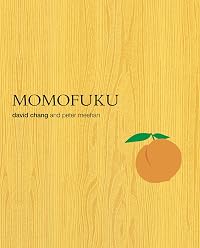
I like the Noodle Bar, though it is so physically uncomfortable I rarely go. I ate at Ssam once, and it was really pretty bad. That said, I have always generally liked the Momofuku ethos. When you eat out in New York a lot and talk to others that do as well its pretty easy to start truly hating the word "authentic." I love that Momofuku celebrates appropriation - appropriating gets a bad rap, but its a great thing. That blend of traditions is the heartbeat of America. And that appropriation has meant that whenever I eat at Momofuku I eat something that surprises me, and most of the time its in a good way. All this is to say I am no David Chang groupie but I dig his style. I looked forward to this read.
So, I think I liked the book show more overall, but there was a tonal issue that bugged me. Have you ever known a person who is so self obsessed that they routinely lead interactions by bringing up whatever flaw they think you are thinking about them - something that makes them a conspicuous outsider in their mind. (In fact you are likely thinking nothing about them.) You know the type, endless half-jokey references to how fat they are, how they are not stylish enough to be in the room, or not rich enough, or educated or cultured or well-connected or or or. They think that if they bring it up first that it dissolves tension. In fact it creates tension and it also means the following conversation is going to be all about them because you need to reassure them about how they look fine, or they are not fat, or they are very smart, or whatever. That is what happens in this book over and over. He tells you he is not being defensive while he in the midst of yet another defensive hurling of his faults. They come at you like grenades being lobbed by a speeding car. Then when that discomfort starts to abate he blasts in with "but this is a great thing I did" or "look how loyal these people are to me so they must think I am great." That shifts the narrative so it seems like you were the one who brought up the ways in which he is lacking and that he has to defend himself. It is exhausting, and, again, it reeks of pathological self-involvement (which I know may be a result of his bi-polar disorder.)
But still, I did like the book. Especially satisfying was the discussion of food, of flavor, of craft. The way in which he approaches his own food is fascinating, but I also loved when he talked about chef gatherings. He apologized because these gatherings were such sausage fests -- as if that negates the value of the entire experience. But that is silly. The experience is still amazing -- chefs hanging out and trying to outdo one another. Anyone who has ever sat in on or been a part of a group of musicians or comedians or chefs has seen this fertile, competitive, creative dynamic. Its amazing. The issue isn't the nature of the gatherings, it is that women chefs are actively excluded and that aspiring chefs who are female are not mentored in a way that helps them get into the elite club. But the combination of shared experience and competition, and passion for their art, that is electric and fun to read about. I wish he had included more about this.
As a business book for aspiring restaurateurs, which this is supposed to partially be according to Chang. I am not sure it accomplishes much other than the Appendix on Rules for Being a Chef (which is good -- especially the part where he tells people to go to college not to culinary school unless they want to cook in a convention hotel or something similar.) The book's message is that if you are manic (clinically so) you may alienate everyone around you, drain all happiness from your life, eliminate any possibility of contentment but your business may thrive. That, and that some of it is luck. I guess there is a strong nod to respecting the MBAs but trusting your instincts. The one important message -- I would say essential -- is that the only way you will ever do anything special is if you are willing to fail, sometimes spectacularly. There are lots of books for entrepreneurs that will tell you the same thing, but it is a message I celebrate and which I wish was more commonly embraced and validated. A failed experiment brings us one step closer to the truth. I appreciated Chang doubling down on this point.
So mostly interesting, revealing, and unique. It did not lead me to much like Chang, and it taught me nothing about entrepreneurship, but I respect his maverick-ness, his exceptional palate, and his really good taste in music. I wish him peace. show less
So, I think I liked the book show more overall, but there was a tonal issue that bugged me. Have you ever known a person who is so self obsessed that they routinely lead interactions by bringing up whatever flaw they think you are thinking about them - something that makes them a conspicuous outsider in their mind. (In fact you are likely thinking nothing about them.) You know the type, endless half-jokey references to how fat they are, how they are not stylish enough to be in the room, or not rich enough, or educated or cultured or well-connected or or or. They think that if they bring it up first that it dissolves tension. In fact it creates tension and it also means the following conversation is going to be all about them because you need to reassure them about how they look fine, or they are not fat, or they are very smart, or whatever. That is what happens in this book over and over. He tells you he is not being defensive while he in the midst of yet another defensive hurling of his faults. They come at you like grenades being lobbed by a speeding car. Then when that discomfort starts to abate he blasts in with "but this is a great thing I did" or "look how loyal these people are to me so they must think I am great." That shifts the narrative so it seems like you were the one who brought up the ways in which he is lacking and that he has to defend himself. It is exhausting, and, again, it reeks of pathological self-involvement (which I know may be a result of his bi-polar disorder.)
But still, I did like the book. Especially satisfying was the discussion of food, of flavor, of craft. The way in which he approaches his own food is fascinating, but I also loved when he talked about chef gatherings. He apologized because these gatherings were such sausage fests -- as if that negates the value of the entire experience. But that is silly. The experience is still amazing -- chefs hanging out and trying to outdo one another. Anyone who has ever sat in on or been a part of a group of musicians or comedians or chefs has seen this fertile, competitive, creative dynamic. Its amazing. The issue isn't the nature of the gatherings, it is that women chefs are actively excluded and that aspiring chefs who are female are not mentored in a way that helps them get into the elite club. But the combination of shared experience and competition, and passion for their art, that is electric and fun to read about. I wish he had included more about this.
As a business book for aspiring restaurateurs, which this is supposed to partially be according to Chang. I am not sure it accomplishes much other than the Appendix on Rules for Being a Chef (which is good -- especially the part where he tells people to go to college not to culinary school unless they want to cook in a convention hotel or something similar.) The book's message is that if you are manic (clinically so) you may alienate everyone around you, drain all happiness from your life, eliminate any possibility of contentment but your business may thrive. That, and that some of it is luck. I guess there is a strong nod to respecting the MBAs but trusting your instincts. The one important message -- I would say essential -- is that the only way you will ever do anything special is if you are willing to fail, sometimes spectacularly. There are lots of books for entrepreneurs that will tell you the same thing, but it is a message I celebrate and which I wish was more commonly embraced and validated. A failed experiment brings us one step closer to the truth. I appreciated Chang doubling down on this point.
So mostly interesting, revealing, and unique. It did not lead me to much like Chang, and it taught me nothing about entrepreneurship, but I respect his maverick-ness, his exceptional palate, and his really good taste in music. I wish him peace. show less
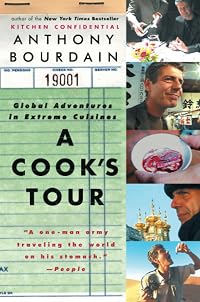
I'm a little on the fence with this one. On one hand, David Chang comes off as a pretty big jerk in his memoir. On the other hand, I can certainly admire how candid and genuine he is. I did learn a lot about him, but some of it wasn't very pleasant. It is interesting that he leveraged his mental health issues in a way that created his Momofuku empire, but I can't help thinking about all those people who helped him getting yelled at all the time. I did enjoy the general chef's chef moments where his admiration for other chefs came through, and the two brief moments about Anthony Bourdain were like tiny shining treasures among the gritty mess. I'm not sure if he would be pleased or upset to know that his general rage came through very show more well in his writing.
In the long run, I think what I took away from the book is that he's human, and so are the rest of us. He's kind of an asshole, but he would probably think I was pretty stupid for wanting to read his book, so I guess it evens out. The more I think about it, the more I think I appreciate what he did here. In fact, I'm giving it an extra star for explaining the Michelin star system in a way I finally understood it.
I definitely love the end products of his process (though I actually had no idea that Mind of a Chef was initially his project, and don't even get me started on how much I still miss Lucky Peach), so clearly something is working here even if it does sound a little like crossing the finish line in a fiery heap propelled only by the explosion that nearly killed you. Winning's winning. show less
In the long run, I think what I took away from the book is that he's human, and so are the rest of us. He's kind of an asshole, but he would probably think I was pretty stupid for wanting to read his book, so I guess it evens out. The more I think about it, the more I think I appreciate what he did here. In fact, I'm giving it an extra star for explaining the Michelin star system in a way I finally understood it.
I definitely love the end products of his process (though I actually had no idea that Mind of a Chef was initially his project, and don't even get me started on how much I still miss Lucky Peach), so clearly something is working here even if it does sound a little like crossing the finish line in a fiery heap propelled only by the explosion that nearly killed you. Winning's winning. show less
Chang welcomes you in, puts some amazing food in front of you while a kickas* conversation with someone that you seem to know takes over the evening. By the end, your food might have grown cold, but the taste lingers as you are left in awe of the journey David took to bring his love of food to your table; This reluctant memoir cured my latest book hangover
Members
- Recently Added By
Lists

History: Asia
103 works; 1 member

Books Read in 2020
4,379 works; 124 members
Author Information
28+ Works 2,010 Members
All Editions
Awards and Honors
Common Knowledge
- Original publication date
- 2020-09-08
- Dedication
- For Grace and Hugo, with love. In memory of Joe Chang. And to all the underdogs.
- First words
- I can convince myself of almost anything.
- Last words
- (Click to show. Warning: May contain spoilers.)Beyond that , my only advice to you is to aim for the best and fight like hell to avoid the worst.
Classifications
Statistics
- Members
- 555
- Popularity
- 53,447
- Reviews
- 26
- Rating
- (3.63)
- Languages
- English
- Media
- Paper, Audiobook, Ebook
- ISBNs
- 9
- ASINs
- 3