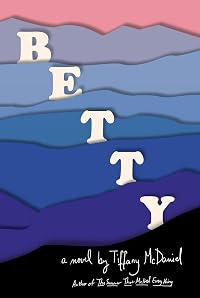
Betty
by Tiffany McDaniel
On This Page
Description
"A stunning, lyrical coming-of-age novel set in the rolling foothills of the Appalachians in which a young girl, with only the compass of her father's imagination, must navigate racism, sexism, and the dark secrets that will haunt her for the rest of her life. "A girl comes of age against the knife." So begins the story of Betty Carpenter. Born in a bathtub in Arkansas in 1954 to a Cherokee father and white mother, Betty is the sixth of eight siblings. The world they inhabit is one of show more poverty, racism, abuse, and violence--both from outside the family, and also, devastatingly, from within. After years on the road, searching in vain for a better life, the Carpenters return to their hometown of Breathed, Ohio, in northern Appalachia. There, they move into a sprawling wreck of a farmhouse that local legend says is cursed. The townsfolk decide the Carpenters are cursed, too: "My mother gave birth to eight of us," Betty tells us in her frank, wry voice. "More than one would die for no good reason in the prizewinning years of their youth. Some blamed God for taking too few. Others accused the Devil of leaving too many." But Betty is resilient. Her father's inventive stories are kindling for the fire of her own imagination and even in the face of tragedy and death, her creativity is irrepressible. Against overwhelming odds, she may be the first member of her family to break the cycle of abuse and trauma--and escape"-- show lessTags
Recommendations






Member Reviews
I had NO idea what I was in for with this book. I bought it because it was 'local', set in Appalachia, and because the cover was beautiful.
This book shattered me. It was so beautifully written. I immediately bought another book from the author because I needed more. (Although I am not emotionally ready and need to give my heart time to recover before I read it)
Betty is pure art, and I already know that it is one that will stick with me for a very long time. This goes on my all time favorites list.
A very strong trigger warning, though. This book has ALL the triggers.
This book shattered me. It was so beautifully written. I immediately bought another book from the author because I needed more. (Although I am not emotionally ready and need to give my heart time to recover before I read it)
Betty is pure art, and I already know that it is one that will stick with me for a very long time. This goes on my all time favorites list.
A very strong trigger warning, though. This book has ALL the triggers.
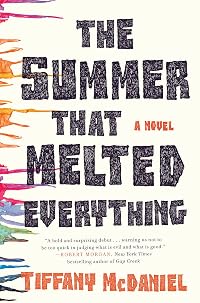
Another winner from Tiffany McDaniel! I read her first book The Summer That Melted Everything when it was released four years ago and was blown away so I was pretty eager to get my hands on her newest novel. Both books are set in the same town of Breathed, Ohio and there were a few quick glimpses of some familiar characters but otherwise, these were two very different stories. I ended up loving this book just as much as I loved her previous novel.
It did take me a long time to read this book. One reason is that my life has been absolutely crazy for the past few months and time to read has been hard to come by. Another reason, and probably a bigger one, was the fact that I really needed to process some of the scenes in this book. This show more book is based on the life of the author's mother which made it even more heart-wrenching. This was a book that I wanted to savor every moment of and I am glad that I took my time and really gave Betty the time that she deserved.
This book tells the story of Betty and the rest of the Carpenter family. We see Betty's mother and father meet, marry, and bring their children into the world. Betty's father is Cherokee and she is darker like him which makes life difficult for her in 1960's Ohio. Her family was poor but they made things work. Her father had a garden that helped to feed the family and used his knowledge of plants and herbs to make medicines for the local community. We see the challenges that all of her family members face through Betty's eyes and hear their stories through Betty's ears. I was often just as horrified as Betty was.
The writing was just as fantastic as the story. I love the way that the author was able to share an event in such brilliant detail that I felt like I could actually see what was happening. Betty's family was quite large but I felt like I knew her brothers and sisters almost as well as Betty. The story had a wonderful and I found myself wanting to go over certain passages more than once just because I felt the power and beauty of the words.
I would highly recommend this book to others. This was a wonderful story of resilience and strength even when things were at the lowest point. Tiffany McDaniel has cemented her position as an author I plan to follow.
I received a digital review copy of this book from Knopf Doubleday Publishing Group via NetGalley. show less
It did take me a long time to read this book. One reason is that my life has been absolutely crazy for the past few months and time to read has been hard to come by. Another reason, and probably a bigger one, was the fact that I really needed to process some of the scenes in this book. This show more book is based on the life of the author's mother which made it even more heart-wrenching. This was a book that I wanted to savor every moment of and I am glad that I took my time and really gave Betty the time that she deserved.
This book tells the story of Betty and the rest of the Carpenter family. We see Betty's mother and father meet, marry, and bring their children into the world. Betty's father is Cherokee and she is darker like him which makes life difficult for her in 1960's Ohio. Her family was poor but they made things work. Her father had a garden that helped to feed the family and used his knowledge of plants and herbs to make medicines for the local community. We see the challenges that all of her family members face through Betty's eyes and hear their stories through Betty's ears. I was often just as horrified as Betty was.
The writing was just as fantastic as the story. I love the way that the author was able to share an event in such brilliant detail that I felt like I could actually see what was happening. Betty's family was quite large but I felt like I knew her brothers and sisters almost as well as Betty. The story had a wonderful and I found myself wanting to go over certain passages more than once just because I felt the power and beauty of the words.
I would highly recommend this book to others. This was a wonderful story of resilience and strength even when things were at the lowest point. Tiffany McDaniel has cemented her position as an author I plan to follow.
I received a digital review copy of this book from Knopf Doubleday Publishing Group via NetGalley. show less
In a dark, dark book (with a pretty cover), there was a dark, dark story about the dark, dark events witnessed by a dark-skinned girl. Boy howdy, was this a depressing experience - but after a slow start, I was completely gripped and also couldn't stop thinking about the characters when I wasn't reading. Racism, sexism, abuse, incest, animal cruelty, and more deaths per novel since the days of Elizabeth Gaskell. Not a story for the faint-hearted!
Betty Carpenter is born to a white mother and a Cherokee father and grows up in a small-minded town called Breathed (Breath-ed) in Ohio during the 1960s. Children (and teachers) at school make her life hell for inheriting her father's colouring while at home her family of two sisters and three show more brothers is being destroyed by secrets from the past.
To start with, Betty's story reminded me of To Kill A Mockingbird (if told from Tom Robinson's perspective) - there are even one or two similar scenes like the 'cursed' Peacock house where the Carpenters live and the old woman who teaches Betty a valuable lesson. But Breathed is far, far uglier than Maycomb, turning this novel into a Southern Gothic nightmare with bizarre characters, in both name and nature - like the woman who wears a mask because she believes she has been disfigured by something she once witnessed - and apocalyptic events including kamikaze birds!
I really felt for Betty, who has to survive both her own torment and also bear the burdens of her family too, keeping the secrets of others while struggling with her own guilt. Only her father Landon is a positive influence, weaving fantastical myths and trying to promote pride in their shared Cherokee heritage. I felt sorry for Betty's mother, too, until one particularly harrowing scene of animal cruelty nearly made me throw up. Representing abuse through fictional characters is disturbing but hurting fictional animals is just gratuitous.
There is a lot packed into the story and the characters which still applies - Betty's principal manages to encapsulate attitudes towards women and people of colour which hasn't really changed since the 1960s: 'Women in pants lost your people your land,' he tells her. When she wears shorts to school because boys keep looking up her skirt, she is told that girls can't wear pants which draw the attention to the crotch but she is also to blame for not dressing 'modestly' and tempting the 'good sons' of the community with her body. Betty is also accused of stealing and caned with no evidence of the crime.
What it boiled down to was a frenzied hope that there was more to life than the reality around us. Only then could we claim a destiny we did not feel cursed to.
I loved how Betty turned her father's stories into a love of writing and capturing the truth on paper, burying her mother's and sisters' stories in jars until ready to face the heartbreak in her family. Words are the only defence she has against the world. Betty is somehow an inspiring figure in a depressing blend of social commentary and grotesque fantasy.
Take a deep breath and dive in but take a break every hundred pages - if possible - with a lighter antidote! show less
Betty Carpenter is born to a white mother and a Cherokee father and grows up in a small-minded town called Breathed (Breath-ed) in Ohio during the 1960s. Children (and teachers) at school make her life hell for inheriting her father's colouring while at home her family of two sisters and three show more brothers is being destroyed by secrets from the past.
To start with, Betty's story reminded me of To Kill A Mockingbird (if told from Tom Robinson's perspective) - there are even one or two similar scenes like the 'cursed' Peacock house where the Carpenters live and the old woman who teaches Betty a valuable lesson. But Breathed is far, far uglier than Maycomb, turning this novel into a Southern Gothic nightmare with bizarre characters, in both name and nature - like the woman who wears a mask because she believes she has been disfigured by something she once witnessed - and apocalyptic events including kamikaze birds!
I really felt for Betty, who has to survive both her own torment and also bear the burdens of her family too, keeping the secrets of others while struggling with her own guilt. Only her father Landon is a positive influence, weaving fantastical myths and trying to promote pride in their shared Cherokee heritage. I felt sorry for Betty's mother, too, until one particularly harrowing scene of animal cruelty nearly made me throw up. Representing abuse through fictional characters is disturbing but hurting fictional animals is just gratuitous.
There is a lot packed into the story and the characters which still applies - Betty's principal manages to encapsulate attitudes towards women and people of colour which hasn't really changed since the 1960s: 'Women in pants lost your people your land,' he tells her. When she wears shorts to school because boys keep looking up her skirt, she is told that girls can't wear pants which draw the attention to the crotch but she is also to blame for not dressing 'modestly' and tempting the 'good sons' of the community with her body. Betty is also accused of stealing and caned with no evidence of the crime.
What it boiled down to was a frenzied hope that there was more to life than the reality around us. Only then could we claim a destiny we did not feel cursed to.
I loved how Betty turned her father's stories into a love of writing and capturing the truth on paper, burying her mother's and sisters' stories in jars until ready to face the heartbreak in her family. Words are the only defence she has against the world. Betty is somehow an inspiring figure in a depressing blend of social commentary and grotesque fantasy.
Take a deep breath and dive in but take a break every hundred pages - if possible - with a lighter antidote! show less
In Tiffany McDaniel’s powerful new novel “Betty,” we become privy to the childhood and coming-of-age of the eponymous character. When very young, she moved around with her family, but they settle finally in the hills of southern Ohio. “Betty” is the story of how this young girl deals with the sins which men commit against the girls and women in their families, and how she rises above them, having acquired wisdom beyond her tender years. By turns homespun and horrific, this novel carries pride, sorrow, love, malice, and the resilient human spirit, and serves them up to the reader in a memorable, beautiful whole.
Betty is her father’s daughter, through and through. She inherits his dark Cherokee pigment, and he inculcates show more Native wisdom and understanding in her, particularly as it relates to the significance of the natural world, and how it can heal. Delivered in plain speech and fanciful art, this instruction aligns perfectly with the countrified pallet in which McDaniel paints her tableaux. All dialogue has a rural twang and inflection; and Betty has siblings named Fraya, Trustin, Flossie, and Lint. She suffers racial prejudice in the 1950s and 60s, even to some extent from her mother and sisters, who don’t share her rich coloring.
Women suffer at the hands of the men in their family throughout the novel; Betty witnesses some of it first-hand, and learns of other episodes from her mother. She rails against not only the cruelty and injustice but also she hates the culture of silence enabling and perpetuating the sin. This pall colors and stains the life of this spirited girl; she can’t stand it, and neither can we. Ultimately, Betty delivers herself, wise to so many ways of the world, from this childhood, and ends up meeting a character from McDaniel’s remarkable first novel, “The Summer That Melted Everything.” One wonders if we will hear more of these characters in the future.
Stunningly spirited, unbowed by all she has witnessed, loved dearly by her gentle father, Betty is a hard, determined plug of gristle, a take-no-quarter fighter, and at the same time a fond believer in sweet dreams. She befriends some of the town’s castoffs, and learns something of herself in the process. She can’t help her strong subversive streak, and it might just be the thing that saves her. Betty the character will live in your imagination as it will in mine.
McDaniel has followed up “The Summer That Melted Everything” with a stunning, masterful second effort. In her writing she again shows no fear in displaying all the treachery and predation of her story - she has no mercy and tolerates no nonsense. A little like Betty herself. This author demonstrates a crystal clear vision in this area, and has also shown a very deft hand at drawing characters and family interaction.
Even while steeped in folklore, this is fine, unflinching work. It rewards its reader with a rich, nuanced, well-paced story, with a very, very sympathetic heroine, all set in a memorable picture of rural American life. I urge you to reap these rewards.
https://bassoprofundo1.blogspot.com/2020/07/betty-by-tiffany-mcdaniel.html show less
Betty is her father’s daughter, through and through. She inherits his dark Cherokee pigment, and he inculcates show more Native wisdom and understanding in her, particularly as it relates to the significance of the natural world, and how it can heal. Delivered in plain speech and fanciful art, this instruction aligns perfectly with the countrified pallet in which McDaniel paints her tableaux. All dialogue has a rural twang and inflection; and Betty has siblings named Fraya, Trustin, Flossie, and Lint. She suffers racial prejudice in the 1950s and 60s, even to some extent from her mother and sisters, who don’t share her rich coloring.
Women suffer at the hands of the men in their family throughout the novel; Betty witnesses some of it first-hand, and learns of other episodes from her mother. She rails against not only the cruelty and injustice but also she hates the culture of silence enabling and perpetuating the sin. This pall colors and stains the life of this spirited girl; she can’t stand it, and neither can we. Ultimately, Betty delivers herself, wise to so many ways of the world, from this childhood, and ends up meeting a character from McDaniel’s remarkable first novel, “The Summer That Melted Everything.” One wonders if we will hear more of these characters in the future.
Stunningly spirited, unbowed by all she has witnessed, loved dearly by her gentle father, Betty is a hard, determined plug of gristle, a take-no-quarter fighter, and at the same time a fond believer in sweet dreams. She befriends some of the town’s castoffs, and learns something of herself in the process. She can’t help her strong subversive streak, and it might just be the thing that saves her. Betty the character will live in your imagination as it will in mine.
McDaniel has followed up “The Summer That Melted Everything” with a stunning, masterful second effort. In her writing she again shows no fear in displaying all the treachery and predation of her story - she has no mercy and tolerates no nonsense. A little like Betty herself. This author demonstrates a crystal clear vision in this area, and has also shown a very deft hand at drawing characters and family interaction.
Even while steeped in folklore, this is fine, unflinching work. It rewards its reader with a rich, nuanced, well-paced story, with a very, very sympathetic heroine, all set in a memorable picture of rural American life. I urge you to reap these rewards.
https://bassoprofundo1.blogspot.com/2020/07/betty-by-tiffany-mcdaniel.html show less
Un cumulo di cose atroci, scritte con molta dolcezza. Mi chiedo quanto soffra, quanto abbia sofferto questa scrittrice. Eppure ha una forza e una brillantezza che ti fanno vedere una scintilla di speranza in mezzo alla disperazione. Questa è la storia di Bitty e della sua tragica, tragica famiglia. Il tono è un po’ quello de “il buio oltre la siepe”. Una grandiosa voce narrante che lotta con tutte le sue forze per non farsi travolgere dalla miseria e dalla crudeltà della povera umanità che la circonda. Oltre a tutta la disperazione è davvero un meraviglioso romanzo.
This originally appeared at The Irresponsible Reader.
---
I've struggled with this one for days now and was tempted to say something like, "It's a Tiffany McDaniel book. This means the writing is gorgeous, the subject will provoke you, you will be moved. And did I mention it's wonderfully written?" But I knew I couldn't post that...it doesn't actually tell you anything about this book ("Tiffany McDaniel" and "gorgeous writing" is essentially a tautology) and since when do I express myself in twenty-seven words?
WHO'S BETTY ABOUT?
Yeah, I normally ask what a book is about, but the what is so unimportant in this book a reader could be excused for not remembering. You won't forget the who anytime soon. The who is what matters.
It's about a show more young, poor family's struggles between 1939 and 1973—with a focus on 1961-73 (when Betty was 7-19) when the family settles in Appalachian Ohio (and largely stays there). The father is of Cherokee descent (Tsa-la-gi. A-vn-da-di-s-di), the mother is white—and you can imagine how easy life was for them and their children in that time (harder for Betty who takes more after her Cherokee lineage, while her siblings favor their mother). While none of the children has an easy life, there's a greater degree of difficulty of Betty.
I could spend a good deal of time talking about various family members, but I'm going to focus on two of them.
LANDON CARPENTER (A.K.A. DAD)
When Landon Carpenter met Alka Lark, he was working as a gravedigger, he later worked at a clothespin factory—and then several other jobs, including a stint in a coal mine (which left him with a permanent limp due to a beating given by racists), while the family moved from state to state. When they settled in Breathed, Ohio*, he became known for selling moonshine, herbal remedies (based on "Cherokee wisdom" that was essentially what he happened to make up on the spot), and hand-crafting furniture.
* A fictional city that also served as the setting for The Summer that Melted Everything—one of several nods to that work included here.
But really, what he does with his time is father his children and try to take care of his wife. They don't all appreciate it, or understand what he's doing, but they're (largely) devoted anyway. He will be frequently found passing on a bit of received knowledge through myths or parable form. He wasn't ready to be a father when he became one and two decades later, he still wasn't entirely ready when Betty arrived (or her younger siblings, either), but he rises to the occasion as best as he can. I don't get the picture that he's the easiest guy to get to know or get along with for prolonged periods. But for those who do get to know him, he's clearly a loyal and supportive friend.
BETTY (A.K.A. "LITTLE INDIAN")
Either as a quirk of personality or because she's physically closer to her Cherokee heritage (likely a combination), Betty embraces the cultural lessons her father passes down more readily than her siblings do—and always wants more. She's naive, inquisitive, and somehow despite everything she witnesses innocent and optimistic (not precisely, but that's the best word I can come up with). Life hands her horrible experience after horrible experience, and while momentarily cowed, she comes back, wiser, but still innocent. Toward the end of the book, she has a couple of experiences (one thing she's told about, one thing she witnesses) that drive her to the breaking point—but even then she holds on for a little longer.
She's our Point of View character and doesn't understand everything that's going on around her for most of the book—things really kick off when she's seven, after all. So we see a lot of the book through unreliable eyes, but very reliable emotions and reactions. From the latter, we can get a good understanding of what's going on, better than she can.
THE MAGIC (FOR LACK OF A BETTER WORD)
In McDaniel's The Summer that Melted Everything, many things happen that may be supernatural or magical in origin, there's a semi-magical realism feel to it. That's not the case here. Nor is the source of the "magic" in this novel one mysterious stranger.
The power that keeps Dad and Betty—and the rest of the family—going comes from story. Dad's constantly telling stories to his children, Betty in particular—and, we learn, he even tells stories to his friends (I don't think Landon's wife has much patience for many such stories, as much as she needs them). Betty typically doesn't tell her stories to anyone, but she writes them down, filling notebooks with them. Some she keeps, some she buries (to preserve or to hid), some she gives away. By their use of story—sometimes use of words—Dad and betty keep themselves, and those around them, going. They inspire, encourage, and teach with them.
A story that Betty's mother tells her is arguably the most powerful story in the novel—and it explains more of the novel than anything else. Her story, is wholly true, and wholly heartbreaking, but even that comes down to the power of storytelling.
DRAWBACKS TO THE BOOK
I don't really want to label these as problems with the book, but there are a few things that keep me from being as enthusiastic about Betty as I was for The Summer that Melted Everything (which I am enthusiastic about to this day). I basically proselytized readers over that book, I won't go that overboard for this.
The first is that it took me far longer than it should have to get what McDaniel was trying to accomplish, I kept waiting for a plot to emerge, and there's never much of one by design. Instead, as I indicated above, this is about the characters. Growing, developing, faltering, stumbling, and retreating. It's about how they react to the events (or non-events) in their lives that matters, now the events themselves. It's entirely possible that this is all me and not the text. But I don't think that's the case (or I wouldn't have gone on about it).
Secondly, the non-Carpenter characters. With two notable exceptions (the town Doctor who comes running when they call; and a friend of Landon's who rents them the house they settle in. But the rest of the people (almost without exception), are simply horrible. Some of the Carpenters are okay, and most of them demonstrate growth (at least). But everyone else is horrible, blatantly so...so many people in authority of varying degrees are just horrible, spiteful, evil people. And it's just hard to read that. I firmly believe in man's inhumanity to man, but it's usually tempered, at least on the surface/occasionally, with something positive. We aren't given anything to look to and say, "Hey, there's someone decent", or "There's someone doing something decent. Spiteful, racist, ignorant, misogynous, capricious, and evil. Those are the words that come to mind as I think about the non-Carpenter characters, and it's just hard to read them.
SO, WHAT DID I THINK ABOUT BETTY?
I started off liking it, and that feeling slowly grew. There weren't many moments that wow'ed me, but there were a handful that broke my heart. I sincerely want another 50 pages of the Dad's odd little myths (some of which, I'm pretty sure contradict themselves, which Betty sees and rolls with). I wanted to help Betty through her challenges, to at least shoulder some of her burden with her.
And did I mention the prose is fantastic?
That said, I don't think I connected with the characters (particularly those who aren't Dad or Betty) the way McDaniel wanted me to. I don't think there's enough going on to urge people to read this, but I will recommend it strongly. That said, I think I will be in the minority with this book and most readers won't understand my hesitation to rave over this. I do recommend this book, I do plan on re-reading it in a year or two, and I will be first in line for McDaniel's next book.
Disclaimer: I received this eARC from Knopf Doubleday Publishing Group via NetGalley in exchange for this post—thanks to both for this. I also want to thank McDaniel for approaching me to let me know it was available for request. None of the above kept me from giving my honest opinion. show less
---
I've struggled with this one for days now and was tempted to say something like, "It's a Tiffany McDaniel book. This means the writing is gorgeous, the subject will provoke you, you will be moved. And did I mention it's wonderfully written?" But I knew I couldn't post that...it doesn't actually tell you anything about this book ("Tiffany McDaniel" and "gorgeous writing" is essentially a tautology) and since when do I express myself in twenty-seven words?
WHO'S BETTY ABOUT?
Yeah, I normally ask what a book is about, but the what is so unimportant in this book a reader could be excused for not remembering. You won't forget the who anytime soon. The who is what matters.
It's about a show more young, poor family's struggles between 1939 and 1973—with a focus on 1961-73 (when Betty was 7-19) when the family settles in Appalachian Ohio (and largely stays there). The father is of Cherokee descent (Tsa-la-gi. A-vn-da-di-s-di), the mother is white—and you can imagine how easy life was for them and their children in that time (harder for Betty who takes more after her Cherokee lineage, while her siblings favor their mother). While none of the children has an easy life, there's a greater degree of difficulty of Betty.
I could spend a good deal of time talking about various family members, but I'm going to focus on two of them.
LANDON CARPENTER (A.K.A. DAD)
When Landon Carpenter met Alka Lark, he was working as a gravedigger, he later worked at a clothespin factory—and then several other jobs, including a stint in a coal mine (which left him with a permanent limp due to a beating given by racists), while the family moved from state to state. When they settled in Breathed, Ohio*, he became known for selling moonshine, herbal remedies (based on "Cherokee wisdom" that was essentially what he happened to make up on the spot), and hand-crafting furniture.
* A fictional city that also served as the setting for The Summer that Melted Everything—one of several nods to that work included here.
But really, what he does with his time is father his children and try to take care of his wife. They don't all appreciate it, or understand what he's doing, but they're (largely) devoted anyway. He will be frequently found passing on a bit of received knowledge through myths or parable form. He wasn't ready to be a father when he became one and two decades later, he still wasn't entirely ready when Betty arrived (or her younger siblings, either), but he rises to the occasion as best as he can. I don't get the picture that he's the easiest guy to get to know or get along with for prolonged periods. But for those who do get to know him, he's clearly a loyal and supportive friend.
BETTY (A.K.A. "LITTLE INDIAN")
Either as a quirk of personality or because she's physically closer to her Cherokee heritage (likely a combination), Betty embraces the cultural lessons her father passes down more readily than her siblings do—and always wants more. She's naive, inquisitive, and somehow despite everything she witnesses innocent and optimistic (not precisely, but that's the best word I can come up with). Life hands her horrible experience after horrible experience, and while momentarily cowed, she comes back, wiser, but still innocent. Toward the end of the book, she has a couple of experiences (one thing she's told about, one thing she witnesses) that drive her to the breaking point—but even then she holds on for a little longer.
She's our Point of View character and doesn't understand everything that's going on around her for most of the book—things really kick off when she's seven, after all. So we see a lot of the book through unreliable eyes, but very reliable emotions and reactions. From the latter, we can get a good understanding of what's going on, better than she can.
THE MAGIC (FOR LACK OF A BETTER WORD)
In McDaniel's The Summer that Melted Everything, many things happen that may be supernatural or magical in origin, there's a semi-magical realism feel to it. That's not the case here. Nor is the source of the "magic" in this novel one mysterious stranger.
The power that keeps Dad and Betty—and the rest of the family—going comes from story. Dad's constantly telling stories to his children, Betty in particular—and, we learn, he even tells stories to his friends (I don't think Landon's wife has much patience for many such stories, as much as she needs them). Betty typically doesn't tell her stories to anyone, but she writes them down, filling notebooks with them. Some she keeps, some she buries (to preserve or to hid), some she gives away. By their use of story—sometimes use of words—Dad and betty keep themselves, and those around them, going. They inspire, encourage, and teach with them.
A story that Betty's mother tells her is arguably the most powerful story in the novel—and it explains more of the novel than anything else. Her story, is wholly true, and wholly heartbreaking, but even that comes down to the power of storytelling.
DRAWBACKS TO THE BOOK
I don't really want to label these as problems with the book, but there are a few things that keep me from being as enthusiastic about Betty as I was for The Summer that Melted Everything (which I am enthusiastic about to this day). I basically proselytized readers over that book, I won't go that overboard for this.
The first is that it took me far longer than it should have to get what McDaniel was trying to accomplish, I kept waiting for a plot to emerge, and there's never much of one by design. Instead, as I indicated above, this is about the characters. Growing, developing, faltering, stumbling, and retreating. It's about how they react to the events (or non-events) in their lives that matters, now the events themselves. It's entirely possible that this is all me and not the text. But I don't think that's the case (or I wouldn't have gone on about it).
Secondly, the non-Carpenter characters. With two notable exceptions (the town Doctor who comes running when they call; and a friend of Landon's who rents them the house they settle in. But the rest of the people (almost without exception), are simply horrible. Some of the Carpenters are okay, and most of them demonstrate growth (at least). But everyone else is horrible, blatantly so...so many people in authority of varying degrees are just horrible, spiteful, evil people. And it's just hard to read that. I firmly believe in man's inhumanity to man, but it's usually tempered, at least on the surface/occasionally, with something positive. We aren't given anything to look to and say, "Hey, there's someone decent", or "There's someone doing something decent. Spiteful, racist, ignorant, misogynous, capricious, and evil. Those are the words that come to mind as I think about the non-Carpenter characters, and it's just hard to read them.
SO, WHAT DID I THINK ABOUT BETTY?
I started off liking it, and that feeling slowly grew. There weren't many moments that wow'ed me, but there were a handful that broke my heart. I sincerely want another 50 pages of the Dad's odd little myths (some of which, I'm pretty sure contradict themselves, which Betty sees and rolls with). I wanted to help Betty through her challenges, to at least shoulder some of her burden with her.
And did I mention the prose is fantastic?
That said, I don't think I connected with the characters (particularly those who aren't Dad or Betty) the way McDaniel wanted me to. I don't think there's enough going on to urge people to read this, but I will recommend it strongly. That said, I think I will be in the minority with this book and most readers won't understand my hesitation to rave over this. I do recommend this book, I do plan on re-reading it in a year or two, and I will be first in line for McDaniel's next book.
Disclaimer: I received this eARC from Knopf Doubleday Publishing Group via NetGalley in exchange for this post—thanks to both for this. I also want to thank McDaniel for approaching me to let me know it was available for request. None of the above kept me from giving my honest opinion. show less
HAPPY PUB DAY (!!!) to dear, dear Betty. What a treasure this novel is. Betty has no peer in my eyes, and Tiffany McDaniel has established herself as a clear and important voice in literature today.
Betty is breathtaking from start to finish and in so many different ways. Firstly, the writing is beautiful. The way she describes the lush landscapes and sprawling setting of the Appalachians is subtly woven throughout the narrative and yet poetically portrayed.
Despite its beauty, this book is dark. It digs deep and heavy into the family dynamics of rural Americans in the 1940-70s, and many of the truths revealed are bitter and ugly. While portraying horrifically vivid scenes of rape and incest, the timing of the plot is well-planned. I show more felt like I was just beginning to sympathize with and become emotionally invested in the characters just as they were starting to break my heart, or have my heart broken for them.
Betty also reveals to us a culture that is vastly underrepresented in the canon of American literature today--that of Cherokee people living out their culture and traditions in the face of extreme discrimination, and how they cling to their roots and to the land for comfort, hope, and provision. Through the character of Dad and his relationship with Betty, we can see how values and traditions of this beautiful culture are passed down through generations, despite the horrific oppression and prejudice that they face in continuing to practice their traditions.
This is a beautiful book. It is an important book, and I am so thankful that Tiffany McDaniel wrote it and that I got to read it.
Thank you to Knopf Doubleday and NetGalley for an advance copy of Betty in exchange for an honest review. show less
Betty is breathtaking from start to finish and in so many different ways. Firstly, the writing is beautiful. The way she describes the lush landscapes and sprawling setting of the Appalachians is subtly woven throughout the narrative and yet poetically portrayed.
Despite its beauty, this book is dark. It digs deep and heavy into the family dynamics of rural Americans in the 1940-70s, and many of the truths revealed are bitter and ugly. While portraying horrifically vivid scenes of rape and incest, the timing of the plot is well-planned. I show more felt like I was just beginning to sympathize with and become emotionally invested in the characters just as they were starting to break my heart, or have my heart broken for them.
Betty also reveals to us a culture that is vastly underrepresented in the canon of American literature today--that of Cherokee people living out their culture and traditions in the face of extreme discrimination, and how they cling to their roots and to the land for comfort, hope, and provision. Through the character of Dad and his relationship with Betty, we can see how values and traditions of this beautiful culture are passed down through generations, despite the horrific oppression and prejudice that they face in continuing to practice their traditions.
This is a beautiful book. It is an important book, and I am so thankful that Tiffany McDaniel wrote it and that I got to read it.
Thank you to Knopf Doubleday and NetGalley for an advance copy of Betty in exchange for an honest review. show less
Members
- Recently Added By
Published Reviews
ThingScore 100
Tiffany McDaniel heeft een indrukwekkende en indringende roman geschreven over de ronduit vijandige maatschappij waarmee indianen te maken krijgen (en vaak nog steeds krijgen) in de Verenigde Staten. Bovendien heeft ze aandacht voor de verziekte omgangsvormen en geweld naar vrouwen die werd vergoeilijkt en zonder enige mededogen voor de slachtoffers onder het tapijt werd geschoven...lees verder >
added by Jordaan
Lists

Books Set in Ohio
30 works; 6 members

Book of the Month Selections 2016 to Present
130 works; 5 members
Author Information

7 Works 1,747 Members
Awards and Honors
Awards
Distinctions
Common Knowledge
- Canonical title
- Betty
- Important places
- Ohio, USA
- Epigraph
- MY BROKEN HOME: You give me a wall / And I'll give you a hole. / You give me a window / And I'll give you a break. / You give me water / And I'll give you blood. -Betty
- First words
- I'm still a child, only as tall as my father's shotgun. -Prologue
A girl comes of age against the knife. -Chapter 1 - Canonical DDC/MDS
- 813.6
Classifications
Statistics
- Members
- 910
- Popularity
- 29,563
- Reviews
- 28
- Rating
- (4.31)
- Languages
- 5 — Dutch, English, French, Italian, Spanish
- Media
- Paper, Audiobook, Ebook
- ISBNs
- 24
- ASINs
- 7