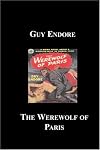
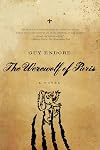
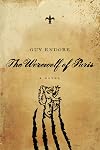
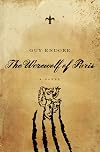
The Werewolf of Paris
by Guy Endore
On This Page
Description
The werewolf is one of the great iconic figures of horror in folklore, legend, film, and literature. And connoisseurs of horror fiction know that The Werewolf of Paris is a cornerstone work, a masterpiece of the genre that deservedly ranks with Mary Shelley's Frankenstein, Bram Stoker's Dracula, and Robert Louis Stevenson's The Strange Case of Dr. Jekyll and Mr. Hyde. Endore's classic novel has not only withstood the test of time since it was first published in 1933, but it boldly used and show more portrayed elements of sexual compulsion in ways that had never been seen before, at least not in horror literature. In this gripping work of historical fiction, Endore's werewolf, an outcast named Bertrand Caillet, travels across pre-Revolutionary France seeking to calm the beast within. Stunning in its sexual frankness and eerie, fog-enshrouded visions, this novel was decidedly influential for the generations of horror and science fiction authors who came afterward. show lessTags
Recommendations





















Member Reviews
Guy Endore's 'The Werewolf of Paris' (1933) has been touted as doing for the werewolf what 'Dracula' did for vampires but this is nonsense. Although it has its qualities, it is a literary mish-mash that is not a patch on Bram Stoker's seminal novel.
Endore himself was an American novelist and scriptwriter who had Tod Browning's 'Mark of the Vampire' to his credit as well as 'The Curse of the Werewolf' (based on this book), 'Mad Love' and other schlocky but cult Hollywood favourites. As this book testifies, he could write with facility.
So what is the problem with the book, especially as those sections that actually deal with the werewolf are very good? It is that he tries to do too many things at once. If you try to sell two things (let show more alone three or four) you will not sell one.
We start with a quasi-autobiographical introduction that introduces the manuscript, the trope that is the go-to for a lot of weird fiction. This indicates what is to come - a classic interwar American love affair with all things French.
This passion for France may be the heart of the problem because a folkloric tale of a loup-garou drifts into a pastiche/parody/tribute (depending on your attitude to such things) of the French novel and then into a somewhat didactic account of the Paris Commune.
None of this is bad in itself but it detracts from the authenticity of the central story which, in itself, offers some degree of confusion over the origins of the werewolf. Is it genetic, is it environmental, is it just plain evil? Endore seems to settle somewhere traditionalist Catholicism and Lamarckianism.
This core would have made a fine novella that could have made or enhanced Endore's reputation since, despite the obscurities as to context, it nevertheless does not shy from authentic horror, is very well written and introduces an interesting sado-masochistic element with Sophie.
This sexual element acts as counterpoint to Stoker's. Whereas with Dracula we have sublimated eroticism, seduction and female desire in the hands of the ultimate cad, Bertrand (werewolf) and Sophie (Jewish princess) create a more physical direct eroticism of cuts, pain and death.
However, although we might have tolerated the distraction of the aping of the French great novel as the framing of the monster, the Paris Commune setting that dominates the second half of the book is far too didactic, allowing Endore, the American Leftie, to excoriate violent Europeans.
The point of the didacticism is passed over lightly when Chaplin's argument from 'M. Verdoux' appears. The ordinary criminal from circumstance (after all, Bertrand can hardly be responsible for his inheritance) is contrasted with the bloody violence of both sides in the Commune.
Endore is clearly the type of the world-weary intellectual looking at the horrors of the world and wanting to vent his frustration at the species. He also resurrects the idea of Catholic evil (interesting from a Jewish writer) without irony although he himself would incline to Communism.
His excoriation of the Communards incidentally is far from incompatible with his moralistic American Communism. Marxism is disciplined - or at least was amongst interwar Anglo-Saxon Leftists. Very intellectual and disciplined Marxists had (then) little time for emotional blood-letting.
So, we get a somewhat hysterical account of that historical episode in which no horror is disallowed the reader but at the cost of our werewolf becoming a mere bit player. At a certain point we ask is this a contribution to the werewolf genre or is it a political tract using the horror novel as medium?
Endore comes to seem self-indulgent in his story-telling, wanting to express his interests and concerns and allow himself the pleasure of writing horrible things, without putting in the effort to give his story coherence or the opportunity to found a true mythos.
It is no surprise to find that, although the book has its aficionados, it cannot be said to be firmly placed at the top of the horror canon although this is not on account of it being in any way careful not to shock us. Precisely the opposite. This is a novel of real horror far more than of unease.
He closes with a detailed and gruesome account of cemetery practices in Paris but there are many instances of extremity with detailed accounts of what a murderous werewolf might do, of grave-robbing, political massacres, of the afore-mentioned sado-masochism and even of incest.
Once again, we are led to question why this horror (meant to shock) was not integrated into a better structured and frankly shorter tale and Endore perhaps written a separate French pastiche about the horrors instigated by the Communards and the countryside thugs who Thiers sent in to destroy them. show less
Endore himself was an American novelist and scriptwriter who had Tod Browning's 'Mark of the Vampire' to his credit as well as 'The Curse of the Werewolf' (based on this book), 'Mad Love' and other schlocky but cult Hollywood favourites. As this book testifies, he could write with facility.
So what is the problem with the book, especially as those sections that actually deal with the werewolf are very good? It is that he tries to do too many things at once. If you try to sell two things (let show more alone three or four) you will not sell one.
We start with a quasi-autobiographical introduction that introduces the manuscript, the trope that is the go-to for a lot of weird fiction. This indicates what is to come - a classic interwar American love affair with all things French.
This passion for France may be the heart of the problem because a folkloric tale of a loup-garou drifts into a pastiche/parody/tribute (depending on your attitude to such things) of the French novel and then into a somewhat didactic account of the Paris Commune.
None of this is bad in itself but it detracts from the authenticity of the central story which, in itself, offers some degree of confusion over the origins of the werewolf. Is it genetic, is it environmental, is it just plain evil? Endore seems to settle somewhere traditionalist Catholicism and Lamarckianism.
This core would have made a fine novella that could have made or enhanced Endore's reputation since, despite the obscurities as to context, it nevertheless does not shy from authentic horror, is very well written and introduces an interesting sado-masochistic element with Sophie.
This sexual element acts as counterpoint to Stoker's. Whereas with Dracula we have sublimated eroticism, seduction and female desire in the hands of the ultimate cad, Bertrand (werewolf) and Sophie (Jewish princess) create a more physical direct eroticism of cuts, pain and death.
However, although we might have tolerated the distraction of the aping of the French great novel as the framing of the monster, the Paris Commune setting that dominates the second half of the book is far too didactic, allowing Endore, the American Leftie, to excoriate violent Europeans.
The point of the didacticism is passed over lightly when Chaplin's argument from 'M. Verdoux' appears. The ordinary criminal from circumstance (after all, Bertrand can hardly be responsible for his inheritance) is contrasted with the bloody violence of both sides in the Commune.
Endore is clearly the type of the world-weary intellectual looking at the horrors of the world and wanting to vent his frustration at the species. He also resurrects the idea of Catholic evil (interesting from a Jewish writer) without irony although he himself would incline to Communism.
His excoriation of the Communards incidentally is far from incompatible with his moralistic American Communism. Marxism is disciplined - or at least was amongst interwar Anglo-Saxon Leftists. Very intellectual and disciplined Marxists had (then) little time for emotional blood-letting.
So, we get a somewhat hysterical account of that historical episode in which no horror is disallowed the reader but at the cost of our werewolf becoming a mere bit player. At a certain point we ask is this a contribution to the werewolf genre or is it a political tract using the horror novel as medium?
Endore comes to seem self-indulgent in his story-telling, wanting to express his interests and concerns and allow himself the pleasure of writing horrible things, without putting in the effort to give his story coherence or the opportunity to found a true mythos.
It is no surprise to find that, although the book has its aficionados, it cannot be said to be firmly placed at the top of the horror canon although this is not on account of it being in any way careful not to shock us. Precisely the opposite. This is a novel of real horror far more than of unease.
He closes with a detailed and gruesome account of cemetery practices in Paris but there are many instances of extremity with detailed accounts of what a murderous werewolf might do, of grave-robbing, political massacres, of the afore-mentioned sado-masochism and even of incest.
Once again, we are led to question why this horror (meant to shock) was not integrated into a better structured and frankly shorter tale and Endore perhaps written a separate French pastiche about the horrors instigated by the Communards and the countryside thugs who Thiers sent in to destroy them. show less
Written in 1933, this is framed with a story of an American finding a discarded manuscript about the werewolf, Bertrand Caillet. Set in France in the late 19th Century, this tries to be for werewolves what Dracula is to vampires, filled with lots of werewolf lore.
The novel doesn't gloss over the original legendary nature of werewolves as savage, uncontrollable and dangerous, not just smexy men running in a pack with a furry problem... It's what I appreciated in the book more than anything. It's hard to find straight-up horror these days. Vampires sparkle, and werewolves are mannerly professors or suave sophisticates, so I enjoyed finding one that's an out and out monster, mad, bad, and dangerous to know.
There are risque and disturbing show more elements--rape, incest, etc, yet the story is shot through with dark humor. The secondary characters are finely drawn and the historical backdrop of the Franco-Prussian War and Paris Commune well-detailed. However, it often has tedious, rambling parts that have nothing to do with the story--mostly in service to the rather obvious communist point-of-view. Way too much of the material about the Paris Commune had nothing to do with the werewolf. show less
The novel doesn't gloss over the original legendary nature of werewolves as savage, uncontrollable and dangerous, not just smexy men running in a pack with a furry problem... It's what I appreciated in the book more than anything. It's hard to find straight-up horror these days. Vampires sparkle, and werewolves are mannerly professors or suave sophisticates, so I enjoyed finding one that's an out and out monster, mad, bad, and dangerous to know.
There are risque and disturbing show more elements--rape, incest, etc, yet the story is shot through with dark humor. The secondary characters are finely drawn and the historical backdrop of the Franco-Prussian War and Paris Commune well-detailed. However, it often has tedious, rambling parts that have nothing to do with the story--mostly in service to the rather obvious communist point-of-view. Way too much of the material about the Paris Commune had nothing to do with the werewolf. show less
The narrator of this novel is communicating the story of Bertrand, a young man inflicted with lycanthropy. He found a defense statement written by Bertrand's adoptive uncle Aymar and turned it into this novel. The story follows Bertrand's ancestry and violent conception. Aymar's hypothesis is that people with weak spirits can be possessed by the spirits of wolves. He tries to tame Bertrand without success. Once Bertrand has the taste for human blood there is no turning back.
None of the characters in this novel has any redeeming qualities. Bertrand comes across as a weak idiot who lives in denial most of the time. He lets his lusts control him. You never feel sorry for his affliction. His uncle doesn't care much for Bertrand even as a show more child. He tries to educate him, but you never get the impression that he shows him any love or affection. Aymar treats him like a dog and it only makes things worse. Everyone Bertrand comes in contact with is doomed as though they are cursed by even the most fleeting contact with him. When you start to think that true love will cure him you find out that he has corrupted his lover as well.
The over the top gore and long narrative passages made this novel a disappointing read. Some of the cannibalistic sections were so over played that I found them funny. The idiot Bertrand kills a friend of his on the road to Paris and is horrified at first, then later down the road he gets peckish and remarks that he should have taken the dead man's arm with him to snack on later. Near the end of the story the author ads an anti-war theme by describing the atrocities of the Franco-Prussian War and compares man's in-humanity to man to werewolfism.
I read this novel when I found out it was the basis for the Hammer Studios film "The Curse of the Werewolf." This is an unusual case of the movie being better than the book. I suggest skipping the book and watching the movie instead.
A warning to anyone reading this as a kindle book, the formatting is lousy. Every page has a miss-spelled word. One character named Mrs. Didier is turned into Mrs. Dither which is kind of funny, but I'm sure not what the author intended. show less
None of the characters in this novel has any redeeming qualities. Bertrand comes across as a weak idiot who lives in denial most of the time. He lets his lusts control him. You never feel sorry for his affliction. His uncle doesn't care much for Bertrand even as a show more child. He tries to educate him, but you never get the impression that he shows him any love or affection. Aymar treats him like a dog and it only makes things worse. Everyone Bertrand comes in contact with is doomed as though they are cursed by even the most fleeting contact with him. When you start to think that true love will cure him you find out that he has corrupted his lover as well.
The over the top gore and long narrative passages made this novel a disappointing read. Some of the cannibalistic sections were so over played that I found them funny. The idiot Bertrand kills a friend of his on the road to Paris and is horrified at first, then later down the road he gets peckish and remarks that he should have taken the dead man's arm with him to snack on later. Near the end of the story the author ads an anti-war theme by describing the atrocities of the Franco-Prussian War and compares man's in-humanity to man to werewolfism.
I read this novel when I found out it was the basis for the Hammer Studios film "The Curse of the Werewolf." This is an unusual case of the movie being better than the book. I suggest skipping the book and watching the movie instead.
A warning to anyone reading this as a kindle book, the formatting is lousy. Every page has a miss-spelled word. One character named Mrs. Didier is turned into Mrs. Dither which is kind of funny, but I'm sure not what the author intended. show less
[b:The Werewolf of Paris|539519|The Werewolf of Paris|Guy Endore|http://photo.goodreads.com/books/1175633863s/539519.jpg|526906] is an interesting book. Part horror story and part historical fiction, it follows the travails of the titular werewolf of Paris from his birth to his death, as well as his place in the blood-drenched moment of history known as the Franco-Prussian War that was followed by the ill-fated Paris Commune. Interestingly the werewolf in question, Bertrand Caillet, is actually something of a secondary character in his own tale, as it is told from the perspective of his adoptive father Aymar Galliez. We never see the wolf itself in action, and despite some tantalizing clues built upon separate pieces of evidence, the show more actual lycanthropy of Bertrand could as easily be interpreted as a purely psychological affliction as opposed to a supernatural one. Add to that the fact that we are being told this tale third-hand (Endore’s conceit being that his story is being constructed from the reports and reminiscences of Galliez who had to put the pieces together mostly second-hand, interspersed with Endore’s own researches into the documents of the period) and the truth or fiction of the lyncanthropy in question becomes even greater. Sometimes this conceit does not always benefit Endore’s story, for there are many scenes and events that occur within the text that would have been clearly outside of the knowledge of Galliez or any documentary sources of the day…still that is a quibble for something that really is a novel and quite an enjoyable one at that.
Endore starts his ‘documentary’ with a tale taken from the annals of history that purports to enlighten us as to the ultimate origins of our werewolf. It is a sordid tale of feuding nobility wherein the Pitamonts and Pitavals, after having waged generations of warfare against each other, finally end their feud in mutual impoverishment and one of the last of the Pitamonts is held captive for years by the last of the Pitavals. His imprisonment is an inhuman one, and he is left to suffer in a literal hole in the ground, fed nothing save raw meat. This apparently triggers his transformation into the wolf-man of legend. Our tale truly begins, however, when Josephine, a young peasant girl newly arrived in Paris, is raped by a priest, a descendant of the last of the Pitamonts, and bears Bertrand, a child destined to bring forth the family curse.
We follow Bertrand in his young life, at first so full of promise and then slowly brought to near ruin by his ever-increasing taste for blood. Strange things begin to happen in Bertrand’s village: animals go missing or turn up dead, recent corpses are found exhumed and partially eaten. What could be happening? Slowly Bertrand’s “uncle” Aymar (the nephew of the woman who had taken in Josephine and the man who ends up becoming responsible for both mother and child) begins to put the pieces of the puzzle together and see that everything leads back to his nephew. At first he tries to slake the thirst of the monster inside Bertrand by feeding the boy raw meat and keeping him confined to the house. This only has limited efficacy and soon more drastic measures need to be taken. Ultimately the boy is able to escape his well-meant prison and, starving to appease his lusts, goes on a spree of murder and terror that takes him to Paris. Here, amidst the confusion of the end of the Franco-Prussian war and the rise of the Commune Bertrand is able to satisfy most of his hungers free from persecution or discovery. But his Uncle Aymar is spurred on by regret and remorse. He feels responsible for the release of this beast upon the world, a beast he is convinced is a supernatural terror, and decides to hunt him down. The rest of the tale details his attempts to find Bertrand and his slowly dawning discovery amidst the chaos and death that seems to permanently reside in Paris that perhaps mankind itself is the true monster. Side by side with this runs the parallel story of Bertrand and his fortuitous discovery of a lover not only able, but willing to supply him with a conduit for the slaking of his varied lusts…it is an interesting picture of depravity, lust and mutual co-dependence. Of course things come to a head and the piper must be paid.
Endore’s overarching purpose is, I think, not really to tell a werewolf story, but a desire to expose the bloodthirsty nature of mankind, for which the werewolf of the title becomes little more than a symbol, or even a contrast to this thesis, since one lone werewolf, no matter how savage, can never hope to decimate the lives of which plain old human conflict is capable. For, as even Aymar the unstinting hunter of the wolf must admit, if the hands of “normal” men are able to commit and rationalize the cold-blooded killing of 20,000 commoners as part of the reaction against the Commune (not to mention those killed by the Commune itself in its heyday, or the casualties of the Franco-Prussian war before it) then “What was a werewolf who had killed a couple of prostitutes, who had dug up a few corpses…?” Endore, and by extension Aymar, even postulates that the very existence of the werewolf may have been nothing more than the sickness of the time manifesting itself physically…though it is left open-ended in a chicken-and-egg way whether it is the madness of the time that allowed the wolf to be born, or whether it was the existence of the wolf that could infect mankind with its madness and bloodlust.
Overall this was a good tale, though I would say it came across much more as historical fiction for me than as pure horror (which in my opinion is fine). It has also been claimed that this is the “Dracula for Werewolves” and I’m not sure if I agree. Certainly it shares similarities with Dracula in its documentary format and is a well-written, and even seminal, version of the werewolf myth, but I am not widely enough read in werewolf stories to say whether or not it is the best of them. Also, the ambiguity of the actual ‘reality’ of Bertrand’s lyncanthropy and his relatively secondary role as a character in the story makes me think that while this is a good tale well worth reading, it may not be the ultimate exemplar of werewolf fiction. show less
Endore starts his ‘documentary’ with a tale taken from the annals of history that purports to enlighten us as to the ultimate origins of our werewolf. It is a sordid tale of feuding nobility wherein the Pitamonts and Pitavals, after having waged generations of warfare against each other, finally end their feud in mutual impoverishment and one of the last of the Pitamonts is held captive for years by the last of the Pitavals. His imprisonment is an inhuman one, and he is left to suffer in a literal hole in the ground, fed nothing save raw meat. This apparently triggers his transformation into the wolf-man of legend. Our tale truly begins, however, when Josephine, a young peasant girl newly arrived in Paris, is raped by a priest, a descendant of the last of the Pitamonts, and bears Bertrand, a child destined to bring forth the family curse.
We follow Bertrand in his young life, at first so full of promise and then slowly brought to near ruin by his ever-increasing taste for blood. Strange things begin to happen in Bertrand’s village: animals go missing or turn up dead, recent corpses are found exhumed and partially eaten. What could be happening? Slowly Bertrand’s “uncle” Aymar (the nephew of the woman who had taken in Josephine and the man who ends up becoming responsible for both mother and child) begins to put the pieces of the puzzle together and see that everything leads back to his nephew. At first he tries to slake the thirst of the monster inside Bertrand by feeding the boy raw meat and keeping him confined to the house. This only has limited efficacy and soon more drastic measures need to be taken. Ultimately the boy is able to escape his well-meant prison and, starving to appease his lusts, goes on a spree of murder and terror that takes him to Paris. Here, amidst the confusion of the end of the Franco-Prussian war and the rise of the Commune Bertrand is able to satisfy most of his hungers free from persecution or discovery. But his Uncle Aymar is spurred on by regret and remorse. He feels responsible for the release of this beast upon the world, a beast he is convinced is a supernatural terror, and decides to hunt him down. The rest of the tale details his attempts to find Bertrand and his slowly dawning discovery amidst the chaos and death that seems to permanently reside in Paris that perhaps mankind itself is the true monster. Side by side with this runs the parallel story of Bertrand and his fortuitous discovery of a lover not only able, but willing to supply him with a conduit for the slaking of his varied lusts…it is an interesting picture of depravity, lust and mutual co-dependence. Of course things come to a head and the piper must be paid.
Endore’s overarching purpose is, I think, not really to tell a werewolf story, but a desire to expose the bloodthirsty nature of mankind, for which the werewolf of the title becomes little more than a symbol, or even a contrast to this thesis, since one lone werewolf, no matter how savage, can never hope to decimate the lives of which plain old human conflict is capable. For, as even Aymar the unstinting hunter of the wolf must admit, if the hands of “normal” men are able to commit and rationalize the cold-blooded killing of 20,000 commoners as part of the reaction against the Commune (not to mention those killed by the Commune itself in its heyday, or the casualties of the Franco-Prussian war before it) then “What was a werewolf who had killed a couple of prostitutes, who had dug up a few corpses…?” Endore, and by extension Aymar, even postulates that the very existence of the werewolf may have been nothing more than the sickness of the time manifesting itself physically…though it is left open-ended in a chicken-and-egg way whether it is the madness of the time that allowed the wolf to be born, or whether it was the existence of the wolf that could infect mankind with its madness and bloodlust.
Overall this was a good tale, though I would say it came across much more as historical fiction for me than as pure horror (which in my opinion is fine). It has also been claimed that this is the “Dracula for Werewolves” and I’m not sure if I agree. Certainly it shares similarities with Dracula in its documentary format and is a well-written, and even seminal, version of the werewolf myth, but I am not widely enough read in werewolf stories to say whether or not it is the best of them. Also, the ambiguity of the actual ‘reality’ of Bertrand’s lyncanthropy and his relatively secondary role as a character in the story makes me think that while this is a good tale well worth reading, it may not be the ultimate exemplar of werewolf fiction. show less
Episodic novel frequently diverges unto tangential tales of poor souls who fall victim to the aftermath of the sad and sordid tale of Bertrand. Doomed from the start, having been fathered by a priest and born on Christmas Day with joined eyebrows, Betrand makes for quite a tragic character in Guy Endore often rambling narrative. Its a bit of a slow burn before some genuine werewolf action commences, but Endore throws in some creepy touches into Bertrand's early life; being thirsty for the taste of blood as a young child stands out in particular. The author teases the reader with Aymar's growing hysteria over his 'nephew''s night time antics, listening to the sound of claws at his door. Endore briefly entertains the idea that somehow show more Bertrand himself is perhaps responsible for all of the grim war fever that is upsetting Europe, which is interestingly a similar idea hinted in relation to Dracula in the novel Dracula: Asylum. The Parisian segment with the General and his daughter is one of the best of the side vignettes that showcase the side effects of Bertrand's rampages as a werewolf. The sidebar on public hysteria regarding the supposed immoral and cruel secret lives of priests, monks, and nuns in Paris is interesting in itself but offers nothing to advance the plot. The novel's flow was too overly complicated for me to say that I enjoyed it. I appreciated the basic elements of the story, the methods of survival employed by Bertand over the course of his life, and some of the author's stylistic form. I'm glad I read the book, simply to say that I have read it, but honestly I found this novel a chore to get through. show less
An influential werewolf novel written by Guy Endore in the 1930s which was the source for the classic hammer Horror film "The Curse Of The Werewolf". This is a well written and engaging story of how and why the main character has been afflicted with lycanthropy and the subsequent attempts by both his adpoted uncle and eventually himself to find a cure. Although in some respects the narrative could be viewed as rather tame by todays standards, the author's portrayal of the werewolf as a feral beast with an uncontrollable blood-lust results in a number of rather disturbing topics being covered including cannibalism. In summary this is must read for fans of classic horror fiction.
Unfortunately as the book has only been re-printed show more infrequently, even well read paperback copies command relatively high prices. show less
Unfortunately as the book has only been re-printed show more infrequently, even well read paperback copies command relatively high prices. show less
I feel like this had a lot of potential to be great but fell short. The most interesting parts of the story were left inconclusive. But it had some moments.
Members
- Recently Added By
Lists

Cawthorn and Moorcock's Fantasy: The 100 Best Books
110 works; 7 members

Favorite Werewolf Novels
62 works; 30 members

Best Horror Mega-List
342 works; 6 members

Overdue Podcast
806 works; 9 members

Jones and Newman's Horror: The 100 Best Books
100 works; 4 members
NPR Reader Poll: 100 Best Horror Novels and Stories
100 works; 20 members

Best Vampire & Werewolf Fiction
221 works; 146 members
Author Information

Some Editions
Awards and Honors
Series
Belongs to Publisher Series
Work Relationships
Has the adaptation
Common Knowledge
- Original title
- The Werewolf Of Paris
- Original publication date
- 1933
- People/Characters
- Bertrand Caillet; Aymar Galliez; Sophie de Blumenberg; Barral de Montfort; Jacques Bramond; Jean Robert (show all 10); Jehan Pitamont; Geoffroy Saint-Hilaire; Anatole de Grandmont; Sophie de Blumenberg
- Important places
- Paris, France
- Important events
- Franco-Prussian War; Paris Commune (1871)
- Epigraph
- These creatures live onely without meats;
The Cameleon by the Air,
The Want or Mole by the Earth, The Sea-Herring by the Water,
The Salamander by the Fire, Unto which may be added the Dormouse, which lives partly... (show all) by sleep,
And the Werewolf, whose food is night, winter and death. -- An old saying - Dedication
- to Henrietta Portugal
- First words
- Where shall I begin my tale?
- Last words
- (Click to show. Warning: May contain spoilers.)This completes the elucidation of the Galliez script.
- Original language
- English
- Canonical DDC/MDS
- 813.087382
Classifications
- Genres
- Horror, Fiction and Literature, General Fiction, Historical Fiction, Fantasy
- DDC/MDS
- 813.087382 — Literature & rhetoric American literature in English American fiction in English By type Genre fiction Adventure fiction Horror fiction; Ghost fiction Horror fiction Werewolves, lycanthropes and shapeshifters
- LCC
- PZ3 .E571 — Language and Literature Fiction and juvenile belles lettres Fiction and juvenile belles lettres Fiction in English
- BISAC
Statistics
- Members
- 332
- Popularity
- 95,568
- Reviews
- 11
- Rating
- (3.68)
- Languages
- 6 — Dutch, English, French, German, Spanish, Turkish
- Media
- Paper, Audiobook, Ebook
- ISBNs
- 19
- UPCs
- 1
- ASINs
- 15