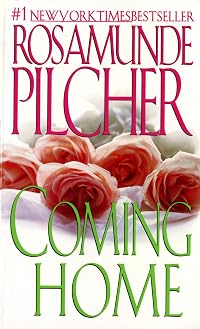
Coming Home
by Rosamunde Pilcher
On This Page
Description
Against the backdrop of an elegant Cornwall mansion before World War II and a vast continent-spanning canvas during the turbulent war years, #1 New York Times bestselling author Rosamunde Pilcher's Coming Home tells of an extraordinary young woman's coming of age, coming to grips with love and sadness, and in every sense of the term, coming 1935, Judith Dunbar is left behind at a British boarding school when her mother and baby sister go off to join her father in Singapore. At Saint show more Ursula's, her friendship with Loveday Carey-Lewis sweeps her into the privileged, madcap world of the British aristocracy, teaching her about values, friendship, and wealth. But it will be the drama of war, as it wrenches Judith from those she cares about most, that will teach her about about love. show lessTags
Recommendations

























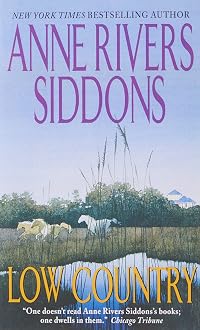


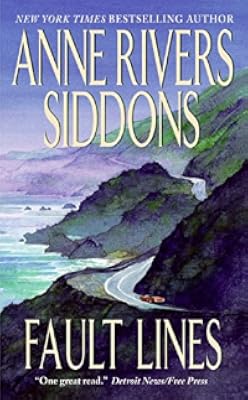
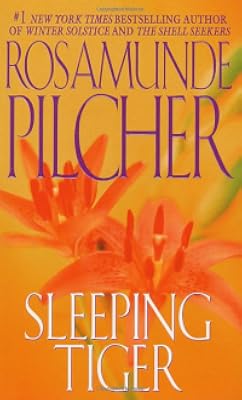

Member Recommendations


MyriadBooks A completely different time setting, yes, but a very similar feel of learning how to live your life on your own merits.

Member Reviews
Rosamunde, darling, your novels are my guilty pleasure, but a thousand pages of middle class bleating is rather trying on the old sensibilities. I really only bought a second hand copy of this weighty tome because I could have sworn that I'd abandoned the story midway through, many years back, only to keep remember rather more and more as I read on. I think I must have given up with only the last two hundred pages to go. That'll teach me.
Anyway. While I raved about The Shell Seekers, I found myself rather more critical of Coming Home. I do love the Carey-Lewises, cliché ridden ensemble of romantic stereotypes though they are, and their beautiful Du Maurier style house in Cornwall, Nancherrow, but I could cheerfully throttle hearty show more heroine Judith, and the jolly hockey-sticks dialogue spouted by each and every character doesn't help. Judith is a horrid combination of Austen's Fanny Price and Gaskell's Margaret Hale, insufferably noble and beloved by all (she also has a curious combination of blonde hair and dark eyelashes, but at least she doesn't have violet eyes, like her friend Loveday). Packed off to boarding school at fourteen, Judith is plagued by a series of unfortunate events which leave her 'independent', not to mention 'pretty' (Pilcher's highest accolade for her female characters) and smart. She is assimilated by the aforementioned upper class Carey-Lewises, who drift through life on a cloud of liberal lifestyles and idyllic Cornish landscapes, bestowing the fairy dust of charm and patronage on assorted hangers-on. Daughter Loveday is at school with Judith, but there is also golden boy Edward and - wait for it - Athena, plus parents Diana and the Colonel, in the family of posh eccentrics. Everything is too this and frightfully that, and everyone is a darling or a dear. I think I might have found them all too, too amusing if Judith was more of an antidote, but she simply drips with the same ridiculous phrases. Did people really talk like that in real life, and if they did, please tell me that nobody this side of the 1950s still does? And the period-accurate, but still grating, insistence that all 'pretty' young women must ultimately wish to get married and have babies, also sets my teeth on edge - Judith/Rosamunde refers to a senior female officer in the WRNS during the War as an 'embittered old hag of a spinster' and a 'prune-faced woman with a power complex' because she puts duty before giving Judith the weekend off to lunch with Diana and Loveday!
The author is more of a storyteller than a wordsmith, granted, but writing 'her knees literally turned to water' (are you sure about that?) and starting sentence after sentence (after sentence) with 'as well' are not easily overlooked after the first five hundred pages. In fact, the whole novel could have been comfortably reduced to five hundred pages, because bar a handful of unlikely plot twists and hackneyed romantic devices, nothing much really happens. Rosamunde Pilcher could learn a lot from Daphne Du Maurier!
An epic aga saga for readers who suffer from rose-tinted nostalgia. show less
Anyway. While I raved about The Shell Seekers, I found myself rather more critical of Coming Home. I do love the Carey-Lewises, cliché ridden ensemble of romantic stereotypes though they are, and their beautiful Du Maurier style house in Cornwall, Nancherrow, but I could cheerfully throttle hearty show more heroine Judith, and the jolly hockey-sticks dialogue spouted by each and every character doesn't help. Judith is a horrid combination of Austen's Fanny Price and Gaskell's Margaret Hale, insufferably noble and beloved by all (she also has a curious combination of blonde hair and dark eyelashes, but at least she doesn't have violet eyes, like her friend Loveday). Packed off to boarding school at fourteen, Judith is plagued by a series of unfortunate events which leave her 'independent', not to mention 'pretty' (Pilcher's highest accolade for her female characters) and smart. She is assimilated by the aforementioned upper class Carey-Lewises, who drift through life on a cloud of liberal lifestyles and idyllic Cornish landscapes, bestowing the fairy dust of charm and patronage on assorted hangers-on. Daughter Loveday is at school with Judith, but there is also golden boy Edward and - wait for it - Athena, plus parents Diana and the Colonel, in the family of posh eccentrics. Everything is too this and frightfully that, and everyone is a darling or a dear. I think I might have found them all too, too amusing if Judith was more of an antidote, but she simply drips with the same ridiculous phrases. Did people really talk like that in real life, and if they did, please tell me that nobody this side of the 1950s still does? And the period-accurate, but still grating, insistence that all 'pretty' young women must ultimately wish to get married and have babies, also sets my teeth on edge - Judith/Rosamunde refers to a senior female officer in the WRNS during the War as an 'embittered old hag of a spinster' and a 'prune-faced woman with a power complex' because she puts duty before giving Judith the weekend off to lunch with Diana and Loveday!
The author is more of a storyteller than a wordsmith, granted, but writing 'her knees literally turned to water' (are you sure about that?) and starting sentence after sentence (after sentence) with 'as well' are not easily overlooked after the first five hundred pages. In fact, the whole novel could have been comfortably reduced to five hundred pages, because bar a handful of unlikely plot twists and hackneyed romantic devices, nothing much really happens. Rosamunde Pilcher could learn a lot from Daphne Du Maurier!
An epic aga saga for readers who suffer from rose-tinted nostalgia. show less
This thick novel stretches from 1935-45 and is set on the beautiful shores of Cornwall. It was a lovely read, one filled with unforgettable characters and setting that I got lost in. Judith’s parents and young sister Jess head to Singapore for work while she stays in England with her aunt. She becomes close with the Carey-Lewis family and their glamorous lifestyle at their home, Nancherrow. It reminded me a bit of Brideshead Revisited in that way.
I felt like Judith, Loveday, Aunt Biddy, Edward, Gus, Jeremy, etc. were all real people. They were flawed, kind, selfish, naïve, and all of the things real people are. Pilcher can paint a picture of grief or innocence without making it dramatic. It felt like a glimpse into that world as it show more truly was during that tumultuous period. There's one section with a creepy old man that makes your skin crawl, another with a beautiful party dress that just radiates first love and all the hormones that go with it.
SPOILER**
I loved that despite it feeling like Judith had no one at times, (her aunt dies in a car wreck and her family is in Asia), she is still surrounded by people who care. Her Aunt Biddy and Uncle treat her like their own child. The Carey-Lewis family gives her a room of her own, the headmistress at the school takes her under her wing, and even their maid Mary looks out for Judith.
I'll continue to read more books from this author and I can't believe I've only just discovered her this year! show less
I felt like Judith, Loveday, Aunt Biddy, Edward, Gus, Jeremy, etc. were all real people. They were flawed, kind, selfish, naïve, and all of the things real people are. Pilcher can paint a picture of grief or innocence without making it dramatic. It felt like a glimpse into that world as it show more truly was during that tumultuous period. There's one section with a creepy old man that makes your skin crawl, another with a beautiful party dress that just radiates first love and all the hormones that go with it.
SPOILER**
I loved that despite it feeling like Judith had no one at times, (her aunt dies in a car wreck and her family is in Asia), she is still surrounded by people who care. Her Aunt Biddy and Uncle treat her like their own child. The Carey-Lewis family gives her a room of her own, the headmistress at the school takes her under her wing, and even their maid Mary looks out for Judith.
I'll continue to read more books from this author and I can't believe I've only just discovered her this year! show less
Did you ever read a 826 page novel and when you closed the back board onto the last page wish that there were another 826 pages to go? That is how I felt coming to the end of Coming Home. The title of this novel seems infinitely appropriate for me, because reading Pilcher again feels exactly like that--Coming Home. She makes her settings and her people so real and warm that you want to belong there and to remain listening to the sea and watching the waves crash on a Cornwall beach.
It is 1935 and we are introduced to Judith Dunbar, a fourteen year old about to embark on life at boarding school while her parents and little sister, Jess, are living a world away in Singapore. Her father works for a British company abroad, and the practice show more of sending older children to school and leaving them in the care of relatives is not unusual. Judith has her father’s sister, Aunt Louise, with whom she is to spend holidays, and makes friends with Loveday Carey-Lewis, who is to have a huge impact on her life and fortunes.
Pilcher writes a very linear novel in Coming Home, taking Judith from 1935 England, when there are only whispers of war, and through the war years into 1945. We watch her grow, experience her loves and her losses and in a style that few other authors can match, we see, feel and touch the world she lives in. We hope with her and grieve with her, and I am unashamed to say I shed a few tears with her.
There are a host of characters in Coming Home, but they are like your family--you do not forget who they are or where they fit into the fabric of Judith’s life. One of the major characters is Cornwall itself. The sea, the towns, the colors and the skies that make it special and different from other places in England or the rest of the world.
There is not a single character, from Judith herself to Mr. Nettlebed (the crusty butler who is transformed into a gardener by the war effort), who isn’t as real as the couple who live across the street from you. Her romances are believable and gripping, her twists and turns ring so true to the era and the realities of the times and the war. She can give you a happy ending without leaving you with a saccharin aftertaste. She satisfies your emotional needs without stretching credibility. Few can do this with any success, but Pilcher does it seamlessly.
I first read this novel back in the mid 1990s. I was younger then. I was afraid that with the sharpness of the years and the age of romance behind me it might feel dated or diminished. It doesn’t. As I stumbled into familiar passages, the story came back and captivated me again. I found I still cared about Judith, Loveday, Edward, Gus and Jeremy, Molly and Jess. The descriptions of the path leading to the cove and the charm of Nancherrow were still magnets for me. I could close my eyes and see the Laura Knight image Pilcher described and I knew who Loveday was and who she was to Gus.
I haven’t Cornwall to come home to, but going home to Rosamunde Pilcher is almost the same thing. A huge thank you to Lori for reading with me and making this an even better experience by doing so. show less
It is 1935 and we are introduced to Judith Dunbar, a fourteen year old about to embark on life at boarding school while her parents and little sister, Jess, are living a world away in Singapore. Her father works for a British company abroad, and the practice show more of sending older children to school and leaving them in the care of relatives is not unusual. Judith has her father’s sister, Aunt Louise, with whom she is to spend holidays, and makes friends with Loveday Carey-Lewis, who is to have a huge impact on her life and fortunes.
Pilcher writes a very linear novel in Coming Home, taking Judith from 1935 England, when there are only whispers of war, and through the war years into 1945. We watch her grow, experience her loves and her losses and in a style that few other authors can match, we see, feel and touch the world she lives in. We hope with her and grieve with her, and I am unashamed to say I shed a few tears with her.
There are a host of characters in Coming Home, but they are like your family--you do not forget who they are or where they fit into the fabric of Judith’s life. One of the major characters is Cornwall itself. The sea, the towns, the colors and the skies that make it special and different from other places in England or the rest of the world.
There is not a single character, from Judith herself to Mr. Nettlebed (the crusty butler who is transformed into a gardener by the war effort), who isn’t as real as the couple who live across the street from you. Her romances are believable and gripping, her twists and turns ring so true to the era and the realities of the times and the war. She can give you a happy ending without leaving you with a saccharin aftertaste. She satisfies your emotional needs without stretching credibility. Few can do this with any success, but Pilcher does it seamlessly.
I first read this novel back in the mid 1990s. I was younger then. I was afraid that with the sharpness of the years and the age of romance behind me it might feel dated or diminished. It doesn’t. As I stumbled into familiar passages, the story came back and captivated me again. I found I still cared about Judith, Loveday, Edward, Gus and Jeremy, Molly and Jess. The descriptions of the path leading to the cove and the charm of Nancherrow were still magnets for me. I could close my eyes and see the Laura Knight image Pilcher described and I knew who Loveday was and who she was to Gus.
I haven’t Cornwall to come home to, but going home to Rosamunde Pilcher is almost the same thing. A huge thank you to Lori for reading with me and making this an even better experience by doing so. show less
So I ended up reading three Pilcher novels this holiday weekend. I needed something to do with myself so just decided to get those off my plate. I started with "Coming Home" and finished up with "Winter Solstice." I have to say that the only reason this one doesn't get five stars is that Pilcher was too afraid to allow one of the characters (Loveday) to have an unhappy ending. She had no one but herself to blame though, I just didn't find it realistic how she got her Happily Ever After. Other than that, I thought things were pretty much almost perfect.
Starting in 1935, "Coming Home" follows 14 year old Judith Dunbar. Judith is to be left behind to start boarding school in England, while her mother and 4 year old sister are going to show more join her father in Singapore. Judith ends up being brought into a family of a girl that she meets at boarding school, Loveday Carey-Lewis. Judith quickly becomes enthralled with the whole family, Diana (the mother), Edgar (the father), Athena (the older sister) and Edward (the older brother). Judith feels for the first time that she has a home with the Carey-Lewis's family and is reluctant to be away from them very much.
I really loved the character of Judith. She definitely realizes that life is not often fair. When she realizes that she is going to have to board and then vacation with her Aunt Louise (her father's sister) she takes things in stride. Luckily though, her aunt seems fond of her, and her mother's sister, her Aunt Biddy, is determined to be there for Judith and ensure that she have some fun.
Judith is sensible, loyal, and loving. She's also smart and we find that out via the marks she gets at her boarding school and when she is accepted into Oxford. I was hoping that the ending of the book would have Judith going back to school or something, but that is left up in the air. We just know who she ends up with (no spoilers) and it seems that she will be content with that life. We also find out she is resilient when we see what she does when she realizes a man close to one of her aunt's is after Judith (that whole sequence in the book was freaky). You are also going to feel sorry for Judith when she realizes her first love is full of it (no spoilers). I felt for her and wanted to throttle this person.
I thought the other characters in this book were great. I loved Judith's Aunt Biddy and her uncle as well. They both adored her and do their best to be there for her when a tragedy occurs that affects Judith.
The Carey-Lewis family definitely come alive. I have to say that even though he doesn't look it, the patriarch of the family is the strongest and definitely knows the weaknesses of the others. Athena I felt I didn't really get to know until about mid-way through the book. I initially liked Edward and then went meh. Loveday was selfish as the day was long. Pilcher makes all of these people feel like living and breathing people.
The writing was really good. The flow worked throughout too. I did think that the book was really long though. I get why though, even if I thought some pieces could have been cut a bit.
The backdrop of this book is the pre-war years and during and after World War II. Pilcher obviously knows of what she speaks (she lived through that) and I was fascinated about the details that were dropped. Who knew people would get fined for not having blackout curtains and if any sort of light came through. I did know about Dunkirk, but other incidents are mentioned in this one too. This book also ties what else is going on in Asia with the Japanese taking over in that region as well.
I thought the ending was a bit much though. I am glad Judith got her happy ending, but Loveday's was not even a bit realistic. That whole thing felt very rushed and so did Judith's understanding with the man she is going to marry. Due to the length of this book, Pilcher could have added on another 20-30 pages and had a more satisfying ending. show less
Starting in 1935, "Coming Home" follows 14 year old Judith Dunbar. Judith is to be left behind to start boarding school in England, while her mother and 4 year old sister are going to show more join her father in Singapore. Judith ends up being brought into a family of a girl that she meets at boarding school, Loveday Carey-Lewis. Judith quickly becomes enthralled with the whole family, Diana (the mother), Edgar (the father), Athena (the older sister) and Edward (the older brother). Judith feels for the first time that she has a home with the Carey-Lewis's family and is reluctant to be away from them very much.
I really loved the character of Judith. She definitely realizes that life is not often fair. When she realizes that she is going to have to board and then vacation with her Aunt Louise (her father's sister) she takes things in stride. Luckily though, her aunt seems fond of her, and her mother's sister, her Aunt Biddy, is determined to be there for Judith and ensure that she have some fun.
Judith is sensible, loyal, and loving. She's also smart and we find that out via the marks she gets at her boarding school and when she is accepted into Oxford. I was hoping that the ending of the book would have Judith going back to school or something, but that is left up in the air. We just know who she ends up with (no spoilers) and it seems that she will be content with that life. We also find out she is resilient when we see what she does when she realizes a man close to one of her aunt's is after Judith (that whole sequence in the book was freaky). You are also going to feel sorry for Judith when she realizes her first love is full of it (no spoilers). I felt for her and wanted to throttle this person.
I thought the other characters in this book were great. I loved Judith's Aunt Biddy and her uncle as well. They both adored her and do their best to be there for her when a tragedy occurs that affects Judith.
The Carey-Lewis family definitely come alive. I have to say that even though he doesn't look it, the patriarch of the family is the strongest and definitely knows the weaknesses of the others. Athena I felt I didn't really get to know until about mid-way through the book. I initially liked Edward and then went meh. Loveday was selfish as the day was long. Pilcher makes all of these people feel like living and breathing people.
The writing was really good. The flow worked throughout too. I did think that the book was really long though. I get why though, even if I thought some pieces could have been cut a bit.
The backdrop of this book is the pre-war years and during and after World War II. Pilcher obviously knows of what she speaks (she lived through that) and I was fascinated about the details that were dropped. Who knew people would get fined for not having blackout curtains and if any sort of light came through. I did know about Dunkirk, but other incidents are mentioned in this one too. This book also ties what else is going on in Asia with the Japanese taking over in that region as well.
I thought the ending was a bit much though. I am glad Judith got her happy ending, but Loveday's was not even a bit realistic. That whole thing felt very rushed and so did Judith's understanding with the man she is going to marry. Due to the length of this book, Pilcher could have added on another 20-30 pages and had a more satisfying ending. show less
I first read this about 20 years ago. The only thing I really remember is the atmosphere and the feeling of coziness the narrative evoked. I don't often re-read books, but I'm glad I picked this one up again. At 40 hours of listening, it was one of the longest books I've listened to. I seldom felt like the story was dragging.
A very detailed story about a young woman, Judith Dunbar, who mostly lives in Cornwall, except for some years she lived overseas with her family, and during WWII. In extensive detail, it covers her friends, her surroundings, her thoughts, her actions and the actions of everyone around her. In great detail.
I loved Rosamunde Plicher's book called "Winter Solstice," but have not been very successful at loving other works of hers. This one had enjoyable characters to a point, but everything was so neat and tidy. Even the bad stuff. The fairy godmother of the tale, Diana, struck me as just that, fairy tale fodder. There was such an unreality to her that I kept having echoes of "Rebecca" by Daphne Du Maurier run through my mind. The story did show more not take that twist however. I only managed to finish this by extensive skimming. It was much too long, since events and news were repeated over and over as Judith ran into other characters; retelling in detail (did I mention there is a lot of detail?) everything which had already been told to the reader. It felt like the stories which I tell myself at night to put me to sleep. I use copious amounts of detail, which I have to go over the next night and the next because it is so dull I fall asleep before finishing the story. Which may be why it took me a month and a half to read this book.
It is quite possible that someone else may love all the details lovingly crafted; Pilcher is very good at descriptions, but never again for me. show less
I loved Rosamunde Plicher's book called "Winter Solstice," but have not been very successful at loving other works of hers. This one had enjoyable characters to a point, but everything was so neat and tidy. Even the bad stuff. The fairy godmother of the tale, Diana, struck me as just that, fairy tale fodder. There was such an unreality to her that I kept having echoes of "Rebecca" by Daphne Du Maurier run through my mind. The story did show more not take that twist however. I only managed to finish this by extensive skimming. It was much too long, since events and news were repeated over and over as Judith ran into other characters; retelling in detail (did I mention there is a lot of detail?) everything which had already been told to the reader. It felt like the stories which I tell myself at night to put me to sleep. I use copious amounts of detail, which I have to go over the next night and the next because it is so dull I fall asleep before finishing the story. Which may be why it took me a month and a half to read this book.
It is quite possible that someone else may love all the details lovingly crafted; Pilcher is very good at descriptions, but never again for me. show less
Do you like big fat books, the sort that tell a family saga and have you so immersed you are sorry to see it all end? This is the book for you. It's set in the time period before, during and then after World War I. You'll read about Judith Dunbar who, at age 14, is left behind at a girl's school in Cornwall while her mother and little sister depart for Singapore to join her father.
This story takes you through Judith's younger years in England and her great friendship with the wealthy Carey-Lewis family. The hardships of war, the only son of this affluent family leaving for his military service and the traumas of this time period. There are happy times, revelations and tragedy - you are invested in each situation and get to know these show more people well.
If you're an Anglophile, you will love this book. show less
This story takes you through Judith's younger years in England and her great friendship with the wealthy Carey-Lewis family. The hardships of war, the only son of this affluent family leaving for his military service and the traumas of this time period. There are happy times, revelations and tragedy - you are invested in each situation and get to know these show more people well.
If you're an Anglophile, you will love this book. show less
Members
- Recently Added By
Lists

Women in War
148 works; 30 members

Best family sagas
244 works; 34 members

Top Five Books of 2014
1,064 works; 398 members

Books about World War II
241 works; 22 members

Books Read in 2019
4,052 works; 110 members

Books We Love to Reread
688 works; 296 members
Book Worlds We'd Like To Visit
322 works; 158 members
Author Information

138+ Works 18,691 Members
Rosamunde Pilcher was born Rosamunde Scott on September 22, 1924 in Lelant, Cornwall, England. When World War II broke out, she left school and went to work for the Foreign Office. In 1944, she joined the Women's Royal Naval Service and was stationed in Ceylon when the war ended. Her first short story was published while she was serving in Ceylon. show more She married Graham Pilcher in 1946. Her first novel, Half-Way to the Moon, was published in 1949 under the penname Jane Fraser. She continued writing books under that penname into the early 1960s, but in 1955 she also published her first book under her own name entitled A Secret to Tell. Her best-known novel, The Shell Seekers, was published in 1987. Her other novels included Sleeping Tiger, The End of the Summer, Wild Mountain Thyme, Voices in Summer, September, Coming Home, and Winter Solstice. She also wrote short stories. She died after a short illness on February 6, 2019 at the age of 94. (Bowker Author Biography) show less
Some Editions
Awards and Honors
Awards
Distinctions
Work Relationships
Is contained in
Contains
Has the adaptation
Common Knowledge
- Canonical title*
- De thuisreis
- Original title
- Coming Home
- Original publication date
- 1995
- People/Characters
- Judith Dunbar; Loveday Carey-Lewis; Edward Carey-Lewis; Athena Carey-Lewis; Diana Carey-Lewis; Molly Dunbar (show all 8); Jess Dunbar; Jeremy Wells
- Important places
- Cornwall, England, UK
- Important events
- World War II (1939 | 1945); World War II, Pacific Theater (1941-12-07 | 1945-09-02); Fall of Singapore (1941 | 1942)
- Related movies
- Coming Home (1997 | IMDb)
- Dedication
- This book is for my husband, Graham,
who served with the Highland Division.
And for Gordon, and for Judith, and for all of us
who were young together at the same time. - First words
- The Porthkerris Council School stood half-way up the steep hill which climbed from the heart of the little town to the empty moors which lay beyond.
- Last words
- (Click to show. Warning: May contain spoilers.)"Why don't we go and find out?"
*Some information comes from Common Knowledge in other languages. Click "Edit" for more information.
Classifications
Statistics
- Members
- 2,050
- Popularity
- 10,178
- Reviews
- 48
- Rating
- (4.10)
- Languages
- 12 — Danish, Dutch, English, Estonian, French, German, Greek, Italian, Portuguese, Russian, Spanish, Swedish
- Media
- Paper, Audiobook, Ebook
- ISBNs
- 81
- ASINs
- 26