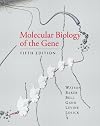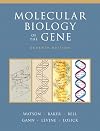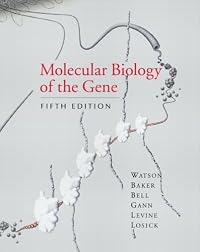
Molecular biology of the gene
by James D. Watson, Stephen P. Bell (Author)
On This Page
Description
Now completely up-to-date with the latest research advances, the Seventh Edition retains the distinctive character of earlier editions. Twenty-two concise chapters, co-authored by six highly distinguished biologists, provide current, authoritative coverage of an exciting, fast-changing discipline.Tags
Recommendations





















Member Reviews
And this is why I became so interested in cell biology. Molecular biology changes so fast that I am tempted to buy the latest, 7th edition.
It's old, and there have been a lot of discoveries, but the basic science is still good.
Cytogenetics; Molecular biology; QH 506
Ratings
Members
- Recently Added By
Lists

Books in the bibliography of Godel, Escher, Bach by Douglas Hofstadter
97 works; 3 members
Author Information

34+ Works 6,103 Members
James Dewey Watson James D. Watson was born on April 6, 1928. Watson was an extremely industrious student and entered the University of Chicago when he was only 15. He received his Bachelor of Science degree in Zoology four years later, and went on to earn a Ph.D. in the same subject at Indiana University. He was performing research at the show more University of Copenhagen in Denmark, when he first learned of the biomolecular research at the Cavendish Laboratory of Cambridge University in England. Watson joined Francis Crick in this work in 1951. At the age of 25, he and colleague Crick discovered the structure of DNA, the double helix. Watson went on to become a Senior Research Fellow in Biology at the California Institute of Technology, before returning to Cambridge in 1955. The following year he moved to Harvard University, where he became Professor of Biology, a post he held until 1976. Watson and Crick won the 1962 Nobel Laureate in Medicine for their discoveries concerning the molecular structure of nuclear acids and its significance for information transfer in living material. In 1968, Watson published his account of the DNA discovery, "The Double Helix." The book became an international best-seller. Watson became the Director and later President of the Cold Spring Harbor Laboratory. In 1988 he served as Director of the Human Genome Project at the National Institutes of Health, a massive project to decipher the entire genetic code of the human species. Watson has received many awards and medals for his work, along with the Nobel Prize, he has also received the Presidential Medal of Freedom. (Bowker Author Biography) show less
Some Editions
Work Relationships
Is contained in
Contains
Is an expanded version of
Common Knowledge
- Disambiguation notice
- The first edition is significantly different from later ones, please don't combine them.
Classifications
Statistics
- Members
- 376
- Popularity
- 82,763
- Reviews
- 3
- Rating
- (4.44)
- Languages
- 6 — English, French, German, Hungarian, Italian, Spanish
- Media
- Paper, Ebook
- ISBNs
- 30
- ASINs
- 10