Let's Go Play at the Adams'
by Mendal W. Johnson
On This Page
Description
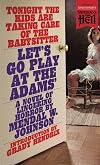
They're just kids ... It's only a game. That's what Barbara, a lovely twenty-year-old babysitter told herself when she awoke bound and gagged. But the knots were tight and painful and the children would not let her go.They're just kids ... It's only a game, she told herself again. But the terror was real ... and deadly!In the decades since its original publication, Mendal W. Johnson's bestseller Let's Go Play at the Adams' (1974) has gained a reputation as one of the most harrowing horror show more novels ever written, and copies have long been unobtainable except at exorbitant prices. This edition reproduces the original paperback cover art and features a new introduction by Grady Hendrix (Paperbacks from Hell), in which details about this cult masterpiece's enigmatic author are revealed for the first time. show lessTags
Recommendations
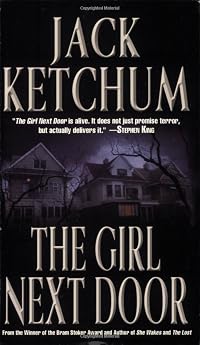
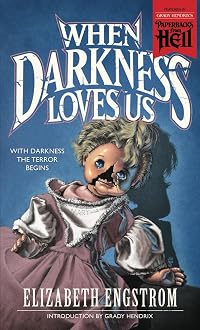
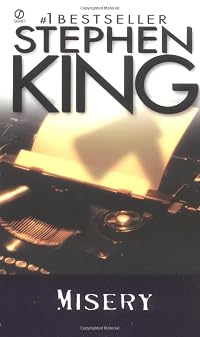

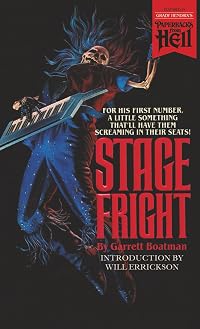

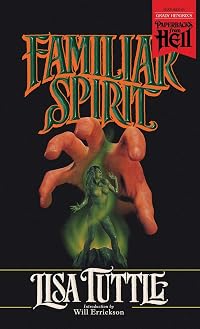
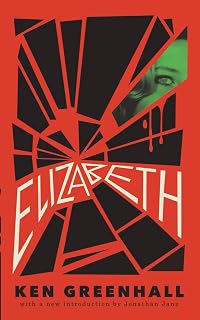

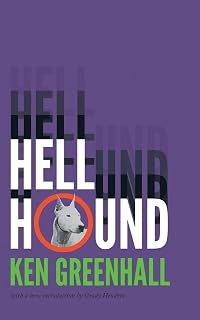
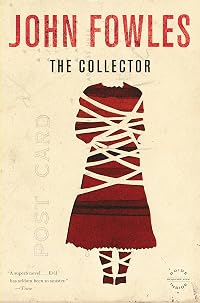
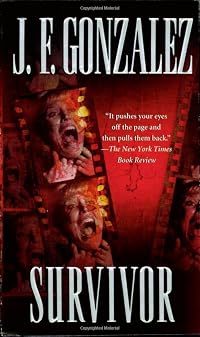
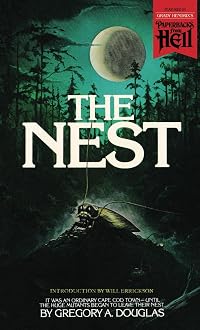
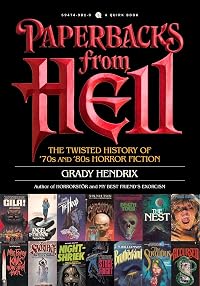

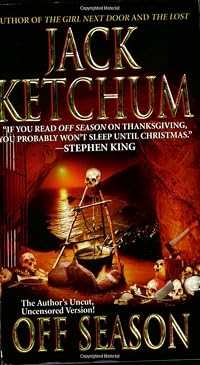

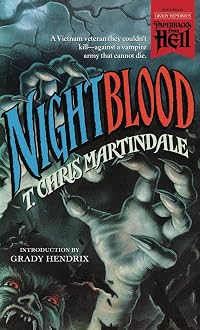


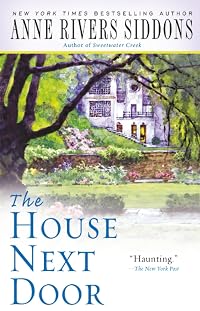
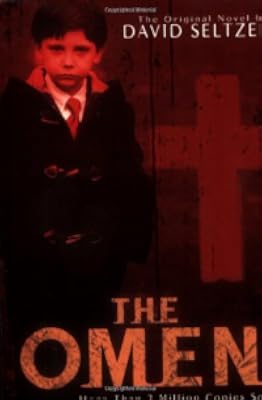

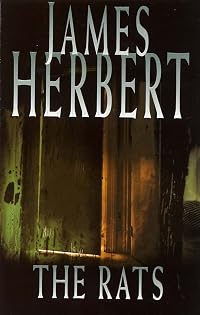

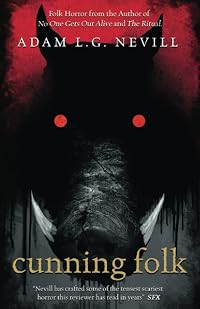




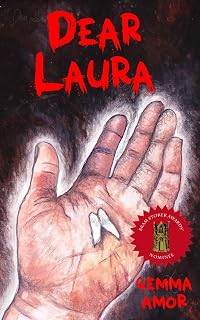
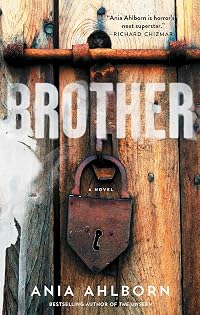
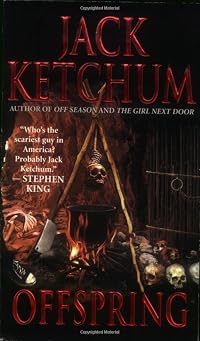
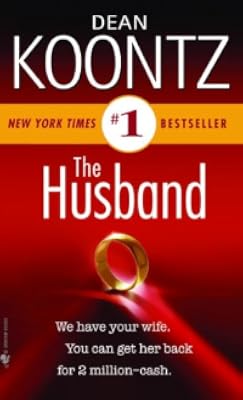
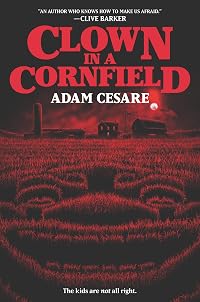
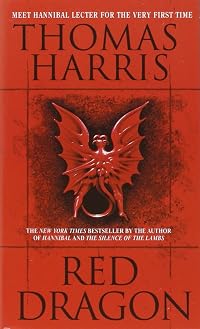

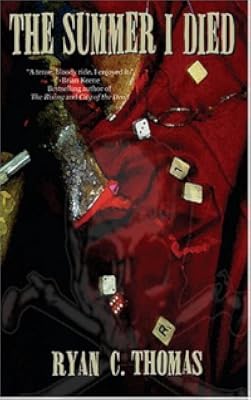

Member Recommendations
Cecrow A better study of the "chaotic morality of children" theme.
Member Reviews
Very bleak and depraved book with no glimpse of hope or feelings of exultation. The writing in this book in regards to the tenebrous atmosphere, vivid descriptions, internal monologues, etc. is very well executed. The main gripe I had with the book doesn't have to do with the actions of the kids, albeit those too were detestable, but rather the motive of the kids. There wasn't any motive other than "just because I/we can," which I find inconceivable, irrespective of that they are "just kids." Diane gave somewhat of an answer when telling Barbara that despite she and the kids liking her, they hated her in that her notion of kids was that they are innocent and naive and therefore incapable of certain things: she wanted to prove her wrong. show more The thing is that NONE of the kids saw what they were doing as wrong or immoral (with the exception of Bobby later on but not even). I also find it unfathomable that Cindy, a ten year old, would be so pliable in doing whatever the ringleaders tell her to do. One moment she misses the playful Barbara and wants her to be safe and another moment she wants to torture her with a hot iron rod. Paul is a psycopath, but I am at least glad that he didn't partake in the sexual assault unlike John, who raped her twice. Diane is a spoiled pretentious brat. Cindy is stupid and makes no sense as a character. Bobby is capricious as fuck. I find it incredulous that Barbara not once sweared at the kids or detested them (even in her head).
The hardest part of the read for me is when Barbara is just seeking comfort or some sort of empathy from the kids and they neglect or completely ignore her, oblivious to her pains and emotions. It was also harrowing to see Barbara slowly come to accept her death and eventually pleading for her death. Another part of the book I dislike is how Barbara somehow maintains her view that the kids are mistaken or forgivable? Near the end of the book she thinks highly of Bobby, even though HE WAS THE ONE WHO STARTED IT. Hate the fact that she orgasmed from the second rape at the end of the book and even called John "lover" several times.
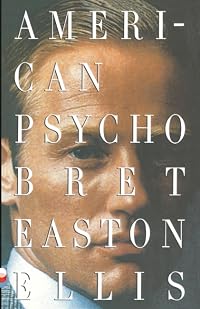
The book is emotionally disturbing for sure. Evil kids in any form of literature or medium is haunting. However, the book isn't as gory or disturbing as books like American Psycho or the Girl Next Door. Nonetheless, it is one that I probably won't want to reread as it is very bleak and unrewarding. It wasn't an enjoying or satisfying read - I mainly binged through it out of morbid curiosity.
**Ending Spoilers**
-She gets strangled to death and her death gets blamed on the "Picker," who the kids ended up killing after Barbara to be painted as the heroes of the story.
Fun fact: The author died 2 years after publishing the book and this was the only work he published in his lifetime. show less
The hardest part of the read for me is when Barbara is just seeking comfort or some sort of empathy from the kids and they neglect or completely ignore her, oblivious to her pains and emotions. It was also harrowing to see Barbara slowly come to accept her death and eventually pleading for her death. Another part of the book I dislike is how Barbara somehow maintains her view that the kids are mistaken or forgivable? Near the end of the book she thinks highly of Bobby, even though HE WAS THE ONE WHO STARTED IT. Hate the fact that she orgasmed from the second rape at the end of the book and even called John "lover" several times.
The book is emotionally disturbing for sure. Evil kids in any form of literature or medium is haunting. However, the book isn't as gory or disturbing as books like American Psycho or the Girl Next Door. Nonetheless, it is one that I probably won't want to reread as it is very bleak and unrewarding. It wasn't an enjoying or satisfying read - I mainly binged through it out of morbid curiosity.
**Ending Spoilers**
-She gets strangled to death and her death gets blamed on the "Picker," who the kids ended up killing after Barbara to be painted as the heroes of the story.
Fun fact: The author died 2 years after publishing the book and this was the only work he published in his lifetime. show less
A nauseating masterpiece on the level of The Girl Next Door. Rich in setting and period detail - this novel glows with the warmth of summer in the 70s - and psychological depth. A horrific event is examined from every possible angle, in slow motion. Long out of print, this book is being done a phenomenal service by Valancourt/Paperbacks from Hell, with a perfectly executed reissue including an introduction from paperback horror champion Grady Hendrix. This is a must purchase for some readers, and deserves the resurgence it will hopefully receive. But know going in that it’s grotesque nature isn’t for everybody.
I read this book last year (2020) and a year later am still haunted by it. I've never had a book do that before. Some compare this book to Girl Next Door though that book was written over a decade later. I do think that this book might have been inspiration for King's Children of the Corn short story published only a few years after this book. This story LGPatA might have been inspired by the Sylvia Likens true crime case. I think this story was more likely inspired by Lord of the Flies.
I've analyzed, and reanalyzed this story over and over again. There is lots of psychology going on and some politics as well. Briefly I think political symbolism is that adults are like the ruling class. Kids are the working class. And the 20 y.o. show more babysitter is in the smallest class, the intellectual class. The kids resent being ruled by the adults, but the intellectual people are a wild card not fitting in with either. I will stop with that here as I'm not trained in political science. But my point is that I think LGPatA mirrors some aspects of politics.
I see this book as more than just a typical horror story such as Dracula. I think LGPatA is a cautionary tale more like Frankenstein. Yes, there is horror in this book, but a message too. These kids, through a childish prank, create a problem. The problem worsens as time goes on. And like problems do, it reaches a tipping point. This happens halfway through the book. The solution is unclear. The problem cannot simply be reversed. There is a crisis quickly approaching. A drastic solution seems the only one which might work. The message is about how easy it is for people (kids and adults too) to convince themselves that an ends justifies a means no matter how horrific. And the means has to be horrific for the solution to work. I'm going to leave it that abstracted. I could go on with my analysis of each character, but wont.
But this is why I say this book is more than just a horror story. It's a warning what people might do when in a dilemma. And that is to take the easy, most controllable, way out. We adults do this frequently and kids watch us doing it. The kids in this story actually mimicked adults rather closely. That, to me, is what made this story so horrible and disturbing. Because the kids ARE doing what adults do. I have pages of analysis but will stop here. I do recommend the book, but be warned what you are getting into. I have given this book a rating of 4/5 numerous places. show less
I've analyzed, and reanalyzed this story over and over again. There is lots of psychology going on and some politics as well. Briefly I think political symbolism is that adults are like the ruling class. Kids are the working class. And the 20 y.o. show more babysitter is in the smallest class, the intellectual class. The kids resent being ruled by the adults, but the intellectual people are a wild card not fitting in with either. I will stop with that here as I'm not trained in political science. But my point is that I think LGPatA mirrors some aspects of politics.
I see this book as more than just a typical horror story such as Dracula. I think LGPatA is a cautionary tale more like Frankenstein. Yes, there is horror in this book, but a message too. These kids, through a childish prank, create a problem. The problem worsens as time goes on. And like problems do, it reaches a tipping point. This happens halfway through the book. The solution is unclear. The problem cannot simply be reversed. There is a crisis quickly approaching. A drastic solution seems the only one which might work. The message is about how easy it is for people (kids and adults too) to convince themselves that an ends justifies a means no matter how horrific. And the means has to be horrific for the solution to work. I'm going to leave it that abstracted. I could go on with my analysis of each character, but wont.
But this is why I say this book is more than just a horror story. It's a warning what people might do when in a dilemma. And that is to take the easy, most controllable, way out. We adults do this frequently and kids watch us doing it. The kids in this story actually mimicked adults rather closely. That, to me, is what made this story so horrible and disturbing. Because the kids ARE doing what adults do. I have pages of analysis but will stop here. I do recommend the book, but be warned what you are getting into. I have given this book a rating of 4/5 numerous places. show less
I did the thing, read this classic shocker.
It was okay, but not amazing. In terms of the events themselves, its not nearly as shocking as its billed as. I'd like that say that's thanks to decades of horror porn movies and splatterpunk writing shifting the needle, but then I think about Last House of the Left and Deliverance and think its not necessarily that. I think, along the lines of a banned book, the very unavailability of Johnson's book for so long until Valancourt re-issued it is what gave it this mystique.
The writing itself, much like its shock value, clocks in at the moderately okay. It seems to be struggling, reaching, for something greater, but never really gets there. Johnson clearly wanted to say *something*, buts its show more always muddy what exactly that message is. Is it about capitalism? About the politically and socially left and right? If its just a simple commentary on human nature writ broad that doesn't feel successful either. I think this lack of clarity and focus, when he's clearly struggling to communicate something beyond the shocking nature of the story itself, ends up really detracting from the overall believability of the characters as well. Its difficult to accept them as written as believable people, which would be excusable if they were clearly metaphors, but it just doesn't work.
Sadly, Let's Go Play doesn't live up to the hype, and Valancourt likely could have found something much more worthwhile (or enjoyable) to reprint. show less
It was okay, but not amazing. In terms of the events themselves, its not nearly as shocking as its billed as. I'd like that say that's thanks to decades of horror porn movies and splatterpunk writing shifting the needle, but then I think about Last House of the Left and Deliverance and think its not necessarily that. I think, along the lines of a banned book, the very unavailability of Johnson's book for so long until Valancourt re-issued it is what gave it this mystique.
The writing itself, much like its shock value, clocks in at the moderately okay. It seems to be struggling, reaching, for something greater, but never really gets there. Johnson clearly wanted to say *something*, buts its show more always muddy what exactly that message is. Is it about capitalism? About the politically and socially left and right? If its just a simple commentary on human nature writ broad that doesn't feel successful either. I think this lack of clarity and focus, when he's clearly struggling to communicate something beyond the shocking nature of the story itself, ends up really detracting from the overall believability of the characters as well. Its difficult to accept them as written as believable people, which would be excusable if they were clearly metaphors, but it just doesn't work.
Sadly, Let's Go Play doesn't live up to the hype, and Valancourt likely could have found something much more worthwhile (or enjoyable) to reprint. show less
There's not much for me to say about this book that has not already been said. It is a nasty, mean-spirited book. It is well-written for the most part (I would've cut down the first chapter to up the pace a tiny bit). It does avoid the torture-porn moniker (if that's even still in use) at least from me due to not fixating on graphic blow-by-blow descriptions, it gets the understanding of what exactly happened very quickly and holds more on the aftermath but not fixedly so. For the most part, I did enjoy the book for what it was, however, I found the ending plainly unsatisfying.
To me it felt as if the ending chapter was a patchwork of the climax of a first half and a tacked-on series of questions meant to set the author onto exploring show more the second part of the story with the bridge between these two being stuck at the very end. I did hear of this book before I read [b:Paperbacks from Hell: The Twisted History of '70s and '80s Horror Fiction|33670466|Paperbacks from Hell The Twisted History of '70s and '80s Horror Fiction|Grady Hendrix|https://i.gr-assets.com/images/S/compressed.photo.goodreads.com/books/1504436657l/33670466._SX50_.jpg|54542087] and have always wanted to read it because of the "shocking" content. And it is brutal but the ending just felt incomplete. I did appreciate a glimpse at the utterly tragic worldview of the story and accepted the lack of logical motivation for the children to behave in the ways that they did. The babysitter was portrayed so innocent a soul contrasting so sharply with the children that the text seemed to hint at a purpose aside from horror. Social class seemed to be an undercurrent or weak theme when contrasting the babysitter and the children but that could just be me. The lack of parents as entities in the story also took away any potential explanations for the children's actions.
Would I recommend this book? Yes, but only to those with the constitution for it and the ability to take an unsatisfying spoonful at the end. show less
To me it felt as if the ending chapter was a patchwork of the climax of a first half and a tacked-on series of questions meant to set the author onto exploring show more the second part of the story with the bridge between these two being stuck at the very end. I did hear of this book before I read [b:Paperbacks from Hell: The Twisted History of '70s and '80s Horror Fiction|33670466|Paperbacks from Hell The Twisted History of '70s and '80s Horror Fiction|Grady Hendrix|https://i.gr-assets.com/images/S/compressed.photo.goodreads.com/books/1504436657l/33670466._SX50_.jpg|54542087] and have always wanted to read it because of the "shocking" content. And it is brutal but the ending just felt incomplete. I did appreciate a glimpse at the utterly tragic worldview of the story and accepted the lack of logical motivation for the children to behave in the ways that they did. The babysitter was portrayed so innocent a soul contrasting so sharply with the children that the text seemed to hint at a purpose aside from horror. Social class seemed to be an undercurrent or weak theme when contrasting the babysitter and the children but that could just be me. The lack of parents as entities in the story also took away any potential explanations for the children's actions.
Would I recommend this book? Yes, but only to those with the constitution for it and the ability to take an unsatisfying spoonful at the end. show less
I really have no idea what to rate this. I mean, Let's Go Play at the Adams is one book that I truly regret reading. I'm intentionally ignoring Twilight and Companions of the Night (they were two of the worst books I've ever read) because those really didn't make me feel physically ill while reading them. Let's Go Play at the Adams did. I don't regret reading it because it was terribly written or because it was complete and utter crap, but rather because it was just so disturbing and horrifying.
I read The Girl Next Door about 8 months ago and I feel the need to mention that book in this review because it and Let's Go Play at the Adams sort of go hand in hand. They deal with the same premise: a young woman who gets captured and tortured show more by a bunch of children. While The Girl Next Door was disturbing, I think Let's Go Play at the Adams was even more so. I had seen The Girl Next Door movie before I read the book so I didn't go in there blind. I knew what was going to happen. And while I was shocked and horrified, I didn't have that sense of apprehension because the movie stuck very close to the book. In Let's Go Play at the Adams' I was a total wreck. I was literally shaking. I couldn't take the not knowing what was going to happen that I read the last few pages to see what happened and then went back and finished. And I NEVER do that. It's just that the not knowing what's going to happen is worse.
I guess another reason why this book traumatized me more than The Girl Next Door is that in TGND while the kids were also terrible, you have to understand that a big reason they were inflicting this cruelty is because they had the permission of a sadistic adult whom they trusted. In Let's Go Play at the Adams' you have kids who know what they're doing is wrong, who know they could get in trouble by doing this, yet do it anyway. It's chilling. And I couldn't help but wonder with the captive "Why? Why? Why?" I guess what's even more terrifying was the underlying message. If children are capable of this cruelty than, really, who isn't? Are we all just ticking time bombs? Once an opportunity to inflict pain presents itself, would we do it? These are doubts that I really try not to dwell in when it comes to my "pleasure" reading.
So, Let's Go Play at the Adams was terrible. It was superbly written and the author suprisingly got into the inner psyches of the children really well. Due to this, I'm rating it four stars. I can't rate it five because it was too disturbing for me. I finished it about a half hour ago and I'm still shaking. I haven't sufficiently calmed down yet. I was mess while reading it and I'm a mess even though I finished it. I suspect that this will be one book that will haunt me for a long time. Do I recommend it? I don't really think that I do. If you're disturbed easily or even semi-easily I suggest you stay far, far away from this book. show less
I read The Girl Next Door about 8 months ago and I feel the need to mention that book in this review because it and Let's Go Play at the Adams sort of go hand in hand. They deal with the same premise: a young woman who gets captured and tortured show more by a bunch of children. While The Girl Next Door was disturbing, I think Let's Go Play at the Adams was even more so. I had seen The Girl Next Door movie before I read the book so I didn't go in there blind. I knew what was going to happen. And while I was shocked and horrified, I didn't have that sense of apprehension because the movie stuck very close to the book. In Let's Go Play at the Adams' I was a total wreck. I was literally shaking. I couldn't take the not knowing what was going to happen that I read the last few pages to see what happened and then went back and finished. And I NEVER do that. It's just that the not knowing what's going to happen is worse.
I guess another reason why this book traumatized me more than The Girl Next Door is that in TGND while the kids were also terrible, you have to understand that a big reason they were inflicting this cruelty is because they had the permission of a sadistic adult whom they trusted. In Let's Go Play at the Adams' you have kids who know what they're doing is wrong, who know they could get in trouble by doing this, yet do it anyway. It's chilling. And I couldn't help but wonder with the captive "Why? Why? Why?" I guess what's even more terrifying was the underlying message. If children are capable of this cruelty than, really, who isn't? Are we all just ticking time bombs? Once an opportunity to inflict pain presents itself, would we do it? These are doubts that I really try not to dwell in when it comes to my "pleasure" reading.
So, Let's Go Play at the Adams was terrible. It was superbly written and the author suprisingly got into the inner psyches of the children really well. Due to this, I'm rating it four stars. I can't rate it five because it was too disturbing for me. I finished it about a half hour ago and I'm still shaking. I haven't sufficiently calmed down yet. I was mess while reading it and I'm a mess even though I finished it. I suspect that this will be one book that will haunt me for a long time. Do I recommend it? I don't really think that I do. If you're disturbed easily or even semi-easily I suggest you stay far, far away from this book. show less
I like to be shocked. I like that feeling when I’m reading a book and I think to myself, “there’s no way the author is going to go there…oh, my gosh…he’s going there, OH MY GOSH, WE’RE THERE, so far past acceptability.” That’s why I’m trying to make way through a list of books that readers have told me are “the most disturbing book they’ve ever read.” Let’s Go Play At The Adams’ by Mendal Johnson made nearly every list I’ve looked at so it was an obvious choice for me. Comparisons are made between this work of fictional horror and Jack Ketchum’s [b:The Girl Next Door|179735|The Girl Next Door|Jack Ketchum|http://photo.goodreads.com/books/1298460378s/179735.jpg|1109091], which has a very similar plot show more structure but is based on a true crime. Ketchum’s novel horrified me in so many ways—it was graphic and it felt over-the-top, but I just couldn’t stop reading it. Let’s Go Play felt stronger in terms of writing but I’m just going to say it: I was rather bored. This is the part of the review where most of you are going to think I’m a lunatic, but I guess I was expecting there to be as much graphic torture in this one as there was in The Girl Next Door, and there absolutely is not.
Whereas Ketchum’s novel focuses on what it could be like for a bystander to see and ultimately participate in such horrific behavior, Let’s Go Play at the Adams’ puts more emphasis on how both the perpetrators and the victim would feel in a captivity and torture situation. The narration remains in third-person throughout but regularly shifts focus from the captors to the captive. In terms of plot, it is very basic. A brother and sister (very Brady-Bunchily named Bobby and Cindy) are left in the care of a babysitter, Barbara, while their parents are on vacation abroad. Very early on in the vacation, Bobby, Cindy, and three neighborhood kids drug Barbara and then proceed to keep her captive in the house. After about 20 pages of this, that’s when I started to get bored. I was mentally prepared for the worst. I was ready for some horror movie gore and…nothing. Basically, this entire book reads like the kids all wondering how they could do something like this, patting themselves on the back for succeeding at their “game,” and Barbara wondering how these “good kids” could do this to her and how she could be so idiotic as to let it happen.
That’s not to say that there aren’t a few sections that many readers might find hard to read—there is a sexual abuse scene that was rough and a section near the ending as well, but overall, I spent more time learning about the mundane trials of having a captive than I did being horrified. Oh, they tied up her ankles instead of her thighs this time. Oh, now she’s on a chair instead of the bed. So now they are taking her to the bathroom and giving her a bath. I understand the reasoning for this deliberate tactic of the author—what started out as a game was no longer fun. Part of the allure of staying up late and eating whatever you want as a child is seeing if you can get away with it. When there is no one there to keep it hidden from, it becomes dull. But imagine if you went to see a horror movie when someone got kidnapped and then most of the movie was spent feeding the captive chicken sandwiches and Coke, switching up the ropes, and the captor wondering if he would get away with it. Who would pay to watch that kind of horror movie?
While I know crimes like this actually do occur, I felt like the nonchalance of the children was not very believable. Ahh, might as well just do this or that. They seemed to have no regard for or understanding of human life. I know that the value of a life is something foreign to many young children but these “children” were more early to mid-teens. One of them was nearly 17—and the babysitter was only 20. I suppose I was just surprised because the children in The Girl Next Door were heavily influenced by an absolutely unfit mother or other family situations that might make them more likely to keep things hidden or to partake in abuse. Here, no one’s family life is really mentioned. All the children seem to come from regular families and live in large houses on the water. Maybe it is more disturbing when there seems to be no backstory. I mean, I’ve seen enough of those news reports where flabbergasted neighbors go on about how that nice man could never have done something so horrific. Yeah, right.
So, in sum, if you’re thinking of taking a trip down horrific lane, I’d start with this one before reading The Girl Next Door. If you can’t make it through this, there is no way in hell you could make it through that. show less
Whereas Ketchum’s novel focuses on what it could be like for a bystander to see and ultimately participate in such horrific behavior, Let’s Go Play at the Adams’ puts more emphasis on how both the perpetrators and the victim would feel in a captivity and torture situation. The narration remains in third-person throughout but regularly shifts focus from the captors to the captive. In terms of plot, it is very basic. A brother and sister (very Brady-Bunchily named Bobby and Cindy) are left in the care of a babysitter, Barbara, while their parents are on vacation abroad. Very early on in the vacation, Bobby, Cindy, and three neighborhood kids drug Barbara and then proceed to keep her captive in the house. After about 20 pages of this, that’s when I started to get bored. I was mentally prepared for the worst. I was ready for some horror movie gore and…nothing. Basically, this entire book reads like the kids all wondering how they could do something like this, patting themselves on the back for succeeding at their “game,” and Barbara wondering how these “good kids” could do this to her and how she could be so idiotic as to let it happen.
That’s not to say that there aren’t a few sections that many readers might find hard to read—there is a sexual abuse scene that was rough and a section near the ending as well, but overall, I spent more time learning about the mundane trials of having a captive than I did being horrified. Oh, they tied up her ankles instead of her thighs this time. Oh, now she’s on a chair instead of the bed. So now they are taking her to the bathroom and giving her a bath. I understand the reasoning for this deliberate tactic of the author—what started out as a game was no longer fun. Part of the allure of staying up late and eating whatever you want as a child is seeing if you can get away with it. When there is no one there to keep it hidden from, it becomes dull. But imagine if you went to see a horror movie when someone got kidnapped and then most of the movie was spent feeding the captive chicken sandwiches and Coke, switching up the ropes, and the captor wondering if he would get away with it. Who would pay to watch that kind of horror movie?
While I know crimes like this actually do occur, I felt like the nonchalance of the children was not very believable. Ahh, might as well just do this or that. They seemed to have no regard for or understanding of human life. I know that the value of a life is something foreign to many young children but these “children” were more early to mid-teens. One of them was nearly 17—and the babysitter was only 20. I suppose I was just surprised because the children in The Girl Next Door were heavily influenced by an absolutely unfit mother or other family situations that might make them more likely to keep things hidden or to partake in abuse. Here, no one’s family life is really mentioned. All the children seem to come from regular families and live in large houses on the water. Maybe it is more disturbing when there seems to be no backstory. I mean, I’ve seen enough of those news reports where flabbergasted neighbors go on about how that nice man could never have done something so horrific. Yeah, right.
So, in sum, if you’re thinking of taking a trip down horrific lane, I’d start with this one before reading The Girl Next Door. If you can’t make it through this, there is no way in hell you could make it through that. show less
Members
- Recently Added By
Lists

Best Horror Books
281 works; 85 members

Read-alike - The laws of the skies by Gregoire Courtois
26 works; 1 member

Most Disturbing Books
124 works; 27 members

Paperbacks from Hell
382 works; 9 members

Gen X Library
245 works; 4 members

Books Read in 2025
4,128 works; 98 members

Books Set in Small Towns and Villages
278 works; 16 members

BlackDog's Complete Paperbacks From Hell List
639 works; 3 members
Author Information

3 Works 466 Members
Series
Belongs to Publisher Series
Common Knowledge
- Canonical title
- Let's Go Play at the Adams'
- Original title
- Let's Go Play at the Adams
- Original publication date
- 1974
- Dedication
- To my wife, Ellen Argo Johnson
- First words
- In the first moments, her mind floated up still webbed in memory of the most recent hours.
- Last words
- (Click to show. Warning: May contain spoilers.)This is not the end, either. Despite human protest, the end of the end goes on forever.
Classifications
Statistics
- Members
- 464
- Popularity
- 66,003
- Reviews
- 14
- Rating
- (3.49)
- Languages
- English, Polish, Portuguese
- Media
- Paper, Audiobook, Ebook
- ISBNs
- 13
- ASINs
- 6