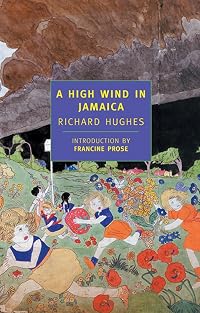
A High Wind in Jamaica
by Richard Hughes
On This Page
Description
First published in 1929, ''A High Wind in Jamaica'' by Richard Hughes is "A masterpiece of 20th-century literature." - Graham Greene Set against the lush, untamed beauty of 19th-century Jamaica, ''A High Wind in Jamaica'' is a chillingly unforgettable exploration of innocence, morality, and human nature. The tranquil lives of the Bas-Thornton children are shattered when a hurricane devastates their family estate. Sent back to England for safety, the children's voyage takes a dangerous turn show more when their ship is hijacked by pirates. What begins as an adventure quickly transforms into a harrowing study of survival and the unexpected resilience-and cruelty-of childhood. As the children adapt to their new circumstances, the line between victim and perpetrator begins to blur, culminating in an act of violence that questions the very nature of guilt and innocence. Praised for its stark psychological insight and dark humor, Richard Hughes' A High Wind in Jamaica remains a landmark novel that defies categorization, blending elements of adventure, tragedy, and existential reflection. show lessTags
Recommendations



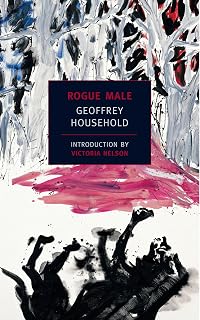
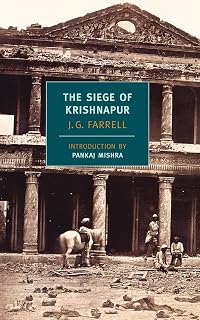

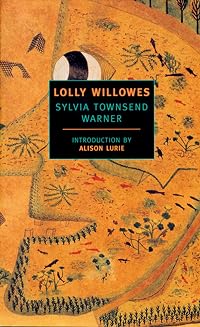
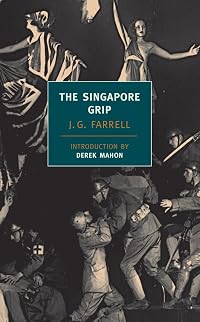
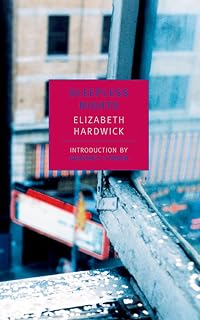
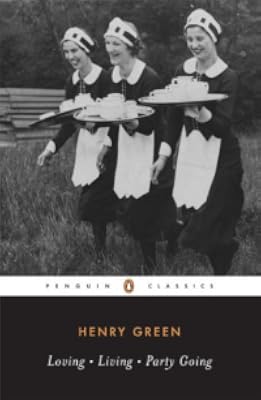
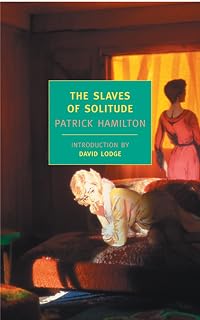
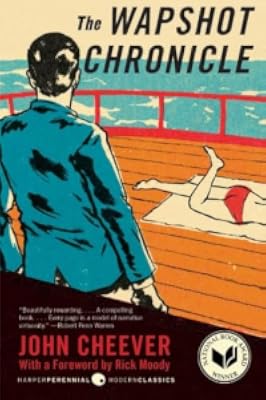



Member Recommendations
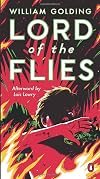
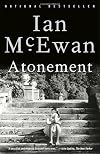
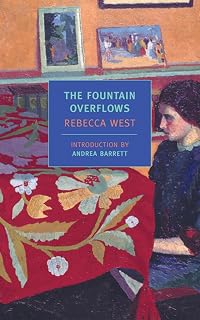
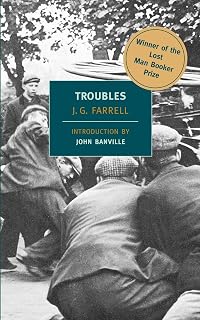
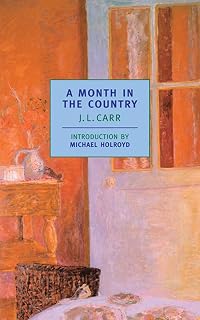
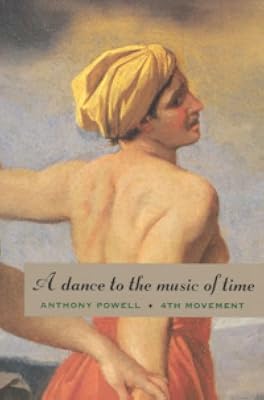
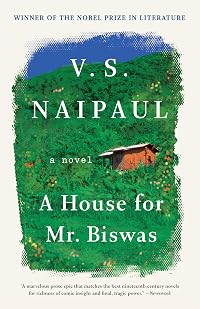
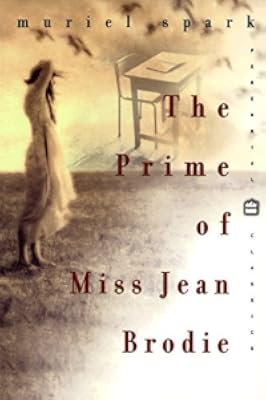
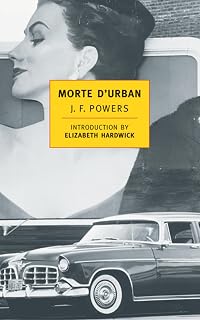
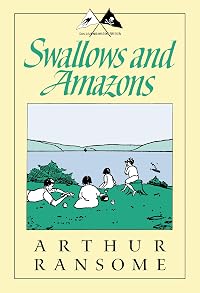
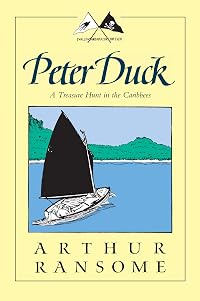
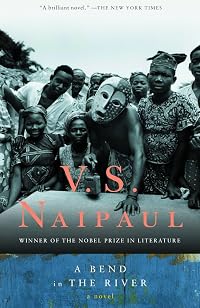
SCPeterson Both are great novels revealing the darker side of childhood imagination

Member Reviews
A book about children and pirates? Sounds fun. And on the surface it is. The five Bas-Thorton children are being raised in a haphazard fashion on a dilapidated plantation in Jamaica in the mid-1800s. After an earthquake and a hurricane in quick succession, the parents decide to send their children, along with two other children, to England for safety. Not long after departing, the barque is overrun by pirates. In a comedy of errors, the pirates attempt to use the children as hostages and instead end up stuck with them on their ship. One almost feels sorry for the pirates. But throughout the entire book there is an undercurrent of darkness, which only gets more disturbing as the tale progresses.
Although the word trauma is never used, the show more children are exposed to a series of traumatic, life-threatening events, from natural disasters to kidnapping, and they must cope without any emotional support from adults. Left to make sense of the world on their own, they come to decisions that can be funny (are the sailors pirates or pilots?) or cold and deadly. By the end of the book, even the things that seemed funny earlier take on darker meaning. show less
Although the word trauma is never used, the show more children are exposed to a series of traumatic, life-threatening events, from natural disasters to kidnapping, and they must cope without any emotional support from adults. Left to make sense of the world on their own, they come to decisions that can be funny (are the sailors pirates or pilots?) or cold and deadly. By the end of the book, even the things that seemed funny earlier take on darker meaning. show less
This is a whimsical statement on what beastly things children are, or childhood innocence at any rate: rather than a moral good it's chaotic neutral, something best not forgotten or else you'll be liable to misconstrue all manner of things, overlook the real issues and be dealt some nasty surprises. Cling to that message and you'll understand what you're reading.
Children who don't act like children, pirates who don't act like pirates ... this book has a peculiar tone to it, like magical realism without the magic, that had me viewing it almost as a farce during the middle portion which I found difficult to weather. Making it out the other side, I felt my perseverance was rewarded. So much so, this might land on the re-read pile. I don't show more often experience a flip like that, so this one's going to stand out in memory. show less
Children who don't act like children, pirates who don't act like pirates ... this book has a peculiar tone to it, like magical realism without the magic, that had me viewing it almost as a farce during the middle portion which I found difficult to weather. Making it out the other side, I felt my perseverance was rewarded. So much so, this might land on the re-read pile. I don't show more often experience a flip like that, so this one's going to stand out in memory. show less
A very odd book. I borrowed it after a mention in the film of "The Bookshop" where it is described (if I remember correctly) as "a book about good pirates and bad children". That seems to sum it up rather well but it's more than that, it's about who we are and how that affects those around us and how easy it is to destroy people. It's also about what used to be called original sin, and the antithesis of the Victorian sentimentality about the innocence of childhood. Maybe it's also about the end of colonialism and how the underlying violence of the colonised springs through the veneer of civilization. I don't know. There's lots of casual racism, cruelty to animals, drunkenness and self delusion too. Yet it's written in the gentle tone of show more a children's book. A very odd classic... show less
I think I was vaguely conscious of this book as a child, as one of those traditional children's books (perhaps something along the lines of Treasure Island) that I'd never got around to reading. But recently I've heard it strongly recommended (twice) in the BBC Radio 4's 'A Good Read' programme, so when it was one of the choices in the BAC, I thought I'd give it a try. And having read it, I can't help being a little surprised that anyone would have ever considered it a children's book in the first place.
In the middle of the nineteenth century, the Bas-Thornton children live a somewhat uncontrolled but idyllic life on the island of Jamaica, where their father has a business, albeit a not very profitable one. When a hurricane strikes and show more destroys their home, their parents decide that the Caribbean is too dangerous, and the children must be sent home to England to be educated. They are duly dispatched on the Clorinda under the care of Captain Marpole, but within a few days of setting out the ship is captured by pirates and the children are taken. Captain Marpole kindly writes from Havana to comfort Mr & Mrs Bas-Thornton:
Of course, the children are not dead, but they are too young and ignorant of the ways of the world to understand what is really going on around them. Margaret Fernandez, a rather older girl travelling with the Bas-Thorntons, is inconsolable on the first night of their capture because she has more understanding of what might happen, but she is dismissed as silly ...
This is a story of lost innocence, in more ways than one. Its original US title was The Innocent Voyage and clearly that was meant ironically. There is very little that is innocent about this voyage ... show less
In the middle of the nineteenth century, the Bas-Thornton children live a somewhat uncontrolled but idyllic life on the island of Jamaica, where their father has a business, albeit a not very profitable one. When a hurricane strikes and show more destroys their home, their parents decide that the Caribbean is too dangerous, and the children must be sent home to England to be educated. They are duly dispatched on the Clorinda under the care of Captain Marpole, but within a few days of setting out the ship is captured by pirates and the children are taken. Captain Marpole kindly writes from Havana to comfort Mr & Mrs Bas-Thornton:
There is one point on which you will feel some anxiety, considering the sex of some of the poor innocents, and on which I am glad to be able to set your minds at rest, the children were taken into the other vessel in the evening and I am glad to say there done to death immediately, and their little bodies cast into the sea, as I saw with my own eyes. There was no time for what you might fear to have occurred and this consolation I am glad to be able to give you
Of course, the children are not dead, but they are too young and ignorant of the ways of the world to understand what is really going on around them. Margaret Fernandez, a rather older girl travelling with the Bas-Thorntons, is inconsolable on the first night of their capture because she has more understanding of what might happen, but she is dismissed as silly ...
This is a story of lost innocence, in more ways than one. Its original US title was The Innocent Voyage and clearly that was meant ironically. There is very little that is innocent about this voyage ... show less
Whether or not you think that Richard Hughes' "A High Wind in Jamaica" works as a whole, you've got to give him this: like Bill Watterson and Roald Dahl, he recognized that children occupy an entirely different psychological space than their elders. Of course, occasionally a judgement or fact from the world of adults does make it through to this novel's youthful protagonists, but it usually bears little resemblance to the lesson that the adults intended to teach, and the adults themselves never seem to realize this disconnect. As others have mentioned, the novel's most interested in the moral dimensions of childhood: does the children's lack of knowledge about the world around them contribute to a naturally occurring amorality? I'll show more leave that for other readers to figure out, though, because "A High Wind in Jamaica" could also be read as a case study in the uncanny resilience of children. The Bas-Thorton and Fernandez children adapt without hesitation to just about any situation they're thrown into, and Hughes seems intrigued by the existence of a stage of human development where our preconceptions are almost infinitely malleable. Emily, for example, reacts to a minor earthquake, a pirate kidnapping, and a pet alligator with varying levels of interest, boredom, and quiet delight – someone who lacks experience, as she does, can't be expected to tell the difference between the extraordinary and the merely ordinary, or the difference between right and wrong, for that matter. Still, I was also charmed by the way that the boys started planning their own careers in piracy almost from the moment that they were kidnapped. Hughes seems to realize that for imaginative children, life holds an almost unlimited number of possibilities: why should a lifetime spent on the high seas be considered any more remarkable than a quiet life lived in England?
Hughes, unlike, say, Harper Lee or Roald Dahl, who wrote their child characters using a friendly, accessible indirect third person, draws a careful distinction between his own authorial voice and the lives of his young protagonists. Instead of using the children as narrators, he describes childhood in the same way that an anthropologist might describe a foreign culture: he makes incisive descriptions, draws comparisons, and makes inferences about their self-made social and moral structures, but he relates their story in a style that is complex, eloquent, and undeniably adult. In fact, there are places where I'm not sure that Hughes wasn't satirizing, or perhaps criticizing, the Victorian age's own well-formed ideas about a "separate space" for children and their concerns. With its seafaring narrative and "A High Wind in Jamaica" and its wild scenes of play and children's games, this might be the first novel influenced in equal measure by "Peter Pan" and "Heart of Darkness." Some readers, will, I think, find these extreme tendencies hard to accept; this is a novel that makes it difficult to believe in childhood innocence at all. Still, I came away from it think that it's pity that Hughes wrote only four novels, and only two aimed at adults; I suspect that he would have written superbly on any subject he chose. show less
Hughes, unlike, say, Harper Lee or Roald Dahl, who wrote their child characters using a friendly, accessible indirect third person, draws a careful distinction between his own authorial voice and the lives of his young protagonists. Instead of using the children as narrators, he describes childhood in the same way that an anthropologist might describe a foreign culture: he makes incisive descriptions, draws comparisons, and makes inferences about their self-made social and moral structures, but he relates their story in a style that is complex, eloquent, and undeniably adult. In fact, there are places where I'm not sure that Hughes wasn't satirizing, or perhaps criticizing, the Victorian age's own well-formed ideas about a "separate space" for children and their concerns. With its seafaring narrative and "A High Wind in Jamaica" and its wild scenes of play and children's games, this might be the first novel influenced in equal measure by "Peter Pan" and "Heart of Darkness." Some readers, will, I think, find these extreme tendencies hard to accept; this is a novel that makes it difficult to believe in childhood innocence at all. Still, I came away from it think that it's pity that Hughes wrote only four novels, and only two aimed at adults; I suspect that he would have written superbly on any subject he chose. show less
I found this a rather difficult book to write about. At first I was a little disappointed as it wasn’t the straight forward adventure story that I expected. But as I read on it became clear that this was an absorbing psychological character study on the nature of children. A High Wind In Jamaica tells of a group of young children travelling from Jamaica to school in England that inadvertently are captured by pirates. The pirates have no idea of what to do with these children and after one half-hearted attempt to get rid of them, basically ignore them and let them run wild on their ship. I was very much reminded of The Lord of the Flies, in that the author appears fully convinced that children, once lacking in adult supervision, show more quickly deviate into savages, totally without empathy, kindness or morals.
This is a disturbing story of children, and in particular one young girl, Emily, who at the age of ten has the power to give one chills with her thoughts and inner conversations. The children lose one of their own through his own misadventure but actually give him very little thought, they seem much more concerned with the fate of their pet pig who is destined to become dinner. I don’t totally agree with the author’s point of view, I think most people, child or adult, are born with a compassionate, loving nature and it is life’s circumstances that can harden them.
A High Wind in Jamaica is also about the complex relationships that exist between children and adults. I would certainly not call this a YA or children’s book as it deals with very adult matters from murder, awakening sexuality to implied rape. Overall an interesting read but the author didn’t manage to change my viewpoint. show less
This is a disturbing story of children, and in particular one young girl, Emily, who at the age of ten has the power to give one chills with her thoughts and inner conversations. The children lose one of their own through his own misadventure but actually give him very little thought, they seem much more concerned with the fate of their pet pig who is destined to become dinner. I don’t totally agree with the author’s point of view, I think most people, child or adult, are born with a compassionate, loving nature and it is life’s circumstances that can harden them.
A High Wind in Jamaica is also about the complex relationships that exist between children and adults. I would certainly not call this a YA or children’s book as it deals with very adult matters from murder, awakening sexuality to implied rape. Overall an interesting read but the author didn’t manage to change my viewpoint. show less
I was hoping this novel would be strange and intriguing: blithely cruel 19th century British children on a grand adventure, told in an imperial, self-satisfied voice - but the first 10 pages disturbed me, and not in a good way. Really, the first page did me in with this:
With Emancipation, like many others, that [plantation] went bung. The sugar buildings fell down. Bush smothered the cane and guinea-grass. The field negroes left their cottages in a body, to be somewhere less disturbed by even the possibility of work.
Maybe all of this is subverted in the rest of the tale, maybe it has clever and cynical things to say about morality that would make it all worth reading, but I just couldn't stand it. I realize it was written in 1929 and I show more am generally capable of suspending my 21st century sensibilities for books of another era, but not this time. I did read Francine Prose's Introduction, which gave me all that was valuable about the book without the pain of actually reading it. show less
With Emancipation, like many others, that [plantation] went bung. The sugar buildings fell down. Bush smothered the cane and guinea-grass. The field negroes left their cottages in a body, to be somewhere less disturbed by even the possibility of work.
Maybe all of this is subverted in the rest of the tale, maybe it has clever and cynical things to say about morality that would make it all worth reading, but I just couldn't stand it. I realize it was written in 1929 and I show more am generally capable of suspending my 21st century sensibilities for books of another era, but not this time. I did read Francine Prose's Introduction, which gave me all that was valuable about the book without the pain of actually reading it. show less
Members
- Recently Added By
Published Reviews
ThingScore 100
added by booksaplenty1949
Lists

The Guardian's 1000 Novels Everyone Must Read
1,005 works; 547 members

501 Must-Read Books
529 works; 72 members

Read the book and saw the movie
1,170 works; 195 members
20th Century Literature
1,161 works; 54 members

water on the brain: maritime fiction
74 works; 18 members

Pleasant Surprises: Books That Exceeded Our Expectations
418 works; 143 members

Canon de la narrativa universal del siglo XX
254 works; 6 members

In and About the 1920s
181 works; 31 members

Folio Society
831 works; 48 members

Top Five Books of 2014
1,064 works; 397 members
The Modern Library's 100 Best Novels: The Board's List
85 works; 6 members
LibraryThingers' 1001 Books You Must Read Before You Die
442 works; 30 members
1920s
141 works; 6 members

Novels featuring siblings
133 works; 8 members

Books mentioned in The Diary of a Provincial Lady
59 works; 4 members

A Novel Cure
742 works; 23 members

Great Pirate Books
39 works; 21 members
Books Set on Islands
190 works; 24 members

Read This Next
120 works; 3 members
Best Books of the 20th Century
193 works; 5 members

Favorite Books from the 1920s
33 works; 3 members
Trinity College Booklist (1951): Class Ten, English Literature
358 works; 5 members

Undiscovered Classics to Read
70 works; 15 members

Books Read in 2015
3,299 works; 126 members

Tammen Keltainen kirjasto
81 works; 1 member

Ocean Setting
33 works; 5 members

Books about pirates
29 works; 10 members

Books Read in 2011
684 works; 19 members

AP Lit
363 works; 6 members

Mustich's 1000 Books to Read Before You Die: A Life Changing List
1,001 works; 19 members
Canon de la narrativa universal del s. XX (cicutadry)
499 works; 3 members

Top Five Books of 2024
795 works; 264 members

Children's Adventure
53 works; 4 members
Modern Library's 100 Best Novels
100 works; 2 members
Author Information

22+ Works 3,653 Members
Some Editions
Awards and Honors
Awards
Series
Belongs to Publisher Series
Koliber (54)
Common Knowledge
- Canonical title*
- Storm over Jamaica
- Original title
- A High Wind in Jamaica
- Alternate titles
- The Innocent Voyage
- Original publication date
- 1929
- People/Characters
- Frederic Bas-Thornton; John Bas-Thornton; Emily Bas-Thornton; Rachel Bas-Thornton; Edward Bas-Thornton; Laura Bas-Thornton (show all 11); Margaret Fernandez; Harry Fernandez; Captain Jonsen; Otto; José
- Important places
- Jamaica; Cuba; Caribbean Region; London, England, UK
- Related movies
- A High Wind in Jamaica (1965 | IMDb)
- First words
- One of the fruits of Emancipation in the West Indian islands is the number of ruins, either attached to the houses that remain or within a stone's throw of them: ruined slaves' quarters, ruined sugar-grinding houses, ruined b... (show all)oiling houses; often ruined mansions that were too expensive to maintain.
- Quotations
- When Destiny knocks the first nail in the coffin of a tyrant, it is seldom long before she knocks the last.
It is the novelist who is concerned with facts, whose job it is to say what a particular man did do on a particular occasion: the lawyer does not, cannot be expected to go further than to show what the ordinary man would be m... (show all)ost likely to do under presumed circumstances.
Of course it is not really so cut-and-dried as all this; but often the only way of attempting to express the truth is to build it up, like a card-house, of a pack of lies.
The morning advanced. The heated air grew quite easily hotter, as if from some reserve of enormous blaze on which it could draw at will. Bullocks only shifted their stinging feet when they could bear the soil no longer: even ... (show all)the insects were too languorous to pipe, the basking lizards hid themselves and panted. It was so still you could have heard the least buzz a mile off. Not a naked fish would willingly move his tail. The ponies advanced because they must. The children ceased even to muse. - Last words
- (Click to show. Warning: May contain spoilers.)In another room, Emily with the other new girls was making friends with the older pupils. Looking at that gentle, happy throng of clean innocent faces and soft graceful limbs, listening to the ceaseless, artless babble of chatter rising, perhaps God could have picked out from among them which was Emily; but I am sure that I could not.
- Disambiguation notice
- Originally published in the US as The Innocent Voyage
*Some information comes from Common Knowledge in other languages. Click "Edit" for more information.
Classifications
Statistics
- Members
- 2,376
- Popularity
- 8,238
- Reviews
- 70
- Rating
- (3.87)
- Languages
- 16 — Danish, Dutch, English, Finnish, French, German, Hebrew, Hungarian, Italian, Norwegian (Bokmål), Norwegian, Polish, Portuguese, Spanish, Swedish, Turkish
- Media
- Paper, Audiobook, Ebook
- ISBNs
- 58
- UPCs
- 1
- ASINs
- 66