
On This Page
Description
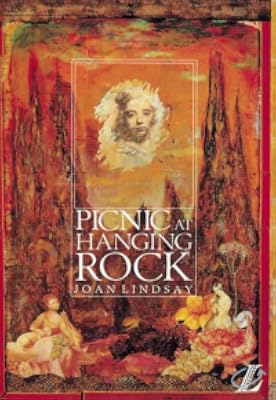
The classic novel about the disappearance of three boarding school girls that inspired the acclaimed film It was a cloudless summer day in the year 1900. Everyone at Appleyard College for Young Ladies agreed it was just right for a picnic at Hanging Rock. After lunch, a group of three girls climbed into the blaze of the afternoon sun, pressing on through the scrub into the shadows of the secluded volcanic outcropping. Farther, higher, until at last they disappeared. They never returned. . show more . . Mysterious and subtly erotic, Picnic at Hanging Rock inspired the iconic 1975 film of the same name by Peter Weir. A beguiling landmark of Australian literature, it stands with Shirley Jackson's We Have Always Lived in the Castle, Daphne du Maurier's Rebecca, and Jeffrey Eugenides' The Virgin Suicides as a masterpiece of haunting intrigue. show lessTags
Recommendations





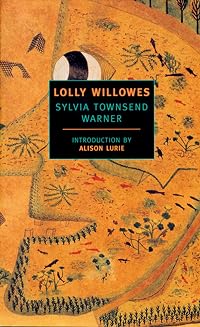


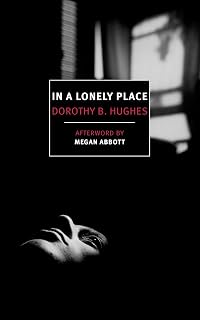













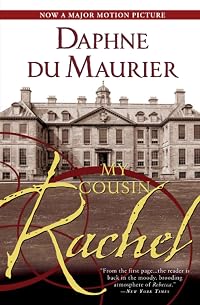
Member Recommendations
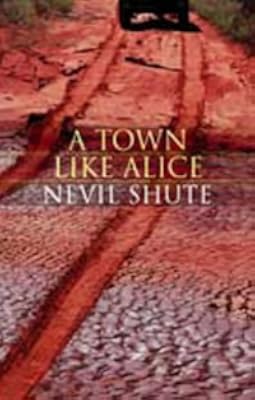
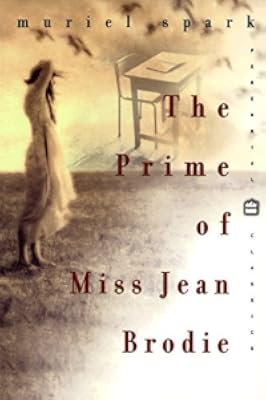
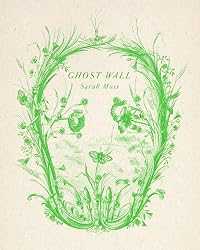
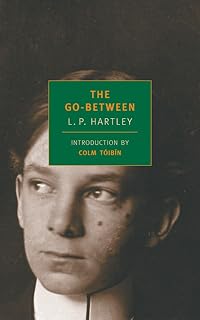
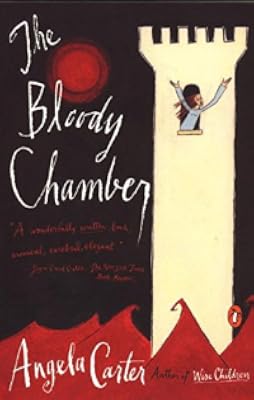
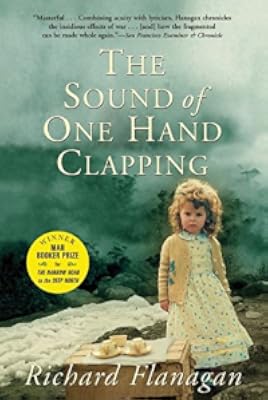
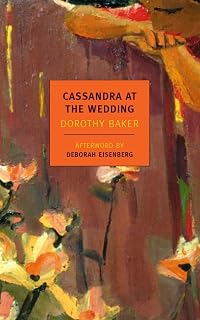
blacksylph 'Picnic at Hanging Rock' is referenced several times in this book. They also share a tone of unseen dread and mystery.
20


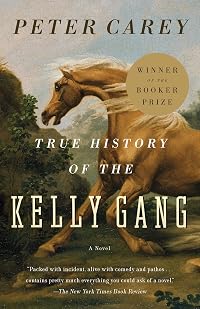
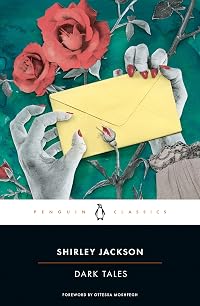
anonymous user "Girls' School" is about Picnic at Hanging Rock. "When I Was a Young Girl" also matches the tone of the earlier part of the book.


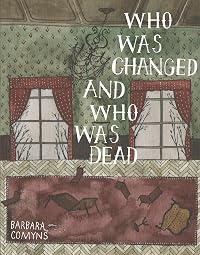
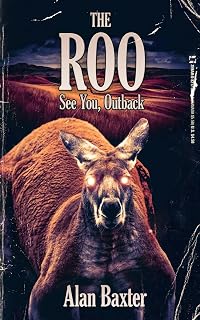
bluepiano Sxhoolgirls who have inexplicably gone missing. Interersting to see how two books with the same basis of a plot differ so wildly.
Member Reviews
I spotted ‘Picnic at Hanging Rock’ in the library and recalled seeing stylish images of a mini series adaptation online. Since I might watch that someday, clearly I ought to read the book. Such are the tenuous reasons that sometimes lead me to read things. As I’d hoped, the novel proved to be atmospheric and involving. The focus wasn’t quite what I anticipated, though. Although the titular picnic involves a party from an all-girls school, much of the subsequent narration follows Mike, a young aristocrat recently arrived in Australia. This isn’t really a mystery story, rather it traces the cascade of consequences that follow the picnic. There isn’t much more I can say without spoilers, other than that I enjoyed the sly and show more evocative voice in which it is told.
Mike’s involvement has a surprising twist. When he gets involved in the search for the missing girls and finds one of them, it seems almost inevitable that he’ll fall in love with her. No indeed! After politely taking Irma punting, he bids her goodbye and subsequently runs off to Queensland with Albert the stable lad. The two have an intense relationship with unsubtle homoerotic overtones, which is apparently enabled by the picnic and its fallout. This turned out to be the most touching and wholesome dynamic in the book, whereas the bonds between the schoolgirls and their teachers are treated with a much more jaded eye. The school is depicted as a haunted, even cursed, place. The spookiness is conveyed very well and Mrs. Appleyard is a genuinely scary presence.
I suspected long before getting to the end that there would be no ultimate explanation for events. The mystery of three disappearances at Hanging Rock remains unsolved and the denouement instead shocked me with Sara’s apparent murder. While I’m willing to accept that Miranda and Marion wandered through some secret portal to fairyland, I remain curious about how Miss McCraw lost her skirt then vanished. Although the stolid policeman mentions the possibility of rape and murder, it seems more plausible that Australia simply opened its mouth and ate all three of them. The lack of interest that the novel has in their fate is strikingly unusual and, as a general disliker of murder mysteries, I really enjoyed the novelty. It left space for close observation of the characters that remained, alternately humorous and unsettling in tone. The mundane becomes vivid in the light of strange disappearances; individual reactions say interesting things about the characters and their society. A distinctly beguiling little book. show less
I suspected long before getting to the end that there would be no ultimate explanation for events. The mystery of three disappearances at Hanging Rock remains unsolved and the denouement instead shocked me with Sara’s apparent murder. While I’m willing to accept that Miranda and Marion wandered through some secret portal to fairyland, I remain curious about how Miss McCraw lost her skirt then vanished. Although the stolid policeman mentions the possibility of rape and murder, it seems more plausible that Australia simply opened its mouth and ate all three of them. The lack of interest that the novel has in their fate is strikingly unusual and, as a general disliker of murder mysteries, I really enjoyed the novelty. It left space for close observation of the characters that remained, alternately humorous and unsettling in tone. The mundane becomes vivid in the light of strange disappearances; individual reactions say interesting things about the characters and their society.
This is a re-read of this classic Australian mystery novel, prompted by watching the current BBC TV series. When I first read it 13 years ago, I thought it was less good than the superbly atmospheric 1975 film version, as I was somewhat bored by the doings of the more minor characters, which I thought distracted from the tightly plotted horror and suspense. This time round, I felt those elements melded together more organically to add to the mystery and sense that the events set off by the disappearance of Miranda, Marion and Miss McCraw are like ripples from a stone thrown into a pond. Excellent stuff, and the fact that the mystery remained unsolved in the published version was undoubtedly the right decision.
Every interpretation of this novel cannot help but displace or destroy an equally 'credible' and fiercely held interpretation. Even Lindsay's own final, 12-page chapter - excised from the book until 1987 and appropriately held separate from the book as it has been known and admired - sits like a boulder atop filament. Without that final chapter, readers are free to wonder forever about the fates of Miranda, Marion, and Miss McCraw - each theory at least as plausible as the next and possibly more than Lindsay's own - which is the rarest gift any author can give a reader.
In a perfectly sane, settled world where all frontiers have been (or are being) conquered, a single outbreak of mystery, of the inexplicable, will bring chaos and bewilderment to countless onlookers. Joan Lindsay's novel calls attention to the taboos, shadows and other limites that hem in our weary daylight world of Enlightened Reason. Lives, she suggests, spent in denial of these things are sure to be crushed by bereavements occurring in a haunted landscape unmarked by human ken. -Adam
I've seen the Peter Weir film of this a couple of times, and it's always confounded me, but I have to say that the book, now that I've finally gotten around to it, was a real pleasure to read. It is slow-moving, atmospheric, often subtly sinister, and wonderfully deliberate in its depictions of its characters and settings. It gets the picnic out of the way quickly, and most of the rest of the story focuses on the reverberations from that day and how everyone was affected by it. The mood is liminal, untethered, quietly unsettling--a feeling that something is off that can't be identified. Lindsay's descriptions are so evocative: the school, the manor house, the Rock itself--every setting feels like it has its own character and nature and show more is held up in contrast with the others. The Australian countryside particularly is depicted as being lushly alive and ancient, an entity in itself that seems to operate by its own rules outside the understanding of the human realm. The ending was a shock but felt right, as if everything that happened was somehow inevitable. I was so glad I read this, and I'll probably give the movie another shot now. show less
This novel was more than I anticipated. The event that launched the story was the disappearance of three young women from Appleyard College along with a governess. The circumstances of the disappearance are eerie and hint of the supernatural, as mysterious disappearances do, but the details of the disappearance and the subsequent search are not really the focus of the book. The disappearance is what the book is “about,” but more incidental to the story in the way that, say, ripples in a pond are “about” the stone someone dropped in the water.
The main focus of the book is on the ripples emanating from the disappearance, as those ripples move through and then out and away from people adjacent to the event. Initially there is show more involvement by the police and their interviews with the other students, the livery driver, other picnic goers, and the one student who left with the women but returned, mysteriously dazed. The ripples eventually reach others, causing great psychological distress, particularly for Mrs. Appleyard, Michael Fitzhubert, and Sara Waybourne who all have compelling narrative lines.
Lindsay’s writing struck me as alike in tone and mood to Shirley Jackson, and I think I liked this novel for the same reasons I tend to like her writing. There is an element of the gothic in it, but unlike what I have read from Jackson, this story is grounded in a fabricated but realistic missing persons case with evidence, police interviews, and news reports. But behind the events, the book seems to be about time and memory and their destructive potential.
In fact, when you start to look, clocks and time are everywhere in this book. Lindsay even wrote an autobiographical novel called Time Without Clocks, which strongly suggests that they meant something to her. The events of this book begin with two clocks (the carriage driver’s and a governess’s) that have both mysteriously stopped a 12:00 pm on the day of the disappearance. The disappearance, then, takes place in that subjective, narrative space of halted time, and there it remains, like the images of those young women forever frozen in memory, the last fleeting image of a white sleeve disappearing into the brush.
The image of these young women (less so the governess, sadly) are halted as well, psychologically, permanently in the minds of people like Sara, Mrs. Appleyard, and Michael, not to be dislodged. Lindsay observes that …
All of the characters in the book seem to have their own flash memories that they keep and in reflecting on those memories they grow to occupy time and become over-attributed with significance as totems of memory. Some of those memories are, in the moment they were formed, insignificant and do not warrant their significance or longevity.
Kant says that time is part of the medium of pure intuition that we experience subjectively. There is no time that one can point to objectively. Its presence is only felt as the change in things that exist in space, ourselves included. But the images of these disappeared women are unchanging. The women are forever the same age, forever dressed as they were, their personalities forever as they were in the moment they were suddenly lost. They do not change with time or fade out and away but instead remain as persistent as an ache that cannot be soothed.
I’m glad that this book caught my attention, even if it was for the superficial similarity in place names. Whereas this Hanging Rock is a volcanic monolith in Australia, the Hanging Rock that immediately came to mind for me is a state park in my home state of North Carolina. Totally unrelated. show less
The main focus of the book is on the ripples emanating from the disappearance, as those ripples move through and then out and away from people adjacent to the event. Initially there is show more involvement by the police and their interviews with the other students, the livery driver, other picnic goers, and the one student who left with the women but returned, mysteriously dazed. The ripples eventually reach others, causing great psychological distress, particularly for Mrs. Appleyard, Michael Fitzhubert, and Sara Waybourne who all have compelling narrative lines.
Lindsay’s writing struck me as alike in tone and mood to Shirley Jackson, and I think I liked this novel for the same reasons I tend to like her writing. There is an element of the gothic in it, but unlike what I have read from Jackson, this story is grounded in a fabricated but realistic missing persons case with evidence, police interviews, and news reports. But behind the events, the book seems to be about time and memory and their destructive potential.
In fact, when you start to look, clocks and time are everywhere in this book. Lindsay even wrote an autobiographical novel called Time Without Clocks, which strongly suggests that they meant something to her. The events of this book begin with two clocks (the carriage driver’s and a governess’s) that have both mysteriously stopped a 12:00 pm on the day of the disappearance. The disappearance, then, takes place in that subjective, narrative space of halted time, and there it remains, like the images of those young women forever frozen in memory, the last fleeting image of a white sleeve disappearing into the brush.
The image of these young women (less so the governess, sadly) are halted as well, psychologically, permanently in the minds of people like Sara, Mrs. Appleyard, and Michael, not to be dislodged. Lindsay observes that …
“There is no single instant on this spinning globe that is not, for millions of individuals, immeasurable by ordinary standards of time: a fragment of eternity forever unrelated to the calendar or the striking clock” (120)
All of the characters in the book seem to have their own flash memories that they keep and in reflecting on those memories they grow to occupy time and become over-attributed with significance as totems of memory. Some of those memories are, in the moment they were formed, insignificant and do not warrant their significance or longevity.
Kant says that time is part of the medium of pure intuition that we experience subjectively. There is no time that one can point to objectively. Its presence is only felt as the change in things that exist in space, ourselves included. But the images of these disappeared women are unchanging. The women are forever the same age, forever dressed as they were, their personalities forever as they were in the moment they were suddenly lost. They do not change with time or fade out and away but instead remain as persistent as an ache that cannot be soothed.
I’m glad that this book caught my attention, even if it was for the superficial similarity in place names. Whereas this Hanging Rock is a volcanic monolith in Australia, the Hanging Rock that immediately came to mind for me is a state park in my home state of North Carolina. Totally unrelated. show less
Picnic at Hanging Rock by Joan Lindsay was my spin pick for The Classics Club. I read the lenghty forward and it seems there was a question about the author's first hand knowledge or is it entirely a work of fiction. It is labeled as historical fiction with a setting in 1900 at a girl's college in Victoria Australia. The locations Hanging Rock and Macedon ranges are real.
Mrs. Appleyard established a girls college and boarding school insisting on a very English "uniform" and forms of etiquette. When the story begins it's Valentine's day, the girls exchanging cards and planning a picnic at Hanging Rock. Mrs. Appleyard is a strict head mistress and very unyielding, trying to keep with "proper" English customs in an unsuitable environment show more regarding clothing.
It is mentioned how the governess, teacher and young ladies are required to wear gloves, voluminous dresses and hats in spite of the scorching Australian heat. Appleyard did not believe in adapting for the heat. The description of the landscape, flora and heat are well written, placing you in the scene.
" Insulated from natural contacts with earth, air and sunlight, by corsets pressing on the solar plexus, by volumious petticoats, cotton stockings and kid boots, the drowsy well-fed girls lounging in the shade were no more a part of their environment than figures in a photograph album, arbitrarily posed against a backcloth of cork rocks and cardboard trees."
A few of the girls napped while several of the senior girls decided they would like to walk and get closer to the Rock. Miss McGraw, the mathmatics teacher, wanted to take measurements and so it was agreed they could walk but be gone no more than one hour. It should be noted everyone's time pieces stopped at noon.
Over an hour later one girl came screaming down the path and couldn't recall what had actually happened but the senior girls and Miss Mcgraw were missing. After searching as long as possible the coachman returned to the college. From there on, the scandal of it blackened the college until it's ruin.
There are many more characters who played a large part; Albert the stableman and Michael, a young artistocrat living with his aunt and uncle, forming an unlikely friendship with Albert. The two of them went lookng for the missing girls independent of the police investigation. One of the girls was found, close to death, but she could not remember a single thing about the walk after the picnic or anything about the missing girls and teacher.
There is an otherworldly and eerie atmosphere about the disappearances and the subsequent events which seemed to touch on the lives of anyone involved with this picnic.
As Joan Lindsay attended a girl's boarding school in the same vicinity it has been suggested this is very loosely based on a true story. That is never revealed to be true and I think this novel was a brilliant fiction Lindsay created. As the author stated when asked, "Whether Picnic at Hanging Rock is fact or fiction, the reader must decide for themselves...it hardly matters."
It should be noted there was a final chapter which the editor asked Lindsay to delete, leaving things ambiguous rather than explaining. I'll be looking for that version called The Secret of Hanging Rock, it would include chapter 18, to see how our author wanted to end this.
4 stars show less
Mrs. Appleyard established a girls college and boarding school insisting on a very English "uniform" and forms of etiquette. When the story begins it's Valentine's day, the girls exchanging cards and planning a picnic at Hanging Rock. Mrs. Appleyard is a strict head mistress and very unyielding, trying to keep with "proper" English customs in an unsuitable environment show more regarding clothing.
It is mentioned how the governess, teacher and young ladies are required to wear gloves, voluminous dresses and hats in spite of the scorching Australian heat. Appleyard did not believe in adapting for the heat. The description of the landscape, flora and heat are well written, placing you in the scene.
" Insulated from natural contacts with earth, air and sunlight, by corsets pressing on the solar plexus, by volumious petticoats, cotton stockings and kid boots, the drowsy well-fed girls lounging in the shade were no more a part of their environment than figures in a photograph album, arbitrarily posed against a backcloth of cork rocks and cardboard trees."
A few of the girls napped while several of the senior girls decided they would like to walk and get closer to the Rock. Miss McGraw, the mathmatics teacher, wanted to take measurements and so it was agreed they could walk but be gone no more than one hour. It should be noted everyone's time pieces stopped at noon.
Over an hour later one girl came screaming down the path and couldn't recall what had actually happened but the senior girls and Miss Mcgraw were missing. After searching as long as possible the coachman returned to the college. From there on, the scandal of it blackened the college until it's ruin.
There are many more characters who played a large part; Albert the stableman and Michael, a young artistocrat living with his aunt and uncle, forming an unlikely friendship with Albert. The two of them went lookng for the missing girls independent of the police investigation. One of the girls was found, close to death, but she could not remember a single thing about the walk after the picnic or anything about the missing girls and teacher.
There is an otherworldly and eerie atmosphere about the disappearances and the subsequent events which seemed to touch on the lives of anyone involved with this picnic.
As Joan Lindsay attended a girl's boarding school in the same vicinity it has been suggested this is very loosely based on a true story. That is never revealed to be true and I think this novel was a brilliant fiction Lindsay created. As the author stated when asked, "Whether Picnic at Hanging Rock is fact or fiction, the reader must decide for themselves...it hardly matters."
It should be noted there was a final chapter which the editor asked Lindsay to delete, leaving things ambiguous rather than explaining. I'll be looking for that version called The Secret of Hanging Rock, it would include chapter 18, to see how our author wanted to end this.
4 stars show less
Members
- Recently Added By
Lists

Read the book and saw the movie
1,170 works; 192 members

Cerebral Mysteries
34 works; 23 members

Recommend the 20 best books you've read in the last five years
2,168 works; 606 members

Women's Stories
88 works; 13 members

20th Century Literature
1,161 works; 54 members

Female Author
1,235 works; 65 members
Best School Stories
219 works; 22 members
Lithub: 50 Great Classic Novels Under 200 pages
50 works; 10 members

Best Horror Books
281 works; 85 members

1960s, Best books published therein
254 works; 22 members

Australia's Greatest Books, as chosen by Geoffrey Dutton (1985)
97 works; 6 members

Books Set in Australia.
45 works; 9 members
Booktopia's 50 Must Read Australian Novels
50 works; 5 members

Top Five Books of 2018
802 works; 265 members
LibraryThingers' 1001 Books You Must Read Before You Die
442 works; 30 members
Top Five Books of 2017
757 works; 230 members

1960s
281 works; 16 members

Big Jubilee List
70 works; 3 members

Short and Sweet
246 works; 24 members
Stories set on Australian Continent
67 works; 5 members

Australia, New Zealand and Oceania
88 works; 20 members

Academia in Fiction
158 works; 23 members

Favourite books by Female Authors
43 works; 4 members

Australian Classics: Fifty Great Writers and Their Celebrated Works
43 works; 1 member
Five star books
1,755 works; 107 members

Books Read in 2023
5,547 works; 145 members
Literature About Women and Girls
394 works; 39 members

Books Read in 2017
4,249 works; 129 members

Books Read in 2022
5,166 works; 114 members

Favourite Books
50 works; 1 member
Missing!
18 works; 4 members

Schwob Nederland
207 works; 2 members

Allie's Wishlist
217 works; 2 members
Best Book and Movie Combos
70 works; 11 members

Canon de la narrativa universal del s. XX (cicutadry)
499 works; 3 members

Australian Women Writers
9 works; 1 member

ScaredyKit 2025
13 works; 1 member

Llibres que he llegit el 2025
81 works; 2 members

Books Read in 2025
4,091 works; 97 members

Top Five Books of 2025
954 works; 303 members
Australian Science Fiction
2 works; 2 members

1001 Children's Books You Must Read Before You Grow Up
774 works; 101 members

Books Read in 2013
1,630 works; 51 members
Author Information

Some Editions
Awards and Honors
Series

Belongs to Publisher Series
Work Relationships
Common Knowledge
- Canonical title
- Picnic at Hanging Rock
- Original title
- Picnic at Hanging Rock
- Original publication date
- 1967
- People/Characters
- Mrs. Appleyard; Miranda; Irma Leopold; Marion Quade; Edith Horton; Sara Waybourne (show all 10); Miss Greta McCraw; Mlle. Dianne de Poitiers; Michael Fitzhubert; Albert Crundall
- Important places
- Hanging Rock, Victoria, Australia (Mt. Diogenes, Victoria, Australia); Victoria, Australia; Australia
- Important events
- Valentine's Day (1900)
- Related movies
- Picnic at Hanging Rock (1975 | IMDb); Picnic at Hanging Rock (2018 | IMDb)
- First words
- Everyone agreed that the day was just right for the picnic to Hanging Rock—a shimmering summer morning warm and still, with cicadas shrilling all through breakfast from the loquat trees outside the dining room windows and b... (show all)ees murmuring above the pansies bordering the drive.
- Quotations
- Miranda!
As always, in matters of surpassing human interest, those who knew nothing whatever either at first or even second hand were the most emphatic in expressing their opinions; which are well known to have a way of turning into e... (show all)stablished facts overnight.
Hatless and trembling with suppressed fury Reg stood alone in the hall. Here, in an agony of frustrated oratory and punctured self-esteem, he was obliged to pass the time as best he could, on a high-backed mahogany chair, dev... (show all)ising ways and means of retrieving his hat from the study without loss of face.
She sat staring at the heavy curtains that shut out the gentle twilit garden, thinking how few things in life were unmuddled, firmly outlined as they were surely intended to be? One could organize, direct, plan each hour in a... (show all)dvance and still the muddle persisted. Nothing in life was really watertight, nothing secret, nothing secure.
At every step the prospect ahead grew more enchanting with added detail of crenellated crags and lichen-patterned stone. Now a mountain laurel glossy above the dogwood's dusty silver leaves, now a dark slit between two rocks ... (show all)where maidenhair fern trembled like green lace. 'Well, at least let us see what it looks like over this first little rise,' said Irma, gathering up her voluminous skirts. 'Whoever invented female fashions for nineteen hundred should be made to walk through bracken fern in three layers of petticoats.' The bracken soon gave way to a belt of dense scratchy scrub ending in a waist-high shelf of rock. Miranda was first out of the scrub and kneeling on the rock to pull up the others with the expert assurance that Ben Hussey had admired this morning when she opened the gate. - Last words
- (Click to show. Warning: May contain spoilers.)Thus the College Mystery, like that of the celebrated case of the Marie Celeste, seems likely to remain forever unsolved.
- Original language
- English
- Canonical DDC/MDS
- 823.914
- Canonical LCC
- PR9619.3.L49
Classifications
- Genres
- Fiction and Literature, General Fiction, Horror, Mystery, Historical Fiction
- DDC/MDS
- 823.914 — Literature & rhetoric English & Old English literatures English fiction 1900- 1901-1999 1945-1999
- LCC
- PR9619.3 .L49 — Language and Literature English English Literature English literature: Provincial, local, etc.
- BISAC
Statistics
- Members
- 2,258
- Popularity
- 8,874
- Reviews
- 71
- Rating
- (3.78)
- Languages
- 10 — Danish, English, French, German, Italian, Norwegian, Polish, Slovenian, Spanish, Swedish
- Media
- Paper, Audiobook, Ebook
- ISBNs
- 71
- UPCs
- 1
- ASINs
- 20