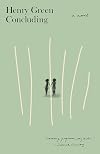
Concluding
by Henry Green
On This Page
Description
Old Mr Rock, a widower, lives in a cottage with his granddaughter Elizabeth; his household includes Daisy the pig, Ted the goose and Alice the cat, but an additional member threatens in the person of Sebastian Birt, the schoolteacher whom Elizabeth wants to marry. Birt teaches in the state institution for girls run by two authoritarian spinsters, the inseparable Misses Edge and Baker. One sunny summer's morning, the morning of the Founders' Day Ball, as Mr Rock goes up to the school to fetch show more his pig-swill for Daisy, it is discovered that two of the girls have gone missing in the night. As he pursues the unfolding events of this crowded day and eavesdrops on the conversations up at the school and down at the cottage, Henry Green subtly teases out all the hidden ambitions and lusts, the suspicions and jealousies that are rife just beneath the placid surface of the institution. With an unmatched ear for dialogue and an absolute mastery in the depiction of character, he imbues this apparently routine school day with a powerful charge of drama and superb comic effect. show lessTags
Recommendations










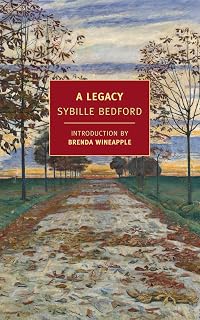
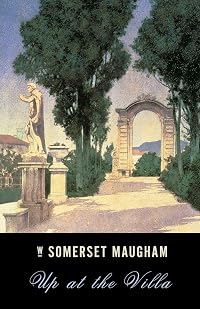
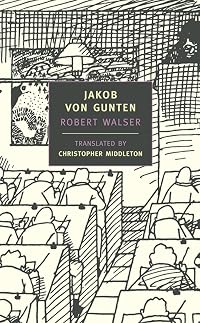
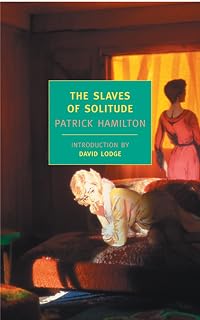








Member Recommendations

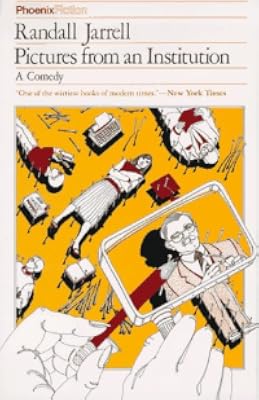
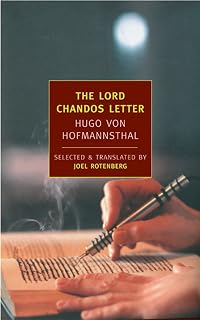
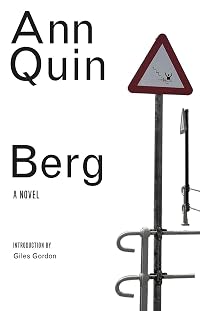
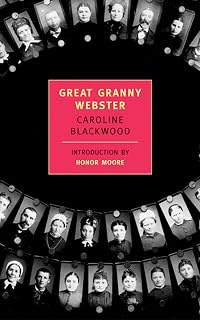
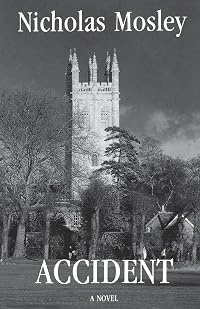
bluepiano Schoolgirls who have inexplicably gone missing. Interesting to see how two books with the same basis for a plot differ so wildly.
Member Reviews
In a Henry Green novel the characters were living before the reader picked up the book, so when you arrive you don't quite know where you are. Eventually things start to make sense, but you can never be sure that you understand, because the characters don't understand either. They might be deliberately misleading one another, not making themselves clear, not listening. One of the characters, Mr Rock, is partly deaf, so he both mishears and pretends to mishear.
Mr Rock is a retired scientist, a man with a distinguished career behind him. A grateful government has granted him the lifetime tenancy of a cottage, where he lives with his grand daughter Elizabeth who has had a nervous breakdown. The cottage is on the grounds of a government show more girls' school run by two governors, Miss Edge and Miss Baker, who are scheming to move Rock on. They're also scheming to keep their jobs and avoid scandal, so when two students go missing, Edge and Baker don't report it.
The plot is the day. The girls and the staff are preparing for a Founder's Day celebration. Girls visit Rock's pig. People search for the missing girls. People move through the day gossiping, misleading, manipulating, trying to get their own way, hiding their motives from themselves. Green's descriptions of physical world they move through are strange, dazzling and perfect.
This is a confusing, unsettling, brilliant book. show less
Mr Rock is a retired scientist, a man with a distinguished career behind him. A grateful government has granted him the lifetime tenancy of a cottage, where he lives with his grand daughter Elizabeth who has had a nervous breakdown. The cottage is on the grounds of a government show more girls' school run by two governors, Miss Edge and Miss Baker, who are scheming to move Rock on. They're also scheming to keep their jobs and avoid scandal, so when two students go missing, Edge and Baker don't report it.
The plot is the day. The girls and the staff are preparing for a Founder's Day celebration. Girls visit Rock's pig. People search for the missing girls. People move through the day gossiping, misleading, manipulating, trying to get their own way, hiding their motives from themselves. Green's descriptions of physical world they move through are strange, dazzling and perfect.
This is a confusing, unsettling, brilliant book. show less
A day in the life of a retired scientist who lives with his pig, his goose, his cat and his granddaughter in a cottage in the grounds of a big country house that has been turned into some sort of college for young women. Although it seems an idyllic, rural English setting, there are various hints that some sort of authoritarian, perhaps totalitarian, State-with-a-capital-S is operating in the background (very 1948). Various problems are faced: some are resolved, most are not.
Green has a simple but very distinctive style, and likes to explore his characters by looking at their mismatches in communication. The discrepancy between what a character means and what is actually said, and the further discrepancy between what is said and what show more the other understands, expose more about the characters' attitudes, preconceptions and motives than pages of analysis or interior monologue might. Rather like Virginia Woolf, but done in half the number of words. It looks so simple, but it must be a very difficult trick to pull off, technically: this is probably one of the reasons why Green is so often praised by much better-known writers. show less
Green has a simple but very distinctive style, and likes to explore his characters by looking at their mismatches in communication. The discrepancy between what a character means and what is actually said, and the further discrepancy between what is said and what show more the other understands, expose more about the characters' attitudes, preconceptions and motives than pages of analysis or interior monologue might. Rather like Virginia Woolf, but done in half the number of words. It looks so simple, but it must be a very difficult trick to pull off, technically: this is probably one of the reasons why Green is so often praised by much better-known writers. show less
This was the first book that I read by Green, and it wasn't probably the best place to start since it seems atypical in several ways. The story's setting, a girl's school, is exceedingly odd. While that doesn't seem peculiar, I never really grasped the time, but it seemed a slightly futuristic setting with a tightly centralized & controlling government; there's an almost a dystopic feel to it. Nor did I fully understand the school's purpose, though it seemed to be production of unobjectionable dogsbodies. Like the setting, characters are odd, every last one of them is just slightly askew, though only vaguely portrayed. The plot involves a couple of missing student, which in itself is disconcerting, them there is much ado about the show more possible displacement of a retired scientist, and some bloody-minded assumptions about one of the male instructors at the school. Top this off with persistent miscommunication and ominous hints, an awful lot is only slightly suggested and you have one treat of an unsettling story. The book is just plain unnerving, but I really, really liked it. I suppose it should also be mentioned that all the girls' names begin with "M". Like I said, odd book. show less
This novel by the British writer Henry Green is set in a state sponsored girls school in an overly colorful pastoral setting. The principal characters are Mr. Rock a famous but aged scientist and beneficiary of a cottage on the schools grounds and his adult granddaughter Elizabeth. Her much younger lover Sebastian Birt is a first year teacher at the school which is presided over by two spinsterish principals Ms. Edge and Ms. Baker. The two principals (primarily Edge) would like to pack Mr. Rock off to an old folks home and take posession of the cottage. The lovestruck but mentally fragile Elizabeth is also conflicted over her own and more precisely Sebastian's place in her grandfather's home as strictly speaking without her illness she show more has no right to be there--and Mr. Rock's and Sebastian almost natural antipathy towards each other--as for one thing Mr. Rock shows much more affection for his pets which include a pig, a goose and a cat. When two girls go missing then from the school suspicions are raised in all quarters as just about everyone's activities seem suspect to everyone else. One girl reappears but she's saying nothing. The schoolgirls knowingly gossip among themselves--but about what? It all seems to lead to a final conflict between Rock and Edge at the Founder's day dance but in the end it is only their suspicions and ambitions that we're left with.
In some respects this is a strange story--beyond the human interaction between the parties which is almost always garbled and confused by the other party acting on their own biases and for their own ends is an intrusion always from outside--mostly from an almost supernatural natural world but also somewhat from an almost all powerful state apparatus which can swoop in at any moment. The book reads almost like a fable and its characters seemingly go about their lives with a sense of almost unarticulated dread as if something is always lurking behind them and paralyzing them from looking beyond their own lives. The natural world of the school surrounded by gardens and the almost junglelike atmosphere reminds me a bit in some respects of Robinson Jeffers long story poems where it's always something beyond the human (but real nonetheless) that has the final say in how the story will resolve itself. In this book that kind of reality and any ultimate resolution is left open for another day. show less
In some respects this is a strange story--beyond the human interaction between the parties which is almost always garbled and confused by the other party acting on their own biases and for their own ends is an intrusion always from outside--mostly from an almost supernatural natural world but also somewhat from an almost all powerful state apparatus which can swoop in at any moment. The book reads almost like a fable and its characters seemingly go about their lives with a sense of almost unarticulated dread as if something is always lurking behind them and paralyzing them from looking beyond their own lives. The natural world of the school surrounded by gardens and the almost junglelike atmosphere reminds me a bit in some respects of Robinson Jeffers long story poems where it's always something beyond the human (but real nonetheless) that has the final say in how the story will resolve itself. In this book that kind of reality and any ultimate resolution is left open for another day. show less
I once asked John Updike – my favorite author – which writer influenced him the most. He quickly answered, Henry Green. I had never heard of this British writer, but I soon became an avid fan of his work. Green was born near Tewkesbury, Gloucestershire, into an educated family with successful business interests. His father was a wealthy landowner and industrialist. Green attended Eton College, where he became friends with Anthony Powell and wrote his first novel, Blindness. He studied at Oxford University, where he began a rivalry with Evelyn Waugh. He left Oxford in 1926 without a degree and returned to his family business. He began by working with the ordinary workers in his family’s factory. His second novel, Living, came out show more in 1928.
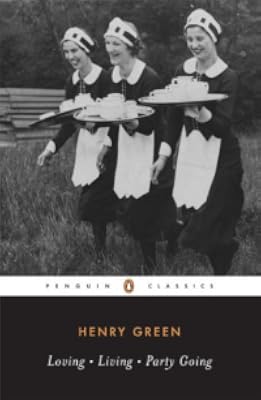
After several more novels, Green published an autobiography Pack My Bag in 1940, and his last novel, Doting in 1952. That was the end of his writing career. He became reclusive and died in 1973. Living, Loving, and Party Going were his most admired novels and are most often published in a single volume.
I have managed to collect all of his novels – except for one. During a visit to one of my favorite used bookstores, The Old Tampa Book Store, I landed a copy of his 1948 novel, Concluding. As I began reading the first page, I slid easily back into the world Henry Green created. The interaction between the wealthy and the tenants is an unending source of entertainment. Green writes in the opening paragraph, “Mr. Rock rose with a groan. Crossing the open bedroom window he shone his torch light on the thick spectacles he wore. He shone it up and down. –It will be a fine day, a fine day in the end, he decided. // He looked down. He clicked his light out. He found there was just enough filtering through the mist which hung eighteen foot up and which did not descent to the ground, to make out Ted, his goose, about already, a dirty pallor, almost the same colour as Alice, the Persian cat, that kept herself dry where every blade of grass bore its dark, mist laden string of water. –Old and deaf, half blind, Mr. Rock said about himself, the air raw in his throat. Nevertheless, he saw plain how Ted was not ringed in by fog. For the goose posed staring, head to one side, with a single eye, straight past the house, up into the fog bank which had made all the daylight deaf beneath, and beyond which, at some clear height, Mr. Rock knew there must be a flight of birds fast winging, --Ted knows where, he thought. // The old and famous man groaned again, shut the window, He began to dress. He put working clothes over the yellow woolen nightshirt. The bedroom smelled stale, packed with books not one of which he had read in years. He groaned a third time. –Early morning comes hard on a man my age, he told himself for comfort, comes hard. –How hard? Oh, heavy.” (5).
I can see the scene and smell the fog, as if I were beginning something by George Eliot – perhaps The Mill on the Floss. As I finished these opening words, I knew Henry Green would not disappoint.
Oddly enough, none of Green’s novels sold more than 10,000 copies. He was far more popular among writers than the reading public. According to Wikipedia, Green has been referred to as a “Writer’s, writer’s, writer.” His impressive list of admirers included John Updike, W.H. Auden, Christopher Isherwood, Eudora Welty, Anthony Burgess, and Rebecca West. Start with the trio of Living, Loving, and Party Going, and work your way to Concluding. I bet you will become an admirer of Henry Green, too. 5 stars
--Chiron, 12/31/15 show less
After several more novels, Green published an autobiography Pack My Bag in 1940, and his last novel, Doting in 1952. That was the end of his writing career. He became reclusive and died in 1973. Living, Loving, and Party Going were his most admired novels and are most often published in a single volume.
I have managed to collect all of his novels – except for one. During a visit to one of my favorite used bookstores, The Old Tampa Book Store, I landed a copy of his 1948 novel, Concluding. As I began reading the first page, I slid easily back into the world Henry Green created. The interaction between the wealthy and the tenants is an unending source of entertainment. Green writes in the opening paragraph, “Mr. Rock rose with a groan. Crossing the open bedroom window he shone his torch light on the thick spectacles he wore. He shone it up and down. –It will be a fine day, a fine day in the end, he decided. // He looked down. He clicked his light out. He found there was just enough filtering through the mist which hung eighteen foot up and which did not descent to the ground, to make out Ted, his goose, about already, a dirty pallor, almost the same colour as Alice, the Persian cat, that kept herself dry where every blade of grass bore its dark, mist laden string of water. –Old and deaf, half blind, Mr. Rock said about himself, the air raw in his throat. Nevertheless, he saw plain how Ted was not ringed in by fog. For the goose posed staring, head to one side, with a single eye, straight past the house, up into the fog bank which had made all the daylight deaf beneath, and beyond which, at some clear height, Mr. Rock knew there must be a flight of birds fast winging, --Ted knows where, he thought. // The old and famous man groaned again, shut the window, He began to dress. He put working clothes over the yellow woolen nightshirt. The bedroom smelled stale, packed with books not one of which he had read in years. He groaned a third time. –Early morning comes hard on a man my age, he told himself for comfort, comes hard. –How hard? Oh, heavy.” (5).
I can see the scene and smell the fog, as if I were beginning something by George Eliot – perhaps The Mill on the Floss. As I finished these opening words, I knew Henry Green would not disappoint.
Oddly enough, none of Green’s novels sold more than 10,000 copies. He was far more popular among writers than the reading public. According to Wikipedia, Green has been referred to as a “Writer’s, writer’s, writer.” His impressive list of admirers included John Updike, W.H. Auden, Christopher Isherwood, Eudora Welty, Anthony Burgess, and Rebecca West. Start with the trio of Living, Loving, and Party Going, and work your way to Concluding. I bet you will become an admirer of Henry Green, too. 5 stars
--Chiron, 12/31/15 show less
Just a bit dull. There is some satirical envisioning of a future State, and a bit of old vs young constrast. Fortunately but surprisingly an elderly male author managed to write a book set in an institution for late teenage girls without being the least salacious.
henry green is so good what the hell
Members
- Recently Added By
Lists

Henry Green ranked
9 works; 2 members

Unmarried women
66 works; 6 members
Author Information

16+ Works 4,372 Members
Writing under the pseudonym Henry Green, Henry Vincent Yorke kept his life as a wealthy industrialist separate from his literary persona. Although he had friends who were authors, he did not travel in literary circles and refused to be photographed, to protect his anonymity. Yorke was born in 1905 in Gloucestershire, England, and worked as a show more laborer before becoming managing director of a food engineering firm. From the publication of his first book Blindness (1926), which was begun when he was 17 years old and a student at Eton, he was admired for his unfailing sense of dialogue and characterization for all classes of British life. Green's last novel, Nothing, was published in 1950. Although he is still relatively unknown in the United States, he is recognized by authors such as John Updike and W. H. Auden as a masterful storyteller and one of the greatest English writers of the 20th century. He died in 1973 (Bowker Author Biography) show less
Series
Belongs to Publisher Series
Work Relationships
Is contained in
Common Knowledge
- Original publication date
- 1948
Classifications
Statistics
- Members
- 238
- Popularity
- 136,563
- Reviews
- 8
- Rating
- (3.90)
- Languages
- English
- Media
- Paper, Ebook
- ISBNs
- 9
- ASINs
- 12