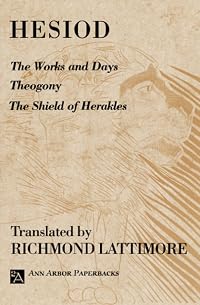
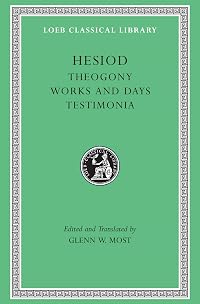
Theogony, Works and Days, and Shield of Herakles
by Hesiod, Paul Mazon (Translator)
On This Page
Description
"The Theogony is one of the most important mythical texts to survive from antiquity, and we devote the first section to it. It tells of the creation of the present world order under the rule of almighty Zeus. The Works and Days, in the second section, describes a bitter dispute between Hesiod and his brother over the disposition of their father's property, a theme that allows Hesiod to range widely over issues of right and wrong. The Shield of Herakles, whose centerpiece is a long show more description of a work of art, is not by Hesiod, at least most of it, but it was always attributed to him in antiquity. It is Hesiodic in style and has always formed part of the Hesiodic corpus. It makes up the third section of this book"--Provided by publisher. show lessTags
Recommendations







Member Reviews
I appreciate Lattimore's style, but there is no saving this sad summation of Hellenic cosmogonic mythology by the wannabe Homer, Hesiod. His work in Theogony is to me the precursor of the genealogical fantastic storytelling that has come to plague the Fantasy genre, inundating it with an interminable deluge of minutiae to please people who seek bloated world-building at the expense of actual literary artistry.
I appreciate Lattimore's style, but there is no saving this sad summation of Hellenic cosmogonic mythology by the wannabe Homer, Hesiod. His work in Theogony is to me the precursor of the genealogical fantastic storytelling that has come to plague the Fantasy genre, inundating it with an interminable deluge of minutiae to please people who seek bloated world-building at the expense of actual literary artistry.
This is the real thing. A man (or the narrator) talking about Greek life 2500 years ago, with absolute authority, because he lives it. The Works and Days is down-to-earth advice to a younger brother about how to get on in life, the Theogony contains tales of the gods, tales of their origins, their relationships to each other and to the Ancient Greeks. Again, the real thing, not as retold by Hollywood, but straight from the mind of someone who lives there.
A partial guide to the gods is provided, which is somewhat helpful. Gaia is one of the original four gods (along with Chaos, Darkness, and Night), and she and her offspring made more and more offspring. Theogony outdoes the Bible in listing the names of all of these by the dozens upon dozens upon dozens. It must have been quite a feat to recite all of this by memory but that's what was done.
Works and Days is full of aphorisms, and Shield describes the imaginatively profuse artwork on the shield of Herakles, which includes all sorts of scenes of war, peace and strife.
Tbh, I found it all pretty dry compared to the works Xenophon, Sophocles, Homer or Virgil, but it was still worthwhile given its age, and relatively short. Well over half of show more this particular book was commentary on the texts. show less
Works and Days is full of aphorisms, and Shield describes the imaginatively profuse artwork on the shield of Herakles, which includes all sorts of scenes of war, peace and strife.
Tbh, I found it all pretty dry compared to the works Xenophon, Sophocles, Homer or Virgil, but it was still worthwhile given its age, and relatively short. Well over half of show more this particular book was commentary on the texts. show less
Classics can be pretty fun, and The Works and Days only takes an hour or so to read, so embrace the listy advice and learn a thing or two from Hesiod!
[full review here: http://spacebeer.blogspot.com/2011/08/works-and-days-by-hesiod-translated-by.htm... ]
[full review here: http://spacebeer.blogspot.com/2011/08/works-and-days-by-hesiod-translated-by.htm... ]
I like Lattimore's translations a great deal (but I am no one to judge accuracy).
TEOGONIA, TRABAJOS Y DÍAS,ESCUDO, CERTAMEN
Las obras de Hesíodo conforman con las de Homero los pilares fundacionales de la cultura griega. Al conjunto de mitos heredados que ambos toman y exponen, Hesíodo agrega una interpretación moral y práctica: en Teogonía y en Trabajos y días subyace la idea de un orden que se alcanza en virtud de actos de justicia divina y está representado por la autoridad de Zeus.
Teogonía presenta extensamente el mundo de los dioses, con su origen y descendencia, y Trabajos y días se ocupa de la realidad humana, en que se destaca el trabajo del campo y otras actividades del hombre.
La mayor originalidad de Hesíodo reside en la relación que establece entre el yo poético y la creación del poema. En show more Teogonía se consagra como intérprete de las Musas, y procura explicar el sentido del mundo divino hasta el triunfo de Zeus, quien encarna la justicia y el orden: allí está la “verdad” que las Musas han de enseñar.
En Trabajos y días se cristaliza una tradición poética didáctica, unida al elevado estilo de la épica, pinceladas líricas y andamiajes dramáticos al modo de una conversación; sobresale allí el tema de la injusticia en la tierra: merced al trabajo se puede restituir el orden del mundo.
El combate con Cicno contenido en Escudo es el único episodio legendario que presenta a Heracles con el armamento completo de un guerrero épico, no sólo con arco y maza; sigue el modelo homérico de la descripción del escudo de Aquiles en Ilíada, a la vez que incorpora elementos intimidantes, representaciones de animales, escenas mitológicas y cuadros simbólicos.
Labor poética y cotidianidad campesina están ilustradas de modo legendario por el poema en prosa y verso Certamen, que imagina a Hesíodo y Homero como rapsodas; el triunfo del primero subraya el interés didáctico de mostrar su superioridad como poeta de la paz frente a la poesía homérica, que canta hechos bélicos. show less
Las obras de Hesíodo conforman con las de Homero los pilares fundacionales de la cultura griega. Al conjunto de mitos heredados que ambos toman y exponen, Hesíodo agrega una interpretación moral y práctica: en Teogonía y en Trabajos y días subyace la idea de un orden que se alcanza en virtud de actos de justicia divina y está representado por la autoridad de Zeus.
Teogonía presenta extensamente el mundo de los dioses, con su origen y descendencia, y Trabajos y días se ocupa de la realidad humana, en que se destaca el trabajo del campo y otras actividades del hombre.
La mayor originalidad de Hesíodo reside en la relación que establece entre el yo poético y la creación del poema. En show more Teogonía se consagra como intérprete de las Musas, y procura explicar el sentido del mundo divino hasta el triunfo de Zeus, quien encarna la justicia y el orden: allí está la “verdad” que las Musas han de enseñar.
En Trabajos y días se cristaliza una tradición poética didáctica, unida al elevado estilo de la épica, pinceladas líricas y andamiajes dramáticos al modo de una conversación; sobresale allí el tema de la injusticia en la tierra: merced al trabajo se puede restituir el orden del mundo.
El combate con Cicno contenido en Escudo es el único episodio legendario que presenta a Heracles con el armamento completo de un guerrero épico, no sólo con arco y maza; sigue el modelo homérico de la descripción del escudo de Aquiles en Ilíada, a la vez que incorpora elementos intimidantes, representaciones de animales, escenas mitológicas y cuadros simbólicos.
Labor poética y cotidianidad campesina están ilustradas de modo legendario por el poema en prosa y verso Certamen, que imagina a Hesíodo y Homero como rapsodas; el triunfo del primero subraya el interés didáctico de mostrar su superioridad como poeta de la paz frente a la poesía homérica, que canta hechos bélicos. show less
Mar 20, 2018Spanish
Members
- Recently Added By
Lists


Author Information

163+ Works 7,426 Members
The poet Hesiod tells us that his father gave up sea-trading and moved from Ascra to Boeotia, that as he himself tended sheep on Mount Helicon the Muses commanded him to sing of the gods, and that he won a tripod for a funeral song at Chalcis. The poems credited to him with certainty are: the Theogony, an attempt to bring order into the otherwise show more chaotic material of Greek mythology through genealogies and anecdotes about the gods; and The Works and Days, a wise sermon addressed to his brother Perses as a result of a dispute over their dead father's estate. This latter work presents the injustice of the world with mythological examples and memorable images, and concludes with a collection of folk wisdom. Uncertain attributions are the Shield of Heracles and the Catalogue of Women. Hesiod is a didactic and individualistic poet who is often compared and contrasted with Homer, as both are representative of early epic style. "Hesiod is earth-bound and dun colored; indeed part of his purpose is to discredit the brilliance and the ideals of heroism glorified in the homeric tradition. But Hesiod, too, is poetry, though of a different order. . . " (Moses Hadas, N.Y. Times). (Bowker Author Biography) show less

All Editions
Some Editions
Work Relationships
Is contained in
Contains
Common Knowledge
- Canonical title
- Theogony, Works and Days, and Shield of Herakles
- Original title
- Ἀσπὶς Ἡρακλέους; Ἔργα καὶ Ἡμέραι; Θεογονία
- Alternate titles
- Hesiod: The Works and Days; Theogony; The Shield of Herakles
- Original publication date
- ca. 700 BC; 1959 (Lattimore) (Lattimore)
- Disambiguation notice
- The Works and Days; Theogony; and The Shield of Herakles in translation.
Classifications
- Genres
- Poetry, Fiction and Literature
- DDC/MDS
- 881.01 — Literature & rhetoric Classical & modern Greek literatures Classical Greek poetry Different categories of Greek classical poetry Philosophy and Theory
- LCC
- PA4010 .E5 .T5 — Language and Literature Greek language and literature. Latin language and literature Greek literature Individual authors
- BISAC
Statistics
- Members
- 1,026
- Popularity
- 25,332
- Reviews
- 7
- Rating
- (3.73)
- Languages
- 5 — Danish, English, French, Greek (Ancient), Spanish
- Media
- Paper, Audiobook, Ebook
- ISBNs
- 24
- ASINs
- 19