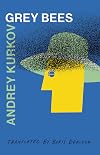
Grey Bees
by Andrej Kurkow
On This Page
Description
With a warm yet political humor, Ukraine's most famous novelist presents a balanced and illuminating portrait of modern conflict. Little Starhorodivka, a village of three streets, lies in Ukraine's Grey Zone, the no-man's-land between loyalist and separatist forces. Thanks to the lukewarm war of sporadic violence and constant propaganda that has been dragging on for years, only two residents remain: retired safety inspector turned beekeeper Sergey Sergeyich, and Pashka, a rival from his show more schooldays. With little food and no electricity, under constant threat of bombardment, Sergeyich's one remaining pleasure is his bees. As spring approaches, he knows he must take them far from the Grey Zone so they can collect their pollen in peace. This simple mission on their behalf introduces him to combatants and civilians on both sides of the battle lines: loyalists, separatists, Russian occupiers, and Crimean Tatars. Wherever he goes, Sergeyich's childlike simplicity and strong moral compass disarm everyone he meets. But could these qualities be manipulated to serve an unworthy cause, spelling disaster for him, his bees and his country? show lessTags
Recommendations


















Member Reviews
A book club pick
The flow of language is like the slow flow of a river over stones – gurgling gurgling, gurgling. It took me a while to get into the rhythm, and I spent the first couple of chapters wondering “do I like this, yes, no, yes, no, yes?” Once I found the key to the book (or vise versa), I couldn’t stop.
The book goes deeper than a story of human resilience and survival under horrible circumstances – you see people getting used to war, getting used to an abnormal reality that becomes the norm. That is why the main character’s dreams and nightmares are so prominent, I think. When your life, your reality is taken away from you, what is real?
Parts of Grey Bees seem almost pastoral and cozy, with absurdities lurking in show more the background. The coziness makes the hell just waiting to be unleashed on every page even more terrifying. Sometimes you catch glimpses of the monsters of hell, sometimes they show their teeth, and sometimes they bite. This is brilliantly done.
The structure of the novel is Everyman’s version of a hero’s journey, with shadows and reflections of the Odyssey. The story is circular – Sergey is back where he started by the end. And hell is still there.
The more I think about Grey Bees after finishing it, the more things I find to think about. show less
The flow of language is like the slow flow of a river over stones – gurgling gurgling, gurgling. It took me a while to get into the rhythm, and I spent the first couple of chapters wondering “do I like this, yes, no, yes, no, yes?” Once I found the key to the book (or vise versa), I couldn’t stop.
The book goes deeper than a story of human resilience and survival under horrible circumstances – you see people getting used to war, getting used to an abnormal reality that becomes the norm. That is why the main character’s dreams and nightmares are so prominent, I think. When your life, your reality is taken away from you, what is real?
Parts of Grey Bees seem almost pastoral and cozy, with absurdities lurking in show more the background. The coziness makes the hell just waiting to be unleashed on every page even more terrifying. Sometimes you catch glimpses of the monsters of hell, sometimes they show their teeth, and sometimes they bite. This is brilliantly done.
The structure of the novel is Everyman’s version of a hero’s journey, with shadows and reflections of the Odyssey. The story is circular – Sergey is back where he started by the end. And hell is still there.
The more I think about Grey Bees after finishing it, the more things I find to think about. show less
Lots of things to like about "Grey Bees". The author gently walks us through a situation and a people caught in the middle of a war. The plot pales in comparison to the richness and warmth of the characters. The main character, Sergey Sergeyich and, as importantly, his bees, wend their way amidst both real and emotional explosives. The novel provides the reader with a very real picture of living in East Ukraine's painful struggles while also reinforcing our commitment to a shared fundamental human dignity. Definitely a worthwhile and touching read.
I hadn’t read anything by Kurkov before picking this up and, for no good reason, I wasn’t expecting a great deal from this book. After all, the plot revolves around a retired mine safety inspector-turned-beekeeper leaves his home in a no-man’s land in the war between Russia and Ukraine so his bees can collect their pollen in peace. Not a promising premise, I thought. Besides, the reviews I had seen compared Kurkov’s work to Bulgakov, Murakami, Kafka, Beckett, Pinter, and Vonnegut! I am particularly pleased to say I was wrong. Kurkov has written more than a dozen novels, beginning in 2001 and he published Grey Bees in 2018, before Russia’s most recent invasion of Ukraine in 2022. The plotline is precisely what was promised: show more Sergeyich leaves his home in Little Starhorodivka, a village whose inhabitants have all fled because its location in the “grey zone” places it squarely between Russian and Ukrainian troops. (Actually, they hall fled except for Sergeyich and his “frenemy” Pashka. Kurkov spends some time describing life in a war zone and then follows him as he leaves. But Sergeyich is leaving not because he is concerned for his own safety but simply to better care for his bees. Kurkov’s handling of the conflict is masterful because it is largely implicit; he doesn’t describe Sergeyich’s interactions with Russians, he shows those interactions through the most ordinary daily acts of life. And Kurkov himself embodies the enormously complicated relations between Russians and Ukrainians: Kurkov is a Ukrainian novelist who was born in Russia (St. Petersburg), grew up in Kyiv, and writes in Russian. Indeed, he makes of point of his protagonist not just using but insisting on his Russian given name despite the fact that he lives in Ukraine and considers himself Ukrainian. Sergeyich has two moving “adventures” on the road but the bees are never far from front and center. The book seems almost like a parable and the translation (by Boris Dralyuk) appears to be excellent—it reads beautifully in English. show less
It’s 2013 and almost everyone has fled the small town of Little Starhorodivka situated in the grey zone between Russia and Ukraine as Russia invade the Crimea.
The exceptions are two men who still live in the otherwise empty town: Sergey Sergeyich, and his ‘frenemy’ Pashka. They endure shelling from both sides, as well as a complete lack of electricity, water, food supplies or doctors. Pashka appears to be a Russian sympathizer; Sergey seems to have no good options to leave; especially as he has six hives of honey bees which have provided his living for many years.
We see the daily small interactions of the men and the soldiers who surround them and periodically visit them in their town. The soldiers do small favors for Sergeyich show more such as charging his cell phone. Sergey in turns worries about them, and covers a body left behind with snow.
Eventually in the spring, Sergey decides to take his hives of bees out of the ruined town to the countryside so they can gather the pollen they need. He heads toward the Crimea and a fellow beekeeper he met one time at a beekeepers' convention many years ago. Eventually he arrives at his friend’s house to discover that the friend has been swallowed up by the Russian prison system. His family is eager for Sergey’s help.
The grey bees are the bees that are no longer healthy. As they are stressed or sicken, they turn from their brilliant yellow, black and orange to grey; usually that means the entire hive is lost.
I loved the story of the daily life of an ordinary civilian caught up in a unique war zone. I found myself cheering Sergey on as he and his hives of bees move through their lives against the background of war. show less
The exceptions are two men who still live in the otherwise empty town: Sergey Sergeyich, and his ‘frenemy’ Pashka. They endure shelling from both sides, as well as a complete lack of electricity, water, food supplies or doctors. Pashka appears to be a Russian sympathizer; Sergey seems to have no good options to leave; especially as he has six hives of honey bees which have provided his living for many years.
We see the daily small interactions of the men and the soldiers who surround them and periodically visit them in their town. The soldiers do small favors for Sergeyich show more such as charging his cell phone. Sergey in turns worries about them, and covers a body left behind with snow.
Eventually in the spring, Sergey decides to take his hives of bees out of the ruined town to the countryside so they can gather the pollen they need. He heads toward the Crimea and a fellow beekeeper he met one time at a beekeepers' convention many years ago. Eventually he arrives at his friend’s house to discover that the friend has been swallowed up by the Russian prison system. His family is eager for Sergey’s help.
The grey bees are the bees that are no longer healthy. As they are stressed or sicken, they turn from their brilliant yellow, black and orange to grey; usually that means the entire hive is lost.
I loved the story of the daily life of an ordinary civilian caught up in a unique war zone. I found myself cheering Sergey on as he and his hives of bees move through their lives against the background of war. show less
A wonderful read that I pottered through so slowly in an effort to make it last as long as I could but still it had to end! Andrey Kurkov always has the ability to make me laugh and cry, sometimes in the same sentence. The novel isn't full of laughter but there is some carefree fun that made me smile and occasionally he pokes fun at Russian officialdom. These parts of the novel are very human and endearing. Sergey Sergeyich, the bee keeper who lives in the grey zone between the Russian and Ukrainian forces, is one of Kurkov's most endearing characters. The village he lives in has been abandoned by most people and only he and Pasha, his frenemy from school, are left. There is no electricity, no shop and shells fly overhead regularly. show more This precarious village is still home for Sergeyich but he is uncomfortable. We meet him when the winter snow is thick but as spring arrives he worries about his bees and decides to take them on a road trip so that they can make honey in more peaceful surroundings. Leaving the Grey Zone is no easy matter but a few jars of honey are useful bribes and he is on his way. Kurkov introduces us to how other people react to someone from the Grey Zone and the assumptions they make. He stays in one village south-west of home and befriends the local shop keeper. He finds kindness and cruelty here and, even here, a few hundred kms from the Grey Zone the war gets in the way. He carries on to Crimea, now in Russian control, hoping to find a friend and fellow bee keeper he had met at a convention. His crossing at the border into Crimea is confusing and distressing but Sergeyich retains his guileless attitude. He tells his bees off when he thinks they are acting like humans. His friend is a Tatar and Kurkov describes the oppression of this community in Russian-controlled Crimea and the risks Sergeyich puts himself in by befriending a family of Tatars. This is a story about war and about the importance of home. It is also about companionship and love and Kurkov includes so much food it will make you hungry. I am sure I will read this novel again, possibly quite soon. show less
I began Andrey Kurkov's Grey Bees slowly, trying to get a sense of Sergey Sergeyich, the 49-year-old beekeeper who lives in the gray zone between loyalists and separatists in Ukraine’s Donbas region. He receives a visit from his former school rival Pashka, the only other resident left in the village. I had to strain at first not to lose sight of the beekeeper, not to mix him up with his rival, but then I read further to the next scene.
Sergeyich is outside walking through his garden.
I cannot even say what touched me so deeply, only that I, too, have walked through a garden I knew well, noticed the silence dotted by the small sounds particular to that area and then that something in the air that made me wonder what was different. I show more never discovered a body, nor did I hear distant shelling, but the familiar details of that walk, the feeling of it, made the contrast of war so palpable. I felt for Sergeyich, for all those who have found themselves in a war not of their choosing.
For me, that was when I landed in the novel. I continued to read, more quickly now, aware of the soft buzzing, if you will, coming to me from the gentle character Sergeyich, who, stuck living in the gray zone, has one focus: the well-being of his bees.
The beekeeper is a good-natured, creative, resourceful character who resonates at a time when we are witness to heinous war crimes taking place in Ukraine, when nuclear brinkmanship brings us closer to World War III, when failing climate leadership makes us fear the future that awaits our children, when mass shootings have become commonplace, when polarization stunts our conversations with friends and family, when disinformation floats around us like swirling dust, making it difficult to spot common signposts that can guide us back to better ground.
The world is on fire in all respects, it seems, and so it is with no small sense of wonder that we follow Sergeyich as he makes do with no electricity and water, as his tea is interrupted by a shell that lands nearby, as he dreams of spring when he can set up a mattress on top of his bees and let their vibration heal his aches and revitalize his spirit. Scarcity brings another level of joy to tea, a slice of bread, an egg, and a bowl of borscht...
I enjoyed this story immensely. show less
Sergeyich is outside walking through his garden.
I cannot even say what touched me so deeply, only that I, too, have walked through a garden I knew well, noticed the silence dotted by the small sounds particular to that area and then that something in the air that made me wonder what was different. I show more never discovered a body, nor did I hear distant shelling, but the familiar details of that walk, the feeling of it, made the contrast of war so palpable. I felt for Sergeyich, for all those who have found themselves in a war not of their choosing.
For me, that was when I landed in the novel. I continued to read, more quickly now, aware of the soft buzzing, if you will, coming to me from the gentle character Sergeyich, who, stuck living in the gray zone, has one focus: the well-being of his bees.
The beekeeper is a good-natured, creative, resourceful character who resonates at a time when we are witness to heinous war crimes taking place in Ukraine, when nuclear brinkmanship brings us closer to World War III, when failing climate leadership makes us fear the future that awaits our children, when mass shootings have become commonplace, when polarization stunts our conversations with friends and family, when disinformation floats around us like swirling dust, making it difficult to spot common signposts that can guide us back to better ground.
The world is on fire in all respects, it seems, and so it is with no small sense of wonder that we follow Sergeyich as he makes do with no electricity and water, as his tea is interrupted by a shell that lands nearby, as he dreams of spring when he can set up a mattress on top of his bees and let their vibration heal his aches and revitalize his spirit. Scarcity brings another level of joy to tea, a slice of bread, an egg, and a bowl of borscht...
I enjoyed this story immensely. show less
I have become Ukrainized. I would have never read this book had it not been for the terrible, horrible things that have been happening to the wonderful nation of Ukraine. As it stands, this book has opened my eyes towards new gems of literary accolades and I will continue to be in the lookouts for more translated books from Ukrainian authors. I really hope editorials also try to translate books from authors whose lives were cruelly taken away from Stalinism and other further soviet purges.
Even if I had read this book beforehand, I would have not understood a lot of the unmentioned innuendo that is succinctly breadcrumbed into this book. For example, the scene where Sergeyich talks to Petro for the first time. If I had not been properly show more warned about Russian and Ukrainian variations of given names, I would have innocently assumed Sergeyich just didn't like his middle name. In reality, this initially inconsequantial scene is a huge window towards Sergeyich's true loyalty despite having grown up in a tiny village inside of the Donbas during Soviet times and who exclusively speaks in Russian during the whole course of the novel.
Yes, it is obvious Sergeyich has pretty straightforward reasons why he got divorced with Vitalina. At first sight, he disagreed with the cosmopolitan name she wanted for their daughter because he is a village guy. But I believe this is the other side to his personality which is multifaceted.
From an ignorant westerner's point of view, the Russian speaking Southeastern Ukrainians are traitors, do not love their country, feel persecuted etc etc etc. And this novel takes few punches because the Ukrainians tend to treat Sergeyich with a certain disdain because of his Donbas license plates instead of the quality of his character. They don't reach the point of mocking him for not speaking Ukrainian (the novel hints he is capable of understanding it when he watches tv or talks to people), but there is always a sense of unwritten tension like he is an outcast in his own country. Outsiders even Vinnytsia who hails from the super patriotic western enclaves of Ukraine seem to be at odds with Sergeyich without really sitting down and examining why he behaves in certain ways during the story.
At almost 50 years old, the MC was born in the late 1960's, in another era where Ukrainianism was met with certain death during the Soviet era. Traveling abroad was pretty much limited to Belarus and Russia and while Vitalina was also forced to perform obligatory soviet summer camps growing up, she was exposed to western society and didn't think twice to flee west when the Donbas war started. Sergeyich proves during many instances of the novel that while he thinks the government wastes too much time renaming streets, he remains allegiant to Ukraine despite feeling closer cultural ties with Russia due to his Soviet upbringing. In a way, he is the personification of a dying breed of simple minded people that are familiar cowering to their evil overlords because that is how you survived but he still retains a sense of humor and a love for Ukrainian literature. He doesn't hate Russia per se, just accepts the cruel things they do like it is. So it makes a whole deal of sense he would soon drift apart from his ex-wife and yet at the same time continue to clamor for her because she was so exotic, outspoken and defiant. Galya serves as his second love interest in the novel and while he could very well be very happy with her as she floods him with love and attention, everything about her just seems a bit plain. Common Russian name, similar soviet worldview, etc...
I like how the novel tries to explore his complicated cultural allegiance in the no-man's land between constant artillery strikes. What kind of person would willingly cling on to a tiny house with primitive coal ovens located in the middle of nowhere with no electricity and barely scraping by eating honey all day? In Sergeyich's case, it seems like a desperate final effort to cling onto nostalgia for his soviet childhood. The only other villager that remains, his frenemy Pashka is very open about his worldview: he wants the Donbas to be annexed to Russia, but he isn't interested in joining the army either. Pashka conveniently ignores the racist way Russians treat him like second-rate trash (even the ones he claims are his friends), whereas Sergeyich doesn't like the soldiers but sort of tolerates them once again due to his soviet occupation upbringing. To him, they are just a normal albeit inconvenient part of life. Some of them treat him with pity because the westernized Ukrainians tend to treat everyone from the Donbas like wannabe terrorists, but none of the Russians in the novel are particularly nice to him. They view him like a weirdo for not getting a Russian passport or having a Tatar muslim friend, and serve zero punches telling him he can't relocate permanently in Russia. For a country with such a dire gender imbalance and decreasing population, Russia does quite the job doing everything in their power to be as unwelcoming to refugees as possible. Even people like Sergeyich with useful job skills that are direly needed.
I would have wanted the book to spend less time delving into Sergeyich's meandering dreams that don't really bring anything to the story (or obsessing over Viktor Yanukovich's shoes). Perhaps the dratted shoes are being used as a metaphor about the MC's sheltered life and his struggles getting used to seeing nice things westernized people take for granted. I would have wanted more time to talk about actual honeymaking and beeswax. What is the difference between them? What can you do with them? Exactly how does an extractor work?
Can't spoil the ending but I enjoyed it a lot. If the book had focused less on meandering and more on apiculture, this book would have been a solid 5 star read. Format of the mobi book also had serious issues. It doesn't stick to the last read page which makes it difficult to navigate. show less
Even if I had read this book beforehand, I would have not understood a lot of the unmentioned innuendo that is succinctly breadcrumbed into this book. For example, the scene where Sergeyich talks to Petro for the first time. If I had not been properly show more warned about Russian and Ukrainian variations of given names, I would have innocently assumed Sergeyich just didn't like his middle name. In reality, this initially inconsequantial scene is a huge window towards Sergeyich's true loyalty despite having grown up in a tiny village inside of the Donbas during Soviet times and who exclusively speaks in Russian during the whole course of the novel.
Yes, it is obvious Sergeyich has pretty straightforward reasons why he got divorced with Vitalina. At first sight, he disagreed with the cosmopolitan name she wanted for their daughter because he is a village guy. But I believe this is the other side to his personality which is multifaceted.
From an ignorant westerner's point of view, the Russian speaking Southeastern Ukrainians are traitors, do not love their country, feel persecuted etc etc etc. And this novel takes few punches because the Ukrainians tend to treat Sergeyich with a certain disdain because of his Donbas license plates instead of the quality of his character. They don't reach the point of mocking him for not speaking Ukrainian (the novel hints he is capable of understanding it when he watches tv or talks to people), but there is always a sense of unwritten tension like he is an outcast in his own country. Outsiders even Vinnytsia who hails from the super patriotic western enclaves of Ukraine seem to be at odds with Sergeyich without really sitting down and examining why he behaves in certain ways during the story.
At almost 50 years old, the MC was born in the late 1960's, in another era where Ukrainianism was met with certain death during the Soviet era. Traveling abroad was pretty much limited to Belarus and Russia and while Vitalina was also forced to perform obligatory soviet summer camps growing up, she was exposed to western society and didn't think twice to flee west when the Donbas war started. Sergeyich proves during many instances of the novel that while he thinks the government wastes too much time renaming streets, he remains allegiant to Ukraine despite feeling closer cultural ties with Russia due to his Soviet upbringing. In a way, he is the personification of a dying breed of simple minded people that are familiar cowering to their evil overlords because that is how you survived but he still retains a sense of humor and a love for Ukrainian literature. He doesn't hate Russia per se, just accepts the cruel things they do like it is. So it makes a whole deal of sense he would soon drift apart from his ex-wife and yet at the same time continue to clamor for her because she was so exotic, outspoken and defiant. Galya serves as his second love interest in the novel and while he could very well be very happy with her as she floods him with love and attention, everything about her just seems a bit plain. Common Russian name, similar soviet worldview, etc...
I like how the novel tries to explore his complicated cultural allegiance in the no-man's land between constant artillery strikes. What kind of person would willingly cling on to a tiny house with primitive coal ovens located in the middle of nowhere with no electricity and barely scraping by eating honey all day? In Sergeyich's case, it seems like a desperate final effort to cling onto nostalgia for his soviet childhood. The only other villager that remains, his frenemy Pashka is very open about his worldview: he wants the Donbas to be annexed to Russia, but he isn't interested in joining the army either. Pashka conveniently ignores the racist way Russians treat him like second-rate trash (even the ones he claims are his friends), whereas Sergeyich doesn't like the soldiers but sort of tolerates them once again due to his soviet occupation upbringing. To him, they are just a normal albeit inconvenient part of life. Some of them treat him with pity because the westernized Ukrainians tend to treat everyone from the Donbas like wannabe terrorists, but none of the Russians in the novel are particularly nice to him. They view him like a weirdo for not getting a Russian passport or having a Tatar muslim friend, and serve zero punches telling him he can't relocate permanently in Russia. For a country with such a dire gender imbalance and decreasing population, Russia does quite the job doing everything in their power to be as unwelcoming to refugees as possible. Even people like Sergeyich with useful job skills that are direly needed.
I would have wanted the book to spend less time delving into Sergeyich's meandering dreams that don't really bring anything to the story (or obsessing over Viktor Yanukovich's shoes). Perhaps the dratted shoes are being used as a metaphor about the MC's sheltered life and his struggles getting used to seeing nice things westernized people take for granted. I would have wanted more time to talk about actual honeymaking and beeswax. What is the difference between them? What can you do with them? Exactly how does an extractor work?
Can't spoil the ending but I enjoyed it a lot. If the book had focused less on meandering and more on apiculture, this book would have been a solid 5 star read. Format of the mobi book also had serious issues. It doesn't stick to the last read page which makes it difficult to navigate. show less
Members
- Recently Added By
Lists

A Ukraine Reading List
121 works; 90 members

Top Five Books of 2022
736 works; 272 members

Ukrainian Culture
17 works; 2 members

My Favorite Russian Novels
37 works; 2 members

Favorite Books in Translation
320 works; 133 members

Books We Couldn't Put Down
443 works; 197 members
Author Information

Andrey Kurkov was born in St. Petersburg and now lives in Kiev. He spent time in the military as a prison warden and has also worked as a journalist and film cameraman. He is now a screenwriter and author of four novels and four childrens books.
Some Editions
Awards and Honors
Awards
Distinctions
Notable Lists
Series
Belongs to Publisher Series
Common Knowledge
- Canonical title
- Grey Bees
- Original title
- Серые пчелы; Serye pčely
- Original publication date
- 2018 (1e édition originale en ukrainien et russe, In-folio, Kharkiv (1e édition originale en ukrainien et russe, In-folio, Kharkiv); 2022-02-03 (1e traduction et édition française, Liana Levi) (1e traduction et édition française, Liana Levi); 2023-08-24 (Réédition française, Piccolo, Liana Levi) (Réédition française, Piccolo, Liana Levi)
- People/Characters
- Sergey Sergeyich; Pashka; Petro; Galya; Aisylu; Aisha Gray (show all 7); Bekir
- Important places
- Ukraine
- First words
- Sergey Sergeyich was roused by the cold air at about three in the morning.
- Last words
- (Click to show. Warning: May contain spoilers.)Well, at least someone's waiting for me, Sergeyich thought, pressing the accelerator.
- Blurbers
- Palin, Michael; Stewart, David O.
- Original language
- Russian
Classifications
- Genres
- General Fiction, Fiction and Literature
- DDC/MDS
- 891.735 — Literature & rhetoric Literatures of other languages East Indo-European and Celtic literatures Russian and East Slavic languages Russian fiction 1991–
- LCC
- PG3482.8 .U6756 .S4713 — Language and Literature Slavic languages and literatures. Baltic languages. Albanian language Slavic. Baltic. Albanian Russian literature Individual authors and works 1961-2000
- BISAC
Statistics
- Members
- 507
- Popularity
- 59,603
- Reviews
- 29
- Rating
- (4.10)
- Languages
- 9 — Dutch, English, Finnish, French, German, Greek, Russian, Spanish, Swedish
- Media
- Paper, Audiobook, Ebook
- ISBNs
- 26
- ASINs
- 10