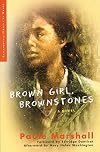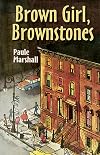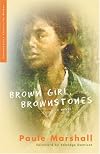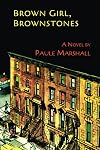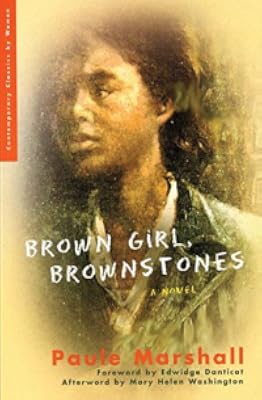
Brown Girl, Brownstones
by Paule Marshall
On This Page
Description
Selina's mother wants to stay in Brooklyn and earn enough money to buy a brownstone row house, but her father dreams only of returning to his island home. Torn between a romantic nostalgia for the past and a driving ambition for the future, Selina also faces the everyday burdens of poverty and racism. Written by and about an African-American woman, this coming-of-age story unfolds during the Depression and World War II. Its setting-a close-knit community of immigrants from Barbados-is drawn show more from the author's own experience, as are the lilting accents and vivid idioms of the characters' speech. Paule Marshall's 1959 novel was among the first to portray the inner life of a young female African-American, as well as depicting the cross-cultural conflict between West Indians and American blacks. It remains a vibrant, compelling tale of self-discovery. show lessTags
Recommendations













Member Reviews
This is an engrossing story of a Brown girl and her family, and their life in Brooklyn NY, around the time of the start of WWII. Selina's mom and dad are from Barbados, having come to NY to better their lives. However, the father only dreams of returning, and will contribute nothing to the mom's dream of buying the brownstone they lease, and turning it into a rooming house. For Selina, whose Dad is her shining star, this creates destructive Dynamics in her world.
Selina, as she grows up, becomes painfully aware of the power of white people over her and those who share her skin color.
Author Marshall has a power of imagery that lets the reader see Selina's world: the scenery, houses, neighborhoods, people, their clothes, their mannerisms, show more their attitudes. These are easily visualized for the reader and you will be the more engrossed in her work for this art.
Selina, at the age of 18, talking with her boyfriend of the scorn she feels for young members of the Barbados business association, which her mother wants her to join:
" 'I don't care, I won't be like them!' she replied savagely, and angrily struck the water with her foot so that the spray burst in a white design before them and then dropped. 'I won't be cut out of the same piece of cloth.' 'And most people want just that,' he offered, his eyes shrouded and aloof again, his voice bland. 'Because who wants to be out here alone? Who can take it? Most people want to be one with the lowering herd, to be told, to be led. They gladly hand over themselves to do something... ' " p.228
Selina, the star of her dance club, performed a solo at a dance recital. Afterwards, a huera who sang in the choir accompanying the recital, invited the members of the club to her house. The mother, jealous of Selina's spotlight, calls her away from the rest of the dancers for a talk:
"But when she looked up and saw her reflection in those pair of eyes, she knew that the woman saw one thing above all Else. Those eyes were a Well - lighted mirror in which, for the first time, Selena truly saw -- with a sharp and shattering clarity--the full meaning of her black skin.
"And knowing was like dying -- like being poised on the rim of time when the heart's simple rhythm is syncopated and then silenced and the blood chills and congeals, when a pall passes in the dark wind over the eyes. In that instant of death, false and fleeting though it was, she was beyond hurt. And then, as swiftly, terror flared behind her eyes, terror that somehow, in some way, this woman, the frightened girl at the door, those others dancing down the hall, even Rachel, all, everywhere, sought to rob her of her substance and herself. The thrust of hate at that moment was strong enough to sweep the world and consume them. What had brought her to this place? To the shattering knowledge? And obscurely she knew: the part of her which had long hated her for her blackness and thus begrudged her every small success like the one tonight..." P. 250
Running away from the party, Selina collapses sobbing in the doorway of a closed shop, and seeing her reflection in the window next to her, tries unsuccessfully to smash it:…
"She peered shyly at her reflection--the way a child looks at himself in the mirror. And, in a sense, it was a discovery for her also. She was seeing, clearly for the first time, the image which the woman--and the ones like the woman--saw when they looked at her. What Clive had said must be true. Her dark face must be confused in their minds with what they feared most: with the night, symbol of their ancient fears, which seethed with sin and Harbored violence, which spawned the beast in its fen; with the heart of darkness within them and all its horror and fascination. The woman, confronted by her brash face, had sensed the arid place within herself and had sought absolution in cruelty. Like the night, she was to be feared, spurned, purified -- and always reminded of her darkness..." p.251
"She cried because, like all her kinsmen, she must somehow prevent it from destroying her inside and find a way for her real face to emerge."p.252 show less
Selina, as she grows up, becomes painfully aware of the power of white people over her and those who share her skin color.
Author Marshall has a power of imagery that lets the reader see Selina's world: the scenery, houses, neighborhoods, people, their clothes, their mannerisms, show more their attitudes. These are easily visualized for the reader and you will be the more engrossed in her work for this art.
Selina, at the age of 18, talking with her boyfriend of the scorn she feels for young members of the Barbados business association, which her mother wants her to join:
" 'I don't care, I won't be like them!' she replied savagely, and angrily struck the water with her foot so that the spray burst in a white design before them and then dropped. 'I won't be cut out of the same piece of cloth.' 'And most people want just that,' he offered, his eyes shrouded and aloof again, his voice bland. 'Because who wants to be out here alone? Who can take it? Most people want to be one with the lowering herd, to be told, to be led. They gladly hand over themselves to do something... ' " p.228
Selina, the star of her dance club, performed a solo at a dance recital. Afterwards, a huera who sang in the choir accompanying the recital, invited the members of the club to her house. The mother, jealous of Selina's spotlight, calls her away from the rest of the dancers for a talk:
"But when she looked up and saw her reflection in those pair of eyes, she knew that the woman saw one thing above all Else. Those eyes were a Well - lighted mirror in which, for the first time, Selena truly saw -- with a sharp and shattering clarity--the full meaning of her black skin.
"And knowing was like dying -- like being poised on the rim of time when the heart's simple rhythm is syncopated and then silenced and the blood chills and congeals, when a pall passes in the dark wind over the eyes. In that instant of death, false and fleeting though it was, she was beyond hurt. And then, as swiftly, terror flared behind her eyes, terror that somehow, in some way, this woman, the frightened girl at the door, those others dancing down the hall, even Rachel, all, everywhere, sought to rob her of her substance and herself. The thrust of hate at that moment was strong enough to sweep the world and consume them. What had brought her to this place? To the shattering knowledge? And obscurely she knew: the part of her which had long hated her for her blackness and thus begrudged her every small success like the one tonight..." P. 250
Running away from the party, Selina collapses sobbing in the doorway of a closed shop, and seeing her reflection in the window next to her, tries unsuccessfully to smash it:…
"She peered shyly at her reflection--the way a child looks at himself in the mirror. And, in a sense, it was a discovery for her also. She was seeing, clearly for the first time, the image which the woman--and the ones like the woman--saw when they looked at her. What Clive had said must be true. Her dark face must be confused in their minds with what they feared most: with the night, symbol of their ancient fears, which seethed with sin and Harbored violence, which spawned the beast in its fen; with the heart of darkness within them and all its horror and fascination. The woman, confronted by her brash face, had sensed the arid place within herself and had sought absolution in cruelty. Like the night, she was to be feared, spurned, purified -- and always reminded of her darkness..." p.251
"She cried because, like all her kinsmen, she must somehow prevent it from destroying her inside and find a way for her real face to emerge."p.252 show less
I probably wouldn't have ever heard of Brown Girl, Brownstones if it hadn't been assigned for the African American Literature by Women course I'm taking this semester. However, it has a deserved place among novels about the immigrant experience and coming of age.
Brown Girl, Brownstones follows Selina Boyce from girlhood into college. In this time, Selina struggles over her allegiance to her father, Deighton, who romantically tries on careers in which he has no realistic future, and her mother, Silla, whose pragmatic obsession with purchasing their leased brownstone causes her to act ruthlessly. Between them and the outspoken cast of supporting characters, Selina has many options for how to model her own life.
The pages of Brown Girl, show more Brownstones fly by quickly, assisted by the realness of the characters' voices. I particularly enjoyed Marshall's use of Barbadian dialect, which helps to locate the novel in a particular time and place.
Brown Girl, Brownstones is an especially good choice for teenagers, but also for adults who are interested in stories set between the depression and the '50s. show less
Brown Girl, Brownstones follows Selina Boyce from girlhood into college. In this time, Selina struggles over her allegiance to her father, Deighton, who romantically tries on careers in which he has no realistic future, and her mother, Silla, whose pragmatic obsession with purchasing their leased brownstone causes her to act ruthlessly. Between them and the outspoken cast of supporting characters, Selina has many options for how to model her own life.
The pages of Brown Girl, show more Brownstones fly by quickly, assisted by the realness of the characters' voices. I particularly enjoyed Marshall's use of Barbadian dialect, which helps to locate the novel in a particular time and place.
Brown Girl, Brownstones is an especially good choice for teenagers, but also for adults who are interested in stories set between the depression and the '50s. show less
I had mixed feelings about this book. I liked the book because of the fact that the plot tells the story of a family who comes from an impoverished, but pristine island nation to a place that is a lot less friendly and accepting. It describes how the mother of the family struggles to keep her family afloat in the face of racism, poverty, and the desire for upward mobility while the father of the family has delusions, negative impulses, selfishness, and other traits that seek to destroy everything that they worked for. I did not, however, like the fact that the writing style of this book doesn't challenge readers to think about the social issues that face immigrant societies. The writing style also seemed forgettable, as it did not push show more me, the reader, to explore additional books that describe West Indian culture. The book did not hold my interest. The main idea of this book details two central characters as they overcome difficulties from many fronts, including society and the people that are closest to them. show less
A young girl's examination of her Barbadian roots and growing individualism as she matures in Brooklyn during the Depression..
Originally published in 1959, it has since received critical acclaim, likely because much of its content remains applicable today!
Ratings
Members
- Recently Added By
Lists


Author Information

15+ Works 1,934 Members
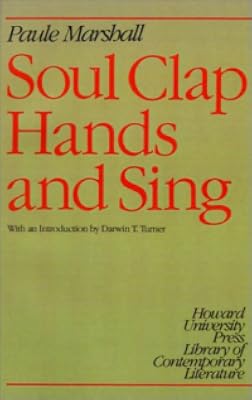
Paule Marshall was born on April 9, 1929 in Brooklyn, New York. She received a B.A. in English literature from Brooklyn College in 1953. She worked briefly as a librarian before joining Our World magazine. Her first novel, Brown Girl, Brownstones, was published in 1959. Her other novels include The Chosen Place, the Timeless People; Daughters; and show more The Fisher King. She is also the author of two collections of short fiction: Soul Clap Hands and Sing, which received the National Institute of Arts Award, and Reena and Other Stories. She has received several awards including the John Dos Passos Prize for Literature and the Columbus Foundation American Book Award for Praisesong for the Widow in 1983. Paule Marshall passed away on August 12, 2019 at the age of 90. (Bowker Author Biography) show less
Some Editions
Awards and Honors
Series
Belongs to Publisher Series
Work Relationships
Common Knowledge
- Original publication date
- 1959
- People/Characters
- Selina Boyce; Ina Boyce; Silla Boyce; Deighton Boyce; Clive Springer
- Important places
- Brooklyn, New York, New York, USA
- First words
- In the somnolent July afternoon the unbroken line of brownstone houses down the long Brooklyn street resembled an army massed at attention.
The small fierce band of Barbadians who emigrated to the United States between 1900 and 1940 came to escape the brutal colonial exploitation of blacks in the West Indies. (Afterword) - Last words
- (Click to show. Warning: May contain spoilers.)A frail sound in that utter silence.
(Click to show. Warning: May contain spoilers.)These women, whose lives and traditions were forever changed by the Middle Passage, emerge under the pen of Paule Marshall as central figures in that history, determined to order the meaning of their past and to find in their spiritual strivings the means to construct a future. (Afterword) - Blurbers
- Walker, Alice
Classifications
Statistics
- Members
- 695
- Popularity
- 41,209
- Reviews
- 5
- Rating
- (3.90)
- Languages
- English, Italian
- Media
- Paper, Audiobook, Ebook
- ISBNs
- 16
- UPCs
- 1
- ASINs
- 12