On This Page
Description
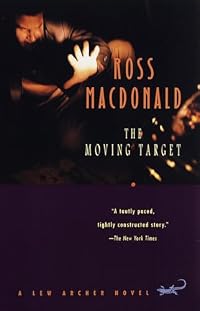
The first book in Ross Macdonald's acclaimed Lew Archer series introduces the detective who redefined the role of the American private eye and gave the crime novel a psychological depth and moral complexity only hinted at before. Like many Southern California millionaires, Ralph Sampson keeps odd company. There's the sun-worshipping holy man whom Sampson once gave his very own mountain; the fading actress with sidelines in astrology and S&M. Now one of Sampson's friends may have arranged his show more kidnapping. As Lew Archer follows the clues from the canyon sanctuaries of the megarich to jazz joints where you get beaten up between sets, The Moving Target blends sex, greed, and family hatred into an explosively readable crime novel. show lessTags
Recommendations


























Member Reviews
Have you ever read a book with which you deliberately took your time so that it wouldn’t be over as quickly? Did you painstakingly read each word to make sure you had fully digested each and every literary morsel because you knew that you would never have a chance to read those words for the first time ever again?
I have. I blame it on an essay I had to read in college, something about the “original experience” of discovering a particular work of art. I can’t remember who wrote it—and I tried to Google it to no avail—but the gist is that the power of original experience can never be attained again. You can read it again and enjoy it, but there will never be that same wonder of discovery that you had upon the first reading. show more So when I find a book that touches me like that, I hold on with white knuckles and do my damnedest to soak in every word.
My most recent “original experience?” The Moving Target by Ross MacDonald. It’s a Noir novel from 1949, the first in the Lew Archer series of hardboiled mysteries. It follows the stylistic trail blazed by Raymond Chandler, so I guess the book itself isn’t all that original, but I’m in love with Raymond Chandler, so why would I complain? I love it all—the private investigator with a sense of justice, the nihilistic take on society and humanity in general, the hardboiled metaphors that make me want to squeal like a tween at a Justin Bieber concert.
I’ll get to the plot summary at some point, I promise. It’s just that right now I’m way too excited to do anything but gush. Can you blame me? I mean, just look at this:
“I tried smiling to encourage myself. I was a good Joe after all. Consorter with roughnecks, tarts, hard cases and easy marks; private eye at the keyhole of illicit bedrooms; informer to jealousy, rat behind the walls, hired gun to anybody with fifty dollars a day; but a good Joe after all. The wrinkles formed at the corner of my eyes, the wings of my nose; the lips drew back from the teeth, but there was no smile. All I got was a lean famished look like a coyote’s sneer. The face had seen too many bars, too many rundown hotels and crummy love nests, too many courtrooms and prisons, postmortems and police lineups, too many nerve endings showing like tortured worms. If I found the face on a stranger, I wouldn’t trust it.”
Squeeeee! That’s the stuff, baby! I know, I know, it’s become a little old hat by today’s standards. And sometimes there’s so much of it in MacDonald’s work that even I found myself saying, “Alright, I get the picture, now get on with the story for Chrissakes!” But despite all that, the sheer brilliance behind the prose leaves me gaping in awe. Very few authors these days write with such iron in their words, which is why I go gaga over vintage crime authors like MacDonald.
The protagonist of The Moving Target, as I mentioned before, is a private investigator named Lew Archer. He is hired (see? I told you I would get to the plot summary eventually) by Mrs. Sampson, a paraplegic millionairess whose husband has disappeared on his way back from a business trip to Las Vegas. She’s worried that he’s gotten sloshed and given away a mountain. Seeing as he’s a wealthy land owner with a proclivity for wine, women, and song, the fears would appear to be well founded. The story MacDonald weaves is a twisted one, intersecting with a washed up actress, the millionaire’s daughter and her love triangle involving her father’s solicitor and his personal pilot, a broken down jazz singer, a sun-worshiping charlatan, and a mishmash of varying criminal elements. As with a lot of noir, the story focuses greatly on family secrets of the rich and elite, and those secrets manifest themselves in the greed and lust and jealousy that eventually leads to the characters’ downfall.
It’s my personal belief that a book can’t be considered “noir” when it has a 100% happy ending. There can be closure to a certain extent, but it can’t end with rainbows and sunshine and a love that lasts a lifetime. The central message of the genre is that the world is shit because people suck. Well, there’s more to it than that, but you get the point. So how do you transmute that into an uplifting, fun-for-the-whole-family ending? The short answer is that you can’t. At least, you can’t and still have it be Noir. That, I’m happy to say, isn’t something I had to worry about with The Moving Target.
Another interesting tidbit, the name Ross MacDonald is a pseudonym. Not surprising, considering that’s what most writers did in those days. What is surprising is that the author’s real name was Kenneth Millar. That name might strike a chord with fellow mystery aficionados, since it’s the same last name as another famous crime author, Margaret Millar, who just so happened to have been Kenneth Millar’s wife. It’s funny. The more I find out about these writerly types, the more I realize what an incestuous bunch they/we are.
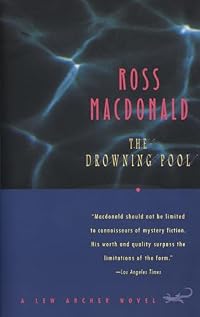
So that’s that on The Moving Target. I absolutely loved it and have already been trolling the internet in search of the next book in the Lew Archer series, The Drowning Pool (which was incidentally the inspiration for the similarly named metal band). There’s no holding back for me on this one. I give it the full five stars.
I mean really—when a grown man “squeeees” with delight, can there be any other verdict?
http://readabookonce.blogspot.com/2012/02/moving-target-by-ross-macdonald.html show less
I have. I blame it on an essay I had to read in college, something about the “original experience” of discovering a particular work of art. I can’t remember who wrote it—and I tried to Google it to no avail—but the gist is that the power of original experience can never be attained again. You can read it again and enjoy it, but there will never be that same wonder of discovery that you had upon the first reading. show more So when I find a book that touches me like that, I hold on with white knuckles and do my damnedest to soak in every word.
My most recent “original experience?” The Moving Target by Ross MacDonald. It’s a Noir novel from 1949, the first in the Lew Archer series of hardboiled mysteries. It follows the stylistic trail blazed by Raymond Chandler, so I guess the book itself isn’t all that original, but I’m in love with Raymond Chandler, so why would I complain? I love it all—the private investigator with a sense of justice, the nihilistic take on society and humanity in general, the hardboiled metaphors that make me want to squeal like a tween at a Justin Bieber concert.
I’ll get to the plot summary at some point, I promise. It’s just that right now I’m way too excited to do anything but gush. Can you blame me? I mean, just look at this:
“I tried smiling to encourage myself. I was a good Joe after all. Consorter with roughnecks, tarts, hard cases and easy marks; private eye at the keyhole of illicit bedrooms; informer to jealousy, rat behind the walls, hired gun to anybody with fifty dollars a day; but a good Joe after all. The wrinkles formed at the corner of my eyes, the wings of my nose; the lips drew back from the teeth, but there was no smile. All I got was a lean famished look like a coyote’s sneer. The face had seen too many bars, too many rundown hotels and crummy love nests, too many courtrooms and prisons, postmortems and police lineups, too many nerve endings showing like tortured worms. If I found the face on a stranger, I wouldn’t trust it.”
Squeeeee! That’s the stuff, baby! I know, I know, it’s become a little old hat by today’s standards. And sometimes there’s so much of it in MacDonald’s work that even I found myself saying, “Alright, I get the picture, now get on with the story for Chrissakes!” But despite all that, the sheer brilliance behind the prose leaves me gaping in awe. Very few authors these days write with such iron in their words, which is why I go gaga over vintage crime authors like MacDonald.
The protagonist of The Moving Target, as I mentioned before, is a private investigator named Lew Archer. He is hired (see? I told you I would get to the plot summary eventually) by Mrs. Sampson, a paraplegic millionairess whose husband has disappeared on his way back from a business trip to Las Vegas. She’s worried that he’s gotten sloshed and given away a mountain. Seeing as he’s a wealthy land owner with a proclivity for wine, women, and song, the fears would appear to be well founded. The story MacDonald weaves is a twisted one, intersecting with a washed up actress, the millionaire’s daughter and her love triangle involving her father’s solicitor and his personal pilot, a broken down jazz singer, a sun-worshiping charlatan, and a mishmash of varying criminal elements. As with a lot of noir, the story focuses greatly on family secrets of the rich and elite, and those secrets manifest themselves in the greed and lust and jealousy that eventually leads to the characters’ downfall.
It’s my personal belief that a book can’t be considered “noir” when it has a 100% happy ending. There can be closure to a certain extent, but it can’t end with rainbows and sunshine and a love that lasts a lifetime. The central message of the genre is that the world is shit because people suck. Well, there’s more to it than that, but you get the point. So how do you transmute that into an uplifting, fun-for-the-whole-family ending? The short answer is that you can’t. At least, you can’t and still have it be Noir. That, I’m happy to say, isn’t something I had to worry about with The Moving Target.
Another interesting tidbit, the name Ross MacDonald is a pseudonym. Not surprising, considering that’s what most writers did in those days. What is surprising is that the author’s real name was Kenneth Millar. That name might strike a chord with fellow mystery aficionados, since it’s the same last name as another famous crime author, Margaret Millar, who just so happened to have been Kenneth Millar’s wife. It’s funny. The more I find out about these writerly types, the more I realize what an incestuous bunch they/we are.
So that’s that on The Moving Target. I absolutely loved it and have already been trolling the internet in search of the next book in the Lew Archer series, The Drowning Pool (which was incidentally the inspiration for the similarly named metal band). There’s no holding back for me on this one. I give it the full five stars.
I mean really—when a grown man “squeeees” with delight, can there be any other verdict?
http://readabookonce.blogspot.com/2012/02/moving-target-by-ross-macdonald.html show less
Having fun with a book i first read decades ago. The Moving Target is the first of the "Lew Archer" detective series by Ross MacDonald. (They made a movie out of it with Paul Newman and called it "Harper".)
Archer is hired to find a missing millionaire in Southern California by the millionare's crippled, bitter second wife and his sullen, just nubile daughter. This leads to a nightmare jungle cruise through the asphalt backwaters of Los Angeles, with sad women and savage men and grotesque cult leaders and a dapper crime boss who knows more than he's telling.
There are images of wealth and power, and scenes of helpless poverty and desperate hunger. These are stories driven by money and by sex. Nobody seems to get much pleasure out of show more either.
There is much fear and violence and much deep seated misogyny, and the "case" is resolved in a way that probably satisfies no one. The figures of the law are brutish and corrupt, and Archer moves among them like a knight without armor in a savage land.
The writing is complex and surprising and sometimes approaches poetry. I was constantly underlining passages just for the wonderful turns of phrase.
I think in later books in the series the plotting was sharper and the characters a little better defined. But this one does just fine. show less
Archer is hired to find a missing millionaire in Southern California by the millionare's crippled, bitter second wife and his sullen, just nubile daughter. This leads to a nightmare jungle cruise through the asphalt backwaters of Los Angeles, with sad women and savage men and grotesque cult leaders and a dapper crime boss who knows more than he's telling.
There are images of wealth and power, and scenes of helpless poverty and desperate hunger. These are stories driven by money and by sex. Nobody seems to get much pleasure out of show more either.
There is much fear and violence and much deep seated misogyny, and the "case" is resolved in a way that probably satisfies no one. The figures of the law are brutish and corrupt, and Archer moves among them like a knight without armor in a savage land.
The writing is complex and surprising and sometimes approaches poetry. I was constantly underlining passages just for the wonderful turns of phrase.
I think in later books in the series the plotting was sharper and the characters a little better defined. But this one does just fine. show less
The first in Macdonald's Lew Archer series (1949) is convoluted and a little crazy. It has a few awkwardnesses, such as the hero getting knocked unconscious three times in 36 hours and a cast of characters that's just too sprawling to fit into a short book, but what's remarkable are its strengths that include peerlessly wry dialogue, intensely vivid description, tight plotting and a solid emotional core. Macdonald's Archer out-Marlowes Marlowe. He's complex, avoids needless violence and isn't afraid to admit fear, at least to the reader. Above all, of course, he's got values and a code, the type introduced by Chandler: a man "who is not himself mean, a complete man and a common man and yet an unusual man."
Although #1 in the series, it's show more the second I've read, and I can see other flaws that weren't present in #3, The Way Some People Die (1951). Most troublingly, there's a trace of authorial cruelty in the depiction of women. I'm not talking about garden-variety misogyny or the chauvinism you should expect in any book by a male author in the 1940s. The women are believably drawn and have agency and motives that are often independent of the male characters. But there is a little too much violence and a little too much cynicism surrounding these women, more than seems necessary even in a book where no one is completely innocent. I'm not sure it would bother even many female readers, given the compensating pleasures of the story, but if you think it would bother you, read it anyway and be aware that the same problem may not be present in later, more accomplished books. show less
Although #1 in the series, it's show more the second I've read, and I can see other flaws that weren't present in #3, The Way Some People Die (1951). Most troublingly, there's a trace of authorial cruelty in the depiction of women. I'm not talking about garden-variety misogyny or the chauvinism you should expect in any book by a male author in the 1940s. The women are believably drawn and have agency and motives that are often independent of the male characters. But there is a little too much violence and a little too much cynicism surrounding these women, more than seems necessary even in a book where no one is completely innocent. I'm not sure it would bother even many female readers, given the compensating pleasures of the story, but if you think it would bother you, read it anyway and be aware that the same problem may not be present in later, more accomplished books. show less
I decided to re-visit the Ross Macdonald Lew Archer series, starting at the beginning. I don't think I had ever read this installment and it seems different in tone and content than the ones I remember. For one thing, Archer and all the other characters seem pretty wordy. Lots of philosophical conversations from damaged people. Archer also seems more of a wise guy than I remember, baiting bad guys, good guys, and pretty much everyone. But Macdonald's talent for description is already there -- people, places, even plants and geology. The book comes to life with his vivid writing. Written in 1949, it evokes post-war Southern California very well. The plot is a bit muddled but acceptable. I'll move on to the next book in the series and see show more how Archer and the stories evolve. show less
When millionaire oilman Ralph Sampson goes missing, his worried wife hires a private detective to track him down. Lew Archer soon discovers, though that what seemed a matter of a man on a bender may in fact be a case of kidnapping. As he investigates further, he encounters an eclectic group of individuals connected to Sampson, all of whom are possibly involved in Sampson's disappearance. With the likelihood of finding Sampson alive diminishing with each passing second, Archer races to discover everyone's secrets, even if doing so comes at the cost of his life.
Though The Moving Target was Ross Macdonald's first novel featuring his signature creation Lew Archer, it is the sixth one in the series that I have read. Because of this, it show more serves as an interesting contrast with the others. Many of the elements that characterize Macdonald's Archer novels, such as the long-held secrets and connections with seemingly unrelated crimes decades beforehand, are absent from this book. Instead what Macdonald provides is a more straightforward mystery involving a grief-ridden family and the dangerous characters orbiting around them. In this respect it's a refreshing change of pace from the regular patterns that would come to characterize the series, which can grow a little tiresome when read back-to-back. This may explain why I enjoyed the novel as much as I did, even if the book did not possess the virtuosic plotting and character development that would become a hallmark of Macdonald's writing in subsequent years. Once again, variety proves to be the spice of life, even with works of such rare quality as Macdonald's. show less
Though The Moving Target was Ross Macdonald's first novel featuring his signature creation Lew Archer, it is the sixth one in the series that I have read. Because of this, it show more serves as an interesting contrast with the others. Many of the elements that characterize Macdonald's Archer novels, such as the long-held secrets and connections with seemingly unrelated crimes decades beforehand, are absent from this book. Instead what Macdonald provides is a more straightforward mystery involving a grief-ridden family and the dangerous characters orbiting around them. In this respect it's a refreshing change of pace from the regular patterns that would come to characterize the series, which can grow a little tiresome when read back-to-back. This may explain why I enjoyed the novel as much as I did, even if the book did not possess the virtuosic plotting and character development that would become a hallmark of Macdonald's writing in subsequent years. Once again, variety proves to be the spice of life, even with works of such rare quality as Macdonald's. show less
This is the first book in the Lew Archer series, but the second-last of the novels I’m reading (I have only The Wycherly Woman left, then the short stories). As far as this book goes relative to the other Archers, it’s in the middle of the pack. It certainly sets the stage well for Archer, introduced as a private detective with more of a conscience or a philosophical bent. He’s a bit more naive here, too, than he is later on in the series, and it’s kind of sweet to see him a bit more innocent. But boy does he learn quickly about the seamy side of Santa Teresa.
J'ai adoré ce livre. L'intrigue tient debout, mais ce qui m'a surtout retenu, c'est le style, impeccable, l'humour, l'air de ne pas y toucher, les détails des années 50, cette ambiance légèrement surannée, qui ne retire rien au côté très moderne de l'œuvre. Je salive déjà à la perspective de découvrir d'autres livres de Ross MacDonald et, surtout, les autres aventures de son privé Lew Archer.
Members
- Recently Added By
Lists

Best Noir Fiction
160 works; 14 members

Anthony Boucher's Best Crime Fiction of the Year
115 works; 5 members

Haycraft Queen Cornerstones
181 works; 3 members

Books Read in 2021
5,361 works; 114 members

Noirvember: Potential Reads
23 works; 1 member
Author Information

103+ Works 14,274 Members
Awards and Honors
Distinctions
Series

Belongs to Publisher Series
Work Relationships
Is contained in
Has the adaptation
Common Knowledge
- Canonical title
- The Moving Target
- Original title
- The Moving Target
- Alternate titles
- Harper
- Original publication date
- 1949 (Knopf) (Knopf)
- People/Characters
- Lew Archer; Miranda Sampson
- Important places
- Santa Teresa, California, USA
- Related movies
- Harper (1966 | IMDb)
- First words
- The cab turned off U.S. 101 in the direction of the sea.
- Disambiguation notice
- The Moving Target was republished in 1966 under the title Harper, when the movie adaptation was released under that name.
Classifications
Statistics
- Members
- 876
- Popularity
- 30,759
- Reviews
- 35
- Rating
- (3.80)
- Languages
- 9 — Catalan, English, Finnish, French, German, Italian, Polish, Spanish, Swedish
- Media
- Paper, Audiobook, Ebook
- ISBNs
- 38
- ASINs
- 17