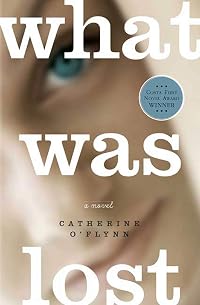
What Was Lost
by Catherine O'Flynn
On This Page
Description
In the 1980s, Kate Meaney is hard at work as a junior detective. Busy trailing "suspects" and carefully observing everything around her at the newly opened Green Oaks shopping mall, she forms an unlikely friendship with Adrian, the son of a local shopkeeper. But when this curious, independent-spirited young girl disappears, Adrian falls under suspicion and is hounded out of his home by the press. Then, in 2003, Adrian's sister Lisa - stuck in a dead-end relationship - is working as a manager show more at Your Music, a discount record store. Every day she tears her hair out at the outrageous behavior of her customers and colleagues. But along with a security guard, Kurt, she becomes entranced by the little girl glimpsed on the mall's surveillance cameras. As their after-hours friendship intensifies, Lisa and Kurt investigate how these sightings might be connected to the unsettling history of Green Oaks itself.. show less
Tags
Recommendations

















Member Recommendations
jayne_charles Similar focus on childhood, comedy and mystery

by anonymous user
jayne_charles Both quirky then-and-now stories
Member Reviews
In 1984, Kate Meaney fancies herself a junior detective; she's observant and has the patience for surveillance, but she sees little that's suspicious. She misses her father, and her grandmother is beginning to talk about boarding school, but, Kate confides to Adrian, the shopkeeper's son, she doesn't want to go. He offers to go with her, but after she sits the exam, she's never seen again, and Adrian becomes a suspect, though Kate's body doesn't turn up.
In the early 2000s, Adrian's sister Lisa is working a dead-end job in a record store in the same mall where Kate used to do surveillance; she misses her brother, who left town and only sends a mix tape on her birthday. Kurt is a security officer at the mall, and after he sees a little show more girl on the monitors, he and Lisa strike up a friendship of sorts. Both are stuck in their patterns, and much less dynamic characters than Kate (and Kate's friend Theresa). Thanks in part to Kate's stuffed monkey, and clues from Kurt's co-worker - who has an encyclopedic knowledge of the mall - they do eventually solve the mystery of Kate's disappearance, and Theresa is there to bring him to justice; however, it's too late for Adrian, who dies by suicide.
Quotes
"I think adults....they think they know what's best for their children's, but they don't really. In fact, they often have very bad ideas, and the children have much better ones, but it doesn't matter...[the adult gets] to choose." (Kate to Adrian, 49-50)
But it seemed to be a trade-off; with the pain went the details and memories. People had said "Time heals," but he realized time didn't heal, time just eroded and confused, and he didn't think that was the same thing at all. (Kurt, 92)
She idealized time away from work to such an extent that it could never live up to her expectations. (Lisa, 114)
Lisa felt as if Dan knew a better version of her - someone with interests and ideas and plans. All that was best about Lisa, or had once been best, was saved in Dan's memory and had yet to be overwritten by the newer, paler reality. The same was also true in reverse. They both had high hopes for each other, if not for themselves. (137)
He wondered if what he'd failed to do had actually made any difference at all. (Kurt, 172)
"Nothing makes spending twelve hours of every day doing something you hate worthwhile." (Dan to Lisa, 176) show less
In the early 2000s, Adrian's sister Lisa is working a dead-end job in a record store in the same mall where Kate used to do surveillance; she misses her brother, who left town and only sends a mix tape on her birthday. Kurt is a security officer at the mall, and after he sees a little show more girl on the monitors, he and Lisa strike up a friendship of sorts. Both are stuck in their patterns, and much less dynamic characters than Kate (and Kate's friend Theresa). Thanks in part to Kate's stuffed monkey, and clues from Kurt's co-worker - who has an encyclopedic knowledge of the mall - they do eventually solve the mystery of Kate's disappearance, and Theresa is there to bring him to justice; however, it's too late for Adrian, who dies by suicide.
Quotes
"I think adults....they think they know what's best for their children's, but they don't really. In fact, they often have very bad ideas, and the children have much better ones, but it doesn't matter...[the adult gets] to choose." (Kate to Adrian, 49-50)
But it seemed to be a trade-off; with the pain went the details and memories. People had said "Time heals," but he realized time didn't heal, time just eroded and confused, and he didn't think that was the same thing at all. (Kurt, 92)
She idealized time away from work to such an extent that it could never live up to her expectations. (Lisa, 114)
Lisa felt as if Dan knew a better version of her - someone with interests and ideas and plans. All that was best about Lisa, or had once been best, was saved in Dan's memory and had yet to be overwritten by the newer, paler reality. The same was also true in reverse. They both had high hopes for each other, if not for themselves. (137)
He wondered if what he'd failed to do had actually made any difference at all. (Kurt, 172)
"Nothing makes spending twelve hours of every day doing something you hate worthwhile." (Dan to Lisa, 176) show less
Sad, bleak yet compelling - a must read!
I loved this book and was completely drawn to it yet at the same time it is a sad and bleak book about consumerist Britain. It is a compelling and perceptive read, and the element of mystery within it keeps the reader reading to the end. Catherine O’Flynn is an astute writer who has created very real characters that are easy to identify with - her observations of 21st century society are acute and at times made me laugh out loud while at other times feel a sense of loss and sadness. Her language style is to the point and the differing perspectives create a picture of the many different worlds connected by the shopping centre. There are a number of main characters in this but each one seems so show more isolated and although there is very little emotion in her writing it serves to create warmth and empathy towards them - I wanted to know their fate - and it’s certainly a good example of less is more. A wonderful read although the image of ‘the gluesniffers’ will remain with me for a long time afterwards. show less
I loved this book and was completely drawn to it yet at the same time it is a sad and bleak book about consumerist Britain. It is a compelling and perceptive read, and the element of mystery within it keeps the reader reading to the end. Catherine O’Flynn is an astute writer who has created very real characters that are easy to identify with - her observations of 21st century society are acute and at times made me laugh out loud while at other times feel a sense of loss and sadness. Her language style is to the point and the differing perspectives create a picture of the many different worlds connected by the shopping centre. There are a number of main characters in this but each one seems so show more isolated and although there is very little emotion in her writing it serves to create warmth and empathy towards them - I wanted to know their fate - and it’s certainly a good example of less is more. A wonderful read although the image of ‘the gluesniffers’ will remain with me for a long time afterwards. show less
It was interesting to come to O'Flynn's debut after reading her third, and most recent novel Mr. Lynch's Holiday. In reading her books out of order, I wondered what I might notice about how she had developed as a novelist. Would signature preoccupations and themes be identifiable? I thought I might come away with a better perspective on her as a writer, a word artist, and I did.
What Was Lost is a fine novel. It is certainly deserving of the first-book award it received. It concerns an unusual, bright, and neglected child--Kate Meaney--a girl detective who lives with her grandmother in what was formerly a store (with a large plate-glass front window), sandwiched between a newsagent's and a butcher's shop, in a now derelict business show more section of town. Kate's quite elderly father has recently died; her mother ran off on them long ago. Using a children's guide to crime detection (a gift from her father), Kate spends much of her free time at a large shopping complex (Green Oaks), her trusty stuffed-toy monkey partner poking from her backpack, surveiling a suspicious looking man routinely seen in a particular section of this monument to consumerism. When not at the mall, Kate can usually be found conversing with kindly 22-year-old Adrian Palmer, her only real friend. Adrian has recently completed university, but he's "stuck". In spite of his father's prodding him to get on with a real job, Adrian works at his dad's newsagent's/sweet shop where he provides inappropriate --some might say "tone-deaf"--music recommendations to the mostly senior clientele. Kate will make another friend at school, the outrageously behaved "bad girl", Teresa Stanton. The neglect that Kate suffers at home seems almost benign when compared to Teresa's chaotic home life.
While Kate's story set in 1984 forms almost the first third of O'Flynn's novel, most of the book will concern itself with two adult characters who work at Green Oaks in the year 2003. Lisa is a manager at a music store, and Kurt is a Green Oaks security guard. Both of them are as stuck as Adrian had been in 1984. Repeatedly resolving and failing to leave their tedious jobs, they teeter on the brink of despair. Both spend their days watching shoppers try to fill their own lives of quiet desperation with consumer goods. Lisa is in a dead-end relationship with a lazy, dull music-store colleague whose dreams don't extend beyond moving into a larger flat that will provide a better view of Green Oaks. Kurt's partner, Nancy, died in a motor vehicle accident a few years back, but shortly before her death he was already aware that she no longer loved him. He has ongoing sleep troubles that contribute to an even bigger problem distinguishing what is real from what is not. He spooks his co-worker when he claims to see over the CCTV monitor a young girl (Kate) standing right next to this man who is doing his nightly walkabout. It turns out that Kurt is the only one who can see the girl, and now all but one of Kurt's colleagues--the weirdest-- refuse to work the night shift with him. In the end, perhaps the most important thing to know about Lisa and Kurt is that they are connected to Kate and Adrian, both of whom went missing 19 years before. By the end of O'Flynn's finely observed and captivating novel, the reader will know what happened to Kate and her 22-year-old friend.
While I don't feel this first novel of O'Flynn's is quite as strong as her third--she goes just a little overboard in her skewering of consumer culture and the characters' lives are just a tad too bleak--it is clear that she has been a fine writer from the start. First of all, she has a vision of life that informs and infuses her work. I can't think of a recent writer who so brilliantly captures the pall-like tedium of most people's working lives: the repetitive, dull tasks; the variously idiosyncratic, dull, enraged, or bizarre work colleagues. Civilization certainly has its comforts and advantages, but I often think that some of the traditional, egalitarian indigenous cultures (like the Anishinabe/Ojibwa) had it right. Labour may have been somewhat divided along sexual lines, but there was variety and meaning in the work: one made things and performed tasks that were plainly critical to one's own and the group's survival. Many modern "jobs" offer little satisfaction to those who perform them.
Besides the fine, sometimes ironic and understated writing, O'Flynn has created characters here that you care for and wonder about, even after you've finished the novel. You feel something when you read her work. In this case, I'll admit that I felt a terrible sadness for what, in fact, was lost. However, O'Flynn does leave the reader with some hope in the wake of sadness. There is renewed human connection. (In this way, her first book resembles her third.) However, the humour that is so much a part of her later novel, Mr. Lynch's Holiday, is harder to find here.
Readers who are looking for lots of action may want to look elsewhere, but I believe thoughtful, more patient ones who enjoy character-driven literary novels will find much of value in What Was Lost.
Rating: 3.5, rounded up to 4. show less
What Was Lost is a fine novel. It is certainly deserving of the first-book award it received. It concerns an unusual, bright, and neglected child--Kate Meaney--a girl detective who lives with her grandmother in what was formerly a store (with a large plate-glass front window), sandwiched between a newsagent's and a butcher's shop, in a now derelict business show more section of town. Kate's quite elderly father has recently died; her mother ran off on them long ago. Using a children's guide to crime detection (a gift from her father), Kate spends much of her free time at a large shopping complex (Green Oaks), her trusty stuffed-toy monkey partner poking from her backpack, surveiling a suspicious looking man routinely seen in a particular section of this monument to consumerism. When not at the mall, Kate can usually be found conversing with kindly 22-year-old Adrian Palmer, her only real friend. Adrian has recently completed university, but he's "stuck". In spite of his father's prodding him to get on with a real job, Adrian works at his dad's newsagent's/sweet shop where he provides inappropriate --some might say "tone-deaf"--music recommendations to the mostly senior clientele. Kate will make another friend at school, the outrageously behaved "bad girl", Teresa Stanton. The neglect that Kate suffers at home seems almost benign when compared to Teresa's chaotic home life.
While Kate's story set in 1984 forms almost the first third of O'Flynn's novel, most of the book will concern itself with two adult characters who work at Green Oaks in the year 2003. Lisa is a manager at a music store, and Kurt is a Green Oaks security guard. Both of them are as stuck as Adrian had been in 1984. Repeatedly resolving and failing to leave their tedious jobs, they teeter on the brink of despair. Both spend their days watching shoppers try to fill their own lives of quiet desperation with consumer goods. Lisa is in a dead-end relationship with a lazy, dull music-store colleague whose dreams don't extend beyond moving into a larger flat that will provide a better view of Green Oaks. Kurt's partner, Nancy, died in a motor vehicle accident a few years back, but shortly before her death he was already aware that she no longer loved him. He has ongoing sleep troubles that contribute to an even bigger problem distinguishing what is real from what is not. He spooks his co-worker when he claims to see over the CCTV monitor a young girl (Kate) standing right next to this man who is doing his nightly walkabout. It turns out that Kurt is the only one who can see the girl, and now all but one of Kurt's colleagues--the weirdest-- refuse to work the night shift with him. In the end, perhaps the most important thing to know about Lisa and Kurt is that they are connected to Kate and Adrian, both of whom went missing 19 years before. By the end of O'Flynn's finely observed and captivating novel, the reader will know what happened to Kate and her 22-year-old friend.
While I don't feel this first novel of O'Flynn's is quite as strong as her third--she goes just a little overboard in her skewering of consumer culture and the characters' lives are just a tad too bleak--it is clear that she has been a fine writer from the start. First of all, she has a vision of life that informs and infuses her work. I can't think of a recent writer who so brilliantly captures the pall-like tedium of most people's working lives: the repetitive, dull tasks; the variously idiosyncratic, dull, enraged, or bizarre work colleagues. Civilization certainly has its comforts and advantages, but I often think that some of the traditional, egalitarian indigenous cultures (like the Anishinabe/Ojibwa) had it right. Labour may have been somewhat divided along sexual lines, but there was variety and meaning in the work: one made things and performed tasks that were plainly critical to one's own and the group's survival. Many modern "jobs" offer little satisfaction to those who perform them.
Besides the fine, sometimes ironic and understated writing, O'Flynn has created characters here that you care for and wonder about, even after you've finished the novel. You feel something when you read her work. In this case, I'll admit that I felt a terrible sadness for what, in fact, was lost. However, O'Flynn does leave the reader with some hope in the wake of sadness. There is renewed human connection. (In this way, her first book resembles her third.) However, the humour that is so much a part of her later novel, Mr. Lynch's Holiday, is harder to find here.
Readers who are looking for lots of action may want to look elsewhere, but I believe thoughtful, more patient ones who enjoy character-driven literary novels will find much of value in What Was Lost.
Rating: 3.5, rounded up to 4. show less
I have found another new favorite author in Catherine O’Flynn. In her What Was Lost she takes her time and develops her story slowly and the reader is drawn firstly into the life of a 10 year old girl and then into the lives of two disenchanted people who work at the Green Oaks Shopping Centre. In fact the Green Oaks Shopping Center could be said to be the main character in the book as the story ebbs and flows through the centre’s endless corridors.
The book opens in 1984 and we meet Kate, a little girl who escapes her dreary life by pretending to be a detective. With her stuffed monkey and notebook in tow she is always on the lookout for suspicious behavior and one of her favorite hunting grounds is the new shopping centre, Green show more Oaks. As she notices someone who behaves suspiciously she is determined to tail him and find out what he is up to.
The book then jumps ahead 20 years and the mall is the working place of Kurt, a security guard and Lisa, an assistant manager of a music store. Late one night as he is watching the CTV screens, Kurt sees a little girl with a notebook and a toy monkey standing outside the bank, and, as she travels the back corridors of the mall, Lisa finds a stuffed money tucked in behind some pipes. As these two get together they first search for a lost little girl, but eventually realize they are experiencing links to the past when a little girl called Kate disappeared
I found What Was Lost a charming yet spooky story, with a unique plot that is made up of both the mystery and ghost story as well as a social commentary on consumerism and the dehumanising effects of these giant shopping malls. People’s reaction to this book appears to be varied, but for me, this was a brilliant, spell bounding read from a very talented writer and I can’t wait to see what she produces next. show less
The book opens in 1984 and we meet Kate, a little girl who escapes her dreary life by pretending to be a detective. With her stuffed monkey and notebook in tow she is always on the lookout for suspicious behavior and one of her favorite hunting grounds is the new shopping centre, Green show more Oaks. As she notices someone who behaves suspiciously she is determined to tail him and find out what he is up to.
The book then jumps ahead 20 years and the mall is the working place of Kurt, a security guard and Lisa, an assistant manager of a music store. Late one night as he is watching the CTV screens, Kurt sees a little girl with a notebook and a toy monkey standing outside the bank, and, as she travels the back corridors of the mall, Lisa finds a stuffed money tucked in behind some pipes. As these two get together they first search for a lost little girl, but eventually realize they are experiencing links to the past when a little girl called Kate disappeared
I found What Was Lost a charming yet spooky story, with a unique plot that is made up of both the mystery and ghost story as well as a social commentary on consumerism and the dehumanising effects of these giant shopping malls. People’s reaction to this book appears to be varied, but for me, this was a brilliant, spell bounding read from a very talented writer and I can’t wait to see what she produces next. show less
Mickey had been made from a craft kit called 'Sew your own Charlie Chimp the gangster' given to Kate by an auntie. Charlie had languished along with all of Kate's other soft toys throughout most of her childhood, but when she'd started up the detective agency last year she thought he looked the part. Charlie Chimp was no good though. Instead he became Mickey the Monkey. Kate would run through the agenda with him each morning and he always travelled with her in the canvas army surplus bag. The waitress brought the order. Kate ate the burger and perused the first Beano of the new year, while Mickey kept a steady eye on some suspicious teenagers below.
A ten-year-old detective haunts the Green Oaks shopping centre, looking for suspicious show more behaviour and hoping to foil a bank raid. Twenty years after her mysterious disappearance she seems to be haunting the shopping centre again, when security guard Kurt sees her ghost on the security cameras.
It's funny and sad in turns, and the mystery at the heart of the book is gripping. I'm not surprised that it won the Costa first novel award, as I couldn't put it down until I found out what happened to Kate all those years ago. show less
A ten-year-old detective haunts the Green Oaks shopping centre, looking for suspicious show more behaviour and hoping to foil a bank raid. Twenty years after her mysterious disappearance she seems to be haunting the shopping centre again, when security guard Kurt sees her ghost on the security cameras.
It's funny and sad in turns, and the mystery at the heart of the book is gripping. I'm not surprised that it won the Costa first novel award, as I couldn't put it down until I found out what happened to Kate all those years ago. show less
A lost little girl with her detective notebook and toy monkey appears on the CCTV screens of the Green Oaks shopping centre, evoking memories of Kate Meaney, missing for twenty years. Kurt, a security guard with a sleep disorder, and Lisa, a disenchanted deputy manager at Your Music, follow glimpses of the girl through the centre's endless corridors - a welcome change from dealing with awkward customers, colleagues and the Green Oaks mystery shopper. But as this after-hours friendship grows in intensity, it brings new loss and new longing to light.
Starting in 1984, we meet Kate Meaney, a 10-year old orphan and self-stylized junior Nancy Drew with dreams of owning her own detective agency. Kate lives with her maternal grandmother. Her show more grandmother expects young Kate to be no more trouble than a flatmate so Kate is pretty much left to her own devices and tends to pass through life unobserved by the people around her. Her friend: 22-year old Adrian who works in his father’s newspaper shop in Kate’s neighborhood. Kate spends her time, when she is not in school, conducting surveillance in the new local shopping mall, Green Oaks. When Kate disappears one day, Adrian is the last person to have seen her and becomes the main suspect. The hounding of the press drives Adrian into hiding from everyone, even his own family.
Fast forward 20 years. Green Oaks is now a much larger shopping complex and the story shifts to Kurt and Lisa, Adrian’s younger sister. As Kurt and Lisa find themselves drawn into the mystery around the girl that appears on the CCTV security screens in the mall’s security room, we delve into their unsatisfying lives, their pasts and slowly unfold the secrets they know. I really like how O’Flynn has given Green Oaks a looming, sinister presence on society and takes the reader into the behind the scenes intricate world of a large shopping mall. The effect of Green Oaks on the characters, the plot and the overall story of Kate Meaney’s disappearance made this part mystery, part ghost story a compelling read for me. While the story tends to stray from its original course, there is a purpose to the straying. What really worked for me is how the story unfolds – slowly, layer by layer – to the surprising conclusion.
For the most part, the story is told through the voices of Kate, Lisa and Kurt. It is more a telling of two stories that merge at the end and is something to keep in mind as you read it. An added element that did not make sense to me until I had finished the book was the inclusion of anonymous first person commentator vignettes (depicted in italics) that would crop up from time to time in the story. While the book starts off with energy and purpose with Kate’s character back in 1984 – no, this is not another Flavia de Luce! - the overall sense of the story is one of loss, loneliness and longing. This is more of a slice of life story – with all its warts – than the mystery that is at its roots. The characters are well drawn, as are the circumstances of their lives and their environment.
For a debut novel, this winner of the Costa First Novel Award is an excellent read and I can honestly say that I will never look at a shopping mall in the same way again. show less
Starting in 1984, we meet Kate Meaney, a 10-year old orphan and self-stylized junior Nancy Drew with dreams of owning her own detective agency. Kate lives with her maternal grandmother. Her show more grandmother expects young Kate to be no more trouble than a flatmate so Kate is pretty much left to her own devices and tends to pass through life unobserved by the people around her. Her friend: 22-year old Adrian who works in his father’s newspaper shop in Kate’s neighborhood. Kate spends her time, when she is not in school, conducting surveillance in the new local shopping mall, Green Oaks. When Kate disappears one day, Adrian is the last person to have seen her and becomes the main suspect. The hounding of the press drives Adrian into hiding from everyone, even his own family.
Fast forward 20 years. Green Oaks is now a much larger shopping complex and the story shifts to Kurt and Lisa, Adrian’s younger sister. As Kurt and Lisa find themselves drawn into the mystery around the girl that appears on the CCTV security screens in the mall’s security room, we delve into their unsatisfying lives, their pasts and slowly unfold the secrets they know. I really like how O’Flynn has given Green Oaks a looming, sinister presence on society and takes the reader into the behind the scenes intricate world of a large shopping mall. The effect of Green Oaks on the characters, the plot and the overall story of Kate Meaney’s disappearance made this part mystery, part ghost story a compelling read for me. While the story tends to stray from its original course, there is a purpose to the straying. What really worked for me is how the story unfolds – slowly, layer by layer – to the surprising conclusion.
For the most part, the story is told through the voices of Kate, Lisa and Kurt. It is more a telling of two stories that merge at the end and is something to keep in mind as you read it. An added element that did not make sense to me until I had finished the book was the inclusion of anonymous first person commentator vignettes (depicted in italics) that would crop up from time to time in the story. While the book starts off with energy and purpose with Kate’s character back in 1984 – no, this is not another Flavia de Luce! - the overall sense of the story is one of loss, loneliness and longing. This is more of a slice of life story – with all its warts – than the mystery that is at its roots. The characters are well drawn, as are the circumstances of their lives and their environment.
For a debut novel, this winner of the Costa First Novel Award is an excellent read and I can honestly say that I will never look at a shopping mall in the same way again. show less
This may be more like 3.75 stars; the point is, I liked it a lot.
It's a Book Club book, and precisely why I'm glad to be in Book Club: I may have never picked this up on my own. But it's a very tender, poetic, unhurried tale of the meaning of a single life, a life that seemed invisible to most.
The story revolves around Kate, a 10 year old junior detective. It is impossible not to like her. She is keen, directed, & driven. O'Flynn shows you how razor-thin the line between adult and child is at this age: Kate's sidekick is Mickey the Monkey, her stuffed toy she has suited up like Sam Spade. She drags him along on her surveillance adventures, she shares all her notes with him... but she knows getting him a walkie-talkie is ridiculous, no show more matter how badly she wants a set.
Kate vanishes one day. When you know her family history, and the extent of her surveillance, you can see it was only a matter of time. Her absence in the remainder of the story is a dull ache. Where she is excited about each day, taking charge of her future, the characters who pick up the story are numbed by the monotony of the lives they've fallen into. They're as lost as she is. It's just that no one knows it. And no one would suspect how they are bound to each other. Even Kate at her most observant would probably have missed the way this unfolds.
This is O'Flynn's first novel, and I'm curious to see if she's published more since this. Her writing style is lively and graceful, allowing things to unfold without rushing or over-explaining them. There are a couple of missed steps (or perhaps I missed their significance), but they can easily be forgiven - they're short distractions, not the undoing of the work as a whole.
Pick this up if you get a chance. show less
It's a Book Club book, and precisely why I'm glad to be in Book Club: I may have never picked this up on my own. But it's a very tender, poetic, unhurried tale of the meaning of a single life, a life that seemed invisible to most.
The story revolves around Kate, a 10 year old junior detective. It is impossible not to like her. She is keen, directed, & driven. O'Flynn shows you how razor-thin the line between adult and child is at this age: Kate's sidekick is Mickey the Monkey, her stuffed toy she has suited up like Sam Spade. She drags him along on her surveillance adventures, she shares all her notes with him... but she knows getting him a walkie-talkie is ridiculous, no show more matter how badly she wants a set.
Kate vanishes one day. When you know her family history, and the extent of her surveillance, you can see it was only a matter of time. Her absence in the remainder of the story is a dull ache. Where she is excited about each day, taking charge of her future, the characters who pick up the story are numbed by the monotony of the lives they've fallen into. They're as lost as she is. It's just that no one knows it. And no one would suspect how they are bound to each other. Even Kate at her most observant would probably have missed the way this unfolds.
This is O'Flynn's first novel, and I'm curious to see if she's published more since this. Her writing style is lively and graceful, allowing things to unfold without rushing or over-explaining them. There are a couple of missed steps (or perhaps I missed their significance), but they can easily be forgiven - they're short distractions, not the undoing of the work as a whole.
Pick this up if you get a chance. show less
Members
- Recently Added By
Lists

Booker Prize
491 works; 62 members

Top Five Books of 2015
811 works; 241 members

stories at work
43 works; 7 members

Man Booker Prize Longlist 2007
13 works; 2 members

Llibres que he llegit el 2022
32 works; 1 member
BingoDOG - Genre Benders
74 works; 14 members
Author Information

12+ Works 1,929 Members
Awards and Honors
Awards
Work Relationships
Is contained in
Common Knowledge
- Canonical title
- What Was Lost
- Original publication date
- 2007-01-04
- People/Characters
- Kate Meaney; Adrian Palmer; Lisa Palmer; Kurt; Teresa Stanton; Mickey (stuffed monkey) (show all 8); Ed; Gavin
- Important places
- Green Oaks shopping centre; Birmingham, England, UK
- Dedication
- Written for Peter and dedicated to the memory of Donal of Hillstreet and Ellen of Oylegate.
- First words
- Crime was out there.
- Last words
- (Click to show. Warning: May contain spoilers.)The light is all around me.
- Blurbers
- Coupland, Douglas; Coe, Jonathan
Classifications
Statistics
- Members
- 1,452
- Popularity
- 16,180
- Reviews
- 101
- Rating
- (3.68)
- Languages
- 9 — Czech, Dutch, English, French, German, Italian, Russian, Spanish, Swedish
- Media
- Paper, Audiobook, Ebook
- ISBNs
- 35
- ASINs
- 10