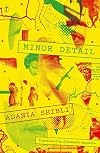
Minor Detail
by Adania Shibli
On This Page
Description
"Minor Detail begins during the summer of 1949, one year after the war that the Palestinians mourn as the Nakba-the catastrophe that led to the displacement and exile of some 700,000 people-and the Israelis celebrate as the War of Independence. Israeli soldiers murder an encampment of Bedouin in the Negev desert, and among their victims they capture a Palestinian teenager and they rape her, kill her, and bury her in the sand. Many years later, in the near-present day, a young woman in show more Ramallah tries to uncover some of the details surrounding this particular rape and murder, and becomes fascinated to the point of obsession, not only because of the nature of the crime, but because it was committed exactly twenty-five years to the day before she was born. Adania Shibli masterfully overlays these two translucent narratives of exactly the same length to evoke a present forever haunted by the past"-- show lessTags
Recommendations
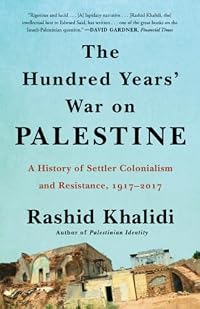
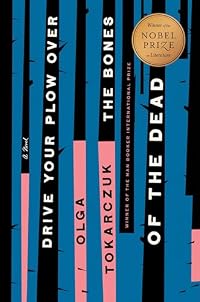
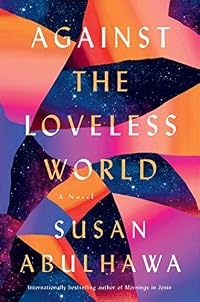
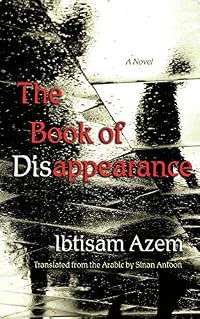








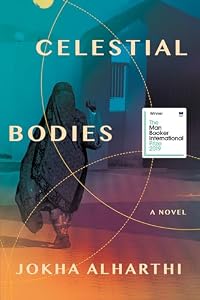
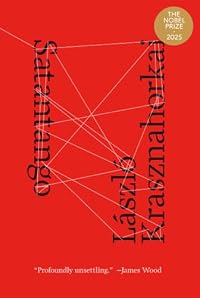
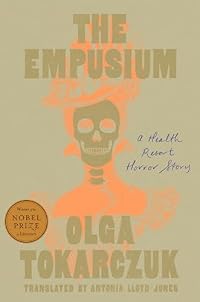

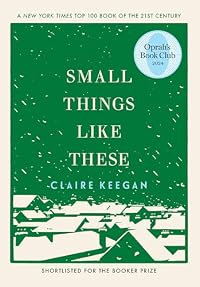



Member Recommendations
Member Reviews
The book opens on August 9, 1949, exactly one year after the Deir Yassin massacre in which 110 Palestinian men, women, and children were murdered in their village on the outskirts of Jerusalem. An Israeli officer and his men are in the South Negev desert along the Egyptian border searching for Arabs. They set up camp, and that night, the officer is bitten in the thigh by a spider. After several days of searching, they discover a small group of Bedouin by an oasis. Within minutes the Arabs and their camels are slaughtered, all except for a young woman and a dog. Four days later, she too would be dead.
"We cannot stand to see vast areas of land, capable of absorbing thousands of our people in exile, remain neglected; we cannot stand to see show more our people unable to return to our homeland. This place, which now seems barren, with nothing aside from infiltrators, a few Bedouins, and camels, is where our forefathers passed thousands of years ago. And if the Arabs act according to their sterile nationalist sentiments and reject the idea of us settling here, if they continue to resist us, preferring that the area remain barren, then we will act as an army.
The second chapter is about a woman in the present day who reads and becomes obsessed with an article about the girl's death because it occurred exactly 25 years to the day before she herself was born. She decides to investigate the incident further, but is hampered by borders: those that physically limit the movement of Palestinians and those that she has internalized in order to protect herself in a highly violent and unpredictable environment that is Israel.
It's the barrier of fear, fashioned from fear of the barrier.
The writing is very spare, and at first I was confused by the focus on minor details in the book (even despite the book's title, my first clue). Why write the minutiae about how the Israeli captain washes up and shaves every day? But as the story unfolded, I realized that every word was there for a reason.
But despite this, there are some who consider this way of seeing, which is to say, focusing intently on the most minor details, like dust on the desk or fly shit on a painting, as the only way to arrive at the truth and definitive proof of its existence.
Obsessions with cleanliness versus decay, the howling dog, chewing gum: every detail would have meaning. Everything ties together despite the fragmentation of history and the unending cycles of violence. The ending is as devastating as it is inevitable. show less
"We cannot stand to see vast areas of land, capable of absorbing thousands of our people in exile, remain neglected; we cannot stand to see show more our people unable to return to our homeland. This place, which now seems barren, with nothing aside from infiltrators, a few Bedouins, and camels, is where our forefathers passed thousands of years ago. And if the Arabs act according to their sterile nationalist sentiments and reject the idea of us settling here, if they continue to resist us, preferring that the area remain barren, then we will act as an army.
The second chapter is about a woman in the present day who reads and becomes obsessed with an article about the girl's death because it occurred exactly 25 years to the day before she herself was born. She decides to investigate the incident further, but is hampered by borders: those that physically limit the movement of Palestinians and those that she has internalized in order to protect herself in a highly violent and unpredictable environment that is Israel.
It's the barrier of fear, fashioned from fear of the barrier.
The writing is very spare, and at first I was confused by the focus on minor details in the book (even despite the book's title, my first clue). Why write the minutiae about how the Israeli captain washes up and shaves every day? But as the story unfolded, I realized that every word was there for a reason.
But despite this, there are some who consider this way of seeing, which is to say, focusing intently on the most minor details, like dust on the desk or fly shit on a painting, as the only way to arrive at the truth and definitive proof of its existence.
Obsessions with cleanliness versus decay, the howling dog, chewing gum: every detail would have meaning. Everything ties together despite the fragmentation of history and the unending cycles of violence. The ending is as devastating as it is inevitable. show less
A story told in two parts - two timelines, two women but in one place.
By August 1949, the Palestine war was over - and the army was deployed close to the borders on patrols - looking for infiltrators and anyone else who may wish ill to the new country of Israel. The group we meet is deployed in the Negev desert, close to the Egyptian border because the dunes are a perfect place for people to hide - and to get into the country. For most of that first story we follow the daily life of the commander of the group - the endless patrols who find nothing, the daily repetition which are almost ritualistic, the daily cleaning which feels almost like a cleansing. Until something changes - a group of people is found and after the gunfire is over, show more the only survivor is a girl, a young woman, dressed in black and covered in the tradition of her people.
It all starts innocently enough - the girl is taken to the camp and left on her own (although the bath she was given was anything but friendly and was designed to humiliate) but... things change quickly - soldiers don't leave her alone even after being warned off her and she is raped repeatedly - and then killed - as if she does not matter.
There is a play on the clean/unclean in this part - almost everything has a counterpart - and the daily cleaning takes almost sinister overtones because of the girl and because of a wound. And even if the commander does not tell the story, we see only what he sees - so in a way he does.
A few decades later, some time in the late 2000s or early 2010s (based on some dates that do show up as the past), a newspaper in Palestine runs a story about the rape and murder of the girl. Our unnamed second narrator, a young Palestinian woman from Ramallah, is stricken by the fact that the girl died exactly 25 years (to the day) before she was born. And that is enough to make her want to know more. Except that she cannot - she is not allowed in this part of the country because of where she lives in Zone A. But instead of giving up, she finally finds a way and starts on her way towards the desert.
Her repeated thoughts about crossing borders and her almost obsession with minor details sounds almost compulsive - and adding up some other details, it sounds like our second narrator is autistic or at least obsessive-compulsive to some extent (she even buys 4 different maps). Which explains a lot of what happens later - when she finally gets across the border and starts driving towards a desert on the other side of Israel. And while she is driving, we see Israel through Palestinian eyes - both compared to memories and compared to a map of 1948. And then the last sentence shatters you.
We never get any names - in either part of the story. It is a story that is about anyone - the first part does not even mention which war it is in so it almost can be either. Two women across the centuries end up in the same desert - and get connected in ways noone could have anticipated. It is a heartbreaking story that lacks redemption and hope - but then this is a tone which is pretty common for Palestinian authors.
Despite the hard topic, I still recommend this novella. It is exquisitely written even if it is not an easy read. It is a story about a war and what people do to each other - a story as old as the world. show less
By August 1949, the Palestine war was over - and the army was deployed close to the borders on patrols - looking for infiltrators and anyone else who may wish ill to the new country of Israel. The group we meet is deployed in the Negev desert, close to the Egyptian border because the dunes are a perfect place for people to hide - and to get into the country. For most of that first story we follow the daily life of the commander of the group - the endless patrols who find nothing, the daily repetition which are almost ritualistic, the daily cleaning which feels almost like a cleansing. Until something changes - a group of people is found and after the gunfire is over, show more the only survivor is a girl, a young woman, dressed in black and covered in the tradition of her people.
It all starts innocently enough - the girl is taken to the camp and left on her own (although the bath she was given was anything but friendly and was designed to humiliate) but... things change quickly - soldiers don't leave her alone even after being warned off her and she is raped repeatedly - and then killed - as if she does not matter.
There is a play on the clean/unclean in this part - almost everything has a counterpart - and the daily cleaning takes almost sinister overtones because of the girl and because of a wound. And even if the commander does not tell the story, we see only what he sees - so in a way he does.
A few decades later, some time in the late 2000s or early 2010s (based on some dates that do show up as the past), a newspaper in Palestine runs a story about the rape and murder of the girl. Our unnamed second narrator, a young Palestinian woman from Ramallah, is stricken by the fact that the girl died exactly 25 years (to the day) before she was born. And that is enough to make her want to know more. Except that she cannot - she is not allowed in this part of the country because of where she lives in Zone A. But instead of giving up, she finally finds a way and starts on her way towards the desert.
Her repeated thoughts about crossing borders and her almost obsession with minor details sounds almost compulsive - and adding up some other details, it sounds like our second narrator is autistic or at least obsessive-compulsive to some extent (she even buys 4 different maps). Which explains a lot of what happens later - when she finally gets across the border and starts driving towards a desert on the other side of Israel. And while she is driving, we see Israel through Palestinian eyes - both compared to memories and compared to a map of 1948. And then the last sentence shatters you.
We never get any names - in either part of the story. It is a story that is about anyone - the first part does not even mention which war it is in so it almost can be either. Two women across the centuries end up in the same desert - and get connected in ways noone could have anticipated. It is a heartbreaking story that lacks redemption and hope - but then this is a tone which is pretty common for Palestinian authors.
Despite the hard topic, I still recommend this novella. It is exquisitely written even if it is not an easy read. It is a story about a war and what people do to each other - a story as old as the world. show less
An extremely measured, thoughtful account of Israeli colonial violence enacted against the people of Palestine, in both a historic and contemporary context.
The novel focuses on the minor details — threading them together to weave a portrait of the banality of violence in the region as it is experienced through the lives of those it touches.
My pick for the Booker International, although it somehow didn't make it onto the shortlist (hmmmm....)
The novel focuses on the minor details — threading them together to weave a portrait of the banality of violence in the region as it is experienced through the lives of those it touches.
My pick for the Booker International, although it somehow didn't make it onto the shortlist (hmmmm....)
This was a fascinating and horrifying peek into the Palestinian existence under occupation. Shibli's writing is so vivid and captivating. I could truly visualize everything she was portraying in this novella. With such beautifully descriptive writing, I wish there was more, but this novella really gives a glimpse of what horrors exist within such a 'minor detail' in time through the eyes of Palestinians. A must read in today's current climate, but do check trigger warnings.
Shibi has crafted an aptly named and harrowing novella whose impact doesn't require hundreds of pages. The first half, set in 1949, recounts an Israeli platoon securing the border with Egypt. Led by a pathologically impassive officer, the story unfolds in third person through his point of view, lending even greater horror to the appalling events.
Part 2 begins in present-day Ramallah, where a woman reads about the war crime depicted in part one, and which happened 25 years to the day before her birth. Unlike the previous narrator, her first-person account exposes a highly neurotic personality, scarred and erased like the landscapes she crosses. Often stricken by mental paralysis, her fears sometimes force her from inertia into show more overreaction, as if no middle ground exists. She becomes obsessed with learning about the nameless 1949 victim, embarking on a road trip to Tel Aviv to discover more. Through her eyes, we experience daily life under occupation: dust and broken glass from distant bombings, identity cards, checkpoints, and the necessity of fabricating stories to hide mundane activities. Her search becomes a wild goose chase she cannot stop, though the risk she's taken by feeling responsible for the woman from the past whom she fears "will forever remain a nobody whose voice nobody will hear," threatens to become her own undoing. show less
Part 2 begins in present-day Ramallah, where a woman reads about the war crime depicted in part one, and which happened 25 years to the day before her birth. Unlike the previous narrator, her first-person account exposes a highly neurotic personality, scarred and erased like the landscapes she crosses. Often stricken by mental paralysis, her fears sometimes force her from inertia into show more overreaction, as if no middle ground exists. She becomes obsessed with learning about the nameless 1949 victim, embarking on a road trip to Tel Aviv to discover more. Through her eyes, we experience daily life under occupation: dust and broken glass from distant bombings, identity cards, checkpoints, and the necessity of fabricating stories to hide mundane activities. Her search becomes a wild goose chase she cannot stop, though the risk she's taken by feeling responsible for the woman from the past whom she fears "will forever remain a nobody whose voice nobody will hear," threatens to become her own undoing. show less
This was a tough listen, and I put off writing about it because I feel unqualified to comment. It exemplifies the ongoing occupation of Palestine, from 1949 onwards, through a deeply personal and tragic lens. Based on a true story, it doesn't exaggerate or sensationalize but presents the grim, horrific details of the restrictions and responses experienced by Palestinian people. The narrative is both painful and powerful, and the English translation is beautifully done, though I feel I'm missing some of the weight carried in the original Arabic. It’s a heart-wrenching listen, made more impactful by the excellent narration. If you have any empathy this will hurt, but I recommend it. It’s important to humanize people in circumstances show more like these and sadly this story remains timely. show less
A very controlled and devastating book. The first section is deeply unsettling —the pov of the Israeli officer who is bitten by a spider and seems robotic in most ways but then orders his platoon to rape a young Arab girl. The second section is a relief—to be in a morally reliable pov. But the ending is inevitable and horrifying.
Members
- Recently Added By
Lists

Recommend the 20 best books you've read in the last five years
2,168 works; 606 members

Best Contemporary Literary Fiction (Around the Last 30 Years)
388 works; 124 members

Top Five Books of 2020
982 works; 350 members

Middle East Fiction
179 works; 15 members

Books Read in 2020
4,379 works; 123 members

Middle Eastern Literature & Non-Fiction
99 works; 3 members

Arab and Arab Diaspora Literature We Recommend
112 works; 53 members

Books recommended by Calgary Public Library staff
1,588 works; 4 members

Not the NYT list of top 100 21st century books
100 works; 6 members

Books Read in 2024
4,623 works; 126 members

Top Five Books of 2024
795 works; 264 members

Favorite Books in Translation
320 works; 133 members
Author Information

13+ Works 1,069 Members
Some Editions
Awards and Honors
Awards
Distinctions
Series
Belongs to Publisher Series
Common Knowledge
- Canonical title
- Minor Detail
- Original publication date
- 2017-06-19
- Important places
- Palestine
- Important events
- Rape/Birth (August 13, 1949)
- First words
- Nothing moved except the mirage. Vast stretches of barren hills rose in layers to the sky, trembling silently under the heft of the mirage, while the harsh afternoon sunlight blurred the outlines of the pale yellow ridges. -C... (show all)hapter 1
- Original language
- Arabic
- Canonical DDC/MDS
- 892.737
- Canonical LCC
- PJ7962.H425 T3413
Classifications
- Genres
- General Fiction, Fiction and Literature, Historical Fiction
- DDC/MDS
- 892.737 — Literature & rhetoric Asian Literature Afro-Asiatic literatures Arabic (Egypt, Lebanon, Palestine, Saudi Arabia, Sudan) Arabic fiction 2000–
- LCC
- PJ7962 .H425 .T3413 — Language and Literature Oriental languages and literatures Oriental philology and literature Arabic Arabic literature Individual authors or works
- BISAC
Statistics
- Members
- 911
- Popularity
- 29,295
- Reviews
- 32
- Rating
- (4.05)
- Languages
- 14 — Arabic, Catalan, Danish, Dutch, English, Finnish, French, German, Italian, Polish, Portuguese (Portugal), Spanish, Swedish, Turkish
- Media
- Paper, Audiobook, Ebook
- ISBNs
- 29
- ASINs
- 6