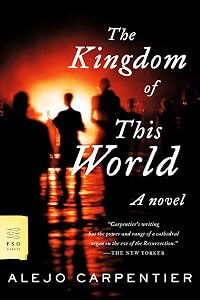
The Kingdom of This World
by Alejo Carpentier
There is 1 current discussion about this work.
On This Page
Description
"After its liberation from harsh French rule in 1803, Haiti endured a period of great brutality under Henri Christophe, who was born a slave but rose to become the first black king in the Western Hemisphere. In this unnerving novel, Henri Christophe's oppressive rule is observed through the eyes of the elderly slave Ti Noël. Ranging across the country, searching for true liberation, Ti Noël finds himself confronted with bloody revolutions, maniacal rulers, and the mysterious power of show more voodoo magic. The Kingdom of this World is widely recognized as a masterpiece of Cuban and Caribbean literature. Pablo Medina's remarkable new translation renders the dreamlike prose of Alejo Carpentier with nuance and felicity while delivering anew a powerful, visionary, and singularly twisted novel about the birth of modern Haiti: a tale of race, erotomania, mysticism, and madness."-- show lessTags
Recommendations














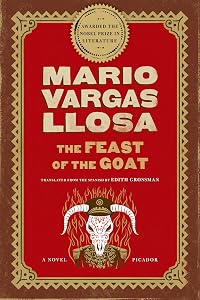








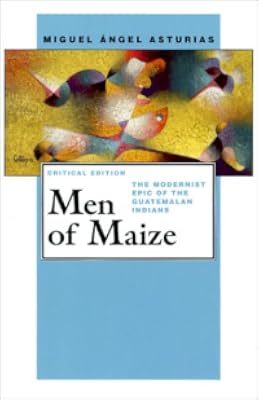


















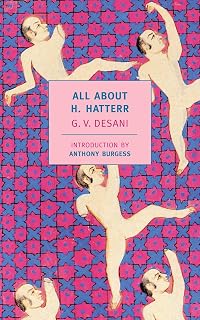
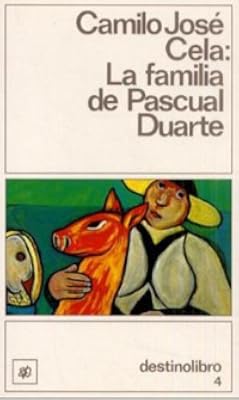
Member Recommendations

wandering_star The scene with the building of the Citadelle in Carpentier's work reminded me very much of the building of the Pyramid.
Member Reviews
Alejo Carpentier was a political radical who had to spend quite a bit of his life in exile outside Cuba, but his project in writing about Haiti was more aesthetic than directly political. He was keen to contribute to the development of a specifically Latin American literature, reflecting his view that the American view of the world differed from traditional European views because of the role of collective belief (both indigenous and arising from African-derived ideas like Santeria and Voudou), which could create a kind of objective reality for fantastic events (lo real maravilloso). For him the key thing about the Haitian revolution thus seems to be the interaction between political and mythical elements in shaping the awareness of the show more people. He was clearly also influenced very heavily by his recollections of some of the sites he visited on his famous trip to Haiti in 1943, especially Henri-Christophe's palace and fort. Instead of a linear account of the events, we get a fragmented, impressionistic view, where we see a few key incidents from the points of view of relatively unimportant characters, giving Carpentier the possibility to abstract and generalise in a way that wouldn't be possible in a classic non-fiction account or a traditional historical novel. The result is very interesting and colourful, and it seems to achieve what Carpentier intended, but of course it lacks one of the important things you normally look for in a historical novel, the opportunity to identify with the characters. show less
This was an important book. The structure of it was beautiful, gracefully capturing dozens of years in a relatively short novel. The content was far from graceful: it was raw without gore; it resonated as true without being clogged with facts. It was deeply uncomfortable, at times, but that felt good and necessary, and I was willing to go almost anywhere with Carpentier. The prose was deft and concise. Though the cover heralds it as magical realism, that element plays a minor role in the plot. Carpentier's sparse and factual tone, however, lends strength and continuity to this technique. Hope to reread at some point, though; the pacing and perhaps the circumstances of reading this book led me to take it faster than I would have liked.
This is a modern classic by Cuban writer Alejo Carpentier about the revolution in Haiti. First published in 1949, this is not a book that would be written today; it's overwhelmingly male-oriented, with women existing mainly as objects of lust, prostitutes or to rape. And there's some interesting phrasing around issues of race. But setting that aside, this is an interesting look a the first successful slave rebellion in the western world.
The novel is told primarily through the eyes of an enslaved Black man named Ti Noel, who witnesses the first attempts to break free, lives through the successful revolt, accompanies the man who enslaved him to Cuba and finally returns to Haiti, where he lives through the oppressive reign of Henri show more Christophe and long after, always just trying to live free in that corner of Haiti he considers home. This is a slender novel that packs a lot in, provides a lot of information while being full of action, magic realism and life. show less
The novel is told primarily through the eyes of an enslaved Black man named Ti Noel, who witnesses the first attempts to break free, lives through the successful revolt, accompanies the man who enslaved him to Cuba and finally returns to Haiti, where he lives through the oppressive reign of Henri show more Christophe and long after, always just trying to live free in that corner of Haiti he considers home. This is a slender novel that packs a lot in, provides a lot of information while being full of action, magic realism and life. show less
I read this deceptively simple novel about the Haitian revolution, the first and only time enslaved Africans liberated themselves in the Americas, and its aftermath in almost one setting. Through the eyes of Ti Noël, who is a young slave at the beginning and an old free man at the end, and with lush but spare prose, Carpentier portrays a period of great harshness and turmoil, from the period of slavery through revolution and upheaval to the reign of Henri Christophe who effectively re-enslaved the people and to his overthrow and beyond.
The reader first meets Ti Noël as he picks a new stallion for a his master, a horse bought for breeding, and then accompanies his master to a barber, staying outside and observing wax heads with wigs in show more the barber's windows and skinned calves' heads in a neighboring shop. What a preview of some of the themes of this novel in just the first two pages: sex and violence, and the interactions of animals with humans. Needless to say, although Ti Noël's master, a French plantation owner, respects his skill in selecting horses, he considers him a work animal, just like the horses.
Soon, Ti Noël is working with Macandal, a slave who remembers and tells others about the wonders of former African kingdoms (the Africans enslaved in Haiti come from a variety of places and a variety of tribes) and the powerful gods there. After a horrific accident in which he loses an arm, Macandal flees to the mountains where the plot is set in motion: he gathers plants, both healing and poisonous, studies with a witch, and secretly plots with slaves on plantations around the country. And so the revolution begins.
For the most part, there are few historical characters in this novel, with the exception of Henri Christophe, who later crowns himself the first king in the western hemisphere, forces Haitians with cudgels and whips and overseers to build his palaces and his supposedly impregnable citadel high in the mountain clouds, and emulates Europeans until he recognizes the powers of the African gods, transmuted into voodoo, just before his death. Nevertheless, Carpentier's research into Haiti, his imagination, and above all his gorgeous writing bring to life Ti Noël, Macandal, and the other fictional characters, the often harsh but nevertheless beautiful landscape of Haiti, the vivid reality of the the African gods, the barbaric treatment of the slaves and attitudes of their owners, the sexual sleaziness of some of the French, and the thrill and horror of the revolt. Not all is "real" in this book: one of the characters, when burned at the stake, transforms himself into a variety of animal forms and lives on in the Kingdom of This World, for example. But this is so interwoven int the novel that the reader, at least this one, accepts it.
To cover a span of probably 40 years in less then 200 pages in a way that seems full and complete is remarkable enough. To do so in such a vivid, entrancing, compelling, and complex way is Carpentier's gift. show less
The reader first meets Ti Noël as he picks a new stallion for a his master, a horse bought for breeding, and then accompanies his master to a barber, staying outside and observing wax heads with wigs in show more the barber's windows and skinned calves' heads in a neighboring shop. What a preview of some of the themes of this novel in just the first two pages: sex and violence, and the interactions of animals with humans. Needless to say, although Ti Noël's master, a French plantation owner, respects his skill in selecting horses, he considers him a work animal, just like the horses.
Soon, Ti Noël is working with Macandal, a slave who remembers and tells others about the wonders of former African kingdoms (the Africans enslaved in Haiti come from a variety of places and a variety of tribes) and the powerful gods there. After a horrific accident in which he loses an arm, Macandal flees to the mountains where the plot is set in motion: he gathers plants, both healing and poisonous, studies with a witch, and secretly plots with slaves on plantations around the country. And so the revolution begins.
For the most part, there are few historical characters in this novel, with the exception of Henri Christophe, who later crowns himself the first king in the western hemisphere, forces Haitians with cudgels and whips and overseers to build his palaces and his supposedly impregnable citadel high in the mountain clouds, and emulates Europeans until he recognizes the powers of the African gods, transmuted into voodoo, just before his death. Nevertheless, Carpentier's research into Haiti, his imagination, and above all his gorgeous writing bring to life Ti Noël, Macandal, and the other fictional characters, the often harsh but nevertheless beautiful landscape of Haiti, the vivid reality of the the African gods, the barbaric treatment of the slaves and attitudes of their owners, the sexual sleaziness of some of the French, and the thrill and horror of the revolt. Not all is "real" in this book: one of the characters, when burned at the stake, transforms himself into a variety of animal forms and lives on in the Kingdom of This World, for example. But this is so interwoven int the novel that the reader, at least this one, accepts it.
To cover a span of probably 40 years in less then 200 pages in a way that seems full and complete is remarkable enough. To do so in such a vivid, entrancing, compelling, and complex way is Carpentier's gift. show less
Through the eyes of a slave, Ti Noel, we see the traumatic and brutal evolution of Haiti's history after liberation from the colonial French rule, when the black regime of King Henri Christophe, at first so promising, sinks into the same morass of social injustice as the former rulers.
For many years, the blacks suffered from white oppression. Social order was based on the exploitation of the natives for the comfort of the white masters. Through folk wisdom, voodoo,and ancestral worship, a charismatic leader, Macandal whips his followers into an uprising, drums beating across the island as machete-bearing slaves overran the sleeping plantations, slaughtering all in their path, masters, livestock, women and children. The uprising is put show more down, Macandal is eventually captured and burned before the eyes of the slaves.
When Ti Noel returns years later to Haiti as a free man, the island is now ruled by King Henri Christophe, a black kingdom. The freedom from previous enslavement, however, so dearly purchased, has merely opened the way for the reestablishment of slavery under the mulatto controlling class. The unthinkable has happened: the enslavement of people of African descent by people of African descent.
A short yet sweeping novel based on historical events, Carpentier writes with power and brilliant imagery. I enjoyed this book immensely, and it goes to my list of top reads for the year. show less
For many years, the blacks suffered from white oppression. Social order was based on the exploitation of the natives for the comfort of the white masters. Through folk wisdom, voodoo,and ancestral worship, a charismatic leader, Macandal whips his followers into an uprising, drums beating across the island as machete-bearing slaves overran the sleeping plantations, slaughtering all in their path, masters, livestock, women and children. The uprising is put show more down, Macandal is eventually captured and burned before the eyes of the slaves.
When Ti Noel returns years later to Haiti as a free man, the island is now ruled by King Henri Christophe, a black kingdom. The freedom from previous enslavement, however, so dearly purchased, has merely opened the way for the reestablishment of slavery under the mulatto controlling class. The unthinkable has happened: the enslavement of people of African descent by people of African descent.
A short yet sweeping novel based on historical events, Carpentier writes with power and brilliant imagery. I enjoyed this book immensely, and it goes to my list of top reads for the year. show less
An almost mellow, distanced telling of the life and times of Ti Noël in the late 18th early 19th century Haiti, during slavery, revolts, exile and always oppression. A few others individuals are briefly in focus, but while sad the book is remarkably unbitter on the failures of revolution.
A strange, brutal, hallucinatory excursion into the revolution(s) in Haiti. I felt confused in many places and finally "relaxed" into the realization that this was part of the experience (for me). The title provides a powerful passage and I was moved to find out more about the history of Haiti (as well as about Carpentier).
Members
- Recently Added By
Lists

The Guardian's 1000 Novels Everyone Must Read
1,004 works; 552 members

Books Set in the Caribbean
18 works; 5 members
Favorite Caribbean Books
60 works; 28 members

1,001 BYMRBYD Concensus
723 works; 27 members

Fiction Set During a Revolution
55 works; 24 members

Speculative Fiction from around the World
610 works; 18 members

501 Must-Read Books
529 works; 72 members
Harold Bloom - The Western Canon: D. The Chaotic Age
833 works; 24 members

Kirkus Starred Fiction Reviews of Books Published in 2017
412 works; 7 members

Las 100 mejores novelas de la literatura hispanoamericana
96 works; 1 member

My TBR
371 works; 3 members
Canon de la narrativa universal del s. XX (cicutadry)
499 works; 3 members
Las 100 mejores novelas de la literatura hispanoamericana (cicutadry)
100 works; 1 member

Magical Realism
23 works; 2 members
Talk Discussions
Current Discussions
The Kingdom of this World by Alejo Carpentier - LEC 1988 in George Macy devotees (September 2025)
Author Information

123+ Works 6,242 Members
Alejo Carpentier was director of Cuba's National Press, which published many millions of volumes in an ambitious program, and for some years was Cuba's ambassador to France. A composer and musicologist, he consciously applied the principles of musical composition in much of his work. Imprisoned for political activity in 1928, he escaped with the show more aid of Robert Desnos, a French surrealist poet, to Paris, where he joined the literary circle of surrealists Louis Aragon, Tristan Tzara, and Paul Eluard. According to Carpentier surrealism influenced his style and helped him to see "aspects of American life he had not previously seen, in their telluric, epic, and poetic contexts." Carpentier articulated a theory of marvelous reality, "lo real maravilloso," with an almost surrealistic sense of the relationship among unrelated, or antithetical, elements, often from distinct ethnic and cultural backgrounds. The Lost Steps (1953) takes the form of a diary of a Cuban musician and intellectual who seeks escape from civilization during his trip to a remote Amazon village in search of native musical instruments. The short stories "The Road to Santiago," "Journey to the Seed," and "Similar to Night," present time as subjective rather than historical, and capable of remarkable personal variations. In his novel The Pursuit, printed in The War of Time (1958), whose title is an allusion to a line from Lope de Vega defining a man as "a soldier in the war of time, presents time similarly. "The Kingdom of This World (1949) deals with the period of Henri Christophe and the slave revolts in Haiti. Its circular structure presents the inevitable recurrence of tyranny and the need for eternal struggle against it. Reasons of State (1976), is another notable addition to the gallery of Latin American fictional portraits of dictators. It uses Carpentier's love for baroque style and parody to raise complex questions about the nature of revolution. (Bowker Author Biography) show less
Some Editions
Awards and Honors
Notable Lists
Series
Belongs to Publisher Series
Work Relationships
Common Knowledge
- Canonical title
- The Kingdom of This World
- Original title
- El reino de este mundo
- Original publication date
- 1949
- Important places
- Haiti; Hispaniola
- First words
- Of the twenty stallions brought to Cap Francais by the ship's captain, who had a kind of partnership with the breeder in Normandy, Ti Noel and unhesitatingly picked that stud with the four white feet and rounded crupper which... (show all) promised good service for mares whose colts were coming smaller each year.
- Last words
- (Click to show. Warning: May contain spoilers.)From that moment Ti Noel was never seen again, nor his green coat with the salmon lace cuffs, except perhaps by that wet vulture who turns every death to his own benefit and who sat with outspread wings, drying himself in the sun, a cross of feathers which finally folded itself up and flew off into the thick shade of Bois Caiman.
- Original language
- Spanish
Classifications
- Genres
- Fiction and Literature, General Fiction, Historical Fiction
- DDC/MDS
- 863.64 — Literature & rhetoric Spanish Literature Spanish fiction 20th Century 1945-2000
- LCC
- PQ7389 .C263 .R413 — Language and Literature French, Italian, Spanish and Portuguese literatures Spanish literature Provincial, local, colonial, etc. Spanish America
- BISAC
Statistics
- Members
- 1,416
- Popularity
- 16,775
- Reviews
- 23
- Rating
- (3.73)
- Languages
- 14 — Czech, Dutch, English, Finnish, French, German, Greek, Italian, Japanese, Norwegian (Bokmål), Polish, Portuguese, Spanish, Swedish
- Media
- Paper, Ebook
- ISBNs
- 61
- ASINs
- 24