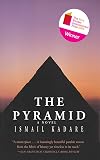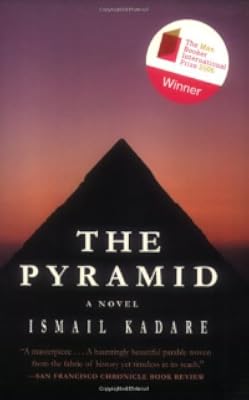
The Pyramid
by Ismaïl Kadaré
On This Page
Description
In ancient Egypt, a pharaoh wants to dispense with a pyramid as his grave, but the priests convince him that building one is necessary to keep the populace busy and controlled. A political allegory by an Albanian writer, author of The Concert.Tags
Recommendations
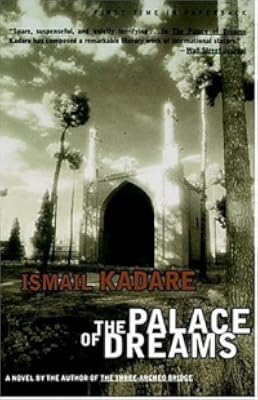
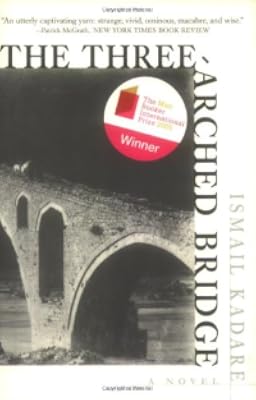






















Member Recommendations
wandering_star The scene with the building of the Citadelle in Carpentier's work reminded me very much of the building of the Pyramid.
Member Reviews
This work is unusual in that it takes place in ancient Egypt, though a reader would have to be exceptionally dull to miss the book-length metaphor—a sharp and penetrating indictment of despotism. The story itself is simple: Cheops has to be convinced to order the creation of a pyramid in his honor and memory. His advisors do so by explaining that only by oppressing his otherwise increasingly contented people can he effectively maintain power: only by making the people miserable can they be truly content. Much of the book is given over to a recounting of each day’s progress in the pyramid’s construction and its cost in human lives. The book is a meditation on the paranoia of absolute power.
The Pyramid Dreams.
Kadare takes some liberties with history, of course, often speculating wildly for dramatic and symbolic effect, but there is enough verisimilitude here to cast the pall of history over the pages. It has a very similar aura to the writings of Kafka, borrowing much of the atmosphere of oppression and psychological tension. Then you have the whorl-pools of Borges, the puzzles of the literary mathematician, well-realized. Similar also is the lack of character development, how Kadare's characters embody concepts rather than make choices according to their or the author's will.
Cheops, the pharaoh, attains immortality vicariously through his pyramid, and the pyramid attains life vicariously via its creators. This is the show more ingenious interplay of the novel. The pyramid takes on increasing weight as the story progresses, metaphorically and literally. Everyone universally endows it with sentience, and many believe it conspires to consume them, haunts them in dreams, not least Cheops himself.
In the absence for most of the book of traditional characterization, the pyramid becomes the central figure, the changeable chimera, baffling and exotic, embodying its peoples' fears, ambitions, myths, and frustrations. Cheops, gullible and vain, is but a puppet for an endless legion of ministers and politicians, magicians, et. al. The pyramid grows and inspires silence and fear, and spreads it like a disease. Its stones bring death from foreign lands in many forms, it swallows people like chum. It is variously and beautifully personified and the bureaucracy surrounding its erection is portrayed as a machine which accomplishes great feats of industry only to wreak havoc in the lives of the humans who are its moving cogs.
Wicked advisors to the throne are plentiful. The first part of this book oozes with shades of Shakespeare, while the second half focuses on the manifestations of phenomena, both real and imagined, surrounding the emergence of the great pyramid.
The luscious historical details are infused with apocryphal history, and serve to explicate and allegorize the evolution of myth and other archetypical human constructs. The mysteries of inborn human superstition, the ambitious capacity they have to design monuments to symbolize their own reaching after heaven. The construction of symbols is an important ritual of ascribing meaning within our lives, but this book illustrates how symbols can take over the mind like a virus. While Kadare insinuates the importance of geometric elegance, his structure does not partake of harsh strictures of form. You can view his approach as a narrowing of themes and action, toward a pinnacle perhaps, but by constraining his subject and given the short duration of the book, I would not consider his form of paramount importance. The elegance of mathematics is nowhere more evident than in the pyramids. Its inner mystery, the decoys, the hidden passages, all mirror the convolutions within our minds, the inner labyrinths, and the mental torture of construing human civilization is fraught with the traps we set through symbology and our own weaknesses.
Aside from the horological complications of The Pyramid, the jigsaw pieces of historical details, and the effective atmosphere, I was struck by the mummification of thought, the cyphers, glyphs, and the embalming of ideas, which Kadare utilizes through the power of his fiction to crystallize experience and impression. The unconfrontable void of death looms over the whole. I loved the eminence of the pyramidion. The positioning of the sarcophagi, the grave-robber foiling devices, the hermetic chambers, and the immense scope of its construction were all worth reading about. The conspiratorial dimension of the pyramid, the menace of its secrets, and the all-too-human aspects of its history, were fairly obvious results of such an unequalled undertaking. The pyramid of Cheops rested on the shoulders of Egyptian society from the moment of its conception - still does - it was a responsibility the whole empire would bear with great strain. Stone by stone, death by death, the physical presence of evil, as a force and an entity, drawing many parallels to the Tower of Babel, would result in one more proliferation of human omen-worship. Above all, this is a profound and charming study of pointed concepts, applicable to any society partaking of human vices. show less
Kadare takes some liberties with history, of course, often speculating wildly for dramatic and symbolic effect, but there is enough verisimilitude here to cast the pall of history over the pages. It has a very similar aura to the writings of Kafka, borrowing much of the atmosphere of oppression and psychological tension. Then you have the whorl-pools of Borges, the puzzles of the literary mathematician, well-realized. Similar also is the lack of character development, how Kadare's characters embody concepts rather than make choices according to their or the author's will.
Cheops, the pharaoh, attains immortality vicariously through his pyramid, and the pyramid attains life vicariously via its creators. This is the show more ingenious interplay of the novel. The pyramid takes on increasing weight as the story progresses, metaphorically and literally. Everyone universally endows it with sentience, and many believe it conspires to consume them, haunts them in dreams, not least Cheops himself.
In the absence for most of the book of traditional characterization, the pyramid becomes the central figure, the changeable chimera, baffling and exotic, embodying its peoples' fears, ambitions, myths, and frustrations. Cheops, gullible and vain, is but a puppet for an endless legion of ministers and politicians, magicians, et. al. The pyramid grows and inspires silence and fear, and spreads it like a disease. Its stones bring death from foreign lands in many forms, it swallows people like chum. It is variously and beautifully personified and the bureaucracy surrounding its erection is portrayed as a machine which accomplishes great feats of industry only to wreak havoc in the lives of the humans who are its moving cogs.
Wicked advisors to the throne are plentiful. The first part of this book oozes with shades of Shakespeare, while the second half focuses on the manifestations of phenomena, both real and imagined, surrounding the emergence of the great pyramid.
The luscious historical details are infused with apocryphal history, and serve to explicate and allegorize the evolution of myth and other archetypical human constructs. The mysteries of inborn human superstition, the ambitious capacity they have to design monuments to symbolize their own reaching after heaven. The construction of symbols is an important ritual of ascribing meaning within our lives, but this book illustrates how symbols can take over the mind like a virus. While Kadare insinuates the importance of geometric elegance, his structure does not partake of harsh strictures of form. You can view his approach as a narrowing of themes and action, toward a pinnacle perhaps, but by constraining his subject and given the short duration of the book, I would not consider his form of paramount importance. The elegance of mathematics is nowhere more evident than in the pyramids. Its inner mystery, the decoys, the hidden passages, all mirror the convolutions within our minds, the inner labyrinths, and the mental torture of construing human civilization is fraught with the traps we set through symbology and our own weaknesses.
Aside from the horological complications of The Pyramid, the jigsaw pieces of historical details, and the effective atmosphere, I was struck by the mummification of thought, the cyphers, glyphs, and the embalming of ideas, which Kadare utilizes through the power of his fiction to crystallize experience and impression. The unconfrontable void of death looms over the whole. I loved the eminence of the pyramidion. The positioning of the sarcophagi, the grave-robber foiling devices, the hermetic chambers, and the immense scope of its construction were all worth reading about. The conspiratorial dimension of the pyramid, the menace of its secrets, and the all-too-human aspects of its history, were fairly obvious results of such an unequalled undertaking. The pyramid of Cheops rested on the shoulders of Egyptian society from the moment of its conception - still does - it was a responsibility the whole empire would bear with great strain. Stone by stone, death by death, the physical presence of evil, as a force and an entity, drawing many parallels to the Tower of Babel, would result in one more proliferation of human omen-worship. Above all, this is a profound and charming study of pointed concepts, applicable to any society partaking of human vices. show less
Like [b:The Palace of Dreams|797635|The Palace of Dreams|Ismail Kadare|https://i.gr-assets.com/images/S/compressed.photo.goodreads.com/books/1178472255l/797635._SY75_.jpg|783601], the only other Ismail Kadare novel that I've yet read, 'The Pyramid' is an acerbic allegory for 20th century communist totalitarianism. It follows the inception, construction, and subsequent history of Giza's largest pyramid. The deadpan tone and dissection of oppression reminded me of Russian novelist [a:Andrei Platonov|6454067|Andrei Platonov|https://images.gr-assets.com/authors/1464983194p2/6454067.jpg], particularly [b:The Foundation Pit|715995|The Foundation Pit|Andrei show more Platonov|https://i.gr-assets.com/images/S/compressed.photo.goodreads.com/books/1418363439l/715995._SY75_.jpg|702247]. Although Kadare is more literal while Platonov is more surreal, both novels centre on a grand and pointless project that absorbs vast energy and resources in order to perpetuate an authoritarian system. I imagine they were also written under similar Soviet conditions. Kadare's writing style is mordantly insightful:
'The Pyramid' is a short and very sharp novel, powerful but not pleasant to read. I would have liked an afterword giving some details of when and how exactly Kadare came to write it; perhaps another edition includes something of the kind. show less
The hour for the start of the building work proper was fast approaching. The dust and the heat, instead of wearying people, now seemed to stimulate them. As long as the anxiety is cleared up, they said amongst themselves, all the rest is bearable! And whilst their hearts flowed over with gratitude for their saviour, the Pharaoh, they dashed about frantically, causing more confusion and raising more sand than was necessary, in the belief that by drowning themselves in hullabaloo and dirt, they would also confound evil and divert it from its path.
Their hopes were short-lived. The day before the first stone was due to be laid, a new plot was uncovered, even more dangerous than the first.
'The Pyramid' is a short and very sharp novel, powerful but not pleasant to read. I would have liked an afterword giving some details of when and how exactly Kadare came to write it; perhaps another edition includes something of the kind. show less
The Pyramid is ostensibly the story of how the great pyramid of Cheops came to be built - but at the same time, it is an allegory of terror and tyranny everywhere.
The grand project of building the pyramid, perhaps, can be seen as the grand project of building socialism, or year zero, or any of those projects which took over a generation, which demanded total belief and support, and for which blood had to be spilt.
There are conspiracies and purges, and abrupt changes of policy which bring bloody consequences for those who can't keep up: at one point, a popular line of argument is that it doesn't matter if the pyramid is progressing very slowly, because it is certain that the Pharaoh will live a very long time - but one 'unfortunate show more member of the government' who suggests, as a logical consequence, that work should be suspended completely to show that the Pharaoh is immortal, is executed by mutilation.
Those lower down try and keep up with the latest winds. People did not know what to do: to expedite their work at a time when intemperate zeal could be seen as supporting the rumour {that the Pharaoh is ill}, or to slacken off, even though their bodies were striped with welts from whippings and other punishments meted out for just such slackness.
All this is very interesting and intellectually this book was a rewarding read. But for me, the impersonality of it undermined its impact. I recognise that as an allegory, it is meant to be a timeless tale of something which repeated itself again and again through history - but even so, I find something like the gulag memoir Into The Whirlwind much better at expressing the universal horror, by taking you into one person's individual experience.
My favourite part of this book was the two chapters which were supposed to be the bureaucratic records of the construction, stone by stone by stone. I think that's because through these details, I could get a better glimpse of the bigger picture, and imagine the impact on individual people's lives.
Forty-seventh stone. From Aswan quarry. Double check carried out as per latest instructions. Swearing heard during haulage: "You should burst like my heart!" "You should be smashed to smithereens!" "You should fall into the abyss!" Blessings heard: "Thank fate to have placed you on this peak!" "I wish you a long life of stone!" SALS in order. Magician's authorization ditto. No problem in hoisting. No graffiti. Forty-sixth stone. From Karnak quarry. A reliable seam. Cursing and praising in roughly equal measure. One of the latter kind of expressions - I sacrificed my son to the pyramid with joy - alludes to an accident that occurred during unloading of the stone. No graffiti. They have disappeared as a result of improved surveillance, a very successful measure. show less
The grand project of building the pyramid, perhaps, can be seen as the grand project of building socialism, or year zero, or any of those projects which took over a generation, which demanded total belief and support, and for which blood had to be spilt.
There are conspiracies and purges, and abrupt changes of policy which bring bloody consequences for those who can't keep up: at one point, a popular line of argument is that it doesn't matter if the pyramid is progressing very slowly, because it is certain that the Pharaoh will live a very long time - but one 'unfortunate show more member of the government' who suggests, as a logical consequence, that work should be suspended completely to show that the Pharaoh is immortal, is executed by mutilation.
Those lower down try and keep up with the latest winds. People did not know what to do: to expedite their work at a time when intemperate zeal could be seen as supporting the rumour {that the Pharaoh is ill}, or to slacken off, even though their bodies were striped with welts from whippings and other punishments meted out for just such slackness.
All this is very interesting and intellectually this book was a rewarding read. But for me, the impersonality of it undermined its impact. I recognise that as an allegory, it is meant to be a timeless tale of something which repeated itself again and again through history - but even so, I find something like the gulag memoir Into The Whirlwind much better at expressing the universal horror, by taking you into one person's individual experience.
My favourite part of this book was the two chapters which were supposed to be the bureaucratic records of the construction, stone by stone by stone. I think that's because through these details, I could get a better glimpse of the bigger picture, and imagine the impact on individual people's lives.
Forty-seventh stone. From Aswan quarry. Double check carried out as per latest instructions. Swearing heard during haulage: "You should burst like my heart!" "You should be smashed to smithereens!" "You should fall into the abyss!" Blessings heard: "Thank fate to have placed you on this peak!" "I wish you a long life of stone!" SALS in order. Magician's authorization ditto. No problem in hoisting. No graffiti. Forty-sixth stone. From Karnak quarry. A reliable seam. Cursing and praising in roughly equal measure. One of the latter kind of expressions - I sacrificed my son to the pyramid with joy - alludes to an accident that occurred during unloading of the stone. No graffiti. They have disappeared as a result of improved surveillance, a very successful measure. show less
An interesting meditation on the brutality and mind-warping effects of political despotism. The metaphors are pretty clear: the pyramids, more explicitly the huge costs in human lives, physically as well as mentally, in their construction are, in this novel, a means of control of the population, much like grand economic and social schemes were the focus of “socialist” programs designed to control the population that gave birth to never-ending intrigues and conspiracies and the need to continually ferret out opposition. The construction of a pyramid is urged upon Cheops because there is a crisis in the weakening of pharaonic power, not because of poverty or pestilence, but because of prosperity: “prosperity, by making people more show more independent and freer in their minds, also made them more resistant to authority in general and to the power of the Pharaoh in particular.” Exactly the conundrum that the communist states of Eastern Europe faced: how to improve economic well-being without loosening the reigns of political power and oppression. The project might be “as useless to its subjects as it would be indispensable to the State,” but the sheer engagement in it would serve the purpose of distracting the people and providing new touchstones to measure opposition or disagreement that would, in turn, be ruthlessly crushed.
As the construction proceeds, dark plots of destruction are unveiled, each plot “even more dangerous than the first.” And, as in the communist worlds, it is the high and mighty who fall first: “…to everyone’s amazement, it was the High Priest Heminunu who fell into disgrace. After him, it was the turn of Khadrihotep, the head of the secret police, and then of the vizier for foreign affairs. A tumbrel of other high officials followed in their wake.” The world becomes one of denunciations, of twisted logic, or no logic other than the “existence” of opposition and plots that have to be rooted out whether they are real or not. Kadare describes well the effect on the general population: “Curiously, alongside fear, people also felt a morbid kind of satisfaction. They were unhealthily effusive, as if their souls had become as soft as sodden shoes, and they chattered deliriously, casting anathemas on the enemies of the State in a sort of sincere intoxication whose origins they themselves were incapable of seeing, while expressing with no less sincerity in their adoration of their sovereign and master, the Pharaoh.” Nor does he spare the phenomenon of making people complicit in their own disgrace and demise: “He would get them to spin out paeans of praised for the pyramid in exact proportion to their hatred of it. He would thus degrade them remorselessly, humiliate them in each other’s eyes, in the eyes of their wives and children as well, and in their own consciences. He would destroy them little by little and in the end turn them into nothing more than worms.”
Kadare diverts briefly into the eastern world with discourses on pyramids of human skulls erected by Timur the Lane, and in case anyone has missed the parallels, he ends the book by noting that Albania is the heir to monuments that first rose in Egypt and then morphed into the skullstacks of Timur.
This book is interesting, but not up to Kadare’s standards in The Siege, The Successor, The File on H, or the Palace of Dreams because, I think, it lacks the narrative structure and interesting characters that those books have. The Pyramid is more explicitly didactic; the others get the same messages across, but in a more complex, more subtle manner. show less
As the construction proceeds, dark plots of destruction are unveiled, each plot “even more dangerous than the first.” And, as in the communist worlds, it is the high and mighty who fall first: “…to everyone’s amazement, it was the High Priest Heminunu who fell into disgrace. After him, it was the turn of Khadrihotep, the head of the secret police, and then of the vizier for foreign affairs. A tumbrel of other high officials followed in their wake.” The world becomes one of denunciations, of twisted logic, or no logic other than the “existence” of opposition and plots that have to be rooted out whether they are real or not. Kadare describes well the effect on the general population: “Curiously, alongside fear, people also felt a morbid kind of satisfaction. They were unhealthily effusive, as if their souls had become as soft as sodden shoes, and they chattered deliriously, casting anathemas on the enemies of the State in a sort of sincere intoxication whose origins they themselves were incapable of seeing, while expressing with no less sincerity in their adoration of their sovereign and master, the Pharaoh.” Nor does he spare the phenomenon of making people complicit in their own disgrace and demise: “He would get them to spin out paeans of praised for the pyramid in exact proportion to their hatred of it. He would thus degrade them remorselessly, humiliate them in each other’s eyes, in the eyes of their wives and children as well, and in their own consciences. He would destroy them little by little and in the end turn them into nothing more than worms.”
Kadare diverts briefly into the eastern world with discourses on pyramids of human skulls erected by Timur the Lane, and in case anyone has missed the parallels, he ends the book by noting that Albania is the heir to monuments that first rose in Egypt and then morphed into the skullstacks of Timur.
This book is interesting, but not up to Kadare’s standards in The Siege, The Successor, The File on H, or the Palace of Dreams because, I think, it lacks the narrative structure and interesting characters that those books have. The Pyramid is more explicitly didactic; the others get the same messages across, but in a more complex, more subtle manner. show less
Kadare's novella The Pyramid rehashes the subject of life under an inscrutable bureaucracy that was also the focus of Kadare's The Palace of Dreams, though this is a darker take on the topic. Kadare paints a portrait of the state as existing solely to oppress the populace, whether that be through busywork on an unimaginable scale or directly through killing and torture. The titular pyramid here seems to represent all the actions taken by a tyrannical and authoritarian state- it is justified to the populace through lies, masking the true purpose of working the people so hard that they will not have the strength to rebel. The pyramid might represent other things to other people, as the construction is met with optimism by the population show more when first announced, but these more positive perspectives of what a pyramid may represent are not dwelled on in this work. The book emphasizes most strongly that such works are tools of oppression and deception more so than they are a symbol with any positive connotations, and the final pages make explicit that Kadare is drawing the same connections between the actions of an . Every stone that is used to build the pyramid is a gravestone, and the blood spilled in such endeavors will never be erased no matter how many years have passed. Kadare clearly means to suggest that modern authoritarian governments will likewise never have their past sins erased- they are fundamentally tainted.
This was a solid novella, but it was weaker than the similar The Palace of Dreams. That work focused on an individual and his family and their experiences with an inscrutable totalitarian state, and was also a longer work, giving you more time to walk in the main character's shoes and come to sympathize with the precarious and absurd position he had to occupy under the bureaucracy. Here, by comparison, the story felt impersonal, as the story shifted focus and provided no anchor point for the story. Such a difficulty was magnified by the fact that Kadare had obviously done research into the construction of the pyramids but chose to set the story in an ahistorical version of Egypt, so the setting always felt a bit wobbly. The Palace of Dreams is well worth your time, I'd only recommend The Pyramid if you've run through a significant portion of Kadare's work and are looking for similar subject matter. show less
This was a solid novella, but it was weaker than the similar The Palace of Dreams. That work focused on an individual and his family and their experiences with an inscrutable totalitarian state, and was also a longer work, giving you more time to walk in the main character's shoes and come to sympathize with the precarious and absurd position he had to occupy under the bureaucracy. Here, by comparison, the story felt impersonal, as the story shifted focus and provided no anchor point for the story. Such a difficulty was magnified by the fact that Kadare had obviously done research into the construction of the pyramids but chose to set the story in an ahistorical version of Egypt, so the setting always felt a bit wobbly. The Palace of Dreams is well worth your time, I'd only recommend The Pyramid if you've run through a significant portion of Kadare's work and are looking for similar subject matter. show less
I started reading this book from the library late, and then I had to return it after only a few pages. This is a book that I want to come back to. It is well written, and I see many hints of an allegory of Communist regimes in Eastern Europe, with its sense of terror and large-scale inhuman grandeur.
Members
- Recently Added By
Lists

Middle East Fiction
179 works; 16 members
Author Information

180+ Works 7,880 Members
Ismail Kadare is the most prominent of contemporary Albanian writers. He has written poetry, short stories, literary criticism, and seven novels. His works have been translated and published in more than two dozen countries. An internationally known figure, he has visited and lectured in many countries. He was also a representative to Albania's show more People's Assembly. In 1990 Kadare left Albania for Paris where he became openly dissident. (Bowker Author Biography) show less
Some Editions
Awards and Honors
Awards
Series
Belongs to Publisher Series
Common Knowledge
- Canonical title
- The Pyramid
- Original title
- Piramida
- Original publication date
- 1992 (original Albanian) (original Albanian); 1992; 1992 (French: Vrioni) (French: Vrioni); 1993, edizione francese; 1993 (French, Second Edition) (French, Second Edition); 1997, 1. edizione italiana, Longanesi (show all 7); 1996 (English: Bellos) (English: Bellos)
- People/Characters
- Cheope, Faraone; Hemiunu, Grande sacerdote
- Important places
- Albania; Egypt
- First words
- Lorsque, par un matin de fin d'automne, le nouveau pharaon Chéops, qui n'était monté que depuis quelques mois sur le trône, laissa entendre qu'il renoncerait peut-être à faire édifier une pyramide, ceux qui l'écoutaie... (show all)nt, l'astrologue du palais, certains ministres parmi les plus proches, le vieux conseiller Ouserkaf et le grand prêtre Hemiounou, qui faisait en même temps office d'architecte en chef d'Egypte, se rembrunirent comme s'ils avaient entendu annocer une catastrophe.
Quando una mattina di fine autunno il nuovo faraone Cheope, asceso al trono da pochi mesi soltanto, lasciò intendere che forse avrebbe rinunciato a farsi costruire una piramide, coloro che l'ascoltavano, l'astrologo di palaz... (show all)zo, alcuni fra i ministri più affezionati, il vecchio consigliere Userkaf, il gran sacerdote Hemiunu, che assolveva anche la funzione di capoarchitetto dell''Egitto, si rabbuiarono come se avessero appena sentito annunciare una catastrofe.
When, one morning in late autumn, only a few months after he had ascended the throne of Egypt, Cheops, the new Pharaoh, let slip that he might perhaps not wish to have a pyramid erected for him, all who heard him - the palace... (show all) astrologer, some of the most senior ministers, Cheops's old Counsellor Userkaf, and the High Priest Hemiunu, who also held the post of Architect-in-chief - furrowed their brows as if they had just heard news of a catastrophe. - Quotations
- Pur se l'oggetto della loro ricerca si ostinava a tenersi nascosto, essi finirono però pian piano col delinearlo. O, quantomeno, a delineare la sua ombra.
Dissertarono a lungo su tutto quanto vi faceva riferimento e, con... (show all) loro grande sorpresa, si resero conto d'essere già perfettamente consapevoli di ciò che andavano cercando. Erano sempre stati al corrente del fatto essenziale, dell'idea primaria, della ragion d'essere della piramide, solo che questa, nella loro mente, stava al di là dell'espressione verbale, se non al di là del loro stesso pensiero. I papiri degli archivi si erano limitati a rivestirla di parole e di significati. Entro i limiti in cui cui si può rivestire un'ombra.
L'idea della piramide, maestà, ha avuto origine in un periodo di crisi.
[...]Il potere del faraone, come testimoniano le cronache, si era indebolito. Naturalmente non si trattava di un fenomeno nuovo. Gli antichi papiri ... (show all)sono pieni di simili vicissitudini. La novità era un'altra. Inedita, strana, addirittura sbalorditiva era la causa di quella crisi. Una causa perfida, senza precedenti: la crisi non era provocata dalla penuria, da un ritardo delle piene del Nilo, dalla peste, come succedeva di solito, ma, al contrario, dall'abbondanza.
Dall'abbondanza, ripeté Hemiunu. In altre parole, dal benessere.
[...] Al principio non era stato facile individuare questa causa, riprese il gran sacerdote. Molti sapienti e confidenti del faraone, fra i primi a circoscriverla, pagarono con la testa o con la deportazione la loro terribile scoperta. Ma la spiegazione da loro fornita, secondo cui il benessere, rendendo i singoli più indipendenti, più liberi nel pensiero, li faceva diventare anche più ribelli all'autorità in generale e in particolare al potere del faraone, pur se all'inizio era stata contrastata da obiezioni di vario genere, si era pian piano aperta un varco. Giorno dopo giorno, tutti avevano raggiunto la convinzione che la nuova crisi era più grave di quelle che l'avevano preceduta. Una sola domanda restava irrisolta: come se ne poteva uscire?
L'astrologo mago Sobekhotpe, inviato da faraone nel Sahara per meditare su quel problema in totale solitudine, tornò in capo a quaranta giorni completamente sfigurato, come d'altronde accadeva alla maggior parte di quanti an... (show all)davano a colloquiare a quel modo col deserto per riferirne poi il messaggi. Quest'ultimo era più terribile di quanto ci si potesse aspettare: occorreva eliminare il benessere.
Si narra che sia stato, stranamente, il custode dell'harem, Reneferef, a dire che si doveva cercare un modo per isterilire parte delle ricchezze dell'Egitto. [...] anche l'Egitto doveva trovare il modo di erodere il sovrappiÃ... (show all)¹ di energia della sua popolazione. Intraprendere un'opera che andasse al di là di ogni immaginazione e i cui effetti sarebbero risultati tanto più debilitanti ed estenuanti per gli egiziani quanto più essa fosse stata colossale. Insomma, qualcosa di sfibrante, di distruttivo per il corpo e per lo spirito, e di assolutamente inutile. O, per meglio dire, un'opera tanto inutile per i sudditi quanto indispensabile per lo Stato.
[...] Bisognava trovare [...] qualcosa che tenesse occupata la gente notte e giorno al punto da renderla dimentica di se stessa. Un'opera che però, per sua stessa natura, potesse essere compiuta e al contempo non esserlo mai. Che, insomma, si rinnovasse continuamente.E fosse inoltre ben visibile.
La piramide è il pilastro su cui si regge il potere. Se cede quella, tutto crolla.
Nemmeno la sua forma è frutto del caso. È una forma divina che la divinità stessa ha suggerito ai geometri del passato. Voi siete lì, nella vostra interezza, sul vertice, alla sommità, in vetta ma anche in tutti gli anon... (show all)imi blocchi di pietra che vi sostengono, uniti l'uno con l'altro, spalla contro spalla, Maestà.
Di sicuro [Timur lo Zoppo] aveva la febbre. Si disse che a Otrar lo aspettava la morte, anche non poteva esserne che la maschera: la morte da lui temuta era un'altra, quella che di solito lo inseguiva alla periferia dell'impe... (show all)ro, laddove le terre incolte si stendevano in plaghe paludose e dove i giunchi, come i monaci mongoli, si facevano sempre più rari.
Sotto un sole torrido, quest'ultima [la piramide di Cheope] continuava a manifestare la sua fecondità, ma i nuovi getti che generava erano i distinguibili. Comparivano in altri paesi e in altre epoche sotto forma di regimi e... (show all) di monumenti storici di cui nessuno avrebbe saputo vedere l'origine nel cuore del deserto. Sempre protetti dall'anonimato, soltanto in due occasioni, come chi si tolga una maschera terrificante o la lasci involontariamente cadere, commisero l'errore di venire allo scoperto. Dopo le pile di teschi di Timur lo Zoppo, la loro seconda apparizione ebbe luogo seicento anni più tardi sulla terra che un tempo era stata degli illiri, ora toccata in sorte ai loro discendenti con il nome di Albania. Come in seguito a un coito cosmico quale potevano immaginare gli Antichi, nel cui corso l'incurante dispersione dello sperma e degli ovuli generava una moltitudine di creature o di corpi celesti, la vecchia piramide fece,non migliaia, ma centinaia di migliaia di piccoli. Li chiamarono bunker e ciascuno, per minuto che fosse se paragonato alla madre, comunicava tutto il terrore ispirato da quest'ultima, riflettendone al tempo stesso la follia. Il cemento era attraversato anche lì dea sbarre di ferro, secondo il principio enunciato un tempo da Kara Huleg. La parola Unità, che compariva spesso sulla loro groppa, testimoniava che quei bunker erano in relazione, oltre che con la piramide madre, anche con le pile di teschi, e che il vecchio sogno di collegare tutti i cervelli per mezzo di una sola idea poteva realizzarsi concretamente soltanto attraverso quel ferro che, trapassando i teschi, li univa, - Last words
- (Click to show. Warning: May contain spoilers.)Ce n'était pas un défaut du film, ainsi qu'il l'avait d'abord pensé, mais une tache de sang dnt aucune eau, aucune solution ne pourrait jamais venir à bout.
(Click to show. Warning: May contain spoilers.)Una mattina, un turista biondo che fotografava la piramide espresse intensamente un desiderio: che il monumento diventasse trasparente, talché dietro ogni faccia di vetro si potesse distinguere ciò che si trovava al suo interno, sarcofagi, mummie, l'indecifrabile enigma. Il sole sorgeva, la piramide diventava sempre più vaporosa e, ogni minuto che passava, l'uomo si sentiva rabbrividire che chi, durante una seduta spiritica, s'aspetti di fotografare un fantasma.
Sviluppò il rullino la sera stessa, e la piramide somigliava davvero a una vetrata, salvo che su uno degli angoli, all'altezza del nono gradone della faccia nordorientale, si distingueva una specie di tacca. Trasse la pellicola dal bagno, ve la reimmerse... a mille, duemila, quattromila anni di profondità, ma, quando la tirò fuori, la tacca era ancora lì. Non era un difetto della pellicola, come aveva pensato all'inizio, ma una macchia di sangue che nessuna acqua, nessuna soluzione sarebbe mai riuscita a lavare.
(Click to show. Warning: May contain spoilers.)It was not, as he had first thought, a fault in the film. It was a bloodstain that neither water nor acid would ever wash clean. - Original language
- Albanian
Classifications
- Genres
- Fiction and Literature, General Fiction, Historical Fiction
- DDC/MDS
- 891.9913 — Literature & rhetoric Literatures of other languages East Indo-European and Celtic literatures Baltic and other Indo-European languages Other Indo-European languages Albanian Albanian fiction
- LCC
- PG9621 .K3 .P5813 — Language and Literature Slavic languages and literatures. Baltic languages. Albanian language Slavic. Baltic. Albanian Albanian
- BISAC
Statistics
- Members
- 280
- Popularity
- 115,560
- Reviews
- 13
- Rating
- (3.57)
- Languages
- 10 — Dutch, English, French, German, Greek, Hebrew, Hungarian, Italian, Portuguese, Spanish
- Media
- Paper, Ebook
- ISBNs
- 27
- ASINs
- 4