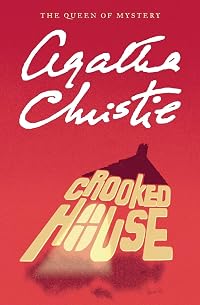
Crooked House
by Agatha Christie
On This Page
Description
The Leonides are one big happy family living in a sprawling, ramshackle mansion. That is until the head of the household, Aristide, is murdered with a fatal barbiturate injection. Suspicion naturally falls on the old man's young widow, fifty years his junior. But the murderer has reckoned without the tenacity of Charles Hayward, fiance of the late millionaire's granddaughter.Tags
Recommendations













Member Reviews
"Crooked House" is the first Agatha Christie standalone novel I've read. I've been pleasantly surprised by how fresh and simple the humour in this book is. The writing feels relaxed and confident as if Agatha Christie is enjoying the people she's writing about rather than working to set up a plot.
Although there is a murder driving the plot of "Crooked House" the book is really an examination of how a rather strange, very rich Leonides family live together and how they see themselves and each other.
The Leonides family is of mixed Greek/English origins, the Greek patriarch being the charismatic self-made man who has become very wealthy by always finding a crooked, but just about legal, angle in a deal and the English matriarch coming show more from a good family with old money.
The family live in the crooked house of the title, purpose-built for them, it aspires to an English Country Cottage style but succeeds only in being too large to be a cottage and too eccentric to be authentically English. Three generations of the family live under one roof but in physically separate domains. The house is a metaphor for the family, the wealth, their integration or lack of it into Society and their relationships with each other.
"Crooked House" is set in 1949 and a, perhaps unconscious, benefit of the book is to give an insight into the behaviour and assumptions of the English Establishment in the years after the war, faced with nationalisation of major industries, the creation of the National Health Service and a dramatic increase in inheritance tax at home, the collapse of Sterling and the start of the slow unravelling of the British Empire abroad.
We gain the Establishment view by having the family and the mystery explored by Charles Hayward, a man so deeply embedded into the English Establishment that it is invisible to him. He's included in the investigation not because he is a policeman but because he's included he's the right sort (English Gentlemen with a senior post in the Foreign Office), is connected to the right people (his father is a Police Commissioner) and is connected to the family (having proposed marriage to the eldest daughter).
Charles is a man whose most distinguishing characteristic is his unrelenting blandness. a facet of his personality he seems completely unaware of. He makes Watson look charismatic and insightful. He is SO bland, I struggled to remember his name.
"Crooked House" opens in Cairo with Charles proposing marriage to Sophia Leonides where they both have Foreign Office postings. The proposal is so tentative, so painfully polite and so completely passionless type that could only have been made by an upper-class Englishman in the nineteen forties. I couldn't figure out whether Charles had finally spotted something that would nicely accessorise his post-war life or if there was genuine passion there. There's so much repression of emotion that I wonder if either Charles or Sophia were any clearer on the answer than I was.
Throughout the book, I found myself wondering if Charles would survive becoming a member of the Leonides family, even if no murder had occurred. Early in the investigation, Sophia gives a frank explanation of how various members of the family see the world and each other and I wondered whether, after letting that point of view sink in for a while, Charles would still be quite so keen to marry into this family. They reminded me of one of the collective nouns for cats: "a pounce of cats". Charles would have to establish very early on that he was not prey. Charles, however, remained blissfully unaware of any threat.
Charles is very much a man of his time. His feelings of comfort on meeting the Leonides nanny made me sorry for him and all the others in his generation who lived with this kind of surrogacy.
The storytelling is suffering from that fact that Charles has no side-kick to bounce things off, hide things from or make witty remarks to. We have to suffer through his interior monologue, which mostly reveals that he is too close to the family and too conventional in his thinking to uncover the murderer.
The most fascinating character in the book is young Josephine, granddaughter of the patriarch. Josephine's a little chilling, quite believable and impossible to look away from. She is a girl who is determined to take control of her own life. She doesn't suffer fools at all and she is constantly telling Charles, as I would like to have done, that he has no idea what is really going on.
"Crooked House" was an environment so rich in potential killers that, like Charles, I had no idea who the murderer was, but I was given a thorough education in the ways in which those who have always been wealthy exercise an instinctive ruthlessness that allows them to stay that way and to continue to feel completely entitled to do so.
I was also given an insight into the unique suffering of the rich. Imagine the pain of a rich man's son who, after having driven a successful business into the ground through a refusal tell his father that he had no talent for business, now has of "to live simply" on the small estate his wife has just inherited in Barbados. How is anyone supposed to cope with such trauma?
Although the focus is on the family rather than the murder, I did enjoy the plot. The identity of the murderer came as a complete surprise to me but left me feeling foolish rather than cheated as, in retrospect, it all made sense. I blame my lack of insight on Charles' lack of investigative talent.
This book was such an unexpected pleasure that I shall be looking for other standalone Christie books of this period. show less
Although there is a murder driving the plot of "Crooked House" the book is really an examination of how a rather strange, very rich Leonides family live together and how they see themselves and each other.
The Leonides family is of mixed Greek/English origins, the Greek patriarch being the charismatic self-made man who has become very wealthy by always finding a crooked, but just about legal, angle in a deal and the English matriarch coming show more from a good family with old money.
The family live in the crooked house of the title, purpose-built for them, it aspires to an English Country Cottage style but succeeds only in being too large to be a cottage and too eccentric to be authentically English. Three generations of the family live under one roof but in physically separate domains. The house is a metaphor for the family, the wealth, their integration or lack of it into Society and their relationships with each other.
"Crooked House" is set in 1949 and a, perhaps unconscious, benefit of the book is to give an insight into the behaviour and assumptions of the English Establishment in the years after the war, faced with nationalisation of major industries, the creation of the National Health Service and a dramatic increase in inheritance tax at home, the collapse of Sterling and the start of the slow unravelling of the British Empire abroad.
We gain the Establishment view by having the family and the mystery explored by Charles Hayward, a man so deeply embedded into the English Establishment that it is invisible to him. He's included in the investigation not because he is a policeman but because he's included he's the right sort (English Gentlemen with a senior post in the Foreign Office), is connected to the right people (his father is a Police Commissioner) and is connected to the family (having proposed marriage to the eldest daughter).
Charles is a man whose most distinguishing characteristic is his unrelenting blandness. a facet of his personality he seems completely unaware of. He makes Watson look charismatic and insightful. He is SO bland, I struggled to remember his name.
"Crooked House" opens in Cairo with Charles proposing marriage to Sophia Leonides where they both have Foreign Office postings. The proposal is so tentative, so painfully polite and so completely passionless type that could only have been made by an upper-class Englishman in the nineteen forties. I couldn't figure out whether Charles had finally spotted something that would nicely accessorise his post-war life or if there was genuine passion there. There's so much repression of emotion that I wonder if either Charles or Sophia were any clearer on the answer than I was.
Throughout the book, I found myself wondering if Charles would survive becoming a member of the Leonides family, even if no murder had occurred. Early in the investigation, Sophia gives a frank explanation of how various members of the family see the world and each other and I wondered whether, after letting that point of view sink in for a while, Charles would still be quite so keen to marry into this family. They reminded me of one of the collective nouns for cats: "a pounce of cats". Charles would have to establish very early on that he was not prey. Charles, however, remained blissfully unaware of any threat.
Charles is very much a man of his time. His feelings of comfort on meeting the Leonides nanny made me sorry for him and all the others in his generation who lived with this kind of surrogacy.
The storytelling is suffering from that fact that Charles has no side-kick to bounce things off, hide things from or make witty remarks to. We have to suffer through his interior monologue, which mostly reveals that he is too close to the family and too conventional in his thinking to uncover the murderer.
The most fascinating character in the book is young Josephine, granddaughter of the patriarch. Josephine's a little chilling, quite believable and impossible to look away from. She is a girl who is determined to take control of her own life. She doesn't suffer fools at all and she is constantly telling Charles, as I would like to have done, that he has no idea what is really going on.
"Crooked House" was an environment so rich in potential killers that, like Charles, I had no idea who the murderer was, but I was given a thorough education in the ways in which those who have always been wealthy exercise an instinctive ruthlessness that allows them to stay that way and to continue to feel completely entitled to do so.
I was also given an insight into the unique suffering of the rich. Imagine the pain of a rich man's son who, after having driven a successful business into the ground through a refusal tell his father that he had no talent for business, now has of "to live simply" on the small estate his wife has just inherited in Barbados. How is anyone supposed to cope with such trauma?
Although the focus is on the family rather than the murder, I did enjoy the plot. The identity of the murderer came as a complete surprise to me but left me feeling foolish rather than cheated as, in retrospect, it all made sense. I blame my lack of insight on Charles' lack of investigative talent.
This book was such an unexpected pleasure that I shall be looking for other standalone Christie books of this period. show less
In 1948, Dame Christie published [b:Taken at the Flood|16308|Taken at the Flood (Hercule Poirot, #24)|Agatha Christie|https://i.gr-assets.com/images/S/compressed.photo.goodreads.com/books/1308808198l/16308._SX50_.jpg|2901701], a Poirot mystery in which a rich older man whose family is financially dependent on him marries a woman in her 20s that the family hates, then dies in the Blitz. I thought it was terrible. I suspect Agatha did, too, because...
In 1949, Dame Christie published Crooked House, a standalone in which a rich older man whose family is financially dependent on him marries a woman in her 20s that the family hates, then is murdered. Although a lot of the details have changed, this feels like a do-over to me, and an excellent show more one at that.
Charles Hayward is no Hercule Poirot. He has no detecting experience, although his father is an admin at Scotland Yard. He has very little ego. And he's in love with one of members of the Leonides family, who find themselves in the midst of a murder investigation. Charles is asked by his father to be an inside source.
Sophia Leonides, Charles's intended, adored her grandfather, but she never mentioned him or the rest of her eccentric family when they were courting during overseas service in Egypt. They can be a bit much: her history scholar father, her overdramatic actress mother, her bumbling uncle and his devoted scientist wife, her great-aunt who hated her grandfather but stepped in to raise his children, her step-grandmother who is Sophia's age, her hormonal teenage brother, and her precocious preteen sister. All the characters are larger-than-life and so well fleshed out by Christie. Sophia's mother Magda often composes life as if it were a scene from one of her plays, and this entire book feels made for the stage or screen. (I'm looking forward to watching the 2017 adaptation a fantastic cast, including Gillian Anderson as Magda!!!)
I'm giving this one four stars because I did not love the ending, which tends to be the weakest part of Christie's writing for me. The murderer was little sis Josephine. She was driven to it between nature (the combination of her Greek grandfather's moral looseness (::face palm::) and her British grandmother's ruthlessness) and nurture (her mother didn't love her because she wasn't as attractive as her older siblings and "jokingly" called her a changeling). Sure. She was toying with the police all along, trying to make them suspect other members of the household. But then Great-Aunt Edith decides to put herself (suffering from cancer?) and Josephine out of their misery in a car crash. Sure it's nice and tidy, but death of the criminal is a conclusion that Christie relies on far too often. show less
In 1949, Dame Christie published Crooked House, a standalone in which a rich older man whose family is financially dependent on him marries a woman in her 20s that the family hates, then is murdered. Although a lot of the details have changed, this feels like a do-over to me, and an excellent show more one at that.
Charles Hayward is no Hercule Poirot. He has no detecting experience, although his father is an admin at Scotland Yard. He has very little ego. And he's in love with one of members of the Leonides family, who find themselves in the midst of a murder investigation. Charles is asked by his father to be an inside source.
Sophia Leonides, Charles's intended, adored her grandfather, but she never mentioned him or the rest of her eccentric family when they were courting during overseas service in Egypt. They can be a bit much: her history scholar father, her overdramatic actress mother, her bumbling uncle and his devoted scientist wife, her great-aunt who hated her grandfather but stepped in to raise his children, her step-grandmother who is Sophia's age, her hormonal teenage brother, and her precocious preteen sister. All the characters are larger-than-life and so well fleshed out by Christie. Sophia's mother Magda often composes life as if it were a scene from one of her plays, and this entire book feels made for the stage or screen. (I'm looking forward to watching the 2017 adaptation a fantastic cast, including Gillian Anderson as Magda!!!)
I'm giving this one four stars because I did not love the ending, which tends to be the weakest part of Christie's writing for me.
Charles Hayward, the son of Assistant Commissioner Hayward of Scotland Yard, meets Sophia Leonides during the Second World War in Cairo; they fall in love but agree not to marry until Charles has returned to England once the war is finished. On his return he discovers that Sophia's grandfather, the wealthy entrepreneur Aristide Leonides, has just been killed. Preliminary investigations establish, without the shadow of a doubt, that he was poisoned. Straddling the middle ground between the police and a family friend, Charles begins to investigate everyone living in the Crooked House.
Crooked House is an enjoyable mystery novel that puts the rather dysfunctional Leonides family under the microscope. Though the individual characters show more occasionally verge on stereotype, the story is well plotted and the puzzle suitably engaging. Agatha Christie plays with her own detective story conventions to good effect, and the ending is quite unusual. show less
Crooked House is an enjoyable mystery novel that puts the rather dysfunctional Leonides family under the microscope. Though the individual characters show more occasionally verge on stereotype, the story is well plotted and the puzzle suitably engaging. Agatha Christie plays with her own detective story conventions to good effect, and the ending is quite unusual. show less
Charles Hayward has it pretty good. He survived the Second World War, is comfortably well-off, young and even has the prospect of marriage, with the lovely Sophia Leonides. But when Charles returns to England, he learns that Sophia's grandfather, noted businessman Aristide Leonides, has died. There's suspicion of foul play. Sophia does not want a shadow of doubt cast on her family as a result of the death, so she asks Charles to help find out the truth.
Agatha Christie herself said that Crooked House was one of her personal favourites, a "pure pleasure" to write. That pleasure comes across in the writing: Charles' narration is light and charming without being excessively "what ho, old chap!" Sophia is a smart, sensible lady, and her show more family is maddeningly eccentric and amusing. (Agatha must have enjoyed writing for Sophia's mother, Magda, in particular -- such carryings-on!)
I read this in the space of a couple of hours and could not put it down. Charles made a good investigator, using his somewhat privileged position as prospective relative-by-marriage to winkle confidences out of the family, as well as being able to draw upon information provided by his father, the Assistant Commissioner at Scotland Yard. I was astounded to read the solution and even found a few tears running down my face. A fair few, actually. I haven't cried so much at an Agatha novel since Curtain (although this was not quite as upsetting, and the upset was for a different reason). Highly recommended for Christie fans. show less
Agatha Christie herself said that Crooked House was one of her personal favourites, a "pure pleasure" to write. That pleasure comes across in the writing: Charles' narration is light and charming without being excessively "what ho, old chap!" Sophia is a smart, sensible lady, and her show more family is maddeningly eccentric and amusing. (Agatha must have enjoyed writing for Sophia's mother, Magda, in particular -- such carryings-on!)
I read this in the space of a couple of hours and could not put it down. Charles made a good investigator, using his somewhat privileged position as prospective relative-by-marriage to winkle confidences out of the family, as well as being able to draw upon information provided by his father, the Assistant Commissioner at Scotland Yard. I was astounded to read the solution and even found a few tears running down my face. A fair few, actually. I haven't cried so much at an Agatha novel since Curtain (although this was not quite as upsetting, and the upset was for a different reason). Highly recommended for Christie fans. show less
As with every Agatha Christie mystery, I'm reluctant to talk about plot and character for fear of giving anything away, but trust me when I tell you that even I, the calloused reader of many an Agatha, was shocked--shocked, I tell you!--by the ending. No, reader, I didn't see it coming. And neither will you, unless you're a flipper-aheader. This is one of the better stand-alone Christies (i.e., without Poirot, Miss Marple, or Tommy & Tuppence) and the narrator, Charles, is a likeable enough character to go sleuthing with. While he's no detective, per se, he does get the job done with the usual cast of Christies living in the titular house, all of them suspects in the murder of the family patriarch--including Charles' own fiancee Sophia, show more granddaughter of the deceased.
There, I've gone and ruined my promise not to give away anything. Oh well, you'll find out soon enough, I suppose. show less
There, I've gone and ruined my promise not to give away anything. Oh well, you'll find out soon enough, I suppose. show less
https://fromtheheartofeurope.eu/crooked-house-by-agatha-christie/
I am trawling through the less popular Agatha Christies at present, I am at the point where most of them are not up to her usual standards (the last one I wrote up here was described by the author herself as “rotten”. But sometimes you get a gem that has escaped the acclaim given to her best known work, and Crooked House is one of those. No Poirot, no Marple; the narrator is a junior diplomat whose father is a senior police detective, and whose girlfriend’s grandfather has just been gruesomely murdered. The entire family (apart from the lovely girlfriend) are a horror show of emotional abuse, all of whom had means and motive, and working out which of them did it show more takes up a very entertaining 200+ pages.
I had read it years back, but could only remember who was responsible for the second murder attempt, so it was good and fresh for me. There is the usual cop-out of not facing human justice at the end, which perhaps requires a bit more ethical examination than Christie usually gives, but otherwise I felt this was a story where Christie plays the game fairly, and the clues are there if you look past the narrator’s biases. show less
I am trawling through the less popular Agatha Christies at present, I am at the point where most of them are not up to her usual standards (the last one I wrote up here was described by the author herself as “rotten”. But sometimes you get a gem that has escaped the acclaim given to her best known work, and Crooked House is one of those. No Poirot, no Marple; the narrator is a junior diplomat whose father is a senior police detective, and whose girlfriend’s grandfather has just been gruesomely murdered. The entire family (apart from the lovely girlfriend) are a horror show of emotional abuse, all of whom had means and motive, and working out which of them did it show more takes up a very entertaining 200+ pages.
I had read it years back, but could only remember who was responsible for the second murder attempt, so it was good and fresh for me. There is the usual cop-out of not facing human justice at the end, which perhaps requires a bit more ethical examination than Christie usually gives, but otherwise I felt this was a story where Christie plays the game fairly, and the clues are there if you look past the narrator’s biases. show less
A top-notch detective story by an author who is very good at detective stories! The titular Crooked House is an oddly-designed house holding the multi-generational family of Aristide Leonides, an immigrant to England from Greece who built his restaurant into a web of businesses that were never illegal, but definitely a bit crooked. His two grown sons and their families, as well as the sister of his deceased wife live in the house with him, along with his much younger second wife and a handsome tutor for his son Philip's younger children. Before the action of the novel, Aristide has died after the insulin his wife injected into him was replaced with eserine (from his eye drops).
Our narrator, Charles, enters the scene as the fiancée of show more Sophia, Philip's oldest child, who he met overseas during the war. Sophia refuses to marry him until the question of who killed her grandfather is settled, since any hint of impropriety could hurt his prospects. Lucky for Charles, his dad is a big wig at Scotland Yard, and he gets sent to the Leonides home with our old friend Chief Inspector Taverner to see what he can learn about the family. Everyone suspects Brenda, the young wife, who had been having an affair with the handsome tutor, but, oddly, everyone in the family had their own reasons why they may want their beloved patriarch to be killed, and they all kind of suspect each other too.
Christie leads us through a mountain of twists and turns and red herrings, wrapping things up with an unsuspected and very satisfyingly dark ending that proves that anyone in this crooked family really could be capable of murder. This was Christie's 49th book, published in 1949, and is frequently put in her top ten by critics and fans. I have to say that I am in agreement there. show less
Our narrator, Charles, enters the scene as the fiancée of show more Sophia, Philip's oldest child, who he met overseas during the war. Sophia refuses to marry him until the question of who killed her grandfather is settled, since any hint of impropriety could hurt his prospects. Lucky for Charles, his dad is a big wig at Scotland Yard, and he gets sent to the Leonides home with our old friend Chief Inspector Taverner to see what he can learn about the family. Everyone suspects Brenda, the young wife, who had been having an affair with the handsome tutor, but, oddly, everyone in the family had their own reasons why they may want their beloved patriarch to be killed, and they all kind of suspect each other too.
Christie leads us through a mountain of twists and turns and red herrings, wrapping things up with an unsuspected and very satisfyingly dark ending that proves that anyone in this crooked family really could be capable of murder. This was Christie's 49th book, published in 1949, and is frequently put in her top ten by critics and fans. I have to say that I am in agreement there. show less
Members
- Recently Added By
Lists

Read the book and saw the movie
1,170 works; 195 members

Crime and Mysteries to Read
746 works; 31 members

British Mystery
469 works; 14 members
Books With Nursery Rhyme Titles
37 works; 8 members

Agatha Christie
28 works; 3 members

Books About Murder
313 works; 7 members

Favorite Books from the 1940s
38 works; 3 members

Detective Stories
343 works; 5 members

BlackDog's Complete Paperbacks From Hell List
639 works; 3 members

Books Read in 2025
4,091 works; 97 members

TBR
77 works; 1 member

Which house?
423 works; 16 members

Books Read in 2020
4,379 works; 124 members

Books Read in 2022
5,168 works; 114 members

Best Family Stories
241 works; 22 members

Books Read in 2019
4,052 works; 110 members

Books Read in 2018
4,360 works; 110 members

Books Read in 2016
4,666 works; 199 members

Agatha Christie Chronology
93 works; 1 member
Author Information

2,158+ Works 440,797 Members
One of the most successful and beloved writer of mystery stories, Agatha Mary Clarissa Christie was born in 1890 in Torquay, County Devon, England. She wrote her first novel, The Mysterious Affair at Styles, in 1920, launching a literary career that spanned decades. In her lifetime, she authored 79 crime novels and a short story collection, 19 show more plays, and six novels written under the name of Mary Westmacott. Her books have sold over a billion copies in the English language with another billion in 44 foreign languages. Some of her most famous titles include Murder on the Orient Express, Mystery of the Blue Train, And Then There Were None, 13 at Dinner and The Sittaford Mystery. Noted for clever and surprising twists of plot, many of Christie's mysteries feature two unconventional fictional detectives named Hercule Poirot and Miss Jane Marple. Poirot, in particular, plays the hero of many of her works, including the classic, The Murder of Roger Ackroyd (1926), and Curtain (1975), one of her last works in which the famed detective dies. Over the years, her travels took her to the Middle East where she met noted English archaeologist Sir Max Mallowan. They married in 1930. Christie accompanied Mallowan on annual expeditions to Iraq and Syria, which served as material for Murder in Mesopotamia (1930), Death on the Nile (1937), and Appointment with Death (1938). Christie's credits also include the plays, The Mousetrap and Witness for the Prosecution (1953; film 1957). Christie received the New York Drama Critics' Circle Award for 1954-1955 for Witness. She was also named Dame Commander of the Order of the British Empire in 1971. Christie died in 1976. (Bowker Author Biography) show less
Some Editions
Series
Belongs to Publisher Series
Collins Crime Club (White Circle)
Work Relationships
Is contained in
The Nursery Rhyme Murders: Crooked House / Hickory Dickory Dock / A Pocket Full of Rye by Agatha Christie
Crooked House | The Witness for the Prosecution and Other Stories | The Under Dog and Other Stories by Agatha Christie
The Fourth Man / The Murder of Roger Ackroyd / SOS / Crooked House / Strange Jest by Agatha Christie
Murder at the Manor : The Seven Dials Mystery | Crooked House | Ordeal by Innocence by Agatha Christie
Common Knowledge
- Canonical title
- Crooked House
- Original title
- Crooked house
- Original publication date
- 1949-03-01
- People/Characters
- Charles Hayward; Sophia Leonides; Brenda Leonides; Laurence Brown; Eustace Leonides; Josephine Leonides (show all 15); Edith de Haviland; Roger Leonides; Clemency Leonides; Philip Leonides; Magda Leonides; Sir Arthur Hayward (Commissioner of Scotland Yard); Chief Inspector Taverner (Scotland Yard); Sergeant Lamb (Scotland Yard); Janet Rowe (Nannie)
- Important places
- England, UK
- Related movies
- Crooked House (2017 | IMDb)
- First words
- I first came to know Sophia Leonides in Egypt towards the end of the war.
- Last words
- (Click to show. Warning: May contain spoilers.)" ... Poor child."
- Original language*
- Englisch
*Some information comes from Common Knowledge in other languages. Click "Edit" for more information.
Classifications
Statistics
- Members
- 4,383
- Popularity
- 3,415
- Reviews
- 109
- Rating
- (3.80)
- Languages
- 29 — Arabic, Catalan, Czech, Danish, Dutch, English, Estonian, Finnish, French, German, Hungarian, Indonesian, Italian, Japanese, Korean, Norwegian (Bokmål), Norwegian, Polish, Portuguese, Romanian, Russian, Serbian, Croatian, Slovenian, Spanish, Swedish, Tamil, Turkish, Ukrainian
- Media
- Paper, Audiobook, Ebook
- ISBNs
- 177
- UPCs
- 2
- ASINs
- 80