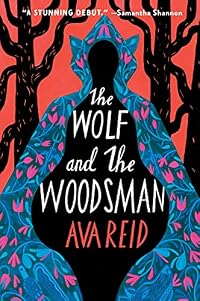
The Wolf and the Woodsman
by Ava Reid
On This Page
Description
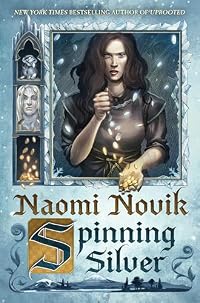
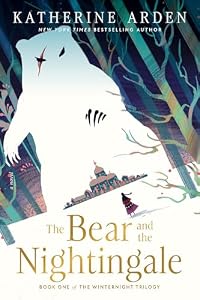
In the vein of Naomi Novik's New York Times bestseller Spinning Silver and Katherine Arden's national bestseller The Bear and the Nightingale, this unforgettable debut— inspired by Hungarian history and Jewish mythology—follows a young pagan woman with hidden powers and a one-eyed captain of the Woodsmen as they form an unlikely alliance to thwart a tyrant.In her forest-veiled pagan village, Évike is the only woman without power, making her an outcast clearly abandoned by the gods. The show more villagers blame her corrupted bloodline—her father was a Yehuli man, one of the much-loathed servants of the fanatical king. When soldiers arrive from the Holy Order of Woodsmen to claim a pagan girl for the king's blood sacrifice, Évike is betrayed by her fellow villagers and surrendered.
But when monsters attack the Woodsmen and their captive en route, slaughtering everyone but Évike and the cold, one-eyed captain, they have no choice but to rely on each other. Except he's no ordinary Woodsman—he's the disgraced prince, Gáspár Bárány, whose father needs pagan magic to consolidate his power. Gáspár fears that his cruelly zealous brother plans to seize the throne and instigate a violent reign that would damn the pagans and the Yehuli alike. As the son of a reviled foreign queen, Gáspár understands what it's like to be an outcast, and he and Évike make a tenuous pact to stop his brother.
As their mission takes them from the bitter northern tundra to the smog-choked capital, their mutual loathing slowly turns to affection, bound by a shared history of alienation and oppression. However, trust can easily turn to betrayal, and as Évike reconnects with her estranged father and discovers her own hidden magic, she and Gáspár need to decide whose side they're on, and what they're willing to give up for a nation that never cared for them at all.
. show less
Tags
Recommendations

Member Reviews
Originally posted on Just Geeking By.
One of the books that I heard about in the Del Rey UK 2021 Virtual Showcase, The Wolf and the Woodsman caught my attention immediately as a pagan because this is a book where the main character is a pagan! That in itself is highly unusual and the more I learned about this book, I realised it was just the tip of the iceberg. I had to get my hands on it and the lovely people at Del Rey were kind enough to provide me with a free copy in exchange for an honest review. Many thanks to Rachel Kennedy for the opportunity to review The Wolf and the Woodsman!
The Wolf and the Woodsman is a novel that delightfully discusses and interrogates the idea of what is belief, what happens when it changes and when that show more change is forced on society through the use of fantasy. Évike and Gáspár are thrown together in a situation where they must choose what is more important; their beliefs or their survival. Is it worth dying just to cling to those beliefs? At first Gáspár, a deeply devout follower of the Patrifaith is willing to do just that, whereas Évike's pagan beliefs allow her to be a little bit more lenient. It isn't her gods that call for her to avoid getting close to Gáspár it's the blood on the hands of the Woodsmen, the Holy Order of soldiers that have claimed so many of her fellow wolf-girls for the King's pleasure. Can she let go of her anger, of her disbelief in the hypocrisy of what Gáspár believes?
As the pair travel together they realise that there is something more important than the rift between them. Gáspár's brother threatens the safety of both their homes and of Évike's father's people, the Yehuli, an indigenous religion under persecution. Nandor's hatred for everyone outside the Patrifaith threatens to consume the entire nation in a religious war just as the Kingdom fights one at their border. No one would be spared, including Gáspár, the son of a foreign queen, and those loyal to him.
Let's be clear about one thing; this is a fantasy novel but it talks about some very real and horrific topics. Fantasy is the lens in which Reid uses to examine real past historical events, particularly the brutal acts of a newfound patriarchal faith that washed away all other traditions and belief systems with blood to establish itself as the dominant religion. As with the Patrifaith in The Wolf and the Woodsman, it did so by intertwining religion with state and crown until it controlled everything. Modern societies still bear many hallmarks of those actions today. The dire consequences of such an act are optimised through the character of Nandor, Gáspár's brother, a figure who has the power and presence to unit people in their hatred and faith to ensure that their country will be cleansed of anyone who does not follow their faith. It isn't an idle threat or a promise, it's a fact, with the blood of as many Yehuli as he can get away with already on Nandor's hands.
The Yehuli already live in persecution, already fear the sound of the soldier's footsteps when they celebrate their holy days and festivals. Likewise, the pagans have been cowed into conversion, forced into hiding or live under constant threat of one of their girls being taken by the Woodsmen. Neither community is a threat to the Patrifaith. They just want to be left to live their lives in peace, to continue the traditions as their ancestors have done for generations. It's a sentiment that I think a lot of us can appreciate. Even more so we recognise the oppressing forces who will not just let us do that, who demand that we should do things their way, that what we do is wrong just because they do not understand it.
Reading The Wolf and the Woodsman I saw in Gáspár a need for some controlling outside force to guide him, to show him the right way, likewise the same with Évike's father and the other Yehuli. Their scrolls were integral to their belief. In comparison, the pagans have a fully oral storytelling based system and that is enough for them. They do not need ritual or the written word to reinforce their faith.
While The Wolf and the Woodsman is a brutal depiction of three religious communities and their differences, it is also the story of their similarities. While stories are the foundation of the pagan belief system each one has stories and this is just one overlap that Évike recognises as she learns more about them. Even as the Patrifaith shuns pagans she sees things that they do that aren't that different to the villagers she's left behind, not that they would ever admit it. Then there's the blatant hypocrisy of a king who wants to use pagan magic to consolidate his power yet shuns the pagans of his country. I appreciated that Reid did not shy away from the stark truth, showing every repulsive act horrifically without any fairytale pretence.
Such as the relationship between Évike and Gáspár, which people have claimed was not romantic enough. If you read this novel and your takeaway from it was that there was not enough romance then you seriously missed the entire point of The Wolf and the Woodsman. I hesitate to even call it "romance" because romance conjures up a certain ideal and Évike and Gáspár's relationship is one born from two people being thrown together in a stressful, horrible situation and realising they care for one another. They are running for their lives, trying to survive monsters and weather, and are the only people who can stop the genocide of two peoples. There's no time for romance. It's real life, and real life is messy, quick and whatever you can get when you can get it. I honestly would have lost a lot of respect for Reid if she had made a point of making it all fluffy and romantic because it would have made a mockery of everything else in the novel. show less
One of the books that I heard about in the Del Rey UK 2021 Virtual Showcase, The Wolf and the Woodsman caught my attention immediately as a pagan because this is a book where the main character is a pagan! That in itself is highly unusual and the more I learned about this book, I realised it was just the tip of the iceberg. I had to get my hands on it and the lovely people at Del Rey were kind enough to provide me with a free copy in exchange for an honest review. Many thanks to Rachel Kennedy for the opportunity to review The Wolf and the Woodsman!
The Wolf and the Woodsman is a novel that delightfully discusses and interrogates the idea of what is belief, what happens when it changes and when that show more change is forced on society through the use of fantasy. Évike and Gáspár are thrown together in a situation where they must choose what is more important; their beliefs or their survival. Is it worth dying just to cling to those beliefs? At first Gáspár, a deeply devout follower of the Patrifaith is willing to do just that, whereas Évike's pagan beliefs allow her to be a little bit more lenient. It isn't her gods that call for her to avoid getting close to Gáspár it's the blood on the hands of the Woodsmen, the Holy Order of soldiers that have claimed so many of her fellow wolf-girls for the King's pleasure. Can she let go of her anger, of her disbelief in the hypocrisy of what Gáspár believes?
As the pair travel together they realise that there is something more important than the rift between them. Gáspár's brother threatens the safety of both their homes and of Évike's father's people, the Yehuli, an indigenous religion under persecution. Nandor's hatred for everyone outside the Patrifaith threatens to consume the entire nation in a religious war just as the Kingdom fights one at their border. No one would be spared, including Gáspár, the son of a foreign queen, and those loyal to him.
Let's be clear about one thing; this is a fantasy novel but it talks about some very real and horrific topics. Fantasy is the lens in which Reid uses to examine real past historical events, particularly the brutal acts of a newfound patriarchal faith that washed away all other traditions and belief systems with blood to establish itself as the dominant religion. As with the Patrifaith in The Wolf and the Woodsman, it did so by intertwining religion with state and crown until it controlled everything. Modern societies still bear many hallmarks of those actions today. The dire consequences of such an act are optimised through the character of Nandor, Gáspár's brother, a figure who has the power and presence to unit people in their hatred and faith to ensure that their country will be cleansed of anyone who does not follow their faith. It isn't an idle threat or a promise, it's a fact, with the blood of as many Yehuli as he can get away with already on Nandor's hands.
The Yehuli already live in persecution, already fear the sound of the soldier's footsteps when they celebrate their holy days and festivals. Likewise, the pagans have been cowed into conversion, forced into hiding or live under constant threat of one of their girls being taken by the Woodsmen. Neither community is a threat to the Patrifaith. They just want to be left to live their lives in peace, to continue the traditions as their ancestors have done for generations. It's a sentiment that I think a lot of us can appreciate. Even more so we recognise the oppressing forces who will not just let us do that, who demand that we should do things their way, that what we do is wrong just because they do not understand it.
Reading The Wolf and the Woodsman I saw in Gáspár a need for some controlling outside force to guide him, to show him the right way, likewise the same with Évike's father and the other Yehuli. Their scrolls were integral to their belief. In comparison, the pagans have a fully oral storytelling based system and that is enough for them. They do not need ritual or the written word to reinforce their faith.
While The Wolf and the Woodsman is a brutal depiction of three religious communities and their differences, it is also the story of their similarities. While stories are the foundation of the pagan belief system each one has stories and this is just one overlap that Évike recognises as she learns more about them. Even as the Patrifaith shuns pagans she sees things that they do that aren't that different to the villagers she's left behind, not that they would ever admit it. Then there's the blatant hypocrisy of a king who wants to use pagan magic to consolidate his power yet shuns the pagans of his country. I appreciated that Reid did not shy away from the stark truth, showing every repulsive act horrifically without any fairytale pretence.
Such as the relationship between Évike and Gáspár, which people have claimed was not romantic enough. If you read this novel and your takeaway from it was that there was not enough romance then you seriously missed the entire point of The Wolf and the Woodsman. I hesitate to even call it "romance" because romance conjures up a certain ideal and Évike and Gáspár's relationship is one born from two people being thrown together in a stressful, horrible situation and realising they care for one another. They are running for their lives, trying to survive monsters and weather, and are the only people who can stop the genocide of two peoples. There's no time for romance. It's real life, and real life is messy, quick and whatever you can get when you can get it. I honestly would have lost a lot of respect for Reid if she had made a point of making it all fluffy and romantic because it would have made a mockery of everything else in the novel. show less
Following a young woman from a pagan village, Evike, and her journey as she is forced from her home village to a one-eyed Woodsman; this story is a culmination of how various faiths and mythos clash.
This is a complicated one to rate as it is both fantastic and awful at the same time. A first for me reading wise, Reid is masterful at world building which is often the hardest part about writing a fantasy world, she brings in many real-life reflections of religions from pagan beliefs to Jewish mythos and Christian practice in a way that is well-done and still unique and interesting to the world that's been created. The depth of the world felt tangible and flowed in an easy way that kept me intrigued. On the other hand, the actual story and show more plotline were, quite frankly, awful. A hundred pages could have been cut from convoluted plot progressions and it is almost sad to say you could remove almost all of the actions of the main characters and end up with the same ending and outcome of the story.
So for world-building and those interested in reading fantasy stories inspired by real-life religious mythos and history than the book is great, but if you're looking for a good story this is not it. This is Reid's first book, and she certainly has a skill to support a great story once she figures out how to plot one. show less
This is a complicated one to rate as it is both fantastic and awful at the same time. A first for me reading wise, Reid is masterful at world building which is often the hardest part about writing a fantasy world, she brings in many real-life reflections of religions from pagan beliefs to Jewish mythos and Christian practice in a way that is well-done and still unique and interesting to the world that's been created. The depth of the world felt tangible and flowed in an easy way that kept me intrigued. On the other hand, the actual story and show more plotline were, quite frankly, awful. A hundred pages could have been cut from convoluted plot progressions and it is almost sad to say you could remove almost all of the actions of the main characters and end up with the same ending and outcome of the story.
So for world-building and those interested in reading fantasy stories inspired by real-life religious mythos and history than the book is great, but if you're looking for a good story this is not it. This is Reid's first book, and she certainly has a skill to support a great story once she figures out how to plot one. show less
Inspired by Hungarian history and Jewish mythology, the haunting debut of Ava Reid follows a young pagan woman with hidden powers and a one-eyed captain of a holy order as they form an unlikely alliance to defeat a tyrant. I started reading it in the summer of 2021 and only finished it after mid-January 2022. But I'm sure I would have devoured it had I read it in e-book format. With long chapters and a tiny font, it was difficult for me to read more than a dozen pages a day. And, to be honest, the first half of the book is definitely slow-paced. But the world-building is so intricate it makes sense we get to know it before the action begins. Atmospheric and dark, the imagery is stunning.
Alongside magic, religion plays a significant show more role, and there are echoes of real medieval history’s power dynamics between Jewish, Christians and pagans. At the core of the story, nation-building is depicted as a brutal process that takes advantage of the power of myths and storytelling, especially about mighty gods, to bend populations to the will of a few men. Tactfully, but without mincing words, Ava Reid addresses important and sensitive issues, such as oppression, persecution and ethnic cleansing, and gives us the opportunity to see people trying and sometimes succeeding at surviving it.
As for the main character, Évike is a well-written character, for sure, but I don’t know if I like or despise her. Outcasted by her own tribe for her corrupted bloodline (her father is a Yehuli man, one of the much-loathed servants of the fanatical king), she’s bound and taken away to be offered as a sacrifice to the fanatical king of Régország. But the one-eyed captain of the Holy Order of the Woodsmen challenges what she believes in. Not every Patritian, a follower of the Patrifaith, is loathsome as she had imagined. Especially not the gentle and tortured Gáspár Barány. It’s great to watch how their alliance allows them to grow as individuals, and I also loved the slow-burn romance, but it annoyed me how mean Évike could be (and was most of the time) to Gáspár, especially after he shows how compassionate and trustworthy he actually is.
Bottom line, I just wish this one wasn't a stand-alone. I feel it could have been a superb duo or trilogy; that would allow the author to delve deeper into the political intrigues and the lore of the world. The first half was much slower compared to the second and the end, while somewhat satisfying, felt rushed (the crux of the issue was swept under the rug). There were also topics that could have been more developed. For example, I would love to know more about Gáspár experience as a mixed-race man with olive skin in a vaguely Eastern European fantasy country. Maybe he should have had a POV. I also would have loved to see more of the relationship between Évike and her father, since that was one of my favourite storylines. And then, there’s a question that will haunt me forever: why a certain character is granted power by praying while some have to get hurt in order to reach theirs? I guess it’s related to the different religions and belief systems, but I wanted to know more about it.
I guess this is actually a 3.75, but I rounded up. In the end, I had a good time with it and plan on re-reading. show less
Alongside magic, religion plays a significant show more role, and there are echoes of real medieval history’s power dynamics between Jewish, Christians and pagans. At the core of the story, nation-building is depicted as a brutal process that takes advantage of the power of myths and storytelling, especially about mighty gods, to bend populations to the will of a few men. Tactfully, but without mincing words, Ava Reid addresses important and sensitive issues, such as oppression, persecution and ethnic cleansing, and gives us the opportunity to see people trying and sometimes succeeding at surviving it.
As for the main character, Évike is a well-written character, for sure, but I don’t know if I like or despise her. Outcasted by her own tribe for her corrupted bloodline (her father is a Yehuli man, one of the much-loathed servants of the fanatical king), she’s bound and taken away to be offered as a sacrifice to the fanatical king of Régország. But the one-eyed captain of the Holy Order of the Woodsmen challenges what she believes in. Not every Patritian, a follower of the Patrifaith, is loathsome as she had imagined. Especially not the gentle and tortured Gáspár Barány. It’s great to watch how their alliance allows them to grow as individuals, and I also loved the slow-burn romance, but it annoyed me how mean Évike could be (and was most of the time) to Gáspár, especially after he shows how compassionate and trustworthy he actually is.
Bottom line, I just wish this one wasn't a stand-alone. I feel it could have been a superb duo or trilogy; that would allow the author to delve deeper into the political intrigues and the lore of the world. The first half was much slower compared to the second and the end, while somewhat satisfying, felt rushed (the crux of the issue was swept under the rug). There were also topics that could have been more developed. For example, I would love to know more about Gáspár experience as a mixed-race man with olive skin in a vaguely Eastern European fantasy country. Maybe he should have had a POV. I also would have loved to see more of the relationship between Évike and her father, since that was one of my favourite storylines. And then, there’s a question that will haunt me forever: why a certain character is granted power by praying while some have to get hurt in order to reach theirs? I guess it’s related to the different religions and belief systems, but I wanted to know more about it.
I guess this is actually a 3.75, but I rounded up. In the end, I had a good time with it and plan on re-reading. show less
✴︎ I liked the world-building and the premise had potential, but this book ended up disappointing for me. This author has a habit of trying to tackle heavy themes and here she fumbled instead of doing them justice, in my opinion. Also, after reading several books of hers now, I noticed things often happen in her stories not from logical plot progression of actions leading to other actions, but just because she wants them to happen that way seemingly at a particular percentage of the story. This kind of writing breaks immersion and makes me feel like I'm wasting my time reading it.
Themes / Subject Matter : Content warning for abuse, bullying, body horror, gore, antisemitism, racism, xenophobia, and religious fanaticism.
The core show more themes of TWATW are mythology, the cost of magic, and how othering and intolerance tears a country apart.
Setting : The Eastern Europe kind of setting was interesting to me, but then I saw comments from people of the place the book was based saying language and history was not properly researched or understood. This disrespect is ironic from a writer who is trying to write a story about how cultures should be respected. Some readers don't like fantasy worlds that borrow so heavily from our world's histories and cultures, and have one-to-one / such easily seen representation (The Yehuli are obviously based on Jewish people, for example), instead of creating a unique world, so beware of that if you don't like this kind of world-building.
Plot : A big portion of the book felt almost pointless except for immersing you in the world. A macguffin given importance for the protagonist's goal was never found in the first part of the book, ended up having our main couple go after it again and actually finding it later, but the thing immediately was rendered useless. Like, what was *the point*? Those pages were simply world-building and only the illusion of plot progression.
Characterization : Not liking a protagonist usually isn’t a problem for me since I don’t read thinking that liking them is necessary. Big BUT here: but I’m getting tired of emotionally immature, wildly impulsive, strikingly idiotic, needlessly aggressive characters who argue just to argue all the time, and have no sense of self-preservation. I understand characters need a starting point to grow towards their arc, but I was losing patience with Evike.
Her love interest's arc was going from blind devotion and fanaticism in attempt to compensate for his mixed heritage and please his abusive father, but then coming to see how subjugation of citizens is plain wrong. This is an interesting arc in theory, but in practice was not written well. The change seemed to happen suddenly and without him properly communicating it.
Romance : The relationship was lacking. There was hardly more than physical attraction there. The couple talked about their pasts and being abused, but there was no special bonding or comfort to be found in each other. In fact, the FMC several times demeaned the MMC for how he reacted to his abuse not being how she reacted to hers. It was so gross, especially because he had faced racism from his father and court his whole life. Also, there was a part that really bothered me where the MMC didn't want the FMC to take off his eye patch but she ignored his wishes and did it anyway. The FMC generally didn't respect the MMC, insulted him in almost every interaction, and was very vocal of how she thought he was a coward until suddenly they declared their love. What they saw in each other besides a body to kiss and have sex with, I have no idea.
The Ending : The way the protagonist's relationship with her village was handled also bothered me. They abused and scarred her physically, mentally, and emotionally, but it was treated like this positive thing thatshe went back to spend time there in the end, instead of just staying with her father who was a good man who wanted her in his life and showed her what being part of a strong community actually was. In the last pages, Evike plans to go and live in the capital city where he was, but it just felt wrong to have her back with the villagers at all, especially after she spent so much of the book yelling at the MMC for not standing up to his abusers.
Prose : As for the writing style, this author takes the crown of the purplest prose I've ever read. Figurative language (mainly similes) appears everywhere to the point of distraction and is often nonsensical on top of that. It drove me *crazy*. Like, I was so annoyed I had to take breaks about it. I’ve read multiple books from Reid now and they all suffer from this overwrought and frustrating style.
Conclusion : Ava Reid's books are a love letter to folklore, fairy tales, and stories as a concept, offering striking atmosphere and portrayals of protagonists who feel real. Unfortunately, her shortcomings as a writer brought down the positives here. show less
Themes / Subject Matter : Content warning for abuse, bullying, body horror, gore, antisemitism, racism, xenophobia, and religious fanaticism.
The core show more themes of TWATW are mythology, the cost of magic, and how othering and intolerance tears a country apart.
Setting : The Eastern Europe kind of setting was interesting to me, but then I saw comments from people of the place the book was based saying language and history was not properly researched or understood. This disrespect is ironic from a writer who is trying to write a story about how cultures should be respected. Some readers don't like fantasy worlds that borrow so heavily from our world's histories and cultures, and have one-to-one / such easily seen representation (The Yehuli are obviously based on Jewish people, for example), instead of creating a unique world, so beware of that if you don't like this kind of world-building.
Plot : A big portion of the book felt almost pointless except for immersing you in the world. A macguffin given importance for the protagonist's goal was never found in the first part of the book, ended up having our main couple go after it again and actually finding it later, but the thing immediately was rendered useless. Like, what was *the point*? Those pages were simply world-building and only the illusion of plot progression.
Characterization : Not liking a protagonist usually isn’t a problem for me since I don’t read thinking that liking them is necessary. Big BUT here: but I’m getting tired of emotionally immature, wildly impulsive, strikingly idiotic, needlessly aggressive characters who argue just to argue all the time, and have no sense of self-preservation. I understand characters need a starting point to grow towards their arc, but I was losing patience with Evike.
Her love interest's arc was going from blind devotion and fanaticism in attempt to compensate for his mixed heritage and please his abusive father, but then coming to see how subjugation of citizens is plain wrong. This is an interesting arc in theory, but in practice was not written well. The change seemed to happen suddenly and without him properly communicating it.
Romance : The relationship was lacking. There was hardly more than physical attraction there. The couple talked about their pasts and being abused, but there was no special bonding or comfort to be found in each other. In fact, the FMC several times demeaned the MMC for how he reacted to his abuse not being how she reacted to hers. It was so gross, especially because he had faced racism from his father and court his whole life. Also, there was a part that really bothered me where the MMC didn't want the FMC to take off his eye patch but she ignored his wishes and did it anyway. The FMC generally didn't respect the MMC, insulted him in almost every interaction, and was very vocal of how she thought he was a coward until suddenly they declared their love. What they saw in each other besides a body to kiss and have sex with, I have no idea.
The Ending : The way the protagonist's relationship with her village was handled also bothered me. They abused and scarred her physically, mentally, and emotionally, but it was treated like this positive thing that
Prose : As for the writing style, this author takes the crown of the purplest prose I've ever read. Figurative language (mainly similes) appears everywhere to the point of distraction and is often nonsensical on top of that. It drove me *crazy*. Like, I was so annoyed I had to take breaks about it. I’ve read multiple books from Reid now and they all suffer from this overwrought and frustrating style.
Conclusion : Ava Reid's books are a love letter to folklore, fairy tales, and stories as a concept, offering striking atmosphere and portrayals of protagonists who feel real. Unfortunately, her shortcomings as a writer brought down the positives here. show less
I loved this book! Every once in a while you stumble upon a special kind of story that completely transports you to a different world. I almost felt like I was living in the book with the characters while I read this amazing story. I cared about the characters and wanted to see things work out for them. I found the book impossible to set aside once I started reading and thoroughly enjoyed the entire reading experience.
Évike lives in a pagan village where the women all have some kind of power, all of the women except for Évike. The Woodsmen come every few years to claim a girl for the king’s sacrifice and the village sends Évike despite her lack of power. She has already lost her mother to the Woodsmen and feels very betrayed to be show more sent to her death by her village. Things don’t go well on the journey to the capital and Évike is alone with only a one-eyed Woodsman who is so much more than he seems. Gáspár is the rightful heir to the throne and is facing his own set of challenges.
I loved the way that this story is told. It was a dark fantasy filled with vivid imagery. Évike and Gáspár get to know each other and learn about each other’s world through the stories that they share. Évike has a lifetime of stories that she has heard time and time again growing up in her pagan village. I loved experiencing the lore of her community through these stories and it was great how they were relevant to the things they were experiencing. Gáspár had his own stories to tell. I loved the connection that these two form during the time that they spend together.
Once they make it to the capital, things heat up and there were quite a few surprises. I loved getting the chance to see how some people lived within the city. I also thought that the politics of the city added a lot to the story and there were some pretty big surprises along the way. I had no idea how Évike and Gáspár would successfully navigate all of the obstacles being placed in their path.
I would highly recommend this book to fans of fantasy. I should probably note that this is an adult fantasy with a fair amount of violence and sexual content. I found this book to be incredibly well-written and filled with plenty of excitement and even a bit of romance. I will be first in line to read more of Ava Reid’s work in the future.
I received an advance review copy of this book from Harper Voyager. show less
Évike lives in a pagan village where the women all have some kind of power, all of the women except for Évike. The Woodsmen come every few years to claim a girl for the king’s sacrifice and the village sends Évike despite her lack of power. She has already lost her mother to the Woodsmen and feels very betrayed to be show more sent to her death by her village. Things don’t go well on the journey to the capital and Évike is alone with only a one-eyed Woodsman who is so much more than he seems. Gáspár is the rightful heir to the throne and is facing his own set of challenges.
I loved the way that this story is told. It was a dark fantasy filled with vivid imagery. Évike and Gáspár get to know each other and learn about each other’s world through the stories that they share. Évike has a lifetime of stories that she has heard time and time again growing up in her pagan village. I loved experiencing the lore of her community through these stories and it was great how they were relevant to the things they were experiencing. Gáspár had his own stories to tell. I loved the connection that these two form during the time that they spend together.
Once they make it to the capital, things heat up and there were quite a few surprises. I loved getting the chance to see how some people lived within the city. I also thought that the politics of the city added a lot to the story and there were some pretty big surprises along the way. I had no idea how Évike and Gáspár would successfully navigate all of the obstacles being placed in their path.
I would highly recommend this book to fans of fantasy. I should probably note that this is an adult fantasy with a fair amount of violence and sexual content. I found this book to be incredibly well-written and filled with plenty of excitement and even a bit of romance. I will be first in line to read more of Ava Reid’s work in the future.
I received an advance review copy of this book from Harper Voyager. show less
I can count how many books I DNF on one hand and this one almost made me want to chuck it across the room for eternity. This had a lot of promise and truly could have been wrapped up in 250 pages. Too many similes, purple prose galore, an author using every high point scrabble word, ugh it was too much. Hungarian folklore, hyped for it, Jewish Mythology, hyped. This book sapped every ounce of excitement over those topics for me.
The action was rushed which saddened me since the author doesn’t shy away from gore but it was a quick whirlwind and then resolved. Same encounters over and over with basically the same resolution. The constant berating of the MC love interests piety, morals, etc was maddening. Again, same argument, different show more word salad, little to no resolution. I sadly couldn’t wait for the book to be over with.
The first person POV wouldn’t have been my first choice, I feel like it was a hinderance to the book. Author has a lot of great ideas, wild imagination but it was just too much of everything with very little substance. You could skip the first half of the book and still rehash everything in the second part, you wouldn’t be lost. Sadly this author may not be for me! show less
The action was rushed which saddened me since the author doesn’t shy away from gore but it was a quick whirlwind and then resolved. Same encounters over and over with basically the same resolution. The constant berating of the MC love interests piety, morals, etc was maddening. Again, same argument, different show more word salad, little to no resolution. I sadly couldn’t wait for the book to be over with.
The first person POV wouldn’t have been my first choice, I feel like it was a hinderance to the book. Author has a lot of great ideas, wild imagination but it was just too much of everything with very little substance. You could skip the first half of the book and still rehash everything in the second part, you wouldn’t be lost. Sadly this author may not be for me! show less
This book was so freaking good! Seriously, everyone should read this. If you were a fan of Naomi Novik's Spinning Silver or Katherine Arden's "The Bear and the Nightingale" then this is a must-read!
The story is about a woman named Évike. She has been raised in a village of women who have the power to heal, forge, or see the future. They are known as wolf girls. Even though Évike was born from a woman with a gift, Évike has none and is considered an outcast and bad luck. So when the Woodsmen come for a "wolf girl" to bring to their king, her village betrays her and gives Évike up instead.
Her journey to the city is tragic and all except herself and the handsome one eyed woodsman survive the journey. This turn of events has them show more depending on one another more and more and their feelings for each other are becoming harder to hide.
Her journey to the city of the king and a hope to find her Jewish father are filled with mythological stories that are beautifully told. I absolutely loved this book. This may be my favorite book of the year so far. :) show less
The story is about a woman named Évike. She has been raised in a village of women who have the power to heal, forge, or see the future. They are known as wolf girls. Even though Évike was born from a woman with a gift, Évike has none and is considered an outcast and bad luck. So when the Woodsmen come for a "wolf girl" to bring to their king, her village betrays her and gives Évike up instead.
Her journey to the city is tragic and all except herself and the handsome one eyed woodsman survive the journey. This turn of events has them show more depending on one another more and more and their feelings for each other are becoming harder to hide.
Her journey to the city of the king and a hope to find her Jewish father are filled with mythological stories that are beautifully told. I absolutely loved this book. This may be my favorite book of the year so far. :) show less
Members
- Recently Added By
Lists

Reading Glasses Podcast
410 works; 3 members

TBR of Books I Don't Own
132 works; 1 member
Author Information

13 Works 8,461 Members
Some Editions
Awards and Honors
Awards
Distinctions
Common Knowledge
- Canonical title
- The Wolf and the Woodsman
- Original publication date
- 2021-06
- First words
- The trees have to be tied down by sunset.
- Last words
- (Click to show. Warning: May contain spoilers.)Virág starts to speak, weaving the story of Vilmötten into the air like two dovetailing tree roots, or like a river carving through the land, and I put the quill to the page and write and down.
- Blurbers
- Shannon, Samantha; Chakraborty, S. A.; Harrow, Alix E.; Blake, Kendare; Smith, Luanne G.; Lee, Victoria (show all 9); Ibañez, Isabel; Gornichec, Genevieve; Kelly, Greta
- Original language
- English
Classifications
Statistics
- Members
- 1,487
- Popularity
- 15,517
- Reviews
- 27
- Rating
- (3.50)
- Languages
- English, Spanish
- Media
- Paper, Audiobook, Ebook
- ISBNs
- 17
- ASINs
- 4