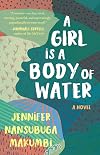
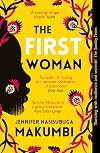
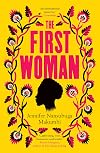
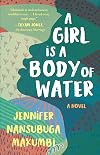
A Girl Is a Body of Water
by Jennifer Nansubuga Makumbi
On This Page
Description
"In her twelfth year, Kirabo, a young Ugandan girl, confronts a piercing question that has haunted her childhood: who is my mother? Kirabo has been raised by women in the small village of Nattetta-her grandmother, her best friend, and her many aunts, but the absence of her mother follows her like a shadow. Complicating these feelings of abandonment, as Kirabo comes of age she feels the emergence of a mysterious second self, a headstrong and confusing force inside her at odds with her sweet show more and obedient nature. Seeking answers, Kirabo begins spending afternoons with Nsuuta, a local witch, trading stories and learning not only about this force inside her, but about the woman who birthed her, who she learns is alive but not ready to meet. Nsuuta also explains that Kirabo has a streak of the "first woman"-an independent, original state that has been all but lost to women. Kirabo's journey to reconcile her rebellious origins, alongside her desire to reconnect with her mother and to honor her family's expectations, is rich in the folklore of Uganda and an arresting exploration of what it means to be a modern girl in a world that seems determined to silence women. Makumbi's unforgettable novel is a sweeping testament to the true and lasting connections between history, tradition, family, friends, and the promise of a different future"--Provided by publisher. show lessTags
Recommendations








Member Reviews
The ancients divided the world into four realms: Up – Heaven; Down – underworld; right- land and men; left - the sea and water and women. Land and men are solid and can have permanent boundaries. There are no boundaries to be drawn on water; women are ever changing and impermanent and therefore under the control of the tribe and of men.
Into this mix of ancient tribal beliefs and modern Uganda, is the girl Kirabo. She was brought back to her tribal village as an infant by her father, Tom, to be raised by her grandmother.
At age 13, she begins a search to find out who her mother was or is.
She also seeks to define herself which she recognizes has a second part which can fly. This is when she meets Nsuuta, who is known as a witch. The show more definition of a witch is someone who can make men bow down to her.
This is a wonderful, complicated novel as Kirabo struggles with balancing the old and the new; learning that relationships with women can be what save you, but can also sink you; learning that relationships with men are not always the ones that destroy or even control you. The same is true of course, of family and tribal affiliation.
And women everywhere.
Highly recommended. show less
Into this mix of ancient tribal beliefs and modern Uganda, is the girl Kirabo. She was brought back to her tribal village as an infant by her father, Tom, to be raised by her grandmother.
At age 13, she begins a search to find out who her mother was or is.
She also seeks to define herself which she recognizes has a second part which can fly. This is when she meets Nsuuta, who is known as a witch. The show more definition of a witch is someone who can make men bow down to her.
This is a wonderful, complicated novel as Kirabo struggles with balancing the old and the new; learning that relationships with women can be what save you, but can also sink you; learning that relationships with men are not always the ones that destroy or even control you. The same is true of course, of family and tribal affiliation.
And women everywhere.
Highly recommended. show less
I legit didn’t know what to expect when I started reading this - I was sort of thinking it might be magical realism or a kind of modern take on a folktale.
If you’d told me the actual plot, I probably wouldn’t have read it - I would have been pooorer for that.
Looking at different generations of women in Uganda, and their different perspectives on feminism, wealth, class, racism, colonialism, slavery, tradition…it’s just breathtaking. Each character turns out to have depths and nuance you didn’t realise was possible. And characters you thought would be flawless heroes end up betraying your expectations. It’s so moving in so many different ways.
I’m so, so glad I read this.
If you’d told me the actual plot, I probably wouldn’t have read it - I would have been pooorer for that.
Looking at different generations of women in Uganda, and their different perspectives on feminism, wealth, class, racism, colonialism, slavery, tradition…it’s just breathtaking. Each character turns out to have depths and nuance you didn’t realise was possible. And characters you thought would be flawless heroes end up betraying your expectations. It’s so moving in so many different ways.
I’m so, so glad I read this.
“And did all the women shrink?’ Kirabo steered Nsuuta away from Grandmother. ‘With that kind of perversion, who would not shrink? Who would want to be huge, or loud, or brave, or any of the other characteristics men claim to be male? We hunched, lowered our eyes, voices, acted feeble, helpless. Even being clever became unattractive. Soon, being shrunken became feminine. Then it became beautiful and women aspired to it. That was when we began to persecute our original state out of ourselves.”
"Once we shrunk, men had to look after us, and it was not long before they started to own us. Fathers sold daughters; husbands bought wives. Once we became a commodity, men could do whatever they wished with us. Even now our bodies do not show more belong to us. That is why when they need it, they will grab it. Things were so bad in some cultures, women had to be hidden away to protect them, in separate spaces where no men were allowed. Soon, they had to be spoken for by men.”
In A Girl is a Body of Water Ugandan Kirabo, a young girl, is being told this by her aunt Nsuuta, known as the local witch, and someone Kirabo's grandmother has instructed her not to speak to. But Kirabo believes Nsuuta can help her find her mother. In turn, Nsuuta believes Kirabo is a rarity, possessing woman's "original state", with the strength and vitality that existed before shrinking occurred.
After growing up in a small rural town, Kirabo is sent to the city Kampala, where she gets the education she needs and finds her way to womanhood and love. This is immersive storytelling, and a penetrating look at the natures of men and women and their relationships with each other. Five stars all the way. show less
"Once we shrunk, men had to look after us, and it was not long before they started to own us. Fathers sold daughters; husbands bought wives. Once we became a commodity, men could do whatever they wished with us. Even now our bodies do not show more belong to us. That is why when they need it, they will grab it. Things were so bad in some cultures, women had to be hidden away to protect them, in separate spaces where no men were allowed. Soon, they had to be spoken for by men.”
In A Girl is a Body of Water Ugandan Kirabo, a young girl, is being told this by her aunt Nsuuta, known as the local witch, and someone Kirabo's grandmother has instructed her not to speak to. But Kirabo believes Nsuuta can help her find her mother. In turn, Nsuuta believes Kirabo is a rarity, possessing woman's "original state", with the strength and vitality that existed before shrinking occurred.
After growing up in a small rural town, Kirabo is sent to the city Kampala, where she gets the education she needs and finds her way to womanhood and love. This is immersive storytelling, and a penetrating look at the natures of men and women and their relationships with each other. Five stars all the way. show less
The novel follows the life of Kirabo, a young Ugandan girl being raised by her grandparents in a rural village. Although her father visits regularly from his job in the city, no one will talk about her mother. Kirabo seeks answers from the village witch and begins a process of self-discovery, even as she learns more about the complicated relationships in her family.
The book is divided into five sections, each of which is set in a different time of Kirabo's life—childhood, living with her father, boarding school, and young adulthood—with the except of the fourth part which relates the relationship between her grandmother and the village witch. Mythology and feminism take on larger roles, with politics and history remaining in the show more background.
I enjoyed Kirabo's story, although the section where the village witch instructs Kirabo in feminism felt heavy-handed. Nothing is black and white, and I liked the tension between ideals and reality. Sometimes choices and compromises must be made, for good or ill, and we must live with the consequences. show less
The book is divided into five sections, each of which is set in a different time of Kirabo's life—childhood, living with her father, boarding school, and young adulthood—with the except of the fourth part which relates the relationship between her grandmother and the village witch. Mythology and feminism take on larger roles, with politics and history remaining in the show more background.
I enjoyed Kirabo's story, although the section where the village witch instructs Kirabo in feminism felt heavy-handed. Nothing is black and white, and I liked the tension between ideals and reality. Sometimes choices and compromises must be made, for good or ill, and we must live with the consequences. show less
This book took me a while to get through, but was very worth the read. A mix of historical fiction, a war story, and magical realism, it ultimately is about feminism and women's empowerment. The book follows the main character, Kirabo, in her search for her mother who abandoned her as an infant, as she goes through childhood, her teen years, boarding school, and the Ugandan civil war. It tells the stroy of many many women and their lives in the Ugandan patriarchy, and is ultimately about female power, friendship, and love.
“Columns of rainwater, formed by the corrugated iron roof, fell like lines of colourless strings.”
This coming of age novel is a sweeping and powerful portrait of a young girl and her family, who they are, what history has taken from them, and most importantly, how they find their way back to each other. The story transitioned from Kirabo’s life in Ugandan village of Nattetta, Eastern Africa. then the story switches to epistolary form and tells the story of Mirro, Nsuuta and Alikisa in earlier years, 1930-1940’s In Uganda and how the Europeans changed time, arranged marriages. The novel touches on wealth, manipulation of the female genitalia, and Girls who excelled in math, science and physics were looked upon as intersexual show more freaks because it was a masculine discipline.
I appreciated the short history of the Gods or Goddesses of Water mentioned in the story, such as Ursula Yemaya (water deity from the Yoruba religion. I also paused my reading to do a little research on Idi Amin Dada Oumee, the 3rd President of Uganda (1971-1979). Considered one of the cruelest deposts in world history. His portrait hangs on the wall of a shop within the story.
The novel was very hard to read with a lot of referencing to Uganda customs, dialog, regions and terminology. But pushing past that, it was a mystical story, a mirror into the feminist views from 1970s, 80s Uganda. I enjoyed the historical fiction aspect of the novel. The writing was very descriptive and characters were well developed. Overall the story was well defined and rendered a great read. show less
This coming of age novel is a sweeping and powerful portrait of a young girl and her family, who they are, what history has taken from them, and most importantly, how they find their way back to each other. The story transitioned from Kirabo’s life in Ugandan village of Nattetta, Eastern Africa. then the story switches to epistolary form and tells the story of Mirro, Nsuuta and Alikisa in earlier years, 1930-1940’s In Uganda and how the Europeans changed time, arranged marriages. The novel touches on wealth, manipulation of the female genitalia, and Girls who excelled in math, science and physics were looked upon as intersexual show more freaks because it was a masculine discipline.
I appreciated the short history of the Gods or Goddesses of Water mentioned in the story, such as Ursula Yemaya (water deity from the Yoruba religion. I also paused my reading to do a little research on Idi Amin Dada Oumee, the 3rd President of Uganda (1971-1979). Considered one of the cruelest deposts in world history. His portrait hangs on the wall of a shop within the story.
The novel was very hard to read with a lot of referencing to Uganda customs, dialog, regions and terminology. But pushing past that, it was a mystical story, a mirror into the feminist views from 1970s, 80s Uganda. I enjoyed the historical fiction aspect of the novel. The writing was very descriptive and characters were well developed. Overall the story was well defined and rendered a great read. show less
Set in Uganda in 1975 - 1983, this book starts with twelve-year-old strong-willed protagonist Kirabo living in a village with her grandparents. She has never known her mother, and her father only visits occasionally. Kirabo is a natural storyteller. She secretly visits local blind woman, Nsuuta, to find out about her mother, but the advice she receives only fuels her obsession. She meets Sio in her youth, and they develop a friendship that could develop into more, but Kirabo wants to continue her education, despite pressure to get married and have children. We follow Kirabo’s life as she moves to Kampala to live with her father and attends a Catholic boarding school for girls.
The characters are memorable, and the strong opening drew show more me in. The mystery of Kirabo’s mother compels the plot but I would not call this a typical mystery. The narrative focuses on the ways in which women adapt and change to overcome obstacles they face from this traditional patriarchal society. It conveys a strong sense of place, both in the rural and urban areas. The upheaval caused by Idi Amin’s dictatorship remains in the background but influences events in the storyline. There is one lengthy digression that returns to the past, told is epistolary style.
This book depicts Ugandan culture, storytelling traditions, rituals, polygamy, tribalism, clans, and rights of inheritance. The ending is satisfying and Kirabo finds a way to move forward. It is an example of Ugandan storytelling that covers so many aspects that we all encounter in life – emotions, conflicts, love, loss, friendship, and family ties. This is the first book I have read by Uganda-born author Jennifer Nansuguba Makumbi and I look forward to reading more. show less
The characters are memorable, and the strong opening drew show more me in. The mystery of Kirabo’s mother compels the plot but I would not call this a typical mystery. The narrative focuses on the ways in which women adapt and change to overcome obstacles they face from this traditional patriarchal society. It conveys a strong sense of place, both in the rural and urban areas. The upheaval caused by Idi Amin’s dictatorship remains in the background but influences events in the storyline. There is one lengthy digression that returns to the past, told is epistolary style.
This book depicts Ugandan culture, storytelling traditions, rituals, polygamy, tribalism, clans, and rights of inheritance. The ending is satisfying and Kirabo finds a way to move forward. It is an example of Ugandan storytelling that covers so many aspects that we all encounter in life – emotions, conflicts, love, loss, friendship, and family ties. This is the first book I have read by Uganda-born author Jennifer Nansuguba Makumbi and I look forward to reading more. show less
Members
- Recently Added By
Lists

Best African Books
126 works; 46 members

Best Contemporary Literary Fiction (Around the Last 30 Years)
388 works; 124 members

Best 21st Century Books (So Far)
670 works; 86 members

Top Five Books of 2020
982 works; 350 members

Female Author
1,234 works; 67 members

LibraryThingers' 1001 Books You Must Read Before You Die
442 works; 30 members

Story Within a Story
65 works; 17 members

Black Authors
384 works; 32 members
Best African and African diaspora books
111 works; 4 members

Childhood: Books for or about children in different cultures around the wor
345 works; 18 members

Books featuring grandmothers
56 works; 12 members

Favorite Books from the 2020s
32 works; 4 members

Books Read in 2022
5,168 works; 114 members

Books Read in 2020
4,379 works; 124 members

Reading Globally
136 works; 16 members

2021 - List of books read
53 works; 1 member

Books With Water Words in the Title
186 works; 12 members

Tour of Africa
54 works; 2 members

Uganda
17 works; 1 member

Your favorite 20 fiction books PUBLISHED in the last five years
20 works; 1 member

2025 Christmas Gifts
70 works; 19 members

Wishlist
48 works; 1 member
Author Information

4+ Works 1,052 Members
Awards and Honors
Awards
Distinctions
Common Knowledge
- Canonical title
- A Girl Is a Body of Water
- Original title
- The First Woman
- Alternate titles
- A Girl Is a Body of Water (US/Canada) (US/Canada)
- Original publication date
- 2020
- People/Characters
- Kirabo Nnamiiro; Vivian Balungi Nsuuta; Miiro; Alikisa Muka Miiro; Sio; Giibwa (show all 15); Tomusange Piitu (Tom); Mwagale; Tommy; Nnambi Muka Tom; Abisaagi (Aunt Abi); Yagala Akuliko (Aunt YA); Sister Ambrose; Kaye Ssemwaka; Lovinka Nnakku
- Important places
- Uganda; Nattetta, Bugerere, Uganda; Kampala, Uganda; Zigoti, Mityana, Uganda
- Important events
- Uganda-Tanzania War (1979)
- Dedication
- To my grandmothers
Rakeli, Yeeko, Abisaagi and Milly on Father's side, and on Mother's side, Baganda and Kaamida, all of them sisters to my 'real' grandmothers. For that thick traditional love, which would not allow me... (show all) to see that my 'real' grandmothers had passed when my parents were very young. Not until all of you had passed.
To Catherine Makumbi-Kulubya, whose fierce independence, sheer tenacity and quiet intelligence first inspired me. - First words
- Until that night, Kirabo had not cared about her.
- Last words
- (Click to show. Warning: May contain spoilers.)Besides, she had this stubborn conviction that since the world had created Nsuuta's captive grandmothers, and had given her Nsuuta and Aunt Abi and Jjajja Nsangi and Kana, there were other women out there.
- Blurbers
- Serpell, Namwali; Eddo-Lodge, Reni; Mengiste, Maaza; Huchu, Tendai; King, Lily; Tamale, Sylvia (show all 9); Okojie, Irenosen; Benaron, Naomi; Jones, Tayari
- Original language
- English
- Canonical DDC/MDS
- 823.92
Classifications
Statistics
- Members
- 498
- Popularity
- 60,599
- Reviews
- 21
- Rating
- (4.05)
- Languages
- 5 — Dutch, English, French, German, Spanish
- Media
- Paper, Audiobook, Ebook
- ISBNs
- 18
- ASINs
- 6