On This Page
Description
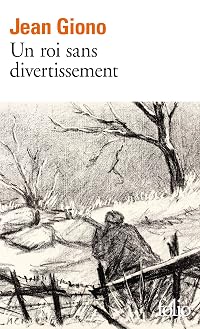
Perhaps no other of his novels better reveals Giono's perfect balance between lyricism and narrative, description and characterization, the epic and the particular, than "The Horseman on the Roof." This novel, which Giono began writing in 1934 and which was published in 1951, expanded and solidified his reputation as one of Europe's most important writers. This is a novel of adventure, a "roman courtois," that tells the story of Angelo, a nobleman who has been forced to leave Italy because show more of a duel, and is returning to his homeland by way of Provence. But that region is in the grip of a cholera epidemic, travelers are being imprisoned behind barricades, and exposure to the disease is almost certain. Angelo's escapades, adventures, and heroic self-sacrifice in this hot, hallucinatory landscape, among corpses, criminals and rioting townspeople, share this epic tale. show lessTags
Recommendations















Member Reviews
[Le Hussard sur le Toit] - Jean Giono (The Horseman on the roof)
Temperatures in France this summer have reached nearly 40 degrees a handful of times in my area and it was during one of these periods that I became engrossed in Jean Gionos book, which features a canicule (heatwave) during a pandemic for which there was no known cure. Reading with the shutters of the house all closed up to keep out the sun and with the contagion figures for covid -19 increasing at a frightening rate outside it was small wonder that I could so easily identify with the Horseman on the Roof (there were other reasons too which will become evident). Giono's book is set in the Provence area of France during the first wave of the cholera epidemic in the early show more 1830's and the hero: Angelo a captain in the Italian cavalry is riding through the area on some sort of mission, when he becomes caught up in the catastrophic effects of the pandemic.
Le Hussard sur le Toit was published in 1951 and is considered to be the last of Giono's grand oeuvres although he died in 1970. It was a long time in gestation and it feels like a book written over a long period of time. Giono was born and died in Manosque in the Alpes-de-Haut-Provence and the town features in his book, but it is the descriptions of the countryside suffering from the heatwave that give this book such a powerful presence. Like many of Giono's characters the author is slow to reveal their names and as the Horseman rides through the shinning white heat of the canicule we gradually learn more about him. He is in exile from Italy after an ill considered dual with an Austrian from the ruling class. Angelo believes he was fighting for liberty, but was forced to flee. He hears stories of a mystery disease in the land he is travelling through and then suddenly is confronted with the reality when he stumbles into a hamlet, which is covered under a cloud of flies and a murder of crows. He sees the body of a woman on the path outside the house and finds inside the houses dead bodies being eaten by birds and domestic animals, his horse panics and flees and is brought back to him by a young French doctor who is out on call. They find a young boy who collapses in front of them the doctor immediately springs into action desperately trying to restore circulation to the boy who loses control of all bodily functions and vomits the tell tale signs of creamed rice (le riz au lait), the two men work for two hours on the boy and Giono describes the desecration of the boy's body with the cholera in some detail. The boy dies horribly in spasms and the doctor anxiously asks Angelo if he can still feel his legs, but it is the doctor who succumbs and Angelo cannot save him.
Shaken by the events Angelo arrives in the town of Manosque at nightfall and when he is seen washing his hands in the fountain he is accused of spreading the disease; a local militia hunts him down but he manages to escape onto the rooftops of the houses. He spends the next few days living on the rooves, foraging below in abandoned houses for food and fighting off the swallows and crows who are becoming crazed with the availability of human flesh. Angelo witnesses many appalling scenes below of residents succumbing to the cholera. He finally gets off the roof when he goes to the help of a nun who has charged herself with helping the afflicted and removing those past all help. Angelo continues his travels when the cholera has wiped out most of the town; he is searching for his boyhood friend and comrade in arms Giuseppe who has also fled Italy, but travelling becomes increasingly difficult as the area is becoming shut down by the army in the belief that the contagion is spread by bodily contact. Angelo meets a young woman (much later revealed as Pauline) and protects her in her efforts to find her husband. They take small country roads and tracks trying to avoid the quarantines and become prisoners in a town where they are kept in an abandoned castle with other people picked up on the highways. They witness many more horrible deaths in a nightmare scenario, but Angelo's military training equips him to outwit the local militia's and police forces. The two never lose their self belief that they will come through the epidemic.
Giono's descriptions of the countryside burning under the heatwave are interlaced with his record of Angelo's journey and his battle with the cholera and the police forces. The horror of the deaths of those infected are given first hand portrayals as Angelo follows the example of the young French doctor in trying to do what he can to help. Angelo himself is honourable , courteous and optimistic, never giving up hope in the face of appalling events, he believes in the goodness of humanity despite his own experiences, but he is a proud man and this conflicts with his curtesy and he struggles with the events that have forced him from his homeland.
There are similarities to Albert Camus' [The Plague], published four years before but the feel and thrust of Giono's book is entirely different. It is less political, more earthy perhaps more fundamental and yet it has a similar idea of treating the disease as an occupying force. There is no cure and the country that Angelo travels through is similar to a country under army occupation. Angelo fights for his freedom, his liberty and his desire to make things right, however Giono has set his book back in the 1830's when a cavalry officer was seen as a heroic figure and Angelo and Pauline's honour and curtesy are far different from the characters that people Camus' book. Giono is concerned with morality, the instances of humans stepping up, taking enormous risks for the good of others, even when many have succumbed to a bleak worthless future, but the reality of the disease always grounds this book back in the dirt and filth of the darker side of humanity.
Towards the very end of the book as Angelo and Pauline are nearing the town of Gap high in the Alps, they come across a man living in a ruin of a house. Described as the "man in the redingote" (fitted coat and we never learn his name) he lives surrounded by books and artefacts. He feeds his visitors with a heartening stew and a good slug of rum, before launching into a lecture about the effects of the cholera on the population and his view on how people can survive. He appears to have been a doctor, but although he goes someway in getting closer to a way of preventing the spread of the disease he is more interested in theorising why it attacks some people and not others. His long speech (nearly twenty pages of the book) talks of how some people are more susceptible than others, according to their moral make up; their moral fibre. He condemns those who he says are jumping with pride and how the cholera reduces them down to the level of others. A certain pride has been an essential characteristic of Angelo: pride in his patriotism, pride in his beliefs and pride in his uniform and the speech goes some way to drawing together those elements in the book, despite if being incoherent in places and more like a rant. Angelo and Pauline still have a chapter of the book left to come to the end of their journey, but it is the speech of the "man in the redingote" that rings out most loud.
Some books are memorable because they provide a reading experience that is different from others; this maybe because of the way it is written or it maybe because of the place and time one chooses to read it. A book like Le Hussard sur le Toit can fall into that category, because of the relentless feel of the disease and the repetition of Giono's writing. There are pages of descriptions of the landscape and there are pages of descriptions of the effects of the cholera so that it all feels claustrophobic. Giono repeats himself driving home the atmosphere created by this novel, of course we want to know what happens to Angelo and there are some memorable incidents, but it is the feel of the burning heat in the countryside and the dirt and squalor of the disease that leaves a lasting impression. 5 stars. show less
Temperatures in France this summer have reached nearly 40 degrees a handful of times in my area and it was during one of these periods that I became engrossed in Jean Gionos book, which features a canicule (heatwave) during a pandemic for which there was no known cure. Reading with the shutters of the house all closed up to keep out the sun and with the contagion figures for covid -19 increasing at a frightening rate outside it was small wonder that I could so easily identify with the Horseman on the Roof (there were other reasons too which will become evident). Giono's book is set in the Provence area of France during the first wave of the cholera epidemic in the early show more 1830's and the hero: Angelo a captain in the Italian cavalry is riding through the area on some sort of mission, when he becomes caught up in the catastrophic effects of the pandemic.
Le Hussard sur le Toit was published in 1951 and is considered to be the last of Giono's grand oeuvres although he died in 1970. It was a long time in gestation and it feels like a book written over a long period of time. Giono was born and died in Manosque in the Alpes-de-Haut-Provence and the town features in his book, but it is the descriptions of the countryside suffering from the heatwave that give this book such a powerful presence. Like many of Giono's characters the author is slow to reveal their names and as the Horseman rides through the shinning white heat of the canicule we gradually learn more about him. He is in exile from Italy after an ill considered dual with an Austrian from the ruling class. Angelo believes he was fighting for liberty, but was forced to flee. He hears stories of a mystery disease in the land he is travelling through and then suddenly is confronted with the reality when he stumbles into a hamlet, which is covered under a cloud of flies and a murder of crows. He sees the body of a woman on the path outside the house and finds inside the houses dead bodies being eaten by birds and domestic animals, his horse panics and flees and is brought back to him by a young French doctor who is out on call. They find a young boy who collapses in front of them the doctor immediately springs into action desperately trying to restore circulation to the boy who loses control of all bodily functions and vomits the tell tale signs of creamed rice (le riz au lait), the two men work for two hours on the boy and Giono describes the desecration of the boy's body with the cholera in some detail. The boy dies horribly in spasms and the doctor anxiously asks Angelo if he can still feel his legs, but it is the doctor who succumbs and Angelo cannot save him.
Shaken by the events Angelo arrives in the town of Manosque at nightfall and when he is seen washing his hands in the fountain he is accused of spreading the disease; a local militia hunts him down but he manages to escape onto the rooftops of the houses. He spends the next few days living on the rooves, foraging below in abandoned houses for food and fighting off the swallows and crows who are becoming crazed with the availability of human flesh. Angelo witnesses many appalling scenes below of residents succumbing to the cholera. He finally gets off the roof when he goes to the help of a nun who has charged herself with helping the afflicted and removing those past all help. Angelo continues his travels when the cholera has wiped out most of the town; he is searching for his boyhood friend and comrade in arms Giuseppe who has also fled Italy, but travelling becomes increasingly difficult as the area is becoming shut down by the army in the belief that the contagion is spread by bodily contact. Angelo meets a young woman (much later revealed as Pauline) and protects her in her efforts to find her husband. They take small country roads and tracks trying to avoid the quarantines and become prisoners in a town where they are kept in an abandoned castle with other people picked up on the highways. They witness many more horrible deaths in a nightmare scenario, but Angelo's military training equips him to outwit the local militia's and police forces. The two never lose their self belief that they will come through the epidemic.
Giono's descriptions of the countryside burning under the heatwave are interlaced with his record of Angelo's journey and his battle with the cholera and the police forces. The horror of the deaths of those infected are given first hand portrayals as Angelo follows the example of the young French doctor in trying to do what he can to help. Angelo himself is honourable , courteous and optimistic, never giving up hope in the face of appalling events, he believes in the goodness of humanity despite his own experiences, but he is a proud man and this conflicts with his curtesy and he struggles with the events that have forced him from his homeland.
There are similarities to Albert Camus' [The Plague], published four years before but the feel and thrust of Giono's book is entirely different. It is less political, more earthy perhaps more fundamental and yet it has a similar idea of treating the disease as an occupying force. There is no cure and the country that Angelo travels through is similar to a country under army occupation. Angelo fights for his freedom, his liberty and his desire to make things right, however Giono has set his book back in the 1830's when a cavalry officer was seen as a heroic figure and Angelo and Pauline's honour and curtesy are far different from the characters that people Camus' book. Giono is concerned with morality, the instances of humans stepping up, taking enormous risks for the good of others, even when many have succumbed to a bleak worthless future, but the reality of the disease always grounds this book back in the dirt and filth of the darker side of humanity.
Towards the very end of the book as Angelo and Pauline are nearing the town of Gap high in the Alps, they come across a man living in a ruin of a house. Described as the "man in the redingote" (fitted coat and we never learn his name) he lives surrounded by books and artefacts. He feeds his visitors with a heartening stew and a good slug of rum, before launching into a lecture about the effects of the cholera on the population and his view on how people can survive. He appears to have been a doctor, but although he goes someway in getting closer to a way of preventing the spread of the disease he is more interested in theorising why it attacks some people and not others. His long speech (nearly twenty pages of the book) talks of how some people are more susceptible than others, according to their moral make up; their moral fibre. He condemns those who he says are jumping with pride and how the cholera reduces them down to the level of others. A certain pride has been an essential characteristic of Angelo: pride in his patriotism, pride in his beliefs and pride in his uniform and the speech goes some way to drawing together those elements in the book, despite if being incoherent in places and more like a rant. Angelo and Pauline still have a chapter of the book left to come to the end of their journey, but it is the speech of the "man in the redingote" that rings out most loud.
Some books are memorable because they provide a reading experience that is different from others; this maybe because of the way it is written or it maybe because of the place and time one chooses to read it. A book like Le Hussard sur le Toit can fall into that category, because of the relentless feel of the disease and the repetition of Giono's writing. There are pages of descriptions of the landscape and there are pages of descriptions of the effects of the cholera so that it all feels claustrophobic. Giono repeats himself driving home the atmosphere created by this novel, of course we want to know what happens to Angelo and there are some memorable incidents, but it is the feel of the burning heat in the countryside and the dirt and squalor of the disease that leaves a lasting impression. 5 stars. show less
One of my favorite authors and, while this is good (and often considered his best work), it didn't thrill me. It’s about the horseman making his way back from France to Italy during a cholera pandemic in the 1830s. Some of the descriptions of cholera (especially of people dying from it) are absolutely horrifying...and what I thought would be an episode or two in the beginning turned out to be much of the book. He is a wonderful, thoughtful, evocative writer but I don't put this up there at the top of his large oeuvre.
First of a two part series (the 2nd book is titled 'The straw man' and for what it's worth there is another title 'Angelo' that refers to the same main character) this swashbuckling adventure story tells us about one Angelo Pardo and Italian nobleman and revolutionary traveling through the Provencal region of France and his mission to hook up with another revolutionary in the town of Manosque. As much a part of the story are 1) the Provencal region where Giono himself grew up which is beautifully rendered throughout and 2) an extremely deadly cholera epidemic that has the local authorities trying to seal off a vast area so that it won't spread throughout the country. And then there is Pauline a rich and beautiful lady married to a much show more older man who the ever gallant and somewhat ferociously adept with his sword Angelo takes upon himself to deliver back to her home and to her husband in one piece. This is a very exciting adventure story--especially once one gets into it a little way and Giono as a writer has a special talent for describing the natural wonders of his homeland. show less
I read this in French "Le hussard sur le toit" and loved both the language and the story. Giono is less well-known to English readers than his Provençal fellow writer Marcel Pagnol, but his stories are lyrical, though there is a darker side to the traditional French peasant in Giono's vision.
Different from his early novels, which in Germany probably would be classified as « Blut-und-Boden-Literatur », blood and soil literature, the later ones range, for my taste more amusing, in the category « adventure ».
Le hussard sur le toit : avec son allure de comptine, ce titre intrigue. Pourquoi sur le toit ? Qu'a-t-il fallu pour l'amener là ? Rien moins qu'une épidémie de choléra, qui ravage la Provence vers 1830, et les menées révolutionnaires des carbonari piémontais. Le Hussard est d'abord un roman d'aventures ; Angelo Pardi, jeune colonel de hussards exilé en France, est chargé d'une mission mystérieuse. Il veut retrouver Giuseppe, carbonaro comme lui, qui vit à Manosque. Mais le choléra sévit : les routes sont barrées, les villes barricadées, on met les voyageurs en quarantaine, on soupçonne Angelo d'avoir empoisonné les fontaines ! Seul refuge découvert par hasard, les toits de Manosque ! Entre ciel et terre, il observe show more les agitations funèbres des humains, contemple la splendeur des paysages et devient ami avec un chat. Une nuit, au cours d'une expédition, il rencontre une étonnante et merveilleuse jeune femme. Tous deux feront route ensemble, connaîtront l'amour et le renoncement. show less
Angelo Pardi è un miracolato. A cavallo o a piedi, alla luce del sole o sfuggendo le insidie, attraversa cinque mesi e quasi cinquecento pagine di colera accusando al più un principio di mal di pancia (sconfitto con due bottiglie di borgogna): eppure non si tira indietro, anzi si danna a soccorrere moribondi e lavare morti senza neppure badare a evitare il contatto con i fluidi corporei. Bisogna dire che, nella prima metà del romanzo, il vero protagonista non è lui, bensì la malattia che fa strage in una Provenza strozzata da una calura implacabile: un’afa innaturale che fa squadra con le innumerevoli descrizioni di morti colerosi e di uccelli più feroci di quelli di Hitchcock, il tutto a testimonianza della scelta iperrealista show more dell’autore. In sintonia con il clima, il ritmo è lentissimo e Angelo è quasi solo testimone sullo sfondo di un’immobilità assoluta. La ripetizione immerge il sud della Francia in una sorta di bolla o di incantesimo, ma non sempre la misura è quella giusta e la lettura si fa irritante, tra corpi blu, riso nel latte, cieli di gesso e foglie rigide: fastidio che però viene dimenticato grazie alle pagine migliori, come quelle che raccontano la sopravvivenza di Angelo sui tetti e per la strade della natìa (per l’autore) Manosque. In questi capitoli non si conosce il nome del protagonista e si hanno solo pochi accenni sul suo passato: solo dopo il definitivo incontro con Pauline scopriamo chi è e che ci fa lì (è in fuga dai moti carbonari in Piemonte). E’ il momento in cui il racconto prende la forma del romanzo di avventura, con un apice nella fuga dalla quarantena di Vaumeilh, mentre il nostro accompagna la bella fuori dai territori del contagio. Cambia anche il clima – ci si inoltra nell’autunno tra piogge e freddo – ma, a differenza della peste manzoniana, il colera (in gran parte immaginario) di Giono non demorde e anche il passo del romanzo resta grave sullo sfondo di una natura quasi sempre matrigna, dove ai paesaggi calcinati dal sole si sostituiscono aspre colline tra le quali ci si può perdere per mancanza di punti di riferimento. La tendenza a calcare la mano rimane sempre – come nell’episodio dei contadini che hanno appena ucciso il maiale – mentre Angelo rivela sempre più un animo nobile, da vero erede dei cavalieri senza macchia e senza paura, che risalta nei confronti della pusillanimità borghese: motivo che ritorna spesso, sia nelle considerazioni del protagonista, sia nei dialoghi con i numerosi personaggi, fra i quali risultano migliori quelli provenienti dalle classi più umili. La gestione delle figure secondarie è, d’altra parte, a volte insoddisfacente, con abbandoni improvvisi non appena se ne esaurisce l’utilità: il dottore ebreo e l’ufficiale medico che compaiono all’inizio, la suora di Manosque, l’amico Giuseppe sono solo alcuni esempi mentre si prende anche troppo spazio l’altro dottore, il logorroico e solitario ospite sulla strada per Gap. Così, sia durante la lettura sia alla fine, resta una sensazione ambivalente, sospesa tra l’ammirazione per i moltissimi passaggi convolgenti in un libro di certo non banale, pur se costruito su di una storia lineare, e la pazienza che a volte scappa quando all’improvviso il motore dà l’impressione di girare a vuoto. show less
Oct 8, 2014 (Edited)Italian
Members
- Recently Added By
Lists

Le Monde - Les 100 livres du siècle
121 works; 25 members
Harold Bloom - The Western Canon: D. The Chaotic Age
833 works; 24 members

Viral Outbreaks and Pandemics
82 works; 8 members
Author Information

Jean Giono was born in France on March 30, 1985. He was an author about whom Germaine Bree and M. Guiton have written, "When Giono's first novel, Colline (Hill of Destiny) appeared in 1929, it struck a fresh, new note. . . . After Proust and Gide, Duhamel and Romains, Cocteau and Giraudoux, what could be more restful than a world of wind and sun show more and simple men who apparently had never heard of psychological analysis, never confronted any social problems, never read any books. . ." (An Age of Fiction). Raised by his shoemaker father in a small town in the south of France, Giono's fiction has its roots in the peasant life of Provence. Horrified by his experiences in World War I, Giono returned to the world of his youth, which became the world of his imagination. After the shock of World War II, his novels seemed to gain in stature. One of his best is Horseman on the Roof (1951), his chronicle of the great cholera epidemic of 1838. Giono was honoured with the Prince Rainier of Monaco literary prize in 1953, awarded for his lifetime achievements, was elected to the Académie Goncourt in 1954, and became a member of the Conseil Littéraire of Monaco in 1963. Giono died of a heart attack in 1970. (Bowker Author Biography) show less
Some Editions
Awards and Honors
Series

Belongs to Publisher Series
Harvill (209)
Gallimard, Folio (240)
Work Relationships
Has the adaptation
Has as a student's study guide
Common Knowledge
- Canonical title*
- Le hussard sur le toit
- Original title
- Le hussard sur le toit
- Original publication date
- 1951
- People/Characters*
- Angelo, le Hussard; Angelo Pardi; Pauline de Théus
- Related movies
- The Horseman on the Roof (1995)
- Epigraph*
- Si es Catalina de Acosta que anda buscando la sua estatua.
(Calderon) - Dedication*
- A la mémoire de mon ami Charles Bistési et à Suzanne
- First words*
- Chapitre premier
L'aube surpris Angelo béat et muet mais réveillé. [...] - Last words*
- (Click to show. Warning: May contain spoilers.)« L’Italie est là derrière », se disait-il.
Il était au comble du bonheur. - Original language*
- Français
*Some information comes from Common Knowledge in other languages. Click "Edit" for more information.
Classifications
- Genres
- General Fiction, Fiction and Literature, Historical Fiction
- DDC/MDS
- 843.912 — Literature & rhetoric French Literature French fiction 1900- 20th Century 1900-1945
- LCC
- PQ2613 .I58 — Language and Literature French, Italian, Spanish and Portuguese literatures French literature Modern literature 1900-1960
- BISAC
Statistics
- Members
- 653
- Popularity
- 44,222
- Reviews
- 11
- Rating
- (3.78)
- Languages
- 9 — Danish, Dutch, English, French, German, Italian, Portuguese, Romanian, Spanish
- Media
- Paper, Audiobook, Ebook
- ISBNs
- 30
- ASINs
- 17